×
Request Free Sample ×

Kindly complete the form below to receive a free sample of this Report

* Please use a valid business email

Leading companies partner with us for data-driven Insights

clients tt-cursor
Hero Background

Non-Invasive Monitoring Device Market

ID: MRFR/MED/0977-CR
204 Pages
Kinjoll Dey
August 2019

Non-Invasive Monitoring Device Market Research Report Information by Type (Cardiac Monitoring Devices, Brain Monitoring Devices, Blood Pressure Monitoring Devices, Anesthesia Monitoring Devices and Blood Glucose Monitoring Devices), Modality (Table-Top Devices and Wearable Devices), Application (Cardiology, Neurology and Oncology), End User (Hospitals & Clinics, Diagnostic Centers, Research & Academic Institutes) and Region (Americas, Europe, Asia-Pacific and Middle East & Africa) - Forecast till 2035

Share:
Download PDF ×

We do not share your information with anyone. However, we may send you emails based on your report interest from time to time. You may contact us at any time to opt-out.

Non-Invasive Monitoring Device Market Infographic
Purchase Options

Non-Invasive Monitoring Device Market Summary

As per MRFR analysis, the Non-Invasive Monitoring Device Market Size was estimated at 25.6 USD Million in 2024. The Non-Invasive Monitoring Device industry is projected to grow from 28.05 in 2025 to 62.38 by 2035, exhibiting a compound annual growth rate (CAGR) of 8.39 during the forecast period 2025 - 2035.

Key Market Trends & Highlights

The Non-Invasive Monitoring Device Market is experiencing robust growth driven by technological advancements and increasing healthcare demands.

  • Technological advancements are enhancing the capabilities of non-invasive monitoring devices, leading to improved patient outcomes.
  • The demand for preventive healthcare is rising, prompting a shift towards non-invasive monitoring solutions in various healthcare settings.
  • North America remains the largest market, while the Asia-Pacific region is emerging as the fastest-growing area for non-invasive monitoring technologies.
  • Key market drivers include technological innovations in non-invasive monitoring devices and the rising prevalence of chronic diseases, particularly in cardiovascular monitoring and home care segments.

Market Size & Forecast

2024 Market Size 25.6 (USD Million)
2035 Market Size 62.38 (USD Million)
CAGR (2025 - 2035) 8.39%

Major Players

Medtronic (US), Philips (NL), GE Healthcare (US), Siemens Healthineers (DE), Abbott Laboratories (US), Omron Healthcare (JP), Nihon Kohden (JP), Masimo Corporation (US), Honeywell (US)

Non-Invasive Monitoring Device Market Trends

The Non-Invasive Monitoring Device Market is currently experiencing a notable evolution, driven by advancements in technology and an increasing emphasis on patient-centered care. This market encompasses a variety of devices that allow for the monitoring of vital signs and other health parameters without the need for invasive procedures. As healthcare systems worldwide strive to enhance patient outcomes while minimizing discomfort, the demand for these devices appears to be on the rise. Furthermore, the integration of artificial intelligence and machine learning into monitoring systems is likely to enhance their accuracy and reliability, thereby fostering greater adoption among healthcare providers. In addition to technological advancements, the Non-Invasive Monitoring Device Market is influenced by a growing awareness of preventive healthcare. Patients and healthcare professionals alike are recognizing the importance of continuous monitoring to detect potential health issues early. This trend is further supported by the increasing prevalence of chronic diseases, which necessitate regular monitoring. As a result, the market is poised for substantial growth, with innovations in wearable technology and remote monitoring solutions likely to play a pivotal role in shaping its future landscape. The ongoing shift towards telehealth services may also contribute to the expansion of this market, as patients seek convenient and effective ways to manage their health remotely.

Technological Advancements

The Non-Invasive Monitoring Device Market is witnessing rapid technological progress, particularly with the integration of advanced sensors and data analytics. These innovations enhance the precision of monitoring devices, allowing for real-time data collection and analysis. As a result, healthcare providers can make informed decisions more swiftly, improving patient care outcomes.

Growing Demand for Preventive Healthcare

There is an increasing emphasis on preventive healthcare, which is driving the demand for non-invasive monitoring solutions. Patients are becoming more proactive in managing their health, leading to a rise in the use of devices that facilitate continuous monitoring. This trend is particularly relevant in the context of chronic disease management.

Expansion of Telehealth Services

The rise of telehealth services is significantly impacting the Non-Invasive Monitoring Device Market. As patients seek remote healthcare solutions, the demand for non-invasive devices that can be used at home is likely to grow. This shift not only enhances accessibility but also encourages regular health monitoring, aligning with contemporary healthcare practices.

Non-Invasive Monitoring Device Market Drivers

Growing Aging Population

The Global Non-Invasive Monitoring Device Market Industry is also propelled by the growing aging population, which is more susceptible to various health issues. As individuals age, the need for regular health monitoring becomes paramount. Non-invasive devices offer a practical solution, allowing elderly patients to manage their health without invasive procedures. This demographic shift is expected to drive market growth as healthcare systems adapt to cater to the needs of older adults. The increasing demand for user-friendly and effective monitoring solutions aligns with the projected CAGR of 8.39% from 2025 to 2035, indicating robust market potential.

Market Growth Projections

The Global Non-Invasive Monitoring Device Market Industry is projected to experience substantial growth over the coming years. With a market value expected to reach 1.0 USD Billion in 2024 and 2.44 USD Billion by 2035, the industry is on a promising trajectory. The anticipated CAGR of 8.39% from 2025 to 2035 indicates a robust expansion phase, driven by various factors including technological advancements and increasing healthcare demands. This growth reflects the industry's potential to innovate and adapt to changing healthcare landscapes, ensuring that non-invasive monitoring devices remain integral to patient care.

Technological Advancements

The Global Non-Invasive Monitoring Device Market Industry is experiencing rapid technological advancements, which enhance the accuracy and efficiency of monitoring devices. Innovations such as wearable sensors and advanced imaging techniques are becoming increasingly prevalent. For instance, devices that utilize photoplethysmography for heart rate monitoring are gaining traction. These advancements not only improve patient outcomes but also facilitate remote monitoring, which is crucial in today's healthcare landscape. As a result, the market is projected to reach 1.0 USD Billion in 2024, reflecting a growing demand for sophisticated non-invasive monitoring solutions.

Shift Towards Home Healthcare

The Global Non-Invasive Monitoring Device Market Industry is witnessing a notable shift towards home healthcare, driven by patient preferences for convenience and comfort. Non-invasive monitoring devices enable patients to manage their health from home, reducing the need for frequent hospital visits. This trend is particularly relevant in the context of chronic disease management, where continuous monitoring is essential. The rise of telehealth services further supports this shift, as healthcare providers increasingly utilize remote monitoring tools. Consequently, the market is poised for growth, with a projected increase in demand for home-based monitoring solutions.

Rising Chronic Disease Prevalence

The Global Non-Invasive Monitoring Device Market Industry is significantly influenced by the rising prevalence of chronic diseases such as diabetes and cardiovascular disorders. These conditions necessitate continuous monitoring, thereby driving demand for non-invasive solutions. According to health statistics, millions of individuals globally are affected by these diseases, leading to an increased focus on preventive healthcare measures. The market is expected to expand as healthcare providers seek efficient monitoring tools that minimize patient discomfort. This trend is anticipated to contribute to the market's growth, with projections indicating a value of 2.44 USD Billion by 2035.

Increased Investment in Healthcare Infrastructure

The Global Non-Invasive Monitoring Device Market Industry benefits from increased investment in healthcare infrastructure, particularly in developing regions. Governments and private entities are recognizing the importance of modernizing healthcare facilities and integrating advanced monitoring technologies. This investment is crucial for improving patient care and outcomes, as non-invasive devices play a vital role in effective health monitoring. Enhanced infrastructure facilitates the adoption of these technologies, thereby expanding market reach. As healthcare systems evolve, the demand for innovative non-invasive monitoring solutions is expected to rise, contributing to overall market growth.

Market Segment Insights

By Application: Cardiovascular Monitoring (Largest) vs. Diabetes Management (Fastest-Growing)

In the Non-Invasive Monitoring Device Market, cardiovascular monitoring dominates with a significant share, attributed to its essential role in chronic disease management and preventative health measures. The steadily increasing prevalence of heart-related conditions has further cemented this segment's position as a market leader. In contrast, diabetes management, while currently smaller, is rapidly gaining traction due to the rising number of diabetic patients. This growth is also influenced by technological advancements in glucose monitoring that are reshaping diabetes care.

Cardiovascular Monitoring (Dominant) vs. Diabetes Management (Emerging)

Cardiovascular monitoring stands out in the Non-Invasive Monitoring Device Market as the dominant segment, driven by an increasing awareness of heart health and the importance of early detection. Devices in this category include wearable ECG monitors and blood pressure sensors, which have seen substantial adoption among healthcare providers and consumers. Conversely, diabetes management is emerging rapidly, fueled by the growth of self-monitoring devices that empower patients to track their glucose levels easily. This segment is characterized by innovative solutions that combine user-friendly interfaces with real-time data access, catering specifically to the evolving needs of diabetic patients. Together, these segments reflect a dynamic landscape focused on patient-centric health management.

By End Use: Hospitals (Largest) vs. Home Care (Fastest-Growing)

In the Non-Invasive Monitoring Device Market, hospitals remain the largest end-use segment due to their extensive patient monitoring needs and critical nature of care. Hospitals adopt these devices to ensure constant health surveillance, leading to significant market penetration. Following closely is the home care segment, which is rapidly gaining traction as more patients prefer remote monitoring solutions in the comfort of their own homes, particularly post-pandemic. The growth trends in this segment are strongly influenced by technology advancements and an increasing focus on patient-centric care. The demand for non-invasive monitoring devices is fueled by the growing incidence of chronic diseases and an aging population. Moreover, healthcare providers are increasingly adopting these devices to enhance care delivery and improve patient outcomes, positioning home care as the fastest-growing segment in this market.

Hospitals: Dominant vs. Fitness Centers: Emerging

Hospitals represent the dominant end-use segment in the Non-Invasive Monitoring Device Market, characterized by sophisticated technological integration and a comprehensive array of monitoring solutions catering to diverse patient needs. These facilities leverage non-invasive devices to provide timely interventions, significantly improving patient outcomes. In contrast, fitness centers are seen as an emerging segment, capitalizing on the growing consumer interest in health and fitness. With an emphasis on real-time monitoring and personalized health management, fitness centers are integrating non-invasive devices to support their clientele. While still developing, this segment shows promising potential as the fitness industry increasingly adopts clinical-grade monitoring solutions to cater to health-conscious consumers.

By Technology: Optical Sensors (Largest) vs. Bioimpedance Sensors (Fastest-Growing)

The Non-Invasive Monitoring Device Market showcases a diverse distribution of technologies, prominently led by Optical Sensors, which dominate in terms of market share due to their high precision and reliability in measuring physiological parameters. Following closely are Ultrasonic Sensors and Electromagnetic Sensors, which offer unique advantages for specific monitoring applications. Bioimpedance Sensors are also gaining significant traction, indicating a shift towards newer technologies as healthcare providers seek comprehensive non-invasive solutions.

Technology: Optical Sensors (Dominant) vs. Bioimpedance Sensors (Emerging)

Optical Sensors stand out in the Non-Invasive Monitoring Device Market, recognized for their ability to provide accurate readings of vital signs such as heart rate and blood oxygen levels. Their extensive application in consumer health devices and clinical settings underscores their market dominance, driven by advancements in light-based technology. In contrast, Bioimpedance Sensors are emerging with their potential for multifaceted monitoring capabilities that include body composition analysis. As healthcare becomes more patient-centered, the demand for these innovative sensors is expected to rise, propelled by their accessibility and the ongoing trend towards personalized healthcare solutions.

By Patient Type: Adult Patients (Largest) vs. Pediatric Patients (Fastest-Growing)

In the Non-Invasive Monitoring Device Market, the segment distribution by patient type shows that adult patients hold the largest share, reflecting the significant healthcare focus on managing the unique needs of this demographic. Adult patients often require continuous monitoring due to chronic conditions, making them a primary target for non-invasive monitoring technologies. However, pediatric patients are emerging as the fastest-growing segment, driven by increasing awareness about pediatric care and advancements in non-invasive monitoring technologies that cater specifically to this age group. The growth trends indicate a shift towards more personalized healthcare solutions. The rising incidence of chronic diseases among adults necessitates the need for sophisticated monitoring devices, while the pediatric segment is burgeoning due to the rise in lifestyle-related health issues in children and investments in specialized monitoring for younger populations. This dual growth creates opportunities for manufacturers to innovate and cater to diverse patient needs.

Pediatric Patients (Emerging) vs. Geriatric Patients (Dominant)

In the current landscape of the Non-Invasive Monitoring Device Market, pediatric patients are recognized as an emerging segment characterized by innovative and targeted monitoring devices that meet the unique physiological needs of children. With rising health concerns and an increasing focus on early diagnosis, the market for pediatric monitoring solutions is rapidly expanding. Conversely, geriatric patients remain a dominant segment due to the growing elderly population, who are often living with multiple chronic conditions requiring consistent monitoring. The geriatric segment benefits from established non-invasive technologies that cater to their specific health monitoring requirements, providing manufacturers an opportunity to enhance device usability and effectiveness in this age group.

By Product Type: Wearable Devices (Largest) vs. Handheld Devices (Fastest-Growing)

In the Non-Invasive Monitoring Device Market, the segment distribution is led by wearable devices, which dominate due to their increasing adoption in health and fitness applications. Handheld devices follow closely, reflecting growing demand from healthcare professionals for point-of-care diagnostics. Portable and implantable devices are also significant; however, they are eclipsed by the widespread appeal of wearables and handhelds, resulting in varied market penetration across different demographics. Growth trends indicate a significant shift toward handheld devices as they offer convenience and real-time monitoring capabilities, attracting both consumers and healthcare providers. Driving factors include technological advancements, increased health awareness, and a shift towards preventive healthcare. As innovations continue to emerge, both wearable and handheld devices are expected to shape the future landscape of non-invasive monitoring solutions.

Wearable Devices (Dominant) vs. Handheld Devices (Emerging)

Wearable devices in the Non-Invasive Monitoring Device Market showcase a robust dominance, primarily due to their blend of accessibility and functionality. They are increasingly integrated with advanced sensors that provide continuous health monitoring for users, thereby enhancing user engagement. Meanwhile, handheld devices are in an emerging phase of popularity as they cater primarily to healthcare professionals for on-the-go assessments. While wearables are tailored for end-user interaction and lifestyle management, handheld devices emphasize accuracy and efficiency in diagnostic settings. This juxtaposition reflects the evolving consumer needs where one prioritizes personal health monitoring while the other focuses on clinical care. Both segments are innovating rapidly, catering to distinct market challenges and opportunities.

Get more detailed insights about Non-Invasive Monitoring Device Market

Regional Insights

North America : Market Leader in Innovation

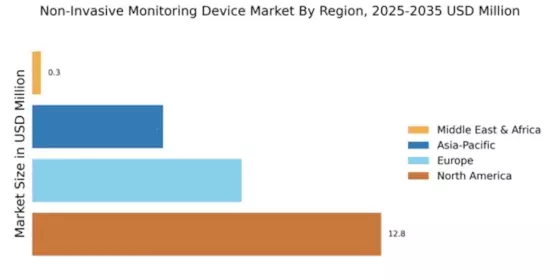
North America is poised to maintain its leadership in the Non-Invasive Monitoring Device Market, holding a significant market share of 12.8 in 2024. The region's growth is driven by increasing healthcare expenditure, technological advancements, and a rising demand for patient-centric care. Regulatory support from agencies like the FDA further catalyzes innovation, ensuring that new devices meet stringent safety and efficacy standards. The competitive landscape is robust, with key players such as Medtronic, GE Healthcare, and Abbott Laboratories leading the charge. The U.S. remains the largest market, supported by a well-established healthcare infrastructure and a high prevalence of chronic diseases. This environment fosters continuous innovation and collaboration among industry leaders, ensuring that North America remains at the forefront of non-invasive monitoring technology.

Europe : Emerging Market with Growth Potential

Europe's Non-Invasive Monitoring Device Market is projected to grow significantly, with a market size of 7.68 in 2024. The region benefits from a strong regulatory framework that encourages innovation while ensuring patient safety. Increasing awareness of preventive healthcare and the rising prevalence of lifestyle-related diseases are key drivers of demand. Additionally, government initiatives aimed at improving healthcare access further bolster market growth. Leading countries such as Germany, France, and the UK are at the forefront of this expansion, hosting major players like Philips and Siemens Healthineers. The competitive landscape is characterized by a mix of established companies and innovative startups, fostering a dynamic environment for technological advancements. As the market evolves, collaboration between public and private sectors will be crucial for sustaining growth and enhancing patient outcomes.

Asia-Pacific : Rapidly Growing Healthcare Sector

The Asia-Pacific region is rapidly emerging as a significant player in the Non-Invasive Monitoring Device Market, with a market size of 4.8 in 2024. Factors such as increasing healthcare investments, a growing aging population, and rising awareness of health monitoring are driving this growth. Additionally, supportive government policies aimed at enhancing healthcare infrastructure are expected to further propel market expansion in the coming years. Countries like Japan, China, and India are leading the charge, with key players such as Omron Healthcare and Nihon Kohden making substantial contributions. The competitive landscape is evolving, with both multinational corporations and local firms vying for market share. As the region continues to develop, the focus on innovative and affordable healthcare solutions will be paramount to meet the diverse needs of its population.

Middle East and Africa : Untapped Market with Potential

The Middle East and Africa (MEA) region represents an untapped market for Non-Invasive Monitoring Devices, with a market size of 0.32 in 2024. The growth in this region is primarily driven by increasing healthcare investments, a rising prevalence of chronic diseases, and a growing emphasis on preventive healthcare. Additionally, government initiatives aimed at improving healthcare access and quality are expected to stimulate market growth. Countries such as South Africa and the UAE are leading the way in adopting advanced healthcare technologies. The competitive landscape is characterized by a mix of local and international players, creating opportunities for innovation and collaboration. As healthcare systems in the MEA region continue to evolve, the demand for non-invasive monitoring solutions is likely to increase, paving the way for future growth.

Key Players and Competitive Insights

The Non-Invasive Monitoring Device Market is characterized by a dynamic competitive landscape, driven by technological advancements and an increasing demand for patient-centric healthcare solutions. Key players such as Medtronic (US), Philips (NL), and GE Healthcare (US) are at the forefront, each adopting distinct strategies to enhance their market presence. Medtronic (US) focuses on innovation through the development of advanced monitoring technologies, while Philips (NL) emphasizes partnerships to expand its product offerings and reach. GE Healthcare (US) is leveraging digital transformation to optimize its monitoring solutions, thereby shaping a competitive environment that prioritizes technological integration and patient outcomes.

In terms of business tactics, companies are increasingly localizing manufacturing to reduce costs and enhance supply chain efficiency. The market structure appears moderately fragmented, with several key players exerting influence over various segments. This fragmentation allows for a diverse range of products and services, fostering competition that drives innovation and quality improvements across the board.

In November 2025, Philips (NL) announced a strategic partnership with a leading telehealth provider to integrate its non-invasive monitoring devices into remote patient monitoring systems. This collaboration is poised to enhance patient engagement and streamline healthcare delivery, reflecting a growing trend towards telehealth solutions. The strategic importance of this partnership lies in its potential to expand Philips' market reach and reinforce its commitment to innovative healthcare solutions.

In October 2025, Medtronic (US) launched a new line of wearable monitoring devices designed to provide real-time health data to patients and healthcare providers. This initiative underscores Medtronic's focus on innovation and its aim to empower patients through technology. The introduction of these devices is likely to strengthen Medtronic's competitive position by addressing the increasing demand for personalized healthcare solutions.

In September 2025, GE Healthcare (US) unveiled a new AI-driven analytics platform that enhances the functionality of its non-invasive monitoring devices. This platform aims to provide healthcare professionals with actionable insights derived from patient data, thereby improving clinical decision-making. The strategic significance of this development lies in GE's commitment to integrating AI into its product offerings, which may set a new standard for monitoring technologies in the industry.

As of December 2025, current competitive trends in the Non-Invasive Monitoring Device Market are heavily influenced by digitalization, sustainability, and AI integration. Strategic alliances are increasingly shaping the landscape, enabling companies to pool resources and expertise to drive innovation. Looking ahead, competitive differentiation is expected to evolve, with a notable shift from price-based competition towards a focus on technological advancement, innovation, and supply chain reliability. This transition may redefine market dynamics, emphasizing the importance of quality and cutting-edge solutions in meeting the needs of healthcare providers and patients alike.

Key Companies in the Non-Invasive Monitoring Device Market market include

Industry Developments

  • The US market has launched the C pro 6 non-invasive monitoring device. The new device was developed for diabetes patient. The system is suitable for diabetes patients above the age of 2 years.  
  • The key players of the market are conspiring plans to improve their product offering. It assures that there is going to be plenty of future developments.  
  • The US market is introducing the GLUCOCARD monitoring device. It is specially developed for blood glucose monitoring applications. 

Future Outlook

Non-Invasive Monitoring Device Market Future Outlook

The Non-Invasive Monitoring Device Market is projected to grow at an 8.39% CAGR from 2024 to 2035, driven by technological advancements, increasing healthcare demands, and rising chronic disease prevalence.

New opportunities lie in:

  • Integration of AI-driven analytics for real-time patient monitoring.
  • Development of portable monitoring devices for home healthcare.
  • Expansion into emerging markets with tailored product offerings.

By 2035, the market is expected to be robust, driven by innovation and increased adoption.

Market Segmentation

Non-Invasive Monitoring Device Market End Use Outlook

  • Hospitals
  • Home Care
  • Ambulatory Surgical Centers
  • Diagnostic Centers
  • Fitness Centers

Non-Invasive Monitoring Device Market Technology Outlook

  • Optical Sensors
  • Ultrasonic Sensors
  • Electromagnetic Sensors
  • Bioimpedance Sensors
  • Thermal Sensors

Non-Invasive Monitoring Device Market Application Outlook

  • Cardiovascular Monitoring
  • Respiratory Monitoring
  • Neurological Monitoring
  • Diabetes Management
  • Fitness Tracking

Non-Invasive Monitoring Device Market Patient Type Outlook

  • Pediatric Patients
  • Adult Patients
  • Geriatric Patients
  • Chronic Disease Patients
  • Healthy Individuals

Non-Invasive Monitoring Device Market Product Type Outlook

  • Wearable Devices
  • Handheld Devices
  • Portable Devices
  • Implantable Devices
  • Stationary Devices

Report Scope

MARKET SIZE 202425.6(USD Million)
MARKET SIZE 202528.05(USD Million)
MARKET SIZE 203562.38(USD Million)
COMPOUND ANNUAL GROWTH RATE (CAGR)8.39% (2024 - 2035)
REPORT COVERAGERevenue Forecast, Competitive Landscape, Growth Factors, and Trends
BASE YEAR2024
Market Forecast Period2025 - 2035
Historical Data2019 - 2024
Market Forecast UnitsUSD Million
Key Companies ProfiledMedtronic (US), Philips (NL), GE Healthcare (US), Siemens Healthineers (DE), Abbott Laboratories (US), Omron Healthcare (JP), Nihon Kohden (JP), Masimo Corporation (US), Honeywell (US)
Segments CoveredApplication, End Use, Technology, Patient Type, Product Type
Key Market OpportunitiesIntegration of artificial intelligence enhances predictive capabilities in the Non-Invasive Monitoring Device Market.
Key Market DynamicsTechnological advancements drive demand for non-invasive monitoring devices, enhancing patient care and operational efficiency.
Countries CoveredNorth America, Europe, APAC, South America, MEA

Market Highlights

Author
Kinjoll Dey
Research Analyst Level I

He is an extremely curious individual currently working in Healthcare and Medical Devices Domain. Kinjoll is comfortably versed in data centric research backed by healthcare educational background. He leverages extensive data mining and analytics tools such as Primary and Secondary Research, Statistical Analysis, Machine Learning, Data Modelling. His key role also involves Technical Sales Support, Client Interaction and Project management within the Healthcare team. Lastly, he showcases extensive affinity towards learning new skills and remain fascinated in implementing them.

Leave a Comment

FAQs

At what CAGR is the non-invasive monitoring device market projected to grow in the forecast period (2017-2023)?

Non-invasive monitoring device market projected to grow at approximately 5.1% CAGR during the assessment period (2022-2032).

How much is the non-invasive monitoring device market worth in the future?

The valuation of the non-invasive monitoring device market is estimated to increase to USD 2.1 Billion by the end of 2032.

What are the major tailwinds pushing the growth of the non-invasive monitoring device market?

Favorble reimbursement policies and the presence of numerous private & government-backed insurance firms, are major tailwinds pushing the growth of the non-invasive monitoring device market.

Which region holds the largest share in the non-invasive monitoring device market?

North America holds the largest share in the non-invasive monitoring device market, followed by the Asia Pacific and Europe, respectively.

Who are the top players in the non-invasive monitoring device market?

Medtronic Plc., Advanced Brain Monitoring, Inc., General Electric Company, NIMedical, Koninklijke Philips N.V, Omron Corporation, CNSystems Medizintechnik AG, Abbott, Vaso Corporation, Tensys Medical Inc., CAS Medical Systems, Inc., OrSense Ltd., Integrity Applications, and A&D Medical Inc., are some of the top players operating in the non-invasive monitoring device market.

Download Free Sample

Kindly complete the form below to receive a free sample of this Report

Compare Licence

×
Features License Type
Single User Multiuser License Enterprise User
Price $4,950 $5,950 $7,250
Maximum User Access Limit 1 User Upto 10 Users Unrestricted Access Throughout the Organization
Free Customization
Direct Access to Analyst
Deliverable Format
Platform Access
Discount on Next Purchase 10% 15% 15%
Printable Versions