Download Free Sample
Kindly complete the form below to receive a free sample of this Report
North America Gluten-Free Products Market Size, Share, Industry Trend & Analysis Research Report: By Type (Bakery & Confectionery, Dairy & Frozen Desserts, Beverages, Meat Products, Prepared Foods, Others), By Distribution Channel (Store Based, Non-Store Based) and By Regional (US, Canada)- Forecast to 2035
As per Market Research Future analysis, the North America gluten free-products market Size was estimated at 2500.0 USD Million in 2024. The North America gluten free-products market is projected to grow from 2707.0 USD Million in 2025 to 6000.0 USD Million by 2035, exhibiting a compound annual growth rate (CAGR) of 8.2% during the forecast period 2025 - 2035
The North America gluten free-products market is experiencing robust growth driven by health trends and consumer demand.
| 2024 Market Size | 2500.0 (USD Million) |
| 2035 Market Size | 6000.0 (USD Million) |
| CAGR (2025 - 2035) | 8.28% |
The gluten free-products market in North America is experiencing notable growth, driven by increasing consumer awareness regarding health and dietary preferences. A rising number of individuals are adopting gluten-free diets, whether due to celiac disease, gluten sensitivity, or a general inclination towards healthier eating habits. This shift is reflected in the expanding variety of gluten free offerings available in supermarkets and specialty stores. Furthermore, manufacturers are innovating to create gluten free alternatives that not only meet dietary needs but also appeal to a broader audience, including those without gluten-related disorders. In addition to health considerations, the gluten free-products market is influenced by changing lifestyle trends. Consumers are increasingly seeking convenience, leading to a surge in ready-to-eat gluten free meals and snacks. The demand for transparency in food labeling is also on the rise, prompting brands to provide clear information about ingredients and sourcing. As a result, the market landscape is evolving, with a focus on quality, taste, and nutritional value. This dynamic environment suggests that the gluten free-products market will continue to expand, catering to diverse consumer preferences and dietary requirements.
The gluten free-products market is significantly influenced by a growing awareness of health and wellness among consumers. Many individuals are opting for gluten free options as part of a healthier lifestyle, whether due to medical conditions or personal choices. This trend is prompting manufacturers to develop a wider range of gluten free products that cater to various dietary needs.
Innovation plays a crucial role in the gluten free-products market, as companies strive to create appealing alternatives to traditional items. This includes the introduction of gluten free snacks, baked goods, and meal solutions that do not compromise on taste or texture. Such advancements are essential for attracting a broader consumer base.
Consumers are increasingly demanding transparency regarding food ingredients and sourcing. This trend is leading brands in the gluten free-products market to prioritize clear labeling and high-quality ingredients. As a result, companies are investing in better sourcing practices and providing detailed information to build trust with their customers.
Consumer awareness regarding the health implications of gluten consumption is a pivotal driver for the gluten free-products market. Educational campaigns and resources have increased knowledge about gluten intolerance and its associated health risks. As consumers become more informed, they are more likely to seek out gluten free products, contributing to market growth. Surveys indicate that a significant portion of the population is now aware of gluten-related disorders, which has led to a shift in purchasing behavior. This heightened awareness is likely to encourage manufacturers to invest in gluten free product development, ensuring that the market continues to expand in response to consumer needs and preferences.
The increasing diagnosis of celiac disease among the North American population is a crucial driver for the gluten free-products market. Recent estimates suggest that approximately 1 in 100 individuals are affected by this autoimmune disorder, leading to a heightened demand for gluten free options. As awareness of celiac disease grows, consumers are actively seeking products that cater to their dietary restrictions. This trend is further supported by healthcare professionals who recommend gluten free diets for those diagnosed, thereby expanding the market. The gluten free-products market is likely to see continued growth as more individuals are diagnosed and educated about the necessity of avoiding gluten, which in turn drives innovation and product development in this sector.
The gluten free-products market is being propelled by a growing interest in alternative diets, such as paleo and ketogenic diets, which often emphasize gluten free foods. Many consumers are adopting these diets for perceived health benefits, including weight management and improved digestion. This trend is reflected in market data, which shows that the gluten free food segment is expected to grow significantly as more individuals explore dietary options that exclude gluten. The rise of social media and health influencers has also played a role in popularizing gluten free diets, leading to increased consumer curiosity and demand. As the market evolves, it is likely that product innovation will continue to align with these dietary trends, further driving growth.
The gluten free-products market is significantly influenced by the broader health and wellness trends that are currently shaping consumer behavior. As individuals increasingly prioritize health, there is a growing inclination towards foods perceived as clean and natural, which often includes gluten free options. Market Research Future indicates that the health food sector is projected to grow substantially, with gluten free products being a key component of this trend. This shift in consumer preferences is prompting brands to innovate and diversify their gluten free offerings, catering to a wider audience. The alignment of gluten free products with health and wellness trends suggests a promising future for the market, as consumers continue to seek out products that align with their lifestyle choices.
The gluten free-products market is experiencing a significant boost due to the enhanced availability of gluten free options in retail and food service sectors. Major grocery chains and restaurants are increasingly stocking gluten free products, responding to consumer demand. Data indicates that the gluten free food market in North America is projected to reach approximately $7 billion by 2026, reflecting a compound annual growth rate (CAGR) of around 9%. This increased accessibility not only caters to those with dietary restrictions but also attracts health-conscious consumers who perceive gluten free products as healthier alternatives. As more retailers and food establishments embrace gluten free offerings, the market is likely to expand further, providing consumers with a wider array of choices.
In the North America gluten free-products market, the segment values display diverse dynamics with respect to market share distribution. Bread stands out as the largest segment, dominating sales due to its wide acceptance and variety available to consumers. It appeals to health-conscious individuals and those with gluten sensitivities. Other segments like snacks are witnessing increased consumer interest, particularly as more individuals seek on-the-go options that fit their dietary needs.
Growth trends indicate a significant shift towards healthier eating habits, with the gluten free segment experiencing rising demand for innovative options. Factors such as increasing awareness of gluten-related disorders and the growing lifestyle choices among consumers are driving the market forward. While bread maintains its strongest position, snacks are quickly emerging as a key area of expansion due to aggressive product innovation and marketing efforts.
Bread: Dominant vs. Snacks: Emerging
Bread remains the dominant force within the gluten free products segment, supported by its traditional role in diets and the increasing variety of gluten-free options available, catering to various tastes and preferences. The bread segment focuses on enhancing taste and texture to appeal to mainstream consumers, driving its popularity. Conversely, snacks are emerging rapidly, capitalizing on the shift towards healthier, convenient eating. This segment features an array of products like chips, bars, and cookies, formulated without gluten to meet consumer demands for both indulgence and health. The growth in the snacks segment is attributed to lifestyle changes and the consumer trend to seek gluten-free alternatives that align with busy lifestyles.
In the distribution channel segment, supermarkets dominate the sales of gluten free-products, commanding a significant market share due to their extensive reach and product variety. Online retail is quickly gaining traction, with an increasing number of consumers opting for the convenience of purchasing gluten free products from the comfort of their homes. Specialty stores and health food stores also contribute to the market but at a smaller scale, appealing mainly to niche segments of health-conscious consumers.
The growth trends within this segment are characterized by the rapid expansion of online retail platforms, driven by changing consumer behavior and the increased adoption of e-commerce. Factors such as busy lifestyles, the need for safe and gluten-free meals, and the rise in health awareness are propelling online retail forward as the fastest-growing channel. Supermarkets continue to capture a large share of the market due to their established presence and consumer trust, while specialty and health food stores maintain loyal customer bases focused on organic and specialized offerings.
Supermarkets: Dominant vs. Online Retail: Emerging
Supermarkets are recognized as the dominant distribution channel for gluten free-products, leveraging their extensive shelf space and established consumer trust to offer a wide range of options. These stores provide not only convenience but also competitive pricing, making gluten free-products accessible to a larger segment of the population. In contrast, online retail is emerging rapidly, catering to tech-savvy consumers who prioritize convenience and variety. This channel allows for easy comparison shopping and access to exclusive online promotions, drawing in a younger demographic. Specialty stores and health food stores, while important, primarily focus on niche markets, offering unique products tailored to health trends, thus positioning themselves as valuable but smaller players in this evolving landscape.
The market for gluten free products shows varying shares across different end user segments. Individuals with Celiac Disease represent the largest segment, driving significant demand due to their strict dietary restrictions. Meanwhile, Health-Conscious Consumers are gaining ground rapidly, increasingly opting for gluten free options as part of a broader health trend that emphasizes clean eating and wellness, reflecting changing consumer behaviors.
Growth trends in this market are largely influenced by rising awareness regarding gluten sensitivity and its health implications. Additionally, as more individuals adopt gluten free diets for health and fitness reasons, the segments of Athletes and Health-Conscious Consumers are becoming pivotal. The combination of lifestyle choices and medical necessities is shaping a rapidly evolving landscape in gluten free products, leading to sustained growth across these segments.
Celiac Disease (Dominant) vs. Health-Conscious Consumers (Emerging)
Individuals with Celiac Disease are the dominant force in the gluten free products segment, necessitating strict adherence to gluten free diets to manage their health. This segment is characterized by a strong loyalty to gluten free brands and products that ensure safety and quality. On the other hand, Health-Conscious Consumers represent the emerging segment, characterized by their proactive approach to health and wellness. They are increasingly driving demand for gluten free items, seeking products that align with their dietary preferences and lifestyle choices. This segment is marked by a desire for innovation and variety, pushing brands to explore more gluten free options that meet both health and taste expectations.
In the gluten free-products market, Dry Products hold the largest market share, reflecting their broad appeal due to convenience and extended shelf life. Frozen Products, while currently smaller in share, are witnessing rapid growth as consumers increasingly seek convenient meal solutions that do not compromise on health, fueling a shift towards frozen gluten free options.
The growth of Frozen Products can be attributed to changing consumer preferences towards ready-to-eat and easy-prep meals. Additionally, innovations in freezing technologies and the proliferation of gluten free offerings have supported this segment's expansion, making it a popular choice among health-conscious consumers in the market, particularly among millennials and families.
Dry Products: Dominant vs. Frozen Products: Emerging
Dry Products dominate the gluten free-products segment due to their versatility and long shelf life, making them a staple in many households. They include items such as gluten free flours, pasta, and snacks, appealing to a diverse consumer base that values both health and convenience. On the other hand, Frozen Products are viewed as an emerging segment, gaining traction for their ability to provide quick, nutritious meal options. With advancements in freezing technology and a wider variety of products available, Frozen Products are rapidly becoming a preferred choice among consumers looking to balance nutrition with convenience, particularly in busy lifestyles.
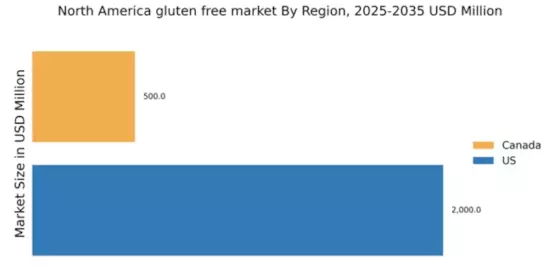
Key markets include California, New York, and Texas, where urban centers drive demand for gluten-free products. The competitive landscape features major players like General Mills, Kraft Heinz, and PepsiCo, all vying for market share. Local dynamics are influenced by a strong retail presence and e-commerce growth, with consumers increasingly seeking gluten-free alternatives in supermarkets and online platforms. The food service industry is also adapting, with restaurants offering gluten-free menus to cater to dietary preferences.
Key markets include Ontario and British Columbia, where urban populations are more inclined to adopt gluten-free diets. The competitive landscape is characterized by both local and international players, including Schär and Enjoy Life Foods, which have established a strong presence. The business environment is favorable, with a growing number of health-focused retailers and restaurants offering gluten-free options. The demand for gluten-free products is also rising in sectors like baking and snacks, reflecting changing consumer preferences.
The gluten free-products market in North America is characterized by a dynamic competitive landscape, driven by increasing consumer awareness regarding health and dietary preferences. Major players such as General Mills (US), Kraft Heinz (US), and PepsiCo (US) are actively positioning themselves through innovation and strategic partnerships. General Mills (US) has focused on expanding its product lines to include more gluten-free options, thereby catering to a growing demographic that prioritizes health-conscious choices. Kraft Heinz (US) has been enhancing its portfolio through acquisitions, aiming to integrate gluten-free products into its mainstream offerings, which reflects a broader trend of inclusivity in food products. PepsiCo (US) is leveraging digital transformation to enhance its supply chain efficiency, ensuring that gluten-free products are readily available to consumers across various channels.The market structure appears moderately fragmented, with a mix of large corporations and smaller niche players. Key tactics employed by these companies include localizing manufacturing to reduce costs and optimize supply chains, which is crucial in maintaining competitive pricing while ensuring product availability. The collective influence of these major players shapes the market dynamics, as they set trends that smaller companies often follow, thereby creating a ripple effect throughout the industry.
In October General Mills (US) launched a new line of gluten-free snacks aimed at children, which is a strategic move to capture the family-oriented segment of the market. This initiative not only diversifies their product offerings but also aligns with the increasing demand for healthier snack options among parents. The introduction of these products is likely to enhance brand loyalty and expand their consumer base in a competitive market.
In September Kraft Heinz (US) announced a partnership with a leading gluten-free flour supplier to enhance its product formulations. This collaboration is significant as it allows Kraft Heinz (US) to improve the quality and taste of its gluten-free offerings, potentially attracting a broader audience. By focusing on ingredient quality, the company positions itself as a premium player in the gluten-free segment, which could lead to increased market share.
In August PepsiCo (US) unveiled a new sustainability initiative aimed at reducing the carbon footprint of its gluten-free product line. This initiative is indicative of a growing trend towards sustainability in food production, which resonates with environmentally conscious consumers. By prioritizing sustainable practices, PepsiCo (US) not only enhances its brand image but also aligns with the values of a significant portion of its customer base, potentially driving sales growth.
As of November the competitive trends in the gluten free-products market are increasingly defined by digitalization, sustainability, and the integration of advanced technologies such as AI. Strategic alliances are becoming more prevalent, as companies recognize the value of collaboration in enhancing product offerings and operational efficiencies. Looking ahead, competitive differentiation is likely to evolve from traditional price-based strategies to a focus on innovation, technology integration, and supply chain reliability. This shift suggests that companies that prioritize these areas will be better positioned to thrive in an increasingly competitive landscape.



The North America Gluten-Free Products Market is experiencing significant growth, with a focus on health and wellness driving consumer demand. Companies like Bob's Red Mill and Enjoy Life Foods are expanding their product lines to cater to the increasing number of consumers preferring gluten-free diets. Recent developments include the rise of innovative gluten-free alternatives, such as those introduced by General Mills and Pillsbury, which aim to replicate traditional baked goods while meeting gluten-free standards. Notably, in August 2023, Annie's Homegrown expanded its organic, gluten-free offerings with new pasta variations to tap into the growing health-conscious segment.
The market also noted a rise in retail availability as more grocery chains prioritize gluten-free products. In the last couple of years, companies such as Schär and Udi's Gluten Free have reportedly seen an uptick in revenue due to heightened awareness and availability, indicating a trend toward gluten-free consumption becoming mainstream. While no significant mergers or acquisitions have been reported recently, developments in product innovation and market expansion strategies continue to shape the landscape of the North America Gluten-Free Products Market.
The Gluten Free Products Market is projected to grow at an 8.28% CAGR from 2025 to 2035, driven by rising health awareness and increasing demand for gluten-free options.
New opportunities lie in:
By 2035, the market is expected to achieve substantial growth, reflecting evolving consumer preferences.
| MARKET SIZE 2024 | 2500.0(USD Million) |
| MARKET SIZE 2025 | 2707.0(USD Million) |
| MARKET SIZE 2035 | 6000.0(USD Million) |
| COMPOUND ANNUAL GROWTH RATE (CAGR) | 8.28% (2025 - 2035) |
| REPORT COVERAGE | Revenue Forecast, Competitive Landscape, Growth Factors, and Trends |
| BASE YEAR | 2024 |
| Market Forecast Period | 2025 - 2035 |
| Historical Data | 2019 - 2024 |
| Market Forecast Units | USD Million |
| Key Companies Profiled | General Mills (US), Kraft Heinz (US), Nestle (CH), PepsiCo (US), Boulder Brands (US), Gluten Free Holdings (US), Schär (IT), Doves Farm (GB), Enjoy Life Foods (US) |
| Segments Covered | Type, Distribution Channel, End User, Form |
| Key Market Opportunities | Rising consumer demand for innovative gluten free-products driven by health consciousness and dietary preferences. |
| Key Market Dynamics | Rising consumer demand for gluten free-products drives innovation and competition among manufacturers in North America. |
| Countries Covered | US, Canada |
The market valuation was $2500.0 Million in 2024.
The market is expected to reach $6000.0 Million by 2035.
The expected CAGR is 8.28% during the forecast period 2025 - 2035.
The cereals segment generated $700.0 Million in 2024, with a potential growth to $1800.0 Million.
Supermarkets generated $1000.0 Million in 2024, while online retail sales were $600.0 Million.
Health-conscious consumers, with a market size of $800.0 Million in 2024, are a key driver.
General Mills is one of the key players in the gluten free-products market.
The snacks segment had a revenue range of $600.0 Million to $1400.0 Million in 2024.
Ready-to-eat products are projected to reach $2500.0 Million by 2035.
Health food stores generated $400.0 Million in 2024, while specialty stores generated $500.0 Million.



Kindly complete the form below to receive a free sample of this Report

“This is really good guys. Excellent work on a tight deadline. I will continue to use you going forward and recommend you to others. Nice job”


“Thanks. It’s been a pleasure working with you, please use me as reference with any other Intel employees.”


“Thanks for sending the report it gives us a good global view of the Betaïne market.”


“Thank you, this will be very helpful for OQS.”


“We found the report very insightful! we found your research firm very helpful. I'm sending this email to secure our future business.”


“I am very pleased with how market segments have been defined in a relevant way for my purposes (such as "Portable Freezers & refrigerators" and "last-mile"). In general the report is well structured. Thanks very much for your efforts.”


“I have been reading the first document or the study, ,the Global HVAC and FP market report 2021 till 2026. Must say, good info! I have not gone in depth at all parts, but got a good indication of the data inside!”


“We got the report in time, we really thank you for your support in this process. I also thank to all of your team as they did a great job.”


“The Automotive 48V ECU Components Procurement Intelligence Study” was a complex project, but the Market Research Future (MRFR) team handled it with quality, agility, and customer-centricity. They delivered all requested data on time and within the agreed scope. The team, including Shubhendra Anand and Rahul Gotadki, was always readily available to clarify questions and swiftly implement necessary adjustments, driving the project to a successful conclusion within a very demanding timeframe.
I would also like to specifically commend Akshay Agarwal for his responsiveness and support at every stage—from our initial inquiry on May 6th through to final delivery on June 18th. His dedication made the entire process seamless.”



