Download Free Sample
Kindly complete the form below to receive a free sample of this Report
North America Healthy Food Market Size, Share, Industry Trend & Analysis Research Report: By Type Outlook (Functional Food, Fortified and Healthy Bakery Products, Healthy Snacks, BFY Foods, Beverages, Chocolates, Others), By Calorie Content Outlook (No calorie, Low calories, Reduced calorie), By Nature Outlook (Non-GMO, GMO), By Fat Content Outlook (No fat, Low fat,, Reduced-fat), By Category Outlook (Conventional, Organic), By Free From Category Outlook (Gluten-Free, Dairy-Free, Soy-Free, Nut-Free, Lactose-Free, Artificial Flavor Free, Artificial Color Free, Others) andBy Distribution Channel Outlook (Store-Based Retailers, Non-Store Retailers)- Forecast to 2035
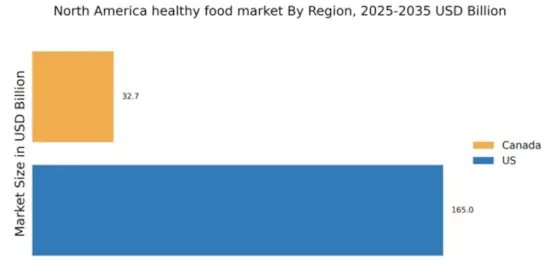
As per Market Research Future analysis, the North America healthy food market Size was estimated at 197.69 USD Billion in 2024. The North America healthy food market is projected to grow from 206.59 USD Billion in 2025 to 320.89 USD Billion by 2035, exhibiting a compound annual growth rate (CAGR) of 4% during the forecast period 2025 - 2035
The North America healthy food market is experiencing a transformative shift towards plant-based and clean label products driven by health consciousness and technological advancements.
| 2024 Market Size | 197.69 (USD Billion) |
| 2035 Market Size | 320.89 (USD Billion) |
| CAGR (2025 - 2035) | 4.5% |
The healthy food market in North America is currently experiencing a notable transformation, driven by evolving consumer preferences and heightened awareness regarding nutrition. Individuals are increasingly prioritizing health-conscious choices, leading to a surge in demand for organic, plant-based, and minimally processed food options. This shift appears to be influenced by a growing understanding of the relationship between diet and overall well-being. As a result, retailers and manufacturers are adapting their offerings to align with these changing consumer behaviors, emphasizing transparency in sourcing and ingredient quality. Moreover, the market is witnessing a rise in innovative products that cater to specific dietary needs, such as gluten-free, keto, and vegan options. This diversification reflects a broader trend towards personalization in food consumption, where consumers seek products that not only meet their health goals but also fit their lifestyle preferences. The emphasis on sustainability is also becoming increasingly prominent, with many brands adopting eco-friendly practices in their production and packaging processes. Overall, the healthy food market is poised for continued growth as it adapts to the dynamic landscape of consumer demands and societal trends.
There is a growing inclination towards plant-based diets among consumers, driven by health benefits and environmental concerns. This trend is reflected in the increasing availability of plant-based alternatives to traditional animal products, appealing to both vegetarians and flexitarians.
Consumers are increasingly seeking transparency in food labeling, favoring products with minimal ingredients and no artificial additives. This clean label movement indicates a desire for authenticity and trust in food sourcing and production.
The demand for tailored nutrition is on the rise, with consumers looking for products that cater to specific dietary needs. This trend encompasses a variety of options, including gluten-free, low-carb, and high-protein foods, reflecting individual health goals.
The growing awareness of health and wellness among consumers is a pivotal driver in the healthy food market. As individuals become more informed about the benefits of nutrition, they are increasingly opting for healthier food choices. This trend is reflected in the rising sales of organic and natural products, which have seen a growth rate of approximately 10% annually in North America. Consumers are now more inclined to read labels and seek out foods that are low in sugar, fat, and artificial ingredients. This shift in consumer behavior is likely to continue, as health education campaigns and social media influence further promote the importance of a balanced diet. Consequently, the healthy food market is experiencing a transformation, with brands adapting their offerings to meet the demand for healthier options.
The increasing demand for convenience foods is reshaping the healthy food market. Busy lifestyles and the need for quick meal solutions have led consumers to seek out ready-to-eat and easy-to-prepare healthy options. This trend is evident in the surge of sales for meal kits and pre-packaged healthy snacks, which have grown by approximately 15% in recent years. Retailers are responding by expanding their offerings of convenient, nutritious products that cater to health-conscious consumers. Additionally, the rise of e-commerce has made it easier for consumers to access a variety of healthy food options from the comfort of their homes. As convenience continues to be a priority, the healthy food market is likely to evolve further, with brands innovating to meet the needs of time-strapped consumers.
Sustainability and ethical consumption are increasingly becoming central themes in the healthy food market. Consumers are more aware of the environmental and social implications of their food choices, leading to a preference for products that are sustainably sourced and ethically produced. This shift is reflected in the growing demand for plant-based foods and organic products, which are perceived as more environmentally friendly. According to recent data, the market for sustainable food is projected to reach $150 billion by 2026 in North America. Brands that prioritize sustainability in their practices are likely to gain a competitive edge, as consumers are willing to pay a premium for products that align with their values. This trend is expected to drive innovation and growth within the healthy food market.
Technological innovations in food production are significantly impacting the healthy food market. Advances in agricultural practices, such as precision farming and vertical farming, are enhancing the efficiency and sustainability of food production. These technologies enable farmers to produce higher yields with fewer resources, thereby reducing costs and environmental impact. Moreover, innovations in food processing, such as cold-pressing and high-pressure processing, help retain the nutritional value of food while extending shelf life. As a result, consumers are gaining access to fresher and more nutritious products. The market for organic food, for instance, is projected to reach $70 billion by 2027, driven by these technological advancements. This evolution in food production is likely to foster a more robust healthy food market in North America.
The influence of social media and celebrity endorsements is a notable driver in the healthy food market. Platforms like Instagram and TikTok have become powerful tools for promoting healthy eating habits and food products. Influencers and celebrities often share their personal experiences with healthy foods, which can significantly sway consumer preferences. This trend has led to a rise in the popularity of specific diets and food brands, as consumers seek to emulate the lifestyles of their favorite public figures. The healthy food market is witnessing a surge in products that are marketed through these channels, with sales of health-focused brands increasing by around 20% annually. As social media continues to shape consumer behavior, the impact on the healthy food market is expected to grow.
In the North America healthy food market, the distribution of market share among various segment values clearly highlights healthy snacks as the dominant player, attracting a large proportion of health-conscious consumers. Functional food follows closely, gaining traction due to its innovative health benefits, fortified bakery products provide necessary nutrients, while beverages, chocolates, and others contribute significantly to the diverse offerings available in the market. Each of these segments introduces unique flavors and health benefits that cater to the evolving consumer preferences. The growth trends within this segment are promising, with healthy snacks leading the charge due to their convenience and on-the-go suitability. The rising awareness of health and wellness has fueled a robust demand for functional foods, which are increasingly being recognized for their contributions to health beyond basic nutrition. As consumers become more ingredient-conscious, the demand for fortified and healthy bakery products continues to rise, along with innovative beverage options that promise functional benefits, thus driving expansion across various product types.
Healthy Snacks: Dominant vs. Functional Food: Emerging
Healthy snacks hold a dominant position in the North America healthy food market, characterized by their appeal to busy lifestyles and the growing trend towards convenient yet nutritious options. This segment includes a variety of products, from nut mixes to organic bars, often emphasizing natural ingredients and health-promoting attributes. On the other hand, functional food is emerging, gaining attention for its remedies and health-enhancing properties, including probiotics and superfoods that cater to consumers seeking specific health outcomes. As the market evolves, the innovation and diversification within these segments reflect the broader shifts towards healthier eating patterns, making them pivotal in shaping consumer choices.
In the current landscape, the 'Low calories' segment holds a significant share of the market, showcasing its established presence among health-conscious consumers. This segment's appeal lies in its ability to provide satisfying options without the guilt of high-calorie counts, making it a straightforward choice for those counting calories or seeking healthier alternatives. The distribution of preferences indicates a strong inclination towards low-calorie products, reflecting a broader trend towards healthier eating habits. Conversely, the 'Reduced calories' segment is emerging as the fastest-growing category within the market. This growth can be attributed to increasing consumer awareness about the advantages of calorie reduction in promoting well-being and weight management. The rising trend of health and wellness has spurred innovations in food products that cater to this need, alongside a shift towards clean eating and transparency in food labeling, further propelling the popularity of reduced-calorie options.
Low calories: Dominant vs. Reduced calories: Emerging
The 'Low calories' segment is characterized by products specifically designed to provide fewer calories while still delivering on taste and satisfaction. It attracts a wide demographic, particularly among individuals who prioritize weight management and healthier lifestyles. This segment benefits from strong marketing and consumer trust in brands that emphasize health benefits. In contrast, the 'Reduced calories' segment is gaining momentum with innovative products that appeal to those seeking both flavor and caloric moderation. This emerging category often integrates natural sweeteners and wholesome ingredients, aiming to capture the attention of consumers seeking healthier indulgence without sacrificing flavor. As awareness about dietary choices grows, both segments are poised for continued evolution.
In the Nature segment, Non-GMO products command a significant share, driven by rising consumer awareness about the benefits of natural foods. As consumers become more health-conscious, the demand for Non-GMO options has soared, leading to its dominance in market share. Conversely, GMO products, while historically less favored, are witnessing a shift as innovation improves their perception among consumers seeking convenience and affordability. Growth trends indicate a fascinating evolution within this segment. Non-GMO products are expected to maintain their stronghold, yet GMO items are emerging as the fastest-growing sector due to advancements in agricultural technology and changing perceptions. The increasing push for sustainable food production and enhanced nutritional profiles is driving this transformation, fostering a more balanced market dynamics in the long run.
Non-GMO: Dominant vs. GMO: Emerging
Non-GMO products are positioned as the dominant force in the food market, appealing to consumers who prioritize clean label ingredients and the avoidance of genetically modified organisms. These products cater to a large demographic that values health, sustainability, and ethical sourcing. On the other hand, GMO products are increasingly being recognized as an emerging option, especially in cost-sensitive segments. They benefit from technological innovations that aim to enhance yield and nutritional content, making them more attractive to a broader consumer base. This duality illustrates a market landscape where both Non-GMO and GMO have essential roles, catering to diverse consumer needs and preferences.
In the North America healthy food market, the 'Low Fat' segment has emerged as the largest player, commanding a significant share among consumers seeking healthier dietary options. This segment has gained momentum due to its perception as a healthier alternative while still providing taste, which appeals strongly to health-conscious buyers. On the other hand, the 'Reduced-Fat' segment is noted for its rapid growth, driven by increasing consumer awareness of health and wellness trends. As people shift towards diets that emphasize lower fat intake, this segment is capitalizing on the demand for products that are both flavorful and healthier. Enhanced marketing strategies and product innovations further accelerate this growth trajectory.
Low Fat (Dominant) vs. Reduced-Fat (Emerging)
The 'Low Fat' segment is characterized by a range of offerings that promise reduced fat content without compromising flavor, making it a dominant choice among health-conscious consumers. Brands in this sector often market their products heavily, appealing to both taste and health benefits. Meanwhile, the 'Reduced-Fat' segment is positioned as an emerging market force, gaining traction as consumers become more educated about dietary fats. This segment presents opportunities for brands willing to innovate, offering reduced-fat options that do not sacrifice taste, aligning with the growing trend of healthier eating.
The market share distribution among the segment values reveals a strong preference for organic food options within the healthy food landscape. Organic products have established themselves as the largest category, driven by consumer awareness toward healthier eating habits and sustainable practices. Conventional foods, while still significant, are rapidly conceding ground as consumers seek transparency and quality in their food choices. Growth trends indicate that while organic food continues to dominate, conventional healthy foods are witnessing a resurgence due to evolving trends and better marketing strategies. Factors like increasing health consciousness and innovative product offerings are boosting the appeal of conventional options, making them the fastest-growing segment. There is a noticeable shift in consumer behavior favoring products positioned as both healthy and affordable, contributing to their rapid growth.
Organic: Dominant vs. Conventional: Emerging
Organic foods are characterized by their adherence to strict farming practices that prohibit synthetic pesticides and fertilizers, appealing to health-conscious consumers. This segment benefits from a well-established reputation for quality and safety, making it a preferred choice for many. In contrast, conventional healthy foods are emerging as formidable competitors, leveraging affordability and accessibility. They often incorporate healthier ingredients into traditional recipes, thus attracting a broader audience seeking a balance between health and cost. The ongoing innovations in the conventional segment, such as fortified products and enhanced nutritional profiles, are enabling it to capture a significant share of the market, positioning itself as an appealing alternative for consumers.
The Free From Category in the healthy food market showcases a dynamic mix of segment values. Currently, Gluten-Free stands out as the largest segment, significantly overshadowing others like Dairy-Free, Nut-Free, and Soy-Free. Each of these segment values presents distinct consumer preferences, with Gluten-Free demonstrating a robust market share due to increasing consumer awareness and demand for gluten-free options, especially among individuals with celiac disease or gluten sensitivity. Dairy-Free continues to emerge as the fastest-growing segment, driven by rising plant-based diet trends and a wider acceptance of alternative dairy products. Factors influencing this growth include changing consumer lifestyles, health conditions requiring dietary restrictions, and an increase in product variety. As these trends continue, the Free From Category is expected to further evolve, reflecting enhanced innovation and consumer-centric offerings.
Gluten-Free (Dominant) vs. Dairy-Free (Emerging)
Gluten-Free has solidified its position as the dominant segment within the Free From Category, benefiting from established consumer familiarity and a diverse product range, including bread, pasta, and snacks. As awareness about gluten's health impacts grows, the demand for Gluten-Free products has surged, compelling manufacturers to innovate. Meanwhile, Dairy-Free is emerging rapidly, appealing to health-conscious consumers and those with lactose intolerance. The surge in variety of dairy alternatives, such as almond, oat, and coconut milk, has spurred growth in this segment, making Dairy-Free an attractive option for both ethical consumers and those seeking healthier choices.
In the healthy food market, store-based retailers command the largest share, serving as the primary destination for consumers seeking nutritious products. These retailers, including supermarkets and health food stores, offer a vast selection of healthy options, enhancing their appeal. Non-store retailers, while smaller in overall market share, have been surging in popularity due to the rise of e-commerce and mobile shopping. The growth trends in this segment reveal that non-store retailers are rapidly gaining traction as consumers become increasingly comfortable with online purchases. The demand for convenient shopping experiences and healthier product options continues to drive this growth. Additionally, promotional strategies and partnerships with health-oriented brands are further solidifying the position of non-store retailers in the market.
Store-Based Retailers: Dominant vs. Non-Store Retailers: Emerging
Store-based retailers are characterized by their physical presence, offering a wide range of healthy food products that cater to the health-conscious consumer. These retailers leverage their established infrastructure and customer loyalty to maintain their dominant status in the market. In contrast, non-store retailers include online platforms and subscription services, appealing to a new generation of consumers who prioritize convenience and variety. As they adopt innovative marketing techniques and enhance their distribution capabilities, non-store retailers are emerging as a crucial segment within the healthy food landscape, redirecting purchasing behaviors towards digital channels.
Key markets include California, New York, and Texas, where urban populations are increasingly seeking healthy food options. The competitive landscape features major players like PepsiCo, General Mills, and Kraft Heinz, all vying for market share. Local dynamics are influenced by a growing trend towards organic and non-GMO products, with retailers expanding their healthy food sections. The food service industry is also adapting, with restaurants offering healthier menu options to meet consumer demand.
Key provinces include Ontario and British Columbia, where urban centers are leading the demand for healthy food products. The competitive landscape features players like Danone and Unilever, who are adapting to local preferences. The market is characterized by a strong emphasis on organic and natural products, with retailers focusing on transparency and sustainability. The food service sector is also evolving, with cafes and restaurants prioritizing health-conscious menu options to attract consumers.
The healthy food market in North America is characterized by a dynamic competitive landscape, driven by increasing consumer demand for nutritious options and a growing awareness of health-related issues. Major players such as Nestle (CH), PepsiCo (US), and General Mills (US) are strategically positioned to capitalize on these trends. Nestle (CH) focuses on innovation in plant-based products, while PepsiCo (US) emphasizes its commitment to sustainability through its "Positive Agriculture" initiative, which aims to promote regenerative farming practices. General Mills (US) is enhancing its portfolio by acquiring smaller health-focused brands, thereby diversifying its offerings and appealing to health-conscious consumers. Collectively, these strategies contribute to a competitive environment that is increasingly centered around health, sustainability, and innovation.Key business tactics employed by these companies include localizing manufacturing and optimizing supply chains to enhance efficiency and responsiveness to market demands. The competitive structure of the market appears moderately fragmented, with a mix of large multinational corporations and smaller niche players. This fragmentation allows for a variety of product offerings, catering to diverse consumer preferences while enabling key players to exert significant influence over market trends.
In October Nestle (CH) announced the launch of a new line of organic snacks aimed at children, reflecting a strategic pivot towards healthier options for younger demographics. This move is likely to strengthen Nestle's market position by appealing to parents seeking nutritious snacks for their children, thereby expanding its consumer base. The introduction of these products aligns with broader trends towards organic and health-oriented food choices, potentially enhancing brand loyalty among health-conscious families.
In September PepsiCo (US) unveiled its partnership with a leading agricultural technology firm to develop sustainable farming solutions. This collaboration is indicative of PepsiCo's commitment to integrating technology into its supply chain, which may enhance its operational efficiency and reduce environmental impact. By investing in sustainable practices, PepsiCo not only addresses consumer concerns regarding environmental sustainability but also positions itself as a leader in responsible food production.
In August General Mills (US) completed the acquisition of a popular plant-based foodbrand, which is expected to bolster its presence in the rapidly growing plant-based segment. This acquisition reflects a strategic focus on expanding product lines to meet the increasing consumer demand for plant-based alternatives. By integrating this brand into its portfolio, General Mills is likely to enhance its competitive edge and appeal to a broader audience seeking healthier food options.
As of November current competitive trends in the healthy food market include a pronounced emphasis on digitalization, sustainability, and the integration of artificial intelligence in product development and supply chain management. Strategic alliances are increasingly shaping the landscape, enabling companies to leverage shared resources and expertise. Looking ahead, competitive differentiation is expected to evolve, with a shift from price-based competition towards innovation, technology, and supply chain reliability. This transition underscores the importance of adaptability and responsiveness to consumer preferences in a rapidly changing market.



The North America Healthy Food Market has observed significant developments recently, with various companies actively participating in market growth and strategic transformations. For example, in October 2023, Conagra Brands announced the launch of several new plant-based products, aiming to capitalize on the growing demand for healthy, sustainable eating. Additionally, PepsiCo's partnership with Farmers Business Network in September 2023 aims to enhance its supply chain for healthier food options, showcasing a dedication to agricultural innovation.
In terms of mergers and acquisitions, Danone completed its acquisition of a small plant-based yogurt company in August 2023, signaling a strategic shift towards plant-forward products. Meanwhile, General Mills announced its acquisition of a local organic snacks brand in July 2023, which aims to strengthen its portfolio in the healthy snacks segment. The market continues to expand as consumer interest in health and wellness products grows, with increased investments seen in organic agriculture and plant-based foods.
This trend significantly impacts the overall valuation of companies like Hain Celestial and Nestle, which are expected to see robust growth in revenues driven by these strategic initiatives and changing consumer preferences.
The Healthy Food Market is projected to grow at a 4.5% CAGR from 2025 to 2035, driven by increasing health awareness, demand for organic products, and innovative food technologies.
New opportunities lie in:
By 2035, the healthy food market is expected to achieve substantial growth, reflecting evolving consumer preferences.
| MARKET SIZE 2024 | 197.69(USD Billion) |
| MARKET SIZE 2025 | 206.59(USD Billion) |
| MARKET SIZE 2035 | 320.89(USD Billion) |
| COMPOUND ANNUAL GROWTH RATE (CAGR) | 4.5% (2025 - 2035) |
| REPORT COVERAGE | Revenue Forecast, Competitive Landscape, Growth Factors, and Trends |
| BASE YEAR | 2024 |
| Market Forecast Period | 2025 - 2035 |
| Historical Data | 2019 - 2024 |
| Market Forecast Units | USD Billion |
| Key Companies Profiled | Nestle (CH), PepsiCo (US), Danone (FR), General Mills (US), Kraft Heinz (US), Unilever (GB), Coca-Cola (US), Mondelez International (US), Hormel Foods (US) |
| Segments Covered | Type, Calorie Content, Nature, Fat Content, Category, Free From Category, Distribution Channel |
| Key Market Opportunities | Growing consumer demand for plant-based alternatives presents a lucrative opportunity in the healthy food market. |
| Key Market Dynamics | Rising consumer demand for plant-based products drives innovation and competition in the healthy food market. |
| Countries Covered | US, Canada |
The healthy food market was valued at $197.69 Billion in 2024.
The market is expected to reach $320.89 Billion by 2035.
The expected CAGR for the market during this period is 4.5%.
Key players include Nestle, PepsiCo, Danone, General Mills, Kraft Heinz, Unilever, Coca-Cola, Mondelez International, and Hormel Foods.
In 2024, the Beverages segment had a valuation of $40.0 Billion.
Organic products were valued at $79.0 Billion, while conventional products reached $118.69 Billion in 2024.
Low-calorie products had a valuation range of $60.0 Billion to $100.0 Billion in 2024.
The gluten-free segment was valued between $30.0 Billion and $50.0 Billion in 2024.
Store-based retailers had a valuation range of $118.85 Billion to $192.0 Billion in 2024.
The healthy snacks segment is projected to grow from $35.0 Billion to $60.0 Billion by 2035.


Kindly complete the form below to receive a free sample of this Report

“This is really good guys. Excellent work on a tight deadline. I will continue to use you going forward and recommend you to others. Nice job”


“Thanks. It’s been a pleasure working with you, please use me as reference with any other Intel employees.”


“Thanks for sending the report it gives us a good global view of the Betaïne market.”


“Thank you, this will be very helpful for OQS.”


“We found the report very insightful! we found your research firm very helpful. I'm sending this email to secure our future business.”


“I am very pleased with how market segments have been defined in a relevant way for my purposes (such as "Portable Freezers & refrigerators" and "last-mile"). In general the report is well structured. Thanks very much for your efforts.”


“I have been reading the first document or the study, ,the Global HVAC and FP market report 2021 till 2026. Must say, good info! I have not gone in depth at all parts, but got a good indication of the data inside!”


“We got the report in time, we really thank you for your support in this process. I also thank to all of your team as they did a great job.”


“The Automotive 48V ECU Components Procurement Intelligence Study” was a complex project, but the Market Research Future (MRFR) team handled it with quality, agility, and customer-centricity. They delivered all requested data on time and within the agreed scope. The team, including Shubhendra Anand and Rahul Gotadki, was always readily available to clarify questions and swiftly implement necessary adjustments, driving the project to a successful conclusion within a very demanding timeframe.
I would also like to specifically commend Akshay Agarwal for his responsiveness and support at every stage—from our initial inquiry on May 6th through to final delivery on June 18th. His dedication made the entire process seamless.”


.webp?v=1787579820)
