×
Request Free Sample ×

Kindly complete the form below to receive a free sample of this Report

* Please use a valid business email

Leading companies partner with us for data-driven Insights

clients tt-cursor
Hero Background

Oral Thin Film Drugs Market

ID: MRFR/Pharma/5085-CR
100 Pages
Rahul Gotadki
October 2018

Oral Thin Film Drugs Market Research Report Information By Product (Fast Dissolving Buccal Film and Sublingual), By Disease Indication (Nausea & Vomiting, Opioid Dependence, Schizophrenia, and Migraine), By Distribution Channel (Retail Pharmacies, Hospital Pharmacies, and Online Drug Stores), And By Region (Europe, Asia-Pacific, North America, And Rest Of The World) – Market Forecast Till 2035

Share:
Download PDF ×

We do not share your information with anyone. However, we may send you emails based on your report interest from time to time. You may contact us at any time to opt-out.

Oral Thin Film Drugs Market Infographic
Purchase Options

Oral Thin Film Drugs Market Summary

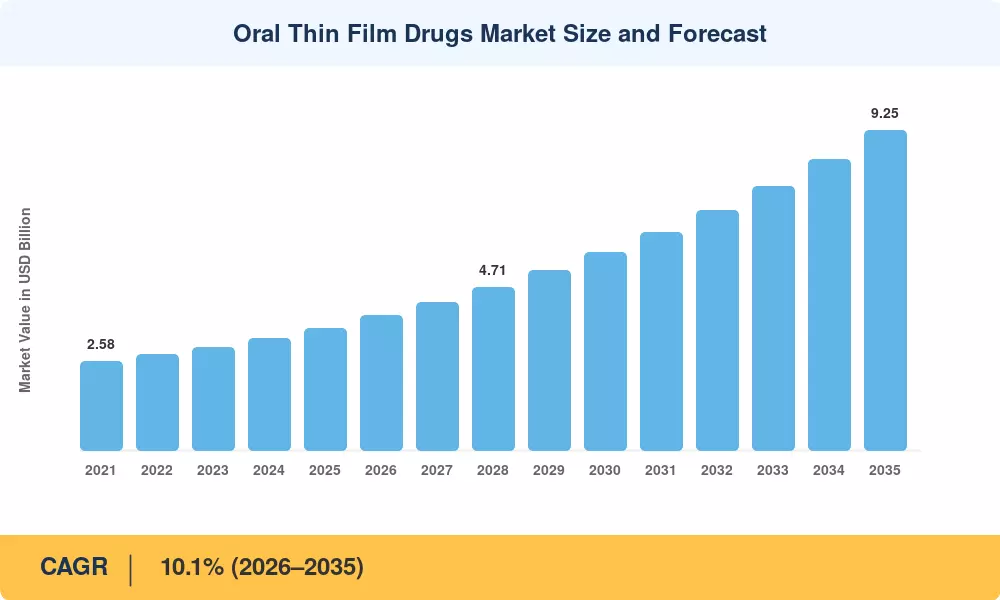
As per MRFR analysis, the Oral Thin Film Drugs Market Size was estimated at 4050.28 USD Million in 2024. The Oral Thin Film Drugs industry is projected to grow from 4362.97 USD Million in 2025 to 9178.15 USD Million by 2035, exhibiting a compound annual growth rate (CAGR) of 7.72 during the forecast period 2025 - 2035.

Key Market Trends & Highlights

The Oral Thin Film Drugs Market is poised for substantial growth driven by technological advancements and increasing demand for convenience.

  • The North American region remains the largest market for oral thin film drugs, driven by a robust healthcare infrastructure.
  • Asia-Pacific is emerging as the fastest-growing region, reflecting a rising demand for innovative drug delivery systems.
  • Pain management is the largest segment, while nausea management is witnessing the fastest growth due to changing patient needs.
  • Key market drivers include the increasing prevalence of chronic diseases and a growing preference for non-invasive drug delivery methods.

Market Size & Forecast

2024 Market Size 4050.28 (USD Million)
2035 Market Size 9178.15 (USD Million)
CAGR (2025 - 2035) 7.72%

Major Players

MediPharm (US), Purdue Pharma (US), Zylera Pharmaceuticals (US), Indivior (GB), Sandoz (DE), Novartis (CH), Teva Pharmaceuticals (IL), Reckitt Benckiser (GB), Boehringer Ingelheim (DE)

Oral Thin Film Drugs Market Trends

The Oral Thin Film Drugs Market is currently experiencing a notable transformation, driven by advancements in drug delivery technologies and increasing consumer preference for convenient medication forms. This market segment is characterized by the development of films that dissolve rapidly in the mouth, offering an alternative to traditional tablets and capsules. The growing demand for non-invasive and easy-to-administer medications is likely to propel the market forward, as patients seek more user-friendly options. Furthermore, the rise in chronic diseases and the need for effective management solutions appear to be influencing the expansion of this market, as oral thin films can facilitate better adherence to treatment regimens. In addition, the Oral Thin Film Drugs Market is witnessing a surge in research and development activities aimed at enhancing the efficacy and bioavailability of drugs. Pharmaceutical companies are increasingly investing in innovative formulations that can cater to diverse therapeutic areas, including pain management, antiemetics, and psychiatric disorders. This trend suggests a shift towards personalized medicine, where tailored drug delivery systems may improve patient outcomes. As the market evolves, regulatory frameworks are also adapting to accommodate these novel delivery methods, potentially fostering a more favorable environment for growth and innovation in the Oral Thin Film Drugs Market.

Rising Demand for Convenience

The Oral Thin Film Drugs Market is seeing a growing preference for convenient medication forms. Patients are increasingly favoring products that are easy to use and require no water for administration. This trend is particularly evident among populations such as children and the elderly, who may struggle with traditional dosage forms. As a result, manufacturers are focusing on developing films that dissolve quickly and are palatable, enhancing patient compliance.

Technological Advancements in Drug Delivery

Innovations in drug delivery technologies are significantly impacting the Oral Thin Film Drugs Market. New methods for formulating and producing thin films are emerging, allowing for improved drug stability and release profiles. These advancements may lead to more effective treatments and broaden the range of applications for oral thin films, potentially addressing various medical conditions more efficiently.

Focus on Personalized Medicine

The shift towards personalized medicine is influencing the Oral Thin Film Drugs Market. As healthcare moves towards tailored treatment approaches, there is an increasing emphasis on developing formulations that meet individual patient needs. This trend may drive the creation of customized oral thin films that cater to specific therapeutic requirements, thereby enhancing treatment efficacy and patient satisfaction.

Oral Thin Film Drugs Market Drivers

Market Growth Projections

The Global Oral Thin Film Drugs Market Industry is projected to experience substantial growth over the next decade. With an estimated market value of 4.05 USD Billion in 2024, the industry is expected to expand to 9.18 USD Billion by 2035. This growth trajectory indicates a compound annual growth rate of 7.72% from 2025 to 2035. Such projections highlight the increasing acceptance and integration of oral thin films in various therapeutic areas, driven by factors such as patient preference, technological advancements, and regulatory support. The market's expansion reflects a broader trend towards innovative drug delivery solutions.

Expansion of Therapeutic Applications

The Global Oral Thin Film Drugs Market Industry is witnessing an expansion in therapeutic applications, which is a key market driver. Originally limited to certain therapeutic areas, oral thin films are now being explored for a broader range of conditions, including pain management, mental health disorders, and infectious diseases. This diversification of applications is likely to attract a wider audience, including healthcare providers and patients seeking alternative delivery methods. The ongoing research and development efforts in this area suggest a promising future for oral thin films, potentially leading to increased market penetration and growth.

Growing Prevalence of Chronic Diseases

The increasing prevalence of chronic diseases globally is a significant driver for the Global Oral Thin Film Drugs Market Industry. Conditions such as diabetes, hypertension, and cardiovascular diseases require consistent medication adherence, which oral thin films can facilitate. These films offer a practical solution for patients who may struggle with traditional dosage forms. The convenience of oral thin films is expected to enhance patient compliance, thereby improving health outcomes. This trend aligns with the projected compound annual growth rate of 7.72% from 2025 to 2035, indicating a robust market response to the rising demand for effective chronic disease management.

Technological Advancements in Drug Formulation

Innovations in drug formulation technology are driving the Global Oral Thin Film Drugs Market Industry forward. Advances in polymer science and manufacturing processes have enabled the development of films that can effectively deliver a wide range of therapeutic agents, including those that are poorly soluble. These technological improvements not only enhance bioavailability but also allow for the incorporation of taste-masking agents, making medications more palatable. As a result, the market is likely to expand significantly, with projections indicating a growth to 9.18 USD Billion by 2035, underscoring the impact of these advancements on patient adherence and overall treatment outcomes.

Rising Demand for Patient-Centric Drug Delivery

The Global Oral Thin Film Drugs Market Industry is experiencing a notable shift towards patient-centric drug delivery systems. Patients increasingly prefer formulations that are easy to administer, particularly those that dissolve quickly and do not require water. This trend is particularly evident in pediatric and geriatric populations, where swallowing difficulties are common. As a result, oral thin films are gaining traction due to their convenience and ease of use. The market is projected to reach 4.05 USD Billion in 2024, reflecting a growing acceptance of these innovative delivery methods among healthcare providers and patients alike.

Regulatory Support for Innovative Drug Delivery Systems

Regulatory bodies are increasingly recognizing the potential of innovative drug delivery systems, including oral thin films, which is positively influencing the Global Oral Thin Film Drugs Market Industry. Initiatives aimed at expediting the approval process for novel formulations encourage pharmaceutical companies to invest in research and development. This regulatory support not only fosters innovation but also enhances market entry for new products. As a result, the industry is likely to witness a surge in new product launches, further driving market growth. The favorable regulatory landscape is expected to contribute to the overall expansion of the market in the coming years.

Market Segment Insights

By Application: Pain Management (Largest) vs. Nausea Management (Fastest-Growing)

The Oral Thin Film Drugs Market is witnessing a diverse distribution of applications, with Pain Management holding the largest share. This segment has become a preferred option for patients seeking effective pain relief due to its ease of administration and rapid onset of action. Meanwhile, Nausea Management has emerged as the fastest-growing segment, driven by increasing incidences of nausea due to rising chronic health conditions and postoperative scenarios, where oral films provide a viable alternative to traditional medications.

Pain Management (Dominant) vs. Nausea Management (Emerging)

Pain Management stands as a dominant application within the Oral Thin Film Drugs Market, primarily due to its ability to provide relief from acute and chronic pain conditions efficiently. The growing acceptance of thin film technology among healthcare providers and patients alike highlights its effectiveness and ease of use. In contrast, Nausea Management is recognized as an emerging segment propelled by a surge in awareness regarding the benefits of rapid absorption and ease of use in diverse patient populations. This segment is particularly appealing to patients undergoing chemotherapy and surgical procedures, where traditional oral medications may not be feasible.

By Formulation Type: Film Coated (Largest) vs. Fast Dissolving (Fastest-Growing)

In the Oral Thin Film Drugs Market, the formulation types exhibit diverse characteristics that cater to specific patient needs and preferences. Film Coated formulations dominate the market, providing effective delivery while ensuring stability and taste masking. Fast Dissolving formulations, however, are rapidly gaining popularity due to their ease of use and effectiveness, particularly among pediatric and geriatric populations. Together, these segments showcase a significant diversity in consumer choice within the market.

Film Coated (Dominant) vs. Fast Dissolving (Emerging)

The Film Coated segment remains dominant in the Oral Thin Film Drugs Market due to its extensive application in delivering solid dosage forms while providing a protective layer against moisture. This formulation type is preferred for its enhanced stability and taste-masking capabilities, addressing patient compliance issues. In contrast, the Fast Dissolving segment is emerging rapidly, spurred by the increasing demand for convenience in medication administration. These films dissolve quickly in the mouth without the need for water, making them ideal for patients who may have difficulty swallowing solid forms. The growth of this segment is driven by technological innovations and the rising focus on patient-centric solutions in the pharmaceutical industry.

By End Use: Pharmaceuticals (Largest) vs. Nutraceuticals (Fastest-Growing)

The Oral Thin Film Drugs Market is segmented into Pharmaceuticals, Nutraceuticals, and Veterinary Medicine. Pharmaceuticals hold the largest share due to the high demand for innovative drug delivery systems, which offer improved patient compliance and bioavailability. Nutraceuticals, while currently smaller, are gaining traction as consumers increasingly seek convenient health supplements, making this segment particularly dynamic. Veterinary Medicine is also a vital segment but remains niche in comparison to the others, as it primarily caters to specific medical needs in animal healthcare.

Pharmaceuticals (Dominant) vs. Nutraceuticals (Emerging)

The Pharmaceuticals segment is characterized by its extensive range of applications in delivering various therapeutic agents effectively. Oral thin films offer advantages like rapid dissolution, dosage accuracy, and ease of use, making them popular among both healthcare professionals and patients. In contrast, the Nutraceuticals segment is emerging with a focus on preventive healthcare and wellness. This market is driven by growing consumer awareness of health benefits associated with dietary supplements, prompting an expansion in product offerings and innovations in delivery methods. Both segments are poised for growth, yet they cater to distinctly different needs and consumer bases.

By Distribution Channel: Online Pharmacy (Largest) vs. Retail Pharmacy (Fastest-Growing)

The Oral Thin Film Drugs Market is witnessing a dynamic distribution landscape with Online Pharmacy taking the largest share. Retail Pharmacy is rapidly expanding its presence, characterized by increasing consumer demand and convenience-driven purchasing choices. In this segment, Online Pharmacy has carved out a significant niche thanks to its ability to provide easy access to products, while Retail Pharmacy thrives on localized service and immediate product availability. As consumers become more comfortable with online shopping, the gap between these two channels continues to narrow. The growth trends in the Oral Thin Film Drugs Market reflect a notable shift towards online platforms, largely influenced by the growing integration of technology in healthcare. The convenience of online pharmacies, along with the rising trend of telemedicine, has initiated a change in consumer purchasing patterns. Retail Pharmacies are adapting by incorporating e-commerce options to stay competitive, indicating that both channels are essential to the overall growth and evolution of drug distribution dynamics in this market.

Online Pharmacy (Dominant) vs. Hospital Pharmacy (Emerging)

Online Pharmacy stands out as the dominant force within the Oral Thin Film Drugs Market. Its extensive network and user-friendly experience have made prescription adherence greater by allowing patients easier access to medications. In contrast, Hospital Pharmacy is emerging as a vital channel, catering to patients in clinical settings who benefit from immediate access to medication during their stay. While Hospital Pharmacy is essential, particularly for in-patient medication management, it faces challenges from the need for faster processing and customer service efficiency. The growth of online pharmacies is reshaping consumer behavior, encouraging Hospital Pharmacies to innovate and collaborate with digital platforms to enhance their service offerings and maintain relevance in this evolving market.

By Patient Demographics: Adult (Largest) vs. Pediatric (Fastest-Growing)

In the Oral Thin Film Drugs Market, the distribution of share among patient demographics reveals that the adult segment currently holds the largest portion. This can be attributed to the growing prevalence of chronic diseases among adults, which increases the utilization of oral thin films for drug delivery. In contrast, the pediatric segment, while smaller in terms of overall share, is emerging rapidly as healthcare providers and parents lean toward more accessible and patient-friendly medication forms for children, positioning it as the fastest-growing demographic in this market.

Adult (Dominant) vs. Pediatric (Emerging)

The adult demographic is the dominant segment within the Oral Thin Film Drugs Market, driven primarily by the high incidence of chronic conditions such as diabetes and hypertension. This segment benefits from established pharmaceutical relationships and a growing acceptance of innovative drug delivery systems. On the other hand, the pediatric segment is emerging quickly, characterized by increasing investments in child-friendly formulations that enhance compliance and ease of administration. This segment's growth is fueled by a greater awareness of the need for effective treatment options tailored to children, coupled with regulatory support for pediatric medications, setting a promising landscape for future development.

Get more detailed insights about Oral Thin Film Drugs Market

Regional Insights

North America : Market Leader in Innovation

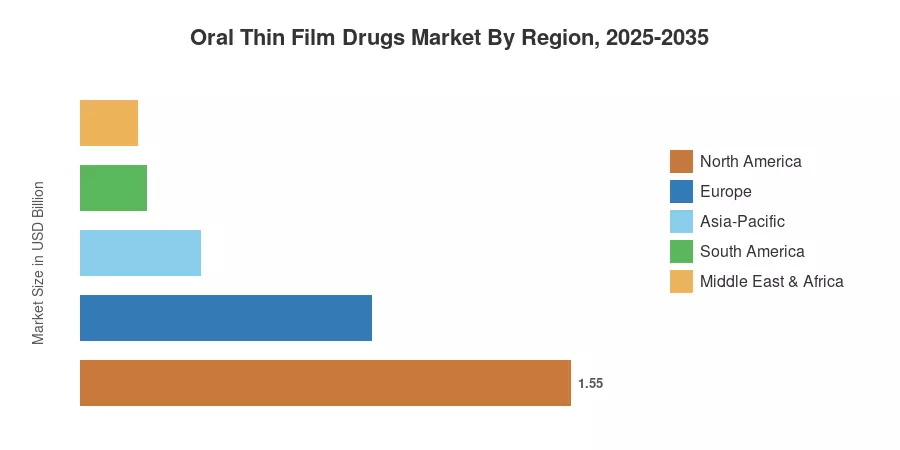
North America continues to lead the Oral Thin Film Drugs Market, holding a significant share of 2025.14M in 2025. The region's growth is driven by increasing demand for convenient drug delivery systems, coupled with supportive regulatory frameworks that encourage innovation. The rise in chronic diseases and the need for effective pain management solutions further propel market expansion. Regulatory bodies are actively promoting the development of novel formulations, enhancing market dynamics. The competitive landscape in North America is robust, featuring key players such as MediPharm, Purdue Pharma, and Teva Pharmaceuticals. These companies are at the forefront of research and development, focusing on enhancing bioavailability and patient compliance. The presence of advanced healthcare infrastructure and a strong emphasis on pharmaceutical innovation solidify North America's position as a market leader in Oral Thin Film Drugs.

Europe : Emerging Market with Growth Potential

Europe's Oral Thin Film Drugs Market is projected to reach 1215.08M by 2025, driven by increasing healthcare expenditure and a growing preference for patient-friendly drug delivery methods. The region benefits from stringent regulatory standards that ensure product safety and efficacy, fostering consumer trust. Additionally, the rise in chronic illnesses and the aging population are significant factors contributing to market growth, as they necessitate innovative therapeutic solutions. Leading countries in this region include Germany, the UK, and France, where major players like Sandoz and Novartis are actively engaged in market expansion. The competitive landscape is characterized by strategic partnerships and collaborations aimed at enhancing product offerings. The European Medicines Agency (EMA) plays a crucial role in regulating and approving new formulations, ensuring that the market remains dynamic and responsive to patient needs.

Asia-Pacific : Rapid Growth and Adoption

The Asia-Pacific region is witnessing significant growth in the Oral Thin Film Drugs Market, projected to reach 675.06M by 2025. This growth is fueled by increasing healthcare access, rising disposable incomes, and a growing awareness of advanced drug delivery systems. Regulatory bodies in countries like India and China are becoming more supportive of innovative pharmaceutical solutions, which is further driving market expansion. The demand for effective pain management and chronic disease treatment is also on the rise, contributing to the market's growth trajectory. Key players in the Asia-Pacific market include Indivior and Boehringer Ingelheim, who are focusing on expanding their product portfolios to cater to the diverse needs of the population. Countries such as Japan and Australia are leading the way in adopting these innovative therapies, creating a competitive landscape that encourages continuous improvement and innovation in drug delivery systems.

Middle East and Africa : Emerging Market with Challenges

The Middle East and Africa (MEA) region is gradually emerging in the Oral Thin Film Drugs Market, with a projected size of 135.0M by 2025. The growth is primarily driven by increasing healthcare investments and a rising demand for effective drug delivery systems. However, challenges such as regulatory hurdles and varying healthcare infrastructure across countries can impede rapid market growth. Nonetheless, the focus on improving healthcare access and the introduction of innovative therapies are expected to enhance market dynamics in the region. Countries like South Africa and the UAE are leading the market, with key players such as Reckitt Benckiser actively participating in the development of oral thin films. The competitive landscape is evolving, with local manufacturers beginning to enter the market, which may lead to increased competition and innovation in drug delivery solutions.

Key Players and Competitive Insights

The Oral Thin Film Drugs Market is characterized by a dynamic competitive landscape, driven by innovation, strategic partnerships, and a growing demand for patient-friendly drug delivery systems. Key players such as MediPharm (US), Purdue Pharma (US), and Indivior (GB) are actively shaping the market through their distinct operational focuses. MediPharm (US) emphasizes innovation in formulation technologies, aiming to enhance bioavailability and patient compliance. Purdue Pharma (US) has been focusing on strategic partnerships to expand its product offerings, while Indivior (GB) is leveraging its expertise in addiction treatment to develop specialized thin film formulations. Collectively, these strategies contribute to a competitive environment that is increasingly focused on patient-centric solutions and technological advancements.

In terms of business tactics, companies are localizing manufacturing to reduce costs and optimize supply chains, which appears to be a critical strategy in maintaining competitive advantage. The market structure is moderately fragmented, with several players vying for market share. This fragmentation allows for diverse product offerings but also intensifies competition among key players, as they seek to differentiate themselves through innovation and operational efficiency.

In November 2025, Teva Pharmaceuticals (IL) announced the launch of a new line of oral thin films designed for rapid disintegration and enhanced patient compliance. This strategic move is significant as it aligns with the growing trend towards more convenient drug delivery methods, potentially capturing a larger share of the market by appealing to both healthcare providers and patients seeking ease of use.

In October 2025, Sandoz (DE) entered into a collaboration with a technology firm to integrate AI into its drug development processes. This partnership is likely to enhance Sandoz's ability to streamline research and development, thereby accelerating the time-to-market for new oral thin film products. Such technological integration may provide Sandoz with a competitive edge in an increasingly tech-driven market.

In September 2025, Reckitt Benckiser (GB) expanded its portfolio by acquiring a small biotech firm specializing in oral thin film formulations. This acquisition is indicative of Reckitt's strategy to diversify its product offerings and strengthen its position in the market. By integrating innovative technologies from the biotech firm, Reckitt may enhance its capabilities in developing effective and patient-friendly drug delivery systems.

As of December 2025, current competitive trends in the Oral Thin Film Drugs Market include a pronounced shift towards digitalization, sustainability, and the integration of AI technologies. Strategic alliances are increasingly shaping the landscape, enabling companies to pool resources and expertise to drive innovation. Looking ahead, competitive differentiation is expected to evolve, with a notable shift from price-based competition to a focus on innovation, technological advancements, and supply chain reliability. This transition underscores the importance of developing unique, patient-centric solutions that not only meet regulatory standards but also enhance overall patient experience.

Key Companies in the Oral Thin Film Drugs Market market include

Industry Developments

October 2022: IntelGenx Corp, a leading pharmaceutical oral thin film drugs delivery Company, partnered with Atai Life Sciences to develop new composition on IntelGenx polymer film technology solutions and utilize Atai's digital therapy for situational settling and adjusting patient support.

August 2022: Libervant Buccal Film from AquestiveTherapeutics has been approved by the FDA for the short-term management of episodic, stereotypical episodes of prevalent seizure activity.

July 2022: TFF Pharmaceuticals increased the size of its facilities by renting a facility in Austin, Texas, to meet the growing demand for oral thin film drugs freezing technologies.

Future Outlook

Oral Thin Film Drugs Market Future Outlook

The Oral Thin Film Drugs Market is projected to grow at a 7.72% CAGR from 2024 to 2035, driven by increasing demand for patient-friendly drug delivery systems and advancements in formulation technologies.

New opportunities lie in:

  • Development of personalized oral thin film formulations for chronic disease management.
  • Expansion into emerging markets with tailored marketing strategies.
  • Partnerships with healthcare providers for integrated patient care solutions.

By 2035, the Oral Thin Film Drugs Market is expected to achieve substantial growth, reflecting evolving consumer preferences and technological advancements.

Market Segmentation

Oral Thin Film Drugs Market End Use Outlook

  • Pharmaceuticals
  • Nutraceuticals
  • Veterinary Medicine

Oral Thin Film Drugs Market Application Outlook

  • Pain Management
  • Nausea Management
  • Cognitive Disorders
  • Nutritional Supplements

Oral Thin Film Drugs Market Formulation Type Outlook

  • Film Coated
  • Fast Dissolving
  • Taste Masked
  • Controlled Release

Oral Thin Film Drugs Market Distribution Channel Outlook

  • Online Pharmacy
  • Retail Pharmacy
  • Hospital Pharmacy

Oral Thin Film Drugs Market Patient Demographics Outlook

  • Pediatric
  • Geriatric
  • Adult

Report Scope

MARKET SIZE 20244050.28(USD Million)
MARKET SIZE 20254362.97(USD Million)
MARKET SIZE 20359178.15(USD Million)
COMPOUND ANNUAL GROWTH RATE (CAGR)7.72% (2024 - 2035)
REPORT COVERAGERevenue Forecast, Competitive Landscape, Growth Factors, and Trends
BASE YEAR2024
Market Forecast Period2025 - 2035
Historical Data2019 - 2024
Market Forecast UnitsUSD Million
Key Companies ProfiledMediPharm (US), Purdue Pharma (US), Zylera Pharmaceuticals (US), Indivior (GB), Sandoz (DE), Novartis (CH), Teva Pharmaceuticals (IL), Reckitt Benckiser (GB), Boehringer Ingelheim (DE)
Segments CoveredApplication, Formulation Type, End Use, Distribution Channel, Patient Demographics
Key Market OpportunitiesAdvancements in drug delivery technologies enhance patient compliance in the Oral Thin Film Drugs Market.
Key Market DynamicsRising demand for patient-friendly drug delivery systems drives innovation in the Oral Thin Film Drugs Market.
Countries CoveredNorth America, Europe, APAC, South America, MEA

Market Highlights

Author
Rahul Gotadki
Assistant Manager

He holds an experience of about 7+ years in Market Research and Business Consulting, working under the spectrum of Life Sciences and Healthcare domains. Rahul conceptualizes and implements a scalable business strategy and provides strategic leadership to the clients. His expertise lies in market estimation, competitive intelligence, pipeline analysis, customer assessment, etc. In addition to the above, his other responsibility includes strategic tracking of high growth markets & advising clients on the potential areas of focus they could direct their business initiatives

Leave a Comment

FAQs

What is the projected growth of the Oral Thin Film Drugs market?

The Oral Thin Film Drugs market is the expected increase in total market value of 9.18 USD billion over a defined forecast period 2025–2035. It is driven by factors such as demand trends, technological advances, regulatory changes, and geographic expansion.

What is the size of the Oral Thin Film Drugs market?

Oral Thin Film Drugs market size was valued at approximately 4.05 billion USD in 2024. This figure will reach 9.18 billion USD covering all regions (America, Europe, Asia, MEA and ROW), focusing its segments / services / distribution channels till 2035.

What is the CAGR of the Oral Thin Film Drugs market?

Oral Thin Film Drugs market is expected to grow at a CAGR of 7.72% between 2025 and 2035.

How much will the Oral Thin Film Drugs market be worth by 2035?

Oral Thin Film Drugs market is expected to be worth of 9.18 billion USD, reflecting growth driven by usage, technology and global demands by the end of 2035.

How will the Oral Thin Film Drugs market perform over the next 10 years?

Over the next 10 years the Oral Thin Film Drugs market is expected to shift from usd billion 4.05 to 9.18 billion USD, led by adoption of advanced tech, demographic trends, regulatory approvals, with potential headwinds from 2025 to 2035.

Which region held the largest market share in the oral thin film drugs market?

North America had the largest share of the market.

Download Free Sample

Kindly complete the form below to receive a free sample of this Report

Compare Licence

×
Features License Type
Single User Multiuser License Enterprise User
Price $4,950 $5,950 $7,250
Maximum User Access Limit 1 User Upto 10 Users Unrestricted Access Throughout the Organization
Free Customization
Direct Access to Analyst
Deliverable Format
Platform Access
Discount on Next Purchase 10% 15% 15%
Printable Versions