North America : Health-Conscious Consumer Base
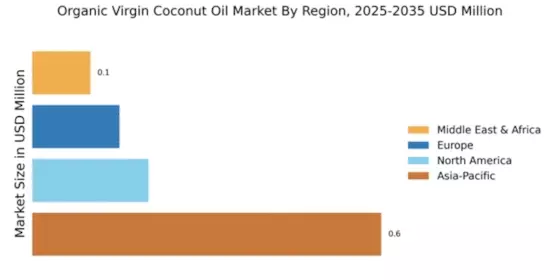
The North American market for organic virgin coconut oil is projected to reach $0.2 billion by 2025, driven by a health-conscious consumer base increasingly seeking natural and organic products. Regulatory support for organic labeling and health claims is enhancing market growth. The rise in veganism and plant-based diets is also contributing to the demand for coconut oil as a versatile cooking ingredient and health supplement. Leading the market are the United States and Canada, where key players like Nutiva, Tropical Traditions, and Dr. Bronner's are prominent. The competitive landscape is characterized by a mix of established brands and emerging players focusing on sustainability and ethical sourcing. The presence of large retail chains further boosts accessibility, making organic virgin coconut oil a staple in many households.
Europe : Sustainable Product Preferences
In Europe, the organic virgin coconut oil market is expected to grow to $0.15 billion by 2025, fueled by increasing consumer awareness of health benefits and sustainability. The EU's stringent regulations on organic labeling and food safety are significant growth drivers. Consumers are increasingly opting for organic products, leading to a shift in purchasing patterns towards health-focused brands. Countries like Germany, the UK, and France are leading the market, with key players such as Coconut Merchant and Viva Naturals gaining traction. The competitive landscape is marked by a focus on quality and transparency, with brands emphasizing ethical sourcing and environmental responsibility. The presence of health food stores and online platforms is enhancing market reach and consumer engagement.
Asia-Pacific : Dominant Market Leader
Asia-Pacific holds the largest share of the organic virgin coconut oil market, projected at $0.6 billion by 2025. The region's growth is driven by rising health consciousness, increasing disposable incomes, and a strong preference for natural products. Countries like the Philippines and Indonesia are significant producers, benefiting from favorable climatic conditions and traditional usage of coconut oil in cooking and health remedies. The competitive landscape is robust, with local brands like Coco & Co. leading the market alongside international players. The presence of established companies and a growing number of startups focusing on organic and premium products are enhancing market dynamics. The region's rich coconut farming heritage supports both local consumption and export opportunities, further solidifying its market position.
Middle East and Africa : Emerging Market Potential
The Middle East and Africa region is witnessing a gradual increase in the organic virgin coconut oil market, projected to reach $0.1 billion by 2025. The growth is driven by rising health awareness and a shift towards natural products among consumers. Regulatory frameworks are evolving to support organic product labeling, which is expected to enhance market credibility and consumer trust. Countries like South Africa and the UAE are leading the market, with a growing number of health food stores and online platforms facilitating access to organic products. The competitive landscape is characterized by both local and international brands, with an increasing focus on quality and sustainability. As consumer preferences shift, the market is poised for further growth, driven by the demand for healthier cooking oils and natural health products.