×
Request Free Sample ×

Kindly complete the form below to receive a free sample of this Report

* Please use a valid business email

Leading companies partner with us for data-driven Insights

clients tt-cursor
Hero Background

Palm Methyl Ester Derivative Market

ID: MRFR/CnM/9979-HCR
110 Pages
Garvit Vyas
October 2025

Palm Methyl Ester Derivative Market Research Report Information By Product Type (Methyl Caprylate, Methyl Laurate, Methyl Myristate, Methyl Palmitate, Methyl Stearate, Methyl Oleate, and Methyl Linoleate), By Application (Soap and Detergent, Personal Care and Cosmetics, Lubricants, and Additives, Biofuel, Textile Treatments, Paints and Coatings, Agriculture and Others) and By Region (North America, Europe, Asia-Pacific, and Rest of The World) - Forecast Till 2035

Share:
Download PDF ×

We do not share your information with anyone. However, we may send you emails based on your report interest from time to time. You may contact us at any time to opt-out.

Palm Methyl Ester Derivative Market Infographic
Purchase Options

Palm Methyl Ester Derivative Market Summary

As per MRFR analysis, the Palm Methyl Ester Derivative Market Size was estimated at 1.1 USD Million in 2024. The Palm Methyl Ester Derivative industry is projected to grow from 1.14 in 2025 to 1.71 by 2035, exhibiting a compound annual growth rate (CAGR) of 4.11 during the forecast period 2025 - 2035.

Key Market Trends & Highlights

The Palm Methyl Ester Derivative Market is experiencing a robust growth trajectory driven by sustainability and innovation.

  • The market is witnessing a pronounced shift towards sustainability, influencing production and consumption patterns.
  • Technological advancements are enhancing the efficiency of palm methyl ester derivatives, particularly in surfactant applications.
  • North America remains the largest market, while Asia-Pacific is emerging as the fastest-growing region for these derivatives.
  • Rising demand for biofuels and innovations in production techniques are key drivers propelling market expansion.

Market Size & Forecast

2024 Market Size 1.1 (USD Million)
2035 Market Size 1.71 (USD Million)
CAGR (2025 - 2035) 4.11%

Major Players

Wilmar International Limited (SG), BASF SE (DE), Cargill, Incorporated (US), IOI Corporation Berhad (MY), Musim Mas Holdings (SG), Kuala Lumpur Kepong Berhad (MY), Sime Darby Plantation Berhad (MY), Emery Oleochemicals (MY)

Palm Methyl Ester Derivative Market Trends

The Palm Methyl Ester Derivative Market is currently experiencing a notable transformation, driven by increasing demand for sustainable and eco-friendly alternatives in various industries. This market encompasses a range of products derived from palm oil, which are utilized in applications such as biodiesel production, personal care formulations, and industrial lubricants. The growing awareness regarding environmental issues and the push for renewable resources appear to be propelling the market forward, as consumers and manufacturers alike seek greener options. Furthermore, regulatory frameworks promoting the use of bio-based products are likely to enhance market growth, creating opportunities for innovation and expansion within the sector. In addition to sustainability, the Palm Methyl Ester Derivative Market is influenced by advancements in technology and production processes. Innovations in extraction and processing techniques may lead to improved efficiency and cost-effectiveness, thereby attracting more players to the market. As the industry evolves, collaboration between stakeholders, including producers, researchers, and end-users, seems essential for fostering growth and addressing challenges. Overall, the Palm Methyl Ester Derivative Market is poised for a dynamic future, characterized by a blend of environmental consciousness and technological progress.

Sustainability Focus

The emphasis on sustainable practices is reshaping the Palm Methyl Ester Derivative Market. As consumers become more environmentally conscious, there is a growing preference for products that are derived from renewable resources. This trend is prompting manufacturers to innovate and develop eco-friendly alternatives, thereby enhancing their market appeal.

Technological Advancements

Technological progress in extraction and processing methods is significantly impacting the Palm Methyl Ester Derivative Market. Enhanced techniques are likely to improve production efficiency and reduce costs, which may attract new entrants and stimulate competition within the sector.

Regulatory Support

Supportive regulatory frameworks are playing a crucial role in the growth of the Palm Methyl Ester Derivative Market. Governments worldwide are implementing policies that encourage the use of bio-based products, which could lead to increased demand and investment in this sector.

Palm Methyl Ester Derivative Market Drivers

Rising Demand for Biofuels

The Global Palm Methyl Ester Derivative Market Industry is experiencing a surge in demand for biofuels, driven by increasing environmental concerns and the need for sustainable energy sources. Governments worldwide are implementing policies to promote renewable energy, which has led to a significant rise in the use of palm methyl esters as biofuels. For instance, the market is projected to reach 1.63 USD Billion in 2024, reflecting a growing acceptance of biofuels in various sectors, including transportation and industrial applications. This trend indicates a shift towards greener alternatives, positioning palm methyl esters as a viable solution in the global energy landscape.

Increasing Awareness of Health Benefits

The Global Palm Methyl Ester Derivative Market Industry is benefiting from a growing awareness of the health benefits associated with palm methyl esters. These derivatives are recognized for their potential to improve skin health and provide moisturizing properties, which are increasingly valued by consumers. As the trend towards health-conscious products continues to rise, manufacturers are incorporating palm methyl esters into formulations for dietary supplements and functional foods. This shift is likely to enhance market growth, as consumers seek products that align with their health and wellness goals. The increasing focus on health benefits positions palm methyl esters favorably in the global market.

Regulatory Support for Sustainable Practices

The Global Palm Methyl Ester Derivative Market Industry benefits from robust regulatory frameworks that encourage sustainable practices in various industries. Governments are increasingly mandating the use of renewable resources, which bolsters the demand for palm methyl esters as eco-friendly alternatives. For example, initiatives aimed at reducing carbon emissions and promoting sustainable agriculture are likely to enhance the market's growth trajectory. The anticipated compound annual growth rate (CAGR) of 6.32% from 2025 to 2035 reflects the positive impact of these regulations on the palm methyl ester derivatives market, positioning it favorably within the global sustainability agenda.

Growing Applications in Personal Care Products

The Global Palm Methyl Ester Derivative Market Industry is witnessing an expansion in the personal care sector, where palm methyl esters are increasingly utilized as emollients and surfactants. These derivatives offer excellent skin-conditioning properties, making them desirable in formulations for cosmetics and skincare products. As consumer preferences shift towards natural and sustainable ingredients, manufacturers are incorporating palm methyl esters to meet these demands. This trend is expected to contribute to the market's growth, with projections indicating a potential increase to 3.2 USD Billion by 2035. The versatility of palm methyl esters in personal care applications underscores their significance in the global market.

Technological Advancements in Production Processes

The Global Palm Methyl Ester Derivative Market Industry is poised for growth due to ongoing technological advancements in production processes. Innovations in extraction and refining techniques are enhancing the efficiency and yield of palm methyl esters, making them more cost-effective and accessible. These advancements not only improve product quality but also reduce environmental impact, aligning with global sustainability goals. As production becomes more streamlined, the market is likely to attract new players and investment, further driving growth. The combination of technology and sustainability is expected to play a crucial role in shaping the future of the palm methyl ester derivatives market.
Market Segment Insights

By Application: Surfactants (Largest) vs. Fuel Additives (Fastest-Growing)

In the Palm Methyl Ester Derivative Market, the application segment shows a diverse distribution of usage among different categories. Surfactants hold the largest market share due to their extensive applicability in personal care products, agrochemicals, and industrial applications. Other significant segments include lubricants and detergents, which utilize palm methyl esters to enhance performance and environmental benefits. Fuel additives, cosmetics, and emerging sectors also contribute to the growth of this market, showcasing the versatility of palm methyl esters across various applications. As sustainability concerns rise and consumers prioritise eco-friendly products, the palm methyl ester derivatives' applications are evolving. Fuel additives are recognized as the fastest-growing segment, driven by increasing demand for renewable energy sources and cleaner fuels. Similarly, the cosmetics sector is witnessing heightened interest in formulations that incorporate natural ingredients, leading to robust growth in that category. Overall, market dynamics are shifting, fueled by innovations and sustainable practices, indicating a promising trajectory for these applications.

Surfactants (Dominant) vs. Cosmetics (Emerging)

Surfactants represent the dominant application in the Palm Methyl Ester Derivative Market, primarily due to their functionality in enhancing wetting, cleaning, and emulsifying capabilities. They are widely used in household and industrial detergents, personal care products, and even agricultural applications, emphasizing their adaptability and crucial role in formulations. The demand for biodegradable and sulfate-free surfactants is prompting manufacturers to adopt palm-based alternatives, aligning with consumer preferences for sustainable ingredients. In contrast, the cosmetics segment is emerging rapidly, as consumers gravitate toward products made from natural and plant-based components for skin, hair, and personal care. This segment is characterized by an increasing trend of integrating palm methyl esters into formulations for their moisturizing and emollient properties, thus driving innovation and expansion within the market.

By End Use: Automotive (Largest) vs. Personal Care (Fastest-Growing)

The Palm Methyl Ester Derivative Market showcases a diverse distribution of end-use segments, with the automotive industry maintaining the largest market share. This segment benefits from the increasing demand for biodiesel and sustainable fuel alternatives, which align with global environmental initiatives. The industrial segment follows closely, fueled by the rising use of palm methyl esters in lubricants and industrial oils. Meanwhile, sectors like household and agriculture are also significant, reflecting growing consumer preferences for biodegradable and eco-friendly products. As the market evolves, the personal care segment is rapidly gaining traction due to rising awareness regarding sustainable ingredients in cosmetics and personal hygiene products. This sector's expansion is driven by a shift towards natural and organic formulations. Moreover, the agricultural sector's adoption of palm methyl esters as bio-based pesticides and fertilizers contributes to its overall growth, linked to increasing emphasis on sustainable farming practices.

Automotive: Dominant vs. Personal Care: Emerging

The automotive segment of the Palm Methyl Ester Derivative Market is characterized by its dominance due to the widespread adoption of biodiesel as a renewable fuel alternative. This segment benefits from stringent regulations on vehicle emissions, encouraging manufacturers to seek sustainable solutions. As consumers become more environmentally conscious, automakers are increasingly incorporating palm-derived biofuels into their fleets. In contrast, the personal care segment, while emerging, is experiencing explosive growth, driven by consumer demand for eco-friendly and sustainably sourced ingredients. Manufacturers are responding to this demand by formulating products with palm methyl esters for their emollient properties, making them ideal for skin care and cosmetics. Although automotive remains the largest segment, personal care's rapid growth trajectory indicates a significant shift towards sustainability across multiple industries.

By Source: Palm Oil (Largest) vs. Sustainable Palm Oil (Fastest-Growing)

In the Palm Methyl Ester Derivative Market, the source segment is dominated by Palm Oil, which holds the largest market share due to its well-established supply chain and extensive applications in various industries. Following closely are Palm Kernel Oil and Waste Cooking Oil, which also make significant contributions to the overall market. Sustainable Palm Oil has begun to capture attention, reflecting a growing preference for environmentally friendly practices, while Non-Palm Sources continue to emerge as viable alternatives.

Palm Oil (Dominant) vs. Sustainable Palm Oil (Emerging)

Palm Oil is the dominant source in the Palm Methyl Ester Derivative Market, primarily due to its cost-effectiveness, abundant supply, and versatile use across multiple applications, including food, cosmetics, and biodiesel. It benefits from established infrastructure and a mature market. In contrast, Sustainable Palm Oil is gaining traction as an emerging source, appealing to environmentally conscious consumers and industries. This trend is driven by increased awareness of sustainability and eco-friendly practices, pushing manufacturers to adopt responsible sourcing. As the demand for responsible and traceable ingredients grows, Sustainable Palm Oil is positioned to play a critical role in meeting the expectations of consumers and regulators alike.

By Formulation Type: Liquid (Largest) vs. Emulsified (Fastest-Growing)

In the Palm Methyl Ester Derivative Market, the formulation type segment showcases a diverse array of product forms. Liquid formulation dominates the market, holding the largest share due to its versatility and wide-ranging applications across various industries, including personal care and biofuels. Solid and powdered formulations also have a notable presence, appealing to niche markets, while emulsified products are gaining traction in response to changing consumer preferences for ease of use and integration in formulations. The growth trends within this segment reveal distinct dynamics, where emulsified products are emerging rapidly as manufacturers innovate to meet the demands for more stable and effective formulations. Increased awareness and regulation surrounding sustainability and environmental impact drive the demand for palm methyl ester derivatives, especially as companies look to leverage the benefits of liquid and emulsified forms that offer enhanced performance and ecological benefits. Factors such as consumer preferences for sustainable sourcing are also pushing solid and concentrated formulations into the spotlight, boosting their market appeal and potential for broader adoption.

Liquid (Dominant) vs. Emulsified (Emerging)

Liquid formulations are well-established as the dominant form in the Palm Methyl Ester Derivative Market, lauded for their adaptability and ease of application. They serve a multitude of industries, primarily in personal care, industrial lubricants, and biofuels, providing excellent performance with greater flexibility in formulation. In contrast, emulsified products, though still emerging, are rapidly capturing attention due to their ability to seamlessly blend with other ingredients, enhancing product stability and functionality. Manufacturers are increasingly focusing on research and development to optimize emulsified formulations that cater to the evolving needs of consumers seeking sustainable and effective solutions. The potential for emulsified products in various applications, including cleaning agents and cosmetics, signals a promising trajectory for growth.

By Market Type: B2B (Largest) vs. Retail (Fastest-Growing)

The Palm Methyl Ester Derivative Market showcases a diverse distribution among various market types. The B2B sector stands out as the largest segment, capturing a significant portion of the total market due to its strong demand from industrial applications such as biodiesel production and chemical manufacturing. On the other hand, the Retail segment is gaining traction, reflecting a shift in consumer preferences for sustainable products in personal care and household applications, which contributes to its growing market share.

B2B (Dominant) vs. Retail (Emerging)

The B2B market type in the Palm Methyl Ester Derivative Market is characterized by extensive partnerships with industries that require large volumes of palm methyl esters for production processes. Its stronghold is due to established supply chains and long-term contracts, which foster stability and demand continuity. Conversely, the Retail segment, while smaller, is recognized as an emerging force, representing the increasing willingness of consumers to purchase environmentally friendly products. This growth is propelled by rising awareness of sustainability and health benefits, leading retailers to expand their offerings of palm methyl ester derivatives in eco-conscious markets.

Get more detailed insights about Palm Methyl Ester Derivative Market

Regional Insights

North America : Emerging Market Potential

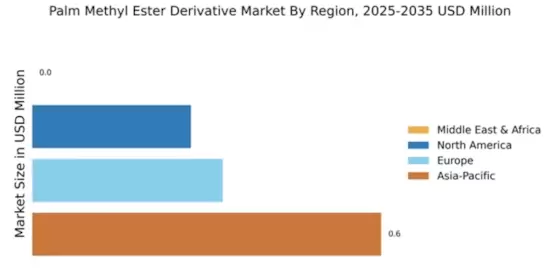
The North American market for palm methyl ester derivatives is poised for growth, driven by increasing demand for sustainable and bio-based products. With a market size of $0.2 billion, the region is witnessing a shift towards eco-friendly alternatives in various industries, including automotive and personal care. Regulatory support for renewable energy and biofuels is further catalyzing this trend, as companies seek to comply with environmental standards and consumer preferences for greener products. Leading the charge in this market are key players such as Cargill, Incorporated and BASF SE, who are investing in innovative solutions to meet the rising demand. The U.S. and Canada are the primary markets, with a focus on developing sustainable supply chains. As consumer awareness grows, the competitive landscape is expected to evolve, with more companies entering the space to capitalize on the opportunities presented by palm methyl esters.

Europe : Sustainability Focused Market

Europe is a significant player in the palm methyl ester derivative market, with a market size of €0.25 billion. The region's growth is largely driven by stringent environmental regulations and a strong push towards sustainable practices. The European Union's Renewable Energy Directive encourages the use of biofuels, which is a key driver for palm methyl esters. This regulatory framework not only supports market growth but also aligns with consumer demand for eco-friendly products. Germany, France, and the Netherlands are leading countries in this market, with major companies like BASF SE and Wilmar International Limited actively participating. The competitive landscape is characterized by innovation and collaboration among industry players to develop sustainable solutions. As the market matures, the focus on quality and sustainability will likely intensify, further enhancing the region's position in the global market.

Asia-Pacific : Dominant Market Leader

Asia-Pacific holds the largest share of the palm methyl ester derivative market, accounting for $0.6 billion. The region's growth is fueled by rising industrialization, urbanization, and increasing demand for biofuels. Countries like Malaysia and Indonesia are key producers, benefiting from abundant palm oil resources. Regulatory initiatives promoting renewable energy and sustainable practices are also significant growth drivers, aligning with global trends towards eco-friendly products. The competitive landscape is robust, with major players such as IOI Corporation Berhad and Musim Mas Holdings leading the market. The presence of these companies ensures a steady supply of palm methyl esters, catering to both domestic and international markets. As the region continues to innovate and expand its production capabilities, it is expected to maintain its dominance in the global market for palm methyl esters.

Middle East and Africa : Emerging Market Opportunities

The Middle East and Africa region represents a nascent market for palm methyl ester derivatives, with a market size of $0.05 billion. The growth potential is significant, driven by increasing interest in biofuels and sustainable products. As countries in this region seek to diversify their energy sources and reduce reliance on fossil fuels, palm methyl esters are gaining traction as a viable alternative. Regulatory frameworks are beginning to support this transition, albeit at a slower pace compared to other regions. Countries like South Africa and Kenya are emerging as key players in this market, with local companies exploring opportunities in biofuels. The competitive landscape is still developing, with a few established players and new entrants looking to capitalize on the growing demand. As awareness of sustainability increases, the market is expected to evolve, presenting new opportunities for investment and growth in palm methyl esters.

Key Players and Competitive Insights

The Palm Methyl Ester Derivative Market is currently characterized by a dynamic competitive landscape, driven by increasing demand for sustainable and bio-based products. Key players such as Wilmar International Limited (SG), BASF SE (DE), and Cargill, Incorporated (US) are strategically positioning themselves through innovation and regional expansion. Wilmar International Limited (SG) has focused on enhancing its production capabilities, while BASF SE (DE) emphasizes research and development to create high-performance products. Cargill, Incorporated (US) is actively pursuing partnerships to strengthen its supply chain, which collectively shapes a competitive environment that is increasingly focused on sustainability and technological advancement.

The market structure appears moderately fragmented, with several key players exerting influence over various segments. Companies are adopting tactics such as localizing manufacturing and optimizing supply chains to enhance efficiency and reduce costs. This competitive structure allows for a diverse range of products and innovations, as companies strive to meet the evolving demands of consumers and regulatory standards.

In November 2025, Wilmar International Limited (SG) announced the launch of a new line of palm methyl ester derivatives aimed at the personal care sector. This strategic move is significant as it not only diversifies their product offerings but also aligns with the growing consumer preference for sustainable ingredients in personal care products. The introduction of these derivatives is expected to enhance Wilmar's market share in this niche segment, reflecting a broader trend towards sustainability in consumer goods.

In October 2025, BASF SE (DE) unveiled a partnership with a leading technology firm to develop AI-driven solutions for optimizing the production of palm methyl esters. This collaboration is indicative of the increasing integration of digital technologies in manufacturing processes, which could lead to enhanced efficiency and reduced environmental impact. The strategic importance of this partnership lies in its potential to position BASF as a leader in innovation within the market, setting a benchmark for competitors.

In September 2025, Cargill, Incorporated (US) expanded its operations in Southeast Asia by acquiring a local manufacturer specializing in palm methyl esters. This acquisition is pivotal as it not only increases Cargill's production capacity but also strengthens its foothold in a rapidly growing market. The strategic implications of this move suggest a commitment to meeting regional demand while enhancing supply chain reliability.

As of December 2025, current trends in the Palm Methyl Ester Derivative Market indicate a shift towards digitalization, sustainability, and AI integration. Strategic alliances are increasingly shaping the competitive landscape, allowing companies to leverage shared resources and expertise. Looking ahead, competitive differentiation is likely to evolve from traditional price-based competition to a focus on innovation, technology, and supply chain reliability, reflecting the industry's response to consumer demands and regulatory pressures.

Key Companies in the Palm Methyl Ester Derivative Market market include

Industry Developments

In August 2023, Carotino Group announced a collaboration with Ecogreen Oleochemicals to enhance the production of palm methyl ester derivatives, which was when such news was announced. This collaboration intends to enhance the supply chain and enhance the market share of sustainable palm oil products.

In October 2023, Wilmar International announced its new correlation with Kao Corporation in order to find new ways of consuming palm methyl ester derivatives in cosmetics. This collaboration seeks to create new products that comply with some of the new demands from consumers in terms of sustainability.

In November 2023, Vantage Specialty Ingredients made a strategic investment in Peter Cremer, North America, for the production of palm methyl ester derivatives. This partnership aims to leverage the oleochemical competencies of the two companies to target the emerging markets of biodiesel and personal care.

In January 2024, Future Prelude Sdn Bhd and PMC Biogenix agreed to work collaboratively in their war on developing innovative biodiesel using the deterioration of palm methyl ester. This partnership seeks to foster sustainable and innovative biofuels.

In August 2023, Sime Darby Plantation published that it was merging AAK AB, one of the companies that specialize in vegetable oils and fats. In chemical engineering, this merger would allow them to add more specialty oils, including derivatives of palm methyl ester to the global market, raising needs in both food products and non-food ones.

In December 2023, Procter & Gamble Company merged with Carotino Sdn Bhd in a bid to expand the supply chain of palm-derived ingredients with a special focus on producing sustainable Palm Methyl Esters for its extensive range of personal care products. Such a merger is in agreement with Procter & Gamble's policy on sustainable development and responsible procurement.

Future Outlook

Palm Methyl Ester Derivative Market Future Outlook

The Palm Methyl Ester Derivative Market is projected to grow at a 4.11% CAGR from 2024 to 2035, driven by increasing demand for sustainable alternatives and regulatory support.

New opportunities lie in:

  • Expansion into bio-lubricants for automotive applications.
  • Development of customized formulations for industrial cleaning agents.
  • Partnerships with renewable energy firms for co-product utilization.

By 2035, the market is expected to solidify its position as a leader in sustainable chemical solutions.

Market Segmentation

Palm Methyl Ester Derivative Market Source Outlook

  • Palm Oil
  • Palm Kernel Oil
  • Waste Cooking Oil
  • Sustainable Palm Oil
  • Non-Palm Sources

Palm Methyl Ester Derivative Market End Use Outlook

  • Automotive
  • Industrial
  • Household
  • Personal Care
  • Agriculture

Palm Methyl Ester Derivative Market Application Outlook

  • Surfactants
  • Lubricants
  • Fuel Additives
  • Cosmetics
  • Detergents

Palm Methyl Ester Derivative Market Market Type Outlook

  • B2B
  • B2C
  • Wholesale
  • Retail
  • Online

Palm Methyl Ester Derivative Market Formulation Type Outlook

  • Liquid
  • Solid
  • Emulsified
  • Concentrated
  • Powdered

Report Scope

MARKET SIZE 20241.1(USD Million)
MARKET SIZE 20251.14(USD Million)
MARKET SIZE 20351.71(USD Million)
COMPOUND ANNUAL GROWTH RATE (CAGR)4.11% (2024 - 2035)
REPORT COVERAGERevenue Forecast, Competitive Landscape, Growth Factors, and Trends
BASE YEAR2024
Market Forecast Period2025 - 2035
Historical Data2019 - 2024
Market Forecast UnitsUSD Million
Key Companies ProfiledWilmar International Limited (SG), BASF SE (DE), Cargill, Incorporated (US), IOI Corporation Berhad (MY), Musim Mas Holdings (SG), Kuala Lumpur Kepong Berhad (MY), Sime Darby Plantation Berhad (MY), Emery Oleochemicals (MY)
Segments CoveredApplication, End Use, Source, Formulation Type, Market Type
Key Market OpportunitiesGrowing demand for sustainable biofuels drives innovation in the Palm Methyl Ester Derivative Market.
Key Market DynamicsRising demand for sustainable alternatives drives innovation in Palm Methyl Ester Derivative applications across various industries.
Countries CoveredNorth America, Europe, APAC, South America, MEA

FAQs

How much is the Palm Methyl Ester Derivative market?

1.5 Billion (2021)

What is the growth rate of the Palm Methyl Ester Derivative market?

5.92%

Which region held the largest share in the Palm Methyl Ester Derivative market?

Asia-Pacific

Who are the key players in the Palm Methyl Ester Derivative market?

Musim Mas, KLK Oleo, Emery Oleochemicals Group, Carotino Group, Apical Group, Asian Agri, Ecogreen Oleochemicals, Oleon NV, VVF LLC, and Kao Corporation

Which product type led the Palm Methyl Ester Derivative market?

Methyl Oleate

Which application had the largest share in the Palm Methyl Ester Derivative market?

Personal Care & Cosmetics

Download Free Sample

Kindly complete the form below to receive a free sample of this Report

Compare Licence

×
Features License Type
Single User Multiuser License Enterprise User
Price $4,950 $5,950 $7,250
Maximum User Access Limit 1 User Upto 10 Users Unrestricted Access Throughout the Organization
Free Customization
Direct Access to Analyst
Deliverable Format
Platform Access
Discount on Next Purchase 10% 15% 15%
Printable Versions