Shift Towards Cleaner Fuels
The Global Pet Coke Market Industry is witnessing a shift towards cleaner fuels as industries seek to reduce their carbon footprints. While pet coke is a fossil fuel, its high energy content and lower emissions compared to other coal types make it a preferred choice for many manufacturers. This transition aligns with global sustainability goals, as companies increasingly adopt cleaner energy sources. The market's growth is likely to be bolstered by regulatory frameworks encouraging the use of lower-emission fuels, thereby enhancing the appeal of pet coke in various industrial applications. This trend indicates a potential for innovation in the sector, as companies explore ways to optimize pet coke usage.
Growth in Aluminum Production
The Global Pet Coke Market Industry is significantly influenced by the aluminum production sector, which utilizes pet coke as a key component in the production of anodes. With the increasing demand for aluminum in various applications, including automotive and construction, the need for pet coke is projected to rise. The market's growth is underscored by the anticipated increase in aluminum production, which is expected to drive the demand for pet coke as a crucial raw material. This trend suggests that the Global Pet Coke Market Industry will continue to thrive, particularly as aluminum production is forecasted to expand in the coming years.
Rising Demand from Cement Industry
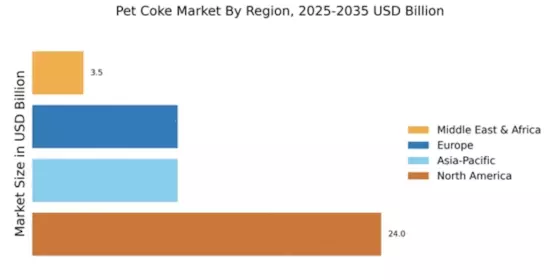
The Global Pet Coke Market Industry experiences heightened demand from the cement sector, which utilizes pet coke as a cost-effective fuel alternative. In 2024, the market is valued at 47.5 USD Billion, driven by the cement industry's need for energy-efficient solutions. Pet coke's high calorific value and low ash content make it an attractive option for cement manufacturers aiming to reduce production costs while maintaining quality. As infrastructure projects proliferate globally, the cement industry's reliance on pet coke is likely to grow, further propelling the market's expansion. This trend indicates a robust future for pet coke, particularly as the industry seeks sustainable energy sources.
Increasing Energy Needs in Emerging Economies
The Global Pet Coke Market Industry is poised for growth due to the rising energy needs in emerging economies. As these nations industrialize, their demand for energy-intensive products, including cement and aluminum, increases. Pet coke serves as a vital energy source, providing a cost-effective solution for industries striving to meet escalating energy demands. The market is projected to reach 97.2 USD Billion by 2035, reflecting the significant role of pet coke in supporting industrial growth in these regions. This trend suggests that the Global Pet Coke Market Industry will continue to expand, driven by the energy requirements of developing economies.
Technological Advancements in Pet Coke Processing
The Global Pet Coke Market Industry benefits from ongoing technological advancements in pet coke processing techniques. Innovations aimed at improving the efficiency of pet coke utilization are emerging, enhancing its appeal across various sectors. For instance, advancements in gasification and carbon capture technologies may enable more sustainable use of pet coke, aligning with global environmental goals. These developments could potentially increase the market's attractiveness to industries seeking to balance energy needs with sustainability. As technology continues to evolve, the Global Pet Coke Market Industry may witness a transformation that enhances the efficiency and environmental compatibility of pet coke.