×
Request Free Sample ×

Kindly complete the form below to receive a free sample of this Report

* Please use a valid business email

Leading companies partner with us for data-driven Insights

clients tt-cursor
Hero Background

Pharmaceutical Glass Packaging Market

ID: MRFR/PCM/3741-CR
143 Pages
Varsha More
December 2024

Pharmaceutical Glass Packaging Market Research Report Information by Product Type (Vials, Bottles & Jars, Cartridges & Syringes, Ampoules), by Material Type (Type I, Type II, Type III), by Application (Generic Drugs, Branded Drugs, Biological Drugs), and by Region (North America, Europe, Asia-Pacific, Middle East & Africa, and South America) –Market Forecast Till 2035

Share:
Download PDF ×

We do not share your information with anyone. However, we may send you emails based on your report interest from time to time. You may contact us at any time to opt-out.

Pharmaceutical Glass Packaging Market Infographic
Purchase Options

Pharmaceutical Glass Packaging Market Summary

As per MRFR analysis, the Pharmaceutical Glass Packaging Market was estimated at 22913.06 USD Million in 2024. The Pharmaceutical Glass Packaging industry is projected to grow from 24590.35 USD Million in 2025 to 49840.36 USD Million by 2035, exhibiting a compound annual growth rate (CAGR) of 7.32 during the forecast period 2025 - 2035.

Key Market Trends & Highlights

The Pharmaceutical Glass Packaging Market is poised for growth driven by sustainability and technological advancements.

  • Sustainability initiatives are increasingly influencing packaging choices in the pharmaceutical sector.
  • Technological advancements in glass manufacturing are enhancing product safety and efficiency.
  • Customization and specialization in packaging solutions are becoming essential for meeting diverse client needs.
  • The rising demand for biopharmaceuticals and consumer preference for sustainable packaging are key drivers of market expansion.

Market Size & Forecast

2024 Market Size 22913.06 (USD Million)
2035 Market Size 49840.36 (USD Million)
CAGR (2025 - 2035) 7.32%

Major Players

Schott AG (DE), Gerresheimer AG (DE), Nipro Corporation (JP), Owen Mumford Limited (GB), Ardagh Group (IE), Amcor plc (AU), Bormioli Pharma S.p.A. (IT), Stölzle-Oberglas GmbH (AT), Saverglass (FR)

Pharmaceutical Glass Packaging Market Trends

The Pharmaceutical Glass Packaging Market is currently experiencing a transformative phase, driven by the increasing demand for safe and effective drug delivery systems. This sector is characterized by a growing emphasis on sustainability and innovation, as manufacturers strive to meet the evolving needs of healthcare providers and patients alike. The shift towards environmentally friendly materials and practices appears to be gaining traction, as stakeholders recognize the importance of reducing their ecological footprint. Furthermore, advancements in glass technology are likely enhancing the functionality and safety of packaging solutions, thereby fostering greater trust among consumers and healthcare professionals. In addition, the Pharmaceutical Glass Packaging Market seems to be influenced by the rising prevalence of chronic diseases and the corresponding need for reliable packaging solutions. As the global population ages, the demand for pharmaceuticals is expected to escalate, necessitating robust packaging that ensures product integrity and compliance with regulatory standards. This trend indicates a potential for growth in specialized glass containers designed for specific therapeutic applications, which may further diversify the market landscape. Overall, the Pharmaceutical Glass Packaging Market is poised for continued evolution, reflecting broader trends in healthcare and environmental responsibility.

Sustainability Initiatives

The focus on sustainability within the Pharmaceutical Glass Packaging Market is becoming increasingly pronounced. Manufacturers are exploring eco-friendly materials and production processes to minimize environmental impact. This trend not only aligns with global efforts to combat climate change but also resonates with consumers who prioritize sustainable practices.

Technological Advancements

Innovations in glass manufacturing techniques are reshaping the Pharmaceutical Glass Packaging Market. Enhanced production methods are leading to the development of more durable and lightweight glass containers. These advancements may improve the safety and efficacy of pharmaceutical products, thereby attracting more stakeholders to invest in glass packaging.

Customization and Specialization

There is a growing trend towards customization in the Pharmaceutical Glass Packaging Market. As pharmaceutical companies seek to differentiate their products, tailored packaging solutions are becoming essential. This trend suggests a shift towards specialized glass containers that cater to specific drug formulations and delivery methods.

Pharmaceutical Glass Packaging Market Drivers

Sustainability Initiatives

Sustainability is becoming a critical driver in the Global Pharmaceutical Glass Packaging Market Industry. With increasing environmental concerns, pharmaceutical companies are seeking eco-friendly packaging solutions. Glass, being recyclable and inert, aligns with these sustainability goals. The push for reducing plastic waste and enhancing recyclability is likely to propel the demand for glass packaging. As regulations tighten and consumer preferences shift towards sustainable practices, the market for glass packaging is expected to grow. This trend may contribute to the anticipated market value of 49.9 USD Billion by 2035, reflecting a broader commitment to environmental responsibility within the pharmaceutical sector.

Market Trends and Projections

The Global Pharmaceutical Glass Packaging Market Industry is characterized by various trends and projections that highlight its growth potential. The market is expected to reach a value of 49.9 USD Billion by 2035, reflecting a robust demand for glass packaging solutions. The anticipated CAGR of 7.34% from 2025 to 2035 suggests a sustained interest in glass as a preferred packaging material. Factors such as increasing biopharmaceutical production, sustainability initiatives, and advancements in packaging technology are likely to shape the market landscape. These trends indicate a dynamic environment where glass packaging continues to play a pivotal role in the pharmaceutical sector.

Growing Demand for Biopharmaceuticals

The increasing prevalence of chronic diseases and the rising demand for biopharmaceuticals are driving the Global Pharmaceutical Glass Packaging Market Industry. Biopharmaceuticals require specialized packaging solutions to ensure stability and efficacy, which glass provides. As the biopharmaceutical market expands, projected to reach 22.9 USD Billion in 2024, the need for reliable glass packaging solutions becomes paramount. This trend indicates a shift towards more complex drug formulations, necessitating advanced packaging technologies that glass can offer. Consequently, manufacturers are likely to invest in innovative glass packaging solutions to meet the evolving needs of the biopharmaceutical sector.

Technological Advancements in Packaging

Technological innovations in glass manufacturing and packaging processes are significantly influencing the Global Pharmaceutical Glass Packaging Market Industry. Advances such as automated production lines and enhanced quality control measures are improving the efficiency and safety of glass packaging. These innovations not only reduce production costs but also enhance the integrity of pharmaceutical products. As a result, companies are likely to adopt these advanced glass packaging solutions to ensure compliance with stringent regulatory standards. The ongoing technological evolution may support the projected CAGR of 7.34% from 2025 to 2035, indicating a robust growth trajectory for the industry.

Regulatory Compliance and Safety Standards

The stringent regulatory landscape governing pharmaceutical packaging is a crucial driver for the Global Pharmaceutical Glass Packaging Market Industry. Regulatory bodies enforce rigorous safety and quality standards to ensure patient safety and product efficacy. Glass packaging is often favored due to its inert nature and ability to maintain drug stability. Compliance with these regulations necessitates investment in high-quality glass packaging solutions, which can withstand the challenges of storage and transportation. As the industry adapts to evolving regulations, the demand for reliable glass packaging is expected to rise, further solidifying its position in the market.

Increasing Global Pharmaceutical Expenditure

The rise in global pharmaceutical expenditure is a significant factor propelling the Global Pharmaceutical Glass Packaging Market Industry. As healthcare systems worldwide allocate more resources to pharmaceuticals, the demand for effective packaging solutions is likely to increase. This trend is reflected in the projected market value of 22.9 USD Billion in 2024, as pharmaceutical companies seek packaging that ensures product safety and efficacy. The growing investment in healthcare infrastructure, particularly in emerging markets, may further drive the demand for glass packaging, which is perceived as a premium option for safeguarding pharmaceutical products.
Market Segment Insights

By Application: Vials (Largest) vs. Ampoules (Fastest-Growing)

In the Pharmaceutical Glass Packaging Market, the Application segment showcases a diverse distribution of product types including Vials, Ampoules, Bottles, and Cartridges. Among these, Vials hold the largest market share, primarily driven by their critical role in storing injectable pharmaceuticals. Ampoules, while currently representing a smaller portion of the market, are gaining traction due to their ability to provide a hermetic seal, thereby ensuring drug stability and safety. Bottles and Cartridges also contribute to the market landscape but are less dominant compared to Vials and Ampoules.

Vials (Dominant) vs. Ampoules (Emerging)

Vials are regarded as the dominant product type in the Pharmaceutical Glass Packaging Market, primarily due to their extensive use in vaccine and injectable drug storage. Their versatility in accommodating various drug formulations makes them a preferred choice among manufacturers. On the other hand, Ampoules are emerging as a popular alternative, particularly for single-dose medications. Their design minimizes contamination risks and enhances the longevity of sensitive drugs. As healthcare demands evolve, both Vials and Ampoules are expected to coexist, catering to different packaging needs, with Vials being steadfast in their market position and Ampoules rapidly adapting to new pharmaceutical innovations.

By End Use: Pharmaceutical Companies (Largest) vs. Biotechnology Firms (Fastest-Growing)

In the Pharmaceutical Glass Packaging Market, Pharmaceutical Companies hold the largest share, driven by their extensive production capabilities and demand for high-quality packaging solutions that ensure drug safety and efficacy. This segment represents a critical demand source for vials, bottles, and ampoules, reflecting the established nature of these companies within the sector. Conversely, Biotechnology Firms are witnessing rapid growth due to rising investments in biopharmaceuticals and increasingly personalized medicine, leading to a heightened requirement for specialized glass packaging that maintains product integrity.

Pharmaceutical Companies (Dominant) vs. Biotechnology Firms (Emerging)

Pharmaceutical Companies have established dominance in the Pharmaceutical Glass Packaging Market through their large-scale operations and significant resource allocation towards research and development. They prioritize high-quality packaging solutions that meet stringent regulatory requirements. In contrast, Biotechnology Firms represent the emerging force in this landscape, characterized by innovation and agility. These firms require flexible packaging solutions that cater to the evolving demands of advanced therapies and biologics, leveraging modern technologies to enhance product delivery and stability. The contrasting dynamics between these sectors reflect their respective strategies—Pharmaceutical Companies emphasize scale and reliability, while Biotechnology Firms focus on innovation and niche applications.

By Material Type: Type I Glass (Largest) vs. Amber Glass (Fastest-Growing)

The Pharmaceutical Glass Packaging Market exhibits a diverse distribution among various material types. Type I Glass holds the largest share due to its superior chemical resistance and suitability for storing a wide range of pharmaceuticals. Following closely are Type II and Type III Glass, which cater to less stringent storage requirements. Amber Glass, on the other hand, is becoming increasingly popular for its ability to protect light-sensitive medications, thus gaining a significant market presence. In recent years, growth trends in the Pharmaceutical Glass Packaging Market have been largely driven by the rising demand for biologics and injectables that require stringent packaging standards. Type I Glass has maintained its dominance due to the growing focus on drug stability and safety. Meanwhile, Amber Glass is witnessing rapid adoption as pharmaceutical companies seek packaging solutions that ensure product integrity for sensitive formulations, illustrating a shift towards more specialized and protective materials.

Type I Glass (Dominant) vs. Amber Glass (Emerging)

Type I Glass, known for its exceptional barrier properties and chemical durability, remains the dominant material in pharmaceutical packaging. Its ability to withstand high sterilization processes makes it ideal for injectable drugs and biologics. Manufacturers favor Type I Glass for its superior performance in preserving the integrity of formulations, ensuring patient safety. On the other hand, Amber Glass, which is particularly effective in protecting light-sensitive products, is emerging as a vital choice for many pharmaceutical applications. Its growing use reflects a trend towards tailored packaging solutions that address specific product requirements. The combination of these two materials signifies a dynamic landscape where Type I Glass solidifies its leadership while Amber Glass rapidly captures market interest due to its unique protective qualities.

By Closure Type: Screw Caps (Largest) vs. Dropper Caps (Fastest-Growing)

The 'Closure Type' segment within the Pharmaceutical Glass Packaging Market showcases a diverse distribution of market share among its various types. Screw caps hold the largest share due to their widespread adoption for securing and preserving pharmaceutical products. They offer advantages in ease of use and ensuring product integrity, making them a favored choice among manufacturers and consumers alike. On the other hand, dropper caps are witnessing significant growth, driven by their increasing application in liquid pharmaceuticals and the need for precision dosing, enhancing their appeal in the market.

Screw Caps (Dominant) vs. Dropper Caps (Emerging)

Screw caps have established themselves as the dominant closure type in the pharmaceutical sector, praised for their reliable sealing capabilities and user-friendliness. They are preferred for various products, including oral medications and topical applications. Meanwhile, dropper caps are emerging as a competitive alternative, particularly appealing in niche markets where precise quantities are crucial, like in liquid formulations and herbal medicines. Their design facilitates accurate dispensing, catering to evolving consumer preferences for convenience and safety. As the demand for innovative delivery mechanisms grows, both closure types could see shifts in market dynamics.

By Production Process: Blow Molding (Largest) vs. Injection Molding (Fastest-Growing)

In the Pharmaceutical Glass Packaging Market, the distribution of market share is heavily tilted towards Blow Molding, which has established itself as the largest production process due to its efficiency and ability to produce complex shapes. This segment accounts for a significant portion of the total market, driven by demand for consistent quality and reliability in pharmaceutical packaging. Conversely, Injection Molding is gaining traction as the fastest-growing segment, reflecting innovations in production methods and increasing demand for precision-engineered glass containers.

Blow Molding (Dominant) vs. Injection Molding (Emerging)

Blow Molding remains the dominant force in the Pharmaceutical Glass Packaging Market, characterized by its ability to produce lightweight containers that maintain structural integrity and safety for pharmaceutical products. This method efficiently uses raw materials and best serves the needs of drug manufacturers for high-quality packaging solutions. Meanwhile, Injection Molding is an emerging segment, propelled by technological advancements that allow for intricate designs and tighter tolerances, catering to the demands for a variety of pharmaceutical applications. Its rapid growth is supported by customizable options, making it an attractive choice for companies focusing on niche products and specialized manufacturing needs.

Get more detailed insights about Pharmaceutical Glass Packaging Market

Regional Insights

North America : Market Leader in Glass Packaging

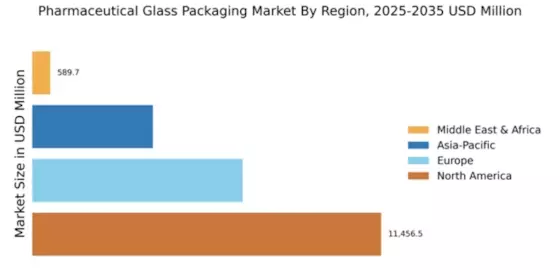
North America is poised to maintain its leadership in the Pharmaceutical Glass Packaging Market, with a market size of $11,456.53 million in 2025. The region's growth is driven by increasing demand for high-quality packaging solutions, stringent regulatory standards, and a robust pharmaceutical sector. The presence of major players and continuous innovation in packaging technologies further bolster market expansion. The United States and Canada are the leading countries in this region, with a significant share attributed to their advanced healthcare systems and high investment in R&D. Key players such as Schott AG and Gerresheimer AG are at the forefront, driving competition and innovation. The market is characterized by a focus on sustainable practices and the development of smart packaging solutions, ensuring compliance with regulatory requirements.

Europe : Emerging Market with Growth Potential

Europe's Pharmaceutical Glass Packaging Market is valued at $6,903.83 million in 2025, reflecting a growing demand for sustainable and compliant packaging solutions. The region benefits from stringent regulations that ensure product safety and quality, driving manufacturers to innovate. The increasing prevalence of chronic diseases and the need for effective drug delivery systems are key growth drivers in this market. Germany, France, and Italy are the leading countries in this region, hosting major players like Bormioli Pharma S.p.A. and Stölzle-Oberglas GmbH. The competitive landscape is marked by collaborations and partnerships aimed at enhancing product offerings. Regulatory bodies emphasize the importance of quality standards, which further propels market growth. As stated by the European Medicines Agency, "Quality packaging is essential for ensuring the safety and efficacy of pharmaceutical products."

Asia-Pacific : Rapidly Growing Market Segment

The Asia-Pacific region is witnessing significant growth in the Pharmaceutical Glass Packaging Market, projected to reach $3,962.67 million by 2025. This growth is fueled by rising healthcare expenditures, increasing population, and a growing emphasis on quality healthcare. Regulatory frameworks are evolving to support the pharmaceutical industry, enhancing the demand for reliable packaging solutions. Countries like Japan, China, and India are leading the market, with a surge in pharmaceutical manufacturing and exports. The competitive landscape features key players such as Nipro Corporation and Amcor plc, who are investing in advanced technologies to meet the growing demand. The region's market dynamics are characterized by a shift towards eco-friendly packaging solutions, aligning with global sustainability trends.

Middle East and Africa : Niche Market with Growth Opportunities

The Middle East and Africa region, with a market size of $590.03 million in 2025, presents unique growth opportunities in the Pharmaceutical Glass Packaging Market. The increasing focus on healthcare infrastructure and rising investments in the pharmaceutical sector are key drivers. Regulatory bodies are beginning to implement stricter guidelines, which will enhance the quality of packaging solutions in the region. Countries like South Africa and the UAE are emerging as significant players in this market, with a growing number of pharmaceutical manufacturers. The competitive landscape is evolving, with both local and international companies vying for market share. Key players such as Saverglass are expanding their operations to cater to the increasing demand for high-quality glass packaging solutions.

Key Players and Competitive Insights

The Pharmaceutical Glass Packaging Market is characterized by a competitive landscape that is increasingly shaped by innovation, sustainability, and strategic partnerships. Key players such as Schott AG (Germany), Gerresheimer AG (Germany), and Nipro Corporation (Japan) are actively pursuing strategies that emphasize technological advancements and operational efficiencies. Schott AG (Germany), for instance, focuses on developing high-quality glass solutions that cater to the growing demand for biologics and specialty pharmaceuticals, thereby positioning itself as a leader in the premium segment of the market. Meanwhile, Gerresheimer AG (Germany) has been enhancing its product portfolio through strategic acquisitions and collaborations, which appear to bolster its market presence and operational capabilities.

The business tactics employed by these companies often include localizing manufacturing to reduce lead times and optimize supply chains. The market structure is moderately fragmented, with several players vying for market share, yet the influence of major companies remains substantial. This competitive dynamic fosters an environment where innovation and efficiency are paramount, as companies strive to differentiate themselves in a crowded marketplace.

In November 2025, Nipro Corporation (Japan) announced the launch of a new line of eco-friendly glass vials designed to meet the increasing demand for sustainable packaging solutions. This strategic move not only aligns with global sustainability trends but also positions Nipro as a forward-thinking player in the market, potentially attracting environmentally conscious clients. The introduction of these vials could enhance Nipro's competitive edge by appealing to pharmaceutical companies looking to reduce their carbon footprint.

In October 2025, Gerresheimer AG (Germany) expanded its production capabilities by investing €50 million in a new manufacturing facility in Eastern Europe. This expansion is likely to enhance the company's operational efficiency and responsiveness to regional market demands, thereby strengthening its competitive position. The facility is expected to focus on producing high-quality glass containers, which could further solidify Gerresheimer's reputation as a reliable supplier in the pharmaceutical sector.

In September 2025, Schott AG (Germany) entered into a strategic partnership with a leading biotech firm to develop customized glass packaging solutions for sensitive biologics. This collaboration underscores Schott's commitment to innovation and its ability to adapt to the evolving needs of the pharmaceutical industry. By aligning with biotech companies, Schott is likely to enhance its product offerings and capture a larger share of the biologics market, which is experiencing rapid growth.

As of December 2025, the competitive trends in the Pharmaceutical Glass Packaging Market are increasingly defined by digitalization, sustainability, and the integration of advanced technologies such as AI. Strategic alliances are becoming more prevalent, as companies recognize the value of collaboration in driving innovation and enhancing supply chain reliability. The shift from price-based competition to a focus on technological advancements and sustainable practices is evident, suggesting that future competitive differentiation will hinge on the ability to innovate and respond to market demands effectively.

Key Companies in the Pharmaceutical Glass Packaging Market market include

Industry Developments

  • Q2 2024: Bormioli Pharma launches EcoPositive, a new range of sustainable pharmaceutical glass packaging Bormioli Pharma announced the launch of its EcoPositive product line, featuring pharmaceutical glass packaging made with recycled materials and designed to reduce environmental impact. The new range targets pharmaceutical companies seeking sustainable primary packaging solutions.

Future Outlook

Pharmaceutical Glass Packaging Market Future Outlook

The Pharmaceutical Glass Packaging Market is projected to grow at a 7.32% CAGR from 2024 to 2035, driven by increasing demand for sustainable packaging and stringent regulatory standards.

New opportunities lie in:

  • Expansion into biopharmaceutical glass packaging solutions
  • Development of smart glass packaging with integrated sensors
  • Investment in eco-friendly glass recycling technologies

By 2035, the market is expected to achieve robust growth, driven by innovation and sustainability initiatives.

Market Segmentation

Pharmaceutical Glass Packaging Market End Use Outlook

  • Pharmaceutical Companies
  • Biotechnology Firms
  • Contract Manufacturing Organizations
  • Research Laboratories

Pharmaceutical Glass Packaging Market Application Outlook

  • Vials
  • Ampoules
  • Bottles
  • Cartridges

Pharmaceutical Glass Packaging Market Closure Type Outlook

  • Screw Caps
  • Dropper Caps
  • Crimped Caps
  • Snap-On Caps

Pharmaceutical Glass Packaging Market Material Type Outlook

  • Type I Glass
  • Type II Glass
  • Type III Glass
  • Amber Glass

Pharmaceutical Glass Packaging Market Production Process Outlook

  • Blow Molding
  • Press Molding
  • Injection Molding
  • Glass Blowing

Report Scope

MARKET SIZE 202422913.06(USD Million)
MARKET SIZE 202524590.35(USD Million)
MARKET SIZE 203549840.36(USD Million)
COMPOUND ANNUAL GROWTH RATE (CAGR)7.32% (2024 - 2035)
REPORT COVERAGERevenue Forecast, Competitive Landscape, Growth Factors, and Trends
BASE YEAR2024
Market Forecast Period2025 - 2035
Historical Data2019 - 2024
Market Forecast UnitsUSD Million
Key Companies ProfiledSchott AG (DE), Gerresheimer AG (DE), Nipro Corporation (JP), Owen Mumford Limited (GB), Ardagh Group (IE), Amcor plc (AU), Bormioli Pharma S.p.A. (IT), Stölzle-Oberglas GmbH (AT), Saverglass (FR)
Segments CoveredApplication, End Use, Material Type, Closure Type, Production Process
Key Market OpportunitiesAdoption of sustainable materials and smart packaging technologies in the Pharmaceutical Glass Packaging Market.
Key Market DynamicsRising demand for sustainable packaging solutions drives innovation in the Pharmaceutical Glass Packaging Market.
Countries CoveredNorth America, Europe, APAC, South America, MEA

Market Highlights

Author
Varsha More
Research Analyst

Experienced business professional with a demonstrated history of working in the CFnB industry. Skilled in market research, and market estimation. Strong professional with a Masters focused in marketing management.

Leave a Comment

FAQs

How much is the Pharmaceutical Glass Packaging Market?

The Pharmaceutical Glass Packaging Market size is expected to be valued at USD 49840.36 Million in 2035.

What is the growth rate of the Pharmaceutical Glass Packaging Market?

Pharmaceutical Glass Packaging Market is expected to grow with a CAGR of 7.32% in the period 2025-2035

Which region held the largest market share in the Pharmaceutical Glass Packaging Market?

North America had the largest share of the global market.

Who are the key players in the Pharmaceutical Glass Packaging Market?

The key players in the market are GERRESHEIMER AG, NIPRO CORPORATION, SCHOTT PHARMACEUTICAL PACKAGING, STEVANATO GROUP, BORMIOLI PHARMA S.P.A, WEST PHARMACEUTICAL SERVICES, INC, PGP GLASS, STÖLZLE-OBERGLAS GMBH, ARAB PHARMACEUTICAL GLASS CO, And AJANTA BOTTLE.

Which Application led the Pharmaceutical Glass Packaging Market?

The generic drugs category dominated the market in 2024.

Which Material had the largest market share in the Pharmaceutical Glass Packaging Market?

Type I segment had the largest revenue share of the global market.

Download Free Sample

Kindly complete the form below to receive a free sample of this Report

Compare Licence

×
Features License Type
Single User Multiuser License Enterprise User
Price $4,950 $5,950 $7,250
Maximum User Access Limit 1 User Upto 10 Users Unrestricted Access Throughout the Organization
Free Customization
Direct Access to Analyst
Deliverable Format
Platform Access
Discount on Next Purchase 10% 15% 15%
Printable Versions