×
Request Free Sample ×

Kindly complete the form below to receive a free sample of this Report

* Please use a valid business email

Leading companies partner with us for data-driven Insights

clients tt-cursor
Hero Background

Photopheresis Product Market

ID: MRFR/HC/39048-HCR
100 Pages
Rahul Gotadki
October 2025

Photopheresis Product Market Research Report By Disease Type (Cutaneous T-Cell Lymphoma (CTCL), Graft-versus-Host Disease (GvHD), Other Diseases), By Product Type (Cells, Plasma), By Application (Ex Vivo, In Vivo), By End-User (Hospitals, Clinics, Research Laboratories) and By Regional (North America, Europe, South America, Asia-Pacific, Middle East and Africa) - Forecast to 2035

Share:
Download PDF ×

We do not share your information with anyone. However, we may send you emails based on your report interest from time to time. You may contact us at any time to opt-out.

Photopheresis Product Market Infographic
Purchase Options

Photopheresis Product Market Summary

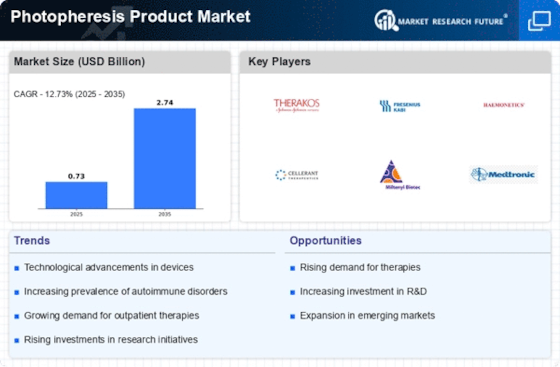
As per MRFR analysis, the Photopheresis Product Market Size was estimated at 0.7327 USD Billion in 2024. The Photopheresis industry is projected to grow from USD 0.826 in 2025 toUSD 2.738 by 2035, exhibiting a compound annual growth rate (CAGR) of 12.73 during the forecast period 2025 - 2035.

Key Market Trends & Highlights

The Photopheresis Product Market is experiencing robust growth driven by technological advancements and increasing demand for personalized medicine.

  • Technological advancements are enhancing the efficacy and efficiency of photopheresis procedures, particularly in North America.
  • The rising demand for personalized medicine is propelling the adoption of photopheresis, especially in the treatment of cutaneous T-cell lymphoma (CTCL).
  • Regulatory support is facilitating market expansion, particularly in the Asia-Pacific region, which is currently the fastest-growing market for photopheresis products.
  • The increasing prevalence of chronic diseases and growing awareness of photopheresis are key drivers influencing market dynamics.

Market Size & Forecast

2024 Market Size 0.7327 (USD Billion)
2035 Market Size 2.738 (USD Billion)
CAGR (2025 - 2035) 12.73%

Major Players

Therakos (US), Fresenius Kabi (DE), Haemonetics (US), Cellerant Therapeutics (US), Miltenyi Biotec (DE), Medtronic (US), Astellas Pharma (JP), Karyopharm Therapeutics (US)

Photopheresis Product Market Trends

The Photopheresis Product Market is currently experiencing a notable evolution, driven by advancements in technology and an increasing understanding of the therapeutic benefits associated with photopheresis. This treatment modality, which involves the use of ultraviolet light to treat various medical conditions, is gaining traction among healthcare providers. The growing prevalence of autoimmune diseases and certain cancers has led to a heightened demand for effective treatment options, thereby propelling the market forward. Furthermore, ongoing research and development efforts are likely to enhance the efficacy and safety profiles of photopheresis products, which may further stimulate market growth. In addition to technological advancements, the Photopheresis Product Market is influenced by regulatory changes and the need for improved patient outcomes. As healthcare systems worldwide prioritize personalized medicine, photopheresis is increasingly recognized for its potential to provide tailored therapeutic solutions. The integration of photopheresis into standard treatment protocols appears to be on the rise, suggesting a shift in clinical practices. Moreover, collaborations between manufacturers and healthcare institutions may foster innovation and expand the reach of photopheresis products, ultimately benefiting patients and healthcare providers alike.

Technological Advancements

Recent innovations in photopheresis technology are enhancing treatment efficacy and patient safety. New devices are being developed that offer improved precision and ease of use, which may lead to better patient compliance and outcomes.

Rising Demand for Personalized Medicine

The shift towards personalized medicine is influencing the Photopheresis Product Market. As healthcare providers seek tailored treatment options, photopheresis is increasingly viewed as a viable solution for various conditions, particularly autoimmune disorders.

Regulatory Support and Market Expansion

Supportive regulatory frameworks are facilitating the entry of new photopheresis products into the market. This regulatory backing is likely to encourage manufacturers to invest in research and development, thereby expanding the range of available therapies.

Photopheresis Product Market Drivers

Increasing Prevalence of Chronic Diseases

The Photopheresis Product Market is experiencing growth due to the rising prevalence of chronic diseases such as autoimmune disorders and certain types of cancers. As these conditions become more common, the demand for effective treatment options increases. Photopheresis, a therapeutic procedure that involves the exposure of blood to ultraviolet light, has shown promise in managing these diseases. According to recent data, the incidence of autoimmune diseases is projected to rise, leading to a greater need for innovative therapies. This trend suggests that the Photopheresis Product Market may expand as healthcare providers seek advanced solutions to address the growing patient population.

Technological Innovations in Photopheresis

Technological advancements play a crucial role in the Photopheresis Product Market. Innovations in equipment design, such as improved photopheresis devices and enhanced blood processing techniques, are likely to enhance treatment efficacy and patient outcomes. For instance, the introduction of automated systems has streamlined procedures, reducing treatment times and increasing patient comfort. Furthermore, ongoing research into optimizing light wavelengths and exposure times may lead to more effective therapies. As these technologies evolve, they could potentially drive market growth by attracting healthcare facilities to adopt photopheresis as a standard treatment option.

Regulatory Support for Innovative Therapies

Regulatory bodies are increasingly supportive of innovative therapies, including those in the Photopheresis Product Market. Streamlined approval processes for new devices and treatment protocols are encouraging manufacturers to invest in research and development. This regulatory environment is conducive to the introduction of novel photopheresis products that meet evolving clinical needs. As a result, the market may witness an influx of new entrants and technologies, potentially enhancing competition and driving down costs. This trend suggests a favorable outlook for the Photopheresis Product Market as it adapts to regulatory changes.

Rising Demand for Minimally Invasive Procedures

The Photopheresis Product Market is likely to benefit from the increasing demand for minimally invasive medical procedures. Patients and healthcare providers are increasingly favoring treatments that offer reduced recovery times and lower risks of complications. Photopheresis, being a non-surgical procedure, aligns well with this trend. As more patients seek alternatives to traditional surgical interventions, the adoption of photopheresis is expected to rise. Market analysis indicates that this shift towards less invasive options could significantly impact the growth trajectory of the Photopheresis Product Market, making it a preferred choice for many clinicians.

Growing Awareness and Acceptance of Photopheresis

The Photopheresis Product Market benefits from increasing awareness and acceptance of photopheresis as a viable treatment option. Educational initiatives aimed at healthcare professionals and patients are fostering a better understanding of the procedure's benefits and applications. As more clinicians recognize the effectiveness of photopheresis in treating conditions like graft-versus-host disease, the demand for these products is likely to rise. Market data indicates that patient advocacy groups are also playing a role in promoting awareness, which may further enhance the visibility of photopheresis therapies in clinical settings.


Market Segment Insights

By Disease Type: Cutaneous T-cell lymphoma (CTCL) (Largest) vs. Graft-versus-Host Disease (GvHD) (Fastest-Growing)

The Photopheresis Product Market is significantly influenced by various disease types, with Cutaneous T-cell lymphoma (CTCL) holding the largest market share. CTCL is a prevalent skin cancer that requires specialized treatment modalities, thereby driving the demand for photopheresis products. Graft-versus-Host Disease (GvHD) follows as the fastest-growing segment due to increased organ transplant procedures, which necessitate effective treatments to manage potential complications associated with GvHD. This growth reflects a rising awareness of photopheresis as a viable therapeutic option.

CTCL (Dominant) vs. GvHD (Emerging)

Cutaneous T-cell lymphoma (CTCL) is the dominant disease type in the Photopheresis Product Market, characterized by its chronic nature and the need for continuous innovative treatment options. The established protocols surrounding CTCL treatment make photopheresis a preferred choice, facilitating enhanced patient outcomes. On the other hand, Graft-versus-Host Disease (GvHD) represents the emerging trend in this market. The increasing frequency of organ and stem cell transplants has underscored the necessity for effective GvHD management. With advancements in photopheresis techniques, this segment is poised for rapid growth, reflecting shifts in treatment paradigms and increasing adoption of targeted therapies.

By Product Type: Cells (Largest) vs. Plasma (Fastest-Growing)

In the Photopheresis Product Market, the segment values showcase a competitive landscape with Cells leading in market share. Cells are predominantly utilized due to their effectiveness in various therapeutic procedures, making them a mainstay in the market. On the other hand, Plasma is rapidly increasing in popularity, reflecting an evolving focus on different treatment methodologies and patient needs that favor Plasma-based procedures. This shift indicates a diversification in treatment approaches within the market.

Cells (Dominant) vs. Plasma (Emerging)

Cells have established themselves as the dominant force in the Photopheresis Product Market due to their extensive applications in immunotherapy and regenerative medicine. This segment benefits from a robust healthcare infrastructure which supports the utilization of cells for various treatments, thus maintaining its market grip. Conversely, Plasma is recognized as the emerging segment, gaining traction due to advancements in purification technologies and growing clinical awareness surrounding its benefits. The increasing preference for less invasive treatment options, coupled with enhanced plasma collection techniques, positions Plasma for significant growth in the coming years, appealing to a broader patient demographic.

By Application: Ex Vivo (Largest) vs. In Vivo (Fastest-Growing)

In the Photopheresis Product Market, the application segment showcases a significant distribution in favor of Ex Vivo methods, which are dominating market share due to their established protocols and effectiveness in treating conditions like cutaneous T-cell lymphoma. Meanwhile, the In Vivo applications, although currently smaller in share, are rapidly gaining traction, driven by technological advancements and increasing interest in less invasive treatment alternatives. The transition of procedures towards In Vivo is evidence of an evolving landscape that prioritizes patient comfort and operational efficiency. Growth trends within the application segment point towards a strong upward trajectory for In Vivo techniques, fueled by growing clinical trials and increasing approvals from regulatory bodies. This shift is propelled by the rising awareness of the benefits associated with In Vivo methods, such as reduced patient recovery time and convenience. As more healthcare providers look to optimize treatment options, the market sees a dual path of growth, with Ex Vivo maintaining its stronghold while In Vivo methods emerge as the preferred choice for innovative therapies in photopheresis.

Application: Ex Vivo (Dominant) vs. In Vivo (Emerging)

The Ex Vivo application in the Photopheresis Product Market is characterized by its well-established practices and proven efficacy, making it the go-to method for many healthcare providers. This segment benefits from a robust infrastructure, including specialized equipment and trained personnel, ensuring high success rates. In contrast, the In Vivo application is an emerging segment that promises to disrupt the traditional methods by offering a more streamlined and patient-friendly approach. With advancements in technology, In Vivo techniques are becoming more viable, catering to the increasing demand for less invasive treatments. As research continues and positive outcomes are reported in clinical settings, In Vivo is poised to capture a notable share of the market, balancing healthcare needs and technological innovations.

By End-User: Hospitals (Largest) vs. Clinics (Fastest-Growing)

In the Photopheresis Product Market, hospitals represent the largest end-user segment due to their extensive resources and facilities for advanced therapeutic procedures. They are well-equipped with advanced technologies and skilled personnel, enabling them to adopt photopheresis effectively for treating complex conditions. Clinics, on the other hand, have been rapidly gaining a market foothold, driven by the increasing demand for outpatient care and less invasive procedures, allowing them to capitalize on a growing patient base seeking convenient treatment options. Growth trends within the end-user segment are notably influenced by the increasing prevalence of conditions such as graft-versus-host disease and autoimmune disorders that photopheresis can effectively address. Hospitals are channeling investments into photopheresis technologies, while clinics are expanding their service offerings to accommodate patient needs. This dynamic creates a robust growth trajectory for both segment values, highlighting the adaptability of photopheresis applications across various healthcare settings.

Hospitals (Dominant) vs. Clinics (Emerging)

Hospitals dominate the Photopheresis Product Market due to their comprehensive treatment capabilities and ability to conduct complex procedures. With a focus on critical care, hospitals can integrate advanced photopheresis systems into their treatment protocols effectively. The extensive infrastructure and skilled workforce in hospitals facilitate better patient management and treatment efficacy. Conversely, clinics are emerging as significant players. With the rise of outpatient therapies, clinics are adapting their service models to include photopheresis, offering patients more accessible and convenient treatment options. This shift is driven by the increasing demand for less invasive therapies and the growing healthcare trend towards outpatient care, positioning clinics as a vital part of the photopheresis ecosystem.

Get more detailed insights about Photopheresis Product Market

Regional Insights

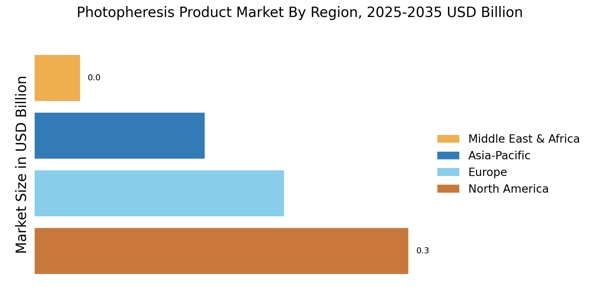
The Photopheresis Product Market is segmented regionally into North America, Europe, APAC, South America, and MEA. In 2023, North America contributed the largest market share, followed by Europe and APAC. North America is expected to continue leading the market throughout the forecast period, with a market value of USD 0.42 billion in 2024. This is due to the presence of a large number of key players in the region, such as Therakos, Inc. and Photopheresis Services, LLC.

Europe is expected to be the second largest market, with a market value of USD 0.27 billion in 2024.This is due to the increasing prevalence of skin cancer and other skin diseases in the region. APAC is expected to be the fastest-growing market, with a CAGR of 13.2% over the forecast period. This is due to the rising awareness about photopheresis and its benefits in the region. South America and MEA are expected to account for a small share of the global market.

Photopheresis Product Market Regional Image

Key Players and Competitive Insights

Major players in the Photopheresis Product Market industry are continuously focusing on the development of novel products to meet the evolving needs of patients and healthcare providers. Leading Photopheresis Product Market players are investing heavily in research and development (R&D) to stay ahead in the competitive landscape. Furthermore, strategic partnerships, collaborations, and acquisitions are becoming increasingly common in the Photopheresis Product Market as companies seek to expand their product portfolios and gain a competitive edge.

The competitive landscape of the Photopheresis Product Market is expected to remain dynamic in the coming years, with new players entering the market and existing players expanding their offerings.Carestream Health is a leading provider of medical imaging and healthcare IT solutions. The company's photopheresis product portfolio includes the Spectra Optia photopheresis system, which is used to treat a variety of skin conditions, including cutaneous T-cell lymphoma (CTCL) and severe atopic dermatitis. Carestream Health has a strong global presence and a well-established customer base.

The company is committed to providing innovative and high-quality products and services to its customers.Fresenius Medical Care is a leading provider of products and services for patients with renal diseases. The company's photopheresis product portfolio includes the Theraflex photopheresis system, which is used to treat a variety of skin conditions, including CTCL and severe atopic dermatitis. Fresenius Medical Care has a strong global presence and a well-established customer base. The company is committed to providing innovative and high-quality products and services to its customers.

Key Companies in the Photopheresis Product Market market include

Industry Developments

The Photopheresis Product Market is projected to reach USD 1.9 billion by 2032, exhibiting a CAGR of 12.73% during the forecast period 2024-2032. The market growth is attributed to factors such as the rising prevalence of skin disorders, increasing adoption of photopheresis therapy for various diseases, and growing awareness about the benefits of photopheresis. Key developments in the market include the launch of new products, such as Therakos CellEx System by Fresenius Kabi, and strategic collaborations between market players to expand their product portfolio and geographical reach.

Future Outlook

Photopheresis Product Market Future Outlook

The Photopheresis Product Market is projected to grow at a 12.73% CAGR from 2024 to 2035, driven by technological advancements, increasing prevalence of autoimmune diseases, and rising demand for personalized medicine.

New opportunities lie in:

  • Development of portable photopheresis devices for home use
  • Expansion into emerging markets with tailored marketing strategies
  • Partnerships with healthcare providers for integrated treatment solutions

By 2035, the Photopheresis Product Market is expected to achieve substantial growth and innovation.

Market Segmentation

Photopheresis Product Market End-User Outlook

  • Hospitals
  • Clinics
  • Research Laboratories

Photopheresis Product Market Application Outlook

  • Ex Vivo
  • In Vivo

Photopheresis Product Market Disease Type Outlook

  • Cutaneous T-cell lymphoma (CTCL)
  • Graft-versus-Host Disease (GvHD)
  • Other Diseases

Photopheresis Product Market Product Type Outlook

  • Cells
  • Plasma

Report Scope

MARKET SIZE 2024 0.7327(USD Billion)
MARKET SIZE 2025 0.826(USD Billion)
MARKET SIZE 2035 2.738(USD Billion)
COMPOUND ANNUAL GROWTH RATE (CAGR) 12.73% (2024 - 2035)
REPORT COVERAGE Revenue Forecast, Competitive Landscape, Growth Factors, and Trends
BASE YEAR 2024
Market Forecast Period 2025 - 2035
Historical Data 2019 - 2023
Market Forecast Units USD Billion
Key Companies Profiled Market analysis in progress
Segments Covered Market segmentation analysis in progress
Key Market Opportunities Advancements in photopheresis technology enhance treatment efficacy, driving demand in the Photopheresis Product Market.
Key Market Dynamics Rising demand for innovative photopheresis technologies drives competitive dynamics and regulatory scrutiny in the healthcare sector.
Countries Covered North America, Europe, APAC, South America, MEA

Leave a Comment

FAQs

What is the current valuation of the Photopheresis Product Market?

The market valuation was 0.7327 USD Billion in 2024.

What is the projected market size for the Photopheresis Product Market by 2035?

The market is expected to reach 2.738 USD Billion by 2035.

What is the expected CAGR for the Photopheresis Product Market during the forecast period?

The expected CAGR for the market from 2025 to 2035 is 12.73%.

Which disease types are the primary focus in the Photopheresis Product Market?

The primary disease types include Cutaneous T-cell lymphoma (CTCL) and Graft-versus-Host Disease (GvHD), with valuations of 1.095 USD Billion each by 2035.

What product types are included in the Photopheresis Product Market?

The market includes cells as a product type, projected to reach 1.369 USD Billion by 2035.

What applications are driving growth in the Photopheresis Product Market?

Ex Vivo applications are anticipated to grow to 1.369 USD Billion by 2035.

Who are the key players in the Photopheresis Product Market?

Key players include Therakos, Fresenius Kabi, Haemonetics, and others.

What are the expected end-user segments for the Photopheresis Product Market?

End-user segments include hospitals, clinics, and research laboratories, with hospitals projected to reach 1.3665 USD Billion by 2035.

How does the market for Other Diseases compare to other segments?

The Other Diseases segment is expected to grow to 0.548 USD Billion by 2035, indicating a smaller but notable market presence.

Download Free Sample

Kindly complete the form below to receive a free sample of this Report

Compare Licence

×
Features License Type
Single User Multiuser License Enterprise User
Price $4,950 $5,950 $7,250
Maximum User Access Limit 1 User Upto 10 Users Unrestricted Access Throughout the Organization
Free Customization
Direct Access to Analyst
Deliverable Format
Platform Access
Discount on Next Purchase 10% 15% 15%
Printable Versions