Download Free Sample
Kindly complete the form below to receive a free sample of this Report
Physician Groups Market Research Report By Type of Physician Groups (Independent Physician Groups, Hospital-Affiliated Physician Groups, Multispecialty Physician Groups, Single Specialty Physician Groups), By Service Offered (Primary Care Services, Specialty Care Services, Emergency Care Services, Preventive Care Services), By Practice Size (Small Practices, Medium Practices, Large Practices), By Payer Mix (Public Payers, Private Insurers, Self-Pay) and By Regional (North America, Europe, South America, Asia Pacific, Middle East and Africa) - Growth & Industry Forecast 2025 To 2035
As per Market Research Future analysis, the Physician Groups Market was estimated at 97.79 USD Billion in 2024. The Physician Groups industry is projected to grow from 101.68 USD Billion in 2025 to 150.07 USD Billion by 2035, exhibiting a compound annual growth rate (CAGR) of 3.97% during the forecast period 2025 - 2035
The Physician Groups Market is experiencing a transformative shift towards integrated care models and technological advancements.
| 2024 Market Size | 97.79 (USD Billion) |
| 2035 Market Size | 150.07 (USD Billion) |
| CAGR (2025 - 2035) | 3.97% |
UnitedHealth Group (US), Anthem (US), Cigna (US), Kaiser Permanente (US), Humana (US), Mayo Clinic (US), Cleveland Clinic (US), HCA Healthcare (US), Tenet Healthcare (US)
Our Impact
Enabled $4.3B Revenue Impact for Fortune 500 and Leading Multinationals
Partnering with 2000+ Global Organizations Each Year
30K+ Citations by Top-Tier Firms in the Industry
The Physician Groups Market is currently experiencing a transformative phase characterized by evolving dynamics and increasing complexity. This sector, which encompasses various healthcare providers organized into groups, is adapting to the changing landscape of healthcare delivery. Factors such as technological advancements, regulatory changes, and shifting patient expectations are influencing how these groups operate. The integration of digital health solutions appears to be a driving force, enabling physician groups to enhance patient engagement and streamline operations. Furthermore, the emphasis on value-based care is reshaping the financial models within this market, pushing organizations to focus on outcomes rather than volume. In addition, the Physician Groups Market is witnessing a trend towards consolidation, as smaller practices seek partnerships with larger entities to improve their competitive edge. This consolidation may lead to increased efficiency and resource sharing, although it could also raise concerns regarding market monopolization. As the healthcare environment continues to evolve, the Physician Groups Market is likely to adapt, reflecting broader trends in patient care and healthcare management. Stakeholders must remain vigilant to navigate these changes effectively and leverage emerging opportunities.
The integration of advanced technologies is reshaping the operational landscape of the Physician Groups Market. Digital health tools, telemedicine, and electronic health records are becoming essential components, facilitating improved patient interactions and data management. This trend suggests a shift towards more efficient healthcare delivery, where technology enhances both patient outcomes and operational efficiency.
There is a growing emphasis on value-based care within the Physician Groups Market, which prioritizes patient outcomes over service volume. This approach encourages physician groups to focus on delivering high-quality care while managing costs effectively. As reimbursement models evolve, organizations are likely to adapt their strategies to align with these new expectations.
The trend of consolidation among physician groups is becoming increasingly prominent. Smaller practices are merging or forming alliances with larger organizations to enhance their market position and resource capabilities. This consolidation may lead to improved operational efficiencies, although it raises questions about competition and access to care in certain regions.
The aging population is a critical driver in the Physician Groups Market. As individuals age, they typically require more medical care, leading to an increased demand for healthcare services. By 2030, it is projected that nearly 20% of the population will be 65 years or older, which could significantly impact the Physician Groups Market. This demographic shift necessitates a greater number of healthcare providers, particularly in primary care and specialized fields. Physician groups are likely to adapt by expanding their services to cater to the unique needs of older patients, thereby enhancing their market presence. Furthermore, the increase in chronic conditions associated with aging may lead to a rise in collaborative care models, where physician groups work closely with other healthcare providers to deliver comprehensive care.
Regulatory changes play a pivotal role in shaping the Physician Groups Market. Policies aimed at improving healthcare access and affordability can influence how physician groups operate. For example, recent legislation has focused on reducing administrative burdens and promoting value-based care, which encourages physician groups to prioritize patient outcomes over volume of services. This shift may lead to a reallocation of resources within physician groups, as they adapt to new reimbursement models. Additionally, compliance with evolving regulations can be challenging, yet it presents an opportunity for physician groups to enhance their operational efficiencies. By staying ahead of regulatory changes, physician groups can not only mitigate risks but also position themselves as leaders in the market.
Technological advancements are reshaping the Physician Groups Market in profound ways. The integration of electronic health records (EHRs), telemedicine, and artificial intelligence (AI) is streamlining operations and improving patient outcomes. For instance, the use of EHRs has been shown to enhance communication among healthcare providers, which is essential for coordinated care. Moreover, telemedicine has gained traction, allowing physician groups to reach patients in remote areas, thus expanding their patient base. According to recent data, telehealth visits have increased significantly, indicating a shift in patient preferences towards more accessible healthcare options. As technology continues to evolve, physician groups that embrace these innovations are likely to gain a competitive edge, positioning themselves favorably within the market.
The shift towards preventive care is a significant driver in the Physician Groups Market. As healthcare systems increasingly recognize the importance of preventing diseases rather than merely treating them, physician groups are adapting their practices accordingly. This trend is reflected in the growing emphasis on wellness programs, screenings, and early intervention strategies. Data suggests that investments in preventive care can lead to substantial cost savings for healthcare systems, as they reduce the need for more expensive treatments down the line. Physician groups that successfully implement preventive care initiatives may not only improve patient health outcomes but also enhance their financial sustainability. This proactive approach positions them favorably within the market, as they align with the broader healthcare movement towards value-based care.
Consumer demand for quality care is increasingly driving the Physician Groups Market. Patients are becoming more informed and are actively seeking healthcare providers that offer high-quality services. This trend is evident in the growing emphasis on patient satisfaction scores and quality metrics, which are now integral to many physician group evaluations. As patients prioritize their healthcare choices, physician groups must focus on delivering exceptional care to attract and retain patients. Furthermore, the rise of online reviews and ratings has empowered consumers to make informed decisions about their healthcare providers. Consequently, physician groups that prioritize quality improvement initiatives and patient engagement strategies are likely to thrive in this competitive landscape.
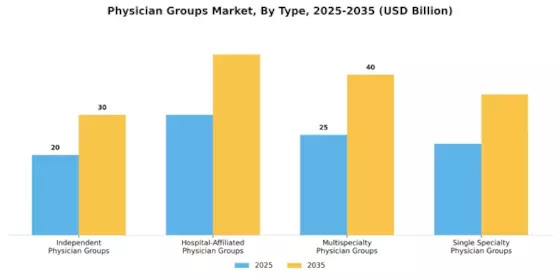
The Physician Groups Market is characterized by a diverse distribution of the four main types: Independent Physician Groups, Hospital-Affiliated Physician Groups, Multispecialty Physician Groups, and Single Specialty Physician Groups. Among these, Independent Physician Groups hold a significant share due to their traditional practice structure, enabling them to maintain patient loyalty and high-quality care. In contrast, Hospital-Affiliated Physician Groups are increasingly gaining traction, attracting a larger patient base with access to integrated services and enhanced resources.
Independent Physician Groups (Dominant) vs. Hospital-Affiliated Physician Groups (Emerging)
Independent Physician Groups are often seen as the backbone of the healthcare system, prioritizing personalized care and flexibility in service delivery. They tend to operate independently from hospital systems, allowing for a more tailored approach to patient interaction. On the other hand, Hospital-Affiliated Physician Groups are emerging as a formidable force, leveraging their affiliations with hospitals to enhance service offerings and improve efficiencies in patient care. This alliance often translates into better access to advanced technologies and resources, positioning them to capture a growing share of the market.
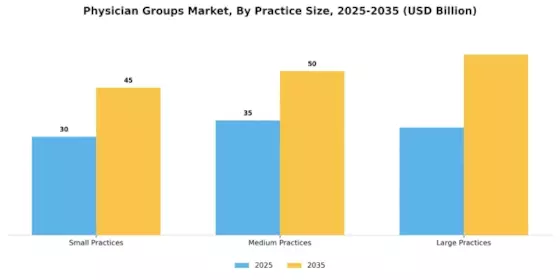
In the Physician Groups Market, Primary Care Services command a significant portion of the overall market share, being the largest segment due to the essential nature of general healthcare provision. These services cater to a broad patient demographic, focusing on early diagnosis and treatment, which solidifies their popularity among healthcare consumers. On the other hand, Specialty Care Services have gained momentum, driven by the increasing complexity of medical conditions requiring specialized knowledge and techniques, hence becoming the fastest-growing segment in recent years.
Primary Care Services (Dominant) vs. Specialty Care Services (Emerging)
Primary Care Services play a crucial role in the healthcare system by providing comprehensive care, preventive services, and continuity of care for patients. This segment thrives on the growing trend of patient-centered services, emphasizing the importance of establishing patient relationships and managing overall health outcomes. Conversely, Specialty Care Services are emerging rapidly as healthcare needs become more diverse and intricate, with specialists addressing specific health issues such as cardiology, oncology, and orthopedics. They often lead to advanced treatment technologies and tailored patient strategies, capturing a niche market as they evolve alongside medical advancements.
In the Physician Groups Market, the distribution of market share among practice sizes reveals a diverse landscape. Small practices dominate the scene, constituting a significant portion of total physician groups due to their personalized care and community connections. Meanwhile, large practices are on the rise, increasingly capturing patient volume and resources, leading to a competitive edge in terms of service offerings and specialty care. As healthcare continues to evolve, growth trends indicate that large practices are experiencing the fastest growth rates. This expansion is fueled by a shift towards integrated care models and the consolidation of healthcare services, allowing these groups to leverage economies of scale. Additionally, the demand for specialized services and comprehensive health solutions is prompting smaller practices to either grow or align with larger entities to enhance their market presence and patient care capabilities.
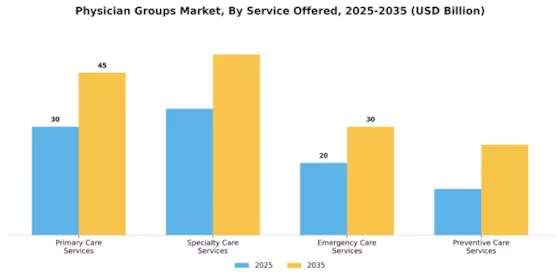
Small Practices (Dominant) vs. Large Practices (Emerging)
Small practices play a dominant role in the Physician Groups Market, characterized by their close-knit relationships with patients and ability to provide tailored healthcare solutions. These practices often thrive on community trust and deliver a wide array of general services. In contrast, large practices are emerging as key players, adapting rapidly to market trends by incorporating advanced technologies and specialized services. This transition positions them to cater to a larger patient base while responding effectively to the complexities of modern healthcare demands. The competitive landscape is encouraging these larger groups to innovate continuously, striking a balance between quality care and operational efficiency.
In the Physician Groups Market, the payer mix plays a significant role in influencing revenue streams for physician groups. Public payers, which include government programs like Medicare and Medicaid, compose the largest share of the market. This segment is essential for many healthcare providers as it ensures a steady flow of income, particularly for practices that cater to older and lower-income populations. On the other hand, private insurers also make up a substantial part of the market, though their share is lower than that of public payers. The competition among private insurers focuses on innovative plans and value-driven care models, which impacts how services are reimbursed and accessed by patients. Growth trends for the payer mix segment highlight a noticeable shift towards private insurers as they adapt to changing healthcare demands. Market dynamics are driving private insurers to innovate with new coverage options that appeal to consumers seeking more tailored healthcare experiences. Additionally, the self-pay segment has gained traction as high-deductible health plans become more common, pushing patients to shoulder a larger portion of their healthcare costs. This trend raises the profile of patient responsibility in spending, adding a new layer of complexity to the payer mix landscape with implications for revenue management and service delivery.
Public Payers (Dominant) vs. Self-Pay (Emerging)
Public payers are positioned as the dominant force in the Physician Groups Market, providing crucial financial support primarily through government-sponsored programs. These payer systems are characterized by their broad reach and ability to cover a significant portion of the population, particularly those who are elderly or low-income. In contrast, self-pay represents an emerging segment, gaining increasing significance as patients are more frequently exposed to high out-of-pocket costs due to the prevalence of high-deductible health plans. Patients opting for self-pay often have a strong desire for transparency in pricing and flexibility in their healthcare choices. This shift towards self-pay can challenge traditional billing practices and compel physician groups to adopt more innovative pricing strategies.
Get more detailed insights about Physician Groups Market Request Free Sample
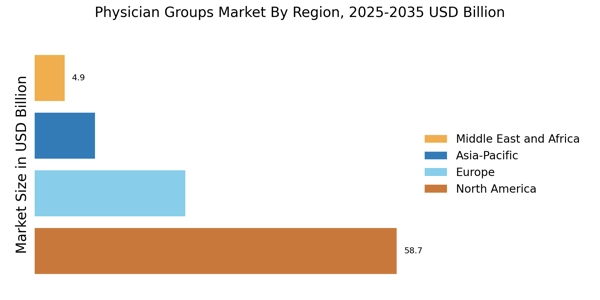
The Physician Groups Market revenue showcases a robust landscape across various regions, highlighting the growing demand for organized healthcare services. North America dominates this market with a substantial share of 40.0 USD Billion in 2024, rising to 65.0 USD Billion by 2035, indicating its majority holding due to advanced healthcare infrastructure and high patient volumes. Europe follows closely with a noteworthy valuation of 25.0 USD Billion in 2024, expected to reach 40.0 USD Billion in 2035, driven by rapid digital transformation in healthcare delivery.
The APAC region is also emerging, valued at 20.0 USD Billion in 2024, projected to grow to 30.0 USD Billion by 2035, as increasing population and healthcare accessibility catalyze market expansion. Meanwhile, South America and MEA present smaller valuations at 7.0 USD Billion and 5.8 USD Billion in 2024 respectively, but these regions hold potential for growth due to rising healthcare investments and a focus on improving medical services. Overall, the Physician Groups Market segmentation reveals diverse opportunities across these regions, influenced by varying dynamics and healthcare needs.
The Physician Groups Market has witnessed significant transformations over recent years, driven by factors such as technological advancements, increasing patient demands, and a growing emphasis on preventive care. This market is characterized by numerous players vying for a share, creating a landscape marked by competition and innovation. Providers are continually adapting their strategic approaches to enhance patient care, optimize operational efficiencies, and respond to regulatory changes. The focus on integrated healthcare delivery models is reshaping the dynamics of the marketplace, leading to collaborations and mergers that enhance service offerings and geographical reach.As healthcare systems evolve, understanding competitive insights becomes essential for stakeholders aiming to succeed in this ever-changing environment.DaVita Inc. has established a robust presence within the Physician Groups Market, primarily through its extensive network of outpatient dialysis centers and integrated care services. The company’s strength lies in its commitment to quality care and patient-centered services, which have positioned it as a trusted provider in the healthcare community. DaVita Inc. emphasizes clinical excellence, operational efficiency, and innovative care models that leverage advanced technologies to improve patient outcomes.Its solid focus on value-based care is complemented by initiatives that foster collaboration among healthcare providers, ensuring that patients receive comprehensive and coordinated treatment. The company's ability to adapt to regulatory changes and industry trends supports its enduring position in the market.Optum stands out in the Physician Groups Market with its comprehensive suite of healthcare offerings, including care delivery, pharmacy care services, and health information technology. The company's strengths are apparent through its data-driven approach to improving healthcare outcomes while reducing costs.Optum fosters a strong integration between its various services, allowing for a seamless transition of care across different patient touchpoints. This holistic approach not only enhances patient satisfaction but also delivers greater value to healthcare systems. By harnessing advanced analytics and innovative technologies, Optum has positioned itself as a leader in population health management, enhancing care efficiency and effectiveness within its physician group operations. The company's commitment to improving health outcomes while addressing the complexities of the healthcare ecosystem has solidified its competitive edge in this dynamic market.



The Physician Groups Market has seen notable developments recently, particularly in mergers and acquisitions among key players like DaVita Inc., Optum, and HCA Healthcare. DaVita Inc. made strides by expanding its footprint with strategic alliances that bolster its healthcare services. Optum announced its plans to acquire several outpatient surgery centers, enhancing its service offerings. Ascension Health has been actively integrating technology to improve patient outcomes, while UnitedHealth Group continues to focus on expanding its network through both organic growth and acquisitions.
Recent market valuation growth is evident, driven by increased demand for value-based care models and advancements in telehealth services, greatly impacting operational efficiencies. Companies such as
Mayo Clinic and Cleveland Clinic are investing heavily in patient-centered care, responding to consumer expectations for better access and quality. Additionally, the rise of integrated health systems, exemplified by the activities of Trinity Health and Tenet Healthcare, showcases a shift towards cohesive service delivery. Mergers involving Community Health Systems and Prime Healthcare Services are also noteworthy, as they reinforce the trend of consolidation in the industry, positioning these entities for improved competitive advantage in an evolving market landscape.
The Physician Groups Market is projected to grow at a 3.97% CAGR from 2025 to 2035, driven by technological advancements, increasing patient demand, and value-based care models.
New opportunities lie in:
By 2035, the Physician Groups Market is expected to be robust, driven by innovation and strategic growth initiatives.
| MARKET SIZE 2024 | 97.79(USD Billion) |
| MARKET SIZE 2025 | 101.68(USD Billion) |
| MARKET SIZE 2035 | 150.07(USD Billion) |
| COMPOUND ANNUAL GROWTH RATE (CAGR) | 3.97% (2025 - 2035) |
| REPORT COVERAGE | Revenue Forecast, Competitive Landscape, Growth Factors, and Trends |
| BASE YEAR | 2024 |
| Market Forecast Period | 2025 - 2035 |
| Historical Data | 2019 - 2024 |
| Market Forecast Units | USD Billion |
| Key Companies Profiled | UnitedHealth Group (US), Anthem (US), Cigna (US), Kaiser Permanente (US), Humana (US), Mayo Clinic (US), Cleveland Clinic (US), HCA Healthcare (US), Tenet Healthcare (US) |
| Segments Covered | Type of Physician Groups, Service Offered, Practice Size, Payer Mix, Regional |
| Key Market Opportunities | Integration of telehealth services enhances patient access in the Physician Groups Market. |
| Key Market Dynamics | Growing consolidation among physician groups enhances competitive positioning and influences healthcare delivery models. |
| Countries Covered | North America, Europe, APAC, South America, MEA |
The overall market valuation was 97.79 USD Billion in 2024.
The projected valuation for the Physician Groups Market in 2035 is 150.07 USD Billion.
The expected CAGR for the Physician Groups Market during the forecast period 2025 - 2035 is 3.97%.
The segments include Independent Physician Groups, Hospital-Affiliated Physician Groups, Multispecialty Physician Groups, and Single Specialty Physician Groups.
The valuation for Independent Physician Groups ranged from 20.0 to 30.0 USD Billion in 2024.
Hospital-Affiliated Physician Groups had a valuation between 30.0 and 45.0 USD Billion in 2024.
Primary Care Services were valued between 30.0 and 45.0 USD Billion in 2024.
Specialty Care Services had a valuation range of 35.0 to 50.0 USD Billion in 2024.
The payer mix includes Public Payers valued between 39.12 and 59.01 USD Billion, Private Insurers between 38.89 and 57.01 USD Billion, and Self-Pay between 19.78 and 34.05 USD Billion.
Key players in the market include UnitedHealth Group, Anthem, Cigna, Kaiser Permanente, Humana, Mayo Clinic, Cleveland Clinic, HCA Healthcare, and Tenet Healthcare.


Kindly complete the form below to receive a free sample of this Report

“This is really good guys. Excellent work on a tight deadline. I will continue to use you going forward and recommend you to others. Nice job”


“Thanks. It’s been a pleasure working with you, please use me as reference with any other Intel employees.”


“Thanks for sending the report it gives us a good global view of the Betaïne market.”


“Thank you, this will be very helpful for OQS.”


“We found the report very insightful! we found your research firm very helpful. I'm sending this email to secure our future business.”


“I am very pleased with how market segments have been defined in a relevant way for my purposes (such as "Portable Freezers & refrigerators" and "last-mile"). In general the report is well structured. Thanks very much for your efforts.”


“I have been reading the first document or the study, ,the Global HVAC and FP market report 2021 till 2026. Must say, good info! I have not gone in depth at all parts, but got a good indication of the data inside!”


“We got the report in time, we really thank you for your support in this process. I also thank to all of your team as they did a great job.”


“The Automotive 48V ECU Components Procurement Intelligence Study” was a complex project, but the Market Research Future (MRFR) team handled it with quality, agility, and customer-centricity. They delivered all requested data on time and within the agreed scope. The team, including Shubhendra Anand and Rahul Gotadki, was always readily available to clarify questions and swiftly implement necessary adjustments, driving the project to a successful conclusion within a very demanding timeframe.
I would also like to specifically commend Akshay Agarwal for his responsiveness and support at every stage—from our initial inquiry on May 6th through to final delivery on June 18th. His dedication made the entire process seamless.”



