×
Request Free Sample ×

Kindly complete the form below to receive a free sample of this Report

* Please use a valid business email

Leading companies partner with us for data-driven Insights

clients tt-cursor
Hero Background

Plant-Based Burgers and Patties Market

ID: MRFR/FnB/9048-HCR
90 Pages
Snehal Singh
October 2025

Plant-Based Burgers and Patties Market Research Report Information by Type (Burgers and Patties), By Category (Organic and Conventional), By Distribution Channel (Food Retail and Food Service), by Region – Forecast till 2035

Share:
Download PDF ×

We do not share your information with anyone. However, we may send you emails based on your report interest from time to time. You may contact us at any time to opt-out.

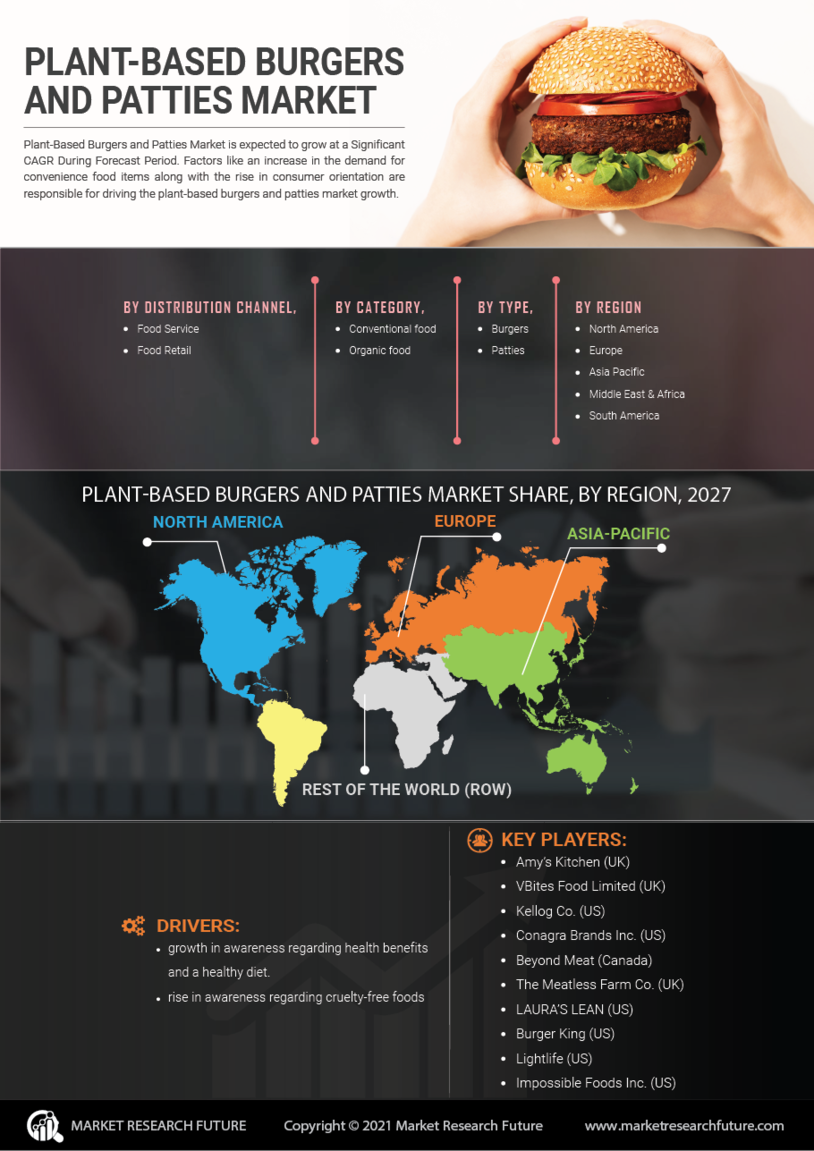
Plant-Based Burgers and Patties Market Infographic
Purchase Options

Plant-Based Burgers and Patties Market Summary

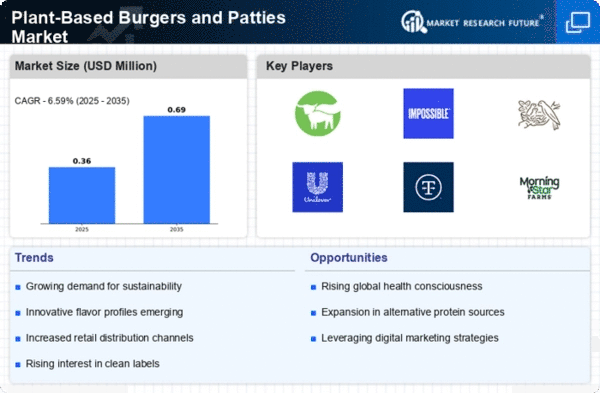
As per MRFR analysis, the Plant-Based Burgers and Patties Market Size was estimated at 338 USD Million in 2024. The Plant-Based Burgers and Patties industry is projected to grow from 365 USD Million in 2025 to 686 USD Million by 2035, exhibiting a compound annual growth rate (CAGR) of 6.59 during the forecast period 2025 - 2035.

Key Market Trends & Highlights

The Plant-Based Burgers and Patties Market is experiencing robust growth driven by health consciousness and sustainability.

  • Health consciousness is increasingly driving demand for plant-based burgers and patties, particularly in North America.
  • Sustainability and ethical considerations are becoming pivotal factors influencing consumer choices in the Asia-Pacific region.
  • Innovation in product development is fostering a diverse range of offerings, with soy-based products leading the market.
  • Rising vegan and vegetarian populations, along with increased availability in retail and foodservice, are key drivers propelling market expansion.

Market Size & Forecast

2024 Market Size 0.338 (USD Million)
2035 Market Size 0.686 (USD Million)
CAGR (2025 - 2035) 6.59%

Major Players

Beyond Meat (US), Impossible Foods (US), Nestle (CH), Unilever (GB), Tyson Foods (US), MorningStar Farms (US), Quorn Foods (GB), Gardein (CA), Lightlife (US), Field Roast (US)

Plant-Based Burgers and Patties Market Trends

The Plant-Based Burgers and Patties Market is currently experiencing a notable transformation, driven by evolving consumer preferences and a growing awareness of health and environmental issues. As individuals increasingly seek alternatives to traditional meat products, the demand for plant-based options has surged. This shift appears to be influenced by a combination of factors, including the desire for healthier diets, ethical considerations regarding animal welfare, and the environmental impact of meat production. Consequently, manufacturers are innovating to create products that not only mimic the taste and texture of meat but also offer nutritional benefits, thereby appealing to a broader audience. In December 2025, the market landscape reflects a diverse array of offerings, with companies exploring various ingredients and formulations to enhance flavor and texture. The rise of flexitarian diets, where consumers incorporate more plant-based foods while still consuming meat occasionally, seems to further bolster market growth. Additionally, the expansion of distribution channels, including online platforms and grocery stores, facilitates greater accessibility for consumers. As the Plant-Based Burgers and Patties Market continues to evolve, it is likely to witness further innovations and adaptations to meet the changing demands of consumers, suggesting a dynamic future ahead.

Health Consciousness Drives Demand

An increasing number of consumers are prioritizing health and wellness, leading to a heightened interest in plant-based diets. This trend indicates a shift towards products perceived as healthier alternatives to traditional meat, prompting manufacturers to focus on nutritional profiles.

Sustainability and Ethical Considerations

Growing concerns about environmental sustainability and animal welfare are influencing consumer choices. The Plant-Based Burgers and Patties Market appears to be responding to these values, with brands emphasizing eco-friendly practices and ethical sourcing.

Innovation in Product Development

The market is witnessing significant innovation, with companies experimenting with diverse ingredients to enhance flavor and texture. This trend suggests a commitment to improving the sensory experience of plant-based products, making them more appealing to a wider audience.

Market Segment Insights

By Application: Retail (Largest) vs. Fast Food (Fastest-Growing)

The Plant-Based Burgers and Patties Market exhibits a diverse application landscape, with retail emerging as the largest segment. Retail channels, including supermarkets and health food stores, have been pivotal in making plant-based options more accessible to consumers. Fast food chains, however, are not far behind, rapidly increasing their offerings of plant-based options, appealing to a growing demographic of health-conscious diners. As consumer preferences shift towards sustainable eating habits, these segments are poised for substantial growth.

Retail: Dominant vs. Fast Food: Emerging

The retail segment remains dominant in the Plant-Based Burgers and Patties Market, characterized by a broad range of product offerings and influential marketing strategies that cater to a diverse consumer base. Retailers leverage packaging and in-store promotions to enhance visibility and drive sales. In contrast, the fast food segment is emerging rapidly, with restaurant chains increasingly introducing plant-based patties to attract customers seeking healthier and more sustainable meal options. This shift is prompted by rising consumer demand for convenient and quick plant-based meals, leading to significant menu innovations that resonate with a younger, eco-conscious audience.

By Type: Soy-Based (Largest) vs. Pea Protein-Based (Fastest-Growing)

In the Plant-Based Burgers and Patties Market, soy-based products hold the largest share, appealing to a wide consumer base due to their familiarity and taste. This segment benefits from the longstanding presence of soy in plant-based diets and its versatility, which enables various flavor profiles and preparations. On the other hand, pea protein-based burgers are rapidly gaining traction, particularly among health-conscious consumers and those with dietary restrictions, positioning them as an innovative alternative to traditional protein sources. Growth trends reveal a significant shift towards healthier eating habits, with consumers increasingly opting for plant-based diets. Factors driving this segment include rising awareness of the health benefits of plant-based proteins, a growing vegetarian and vegan population, and the clean label trend. Pea protein's rise can be attributed to its allergen-friendly profile and nutritional value, making it an attractive option for manufacturers and consumers alike.

Soy-Based (Dominant) vs. Pea Protein-Based (Emerging)

Soy-based burgers represent a dominant force within the plant-based patties market, known for their robust flavor and texture that closely mimics traditional meat. The established supply chain and extensive consumer acceptance contribute to their steady market presence. Conversely, pea protein-based options are emerging as a compelling alternative, particularly among those who avoid soy or seek diverse protein sources. With a favorable nutritional profile and favorable sustainability attributes, pea protein products are increasingly appearing on menus and supermarket shelves. Their ability to cater to a broader audience and align with health trends positions them strongly for future growth, appealing to both flexitarians and dedicated plant-based consumers.

By Consumer Demographics: Millennials (Largest) vs. Generation Z (Fastest-Growing)

In the Plant-Based Burgers and Patties Market, Millennials represent the largest segment, embracing plant-based diets as part of their lifestyle choices. This demographic is heavily influenced by their values around sustainability and animal welfare, driving a significant market share. In contrast, Generation Z, while smaller in share as of now, is the fastest-growing consumer base for plant-based products, drawn by their adventurous eating habits and growing awareness of health benefits associated with plant-based diets.

Millennials: Dominant vs. Generation Z: Emerging

Millennials are recognized as the dominant force in the Plant-Based Burgers and Patties Market, primarily due to their sustained advocacy for sustainable and ethical eating practices. This segment seeks transparency in food production, thus favoring brands that highlight their sourcing and production methods. On the other hand, Generation Z is emerging rapidly in this market, motivated by innovative flavors and health considerations. They are well-informed consumers who extensively use social media to explore new food trends, representing a shift toward variety in product offerings and experimental cooking.

By Packaging Type: Bulk Packaging (Largest) vs. Eco-Friendly Packaging (Fastest-Growing)

In the Plant-Based Burgers and Patties Market, the packaging landscape is diverse, with Bulk Packaging leading the segment. This category is preferred by manufacturers and retailers due to its cost-effectiveness and reduced waste through fewer individual packages. Following this, Single-Serve Packaging holds a considerable share, appealing primarily to convenience-seeking consumers. Eco-Friendly Packaging, while a smaller segment currently, is rapidly gaining traction as consumers increasingly demand sustainable options, positioning it as a significant player in future growth dynamics. As health-conscious and environmentally aware consumers reshape their buying behaviors, growth in packaging types is being notably influenced by changing preferences. Eco-Friendly Packaging is emerging as a key driver, as brands recognize the importance of sustainability in their product lines. Single-Serve Packaging is also growing, catering to on-the-go meal solutions for busy lifestyles. The increasing focus on minimizing environmental footprints and meeting consumer expectations for convenience and sustainability is expected to drive continuous innovation in packaging solutions.

Bulk Packaging (Dominant) vs. Eco-Friendly Packaging (Emerging)

Bulk Packaging remains the dominant choice in the Plant-Based Burgers and Patties Market due to its efficiency in storage and distribution. This packaging type allows manufacturers to reduce costs and waste, making it a preferred option for large-scale production and often appealing to both B2B and B2C segments. On the other hand, Eco-Friendly Packaging, although still emerging, is rapidly gaining popularity, driven by rising environmental concerns among consumers. This segment emphasizes biodegradable or recyclable materials, appealing to eco-conscious buyers, and is becoming an essential component of brand identity. Companies investing in eco-friendly solutions tend to attract a loyal customer base, establishing themselves as leaders in sustainability within the competitive plant-based market.

By Nutritional Profile: High Protein (Largest) vs. Organic (Fastest-Growing)

In the Plant-Based Burgers and Patties Market, the High Protein segment holds the largest share due to increasing consumer demand for protein-rich alternatives. With the rise of health-conscious consumers, this segment has gained significant traction, making it a key player in the overall market dynamics. Meanwhile, the Organic segment is rapidly gaining momentum, appealing to those prioritizing clean-label ingredients and environmentally sustainable products. This growing trend towards organic nutrition reflects a shift towards healthier lifestyle choices among consumers. Growth in the Nutritional Profile segment is driven by the rising awareness of health and wellness, alongside a more significant focus on dietary choices. The High Protein segment is fortified by consumer preferences for muscle building and satiety, while the Organic segment sees its growth fueled by environmental concerns and resource conservation efforts. These trends are shaping a competitive landscape in which brands are increasingly innovating to cater to a health-conscious demographic looking for plant-based options that fulfill both taste and nutritional needs.

High Protein (Dominant) vs. Gluten-Free (Emerging)

The High Protein segment in the Plant-Based Burgers and Patties Market is dominant, primarily due to its appeal to fitness enthusiasts and health-conscious consumers seeking protein alternatives to meat. This segment emphasizes products rich in essential amino acids, often fortifying them further to meet consumer expectations. Conversely, the Gluten-Free segment is emerging, driven by rising awareness of gluten sensitivities and celiac disease among consumers. Brands are innovating to create gluten-free options that do not compromise taste or texture, tapping into a demographic that values both health and inclusivity. As consumer preferences evolve towards plant-based diets, both segments are expected to coexist, complementing each other in meeting diverse consumer needs.

Get more detailed insights about Plant-Based Burgers and Patties Market

Regional Insights

North America : Market Leader in Innovation

North America continues to lead the Plant-Based Burgers and Patties Market, holding a significant market share of 17% in 2024. The growth is driven by increasing consumer demand for healthier and sustainable food options, alongside supportive regulations promoting plant-based diets. The rise in veganism and flexitarian lifestyles further fuels this trend, making plant-based products more mainstream. The competitive landscape is robust, with key players like Beyond Meat, Impossible Foods, and Tyson Foods dominating the market. The U.S. is the largest contributor, supported by innovative product launches and extensive distribution networks. The presence of established brands and new entrants enhances competition, ensuring a diverse range of offerings for consumers.

Europe : Emerging Market with Potential

Europe is witnessing a rapid increase in the Plant-Based Burgers and Patties Market, with a market share of 9% in 2024. This growth is propelled by rising health consciousness among consumers and stringent regulations aimed at reducing meat consumption for environmental reasons. The European Union's Green Deal emphasizes sustainable food systems, further catalyzing demand for plant-based alternatives. Leading countries like Germany, the UK, and France are at the forefront of this trend, with a growing number of local brands and international players like Unilever and Nestle expanding their offerings. The competitive landscape is vibrant, with innovative products catering to diverse consumer preferences, making Europe a key player in the global market.

Asia-Pacific : Emerging Powerhouse in Growth

The Asia-Pacific region is emerging as a significant player in the Plant-Based Burgers and Patties Market, holding a market share of 6% in 2024. The growth is driven by increasing urbanization, changing dietary habits, and a growing awareness of health and environmental issues. Governments are also promoting plant-based diets as part of public health initiatives, further boosting demand. Countries like Australia, Japan, and China are leading the charge, with local brands and international companies like Gardein and Quorn Foods entering the market. The competitive landscape is evolving, with a focus on innovation and product diversification to cater to the diverse tastes of consumers in this region.

Middle East and Africa : Untapped Market Potential

The Middle East and Africa region is still in the nascent stages of the Plant-Based Burgers and Patties Market, with a market share of 1.8% in 2024. However, there is a growing interest in plant-based diets driven by health trends and increasing awareness of sustainability. Regulatory bodies are beginning to recognize the importance of plant-based options, which could catalyze future growth. Countries like South Africa and the UAE are showing potential, with local startups and international brands exploring market entry. The competitive landscape is limited but evolving, with opportunities for innovation and growth as consumer preferences shift towards healthier options.

Key Players and Competitive Insights

The Plant-Based Burgers and Patties Market is currently characterized by a dynamic competitive landscape, driven by increasing consumer demand for sustainable and health-conscious food options. Key players are actively innovating and expanding their product lines to capture market share. Companies such as Beyond Meat (US) and Impossible Foods (US) are at the forefront, focusing on product innovation and strategic partnerships to enhance their market presence. Beyond Meat (US) has been particularly aggressive in expanding its distribution channels, while Impossible Foods (US) emphasizes its commitment to sustainability and environmental impact, which resonates with a growing segment of eco-conscious consumers. This collective focus on innovation and sustainability shapes a competitive environment that is increasingly centered around product differentiation rather than price alone.

In terms of business tactics, companies are localizing manufacturing and optimizing supply chains to enhance efficiency and reduce costs. The market appears moderately fragmented, with several players vying for dominance. However, the influence of major companies like Nestle (CH) and Unilever (GB) cannot be understated, as their extensive resources and global reach allow them to set trends and standards within the industry. These companies are leveraging their established supply chains to introduce plant-based products that appeal to a broader audience, thereby intensifying competition.

In November 2025, Beyond Meat (US) announced a partnership with a leading fast-food chain to introduce a new line of plant-based burgers aimed at mainstream consumers. This strategic move is likely to enhance brand visibility and accessibility, potentially driving significant sales growth. The collaboration underscores Beyond Meat's strategy to penetrate the fast-food sector, which remains a critical battleground for plant-based products.

In October 2025, Impossible Foods (US) launched a new product line featuring plant-based patties designed specifically for grilling. This initiative not only caters to the growing demand for outdoor cooking options but also positions the company as a leader in product innovation. The introduction of grilling-specific products may attract a new customer base, further solidifying Impossible Foods' market position.

In September 2025, Nestle (CH) expanded its plant-based portfolio by acquiring a smaller company specializing in vegan cheese alternatives. This acquisition is indicative of Nestle's strategy to diversify its offerings and integrate plant-based options across various food categories. By enhancing its product range, Nestle aims to capture a larger share of the health-conscious consumer market, which is increasingly seeking diverse plant-based options.

As of December 2025, current competitive trends indicate a strong emphasis on digitalization, sustainability, and the integration of AI technologies in product development and marketing strategies. Strategic alliances are becoming increasingly prevalent, allowing companies to pool resources and expertise to enhance their competitive edge. Looking ahead, it is anticipated that competitive differentiation will evolve, with a shift from price-based competition to a focus on innovation, technology, and supply chain reliability. This transition suggests that companies that prioritize sustainable practices and technological advancements are likely to thrive in the evolving market landscape.

Key Companies in the Plant-Based Burgers and Patties Market market include

Industry Developments

    • In September 2020, Nestle SA launched its flagship plant burger.

    • In 2021, McDonald, a well-known fast-food brand launched its new product known as “McPlant” which acted as a substitute for meat burgers.

    • Beyond Meat formed a partnership with McDonald in order to bring a new form of plant-based burgersfrom the fast-food industry. Also, the Canadian company Beyond Meat is also launching two innovative and brand new versions of burgers which will be the juiciest burger any company ever introduced. 

Report Outlook

The plant-based burgers and patties market report cover the various factors that are responsible for impacting the growth of the market such as drivers, restraints, opportunities, and challenges. The report outlines a brief overview of the market which includes competitive landscape, regional analysis, and value chain analysis. The recent plant-based burgers and patties market trend is also discussed in this report. The segmentation of the plant-based burgers and patties market is based on a detailed qualitative and quantitative analysis of the market. The names of the top plant-based burgers and patties companies are also mentioned along with their headquarters.

This report also covers the impact of the recent outbreak of the COVID-19 pandemic on the market. 

Report Detail 

    • Historic Period: 2018 - 2020

    • Base Year: 2021

    • Forecast Period: 2022 – 2028 

By Geographically

    • Europe

    • North America

    • Latin America

    • Asia Pacific

    • The Middle East and Africa

Future Outlook

Plant-Based Burgers and Patties Market Future Outlook

The Plant-Based Burgers and Patties Market is projected to grow at a 6.59% CAGR from 2024 to 2035, driven by increasing consumer demand for sustainable protein sources and health-conscious eating.

New opportunities lie in:

  • Expansion into emerging markets with localized flavors
  • Development of premium, gourmet plant-based burger lines
  • Partnerships with food delivery services for exclusive offerings

By 2035, the market is expected to solidify its position as a leading segment in the global food industry.

Market Segmentation

Plant-Based Burgers and Patties Market Type Outlook

  • Soy-Based
  • Pea Protein-Based
  • Wheat Protein-Based
  • Mushroom-Based

Plant-Based Burgers and Patties Market Application Outlook

  • Fast Food
  • Retail
  • Food Service
  • Online Sales

Plant-Based Burgers and Patties Market Packaging Type Outlook

  • Bulk Packaging
  • Single-Serve Packaging
  • Eco-Friendly Packaging

Plant-Based Burgers and Patties Market Nutritional Profile Outlook

  • High Protein
  • Low Fat
  • Gluten-Free
  • Organic

Plant-Based Burgers and Patties Market Consumer Demographics Outlook

  • Millennials
  • Generation Z
  • Health-Conscious Consumers
  • Flexitarians

Report Scope

MARKET SIZE 20240.338(USD Million)
MARKET SIZE 20250.365(USD Million)
MARKET SIZE 20350.686(USD Million)
COMPOUND ANNUAL GROWTH RATE (CAGR)6.59% (2024 - 2035)
REPORT COVERAGERevenue Forecast, Competitive Landscape, Growth Factors, and Trends
BASE YEAR2024
Market Forecast Period2025 - 2035
Historical Data2019 - 2024
Market Forecast UnitsUSD Million
Key Companies ProfiledBeyond Meat (US), Impossible Foods (US), Nestle (CH), Unilever (GB), Tyson Foods (US), MorningStar Farms (US), Quorn Foods (GB), Gardein (CA), Lightlife (US), Field Roast (US)
Segments CoveredApplication, Type, Consumer Demographics, Packaging Type, Nutritional Profile
Key Market OpportunitiesGrowing consumer demand for sustainable protein sources drives innovation in the Plant-Based Burgers and Patties Market.
Key Market DynamicsRising consumer demand for sustainable protein alternatives drives innovation and competition in the Plant-Based Burgers and Patties Market.
Countries CoveredNorth America, Europe, APAC, South America, MEA

Market Highlights

Author
Snehal Singh
Assistant Manager - Research

High acumen in analyzing complex macro & micro markets with more than 6 years of work experience in the field of market research. By implementing her analytical skills in forecasting and estimation into market research reports, she has expertise in Packaging, Construction, and Equipment domains. She handles a team size of 20-25 resources and ensures smooth running of the projects, associated marketing activities, and client servicing.

Leave a Comment

Download Free Sample

Kindly complete the form below to receive a free sample of this Report

Compare Licence

×
Features License Type
Single User Multiuser License Enterprise User
Price $4,950 $5,950 $7,250
Maximum User Access Limit 1 User Upto 10 Users Unrestricted Access Throughout the Organization
Free Customization
Direct Access to Analyst
Deliverable Format
Platform Access
Discount on Next Purchase 10% 15% 15%
Printable Versions