Plaque Psoriasis Market Research Report By Treatment Type (Topical Treatments, Systemic Treatments, Phototherapy, Biologic Therapies), By Route of Administration (Topical, Oral, Injectable, Intravenous), By Disease Severity (Mild, Moderate, Severe), By Patient Demographics (Adults, Children, Elderly) and By Regional (North America, Europe, South America, Asia Pacific, Middle East and Africa) - Growth & Industry Forecast 2025 To 2035
As per Market Research Future analysis, the Plaque Psoriasis Market Size was estimated at 6.981 USD Billion in 2024. The Plaque Psoriasis industry is projected to grow from 7.22 USD Billion in 2025 to 10.11 USD Billion by 2035, exhibiting a compound annual growth rate (CAGR) of 3.42% during the forecast period 2025 - 2035
Key Market Trends & Highlights
The Plaque Psoriasis Market is experiencing transformative growth driven by innovative treatment options and increasing patient awareness.
The rise of biologics is reshaping treatment paradigms, particularly in North America, which remains the largest market.
Digital health integration is becoming increasingly prevalent, enhancing patient engagement and treatment adherence in the Asia-Pacific region.
Personalized medicine approaches are gaining traction, particularly within the biologic therapies segment, which is currently the largest.
The increasing prevalence of plaque psoriasis and advancements in treatment options are key drivers propelling market growth.
Market Size & Forecast
2024 Market Size
6.981 (USD Billion)
2035 Market Size
10.11 (USD Billion)
CAGR (2025 - 2035)
3.42%
Major Players
AbbVie (US), Amgen (US), Bristol-Myers Squibb (US), Johnson & Johnson (US), Novartis (CH), Pfizer (US), Regeneron Pharmaceuticals (US), UCB (BE), Eli Lilly and Company (US)
Our Impact
Enabled $4.3B Revenue Impact for Fortune 500 and Leading Multinationals
Partnering with 2000+ Global Organizations Each Year
30K+ Citations by Top-Tier Firms in the Industry
Plaque Psoriasis Market Trends
The Plaque Psoriasis Market is currently experiencing a dynamic evolution, driven by advancements in treatment options and a growing understanding of the condition. As awareness increases, more individuals seek effective therapies, leading to a surge in demand for innovative solutions in The Plaque Psoriasis Market. The market landscape is characterized by a diverse array of products, including biologics, topical treatments, and systemic therapies, each catering to varying degrees of severity and patient preferences. Furthermore, the integration of digital health technologies appears to enhance patient engagement and adherence to treatment regimens, potentially improving outcomes.
In addition, the competitive environment within the Plaque Psoriasis Market is intensifying, with numerous pharmaceutical companies investing in research and development. This focus on innovation suggests a promising future for novel therapies that may offer improved efficacy and safety profiles. As the market continues to expand, collaboration between stakeholders, including healthcare providers and patients, is likely to play a crucial role in shaping treatment paradigms and ensuring access to care. The ongoing evolution of this market reflects a commitment to addressing the unmet needs of individuals living with plaque psoriasis, fostering hope for enhanced quality of life.
Rise of Biologics
The emergence of biologic therapies has transformed the treatment landscape for plaque psoriasis. These advanced medications target specific pathways in the immune system, offering more effective and tailored options for patients. As research progresses, the potential for new biologics to enter the market may further enhance treatment efficacy.
Digital Health Integration
The incorporation of digital health solutions into the management of plaque psoriasis is gaining traction. Mobile applications and telemedicine platforms facilitate better patient monitoring and communication with healthcare providers. This trend may lead to improved adherence to treatment plans and enhanced patient outcomes.
Personalized Medicine Approach
There is a growing emphasis on personalized medicine within the Plaque Psoriasis Market. Tailoring treatments to individual patient profiles, including genetic and phenotypic characteristics, could optimize therapeutic effectiveness. This approach may represent a significant shift in how plaque psoriasis is managed, focusing on the unique needs of each patient.
Plaque Psoriasis Market Drivers
Rising Awareness and Education
There is a noticeable increase in awareness and education surrounding plaque psoriasis, which appears to be influencing the Plaque Psoriasis Market positively. Campaigns aimed at educating both healthcare professionals and patients about the condition are becoming more prevalent. This heightened awareness may lead to earlier diagnosis and treatment, ultimately improving patient outcomes. Additionally, as patients become more informed about their treatment options, they are more likely to seek out advanced therapies, thereby increasing demand within the market. The role of patient advocacy groups in disseminating information and supporting individuals with plaque psoriasis cannot be understated, as they contribute significantly to the overall growth of the Plaque Psoriasis Market.
Advancements in Treatment Options
Recent advancements in treatment options for plaque psoriasis are likely to reshape the landscape of the Plaque Psoriasis Market. The introduction of novel biologics and targeted therapies has provided patients with more effective and safer alternatives compared to traditional treatments. For instance, biologics that target specific pathways in the immune system have shown promising results in clinical trials, leading to improved patient outcomes. The market for biologics is projected to grow significantly, with estimates indicating that it could account for over 50% of the total psoriasis treatment market by 2025. This shift towards more advanced therapies may not only enhance patient satisfaction but also stimulate competition among pharmaceutical companies, further driving innovation within the Plaque Psoriasis Market.
Integration of Digital Health Solutions
The integration of digital health solutions into the management of plaque psoriasis is emerging as a key driver in the Plaque Psoriasis Market. Telemedicine and mobile health applications are becoming increasingly popular, allowing patients to monitor their condition and communicate with healthcare providers more effectively. This trend is particularly relevant as it offers patients greater accessibility to care, especially in remote areas. Moreover, digital platforms can facilitate personalized treatment plans and improve adherence to prescribed therapies. The market for digital health solutions is expected to expand, with projections indicating that it could reach several billion dollars by the end of the decade. This evolution in patient care is likely to enhance the overall experience for individuals living with plaque psoriasis, thereby influencing the Plaque Psoriasis Market.
Increasing Prevalence of Plaque Psoriasis
The prevalence of plaque psoriasis appears to be on the rise, with estimates suggesting that approximately 2-3% of the population is affected by this chronic skin condition. This increase in cases is likely to drive demand within the Plaque Psoriasis Market, as more individuals seek effective treatment options. The growing awareness of the condition and its impact on quality of life may also contribute to heightened demand for therapies. Furthermore, the aging population, which is more susceptible to autoimmune diseases, could exacerbate this trend. As the number of diagnosed cases continues to grow, pharmaceutical companies may invest more in research and development, leading to a broader range of treatment options available in the Plaque Psoriasis Market.
Regulatory Support for Innovative Therapies
Regulatory support for innovative therapies is likely to play a crucial role in shaping the Plaque Psoriasis Market. Regulatory agencies are increasingly recognizing the need for expedited approval processes for new treatments, particularly those that demonstrate significant efficacy and safety. This trend is evident in the approval of several biologics and novel therapies in recent years, which have transformed the treatment landscape for plaque psoriasis. The potential for faster access to new therapies may encourage pharmaceutical companies to invest in research and development, ultimately leading to a more diverse range of treatment options for patients. As regulatory frameworks continue to evolve, they may foster an environment conducive to innovation within the Plaque Psoriasis Market.
Market Segment Insights
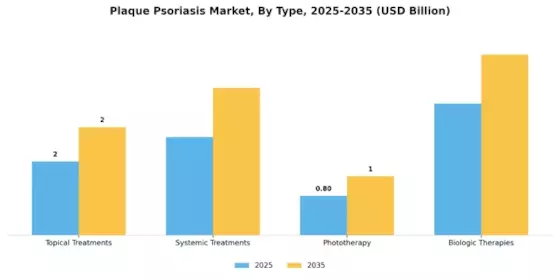
By Type: Biologic Therapies (Largest) vs. Topical Treatments (Fastest-Growing)
In the Plaque Psoriasis Market, Biologic Therapies currently hold the largest market share due to their efficacy and targeted approach to treatment. These therapies, typically administered subcutaneously or intravenously, improve symptoms significantly and provide long-lasting relief for moderate to severe plaque psoriasis patients. Topical Treatments, on the other hand, while holding a smaller share, are rapidly growing in popularity as they are often the first line of defense and are increasingly formulated with innovative ingredients for enhanced effectiveness.
Topical Treatments (Dominant) vs. Systemic Treatments (Emerging)
Topical Treatments have long been the dominant approach in managing plaque psoriasis, allowing for localized application that minimizes systemic exposure. They include drugs like corticosteroids, vitamin D analogues, and topical retinoids, offering patients a wide range of options to suit varying severity levels. Conversely, Systemic Treatments are emerging as influential options for those requiring more aggressive interventions. These treatments tackle psoriasis from within and are often necessary for patients with extensive involvement. The growing recognition of the need for comprehensive care for plaque psoriasis is driving the shift towards these systemic therapies, particularly given their ability to yield long-term management results.
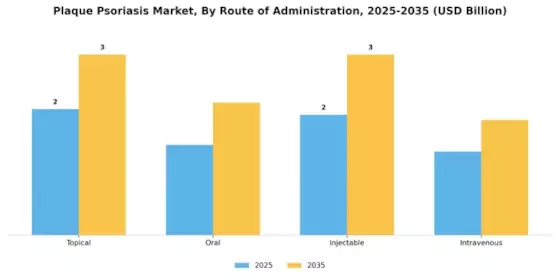
By Route of Administration: Topical (Largest) vs. Injectable (Fastest-Growing)
The Plaque Psoriasis Market showcases a diverse distribution across various routes of administration, including Topical, Oral, Injectable, and Intravenous. Among these, Topical treatments dominate the market, capturing a significant share due to their ease of use and direct application on affected areas. Injectable therapies, while smaller in market share, are rapidly gaining attention due to their efficacy and targeted delivery methods, addressing the needs of patients with moderate to severe forms of plaque psoriasis market.
Topical (Dominant) vs. Injectable (Emerging)
Topical treatments for plaque psoriasis have become the cornerstone of management, offering patients localized relief with an array of drug options such as corticosteroids, vitamin D analogues, and calcineurin inhibitors. The dominant position of plaque psoriasis drug market is attributed to patient preference for non-systemic therapies that minimize side effects. On the other hand, injectable therapies, including biologics, are emerging rapidly due to their effectiveness in treating more severe psoriasis cases. These therapies target specific immune pathways, making them appealing for patients requiring rapid and targeted action. As patient awareness grows and new injectable therapies are developed, their market share is expected to expand significantly.
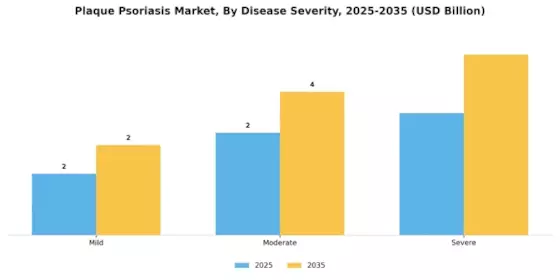
By Disease Severity: Moderate (Largest) vs. Severe (Fastest-Growing)
In the Plaque Psoriasis Market, the distribution of disease severity shows a significant prevalence of moderate cases, which account for the largest share of affected individuals. Mild cases follow, reflecting the growing awareness and diagnosis in early stages of the disease. Severe cases, while fewer in number, are rapidly gaining attention due to the intense need for effective and innovative treatment solutions.
Moderate (Dominant) vs. Severe (Emerging)
The moderate disease severity segment holds a dominant position in the Plaque Psoriasis Market , characterized by patients experiencing uncomfortable but manageable symptoms. This segment benefits from a wide range of treatment options, fostering patient adherence and improving quality of life. In contrast, the severe segment is emerging as the fastest-growing area, primarily due to an increase in advanced therapies and a surge in Plaque Psoriasis clinical trials aimed at severe cases. Patients in this category often require more complex and intensive treatment regimens, prompting pharmaceutical companies to invest heavily in research and development for innovative therapies to address the unmet needs of this demographic.
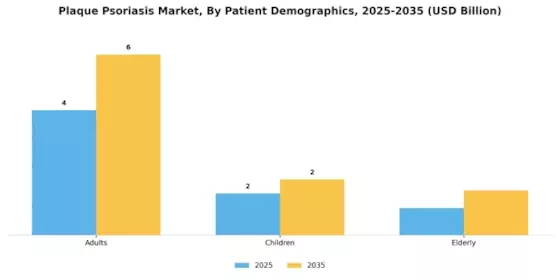
By Patient Demographics: Adults (Largest) vs. Elderly (Fastest-Growing)
In the Plaque Psoriasis Market, the patient demographics reveal that adults hold the largest share, representing a significant portion of the overall patient population affected by this chronic skin condition. They are typically between the ages of 18 and 65, where a majority have been diagnosed and are actively seeking treatment options. The elderly segment, while smaller in proportion, is experiencing rapid growth due to increasing awareness of psoriasis and an aging population that is susceptible to skin disorders like plaque psoriasis. The growth trends in the plaque psoriasis market are driven by a combination of factors affecting both adults and the elderly. In adults, the focus is primarily on moderate to severe forms of the disease, leading to a steady demand for effective treatment options. Meanwhile, the elderly population is gaining attention as advancements in healthcare and dermatology improve awareness and treatment adherence. Increasing life expectancy and a rising number of elderly individuals being diagnosed with plaque psoriasis signal a vital growth area in the market.
Adults (Dominant) vs. Elderly (Emerging)
In the Plaque Psoriasis Market, the adult patient segment serves as the dominant group, largely due to the chronic nature of the disease manifesting during early adulthood to middle age. Adults generally have better access to healthcare resources and are more likely to engage in routine treatments and consultations related to their condition. On the other hand, the elderly segment, identified as emerging, showcases significant growth potential as more seniors are diagnosed with plaque psoriasis, often characterized by unique treatment needs and comorbidities. This demographic may require tailored therapeutic solutions, which emphasizes the necessity for the pharmaceutical industry to innovate and adapt their offerings to cater to this diverse group of patients.
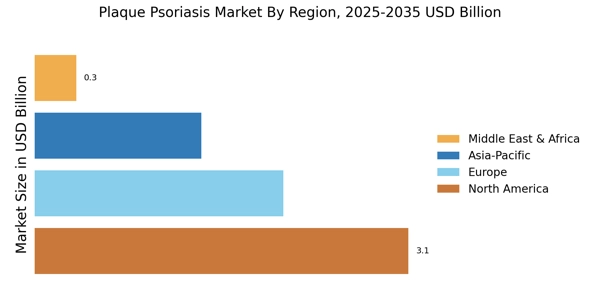
The Plaque Psoriasis Market is significantly diversified across various regions, with North America emerging as a leading player, valued at 2.8 USD Billion in 2024 and expected to reach 4.1 USD Billion by 2035. This dominance is attributed to advanced healthcare infrastructure and the growing prevalence of psoriasis in the region.
Europe follows closely, with a valuation of 2.3 USD Billion in 2024 and an estimated growth to 3.3 USD Billion by 2035, supported by increasing investments in innovative treatments. In South America, the market is projected to be valued at 0.5 USD Billion in 2024 and 0.8 USD Billion in 2035, indicating steady growth as awareness and diagnosis improve.The Asia Pacific region shows promising expansion, anticipated to rise from 1.3 USD Billion in 2024 to 1.9 USD Billion by 2035, driven by a large population base and evolving healthcare facilities.
Meanwhile, the Middle East and Africa currently hold a smaller market share, valued at 0.2 USD Billion in 2024, with an expected increase to 0.3 USD Billion by 2035, reflecting challenges in healthcare access that need to be addressed. Such market growth is primarily fueled by the increasing incidence of plaque psoriasis and the demand for effective treatment options across all regions, making the Plaque Psoriasis Market a crucial area for investment and development.
Key Players and Competitive Insights
The Plaque Psoriasis Market has become increasingly competitive as pharmaceutical companies strive to develop effective treatments for this chronic autoimmune condition. The rising prevalence of plaque psoriasis worldwide has triggered heightened research and development activities, resulting in a diverse range of therapeutic options, including biologics, small molecules, and phototherapy. Key players are focusing on innovations that enhance efficacy, reduce side effects, and improve patient adherence to treatment regimens. As awareness around plaque psoriasis grows, so does the demand for advanced medication, creating immense opportunities for companies that can deliver effective solutions. The competitive landscape is characterized by collaborations, strategic alliances, and advancements in technology, positioning companies to leverage their strengths in understanding patient needs and market dynamics.Novartis has established a strong presence in the Plaque Psoriasis Market, primarily due to its commitment to innovative research and the development of high-quality therapeutic options. The company's portfolio includes several products designed specifically for managing plaque psoriasis, and its robust pipeline indicates a focus on expanding treatment alternatives.Novartis has excelled in clinical trials, demonstrating a high efficacy rate in their offerings, which has significantly enhanced its reputation among healthcare providers and patients alike. The strength of Novartis lies in its extensive global reach and strong relationships with healthcare professionals, allowing for effective product distribution and increased patient access to new therapies. The company's continuous investment in research and development ensures that it remains at the forefront of innovation in treating plaque psoriasis.Merck has also made notable strides in the Plaque Psoriasis Market with a diverse portfolio of treatments aimed at addressing the needs of patients with this condition. The company's key products offer therapeutic benefits for patients experiencing moderate to severe plaque psoriasis, leveraging both innovative biotechnology and established treatment protocols.Merck's market presence is reinforced through strategic mergers and acquisitions that have expanded its capabilities and product offerings in the dermatology field. By focusing on patient-centric solutions and maintaining a strong commitment to research, Merck continuously enhances its competitive edge. The company has also prioritized collaborations with research institutions and healthcare providers to further investigate the underlying mechanisms of psoriasis, ultimately leading to better therapeutic outcomes and improved patient care.
Key Companies in the Plaque Psoriasis Market include
Industry Developments
Recent developments in the Plaque Psoriasis Market highlight ongoing advancements and strategic movements among key players. Notably, Novartis continues to innovate with new data supporting its treatment efficacy, while AbbVie maintains a strong market presence through its diversified portfolio.
In terms of mergers and acquisitions, there were no significant announcements implicating the major companies like Merck, Dermira, Celgene, Gilead Sciences, Takeda, Amgen, AstraZeneca, UCB, Eli Lilly, Incyte, Sanofi, Johnson & Johnson, Bristol-Myers Squibb, and AbbVie in the past few months. Growth in the market valuation of these companies is driven by increasing R&D investments and emerging therapies addressing unmet medical needs, which bolster market dynamics.
For instance, in August 2022, Gilead Sciences acquired a promising therapeutic asset that could enhance its treatment offerings. The overall market is expected to expand significantly as awareness of plaque psoriasis and therapeutic advancements grows, fueled by collaborative efforts in Research and Development among companies striving to deliver innovative solutions to patients. The Plaque Psoriasis Market remains dynamic, with industry stakeholders focusing on enhancing patient outcomes and market reach.
Future Outlook
Plaque Psoriasis Market Future Outlook
The Plaque Psoriasis Market size is projected to grow at a 3.42% CAGR from 2025 to 2035, driven by increasing prevalence, innovative therapies, and rising awareness.
New opportunities lie in:
Development of personalized biologic therapies targeting specific patient profiles.
Expansion of telehealth services for remote patient monitoring and consultations.
Investment in digital health platforms for enhanced patient engagement and education.
By 2035, the Plaque Psoriasis Market is expected to achieve substantial growth, reflecting evolving treatment paradigms.
Market Segmentation
Plaque Psoriasis Market Type Outlook
Topical Treatments
Systemic Treatments
Phototherapy
Biologic Therapies
Plaque Psoriasis Market Disease Severity Outlook
Mild
Moderate
Severe
Plaque Psoriasis Market Patient Demographics Outlook
Adults
Children
Elderly
Plaque Psoriasis Market Route of Administration Outlook
Topical
Oral
Injectable
Intravenous
Report Scope
MARKET SIZE 2024
6.981(USD Billion)
MARKET SIZE 2025
7.22(USD Billion)
MARKET SIZE 2035
10.11(USD Billion)
COMPOUND ANNUAL GROWTH RATE (CAGR)
3.42% (2025 - 2035)
REPORT COVERAGE
Revenue Forecast, Competitive Landscape, Growth Factors, and Trends
BASE YEAR
2024
Market Forecast Period
2025 - 2035
Historical Data
2019 - 2024
Market Forecast Units
USD Billion
Key Companies Profiled
AbbVie (US), Amgen (US), Bristol-Myers Squibb (US), Johnson & Johnson (US), Novartis (CH), Pfizer (US), Regeneron Pharmaceuticals (US), UCB (BE), Eli Lilly and Company (US)
Segments Covered
Treatment Type, Route of Administration, Disease Severity, Patient Demographics, Regional
Key Market Opportunities
Advancements in biologics and personalized medicine enhance treatment options in the Plaque Psoriasis Market.
Key Market Dynamics
Rising demand for biologics drives innovation and competition in the plaque psoriasis treatment landscape.
Countries Covered
North America, Europe, APAC, South America, MEA
FAQs
What is the current valuation of the Plaque Psoriasis Market as of 2024?
The overall market valuation was 6.981 USD Billion in 2024.
What is the projected market size for the Plaque Psoriasis Market in 2035?
The projected valuation for the Plaque Psoriasis Market in 2035 is 10.11 USD Billion.
What is the expected CAGR for the Plaque Psoriasis Market during the forecast period 2025 - 2035?
The expected CAGR for the Plaque Psoriasis Market during the forecast period 2025 - 2035 is 3.42%.
Which companies are considered key players in the Plaque Psoriasis Market?
Key players in the market include AbbVie, Amgen, Bristol-Myers Squibb, Johnson & Johnson, Novartis, Pfizer, Regeneron Pharmaceuticals, UCB, and Eli Lilly and Company.
What are the market segments for Plaque Psoriasis treatments?
The market segments include Topical Treatments, Systemic Treatments, Phototherapy, and Biologic Therapies.
How did the valuation of Biologic Therapies change from 2024 to 2025?
The valuation of Biologic Therapies increased from 2.68 USD Billion in 2024 to a projected 3.68 USD Billion in 2025.
What is the market size for different routes of administration in 2025?
In 2025, the market size for Topical is projected at 3.0 USD Billion, Oral at 2.2 USD Billion, Injectable at 3.0 USD Billion, and Intravenous at 1.91 USD Billion.
How does disease severity impact the market valuation for Plaque Psoriasis?
The market valuation for disease severity in 2025 is projected at 2.2 USD Billion for Mild, 3.5 USD Billion for Moderate, and 4.41 USD Billion for Severe cases.
What is the projected market size for different patient demographics in 2025?
In 2025, the projected market size is 6.5 USD Billion for Adults, 2.0 USD Billion for Children, and 1.61 USD Billion for the Elderly.
What trends are expected to shape the Plaque Psoriasis Market in the coming years?
Trends likely to shape the market include advancements in biologic therapies and an increasing focus on personalized medicine.
Author
Author
Vikita Thakur
Senior Research Analyst
She holds an experience of about 5+ years in market research and business consulting projects for sectors such as life sciences, medical devices, and healthcare IT. She possesses a robust background in data analysis, market estimation, competitive intelligence, pipeline analysis market trend identification, and consumer behavior insights. Her expertise lies in technical Sales support, client interaction and project management, designing and implementing market research studies, conducting competitive analysis, and synthesizing complex data into actionable recommendations that drive business growth.
read more
Co-Author
Rahul Gotadki
Research Manager
He holds an experience of about 9+ years in Market Research and Business Consulting, working under the spectrum of Life Sciences and Healthcare domains. Rahul conceptualizes and implements a scalable business strategy and provides strategic leadership to the clients. His expertise lies in market estimation, competitive intelligence, pipeline analysis, customer assessment, etc.
The secondary research process involved comprehensive analysis of regulatory databases, peer-reviewed medical journals, clinical publications, and authoritative health organizations. Key sources included the US Food & Drug Administration (FDA), European Medicines Agency (EMA), National Psoriasis Foundation (NPF), American Academy of Dermatology (AAD), International Psoriasis Council (IPC), National Institutes of Health (NIH), National Center for Biotechnology Information (NCBI/PubMed), Centers for Disease Control and Prevention (CDC), World Health Organization (WHO) Global Health Observatory, European Medicines Agency (EMA) Centralised Procedure Database, Health Canada, Japan Pharmaceuticals and Medical Devices Agency (PMDA), Therapeutic Goods Administration (TGA) Australia, National Institute for Health and Care Excellence (NICE) UK, IQVIA National Sales Perspective, Symphony Health Solutions, and national health ministry reports from key markets. These sources were utilized to collect epidemiology statistics, regulatory approval data, clinical trial outcomes, pipeline analysis, pricing dynamics, and treatment paradigm shifts for biologic therapies, systemic treatments, topical treatments, and phototherapy segments.
Primary Research
In order to gather both qualitative and quantitative insights, supply-side and demand-side stakeholders were interviewed during the primary research process. CEOs, VPs of clinical development, heads of regulatory affairs, and marketing directors from biopharmaceutical companies creating novel oral systemic medicines, TNF-alpha inhibitors, PDE4 inhibitors, IL-17 inhibitors, and IL-23 inhibitors were examples of supply-side sources. Board-certified dermatologists, rheumatologists, medical directors of dermatological clinics, hospital pharmacy directors, and procurement leads from managed care organizations, specialty pharmacies, and university medical institutions were examples of demand-side sources. Primary research obtained information on prescribing patterns, patient journey mapping, biosimilar adoption rates, and reimbursement dynamics for novel biologics and emerging small molecule inhibitors. It also validated market segmentation across treatment types, confirmed clinical trial timelines, and predicted regulatory milestones.
Primary Respondent Breakdown:
By Designation: C-level Primaries (32%), Director Level (30%), Others (38%)
By Region: North America (32%), Europe (29%), Asia-Pacific (34%), Rest of World (5%)
Market Size Estimation
Global market valuation was derived through revenue mapping and patient volume analysis. The methodology included:
Identification of 50+ key manufacturers across North America, Europe, Asia-Pacific, and Latin America developing treatments across topical, systemic, phototherapy, and biologic therapy categories
Product mapping across TNF-alpha inhibitors (adalimumab, etanercept, infliximab), IL-17 inhibitors (secukinumab, ixekizumab, brodalumab), IL-23 inhibitors (guselkumab, risankizumab, tildrakizumab), PDE4 inhibitors (apremilast), topical corticosteroids, vitamin D analogues, and emerging pipeline assets
Analysis of reported and modeled annual revenues specific to psoriasis therapeutic portfolios
Coverage of manufacturers representing 75-80% of global market share in 2024
Epidemiology-based patient flow modeling accounting for diagnosed prevalence, treatment rates, and therapy lines
Extrapolation using bottom-up (patient volume × treatment cost by country/region) and top-down (manufacturer revenue validation) approaches to derive segment-specific valuations for biologics, oral systemics, and conventional therapies
No country-specific reports available for this market.
Customer Stories
“This is really good guys. Excellent work on a tight deadline. I will continue to use you going forward and recommend you to others. Nice job”
Noah MalgeriCo-Founder
“Thanks. It’s been a pleasure working with you, please use me as reference with any other Intel employees.”
Joseph AguayoSales Operations & Pricing Manager
“Thanks for sending the report it gives us a good global view of the Betaïne market.”
Peter Groot koerkampAccount and Business Manager
“Thank you, this will be very helpful for OQS.”
La Terria DoddProgram Support Specialist
“We found the report very insightful! we found your research firm very helpful. I'm sending this email to secure our future business.”
Younghwan ChoiSenior Retail Manager
“I am very pleased with how market segments have been defined in a relevant way for my purposes (such as "Portable Freezers & refrigerators" and "last-mile").
In general the report is well structured. Thanks very much for your efforts.”
Mark IrwinManagement Consultant
“I have been reading the first document or the study, ,the Global HVAC and FP market report 2021 till 2026. Must say, good info! I have not gone in depth at all parts, but got a good indication of the data inside!”
Rob KooikerGroup Product Manager HVAC & Fire Protection GMA
“We got the report in time, we really thank you for your support in this process. I also thank to all of your team as they did a great job.”
Akif MorogluStrategy & Business Development Director
“The Automotive 48V ECU Components Procurement Intelligence Study” was a complex project, but the Market Research Future (MRFR) team handled it with quality, agility, and customer-centricity. They delivered all requested data on time and within the agreed scope. The team, including Shubhendra Anand and Rahul Gotadki, was always readily available to clarify questions and swiftly implement necessary adjustments, driving the project to a successful conclusion within a very demanding timeframe.
I would also like to specifically commend Akshay Agarwal for his responsiveness and support at every stage—from our initial inquiry on May 6th through to final delivery on June 18th. His dedication made the entire process seamless.”
Guilherme Gomes MartinsProduct Management Director