Psoriasis Treatment Market Size, Growth Research Report By Treatment Type (Topical Treatments, Systemic Treatments, Phototherapy, Biologics), By Administration Route (Oral, Topical, Injectable, Intravenous), By Indication (Plaque Psoriasis, Guttate Psoriasis, Inverse Psoriasis, Pustular Psoriasis), By End User (Hospital, Dermatology Clinics, Homecare Settings) and By Regional (North America, Europe, South America, Asia Pacific, Middle East and Africa) - Competitor Industry Analysis and Trends Forecast Till 2035
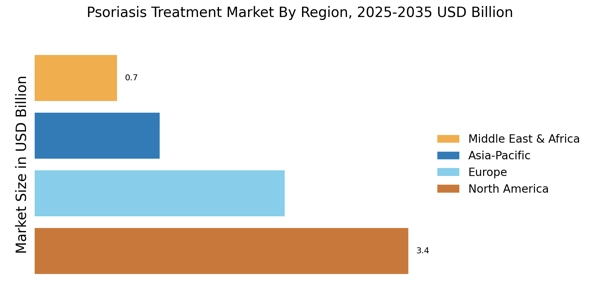
The Global Psoriasis Treatment Market size was valued at USD 28.6 Billion in 2025, and the market is projected to grow from USD 31.2 Billion in 2026 to USD 68.80 Billion by 2035, registering a CAGR of 9.2% during the forecast period 2026–2035. North America led the market in 2025 with over 45% share, generating around USD 12.87 Billion in revenue. Rising global prevalence of psoriasis and other chronic inflammatory skin conditions is a major growth driver, supported by increasing awareness, improved diagnosis rates, and growing demand for advanced therapies, significantly accelerating adoption of effective and targeted psoriasis treatment solutions worldwide. According to WHO, psoriasis affects approximately 2–3% of the global population, representing over 125 million people worldwide, while IHME reports skin diseases contribute to more than 42 million years lived with disability (YLDs) globally, highlighting strong and sustained demand for effective psoriasis treatment solutions.
Key Market Trends & Highlights
The Psoriasis Treatment Market is experiencing a transformative shift towards innovative therapies and personalized care.
Hospitals led end-user adoption with 46% share, benefiting from specialist expertise and access to advanced biologic therapies.
The market is projected to grow from USD 31.2 billion in 2026 to USD 68.80 billion by 2035 at 9.2% CAGR.
North America led the global psoriasis treatment market with over 45% revenue share in 2025.
Europe generated approximately USD 8.58 billion revenue in 2025, accounting for a 30% regional market share.
Market Size & Forecast
2025 Market Size
28.6 (USD Billion)
2035 Market Size
68.8 (USD Billion)
CAGR (2025 - 2035)
9.2%
Major Players
Companies such as AbbVie (US), Amgen (US), Johnson & Johnson (US), Novartis (CH), Bristol-Myers Squibb (US), GSK (GB), Eli Lilly (US), Sanofi (FR), UCB (BE) are some of the major participants in the global market.
Our Impact
Enabled $4.3B Revenue Impact for Fortune 500 and Leading Multinationals
Partnering with 2000+ Global Organizations Each Year
30K+ Citations by Top-Tier Firms in the Industry
Psoriasis Treatment Market Trends
The Psoriasis Treatment Market is currently experiencing a dynamic evolution, driven by a combination of innovative therapies and a growing understanding of the disease's underlying mechanisms. Recent advancements in biologic treatments, which target specific pathways involved in the inflammatory process, appear to be reshaping the therapeutic landscape. Additionally, psoriasis statistics suggest that the increasing prevalence of psoriasis globally suggests a rising demand for effective treatment options.
This trend is further supported by heightened awareness and education surrounding the condition, which encourages patients to seek medical advice and explore available therapies. Moreover, the market is witnessing a shift towards personalized medicine, where treatments are tailored to individual patient profiles. This approach not only enhances treatment efficacy but also minimizes potential side effects, thereby improving patient adherence, augmenting the psoriasis market size.
The integration of digital health technologies, such as telemedicine and mobile health applications, is also gaining traction, facilitating better patient management and follow-up care. As the market continues to evolve, stakeholders must remain vigilant to emerging trends and adapt strategies accordingly to meet the diverse needs of patients and healthcare providers alike.
Rise of Biologic Therapies
The Psoriasis Treatment Market is increasingly characterized by the emergence of biologic therapies. Psoriasis statistics suggest that these advanced treatments target specific components of the immune system, offering a more effective approach to managing psoriasis symptoms. As research progresses, the development of new biologics is likely to expand treatment options, potentially leading to improved patient outcomes.
AbbVie continues strengthening its psoriasis portfolio through biologic product innovation and strategic collaborations. The company's immunology segment generated over USD 29 billion in annual revenue, reflecting strong demand for advanced biologic therapies. Continued investment in next-generation immune-targeting treatments and partnerships is expanding therapeutic options, improving long-term disease management, and accelerating innovation within the psoriasis treatment landscape.
Personalized Medicine Approach
There is a noticeable shift towards personalized medicine within the Psoriasis Treatment Market. Tailoring treatments to individual patient characteristics may enhance therapeutic effectiveness and reduce adverse effects. This trend suggests a growing recognition of the need for customized care in managing chronic conditions like psoriasis.
Amgen's portfolio expansion initiatives and clinical advancements are supporting the transition toward personalized psoriasis care. With multiple biologic therapies receiving regulatory approvals globally, patient-specific treatment selection is becoming increasingly achievable. Strategic acquisitions and expanded immunology research programs continue enhancing precision medicine capabilities, helping healthcare providers optimize treatment outcomes while reducing variability in patient responses.
Integration of Digital Health Solutions
The incorporation of digital health solutions is transforming the Psoriasis Treatment Market. Telemedicine and mobile applications are facilitating better patient engagement and monitoring. This trend indicates a move towards more accessible and efficient healthcare delivery, which could significantly improve treatment adherence and patient satisfaction.
Johnson & Johnson is advancing digital healthcare integration through innovative patient-support technologies and clinically validated treatment platforms. Regulatory progress in digital health adoption is improving remote monitoring and patient engagement. With healthcare systems increasingly embracing connected care models, digital tools are enhancing treatment adherence, improving disease tracking accuracy, and supporting more effective long-term psoriasis management strategies worldwide.
Psoriasis Treatment Market Drivers
Growing Awareness and Education
The increasing awareness and education surrounding psoriasis are crucial drivers for the Psoriasis Treatment Market. Campaigns aimed at educating the public about the condition and its treatment options have led to a rise in diagnosis rates. Patients are now more informed about their treatment choices, which encourages them to seek medical advice. This heightened awareness is particularly evident in regions where healthcare initiatives focus on chronic diseases. As more individuals understand the implications of psoriasis, the demand for effective treatments is expected to rise, thereby propelling the market forward.
According to World Bank health indicators, global life expectancy has surpassed 73 years, increasing focus on chronic disease management and patient education. Growing healthcare awareness campaigns are encouraging earlier diagnosis of psoriasis, improving treatment-seeking behavior, and supporting wider adoption of advanced therapeutic options across both developed and emerging healthcare markets.
Increasing Prevalence of Psoriasis
The rising incidence of psoriasis is a pivotal driver in the Psoriasis Treatment Market. Recent estimates indicate that approximately 2-3% of the population is affected by this chronic skin condition, leading to a growing demand for effective treatment options. As awareness of psoriasis increases, more individuals seek medical intervention, thereby expanding the market. The prevalence of psoriasis is particularly notable in developed regions, where healthcare access is more readily available. This trend suggests that the market will continue to grow as healthcare providers develop new therapies to meet the needs of an expanding patient population.
According to IHME data, skin and subcutaneous diseases collectively affect hundreds of millions of individuals globally each year. The substantial disease burden continues to drive demand for effective psoriasis management solutions, supporting investments in innovative therapies and expanding access to specialized dermatological care services worldwide.
Advancements in Treatment Modalities
Innovations in treatment modalities are significantly influencing the Psoriasis Treatment Market. The introduction of biologic therapies, which target specific pathways in the immune system, has transformed the treatment landscape. These therapies have shown efficacy in moderate to severe cases, leading to increased adoption among healthcare professionals. Furthermore, the market is witnessing a surge in topical treatments and systemic therapies, which cater to varying degrees of psoriasis severity. The continuous research and development efforts in this area indicate a promising future for the market, as new and improved therapies are likely to emerge.
Regulatory Support for New Therapies
Regulatory support for the approval of new therapies is a vital driver in the Psoriasis Treatment Market. Regulatory agencies are increasingly expediting the review process for innovative treatments, particularly biologics and novel systemic therapies. This trend is encouraging pharmaceutical companies to invest in research and development, leading to a more diverse array of treatment options for patients. The favorable regulatory environment not only accelerates the availability of new therapies but also enhances competition within the market. As a result, the market is likely to experience growth as new and effective treatments become accessible to patients.
Rising Investment in Healthcare Infrastructure
The expansion of healthcare infrastructure is a significant factor impacting the Psoriasis Treatment Market. Increased investment in healthcare facilities and services enhances access to dermatological care, which is essential for effective psoriasis management. Governments and private entities are focusing on improving healthcare systems, particularly in underserved areas. This investment is likely to facilitate better diagnosis and treatment options for psoriasis patients. As healthcare systems evolve, the market is poised to benefit from improved patient access and a broader range of treatment modalities.
Market Segment Insights
By Type: Topical Treatments (Largest) vs. Biologics (Fastest-Growing)
The Topical Treatments segment dominates the Psoriasis Treatment Market share at 48% due to its widespread use and accessibility for patients. This segment includes various therapies such as corticosteroids, vitamin D analogs, and retinoids, which are effective for mild to moderate cases of psoriasis. On the other hand, Biologics, which are advanced medications targeting specific parts of the immune system, are gaining traction and hold a significant part of the market due to their effectiveness in severe cases, resulting in their rapid growth.
Novartis continues investing heavily in dermatology innovation and patient-focused treatment solutions. The company's global pharmaceutical operations generated over USD 50 billion in annual revenue, highlighting strong industry commitment toward improving accessible treatment options, including topical therapies that remain the first-line approach for many psoriasis patients.
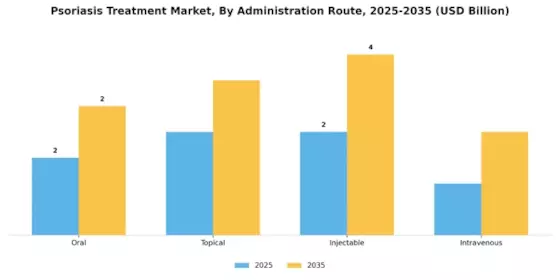
By Administration Route: Topical (Largest) vs. Injectable (Fastest-Growing)
The administration route segment displays significant diversity, with topical treatments holding the largest Psoriasis Treatment Market share at 52%. These treatments are favored due to their direct application on affected areas, resulting in minimal systemic exposure. Injectables, while representing a smaller share currently, are emerging as a potent contender due to their efficacy and the increasing patient and physician acceptance. Oral and intravenous routes, though available, occupy more specialized niches within the market.
Bristol Myers Squibb maintains substantial investment in immunology and inflammatory disease research. With annual R&D spending exceeding USD 9 billion, the company supports development of innovative treatment approaches that complement widespread topical therapy usage, reinforcing the importance of convenient administration routes in psoriasis management.
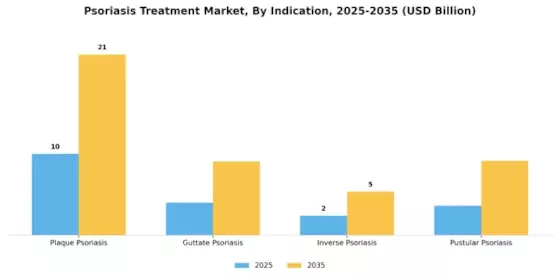
By Indication: Plaque Psoriasis (Largest) vs. Guttate Psoriasis (Fastest-Growing)
The psoriasis treatment market features a diverse range of indications, with Plaque Psoriasis accounting for the largest market share at 62%. This subtype is the most prevalent form of psoriasis and is characterized by raised, inflamed lesions covered with silvery scales. Guttate Psoriasis, while smaller in share compared to Plaque, has been noted for its rapid growth, primarily in younger populations and influenced by factors such as streptococcal infections. As the awareness and diagnosis of various psoriasis types improve, the market distribution reflects these changes in patient demographics and symptom presentations.
GSK continues expanding its immunology research programs focused on chronic inflammatory diseases. Plaque psoriasis remains the most commonly diagnosed form globally, and ongoing investments in targeted therapies and precision medicine initiatives are improving treatment effectiveness and strengthening clinical management across large patient populations.
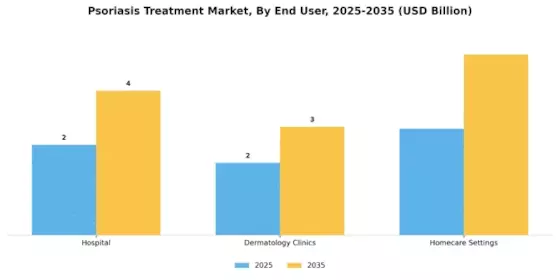
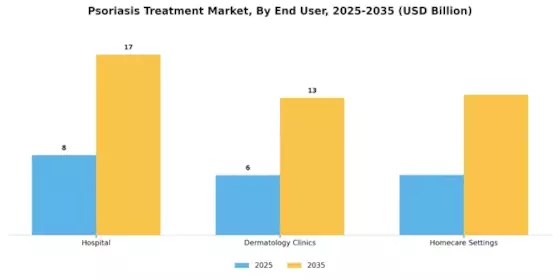
By End User: Hospital (Largest) vs. Dermatology Clinics (Fastest-Growing)
Hospitals account for the largest share in the psoriasis treatment market, representing 46% of the end-user segment. This is primarily due to their capacity to offer comprehensive care, advanced treatment options, and the availability of specialist healthcare professionals. Dermatology clinics follow closely, yet they are witnessing an impressive surge in demand as more patients seek specialized care in a focused environment. Homecare settings are becoming increasingly relevant, particularly for those preferring convenience and personalized treatment regimens, although they hold a smaller share compared to hospitals and clinics.
Sanofi invests significantly in specialty care and immunology innovation, supporting hospital-based treatment ecosystems. With annual pharmaceutical sales exceeding EUR 40 billion, the company contributes to expanding access to advanced psoriasis therapies delivered through hospitals, where multidisciplinary expertise and comprehensive care services remain critical.
Get more detailed insights about Psoriasis Treatment MarketRequest Free Sample
Regional Insights
North America : Leading Market for Treatments
North America leads in the Psoriasis Treatment Market size, accounting for over 45% of the global revenue in 2025. The region's growth is driven by increasing prevalence of psoriasis, advancements in treatment options, and supportive regulatory frameworks. The U.S. Food and Drug Administration (FDA) has accelerated the approval process for innovative therapies, enhancing market dynamics.
According to CDC data, approximately 6 in 10 U.S. adults have at least one chronic disease, increasing demand for long-term disease management solutions. This growing healthcare burden supports adoption of innovative psoriasis treatments and strengthens North America's position as the leading regional market for advanced dermatological therapies.
The demand for biologics and targeted therapies is on the rise, further propelling market growth. The competitive landscape in North America is robust, with key players such as AbbVie, Amgen, and Johnson & Johnson leading the market. The presence of advanced healthcare infrastructure and high healthcare expenditure supports the adoption of new therapies. Additionally, ongoing clinical trials and research initiatives are expected to introduce novel treatment options, solidifying North America's position as a leader in the market.
Eli Lilly and Company reported annual revenue exceeding USD 45 billion, supported by continued investment in immunology and biologic therapies. Ongoing clinical advancements and strong research funding are accelerating treatment innovation, reinforcing North America's leadership in psoriasis therapy development and commercialization.
Europe : Emerging Market with Growth Potential
Europe Psoriasis Treatment Market size was valued at USD 8.58 billion in 2025, making it the second-largest regional market with a 30% share. The region is witnessing significant growth due to rising awareness about psoriasis, increasing healthcare investments, and favorable reimbursement policies. The European Medicines Agency (EMA) has been proactive in approving new therapies, which has stimulated market demand.
The European Medicines Agency oversees medicines for approximately 450 million people across the European Union. Continued approvals of innovative biologics and immunology treatments, combined with supportive reimbursement frameworks, are improving patient access to advanced psoriasis therapies and supporting sustained market growth throughout Europe.
The growing focus on personalized medicine is also a key driver of market expansion in Europe. Leading countries in Europe include Germany, France, and the UK, which are home to several prominent pharmaceutical companies. Key players such as Novartis, GSK, and Sanofi are actively involved in developing innovative treatments. The competitive landscape is characterized by a mix of established companies and emerging biotech firms, fostering a dynamic environment for psoriasis treatment advancements.
Asia-Pacific : Rapidly Growing Treatment Sector
The Asia-Pacific region is emerging as a significant player in the psoriasis treatment market, accounting for approximately 20% of the global market share. The growth is driven by increasing awareness of skin diseases, rising disposable incomes, and expanding healthcare access. Countries like China and India are witnessing a surge in demand for psoriasis treatments, supported by government initiatives aimed at improving healthcare infrastructure and access to medications.
Regulatory bodies are also streamlining approval processes for new therapies, enhancing market dynamics. In the competitive landscape, key players such as Eli Lilly and Pfizer are making substantial investments in the region. The presence of local pharmaceutical companies is also increasing, contributing to a diverse market. The growing trend of telemedicine and digital health solutions is expected to further boost treatment accessibility and patient engagement in the Asia-Pacific region, driving future growth.
Middle East and Africa : Emerging Market with Challenges
The Middle East and Africa (MEA) region is gradually developing its psoriasis treatment market, holding approximately 5% of the global market share. The growth is hindered by challenges such as limited healthcare infrastructure, high treatment costs, and varying levels of awareness about psoriasis. However, increasing investments in healthcare and initiatives to improve access to treatments are expected to drive market growth in the coming years. Regulatory bodies are working to enhance the approval processes for new therapies, which could stimulate market dynamics.
Leading countries in the MEA region include South Africa and the UAE, where there is a growing presence of international pharmaceutical companies. Key players are beginning to explore opportunities in this region, focusing on affordable treatment options. The competitive landscape is evolving, with local firms collaborating with global companies to enhance treatment availability and awareness, paving the way for future growth in the market.
Key Players and Competitive Insights
The Psoriasis Treatment Market is characterized by a dynamic competitive landscape, driven by a confluence of innovation, strategic partnerships, and a growing emphasis on personalized medicine. Major players such as AbbVie (US), Amgen (US), and Novartis (CH) are at the forefront, leveraging their extensive research capabilities and established market presence to enhance their product offerings. AbbVie (US) continues to focus on its flagship product, Humira, while also investing in the development of new therapies that target specific patient populations. Meanwhile, Amgen (US) is expanding its portfolio through strategic collaborations aimed at enhancing its biologics pipeline, which is crucial in addressing the diverse needs of psoriasis patients. Novartis (CH) is similarly positioned, emphasizing its commitment to innovation through the development of novel therapies that not only improve efficacy but also reduce treatment burden for patients. In terms of business tactics, companies are increasingly localizing manufacturing and optimizing supply chains to enhance efficiency and responsiveness to market demands. The competitive structure of the psoriasis treatment market appears moderately fragmented, with several key players exerting influence over various segments. This fragmentation allows for a diverse range of treatment options, catering to different patient demographics and preferences, while also fostering a competitive environment that encourages continuous innovation. In August 2025, AbbVie (US) announced a strategic partnership with a leading biotechnology firm to co-develop a new class of oral therapies for psoriasis. This collaboration is expected to accelerate the development timeline and enhance AbbVie’s competitive edge in the oral treatment segment, which is gaining traction among patients seeking alternatives to injectable therapies. The strategic importance of this partnership lies in its potential to broaden AbbVie’s market share and reinforce its position as a leader in psoriasis treatment. In September 2025, Amgen (US) launched a new digital health platform aimed at improving patient engagement and adherence to psoriasis treatments. This initiative reflects a growing trend towards digitalization in healthcare, where technology is leveraged to enhance patient outcomes. By integrating digital tools into its treatment protocols, Amgen (US) not only improves patient experience but also gathers valuable data that can inform future product development. In October 2025, Novartis (CH) unveiled a sustainability initiative focused on reducing the environmental impact of its manufacturing processes for psoriasis treatments. This move aligns with the increasing demand for sustainable practices within the pharmaceutical industry and positions Novartis as a forward-thinking player committed to corporate social responsibility. The strategic importance of this initiative is multifaceted, as it not only addresses regulatory pressures but also resonates with environmentally conscious consumers. As of October 2025, the competitive trends in the psoriasis treatment market are increasingly defined by digitalization, sustainability, and the integration of artificial intelligence in drug development. Strategic alliances are becoming more prevalent, as companies recognize the value of collaboration in navigating complex market dynamics. Looking ahead, competitive differentiation is likely to evolve from traditional price-based competition towards a focus on innovation, technological advancements, and supply chain reliability, ultimately enhancing patient care and treatment outcomes.
Key Companies in the Psoriasis Treatment Market include
Industry Developments
In recent months, the Global Psoriasis Treatment Market has experienced significant developments, particularly with companies like AbbVie making strides in Research and Development for improved biologic therapies. In September 2023, Pfizer launched a new clinical trial aimed at exploring innovative treatments for moderate to severe psoriasis, showcasing ongoing commitment in this sector. Similarly, in August 2023, Merck announced advancements in their psoriasis portfolio, aimed at enhancing patient outcomes.
Major companies including Johnson and Johnson and Novartis continue to engage in improving treatment options, while GSK has been actively investing in research to tap into emerging treatment modalities. In terms of mergers and acquisitions, in July 2023, AstraZeneca completed the acquisition of a portfolio from a small biotech company focused on skin diseases, significantly enhancing their capabilities in the psoriasis market.
Reports indicate that there is growing momentum for biologic therapies, which has led to increased valuations for key players in the market. Over the past two to three years, the industry has witnessed a marked increase in interest and investment, particularly in targeting more effective treatment options for patients, as the demand for innovative solutions continues to rise globally.
Future Outlook
Psoriasis Treatment Market Future Outlook
The Psoriasis Treatment Market size is projected to reach USD 68.80 Billion by 2035, growing at a CAGR of 9.2%, driven by increasing prevalence, innovative therapies, and rising healthcare expenditure.
New opportunities lie in:
Development of personalized biologic therapies targeting specific patient profiles. Expansion of telehealth services for remote patient monitoring and consultations. Investment in digital health platforms for treatment adherence and education.
By 2035, the Psoriasis Treatment Market is expected to achieve substantial growth and innovation.
Market Segmentation
Psoriasis Treatment Market Type Outlook
Topical Treatments
Systemic Treatments
Phototherapy
Biologics
Psoriasis Treatment Market End User Outlook
Hospital
Dermatology Clinics
Homecare Settings
Psoriasis Treatment Market Indication Outlook
Plaque Psoriasis
Guttate Psoriasis
Inverse Psoriasis
Pustular Psoriasis
Psoriasis Treatment Market Administration Route Outlook
Oral
Topical
Injectable
Intravenous
Report Scope
MARKET SIZE 2025
28.6(USD Billion)
MARKET SIZE 2026
31.2(USD Billion)
MARKET SIZE 2035
68.8(USD Billion)
COMPOUND ANNUAL GROWTH RATE (CAGR)
9.2% (2026 - 2035)
REPORT COVERAGE
Revenue Forecast, Competitive Landscape, Growth Factors, and Trends
BASE YEAR
2025
Market Forecast Period
2026 - 2035
Historical Data
2019 - 2024
Market Forecast Units
USD Billion
Key Companies Profiled
AbbVie (US), Amgen (US), Johnson & Johnson (US), Novartis (CH), Bristol-Myers Squibb (US), GSK (GB), Eli Lilly (US), Sanofi (FR), UCB (BE)
Segments Covered
Treatment Type, Administration Route, Indication, End User, Regional
Key Market Opportunities
Emergence of biologics and personalized therapies enhances treatment options in the market.
Key Market Dynamics
Rising demand for biologics drives innovation and competition in the psoriasis treatment landscape.
What is the current valuation of the Psoriasis Treatment Market as of 2024?
The Psoriasis Treatment Market was valued at 7.45 USD Billion in 2024.
What is the projected market size for the Psoriasis Treatment Market by 2035?
The market is projected to reach 12.0 USD Billion by 2035.
What is the expected CAGR for the market during the forecast period 2025 - 2035?
The expected CAGR for the market during 2025 - 2035 is 4.43%.
Which segment of the Psoriasis Treatment Market had the highest valuation in 2024?
In 2024, the Biologics segment had the highest valuation at 2.95 USD Billion.
What are the projected values for Topical Treatments in the Psoriasis Treatment Market by 2035?
Topical Treatments are projected to reach 2.5 USD Billion by 2035.
How does the market for Injectable treatments compare to Oral treatments in 2024?
In 2024, the market for Injectable treatments was valued at 2.0 USD Billion, while Oral treatments were also at 1.5 USD Billion.
What is the expected growth for the Homecare Settings segment by 2035?
The Homecare Settings segment is expected to grow to 5.0 USD Billion by 2035.
Which key players are leading the Psoriasis Treatment Market?
Key players in the market include AbbVie, Amgen, Johnson & Johnson, and Novartis.
What is the projected value of Plaque Psoriasis treatments by 2035?
Plaque Psoriasis treatments are projected to reach 5.0 USD Billion by 2035.
What is the anticipated market performance for Dermatology Clinics in the coming years?
Dermatology Clinics are expected to grow to 3.0 USD Billion by 2035.
Author
Author
Satyendra Maurya
Research Analyst
An accomplished research analyst with high proficiency in market forecasting, data visualization, competitive benchmarking, and others. He holds a pronounced track record in research and consulting projects for sectors such as life sciences, medical devices, and healthcare IT. His capabilities in qualitative and quantitative analysis have resulted in positive client outcomes. Working on niche market trends, opportunities, sales, and forecasted value is part of his skill set.
read more
Co-Author
Rahul Gotadki
Research Manager
He holds an experience of about 9+ years in Market Research and Business Consulting, working under the spectrum of Life Sciences and Healthcare domains. Rahul conceptualizes and implements a scalable business strategy and provides strategic leadership to the clients. His expertise lies in market estimation, competitive intelligence, pipeline analysis, customer assessment, etc.
The secondary research process involved comprehensive analysis of regulatory databases, peer-reviewed dermatology and immunology journals, clinical trial registries, and authoritative health organizations. Key sources included the US Food & Drug Administration (FDA) [Center for Drug Evaluation and Research - Dermatology and Ophthalmology Division], European Medicines Agency (EMA) [Committee for Medicinal Products for Human Use], National Institute for Health and Care Excellence (NICE) UK, Pharmaceuticals and Medical Devices Agency (PMDA) Japan, and Health Canada.
Clinical and epidemiological data were sourced from the National Psoriasis Foundation (NPF) [US epidemiology studies], International Psoriasis Council (IPC), American Academy of Dermatology (AAD), European Academy of Dermatology and Venereology (EADV), and International League of Dermatological Societies (ILDS). Government health statistics were obtained from the Centers for Disease Control and Prevention (CDC) [National Health and Nutrition Examination Survey], National Institutes of Health (NIH/National Institute of Arthritis and Musculoskeletal and Skin Diseases - NIAMS), World Health Organization (WHO) [Global Burden of Disease Study], Eurostat Health Database, NHS Digital [UK Hospital Episode Statistics], and Agency for Healthcare Research and Quality (AHRQ) [Medical Expenditure Panel Survey].
Academic and clinical sources included PubMed/MEDLINE, Cochrane Library [Systematic reviews on biologic therapies], ClinicalTrials.gov, EU Clinical Trials Register (EudraCT), and peer-reviewed journals such as Journal of the American Academy of Dermatology (JAAD), British Journal of Dermatology, Journal of Investigative Dermatology, JAMA Dermatology, Lancet Dermatology, and Nature Reviews Rheumatology. These sources were used to collect treatment prevalence data, regulatory approval timelines for biologics/biosimilars, clinical efficacy studies, pipeline analysis for IL-17/IL-23 inhibitors, patient demographic trends, and reimbursement landscapes across treatment modalities.
Primary Research
In order to gather qualitative and quantitative information on treatment acceptance, pricing dynamics, and clinical protocols, supply-side and demand-side stakeholders were interviewed during the primary research phase. CEOs, VPs of Immunology/Inflammation R&D, Heads of Global Regulatory Affairs, and Directors of Commercial Strategy were among the supply-side sources. These included pharmaceutical companies that produced biologics (TNF-alpha inhibitors, IL-17/IL-23 inhibitors), topical therapies (corticosteroids, vitamin D analogs, calcineurin inhibitors), and phototherapy equipment OEMs. Board-certified dermatologists in both academic and community settings, rheumatologists who treat psoriatic arthritis, hospital systems' chief pharmacy officers, dermatology clinic medical directors, homecare nursing supervisors, and procurement leads from specialty pharmacies were among the demand-side sources. Primary research obtained information on formulary placement strategies, prior authorization requirements, and reimbursement dynamics for novel therapies such as oral JAK inhibitors and IL-23 inhibitors, validated market segmentation across treatment types, verified biosimilar pipeline timelines, and evaluated patient adherence patterns for biologic vs. topical therapies.
Primary Respondent Breakdown:
By Designation: C-level Executives (32%), Director Level (30%), Others (38%)
[Others include Senior Managers, Principal Scientists, Medical Affairs Leads, and Specialty Pharmacists]
By Region: North America (38%), Europe (28%), Asia-Pacific (24%), Rest of World (10%)
Market Size Estimation
Global market valuation was derived through pharmaceutical revenue mapping, prescription volume analysis, and procedure-based phototherapy utilization metrics. The methodology included:
Identification of 40+ key pharmaceutical and medical device manufacturers across North America, Europe, Asia-Pacific, Latin America, and Middle East/Africa, including innovators in monoclonal antibodies (IL-17A, IL-12/23, IL-23p19 inhibitors), biosimilar developers, topical formulation specialists, and phototherapy equipment providers.
Product mapping across biologics (originator and biosimilar TNF inhibitors, IL inhibitors), systemic small molecules (methotrexate, cyclosporine, apremilast, deucravacitinib), topical therapies (high-potency corticosteroids, vitamin D3 analogs, fixed-dose combinations, topical calcineurin inhibitors), and phototherapy devices (narrowband UVB, excimer laser systems).
Analysis of reported and modeled annual revenues specific to psoriasis indications, segmented by treatment line (first-line topicals vs. second-line biologics) and severity (mild, moderate, severe).
Coverage of manufacturers representing 75-80% of global market share in 2024, reflecting the concentrated nature of the biologics market dominated by major immunology players.
Extrapolation using bottom-up (diagnosed prevalent patient population × treatment penetration rates × average treatment cost by country/severity) and top-down (pharmaceutical company reported revenue validation, adjusted for psoriasis-specific indication where available) approaches to derive segment-specific valuations for biologics, biosimilars, and conventional therapies.
Price elasticity modeling for biosimilar entry scenarios and formulary placement impact across hospital, dermatology clinic, and homecare administration settings.
“This is really good guys. Excellent work on a tight deadline. I will continue to use you going forward and recommend you to others. Nice job”
Noah MalgeriCo-Founder
“Thanks. It’s been a pleasure working with you, please use me as reference with any other Intel employees.”
Joseph AguayoSales Operations & Pricing Manager
“Thanks for sending the report it gives us a good global view of the Betaïne market.”
Peter Groot koerkampAccount and Business Manager
“Thank you, this will be very helpful for OQS.”
La Terria DoddProgram Support Specialist
“We found the report very insightful! we found your research firm very helpful. I'm sending this email to secure our future business.”
Younghwan ChoiSenior Retail Manager
“I am very pleased with how market segments have been defined in a relevant way for my purposes (such as "Portable Freezers & refrigerators" and "last-mile").
In general the report is well structured. Thanks very much for your efforts.”
Mark IrwinManagement Consultant
“I have been reading the first document or the study, ,the Global HVAC and FP market report 2021 till 2026. Must say, good info! I have not gone in depth at all parts, but got a good indication of the data inside!”
Rob KooikerGroup Product Manager HVAC & Fire Protection GMA
“We got the report in time, we really thank you for your support in this process. I also thank to all of your team as they did a great job.”
Akif MorogluStrategy & Business Development Director
“The Automotive 48V ECU Components Procurement Intelligence Study” was a complex project, but the Market Research Future (MRFR) team handled it with quality, agility, and customer-centricity. They delivered all requested data on time and within the agreed scope. The team, including Shubhendra Anand and Rahul Gotadki, was always readily available to clarify questions and swiftly implement necessary adjustments, driving the project to a successful conclusion within a very demanding timeframe.
I would also like to specifically commend Akshay Agarwal for his responsiveness and support at every stage—from our initial inquiry on May 6th through to final delivery on June 18th. His dedication made the entire process seamless.”
Guilherme Gomes MartinsProduct Management Director