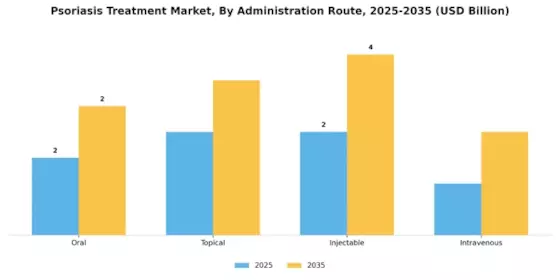
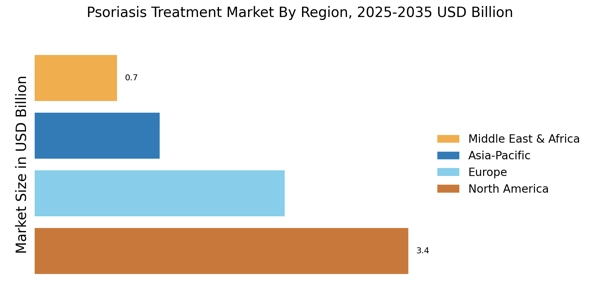
局所治療セグメントは、広く使用されており、患者にとってアクセスしやすいため、乾癬治療市場シェアの 48% を占めています。このセグメントには、コルチコステロイド、ビタミン D アナログ、レチノイドなどのさまざまな治療法が含まれており、これらは軽度から中等度の乾癬の症例に効果的です。一方で、免疫系の特定の部分を標的とする先進医療である生物製剤は、重症例への有効性により注目を集めており、市場の重要な部分を占めており、その結果、急速に成長しています。
MEA 地域の主要国には南アフリカと UAE があり、国際的な製薬会社の存在感が高まっています。主要企業は、手頃な価格の治療オプションに焦点を当てて、この地域での機会を模索し始めています。競争環境は進化しており、地元企業が世界的企業と協力して治療の可用性と認知度を高め、市場の将来の成長への道を切り開いています。
An accomplished research analyst with high proficiency in market forecasting, data visualization, competitive benchmarking, and others. He holds a pronounced track record in research and consulting projects for sectors such as life sciences, medical devices, and healthcare IT. His capabilities in qualitative and quantitative analysis have resulted in positive client outcomes. Working on niche market trends, opportunities, sales, and forecasted value is part of his skill set.
read more
Co-Author
Rahul Gotadki
Research Manager
He holds an experience of about 9+ years in Market Research and Business Consulting, working under the spectrum of Life Sciences and Healthcare domains. Rahul conceptualizes and implements a scalable business strategy and provides strategic leadership to the clients. His expertise lies in market estimation, competitive intelligence, pipeline analysis, customer assessment, etc.
The secondary research process involved comprehensive analysis of regulatory databases, peer-reviewed dermatology and immunology journals, clinical trial registries, and authoritative health organizations. Key sources included the US Food & Drug Administration (FDA) [Center for Drug Evaluation and Research - Dermatology and Ophthalmology Division], European Medicines Agency (EMA) [Committee for Medicinal Products for Human Use], National Institute for Health and Care Excellence (NICE) UK, Pharmaceuticals and Medical Devices Agency (PMDA) Japan, and Health Canada.
Clinical and epidemiological data were sourced from the National Psoriasis Foundation (NPF) [US epidemiology studies], International Psoriasis Council (IPC), American Academy of Dermatology (AAD), European Academy of Dermatology and Venereology (EADV), and International League of Dermatological Societies (ILDS). Government health statistics were obtained from the Centers for Disease Control and Prevention (CDC) [National Health and Nutrition Examination Survey], National Institutes of Health (NIH/National Institute of Arthritis and Musculoskeletal and Skin Diseases - NIAMS), World Health Organization (WHO) [Global Burden of Disease Study], Eurostat Health Database, NHS Digital [UK Hospital Episode Statistics], and Agency for Healthcare Research and Quality (AHRQ) [Medical Expenditure Panel Survey].
Academic and clinical sources included PubMed/MEDLINE, Cochrane Library [Systematic reviews on biologic therapies], ClinicalTrials.gov, EU Clinical Trials Register (EudraCT), and peer-reviewed journals such as Journal of the American Academy of Dermatology (JAAD), British Journal of Dermatology, Journal of Investigative Dermatology, JAMA Dermatology, Lancet Dermatology, and Nature Reviews Rheumatology. These sources were used to collect treatment prevalence data, regulatory approval timelines for biologics/biosimilars, clinical efficacy studies, pipeline analysis for IL-17/IL-23 inhibitors, patient demographic trends, and reimbursement landscapes across treatment modalities.
Primary Research
In order to gather qualitative and quantitative information on treatment acceptance, pricing dynamics, and clinical protocols, supply-side and demand-side stakeholders were interviewed during the primary research phase. CEOs, VPs of Immunology/Inflammation R&D, Heads of Global Regulatory Affairs, and Directors of Commercial Strategy were among the supply-side sources. These included pharmaceutical companies that produced biologics (TNF-alpha inhibitors, IL-17/IL-23 inhibitors), topical therapies (corticosteroids, vitamin D analogs, calcineurin inhibitors), and phototherapy equipment OEMs. Board-certified dermatologists in both academic and community settings, rheumatologists who treat psoriatic arthritis, hospital systems' chief pharmacy officers, dermatology clinic medical directors, homecare nursing supervisors, and procurement leads from specialty pharmacies were among the demand-side sources. Primary research obtained information on formulary placement strategies, prior authorization requirements, and reimbursement dynamics for novel therapies such as oral JAK inhibitors and IL-23 inhibitors, validated market segmentation across treatment types, verified biosimilar pipeline timelines, and evaluated patient adherence patterns for biologic vs. topical therapies.
Primary Respondent Breakdown:
By Designation: C-level Executives (32%), Director Level (30%), Others (38%)
[Others include Senior Managers, Principal Scientists, Medical Affairs Leads, and Specialty Pharmacists]
By Region: North America (38%), Europe (28%), Asia-Pacific (24%), Rest of World (10%)
Market Size Estimation
Global market valuation was derived through pharmaceutical revenue mapping, prescription volume analysis, and procedure-based phototherapy utilization metrics. The methodology included:
Identification of 40+ key pharmaceutical and medical device manufacturers across North America, Europe, Asia-Pacific, Latin America, and Middle East/Africa, including innovators in monoclonal antibodies (IL-17A, IL-12/23, IL-23p19 inhibitors), biosimilar developers, topical formulation specialists, and phototherapy equipment providers.
Product mapping across biologics (originator and biosimilar TNF inhibitors, IL inhibitors), systemic small molecules (methotrexate, cyclosporine, apremilast, deucravacitinib), topical therapies (high-potency corticosteroids, vitamin D3 analogs, fixed-dose combinations, topical calcineurin inhibitors), and phototherapy devices (narrowband UVB, excimer laser systems).
Analysis of reported and modeled annual revenues specific to psoriasis indications, segmented by treatment line (first-line topicals vs. second-line biologics) and severity (mild, moderate, severe).
Coverage of manufacturers representing 75-80% of global market share in 2024, reflecting the concentrated nature of the biologics market dominated by major immunology players.
Extrapolation using bottom-up (diagnosed prevalent patient population × treatment penetration rates × average treatment cost by country/severity) and top-down (pharmaceutical company reported revenue validation, adjusted for psoriasis-specific indication where available) approaches to derive segment-specific valuations for biologics, biosimilars, and conventional therapies.
Price elasticity modeling for biosimilar entry scenarios and formulary placement impact across hospital, dermatology clinic, and homecare administration settings.
“This is really good guys. Excellent work on a tight deadline. I will continue to use you going forward and recommend you to others. Nice job”
Noah MalgeriCo-Founder
“Thanks. It’s been a pleasure working with you, please use me as reference with any other Intel employees.”
Joseph AguayoSales Operations & Pricing Manager
“Thanks for sending the report it gives us a good global view of the Betaïne market.”
Peter Groot koerkampAccount and Business Manager
“Thank you, this will be very helpful for OQS.”
La Terria DoddProgram Support Specialist
“We found the report very insightful! we found your research firm very helpful. I'm sending this email to secure our future business.”
Younghwan ChoiSenior Retail Manager
“I am very pleased with how market segments have been defined in a relevant way for my purposes (such as "Portable Freezers & refrigerators" and "last-mile").
In general the report is well structured. Thanks very much for your efforts.”
Mark IrwinManagement Consultant
“I have been reading the first document or the study, ,the Global HVAC and FP market report 2021 till 2026. Must say, good info! I have not gone in depth at all parts, but got a good indication of the data inside!”
Rob KooikerGroup Product Manager HVAC & Fire Protection GMA
“We got the report in time, we really thank you for your support in this process. I also thank to all of your team as they did a great job.”
Akif MorogluStrategy & Business Development Director
“The Automotive 48V ECU Components Procurement Intelligence Study” was a complex project, but the Market Research Future (MRFR) team handled it with quality, agility, and customer-centricity. They delivered all requested data on time and within the agreed scope. The team, including Shubhendra Anand and Rahul Gotadki, was always readily available to clarify questions and swiftly implement necessary adjustments, driving the project to a successful conclusion within a very demanding timeframe.
I would also like to specifically commend Akshay Agarwal for his responsiveness and support at every stage—from our initial inquiry on May 6th through to final delivery on June 18th. His dedication made the entire process seamless.”
Guilherme Gomes MartinsProduct Management Director