Download Free Sample
Kindly complete the form below to receive a free sample of this Report
US Psoriasis Treatment Market Research Report: Size, Share, Trend Analysis By Treatment Type (Topical Treatments, Systemic Treatments, Phototherapy, Biologics), By Administration Route (Oral, Topical, Injectable, Intravenous), By Indication (Plaque Psoriasis, Guttate Psoriasis, Inverse Psoriasis, Pustular Psoriasis) and By End Users (Hospital, Dermatology Clinics, Homecare Settings) - Growth Outlook & Industry Forecast 2025 To 2035
As per Market Research Future analysis, the US psoriasis treatment market Size was estimated at 1564.5 USD Million in 2024. The Psoriasis Treatment market is projected to grow from 1633.81 USD Million in 2025 to 2520.0 USD Million by 2035, exhibiting a compound annual growth rate (CAGR) of 4.4% during the forecast period 2025 - 2035
The US psoriasis treatment market is experiencing a transformative shift towards innovative therapies and increased patient engagement.
| 2024 Market Size | 1564.5 (USD Million) |
| 2035 Market Size | 2520.0 (USD Million) |
| CAGR (2025 - 2035) | 4.43% |
AbbVie (US), Amgen (US), Bristol-Myers Squibb (US), Johnson & Johnson (US), Novartis (CH), Pfizer (US), Regeneron Pharmaceuticals (US), UCB (BE)
Our Impact
Enabled $4.3B Revenue Impact for Fortune 500 and Leading Multinationals
Partnering with 2000+ Global Organizations Each Year
30K+ Citations by Top-Tier Firms in the Industry
The psoriasis treatment market is experiencing notable transformations driven by advancements in therapeutic options and a growing understanding of the condition. Recent developments in biologic therapies have emerged as a focal point, offering targeted treatments that address the underlying mechanisms of psoriasis. This shift towards precision medicine appears to enhance patient outcomes, as these therapies often result in improved efficacy and reduced side effects compared to traditional treatments. Furthermore, the increasing prevalence of psoriasis in the population has prompted healthcare providers to seek innovative solutions, thereby expanding the market landscape. In addition to therapeutic advancements, The psoriasis treatment market is witnessing a rise in patient awareness and education initiatives. Organizations and healthcare professionals are actively working to inform individuals about the condition, its management, and available treatment options. This heightened awareness may lead to earlier diagnosis and treatment, ultimately improving the quality of life for those affected. Moreover, the integration of telemedicine into dermatological care is likely to facilitate access to specialists, making it easier for patients to receive timely and appropriate treatment. Overall, these trends suggest a dynamic and evolving market that is increasingly responsive to patient needs and scientific progress.
The psoriasis treatment market is seeing a significant increase in the adoption of biologic therapies. These medications target specific pathways involved in the inflammatory process, leading to more effective management of symptoms. As research continues to unveil the complexities of psoriasis, biologics are becoming a preferred choice for many patients.
There is a growing emphasis on patient education regarding psoriasis and its treatment options. Initiatives aimed at raising awareness are helping individuals understand their condition better, which may lead to earlier diagnosis and improved treatment adherence. This trend is likely to enhance overall patient outcomes.
The incorporation of telemedicine into the psoriasis treatment market is transforming how patients access care. Virtual consultations with dermatologists are becoming more common, allowing for greater convenience and accessibility. This trend may facilitate timely interventions and ongoing management of the condition.
The increasing healthcare expenditure in the US is a significant driver for the psoriasis treatment market. As healthcare spending continues to rise, patients are more likely to seek treatment for chronic conditions such as psoriasis. In 2025, healthcare expenditure is projected to reach approximately $4 trillion, indicating a growing willingness to invest in health and wellness. This trend is likely to result in higher demand for psoriasis treatments, as patients prioritize managing their conditions effectively. Additionally, insurance coverage for advanced therapies is improving, making treatments more accessible to a broader population. Consequently, the psoriasis treatment market is expected to expand as more individuals seek effective management options for their condition.
The increasing prevalence of psoriasis in the US is a primary driver for the psoriasis treatment market. Recent estimates suggest that approximately 7.5 million individuals in the US are affected by this chronic skin condition. This rising number of patients necessitates a corresponding increase in treatment options, thereby expanding the market. The psoriasis treatment market is likely to experience growth as healthcare providers seek to address the needs of this expanding patient population. Furthermore, the demand for effective therapies is heightened by the chronic nature of the disease, which often requires long-term management. As awareness of psoriasis continues to grow, the market may see a shift towards more innovative and personalized treatment solutions.
Innovations in treatment modalities are significantly influencing the psoriasis treatment market. The introduction of novel therapies, including biologics and targeted therapies, has transformed the landscape of psoriasis management. For instance, biologics have shown efficacy rates of up to 90% in some patients, which is a substantial improvement over traditional treatments. This advancement not only enhances patient outcomes but also drives market growth as healthcare providers increasingly adopt these new therapies. Additionally, the development of combination therapies that integrate different treatment approaches may further expand the options available to patients. As the market evolves, the focus on personalized medicine is likely to become more pronounced, catering to the unique needs of individuals suffering from psoriasis.
Regulatory support for the approval of new treatments is a crucial driver for the psoriasis treatment market. The US Food and Drug Administration (FDA) has streamlined the approval process for innovative therapies, which encourages pharmaceutical companies to invest in the development of new psoriasis treatments. This regulatory environment is likely to facilitate the introduction of novel therapies that can address unmet medical needs in the psoriasis population. As new treatments receive expedited approval, the market may witness a surge in available options for patients. Furthermore, the FDA's commitment to patient-centered approaches may lead to the development of therapies that are not only effective but also improve the quality of life for individuals living with psoriasis.
The psoriasis treatment market is benefiting from heightened investment in dermatology research. Pharmaceutical companies and research institutions are allocating substantial resources to develop new therapies and improve existing ones. In 2025, it is estimated that the dermatology sector will see an investment increase of approximately 15%, reflecting the growing recognition of psoriasis as a significant public health issue. This influx of funding is likely to accelerate the pace of innovation, leading to the introduction of more effective treatment options. Moreover, collaborations between academia and industry are fostering a conducive environment for breakthroughs in psoriasis research. As a result, the market is poised for expansion, driven by the continuous quest for improved therapeutic solutions.
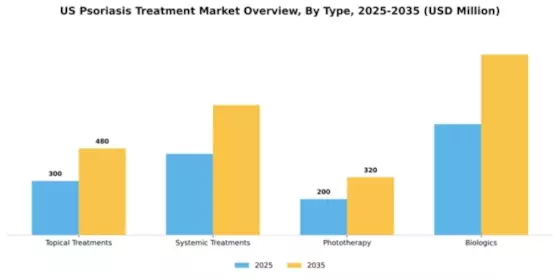
Within the US psoriasis treatment market, the segment breakdown by type shows that biologics continue to dominate with the largest market share. This is attributable to their effectiveness and the increasing prevalence of psoriasis cases. Topical treatments, while historically well-established, are being outpaced by innovations in systemic and biologic therapies, yet they still hold a significant portion of the market due to their accessibility and ease of use. Over recent years, growth trends in the US psoriasis treatment market have shifted towards biologics as patients increasingly opt for more targeted therapies. The rise in awareness about skin conditions and advancements in treatment options are driving demand for both systemic treatments and biologics. Additionally, the convenience and rapid results provided by these therapies are influencing patient choices and treatment plans, ensuring a competitive landscape for topical treatments as well.
Biologics (Dominant) vs. Topical Treatments (Emerging)
Biologics represent the dominant force in the psoriasis treatment market, offering advanced solutions that target specific immune pathways responsible for psoriasis flare-ups. Their clinical efficacy and tailored approaches address severe forms of the condition, making them a preferred choice among healthcare professionals and patients alike. In contrast, topical treatments, while emerging, remain an essential option for mild to moderate psoriasis due to their lower cost and ease of application. Patients often start with topical agents before progressing to biologics for more severe cases. Both segments highlight the diverse options available for treating psoriasis, catering to varying patient needs and conditions.
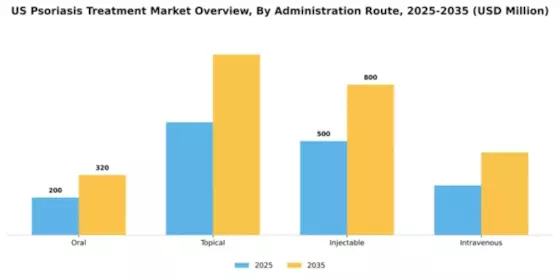
The market distribution among the administration routes for psoriasis treatments reveals that the oral segment holds the largest share, driven by its ease of use and patient preference. Topical treatments also maintain a significant presence, frequently utilized for localized therapy. Meanwhile, injectable options are gaining traction, showcasing a growing response among patients seeking effective management of their condition. Growth trends highlight injectable treatments as the fastest-growing segment, attributed to advancements in biologics and targeted therapies. As more patients look for effective and rapid relief from psoriasis symptoms, innovative drug formulations administered through injections are appealing. Additionally, increasing awareness and better diagnosis rates contribute to the rising adoption of various treatment routes, further driving market expansion.
Oral (Dominant) vs. Injectable (Emerging)
The oral administration route is dominating the treatment landscape due to its convenience and compliance among patients. Oral medications are often preferred for their practicality, allowing patients to manage their psoriasis without the need for injections. In contrast, injectable treatments are emerging rapidly, offering biologics that target specific pathways in the disease's progression. As healthcare providers shift focus towards personalized medicine, injectables are anticipated to enhance efficacy and patient satisfaction. Both segments cater to distinct patient needs, with oral treatments leading in established markets while injectables pave the way for future growth and innovation in psoriasis management.
Among the different indications in the US psoriasis treatment market, plaque psoriasis commands the largest market share, accounting for a substantial majority of the total. This segment has long been recognized for its chronic nature and significant burden on patients, contributing to its dominance. On the other hand, guttate psoriasis has emerged as the fastest-growing segment, appealing increasingly to consumers due to its more acute presentation and varied treatment options. Growth trends indicate a rise in both awareness and treatment availability for different types of psoriasis, with plaque psoriasis consistently holding strong. However, the rapid increase in cases of guttate psoriasis, particularly among younger demographics, drives its growth. Factors such as innovation in treatment options and increasing investment in awareness campaigns are acting as catalysts for this expansion in the US psoriasis treatment market.
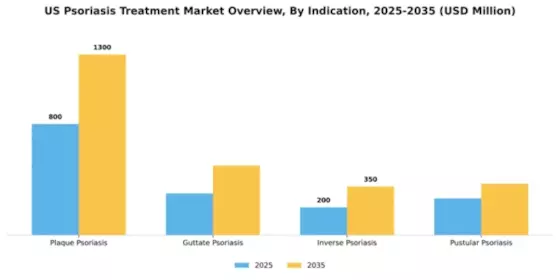
Plaque Psoriasis (Dominant) vs. Guttate Psoriasis (Emerging)
Plaque psoriasis, the dominant segment, is characterized by its chronic plaques that can significantly impact quality of life. Patients often require long-term care, leading to persistent demand for treatments such as topical therapies, phototherapy, and systemic options. The established nature of this indication ensures a steady market presence. Conversely, guttate psoriasis is labeled as an emerging segment, primarily affecting younger individuals and often triggered by infections. Its presentation as small, drop-like lesions allows for varied management approaches and a growing consumer base. As awareness and treatment accessibility improve, guttate psoriasis is poised for significant growth, appealing to a demographic seeking effective and immediate interventions.
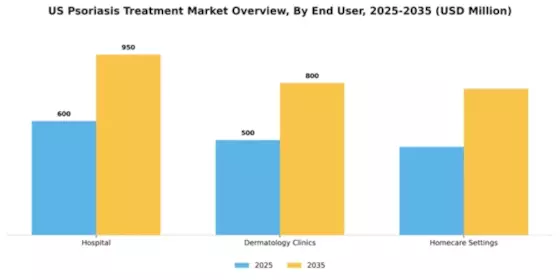
The US psoriasis treatment market showcases a diverse distribution among various end users, with hospitals holding the largest share due to their capacity to provide comprehensive care and advanced treatment options. Dermatology clinics also represent a significant segment, appealing to patients seeking specialized care tailored to their specific needs, which positions them as a robust competitor in this landscape. Growth trends indicate that dermatology clinics are the fastest-growing segment as patients increasingly prefer targeted treatments and personalized services. This shift is driven by the rising prevalence of psoriasis and the growing demand for specialized dermatological care. Additionally, innovations in treatment modalities and increased awareness among healthcare providers further bolster the stature of these clinics, projecting them as pivotal players in the future dynamics of the market.
Hospital (Dominant) vs. Dermatology Clinics (Emerging)
Hospitals remain the dominant end user in the US psoriasis treatment market, leveraging their extensive resources and multidisciplinary teams to manage complex cases effectively. They have established protocols to facilitate patient care, resulting in higher patient retention rates. In contrast, dermatology clinics are emerging as key players, providing focused and specialized treatment solutions that cater directly to psoriasis patients. The personalized approach and shorter wait times enhance patient satisfaction, making these clinics an attractive option. Additionally, the trend towards outpatient treatment options is favorable for dermatology clinics, potentially increasing their market share and positioning them for future growth as more patients seek convenient and accessible care.
Get more detailed insights about US Psoriasis Treatment Market Request Free Sample
The psoriasis treatment market is characterized by a dynamic competitive landscape, driven by a combination of innovation, strategic partnerships, and a focus on patient-centric solutions. Major players such as AbbVie (US), Amgen (US), and Bristol-Myers Squibb (US) are actively shaping the market through their robust portfolios and commitment to research and development. AbbVie (US) continues to leverage its leading position with the successful launch of new formulations, while Amgen (US) emphasizes its focus on biologics and personalized medicine. Bristol-Myers Squibb (US) is strategically positioned through its recent acquisitions, enhancing its capabilities in immunology and expanding its treatment options for psoriasis. Key business tactics within the market include localized manufacturing and supply chain optimization, which are essential for meeting the diverse needs of patients across different regions. The competitive structure appears moderately fragmented, with several key players exerting influence over market dynamics. This fragmentation allows for a variety of treatment options, fostering innovation and competition among companies. The collective influence of these major players is significant, as they drive advancements in treatment efficacy and patient outcomes. In October 2025, AbbVie (US) announced a strategic partnership with a leading telehealth provider to enhance patient access to its psoriasis treatments. This collaboration aims to integrate digital health solutions into the treatment pathway, potentially improving patient adherence and outcomes. The strategic importance of this move lies in AbbVie's recognition of the growing role of telehealth in chronic disease management, positioning itself as a leader in patient engagement. In September 2025, Amgen (US) launched a new clinical trial for its innovative psoriasis therapy, which utilizes a novel mechanism of action. This trial aims to evaluate the long-term efficacy and safety of the treatment in diverse patient populations. The significance of this initiative is underscored by Amgen's commitment to advancing personalized medicine, which may lead to improved treatment options tailored to individual patient needs. In August 2025, Bristol-Myers Squibb (US) completed the acquisition of a biotechnology firm specializing in next-generation biologics for autoimmune diseases. This acquisition is expected to bolster Bristol-Myers Squibb's pipeline and enhance its competitive edge in the psoriasis treatment market. The strategic importance of this move reflects a broader trend of consolidation within the industry, as companies seek to expand their therapeutic offerings and accelerate innovation. As of November 2025, current competitive trends in the psoriasis treatment market are increasingly defined by digitalization, sustainability, and the integration of artificial intelligence (AI) in drug development. Strategic alliances are becoming more prevalent, as companies recognize the value of collaboration in enhancing their capabilities and market reach. Looking ahead, competitive differentiation is likely to evolve, shifting from traditional price-based competition to a focus on innovation, technological advancements, and supply chain reliability. This transition may ultimately lead to improved patient outcomes and a more sustainable market environment.




In recent developments within the US Psoriasis Treatment Market, significant advancements have been made by major players such as Novartis and AbbVie, launching upgraded formulations that have shown improved efficacy in clinical trials. For example, AbbVie's drug Humira continues to dominate the market while new entrants are closely following. Moreover, in September 2023, Regeneron Pharmaceuticals announced a strategic partnership with Sanofi to enhance the delivery of their eczema and psoriasis therapies, showcasing collaboration among leading firms.
Current affairs reflect a growing consumer demand for personalized medicine, prompting companies like Eli Lilly and Amgen to invest heavily in Research and Development for biologic treatments.
In merger and acquisition news, Bristol Myers Squibb completed its acquisition of Myokardia in October 2023, aimed at expanding its cardiovascular portfolio, which may indirectly impact its psoriasis product strategy. Market valuation has steadily grown, with the US Psoriasis Treatment Market estimated to reach $12 billion by 2025, primarily driven by innovative drugs and increasing prevalence rates as reported by the Centers for Disease Control and Prevention (CDC). Such growth highlights an evolving landscape with promising opportunities for both established companies and newcomers entering the psoriasis treatment sector.
The Psoriasis Treatment Market is projected to grow at a 4.43% CAGR from 2025 to 2035, driven by advancements in biologics, increased awareness, and rising healthcare expenditure.
New opportunities lie in:
By 2035, The psoriasis treatment market is expected to achieve substantial growth and innovation.
| MARKET SIZE 2024 | 1564.5(USD Million) |
| MARKET SIZE 2025 | 1633.81(USD Million) |
| MARKET SIZE 2035 | 2520.0(USD Million) |
| COMPOUND ANNUAL GROWTH RATE (CAGR) | 4.43% (2025 - 2035) |
| REPORT COVERAGE | Revenue Forecast, Competitive Landscape, Growth Factors, and Trends |
| BASE YEAR | 2024 |
| Market Forecast Period | 2025 - 2035 |
| Historical Data | 2019 - 2024 |
| Market Forecast Units | USD Million |
| Key Companies Profiled | AbbVie (US), Amgen (US), Bristol-Myers Squibb (US), Johnson & Johnson (US), Novartis (CH), Pfizer (US), Regeneron Pharmaceuticals (US), UCB (BE) |
| Segments Covered | Type, Administration Route, Indication, End User |
| Key Market Opportunities | Emergence of biologics and personalized therapies enhances treatment options in the psoriasis treatment market. |
| Key Market Dynamics | Rising demand for biologics drives innovation and competition in the psoriasis treatment market. |
| Countries Covered | US |
The overall market valuation was 1564.5 USD Million in 2024.
The projected valuation for 2035 is 2520.0 USD Million.
The expected CAGR during the forecast period 2025 - 2035 is 4.43%.
Key players include AbbVie, Amgen, Bristol-Myers Squibb, Johnson & Johnson, Novartis, Pfizer, Regeneron Pharmaceuticals, and UCB.
The valuation for biologics was 614.5 USD Million in 2024, projected to reach 1000.0 USD Million by 2035.
Topical treatments were valued at 300.0 USD Million in 2024, while systemic treatments were valued at 450.0 USD Million.
The market valuation for plaque psoriasis treatments was 800.0 USD Million in 2024, with projections reaching 1300.0 USD Million by 2035.
Biologics had the highest valuation at 614.5 USD Million in 2024.
The projected valuation for injectable treatments is expected to reach 800.0 USD Million by 2035.
The hospital segment had the highest valuation at 600.0 USD Million in 2024.



Kindly complete the form below to receive a free sample of this Report

“This is really good guys. Excellent work on a tight deadline. I will continue to use you going forward and recommend you to others. Nice job”


“Thanks. It’s been a pleasure working with you, please use me as reference with any other Intel employees.”


“Thanks for sending the report it gives us a good global view of the Betaïne market.”


“Thank you, this will be very helpful for OQS.”


“We found the report very insightful! we found your research firm very helpful. I'm sending this email to secure our future business.”


“I am very pleased with how market segments have been defined in a relevant way for my purposes (such as "Portable Freezers & refrigerators" and "last-mile"). In general the report is well structured. Thanks very much for your efforts.”


“I have been reading the first document or the study, ,the Global HVAC and FP market report 2021 till 2026. Must say, good info! I have not gone in depth at all parts, but got a good indication of the data inside!”


“We got the report in time, we really thank you for your support in this process. I also thank to all of your team as they did a great job.”


“The Automotive 48V ECU Components Procurement Intelligence Study” was a complex project, but the Market Research Future (MRFR) team handled it with quality, agility, and customer-centricity. They delivered all requested data on time and within the agreed scope. The team, including Shubhendra Anand and Rahul Gotadki, was always readily available to clarify questions and swiftly implement necessary adjustments, driving the project to a successful conclusion within a very demanding timeframe.
I would also like to specifically commend Akshay Agarwal for his responsiveness and support at every stage—from our initial inquiry on May 6th through to final delivery on June 18th. His dedication made the entire process seamless.”



