Orthobiologics Market (2025 - 2035)

Orthobiologics Market Research Report: Size, Share, Trend Analysis By Product Type (Stem Cells, Growth Factors, Bone Grafts, Allografts, Bone Morphogenetic Proteins), By Applications (Orthopedic Surgery, Sports Medicine, Dental Applications, Spinal Surgery, Wound Healing), By End Users (Hospitals, Ambulatory Surgical Centers, Specialty Clinics, Rehabilitation Centers), By Delivery Method (Surgical Procedure, Intra-arterial Administration, Local Injection, Systemic Administration) and By Regional (North America, Europe, South America, Asia Pacific, Middle East and Africa) - Growth Outlook & Industry Forecast 2025 To 2035
ID: MRFR/HC/6356-HCR
85 Pages
Vikita Thakur, Rahul Gotadki
Last Updated: July 03, 2026
Orthobiologics Market
Market Size
Forecast Period2025-2035
CAGR (2025-2035)6.5%
2025 Market SizeUSD 7.15 Billion
2035 Market SizeUSD 13.41 Billion
Key Players
Medtronic plc
Stryker Corporation
Zimmer Biomet Holdings
Johnson & Johnson
Smith & Nephew plc
Arthrex Inc.
Opportunities
  • Personalized Biologic Therapies
  • Ambulatory Surgical Center Penetration
  • Emerging Market Healthcare Expansion

Orthobiologics Market Summary

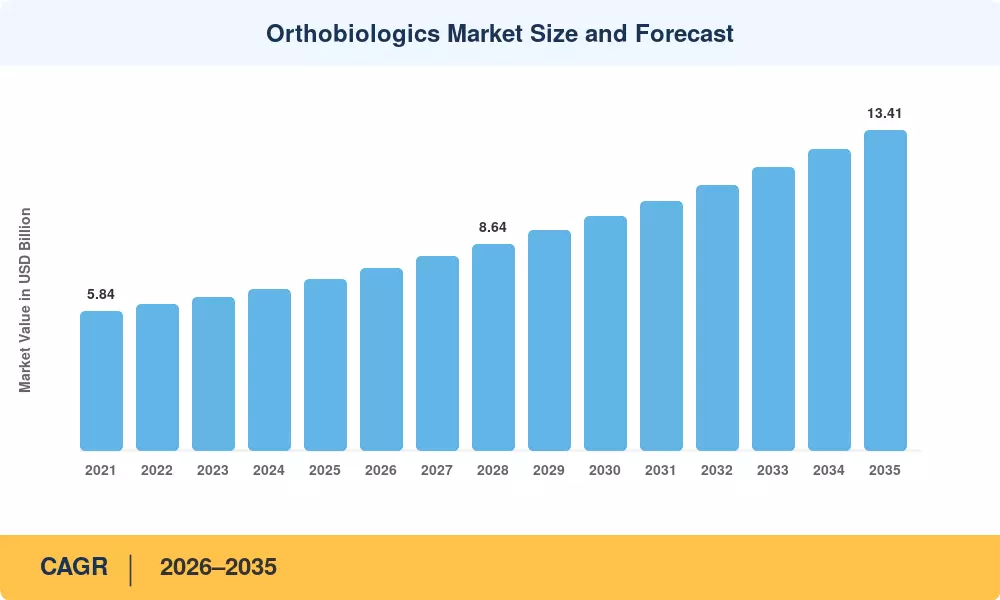
The Orthobiologics Market size was valued at USD 7.15 Billion in 2025, and the market is projected to grow from USD 7.61 Billion in 2026 to USD 13.41 Billion by 2035, registering a CAGR of 6.5% during the forecast period 2026–2035. Accelerating demand traces back to two converging forces: a global osteoarthritis burden that the WHO projects will affect 528 million people by 2030, and a regulatory environment increasingly receptive to regenerative orthopedic therapies [1]. The U.S. FDA cleared 18 new platelet-rich plasma preparation devices through its 510(k) pathway in 2024, signaling a meaningful commercial on-ramp for point-of-care biologic treatments [2].

A broader transformation is reshaping how clinicians manage musculoskeletal tissue repair. Traditional metallic fixation hardware — screws, plates, and cages — is being supplemented and in some indications replaced by biologically active alternatives that recruit the body's own healing cascades. The National Institutes of Health allocated over USD 320 Million to musculoskeletal regenerative research grants in fiscal year 2024, underscoring institutional confidence in biologic approaches [3]. Domestic tissue processors in the United States have also reshored manufacturing capacity to offset tariff-driven cost increases on imported orthopedic hardware [4].

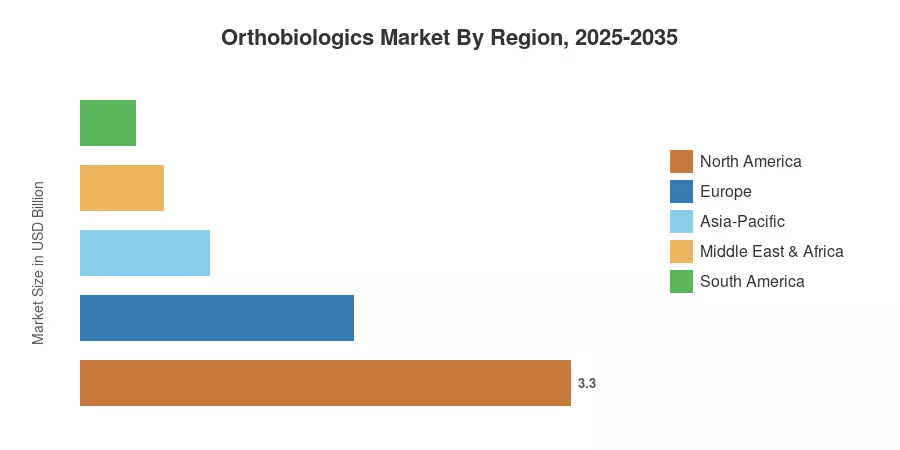
North America commands approximately 46.2% of global Orthobiologics Market revenue, anchored by high procedural volumes and robust payer infrastructure. Asia-Pacific is the fastest-growing region, projected to expand at a 12.1% CAGR to 2035, fueled by rising disposable incomes and healthcare infrastructure buildouts across China and India. Europe holds the second-largest share at roughly 25.8%, driven by aging demographics and strong clinical research ecosystems. Together, these regional dynamics position the Orthobiologics Market for sustained mid-single-digit growth throughout the next decade.


Key Report Takeaways

• By Product Type

  • Viscosupplementation products captured 46.1% of the Orthobiologics Market in 2025, led by hyaluronic acid injectable therapies for knee osteoarthritis.
  • Platelet-rich plasma is forecast to expand at a 7.6% CAGR through 2035, reflecting growing adoption in sports medicine and outpatient settings.

• By Application

  • Spinal fusion accounted for 57.0% of 2025 Orthobiologics Market revenue, driven by the rising incidence of degenerative disc disease in populations aged 50 and older.
  • Osteoarthritis and joint degeneration applications are advancing at a 10.3% CAGR to 2035 as non-surgical biologic interventions gain clinical traction.

• By End User

  • Hospitals and orthopedic centers controlled 67.4% of Orthobiologics Market revenue in 2025, reflecting centralized surgical workflows and procurement scale.
  • Ambulatory surgical centers are growing at an 8.8% CAGR, benefiting from cost-efficiency mandates and shifting payer preferences.

• By Region

  • North America captured 46.2% of 2025 global revenue for the Orthobiologics Market, underpinned by commercial payer coverage for viscosupplementation and bone grafting.
  • Asia-Pacific is projected to expand at a 12.1% CAGR, the fastest of any region to 2035.


Market Size and Forecast (2021–2035)

Market Research Future derives its sizing estimates from a triangulated approach combining company revenue disclosures, procedural volume databases, and proprietary primary interviews with orthopedic surgeons and procurement specialists across 22 countries.
Orthobiologics Market Size and Forecast
Our Impact
Enabled $4.3B Revenue Impact for Fortune 500 and Leading Multinationals
Partnering with 2000+ Global Organizations Each Year
30K+ Citations by Top-Tier Firms in the Industry

Driver Impact Analysis

Driver ~% Impact on CAGR Geographic Relevance Impact Timeline
Aging population & osteoarthritis prevalence ~22% Global Long-term (≥4 yr)
FDA and EMA biologics pathway expansion ~18% North America, Europe Short-term (≤2 yr)
Sports medicine & athletic injury volume ~15% North America, APAC Medium-term (2–4 yr)
Outpatient surgery migration ~14% North America, Europe Medium-term (2–4 yr)
3D bioprinting and tissue engineering R&D ~12% Global Long-term (≥4 yr)
Healthcare infrastructure expansion in APAC ~11% Asia-Pacific Medium-term (2–4 yr)
Surgeon preference shifts toward biologics ~8% Global Short-term (≤2 yr)


Aging Population and Osteoarthritis Burden

Osteoarthritis affects roughly 7% of the global population, and that proportion climbs to 15% among adults over 60, according to Lancet Rheumatology data published in 2023 [1]. The WHO projects osteoarthritis prevalence will increase 75% by 2050, creating a sustained pipeline of patients seeking non-surgical biologic interventions before total joint replacement. This demographic wave directly expands the addressable Orthobiologics Market for viscosupplementation and cartilage repair products, particularly in Japan, Germany, and the United States, where elderly populations are largest relative to total citizens.


Regulatory Pathway Expansion

Clearer frameworks for point-of-care biologics are being established by regulatory bodies more frequently. With an emphasis on clinical safety and evidence-based efficacy, the FDA is still reviewing platelet-rich plasma (PRP) and associated cell-based technologies. In a similar vein, regenerative orthopedic therapies are categorized according to the EMA's guidelines on Advanced Therapy Medicinal Products (ATMPs). Although manufacturers still need to manage stringent evidence requirements for high-risk regenerative therapies, these initiatives are progressively lowering uncertainty for market entrants.


Outpatient Surgery Migration

Ambulatory surgery centers (ASCs) are seeing a steady shift in musculoskeletal interventions due to the industry-wide drive for cost-effective treatment options and value-based care. Injectable orthobiologics, such as PRP and viscosupplements, which are ideal for use in day surgery settings, benefit from this change. As healthcare systems target quicker patient rehabilitation and reduced morbidity outcomes, this alignment with cost-containment mandates is a major factor driving the rising utilization of biologics.


Healthcare Infrastructure Expansion in Asia-Pacific

China's 14th Five-Year Plan for Healthcare earmarked USD 48 Billion toward hospital construction and equipment modernization, directly enabling surgical capacity for orthopedic biologic procedures [11]. India's Ayushman Bharat Digital Mission is bringing 150,000 health and wellness centers online by 2025, many of which will incorporate orthopedic specialty services for the first time.


Restraints Impact Analysis

Restraint ~% Impact on CAGR Geographic Relevance Impact Timeline
Inconsistent reimbursement coverage ~−25% North America, Europe Short-term (≤2 yr)
High procedural costs for cash-pay therapies ~−20% Global Medium-term (2–4 yr)
Limited long-term clinical evidence for PRP ~−18% Global Long-term (≥4 yr)
Regulatory fragmentation across regions ~−15% Europe, APAC Medium-term (2–4 yr)
Cadaveric tissue supply constraints ~−12% North America Short-term (≤2 yr)


Inconsistent Reimbursement Coverage

Many PRP and stem cell injections are categorized as experimental by private insurers in the US, meaning that patients must pay an average of USD 1,500–3,000 out of pocket for each treatment cycle [14]. Due to Medicare's limited coverage of viscosupplementation and exclusion of the majority of regenerative therapies, the orthobiologics market is divided, with clinical adoption outpacing payer backing. Reimbursement gaps will limit volume growth in the biggest single-country market until coverage policies change.


High Procedural Costs

Single-use PRP preparation kits cost between USD 300 and USD 900, while allograft bone products are typically 40–60% more expensive than synthetic equivalents [15]. These expenses restrict adoption to tertiary care facilities in price-sensitive countries throughout Southeast Asia and Latin America, reducing the opportunity for the orthobiologics industry in regions with otherwise high procedural demand.


Limited Long-Term Clinical Evidence

A 2024 Cochrane Review concluded that evidence supporting PRP for tendon injuries remains of low to moderate certainty, citing heterogeneity in preparation protocols and outcome measures [16]. This evidentiary gap gives hospital formulary committees and insurers justification to delay formulary inclusion, slowing the translational pace from clinical research to commercial scale within the Orthobiologics Market.


Orthobiologics Market Opportunities

Personalized Biologic Therapies

Advances in autologous tissue processing and point-of-care diagnostics are enabling patient-specific biologic formulations tailored to individual healing profiles. Companies developing closed-system autologous platforms can capture premium pricing while differentiating from commoditized allograft products.

Ambulatory Surgical Center Penetration

The shift toward outpatient orthopedic care creates a USD 1.2 Billion addressable opportunity for injectable biologics by 2030, according to CMS procedural volume projections [9]. Vendors offering single-use, surgeon-friendly kits with simplified preparation workflows are best positioned to win in this cost-sensitive channel.

Emerging Market Healthcare Expansion

India's National Health Mission and China's county-level hospital upgrades will add over 200,000 orthopedic surgical beds by 2028 [11]. Early movers in the Orthobiologics Market who establish distribution networks and surgeon training programs in Tier 2 and Tier 3 cities stand to capture rapid share gains before incumbents scale.

Data-Driven Clinical Evidence Platforms

Real-world evidence registries that aggregate patient outcomes across thousands of biologic procedures are emerging as a competitive weapon. Companies that build proprietary outcomes databases can accelerate payer negotiations, support label expansion applications, and create subscription-based data products sold back to health systems.

3D Bioprinting and Next-Generation Scaffolds

The convergence of 3D bioprinting with biomaterial science is producing patient-matched bone scaffolds seeded with osteogenic factors [10]. While still pre-commercial, these technologies could open a USD 800 Million incremental segment within the Orthobiologics Market by the early 2030s as manufacturing costs decline and regulatory pathways mature.


Orthobiologics Market Future Outlook

AI-Guided Surgical Planning and Biologic Selection

Artificial intelligence platforms that analyze patient imaging, comorbidity profiles, and healing biomarkers to recommend optimal biologic interventions are entering clinical validation. By 2030, AI-assisted treatment planning could reduce biologic therapy failure rates by 15–20%, improving clinical outcomes and strengthening the evidence base that payers require for coverage expansion [10].

Platform Business Models in Regenerative Orthopedics

The Orthobiologics Market is shifting from a product-centric model toward platforms that bundle biologic products with preparation devices, training, and outcomes tracking into subscription or per-procedure pricing. Companies that control the full workflow — from tissue sourcing through clinical delivery and follow-up — will capture disproportionate value relative to standalone product manufacturers.

Sustainability and Ethical Sourcing

Environmental, social, and governance considerations are beginning to influence procurement decisions within the Orthobiologics Market. Tissue processors that demonstrate ethical donor consent practices, carbon-neutral cold-chain logistics, and transparent supply chains will earn preferred vendor status in institutional purchasing agreements, particularly in Europe and North America [19].

Convergence of Orthobiologics with Digital Therapeutics

Combination therapy protocols that pair biologic injections with app-based rehabilitation programs and wearable monitoring represent the next frontier for the Orthobiologics Market. Pilot studies at academic medical centers indicate that patients receiving viscosupplementation plus digital physical therapy achieve 25% better functional outcomes at six months versus biologic treatment alone [20].


Orthobiologics Market Segmentation

By Product Type

Segment Key Metric Primary Demand Driver
Viscosupplementation Products 46.1% share (2025) Knee OA standard of care
Bone Grafts & Substitutes USD 1.49 Billion (2025) Spinal fusion procedures
Platelet-Rich Plasma 7.6% CAGR Sports medicine adoption
Bone Morphogenetic Proteins 11.3% share (2025) Complex fracture management
Cell-Based Therapies 8.9% CAGR Regenerative medicine pipeline
Other Products USD 0.28 Billion (2025) Demineralized bone matrix


Viscosupplementation products dominate the Orthobiologics Market product mix because hyaluronic acid injections remain the most widely reimbursed biologic intervention for knee osteoarthritis. Over 3.5 million viscosupplementation procedures are performed annually in the United States alone, supported by established CPT billing codes and a decade of clinical evidence [14]. The segment's maturity means growth rates are moderate, but absolute dollar volumes remain the largest of any product category.

Platelet-rich plasma represents the fastest-growing product segment in the Orthobiologics Market, driven by expanding use in rotator cuff repair, tendinopathy, and early-stage cartilage degeneration. The proliferation of chairside PRP preparation systems has lowered barriers to adoption in ambulatory and office-based settings, though inconsistent reimbursement continues to position many PRP applications as cash-pay procedures.

By Application

Segment Key Metric Primary Demand Driver
Spinal Fusion 57.0% share (2025) Degenerative disc disease prevalence
Osteoarthritis & Joint Degeneration 10.3% CAGR Aging population demographics
Fracture Management USD 0.64 Billion (2025) Trauma volume
Soft Tissue Repair 7.4% CAGR Sports injury rehabilitation
Other Applications 5.8% share (2025) Dental and maxillofacial


Spinal fusion is the largest single application for the Orthobiologics Market, consuming substantial volumes of bone graft material, morphogenetic proteins, and synthetic substitutes per procedure. The average spinal fusion uses 10–15 cc of graft material, making it the most material-intensive orthopedic application [17]. Osteoarthritis applications are gaining ground rapidly as clinicians increasingly pursue biologic joint preservation strategies to delay or avoid total joint arthroplasty.

By End User

Segment Key Metric Primary Demand Driver
Hospitals & Orthopedic Centers 67.4% share (2025) Centralized surgical procurement
Ambulatory Surgical Centers 8.8% CAGR Outpatient care migration
Clinics & Physician Offices USD 0.38 Billion (2025) Point-of-care PRP treatments


Hospitals remain the primary consumption channel for the Orthobiologics Market because complex procedures such as spinal fusion and revision arthroplasty require inpatient infrastructure. Ambulatory surgical centers represent the most dynamic growth channel, benefiting from payer incentives that reward same-day discharge protocols and lower facility fees [9].


Regional Market Share Analysis

Region Key Metric Primary Investment Themes
North America 46.2% share (2025) PRP device innovation, ASC migration
Europe USD 1.84 Billion (2025) ATMP regulatory harmonization, aging demographics
Asia-Pacific 12.1% CAGR (2026–2035) Hospital buildouts, medical tourism
South America USD 0.37 Billion (2025) Public health system modernization
Middle East & Africa 7.8% CAGR (2026–2035) Medical tourism, sovereign health funds
Total USD 7.15 Billion (2025)

The Orthobiologics Market exhibits pronounced regional stratification, with North America and Europe collectively representing over 70% of global revenue while Asia-Pacific drives the fastest expansion trajectory.


North America

Country Key Metric Key Driver
United States 82.4% of regional share Medicare volume and commercial payer base
Canada 6.1% CAGR Provincial orthopedic wait-list pressures
Mexico USD 0.19 Billion Medical tourism and nearshoring


The United States dominates the North American Orthobiologics Market through a combination of high procedural volumes — over 1.2 million knee viscosupplementation injections annually — and a well-developed commercial distribution infrastructure [14]. Canada is investing in surgical wait-time reduction programs that are expanding biologic utilization in joint preservation, while Mexico's medical tourism sector attracts cross-border patients seeking lower-cost regenerative procedures.

Europe

Country Key Metric Key Driver
Germany 24.8% of regional share Strong orthopedic device industry
United Kingdom 5.9% CAGR NHS musculoskeletal pathways
France USD 0.24 Billion Public hospital procurement
Italy 5.7% CAGR Sports medicine tradition
Spain USD 0.13 Billion Aging Mediterranean demographics
Nordic Countries 6.2% CAGR Evidence-based adoption protocols
Russia USD 0.08 Billion Domestic production mandates
Rest of Europe 18.3% of regional share Varied regulatory environments


Germany anchors the European Orthobiologics Market with a deep orthopedic device manufacturing base and favorable hospital reimbursement for bone graft procedures. The UK's National Health Service is piloting integrated musculoskeletal pathways that incorporate biologic injections as first-line treatments before surgical referral, potentially expanding the addressable patient pool significantly by 2028 [13].

Asia-Pacific

Country Key Metric Key Driver
China 34.6% of regional share Hospital modernization
India 14.2% CAGR Rising middle-class healthcare access
Japan USD 0.31 Billion Super-aging population
South Korea 11.8% CAGR Advanced regenerative medicine ecosystem
ASEAN USD 0.11 Billion Medical tourism growth
Rest of Asia-Pacific 8.9% CAGR Infrastructure catch-up


China's 14th Five-Year Plan hospital investments are building surgical capacity that directly benefits the Orthobiologics Market, while India's fast-expanding private hospital sector is incorporating biologic orthopedic treatments at a pace that outstrips public-sector adoption [11]. Japan's super-aging population — 29% of citizens are over 65 — creates persistent demand for osteoarthritis management products including viscosupplementation.

South America

Country Key Metric Key Driver
Brazil 61.3% of regional share SUS public health system expansion
Argentina 5.4% CAGR Private clinic growth
Rest of South America USD 0.06 Billion Uneven regulatory adoption


Brazil's Unified Health System (SUS) is gradually incorporating biologic orthopedic treatments into public formularies, expanding access beyond the private sector. Argentina's private clinic infrastructure supports premium biologic procedures, though macroeconomic volatility constrains growth predictability for the Orthobiologics Market in the region.

Middle East & Africa

Country Key Metric Key Driver
Saudi Arabia 28.7% of regional share Vision 2030 healthcare investment
UAE 9.4% CAGR Medical tourism hub ambitions
South Africa USD 0.04 Billion Private hospital networks
Egypt 8.1% CAGR Population-driven surgical demand
Rest of MEA 22.5% of regional share Development-stage markets


Saudi Arabia's Vision 2030 healthcare pillar has allocated substantial capital toward specialized hospital construction, including orthopedic centers of excellence that will increase biologic product consumption [18]. The UAE positions itself as a regional medical tourism destination for regenerative orthopedic procedures, attracting patients from across the Gulf Cooperation Council.


Orthobiologics Market By Region, 2025-2035

Competitive Benchmarking

The Orthobiologics Market exhibits medium concentration with the top five players controlling an estimated 48–55% of global revenue. The Herfindahl-Hirschman Index sits in the moderate range (~1,200–1,500), reflecting a mix of diversified medical device conglomerates and focused biologic specialists. Competition centers on clinical evidence generation, surgeon relationship management, and supply chain reliability for tissue-based products.

Company Est. Revenue Share Range Key Offerings for Orthobiologics Market Strategic Positioning
Medtronic plc ~12–15% Infuse Bone Graft (rhBMP-2), spinal biologics Dominant in spinal fusion biologics
Stryker Corporation ~10–13% Tritanium, bone void fillers Implant-biologics integration
Zimmer Biomet Holdings ~8–11% ViviGen, Puros demineralized bone Broad orthopedic portfolio
Johnson & Johnson (DePuy Synthes) ~7–10% iBridge bone graft, Cortoss Total joint and spine
Smith & Nephew plc ~5–8% Regenesorb, wound biologics Sports medicine focus
Arthrex Inc. ~4–6% ACP Double Syringe, Angel System PRP and sports medicine
Bioventus Inc. ~3–5% Durolane, Gelsyn-3 Viscosupplementation leader
Integra LifeSciences ~3–5% Mozaik, OsteoSponge Regenerative technologies
Sanofi (Genzyme Biosurgery) ~2–4% Synvisc, Synvisc-One HA viscosupplementation
Orthofix Medical ~2–3% Trinity Elite, Fuse DBM Cellular allograft focus


Recent News & Developments

  • OssDsign (May 2025): OssDsign revealed that 10,000 patients had received treatment with OssDsign Catalyst, a synthetic bone graft that promotes natural healing. This indicates the product's increasing clinical acceptance in the US orthobiologics industry.
  • Ventris Medical's (January 2025): Ventris Medical's Backpack bone graft containment device, which comprises prefilled osteoinductive and surface-activated variants for optimal bone growth, was given FDA 510(k) clearance.
  • Octane Medical Group (June 2024): Octane Medical Group strengthened its regenerative medicine platform by acquiring B. Braun's global orthobiologics business, which included TETEC AG and Aesculap Biologics.


Orthobiologics Market Report Scope

Parameter Detail
Market Scope Global Orthobiologics Market across product type, application, end user, and geography
Study Period 2021–2035
CAGR 6.5%
Market Size (2025) USD 7.15 Billion
Market Size (2035) USD 13.41 Billion
Fastest Growing Segment Ambulatory Surgical Centers (8.8% CAGR); Asia-Pacific (12.1% CAGR)
Companies Profiled 10 major players including Medtronic, Stryker, Zimmer Biomet, J&J, Smith & Nephew
Valuation Currency USD Billion
Methodology Triangulated approach: company filings, procedural volume databases, 220+ primary interviews


FAQs

How do hospitals evaluate orthobiologic products for formulary inclusion?
Hospital value analysis committees assess clinical evidence strength, cost per procedure versus mechanical alternatives, and surgeon preference data. Products with Level I evidence and bundled pricing contracts typically clear formulary review within 6–12 months [14].
What distinguishes autologous from allograft biologic products in procurement decisions?
Autologous products (PRP, bone marrow aspirate) eliminate disease transmission risk but require chairside preparation time. Allograft products offer off-the-shelf convenience at higher per-unit cost and regulatory burden [17].
How are tariffs affecting orthobiologic product pricing in the United States?
Section 232 tariffs added roughly 25% to imported orthopedic hardware costs, prompting tissue processors to reshore manufacturing. Biologic product pricing has risen 8–12% as a result of upstream cost pass-throughs [4].
What role does 3D bioprinting play in the Orthobiologics Market today?
Commercial adoption remains pre-revenue, confined to academic research and early-phase clinical trials. Patient-specific scaffold printing is expected to reach limited commercial availability by 2030–2032 [10].
How do ambulatory surgical centers manage biologic product cold-chain requirements?
ASCs partner with regional tissue banks for just-in-time delivery, minimizing on-site storage needs. Lyophilized and shelf-stable formulations are gaining preference over frozen allografts in this channel [9].
What clinical evidence gaps still limit payer coverage for regenerative orthopedic therapies?
Payers cite insufficient long-term outcome data beyond 24 months, heterogeneous preparation protocols, and absence of standardized potency assays as primary barriers to coverage expansion [16].
How are emerging markets structuring regulatory pathways for orthobiologic imports?
India's CDSCO and China's NMPA have created expedited review tracks for regenerative medical products with prior FDA or CE-mark approval, reducing market entry timelines to 12–18 months [11].    
What is the current size of the orthobiologics market?
The orthobiologics market reached USD 7.15 billion in 2025 and is projected to reach USD 13.41 billion by 2035.
What is the CAGR of the orthobiologics market?
The orthobiologics market is projected to grow at a CAGR of 6.5% during the forecast period 2026–2035.
Which region leads the orthobiologics market?
North America holds the largest share at 46.2%, while Asia-Pacific is the fastest-growing region at 12.1% CAGR.
Author
Author
Author Profile
Vikita Thakur LinkedIn
Senior Research Analyst
She holds an experience of about 5+ years in market research and business consulting projects for sectors such as life sciences, medical devices, and healthcare IT. She possesses a robust background in data analysis, market estimation, competitive intelligence, pipeline analysis market trend identification, and consumer behavior insights. Her expertise lies in technical Sales support, client interaction and project management, designing and implementing market research studies, conducting competitive analysis, and synthesizing complex data into actionable recommendations that drive business growth.
Co-Author
Co-Author Profile
Rahul Gotadki LinkedIn
Research Manager
He holds an experience of about 9+ years in Market Research and Business Consulting, working under the spectrum of Life Sciences and Healthcare domains. Rahul conceptualizes and implements a scalable business strategy and provides strategic leadership to the clients. His expertise lies in market estimation, competitive intelligence, pipeline analysis, customer assessment, etc.

Research Approach


Secondary Research

The secondary research process involved comprehensive analysis of regulatory databases, peer-reviewed orthopedic and sports medicine journals, clinical publications, and authoritative health organizations. Key sources included the US Food & Drug Administration (FDA), European Medicines Agency (EMA), Centers for Medicare & Medicaid Services (CMS), Health Canada, Pharmaceutical and Medical Device Agency (PMDA) Japan, Therapeutic Goods Administration (TGA) Australia, National Institutes of Health (NIH), National Center for Biotechnology Information (NCBI/PubMed), Cochrane Library, World Health Organization (WHO) Global Health Observatory, CDC National Center for Health Statistics, NHS England Data Repository, and Eurostat Healthcare Statistics. Professional and industry sources included the American Academy of Orthopaedic Surgeons (AAOS), International Society of Arthroscopy, Knee Surgery and Orthopaedic Sports Medicine (ISAKOS), North American Spine Society (NASS), American Orthopaedic Society for Sports Medicine (AOSSM), International Cartilage Regeneration Society (ICRS), AdvaMed (Advanced Medical Technology Association), and ORTHOWORLD industry databases. These sources were used to collect procedural volume data (spinal fusion, joint reconstruction, sports medicine procedures), regulatory clearance data for 510(k) and PMA pathways, clinical efficacy studies comparing autograft versus allograft versus synthetic alternatives, patient demographics, and reimbursement landscapes for platelet-rich plasma (PRP), bone marrow aspirate concentrate (BMAC), demineralized bone matrix (DBM), synthetic bone graft substitutes, and viscosupplementation therapies.


Primary Research

Qualitative and quantitative insights were obtained by interviewing supply-side and demand-side stakeholders during the primary research process. Sources from the supply side included CEOs, VPs of Research & Development, regulatory affairs chiefs, portfolio managers, and commercial directors from orthobiologics manufacturers, biotechnology firms, and tissue banking organizations. Board-certified orthopedic surgeons (spine, sports medicine, trauma, and joint reconstruction specialists), operating room procurement managers, value analysis committee chairs, and clinical directors from hospitals, ambulatory surgical centers (ASCs), and specialized orthopedic clinics comprised demand-side sources. The primary research validated market segmentation across product categories (bone graft substitutes, growth factors, viscosupplementation, cell-based therapies), confirmed pipeline development timelines for next-generation cell- and gene-therapies, and gathered insights on surgeon adoption barriers, private pay vs. Medicare reimbursement strategies, and hospital formulary inclusion dynamics.

Primary Respondent Breakdown:

By Designation: C-level Primaries (30%), Director Level (32%), Others (38%)

By Region: North America (40%), Europe (25%), Asia-Pacific (28%), Rest of World (7%)


Market Size Estimation

Global market valuation was derived through revenue mapping, procedural volume analysis, and ASP modeling across graft technologies. The methodology included:

Identification of over 50 main manufacturers and tissue banks in North America, Europe, Asia-Pacific, and Latin America that specialize in cell-based therapies, allografts, xenografts, and synthetic matrices

Product mapping across demineralized bone matrix (DBM), synthetic calcium phosphates, platelet-rich plasma (PRP) systems, bone marrow concentrate, stem cell therapies, hyaluronic acid viscosupplementation, and bone morphogenetic proteins (BMPs)

Analysis of reported and modeled annual revenues specific to orthobiologics portfolios, excluding pure-play hardware/implant revenue

Coverage of manufacturers and tissue processors representing 72-78% of global market share in 2024

Extrapolation using bottom-up (procedural volume × ASP by country/region for spinal fusion, trauma fixation, joint reconstruction, and sports medicine procedures) and top-down (manufacturer revenue validation and market share triangulation) approaches to derive segment-specific valuations for bone graft substitutes, cell-based therapies, and growth factor segments

Download Free Sample

Kindly complete the form below to receive a free sample of this Report

Download PDF ×

We do not share your information with anyone. However, we may send you emails based on your report interest from time to time. You may contact us at any time to opt-out.
















