Download Free Sample
Kindly complete the form below to receive a free sample of this Report
Pneumonia Treatment Market Research Report By Type of Pneumonia (Bacterial Pneumonia, Viral Pneumonia, Fungal Pneumonia, Aspiration Pneumonia), By Treatment Method (Antibiotics, Antiviral Drugs, Anti-fungal Medication, Supportive Care, Vaccination), By Route of Administration (Oral, Intravenous, Inhalation), By Age Group (Pediatric, Adult, Geriatric) and By Regional (North America, Europe, South America, Asia Pacific, Middle East and Africa) - Growth & Industry Forecast 2025 To 2035
As per Market Research Future analysis, The Global Pneumonia Treatment Market was estimated at 17.71 USD Billion in 2024. The pneumonia treatment industry is projected to grow from 18.27 USD Billion in 2025 to 24.81 USD Billion by 2035, exhibiting a compound annual growth rate (CAGR) of 3.11% during the forecast period 2025 - 2035
Global Pneumonia Treatment Market is experiencing a transformative shift towards personalized and preventive healthcare solutions.
| 2024 Market Size | 17.71 (USD Billion) |
| 2035 Market Size | 24.81 (USD Billion) |
| CAGR (2025 - 2035) | 3.11% |
The Global Pneumonia Treatment Market is currently experiencing a dynamic evolution, driven by advancements in medical technology and an increasing understanding of pneumonia's complexities. The rise in antibiotic resistance poses challenges, prompting healthcare professionals to explore alternative treatment modalities. Furthermore, the integration of telemedicine into pneumonia care is reshaping patient management, allowing for timely interventions and improved access to healthcare services. This shift not only enhances patient outcomes but also streamlines healthcare delivery, reflecting a broader trend towards personalized medicine. In addition, the growing emphasis on preventive measures, such as vaccination programs, is likely to play a crucial role in shaping the market landscape. Public health initiatives aimed at raising awareness about pneumonia and its risk factors are gaining traction, potentially leading to a decline in incidence rates. As The Global Pneumonia Treatment Market continues to adapt to these changes, stakeholders must remain vigilant in addressing emerging challenges while capitalizing on opportunities for innovation and growth. The interplay between treatment advancements and preventive strategies will likely define the future trajectory of this market.
The Global Pneumonia Treatment Market is witnessing a shift towards personalized medicine, where treatments are tailored to individual patient profiles. This approach enhances the effectiveness of therapies and minimizes adverse effects, as healthcare providers increasingly utilize genetic and biomarker information to guide treatment decisions.
Telehealth services are becoming integral to The Global Pneumonia Treatment Market, facilitating remote consultations and monitoring. This trend not only improves access to care for patients in remote areas but also allows for timely interventions, thereby enhancing overall treatment outcomes.
There is a growing emphasis on preventive healthcare measures within The Global Pneumonia Treatment Market. Vaccination campaigns and public health initiatives aimed at educating populations about pneumonia risks are likely to reduce incidence rates, thereby influencing treatment demand and market dynamics.
The increase in healthcare expenditure across various regions is a significant driver for The Global Pneumonia Treatment Industry. Governments and private sectors are allocating more resources to healthcare, recognizing the economic burden posed by pneumonia. This trend is evident in many countries, where healthcare budgets are expanding to improve access to essential services, including pneumonia treatment. Enhanced funding allows for better infrastructure, availability of medications, and training of healthcare professionals, which collectively improve patient outcomes. Moreover, the rise in health insurance coverage is facilitating access to pneumonia treatments, as more individuals can afford necessary care. As healthcare systems continue to invest in combating pneumonia, the market for treatment options is likely to expand, reflecting the growing commitment to public health.
The rising incidence of pneumonia, particularly among vulnerable populations such as children and the elderly, is a primary driver for The Global Pneumonia Treatment Industry. According to health statistics, pneumonia remains a leading cause of morbidity and mortality worldwide, with millions affected annually. This trend necessitates the development and availability of effective treatment options, thereby propelling market growth. The increasing awareness of pneumonia's impact on public health has led to enhanced funding for research and development in treatment modalities. Furthermore, the prevalence of risk factors such as smoking, air pollution, and chronic diseases contributes to the growing patient population requiring pneumonia treatment. As healthcare systems strive to address this challenge, the demand for innovative therapies and vaccines is likely to escalate, further stimulating The Global Pneumonia Treatment Industry.
Technological advancements in the treatment of pneumonia are significantly influencing The Global Pneumonia Treatment Industry. Innovations in pharmaceuticals, including the development of new antibiotics and antiviral medications, have improved treatment outcomes for pneumonia patients. The introduction of combination therapies and targeted treatments has shown promise in addressing resistant strains of pathogens, which are increasingly prevalent. Additionally, advancements in diagnostic technologies, such as rapid testing and imaging techniques, facilitate early detection and timely intervention, thereby enhancing patient management. The market is also witnessing the integration of artificial intelligence and machine learning in treatment protocols, which may optimize therapeutic strategies. As these technologies continue to evolve, they are expected to drive the demand for pneumonia treatments, contributing to the overall growth of The Global Pneumonia Treatment Industry.
The heightened focus on vaccination programs is a crucial driver for The Global Pneumonia Treatment Industry. Vaccines, such as the pneumococcal vaccine, have been instrumental in reducing the incidence of pneumonia, particularly in high-risk populations. Public health initiatives aimed at increasing vaccination rates are gaining momentum, as they are recognized as effective preventive measures against pneumonia. The World Health Organization and various health agencies advocate for widespread vaccination, which not only protects individuals but also reduces the overall burden on healthcare systems. As vaccination programs expand, there may be a corresponding increase in the demand for treatment options for those who still contract pneumonia. This dynamic interplay between prevention and treatment is likely to shape the future landscape of The Global Pneumonia Treatment Industry.
The growing awareness and education initiatives regarding pneumonia are driving The Global Pneumonia Treatment Industry. Health organizations and governments are actively promoting awareness campaigns to educate the public about pneumonia symptoms, risk factors, and the importance of seeking timely treatment. These initiatives aim to reduce stigma and encourage individuals to pursue medical care, thereby increasing the number of diagnosed cases. Enhanced awareness also leads to greater demand for effective treatment options, as patients become more informed about available therapies. Furthermore, educational programs targeting healthcare providers are improving the quality of care delivered to pneumonia patients. As awareness continues to rise, it is expected that The Global Pneumonia Treatment Industry will experience growth, driven by an informed patient population seeking effective treatment solutions.
In The Global Pneumonia Treatment Market, Bacterial Pneumonia holds the largest market share among the various types of pneumonia. This segment's dominance is primarily driven by the prevalence of bacterial infections and established treatment protocols, making it a significant focus for healthcare providers. Viral Pneumonia, while smaller in share, is rapidly gaining attention, reflecting a shift towards increased awareness and evolving treatment strategies influenced by changing viral trends and outbreaks. The growth trends in the pneumonia treatment segment show a notable increase in funding and research aimed at combating Viral Pneumonia. Factors include a rise in respiratory viral infections and the ongoing impact of global health challenges, fueling demand for innovative treatments. Moreover, as antibiotics become less effective against certain strains, there's a discernible shift in focus towards viral treatment, emphasizing the necessity for ongoing development in this emerging segment.
Bacterial Pneumonia (Dominant) vs. Fungal Pneumonia (Emerging)
Bacterial Pneumonia remains the dominant force in The Global Pneumonia Treatment Market, strongly supported by existing treatment regimens, interventions, and patient management practices. Its significant presence is due to the higher incidence rates, owing to common pathogens like Streptococcus pneumoniae. In contrast, Fungal Pneumonia is an emerging segment, driven by increased incidences of immunocompromised patients and a greater understanding of fungal pathogens. As awareness grows, treatment modalities are evolving, focusing on antifungal therapies and stronger diagnostic tools. This rivalry illustrates a dynamic landscape, with Bacterial Pneumonia's established foothold being challenged by the rising clinical significance of Fungal Pneumonia.
In The Global Pneumonia Treatment Market, the distribution of treatment methods reveals that antibiotics remain the dominant approach, consistently accounting for a significant share due to their effectiveness in treating bacterial pneumonia. In contrast, supportive care, which encompasses oxygen therapy and fluid management, is emerging as the fastest-growing segment as healthcare systems prioritize patient comfort and holistic treatment methodologies. Other treatment methods, such as antiviral drugs and anti-fungal medications, hold smaller shares yet are critical for specialized pneumonia cases.
Antibiotics (Dominant) vs. Supportive Care (Emerging)
Antibiotics are the cornerstone of pneumonia treatment, commanding dominance due to their efficacy against bacteria causing pneumonia. With established protocols and a variety of drug options, antibiotics are a front-line therapy, though their effectiveness is being challenged by rising antibiotic resistance. Conversely, supportive care is quickly becoming an essential treatment strategy, focusing on improving patient quality of life and outcomes during recovery. This approach involves managing symptoms and providing comfort, leading to an increase in its adoption, especially among patients with severe or complicated pneumonia cases.
The Global Pneumonia Treatment Market showcases a diverse distribution of routes of administration, with Oral administration accounting for the largest share. This preference is attributed to the ease of administration and patient compliance. Following closely is the Intravenous route, which, while not as commonly utilized, is rapidly gaining traction among healthcare providers due to its speed of action in severe conditions. Inhalation, while valuable, captures a smaller portion of the market as it is often reserved for targeted therapy in specific patient populations. Analyzing growth trends reveals a notable increase in the Intravenous segment as healthcare professionals recognize its efficacy in treating complicated pneumonia cases. This growth is driven by advancements in formulation technology and the increasing prevalence of antibiotic-resistant strains of pneumonia, prompting a shift towards more effective delivery methods that can ensure higher bioavailability and faster therapeutic effects.
Oral (Dominant) vs. Inhalation (Emerging)
The Oral route of administration remains dominant in The Global Pneumonia Treatment Market due to its convenience, ease of use, and patient preference. It is particularly favored in outpatient settings and mild to moderate cases of pneumonia where immediate action is less critical. In contrast, Inhalation is emerging as a significant alternative, especially for targeted therapeutics in patients with severe respiratory distress. This method allows for direct delivery to the lungs, enhancing drug efficacy and minimizing systemic side effects. As treatment paradigms evolve, the Inhalation route is gaining attention for its potential to address specific patient needs, particularly those with underlying conditions or allergies that contraindicate systemic therapies.
In The Global Pneumonia Treatment Market, the age group segment is primarily dominated by the Pediatric category, which holds the largest market share due to the prevalence of pneumonia in children, especially those under five years old. Pediatric pneumonia is often linked to viral infections and is a significant contributor to child mortality rates globally. The Adult segment also plays a vital role but lacks the prevalence levels seen in pediatric cases, while the Geriatric segment is catching up rapidly due to an aging population worldwide. The growth trends within the Age Group segment are driven by various factors, particularly the rising incidence of pneumonia among the elderly population, which is considered the fastest-growing segment. The increase in awareness concerning pneumonia among older adults, coupled with advances in treatment protocols tailored for this demographic, is driving market growth. Additionally, the pandemic has led to heightened awareness and medical attention towards pneumonia, influencing treatment adoption among all age groups, especially the elderly.
Pediatric (Dominant) vs. Geriatric (Emerging)
The Pediatric segment of the pneumonia treatment market remains dominant due to its critical nature, focusing on treating pneumonia-related complications in children who are more susceptible to infections. This segment benefits from comprehensive healthcare initiatives and vaccination programs aimed at preventing pneumonia in young populations. In contrast, the Geriatric segment is emerging rapidly as older adults face a higher risk of pneumonia, primarily due to weakened immune systems and pre-existing health conditions. The market is responding to this growing demographic by introducing specialized treatment protocols and medications designed for the elderly, reflecting a shift towards addressing their unique healthcare needs. As medical advancements continue, this segment is expected to see increasing investment and research, positioning it for significant growth.
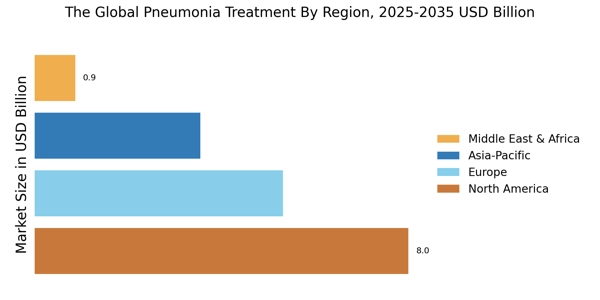
The Global Pneumonia Treatment Market shows robust growth across various regions, North America leads the market, holding a significant share valued at 7.0 USD Billion in 2024, expected to rise to 9.8 USD Billion by 2035. Europe follows, with a valuation of 4.5 USD Billion in 2024 and projected to grow to 6.2 USD Billion by 2035, demonstrating its important role in the healthcare sector. The APAC region is valued at 3.5 USD Billion in 2024, which suggests significant potential for expansion, driven by increasing healthcare investments.
Meanwhile, South America and the MEA region are the smallest segments, valued at 1.3 USD Billion and 1.42 USD Billion in 2024, respectively, but are also expected to see growth, reflecting increasing health awareness and investment in healthcare infrastructure. The revenue trends indicate that North America and Europe dominate the Global Pneumonia Treatment Market, largely due to advanced healthcare systems and higher incidences of pneumonia, while other regions present emerging opportunities for growth in treatment methods and access.
The Global Pneumonia Treatment Market presents a dynamic landscape characterized by rapid advancements in medical research, diverse treatment modalities, and an ongoing commitment to improving patient outcomes. As pneumonia remains a significant health concern globally, the competitive environment encompasses a range of pharmaceutical companies and healthcare providers striving to innovate and develop effective therapies. The market is influenced by the evolving epidemiology of pneumonia, with factors such as the emergence of antibiotic resistance and the impact of viral infections on bacterial pneumonia shaping treatment strategies.Companies are increasingly collaborating with healthcare professionals and academic institutions to expedite the discovery and delivery of novel treatments while focusing on the development of combination therapies and personalized medicine. Mylan is a notable player in the Global Pneumonia Treatment Market, recognized for its extensive portfolio of generic and branded medications aimed at combating respiratory infections, including pneumonia. The company's strengths lie in its robust manufacturing capabilities, which allow it to produce a wide range of antibiotic formulations distributed across various markets.Mylan's commitment to affordability and accessibility enhances its competitive edge, enabling healthcare providers to offer effective treatments at lower costs in both developed and emerging markets. Additionally, Mylan's strategic collaborations and partnerships focus on research and development initiatives that aim to address specific unmet medical needs, particularly in regions with high pneumonia prevalence, thereby solidifying its presence in the marketplace.Amgen plays a significant role in the Global Pneumonia Treatment Market, leveraging its expertise in biotechnology to develop cutting-edge therapies.The company is particularly noted for its focus on innovative biologics and immunotherapies that can enhance the body’s immune response against infections, including pneumonia. Amgen's strengths are amplified by its substantial investment in research and development, which drives medical breakthroughs and introduces differentiated products to the market. The company's strong regulatory compliance history and commitment to high-quality standards further bolster its reputation amongst healthcare professionals. Furthermore, Amgen actively engages in partnerships and alliances that aim to explore novel treatment avenues for pneumonia, positioning itself as a forward-thinking entity in the evolving landscape of pneumonia care.





Recent developments in the Global Pneumonia Treatment Market have underscored the increasing emphasis on innovation and strategic partnerships among key players such as Mylan, Amgen, Johnson and Johnson, Merck and Co, and Pfizer. The ongoing focus on novel antibiotic therapies and biological treatments has been driven by the need for effective strategies to combat antibiotic resistance. Companies like Bristol Myers Squibb and Roche have been investing in research for advanced vaccines as preventive measures against pneumonia.
Notably, there have been significant mergers and acquisitions within this space, enhancing competitive positioning; for instance, mergers involving AbbVie and GSK have heightened their respective portfolios in infectious disease management. Market valuations for companies such as AstraZeneca and Novartis have shown growth, reflecting their strong pipeline of pneumonia-related therapies. Additionally, the impact of new regulatory approvals on the market dynamics is notable as well, with emerging markets witnessing increased demand for pneumonia treatment options. This overall trend indicates a robust and evolving market landscape for the treatment of pneumonia, influenced by both innovative developments and strategic corporate maneuvers.
The Global Pneumonia Treatment Market is projected to grow at a 3.11% CAGR from 2025 to 2035, driven by advancements in treatment protocols, increased healthcare access, and rising awareness.
New opportunities lie in:
By 2035, the market is expected to achieve robust growth, reflecting enhanced treatment capabilities and patient outcomes.
| MARKET SIZE 2024 | 17.71(USD Billion) |
| MARKET SIZE 2025 | 18.27(USD Billion) |
| MARKET SIZE 2035 | 24.81(USD Billion) |
| COMPOUND ANNUAL GROWTH RATE (CAGR) | 3.11% (2025 - 2035) |
| REPORT COVERAGE | Revenue Forecast, Competitive Landscape, Growth Factors, and Trends |
| BASE YEAR | 2024 |
| Market Forecast Period | 2025 - 2035 |
| Historical Data | 2019 - 2024 |
| Market Forecast Units | USD Billion |
| Key Companies Profiled | Pfizer (US), Merck & Co (US), GlaxoSmithKline (GB), AstraZeneca (GB), Roche (CH), Novartis (CH), Sanofi (FR), Bristol-Myers Squibb (US), Johnson & Johnson (US) |
| Segments Covered | Type of Pneumonia, Treatment Method, Route of Administration, Age Group, Regional |
| Key Market Opportunities | Advancements in targeted therapies and diagnostics enhance treatment efficacy in The Global Pneumonia Treatment. |
| Key Market Dynamics | Rising demand for innovative therapies drives competition among pharmaceutical companies in pneumonia treatment. |
| Countries Covered | North America, Europe, APAC, South America, MEA |
The projected market valuation for The Global Pneumonia Treatment is 24.81 USD Billion by 2035.
The overall market valuation of The Global Pneumonia Treatment was 17.71 USD Billion in 2024.
The expected CAGR for The Global Pneumonia Treatment during the forecast period 2025 - 2035 is 3.11%.
The projected revenue for Bacterial Pneumonia treatment is expected to reach 7.5 USD Billion by 2035.
By 2035, the revenue for Viral Pneumonia treatment is projected to be 5.5 USD Billion, whereas Fungal Pneumonia treatment is expected to reach 3.0 USD Billion.
Antibiotics and Vaccination are expected to generate the highest revenues, with projections of 8.0 USD Billion and 6.81 USD Billion respectively by 2035.
The anticipated revenue for the Pediatric age group in pneumonia treatment is projected to be 4.8 USD Billion by 2035.
The Inhalation route of administration is expected to have the highest revenue, projected at 9.81 USD Billion by 2035.
The projected revenue for Geriatric pneumonia treatment is expected to reach 8.51 USD Billion by 2035.



Kindly complete the form below to receive a free sample of this Report

“This is really good guys. Excellent work on a tight deadline. I will continue to use you going forward and recommend you to others. Nice job”


“Thanks. It’s been a pleasure working with you, please use me as reference with any other Intel employees.”


“Thanks for sending the report it gives us a good global view of the Betaïne market.”


“Thank you, this will be very helpful for OQS.”


“We found the report very insightful! we found your research firm very helpful. I'm sending this email to secure our future business.”


“I am very pleased with how market segments have been defined in a relevant way for my purposes (such as "Portable Freezers & refrigerators" and "last-mile"). In general the report is well structured. Thanks very much for your efforts.”


“I have been reading the first document or the study, ,the Global HVAC and FP market report 2021 till 2026. Must say, good info! I have not gone in depth at all parts, but got a good indication of the data inside!”


“We got the report in time, we really thank you for your support in this process. I also thank to all of your team as they did a great job.”


“The Automotive 48V ECU Components Procurement Intelligence Study” was a complex project, but the Market Research Future (MRFR) team handled it with quality, agility, and customer-centricity. They delivered all requested data on time and within the agreed scope. The team, including Shubhendra Anand and Rahul Gotadki, was always readily available to clarify questions and swiftly implement necessary adjustments, driving the project to a successful conclusion within a very demanding timeframe.
I would also like to specifically commend Akshay Agarwal for his responsiveness and support at every stage—from our initial inquiry on May 6th through to final delivery on June 18th. His dedication made the entire process seamless.”



