×
Request Free Sample ×

Kindly complete the form below to receive a free sample of this Report

* Please use a valid business email

Leading companies partner with us for data-driven Insights

clients tt-cursor
Hero Background

Polyglycolic Acid in the Oil and Gas Industry Market

ID: MRFR/CnM/35651-HCR
111 Pages
Chitranshi Jaiswal
October 2025

Polyglycolic Acid in Oil and Gas Industry Market Research Report: By Application (Drilling Fluids, Hydraulic Fracturing, Well Stimulation, Pipeline Coatings), By End Use (Onshore, Offshore), By Type (Surgical Sutures, Biomedical Applications, Additives for Oil and Gas), By Form (Granules, Powder, Fibers) and By Regional (North America, Europe, South America, Asia-Pacific, Middle East and Africa) - Forecast to 2035.

Share:
Download PDF ×

We do not share your information with anyone. However, we may send you emails based on your report interest from time to time. You may contact us at any time to opt-out.

Polyglycolic Acid in the Oil and Gas Industry Market Infographic
Purchase Options

Polyglycolic Acid in the Oil and Gas Industry Market Summary

As per MRFR analysis, the Polyglycolic Acid in the Oil and Gas Industry Market was estimated at 746.69 USD Million in 2024. The Polyglycolic Acid industry is projected to grow from 798.75 USD Million in 2025 to 1567.16 USD Million by 2035, exhibiting a compound annual growth rate (CAGR) of 6.97 during the forecast period 2025 - 2035.

Key Market Trends & Highlights

The Polyglycolic Acid market in the Oil and Gas industry is poised for growth driven by sustainability and technological advancements.

  • The market is increasingly influenced by a focus on sustainability, with biodegradable materials gaining traction.
  • Technological advancements are enhancing the performance characteristics of Polyglycolic Acid, particularly in drilling fluids.
  • North America remains the largest market, while Asia-Pacific is emerging as the fastest-growing region for Polyglycolic Acid applications.
  • Rising demand for biodegradable materials and regulatory support for sustainable practices are key drivers propelling market growth.

Market Size & Forecast

2024 Market Size 746.69 (USD Million)
2035 Market Size 1567.16 (USD Million)
CAGR (2025 - 2035) 6.97%

Major Players

BASF SE (DE), E. I. du Pont de Nemours and Company (US), Mitsubishi Chemical Corporation (JP), Teijin Limited (JP), Corbion N.V. (NL), NatureWorks LLC (US), Futerro (BE), Kraton Corporation (US), Boehringer Ingelheim GmbH (DE)

Polyglycolic Acid in the Oil and Gas Industry Market Trends

The Polyglycolic Acid in the Oil and Gas Industry Market is currently experiencing a notable evolution, driven by the increasing demand for environmentally friendly materials and innovative solutions in various applications. This biopolymer, known for its biodegradability and versatility, is gaining traction in sectors such as drilling fluids, wellbore stability, and enhanced oil recovery. As companies strive to reduce their ecological footprint, the adoption of polyglycolic acid is likely to rise, reflecting a broader trend towards sustainability in the energy sector. Furthermore, advancements in production techniques and formulations are enhancing the performance characteristics of polyglycolic acid, making it a more attractive option for industry stakeholders. In addition to sustainability, the Polyglycolic Acid in the Oil and Gas Industry Market is influenced by the ongoing technological innovations that are reshaping operational efficiencies. The integration of polyglycolic acid into various processes may lead to improved performance metrics, such as increased viscosity and stability in drilling operations. This trend suggests that companies are not only focusing on environmental considerations but also on optimizing their operational capabilities. As the market continues to evolve, the interplay between sustainability and technological advancement will likely shape the future landscape of polyglycolic acid applications in the oil and gas sector.

Sustainability Focus

The emphasis on sustainable practices is driving the adoption of polyglycolic acid in the oil and gas sector. Companies are increasingly seeking biodegradable alternatives to traditional materials, aligning with global environmental goals.

Technological Advancements

Innovations in production methods are enhancing the properties of polyglycolic acid, making it more effective for various applications. This trend indicates a shift towards improved performance in drilling and recovery processes.

Regulatory Influences

Stricter environmental regulations are prompting the oil and gas industry to explore greener materials. Polyglycolic acid is emerging as a viable solution, potentially leading to increased market penetration.

Polyglycolic Acid in the Oil and Gas Industry Market Drivers

Market Charts and Projections

The Global Polyglycolic Acid in Oil and Gas Industry Market is projected to showcase substantial growth over the next decade. Key metrics indicate that the market size is expected to reach 0.75 USD Billion in 2024, with a significant increase to 1.57 USD Billion by 2035. The compound annual growth rate of 6.96% from 2025 to 2035 highlights the upward trajectory of this market segment. These projections underscore the increasing adoption of polyglycolic acid in various applications within the oil and gas sector, driven by technological advancements and regulatory support.

Increasing Exploration Activities

The Global Polyglycolic Acid in Oil and Gas Industry Market is bolstered by increasing exploration activities in untapped regions. As oil and gas companies expand their operations into challenging environments, the need for reliable and effective materials becomes paramount. Polyglycolic acid, with its favorable properties, is being utilized in various applications, including enhanced oil recovery and drilling operations. The growing focus on maximizing resource extraction efficiency is likely to drive demand for polyglycolic acid, contributing to the market's projected growth. This trend aligns with the overall expansion of the oil and gas sector, further solidifying polyglycolic acid's role in future developments.

Technological Advancements in Production

Technological advancements in the production of polyglycolic acid are significantly influencing the Global Polyglycolic Acid in Oil and Gas Industry Market. Innovations in polymerization processes and the development of more efficient catalysts are enhancing the yield and quality of polyglycolic acid. These improvements not only reduce production costs but also increase the material's applicability in various oil and gas operations. As a result, companies are likely to adopt polyglycolic acid more widely, fostering market growth. The anticipated compound annual growth rate of 6.96% from 2025 to 2035 underscores the potential of these advancements to reshape the industry landscape.

Rising Demand for Biodegradable Materials

The Global Polyglycolic Acid in Oil and Gas Industry Market is experiencing an upsurge in demand for biodegradable materials. As environmental regulations tighten, companies are increasingly seeking sustainable alternatives to traditional materials. Polyglycolic acid, known for its biodegradability, aligns with these sustainability goals. For instance, the oil and gas sector is exploring polyglycolic acid for applications in drilling fluids and wellbore stability, which could reduce environmental impact. This shift towards eco-friendly solutions is projected to contribute to the market's growth, with the market size expected to reach 0.75 USD Billion in 2024 and potentially 1.57 USD Billion by 2035.

Regulatory Support for Sustainable Practices

Regulatory support for sustainable practices is a key driver of the Global Polyglycolic Acid in Oil and Gas Industry Market. Governments worldwide are implementing policies that encourage the use of environmentally friendly materials in industrial applications. This regulatory landscape is prompting oil and gas companies to adopt polyglycolic acid as a viable alternative to conventional materials. The push for sustainability not only aligns with corporate social responsibility goals but also enhances operational efficiency. As the market evolves, the integration of polyglycolic acid in various applications is expected to grow, reflecting the industry's commitment to sustainable practices.
Market Segment Insights

By Application: Drilling Fluids (Largest) vs. Enhanced Oil Recovery (Fastest-Growing)

In the Polyglycolic Acid market within the oil and gas industry, drilling fluids emerge as the largest application segment, commanding a significant portion of the market share. This is attributed to the increasing demand for efficient drilling operations and the need for sustainable drilling solutions. Other segments like well stimulation and pipeline coatings also contribute, but they hold a relatively smaller share in comparison to drilling fluids. Enhanced oil recovery is recognized as the fastest-growing segment, fueled by the oil industry's constant quest for maximizing extraction efficiency. The emphasis on sustainable practices and environmental considerations drives innovation in this segment, leading to a growing preference for polyglycolic acid-based solutions. As technology advances, the integration of polyglycolic acid in recovery processes is expected to expand further, enhancing its market presence.

Drilling Fluids (Dominant) vs. Well Stimulation (Emerging)

Drilling fluids are critical in maintaining wellbore stability and optimizing performance during drilling operations. Characterized by their superior viscosity control and eco-friendly properties, polyglycolic acid-based drilling fluids are increasingly favored, making this segment the dominant force in the application landscape. In contrast, well stimulation is considered an emerging segment, focusing on enhancing the permeability of reservoir rocks to boost oil and gas recovery. The evolution of technologies surrounding well stimulation, alongside regulatory support for environmentally safe practices, positions this segment for significant growth, showing promise for polyglycolic acid applications to meet industry needs.

By End Use: Onshore (Largest) vs. Offshore (Fastest-Growing)

In the Polyglycolic Acid in the Oil and Gas Industry Market, the Onshore segment currently holds the largest market share, driven by extensive drilling activities and the need for efficient extraction processes. This segment is characterized by established infrastructure and significant investments, which bolster its dominance over Offshore operations. Conversely, the Offshore segment is gaining momentum, attributed to technological advancements and the growing demand for energy resources from deepwater reserves, positioning it as the fastest-growing segment in this market.

Onshore (Dominant) vs. Offshore (Emerging)

The Onshore segment remains dominant due to the substantial operational scale and familiarity with polyglycolic acid applications, facilitating various industrial procedures such as well completion and enhanced oil recovery. It benefits from established supply chains and lower logistical complexities compared to Offshore operations. However, the Offshore segment is emerging rapidly, fueled by innovations in extraction technologies and increased investments in deepwater projects, making it an attractive area for future growth. The unique challenges of offshore drilling necessitate specialized solutions, positioning polyglycolic acid as an essential material for enhancing operational efficiency.

By Formulation Type: Aqueous Solutions (Largest) vs. Emulsions (Fastest-Growing)

In the Polyglycolic Acid market within the oil and gas industry, the formulation type segment showcases a diverse distribution among aqueous solutions, emulsions, and solid forms. Aqueous solutions hold the largest share, primarily being preferred due to their ease of use and effectiveness in various applications such as enhancing oil recovery and improving fluidity. Conversely, emulsions, while having a smaller current share, are rapidly gaining traction, driven by innovations in formulation techniques and their growing suitability for complex oil recovery processes.

Aqueous Solutions (Dominant) vs. Emulsions (Emerging)

Aqueous solutions are dominant in the formulation type segment due to their widespread application and established effectiveness in the oil and gas industry, particularly in drilling and completion fluids. Their ability to facilitate smoother operations and their compatibility with various additives enhances their appeal. On the other hand, emulsions are emerging rapidly as a viable alternative, particularly in scenarios requiring enhanced stability and performance in extreme conditions. Emulsions offer unique advantages, such as improved blockages in porous materials and maintaining desirable viscosity, which positions them favorably for future applications.

By Production Method: Polymerization (Largest) vs. Biodegradable Processes (Fastest-Growing)

In the Polyglycolic Acid segment for the Oil and Gas Industry, production methods vary significantly with Polymerization holding the majority market share. This traditional method boasts extensive industry application and is preferred for its efficiency, yielding high-quality polyglycolic acid products essential in various energy applications. Following this, Chemical Synthesis also claims a noteworthy portion of the market, focusing on more advanced techniques to achieve polyesters that meet industry demands. Conversely, Biodegradable Processes are beginning to capture interest, appealing mainly for their eco-friendly credentials and potential compliance with stringent environmental regulations.

Production Method: Polymerization (Dominant) vs. Biodegradable Processes (Emerging)

The Dominant Polymerization method remains a cornerstone in the production of Polyglycolic Acid, recognized for its reliability and effectiveness in generating high yields. It utilizes well-established processes that ensure consistency and quality in production, making it the preferred choice for many oil and gas companies. On the other hand, Biodegradable Processes represent an Emerging trend, gaining traction due to rising environmental awareness. This method focuses on sustainable practices, appealing to organizations keen on minimizing their ecological footprint. The shift towards biodegradable solutions is spurred by regulatory push and changing consumer preferences, further driving innovation in production techniques to blend performance with sustainability.

By Market Dynamics: Supply Chain Factors (Largest) vs. Regulatory Environment (Fastest-Growing)

In the Polyglycolic Acid in the Oil and Gas Industry Market, supply chain factors play a significant role, with a dominant presence influencing overall market operations. The intricacies of logistics, material sourcing, and supplier relationships dictate how effectively polyglycolic acid can be utilized in various applications. On the other hand, the regulatory environment is showing robust growth, reflecting an increasing focus on compliance and sustainability within the industry. This segment is crucial for ensuring that production processes meet evolving standards and regulations, thereby impacting market dynamics significantly. Growth trends indicate that while supply chain factors stabilize the market, the regulatory environment is rapidly evolving, influenced by global sustainability initiatives and stricter environmental guidelines. Companies are adapting by investing in compliance measures and environmental technologies, which is leading to accelerated market adaptations. Innovation in sustainable practices is becoming essential for companies seeking to maintain a competitive edge, thereby reinforcing the importance of the regulatory landscape.

Supply Chain Factors (Dominant) vs. Regulatory Environment (Emerging)

The supply chain factors are dominant in the Polyglycolic Acid in the Oil and Gas Industry Market, facilitating seamless operations and ensuring material availability for various applications. Efficient logistics, a reliable network of suppliers, and robust procurement strategies are vital characteristics that define this segment, enabling firms to maintain a consistent flow of products to meet demand. In contrast, the regulatory environment is emerging as a key driver for innovation within the market, demanding compliance with stricter environmental standards and promoting the development of sustainable production practices. Companies are increasingly challenged to meet these regulations, prompting investments in technology and sustainable solutions that can enhance their market position and operational efficiency.

Get more detailed insights about Polyglycolic Acid in the Oil and Gas Industry Market

Regional Insights

North America : Market Leader in Innovation

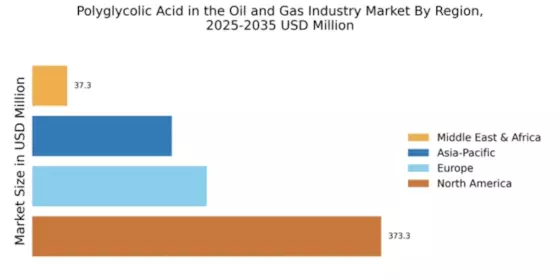
North America is poised to maintain its leadership in the Polyglycolic Acid market, holding a significant share of 373.34 million in 2024. The region's growth is driven by increasing demand for eco-friendly materials in the oil and gas sector, alongside stringent regulations promoting sustainable practices. The presence of advanced research facilities and a robust supply chain further catalyze market expansion, making it a hub for innovation and development. The United States stands out as the leading country in this region, with major players like BASF SE and E. I. du Pont de Nemours and Company driving competition. The competitive landscape is characterized by strategic partnerships and investments in R&D, ensuring a steady flow of innovative products. The market is also supported by favorable government policies that encourage the use of biodegradable materials, enhancing the overall growth trajectory.

Europe : Emerging Market with Potential

Europe is witnessing a growing interest in Polyglycolic Acid, with a market size of 186.67 million. The region's demand is fueled by increasing environmental regulations and a shift towards sustainable solutions in the oil and gas industry. Countries are implementing policies that promote the use of biodegradable materials, which is expected to drive market growth significantly in the coming years. The focus on reducing carbon footprints is a key catalyst for this trend. Germany and the Netherlands are leading the charge in Europe, with companies like Corbion N.V. and Teijin Limited making significant contributions. The competitive landscape is marked by innovation and collaboration among key players, enhancing product offerings. The European market is also characterized by a strong emphasis on research and development, ensuring that the region remains competitive in the global arena. "The European Union is committed to promoting sustainable practices across industries, including oil and gas," said a spokesperson from the European Commission.

Asia-Pacific : Rapidly Growing Market

Asia-Pacific is emerging as a significant player in the Polyglycolic Acid market, with a size of 149.34 million. The region's growth is driven by increasing industrialization and a rising demand for sustainable materials in the oil and gas sector. Countries are increasingly adopting eco-friendly practices, supported by government initiatives aimed at reducing environmental impact. This trend is expected to bolster market growth in the coming years. China and Japan are at the forefront of this growth, with key players like Mitsubishi Chemical Corporation and NatureWorks LLC leading the market. The competitive landscape is evolving, with companies focusing on innovation and sustainability to meet the growing demand. The presence of established manufacturers and a growing number of startups are contributing to a dynamic market environment, ensuring a robust future for Polyglycolic Acid in the region.

Middle East and Africa : Emerging Opportunities Ahead

The Middle East and Africa region is gradually emerging in the Polyglycolic Acid market, with a size of 37.34 million. The growth is primarily driven by increasing investments in the oil and gas sector and a rising awareness of sustainable practices. Governments are beginning to implement regulations that encourage the use of biodegradable materials, which is expected to create new opportunities for market players in the coming years. Countries like South Africa and the UAE are showing potential for growth, with a focus on enhancing local production capabilities. The competitive landscape is still developing, with a few key players beginning to establish their presence. As the region continues to invest in infrastructure and technology, the market for Polyglycolic Acid is likely to expand, driven by both local and international players.

Key Players and Competitive Insights

The Polyglycolic Acid market within the Oil and Gas sector is characterized by a dynamic competitive landscape, driven by increasing demand for sustainable materials and innovative applications. Key players such as BASF SE (DE), E. I. du Pont de Nemours and Company (US), and Mitsubishi Chemical Corporation (JP) are strategically positioning themselves through a combination of technological advancements and strategic partnerships. These companies are focusing on enhancing their product offerings and expanding their market reach, which collectively shapes a competitive environment that is increasingly focused on sustainability and efficiency.

In terms of business tactics, companies are localizing manufacturing to reduce costs and optimize supply chains, which is particularly crucial in the context of fluctuating raw material prices. The market appears moderately fragmented, with several players vying for market share, yet the influence of major companies remains significant. Their collective strategies not only enhance their competitive edge but also contribute to a more resilient market structure.

In November 2025, BASF SE (DE) announced a partnership with a leading oil and gas company to develop biodegradable drilling fluids utilizing polyglycolic acid. This strategic move underscores BASF's commitment to sustainability and innovation, potentially setting a new standard in environmentally friendly drilling practices. The collaboration is expected to enhance operational efficiency while reducing environmental impact, aligning with global trends towards greener technologies.

In October 2025, E. I. du Pont de Nemours and Company (US) launched a new line of polyglycolic acid-based products aimed at improving the performance of hydraulic fracturing fluids. This initiative reflects the company's focus on innovation and its response to the growing demand for high-performance materials in the oil and gas sector. By enhancing the efficacy of hydraulic fracturing, DuPont positions itself as a leader in providing advanced solutions that meet the evolving needs of the industry.

In September 2025, Mitsubishi Chemical Corporation (JP) expanded its production capacity for polyglycolic acid in response to increasing global demand. This expansion not only demonstrates Mitsubishi's commitment to meeting market needs but also highlights the competitive pressure to scale operations efficiently. The increased capacity is likely to enhance the company's market position, allowing it to better serve its clients and respond to emerging opportunities in the oil and gas sector.

As of December 2025, current competitive trends indicate a strong emphasis on digitalization, sustainability, and the integration of AI technologies within the industry. Strategic alliances are increasingly shaping the landscape, fostering innovation and collaboration among key players. The shift from price-based competition to a focus on technological advancement and supply chain reliability is evident, suggesting that future competitive differentiation will hinge on the ability to innovate and adapt to changing market demands.

Key Companies in the Polyglycolic Acid in the Oil and Gas Industry Market market include

Industry Developments

Recent developments in the  Polyglycolic Acid in the Oil and Gas Industry Market have shown significant interest in sustainability and environmentally friendly alternatives. Companies like Dainippon Sumitomo Pharma and Novamont are increasingly focusing on bio-based polyglycolic acids as a response to growing environmental concerns. Galata Chemicals and Teijin Limited have introduced enhanced formulations aimed at improving the performance of polyglycolic acids in various oil and gas applications. Mitsui Chemicals and DOW continue to expand their product lines, showcasing innovations that cater to the need for high-performance materials.

Fujifilm has also made strides in this sector by exploring polyglycolic acid's potential in advanced drilling technologies. Current market dynamics show an upward trend in investment as industry giants like Mitsubishi Chemical Corporation and BASF are collaborating on joint ventures to enhance product capabilities. Recent acquisitions, particularly those involving SABIC and Huntsman Corporation, signify a consolidation trend aimed at strengthening market positions and enhancing technological advancements. The growth in the market valuation of these companies is fostering competition and encouraging further R&D, thereby positively impacting the overall market landscape.

Future Outlook

Polyglycolic Acid in the Oil and Gas Industry Market Future Outlook

The Polyglycolic Acid in the Oil and Gas Industry Market is projected to grow at a 6.97% CAGR from 2024 to 2035, driven by increasing demand for eco-friendly materials and enhanced operational efficiencies.

New opportunities lie in:

  • Development of biodegradable drilling fluids for sustainable operations.
  • Investment in advanced polymer synthesis technologies to improve product performance.
  • Expansion of supply chain partnerships to enhance distribution efficiency.

By 2035, the market is poised for robust growth, reflecting evolving industry needs and sustainability trends.

Market Segmentation

Polyglycolic Acid in the Oil and Gas Industry Market End Use Outlook

  • Onshore
  • Offshore
  • Refinery Operations

Polyglycolic Acid in the Oil and Gas Industry Market Application Outlook

  • Drilling Fluids
  • Well Stimulation
  • Enhanced Oil Recovery
  • Pipeline Coatings

Polyglycolic Acid in the Oil and Gas Industry Market Market Dynamics Outlook

  • Supply Chain Factors
  • Regulatory Environment
  • Technological Advancements

Polyglycolic Acid in the Oil and Gas Industry Market Formulation Type Outlook

  • Aqueous Solutions
  • Emulsions
  • Solid Forms

Polyglycolic Acid in the Oil and Gas Industry Market Production Method Outlook

  • Polymerization
  • Chemical Synthesis
  • Biodegradable Processes

Report Scope

MARKET SIZE 2024746.69(USD Million)
MARKET SIZE 2025798.75(USD Million)
MARKET SIZE 20351567.16(USD Million)
COMPOUND ANNUAL GROWTH RATE (CAGR)6.97% (2024 - 2035)
REPORT COVERAGERevenue Forecast, Competitive Landscape, Growth Factors, and Trends
BASE YEAR2024
Market Forecast Period2025 - 2035
Historical Data2019 - 2024
Market Forecast UnitsUSD Million
Key Companies ProfiledBASF SE (DE), E. I. du Pont de Nemours and Company (US), Mitsubishi Chemical Corporation (JP), Teijin Limited (JP), Corbion N.V. (NL), NatureWorks LLC (US), Futerro (BE), Kraton Corporation (US), Boehringer Ingelheim GmbH (DE)
Segments CoveredApplication, End Use, Formulation Type, Production Method, Market Dynamics
Key Market OpportunitiesIncreasing demand for biodegradable materials in drilling fluids presents opportunities in the Polyglycolic Acid in the Oil and Gas Industry Market.
Key Market DynamicsRising demand for biodegradable materials drives innovation in Polyglycolic Acid applications within the oil and gas sector.
Countries CoveredNorth America, Europe, APAC, South America, MEA

Leave a Comment

FAQs

What is the expected CAGR for the Polyglycolic Acid in the Oil and Gas Industry Market from 2025 to 2034?

Polyglycolic Acid in the Oil and Gas Industry Market is projected to register a CAGR of 6.97% from 2025-2035

Which application segment is expected to dominate the market by 2035?

The Drilling Fluids application segment is expected to dominate the market with a value of 0.36 USD Billion by 2035.

What is the market value of the Hydraulic Fracturing segment by 2035?

The Hydraulic Fracturing segment is projected to reach a market value of 0.43 USD Billion by 2035.

Which region is expected to have the largest market share by 2035?

North America is expected to have the largest market share, valued at 0.45 USD Billion by 2035.

What is the expected market value of Europe in the Polyglycolic Acid Oil and Gas Industry by 2035?

The market value for Europe in the Polyglycolic Acid Oil and Gas Industry is expected to reach 0.25 USD Billion by 2035.

Who are the key players in the Polyglycolic Acid in the Oil and Gas Industry Market?

Key players in the market include Dainippon Sumitomo Pharma, Novamont, Galata Chemicals, and DOW.

What is the expected growth rate for the APAC region in the Polyglycolic Acid Oil and Gas Industry by 2035?

The APAC region is expected to grow to a market value of 0.2 USD Billion by 2035.

What is the projected market value for the Well Stimulation application by 2035?

The Well Stimulation application is projected to have a market value of 0.25 USD Billion by 2035.

Download Free Sample

Kindly complete the form below to receive a free sample of this Report

Compare Licence

×
Features License Type
Single User Multiuser License Enterprise User
Price $4,950 $ $7,250
Maximum User Access Limit 1 User Upto 10 Users Unrestricted Access Throughout the Organization
Free Customization
Direct Access to Analyst
Deliverable Format
Platform Access
Discount on Next Purchase 10% 15% 15%
Printable Versions