Polyphenylene Sulfide Resin Market
Polyphenylene Sulfide Resin Market Summary
As per Market Research Future analysis, the Polyphenylene Sulfide Resin Market Size was estimated at 3.152 USD Billion in 2024. The Polyphenylene Sulfide Resin industry is projected to grow from USD 3.414 Billion in 2025 to USD 7.593 Billion by 2035, exhibiting a compound annual growth rate (CAGR) of 8.32% during the forecast period 2025 - 2035
Key Market Trends & Highlights
The Polyphenylene Sulfide Resin Market is experiencing robust growth driven by diverse applications and technological advancements.
- The automotive sector continues to drive the largest demand for polyphenylene sulfide resins, particularly in North America.
- Asia-Pacific emerges as the fastest-growing region, fueled by increasing industrialization and demand for advanced materials.
- The automotive parts segment remains the largest, while aerospace components are witnessing the fastest growth due to rising safety and performance standards.
- Key market drivers include the increasing applications in electronics and the growing focus on energy efficiency across various industries.
Market Size & Forecast
| 2024 Market Size | 3.152 (USD Billion) |
| 2035 Market Size | 7.593 (USD Billion) |
| CAGR (2025 - 2035) | 8.32% |
Major Players
Toray Industries (JP), Solvay (BE), DIC Corporation (JP), BASF (DE), SABIC (SA), Mitsubishi Gas Chemical Company (JP), Kraton Corporation (US), RTP Company (US), Huntsman Corporation (US)
Polyphenylene Sulfide Resin Market Trends
The Polyphenylene Sulfide Resin Market is currently experiencing a notable transformation, driven by increasing demand across various industries. This high-performance thermoplastic is recognized for its exceptional thermal stability, chemical resistance, and mechanical properties, making it suitable for applications in automotive, aerospace, and electronics sectors. As industries seek materials that can withstand extreme conditions, the appeal of polyphenylene sulfide resin continues to grow. Furthermore, the trend towards lightweight materials in manufacturing processes is likely to bolster the market, as this resin offers a viable solution for reducing overall weight without compromising performance. In addition to its mechanical advantages, the Polyphenylene Sulfide Resin Market is also influenced by advancements in processing technologies. Innovations in molding and extrusion techniques are enhancing the efficiency of production, thereby expanding the potential applications of this versatile material. Moreover, sustainability concerns are prompting manufacturers to explore eco-friendly alternatives, which may lead to the development of bio-based polyphenylene sulfide resins. As the market evolves, it appears that the combination of performance, processing advancements, and sustainability will shape the future landscape of polyphenylene sulfide resin applications across diverse sectors.
Growing Demand in Automotive Sector
The automotive industry is increasingly adopting polyphenylene sulfide resin due to its lightweight nature and ability to withstand high temperatures. This trend suggests a shift towards materials that enhance fuel efficiency and reduce emissions, aligning with global sustainability goals.
Advancements in Processing Technologies
Innovations in processing methods are enhancing the production capabilities of polyphenylene sulfide resin. Improved molding and extrusion techniques are likely to expand its applications, making it more accessible for various industries.
Focus on Sustainability
There is a rising emphasis on sustainable materials within the Polyphenylene Sulfide Resin Market. Manufacturers are exploring bio-based alternatives, which may lead to a new segment of eco-friendly polyphenylene sulfide resins, catering to environmentally conscious consumers.
Polyphenylene Sulfide Resin Market Drivers
Growing Focus on Energy Efficiency
The Polyphenylene Sulfide Resin Market is increasingly driven by a growing focus on energy efficiency across various sectors. As industries seek to reduce energy consumption and improve sustainability, the demand for materials that contribute to energy-efficient processes is rising. Polyphenylene sulfide resins, known for their lightweight and durable characteristics, are being adopted in applications that require energy-efficient solutions. For example, in automotive and aerospace applications, the use of lightweight materials can lead to significant reductions in fuel consumption. The trend towards energy efficiency is expected to continue, potentially leading to a rise in the adoption of polyphenylene sulfide resins in applications that prioritize sustainability and performance.
Increasing Applications in Electronics
The Polyphenylene Sulfide Resin Market is experiencing a notable surge in demand due to its increasing applications in the electronics sector. This resin is favored for its excellent thermal stability and electrical insulation properties, making it suitable for components such as connectors, circuit boards, and housings. As the electronics industry continues to evolve, the need for materials that can withstand high temperatures and provide reliable performance is paramount. In 2023, the electronics segment accounted for a substantial share of the market, reflecting a trend that is likely to persist as technological advancements drive innovation. The integration of polyphenylene sulfide in electronic devices not only enhances performance but also contributes to the miniaturization of components, further propelling the market forward.
Rising Demand in Aerospace Applications
The Polyphenylene Sulfide Resin Market is poised for growth, particularly in the aerospace sector, where the demand for lightweight and high-performance materials is critical. Polyphenylene sulfide resins are increasingly utilized in aircraft components due to their superior mechanical properties and resistance to harsh environmental conditions. The aerospace industry is projected to expand, with an estimated growth rate of 4.5% annually over the next five years. This growth is likely to drive the adoption of polyphenylene sulfide, as manufacturers seek materials that can enhance fuel efficiency and reduce overall weight. The ability of this resin to withstand extreme temperatures and pressures makes it an ideal choice for aerospace applications, thereby contributing to the overall expansion of the market.
Expansion in the Chemical Processing Industry
The Polyphenylene Sulfide Resin Market is benefiting from the expansion of the chemical processing sector, where the need for durable and chemically resistant materials is paramount. Polyphenylene sulfide resins are increasingly employed in applications such as pumps, valves, and piping systems due to their exceptional resistance to corrosive chemicals and high temperatures. The chemical processing industry is expected to witness a compound annual growth rate of approximately 3.8% in the coming years, which may lead to increased demand for polyphenylene sulfide. As industries strive for efficiency and safety, the adoption of this resin is likely to rise, further solidifying its position in the market. The versatility of polyphenylene sulfide in various chemical environments enhances its appeal to manufacturers.
Technological Innovations in Material Science
The Polyphenylene Sulfide Resin Market is significantly influenced by ongoing technological innovations in material science. Advances in processing techniques and formulations are enabling the development of enhanced polyphenylene sulfide resins with improved properties. These innovations are likely to expand the range of applications for this resin, making it more attractive to various industries. For instance, the introduction of new additives and processing methods can enhance the thermal and mechanical properties of polyphenylene sulfide, thereby broadening its usability. As manufacturers continue to invest in research and development, the market is expected to witness a shift towards more specialized and high-performance grades of polyphenylene sulfide, which could lead to increased market penetration and growth.
Market Segment Insights
By Application: Automotive Parts (Largest) vs. Aerospace Components (Fastest-Growing)
The Polyphenylene Sulfide (PPS) Resin Market shows a diverse application segmentation with Automotive Parts holding the largest share due to the increasing adoption of lightweight materials aimed at improving fuel efficiency. This segment leverages the high-performance characteristics of PPS, such as thermal stability and chemical resistance, to meet the stringent requirements of modern vehicles. On the other hand, Aerospace Components is emerging rapidly, driven by the aerospace industry's need for advanced materials that can withstand extreme conditions while maintaining a low weight profile. The adherence to regulatory standards further boosts this application segment's significance in the market.
Automotive Parts (Dominant) vs. Consumer Goods (Emerging)
The Automotive Parts segment of the Polyphenylene Sulfide Resin Market is characterized by its dominance due to the increasing demand for high-performance and durable materials in vehicle manufacturing. PPS resins provide solutions for various automotive applications including under-the-hood components and electronic housing, thanks to their excellent chemical resistance and thermal stability. Conversely, the Consumer Goods segment is gaining traction, driven by a growing trend towards lightweight and durable materials in everyday products. While still emerging, this segment harnesses PPS resins for applications like appliances and electronics, where their resilience and design versatility can lead to enhanced product performance and customer satisfaction.
By End Use Industry: Automotive (Largest) vs. Electronics (Fastest-Growing)
The Polyphenylene Sulfide (PPS) resin market is predominantly driven by the automotive sector, which holds the largest share due to the increasing demand for lightweight and durable materials in vehicle manufacturing. The automotive industry utilizes PPS for various components including fuel systems, electrical connectors, and other critical parts that require high heat resistance and chemical stability. Following automotive, the electronics industry is rapidly emerging as a significant consumer of PPS due to its excellent insulating properties, making it ideal for various electronic applications.
Automotive (Dominant) vs. Electronics (Emerging)
The automotive end use industry is characterized by its robust use of Polyphenylene Sulfide resin, mainly due to the material's outstanding thermal stability and dimensional integrity which are essential for automotive components subjected to high temperatures. This segment thrives on continuous innovations in lightweight materials aimed at enhancing fuel efficiency. In contrast, the electronics segment is swiftly gaining traction as an emerging market for PPS. Its unique properties such as high dielectric strength and resistance to moisture make it a preferred choice for electronic components including connectors, insulators, and housings, thus catering to the growing demand for electronic devices.
By Form: Pellets (Largest) vs. Powder (Fastest-Growing)
The Polyphenylene Sulfide (PPS) resin market is characterized by a diverse range of forms, with pellets holding the largest share due to their versatility in various applications. The pellet form is favored for injection molding processes, making it the leading choice among manufacturers. Meanwhile, the powdered form, while currently a smaller segment, is experiencing rapid growth as it finds its application in additive manufacturing and thermal spraying, appealing to niche markets that require fine-tuned material properties. Growth in the polyphenylene sulfide form segment is largely driven by the increasing demand for high-performance materials in industries such as automotive, aerospace, and electrical components. As manufacturers look for lightweight, heat-resistant, and chemically stable materials, the demand for both pellets and powder forms is expected to rise. The trend toward sustainability and the development of advanced manufacturing techniques are further propelling the powder segment's growth, positioning it as an emerging leader within the market.
Pellets (Dominant) vs. Films (Emerging)
Pellets are the dominant form in the Polyphenylene Sulfide resin market, primarily due to their ease of processing and adaptability in various manufacturing techniques such as injection molding and extrusion. They are recognized for their outstanding dimensional stability, thermal resistance, and chemical inertness, making them ideal for applications that require durability and reliability. On the other hand, films are emerging as a significant segment given their unique properties, such as flexibility and barrier performance, which are becoming increasingly important in electronic and packaging applications. The evolving technology in film manufacturing and a growing interest in lightweight materials enhance films' appeal as a competitive alternative, thus reshaping the market dynamic.
By Type: Unfilled (Largest) vs. Glass-Filled (Fastest-Growing)
In the Polyphenylene Sulfide Resin Market, the segment distribution reveals that Unfilled resins hold the largest share due to their versatile applications across industries such as automotive and electronics. Following closely is Glass-Filled resin, which is gaining momentum due to its superior mechanical properties, making it ideal for high-performance applications. Mineral-Filled and Flame Retardant varieties also play important roles, albeit at a lesser market share, catering to specialized needs. Custom Formulated resins, while smaller, provide tailored solutions that address specific customer requirements.
Unfilled (Dominant) vs. Glass-Filled (Emerging)
Unfilled Polyphenylene Sulfide resins dominate the market due to their broad applicability and cost-effectiveness. These resins are known for their excellent chemical resistance and dimensional stability, making them suitable for a variety of applications. On the other hand, Glass-Filled resins are emerging rapidly, driven by demand for enhanced stiffness and thermal stability, particularly in automotive and electronic components. This segment is characterized by its ability to substantially improve the mechanical performance of finished products, making it appealing to manufacturers looking for high-performance materials. As both segments evolve, their unique characteristics continue to shape their position in the market.
Regional Insights
North America : Innovation and Demand Surge
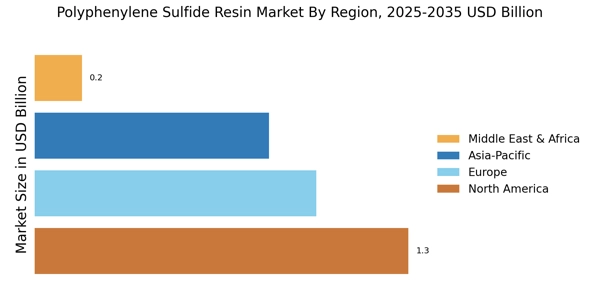
The North American Polyphenylene Sulfide (PPS) resin market is driven by increasing demand from the automotive and electronics sectors, which are focusing on lightweight and high-performance materials. The region holds approximately 40% of the global market share, making it the largest market for PPS resins. Regulatory support for advanced materials and sustainability initiatives further catalyze growth, enhancing the region's competitive edge. Leading countries in this region include the United States and Canada, with the U.S. being the dominant player. Key manufacturers such as Toray Industries and Huntsman Corporation are investing in R&D to innovate and expand their product offerings. The competitive landscape is characterized by strategic partnerships and collaborations aimed at enhancing market presence and meeting the evolving needs of end-users.
Europe : Sustainability and Innovation Focus
Europe is witnessing a significant rise in the Polyphenylene Sulfide resin market, driven by stringent environmental regulations and a shift towards sustainable materials. The region accounts for approximately 30% of the global market share, making it the second-largest market. The European Union's commitment to reducing carbon emissions and promoting circular economy practices is a key regulatory catalyst for the growth of PPS resins in various applications. Germany, France, and the UK are leading countries in this market, with a strong presence of key players like BASF and Solvay. The competitive landscape is marked by innovation in product development and a focus on high-performance applications in automotive and aerospace sectors. Companies are increasingly investing in sustainable practices to align with regulatory requirements and consumer preferences, enhancing their market position.
Asia-Pacific : Emerging Market Dynamics
The Asia-Pacific region is experiencing rapid growth in the Polyphenylene Sulfide resin market, driven by increasing industrialization and demand from the automotive and electronics sectors. This region holds approximately 25% of the global market share, with countries like China and Japan leading the charge. The growing focus on lightweight materials and high-performance applications is further propelling market expansion, supported by favorable government policies and investments in manufacturing. China is the largest market in the region, followed by Japan and South Korea. Key players such as DIC Corporation and Mitsubishi Gas Chemical Company are actively expanding their production capacities to meet the rising demand. The competitive landscape is characterized by a mix of local and international players, with a strong emphasis on innovation and technological advancements to enhance product offerings and market reach.
Middle East and Africa : Resource-Rich Opportunities
The Middle East and Africa (MEA) region presents significant growth potential for the Polyphenylene Sulfide resin market, driven by increasing industrial activities and a focus on diversifying economies. The region holds approximately 5% of the global market share, with countries like Saudi Arabia and South Africa emerging as key players. The demand for PPS resins is expected to rise as industries seek high-performance materials for various applications, supported by government initiatives to boost manufacturing. Saudi Arabia is leading the market in the region, with investments in petrochemical industries enhancing the availability of raw materials for PPS production. The competitive landscape is evolving, with both local and international companies vying for market share. Key players such as SABIC are focusing on innovation and sustainability to meet the growing demand and regulatory requirements in the region.
Key Players and Competitive Insights
The Polyphenylene Sulfide (PPS) Resin Market is currently characterized by a dynamic competitive landscape, driven by increasing demand across various sectors such as automotive, electronics, and aerospace. Key players are actively engaging in strategic initiatives to enhance their market positioning and operational efficiency. Notably, companies like Toray Industries (Japan), Solvay (Belgium), and BASF (Germany) are focusing on innovation and sustainability as core components of their strategies. These firms are not only investing in research and development to create advanced materials but are also exploring mergers and acquisitions to expand their product portfolios and market reach, thereby shaping a competitive environment that emphasizes technological advancement and environmental responsibility.In terms of business tactics, companies are increasingly localizing manufacturing to reduce lead times and optimize supply chains. This approach appears to be particularly effective in a moderately fragmented market where several players vie for market share. The collective influence of these key players, including DIC Corporation (Japan) and SABIC (Saudi Arabia), suggests a trend towards consolidation, as firms seek to leverage economies of scale and enhance their competitive edge.
In August Toray Industries (Japan) announced the launch of a new line of PPS resins designed specifically for high-temperature applications in the automotive sector. This strategic move is likely to position Toray as a leader in providing specialized materials that meet the evolving needs of the automotive industry, particularly as manufacturers increasingly prioritize lightweight and heat-resistant components.
In September Solvay (Belgium) unveiled a partnership with a leading electric vehicle manufacturer to develop advanced PPS composites aimed at improving battery efficiency and safety. This collaboration underscores Solvay's commitment to innovation and sustainability, as it aligns with the growing trend of electrification in the automotive sector, potentially enhancing the company's market share in the rapidly expanding electric vehicle market.
In July BASF (Germany) completed the acquisition of a specialty chemicals firm that specializes in high-performance polymers, including PPS. This acquisition is expected to bolster BASF's capabilities in producing advanced materials, thereby enhancing its competitive positioning in the PPS market. The integration of new technologies and expertise from the acquired firm may lead to the development of innovative products that cater to diverse industrial applications.
As of October the competitive trends in the Polyphenylene Sulfide Resin Market are increasingly defined by digitalization, sustainability, and the integration of artificial intelligence in production processes. Strategic alliances are becoming more prevalent, as companies recognize the value of collaboration in driving innovation and addressing market challenges. Looking ahead, it appears that competitive differentiation will increasingly hinge on factors such as technological innovation, supply chain reliability, and a commitment to sustainability, marking a shift away from traditional price-based competition.
Key Companies in the Polyphenylene Sulfide Resin Market include
Industry Developments
Recent developments in the Global Polyphenylene Sulfide (PPS) Resin Market highlight significant activity among major players such as RTP Company, Sabic, and Mitsui Chemicals, who are focusing on expanding their product lines and enhancing their manufacturing capabilities to meet rising demand in industries like automotive and electronics.
Samsung SDI and Kaneka Corporation have been investing in innovative applications of PPS, particularly in electronics, which are reinforcing the material's critical role in performance and sustainability. Noteworthy mergers and acquisitions have emerged, particularly involving organizations like Wanhua Chemical Group and BASF, which aim to bolster market positions through strategic alliances and resource-sharing.
Furthermore, companies like Solvay and DIC Corporation are actively engaged in research and development efforts to enhance the properties and applications of PPS, thus driving growth in market valuation.
The recent surge in market valuation is indicative of an increasing focus on high-performance materials, further propelling the expansion of the Polyphenylene Sulfide Resin Market as companies strive to capitalize on the growing demand for advanced materials across various sectors.
Future Outlook
Polyphenylene Sulfide Resin Market Future Outlook
The Polyphenylene Sulfide Resin Market is projected to grow at an 8.32% CAGR from 2025 to 2035, driven by increasing demand in automotive, electronics, and aerospace sectors.
New opportunities lie in:
- Development of high-performance composites for automotive applications.
- Expansion into emerging markets with tailored product offerings.
- Investment in R&D for sustainable and recyclable resin formulations.
By 2035, the market is expected to solidify its position as a leader in advanced materials.
Market Segmentation
Polyphenylene Sulfide Resin Market Form Outlook
- Pellets
- Powder
- Sheet
- Films
- Parts
Polyphenylene Sulfide Resin Market Type Outlook
- Unfilled
- Glass-Filled
- Mineral-Filled
- Flame Retardant
- Custom Formulated
Polyphenylene Sulfide Resin Market Application Outlook
- Automotive Parts
- Electrical Components
- Industrial Equipment
- Aerospace Components
- Consumer Goods
Polyphenylene Sulfide Resin Market End Use Industry Outlook
- Automotive
- Electronics
- Industrial
- Aerospace
- Medical
Report Scope
| MARKET SIZE 2024 | 3.152(USD Billion) |
| MARKET SIZE 2025 | 3.414(USD Billion) |
| MARKET SIZE 2035 | 7.593(USD Billion) |
| COMPOUND ANNUAL GROWTH RATE (CAGR) | 8.32% (2025 - 2035) |
| REPORT COVERAGE | Revenue Forecast, Competitive Landscape, Growth Factors, and Trends |
| BASE YEAR | 2024 |
| Market Forecast Period | 2025 - 2035 |
| Historical Data | 2019 - 2024 |
| Market Forecast Units | USD Billion |
| Key Companies Profiled | Toray Industries (JP), Solvay (BE), DIC Corporation (JP), BASF (DE), SABIC (SA), Mitsubishi Gas Chemical Company (JP), Kraton Corporation (US), RTP Company (US), Huntsman Corporation (US) |
| Segments Covered | Application, End Use Industry, Form, Type, Regional |
| Key Market Opportunities | Growing demand for lightweight, high-performance materials in automotive and electronics sectors drives Polyphenylene Sulfide Resin Market opportunities. |
| Key Market Dynamics | Rising demand for lightweight materials drives innovation and competition in the Polyphenylene Sulfide Resin market. |
| Countries Covered | North America, Europe, APAC, South America, MEA |
FAQs
What is the projected market valuation of the Polyphenylene Sulfide Resin Market by 2035?
The Polyphenylene Sulfide Resin Market is projected to reach a valuation of 7.593 USD Billion by 2035.
What was the market valuation of the Polyphenylene Sulfide Resin Market in 2024?
In 2024, the market valuation of the Polyphenylene Sulfide Resin Market was 3.152 USD Billion.
What is the expected CAGR for the Polyphenylene Sulfide Resin Market during the forecast period 2025 - 2035?
The expected CAGR for the Polyphenylene Sulfide Resin Market during the forecast period 2025 - 2035 is 8.32%.
Which companies are considered key players in the Polyphenylene Sulfide Resin Market?
Key players in the Polyphenylene Sulfide Resin Market include Toray Industries, Solvay, DIC Corporation, BASF, SABIC, Mitsubishi Gas Chemical Company, Kraton Corporation, RTP Company, and Huntsman Corporation.
What application segment is projected to have the highest valuation by 2035 in the Polyphenylene Sulfide Resin Market?
The Consumer Goods application segment is projected to reach a valuation of 1.922 USD Billion by 2035.
How much is the Automotive Parts segment expected to grow by 2035?
The Automotive Parts segment is expected to grow to 1.872 USD Billion by 2035.
What is the projected valuation for the Electronics end-use industry segment by 2035?
The Electronics end-use industry segment is projected to reach a valuation of 1.4 USD Billion by 2035.
Which form of Polyphenylene Sulfide Resin is expected to have the highest market valuation by 2035?
Pellets are expected to have the highest market valuation, reaching 2.25 USD Billion by 2035.
What is the projected growth for the Glass-Filled type segment by 2035?
How does the market valuation of the Industrial end-use industry segment compare between 2024 and 2035?
Kindly complete the form below to receive a free sample of this Report
Customer Stories
“This is really good guys. Excellent work on a tight deadline. I will continue to use you going forward and recommend you to others. Nice job”
“Thanks. It’s been a pleasure working with you, please use me as reference with any other Intel employees.”
“Thanks for sending the report it gives us a good global view of the Betaïne market.”
“Thank you, this will be very helpful for OQS.”
“We found the report very insightful! we found your research firm very helpful. I'm sending this email to secure our future business.”
“I am very pleased with how market segments have been defined in a relevant way for my purposes (such as "Portable Freezers & refrigerators" and "last-mile"). In general the report is well structured. Thanks very much for your efforts.”
“I have been reading the first document or the study, ,the Global HVAC and FP market report 2021 till 2026. Must say, good info! I have not gone in depth at all parts, but got a good indication of the data inside!”
“We got the report in time, we really thank you for your support in this process. I also thank to all of your team as they did a great job.”