Sodium Sulfide Market
Sodium Sulfide Market Summary
As per Market Research Future analysis, the Sodium Sulfide Market Size was estimated at 605.76 USD Million in 2024. The Sodium Sulfide industry is projected to grow from USD 626.37 Million in 2025 to USD 875.23 Million by 2035, exhibiting a compound annual growth rate (CAGR) of 3.4% during the forecast period 2025 - 2035
Key Market Trends & Highlights
The Sodium Sulfide Market is experiencing a dynamic shift driven by sustainability and technological advancements.
- North America remains the largest market for sodium sulfide, primarily due to its established industrial base.
- Asia-Pacific is identified as the fastest-growing region, fueled by increasing demand in various sectors.
- The Low Ferric segment dominates the market, while the Anhydrous segment is witnessing rapid growth.
- Key market drivers include rising applications in the textile industry and technological innovations in production.
Market Size & Forecast
| 2024 Market Size | 605.76 (USD Million) |
| 2035 Market Size | 875.23 (USD Million) |
| CAGR (2025 - 2035) | 3.4% |
Major Players
Tessenderlo Group (BE), BASF SE (DE), Hunan Dazhong Chemical (CN), Shaanxi Jintai Chemical (CN), Korea Zinc Co., Ltd. (KR), Sodium Sulfide, Inc. (US), Hubei Yihua Chemical Industry Co., Ltd. (CN), Shaanxi Huayu Chemical Co., Ltd. (CN)
Sodium Sulfide Market Trends
The Sodium Sulfide Market is currently experiencing a dynamic phase characterized by evolving demand patterns and diverse applications across various industries. This compound, primarily utilized in the production of pulp and paper, textiles, and leather, is witnessing a shift in consumption trends as manufacturers seek more sustainable and eco-friendly alternatives. The increasing focus on environmental regulations and the push for greener production methods appear to be influencing the market landscape significantly. Furthermore, the growth of the chemical industry, particularly in emerging economies, seems to be driving the demand for sodium sulfide, as it is a crucial component in several chemical processes. In addition to industrial applications, the Sodium Sulfide Market is also seeing interest from sectors such as agriculture and mining, where it is employed in various processes. The potential for innovation in product formulations and the development of new applications may further enhance market growth. As companies adapt to changing consumer preferences and regulatory frameworks, the Sodium Sulfide Market is likely to evolve, presenting both challenges and opportunities for stakeholders. The interplay between supply chain dynamics and technological advancements will be critical in shaping the future trajectory of this market.
Sustainability Initiatives
The Sodium Sulfide Market trends are increasingly influenced by sustainability initiatives, as industries strive to reduce their environmental footprint. Companies are exploring eco-friendly production methods and alternative materials, which may reshape demand dynamics. This trend reflects a broader commitment to sustainable practices across various sectors.
Technological Advancements
Technological advancements in production processes are likely to enhance the efficiency and quality of sodium sulfide manufacturing. Innovations may lead to cost reductions and improved product characteristics, potentially attracting new applications and expanding market reach.
Regulatory Changes
Regulatory changes concerning chemical usage and environmental protection are expected to impact the Sodium Sulfide Market. Stricter regulations may compel manufacturers to adapt their practices, influencing supply chains and market strategies.
Sodium Sulfide Market Drivers
Growth in Mining Activities
The Sodium Sulfide Market is closely linked to the mining sector, particularly in the extraction of metals such as copper and lead. Sodium sulfide is employed as a flotation agent in mineral processing, facilitating the separation of valuable minerals from ore. As mining activities ramp up to meet the increasing demand for metals, the consumption of sodium sulfide is anticipated to rise correspondingly. In recent years, mining operations have expanded, with a reported increase of 5% in global mining output in 2023. This growth is likely to continue, driven by infrastructure development and urbanization trends. Consequently, the mining sector's reliance on sodium sulfide as a critical reagent positions it as a key driver in the sodium sulfide market, suggesting a sustained upward trajectory in demand.
Increasing Demand in Textile Industry
The Sodium Sulfide Market is experiencing a notable surge in demand from the textile sector, particularly for its application in the production of dyes and bleaching agents. As the textile industry continues to expand, driven by rising consumer preferences for dyed fabrics, the need for sodium sulfide is likely to increase. In 2023, the textile industry accounted for approximately 30% of the total sodium sulfide consumption, indicating a robust market potential. This trend is expected to persist, as manufacturers seek to enhance the quality and vibrancy of their products. Furthermore, the shift towards sustainable practices in textiles may also bolster the demand for sodium sulfide, as it is utilized in eco-friendly dyeing processes. Thus, the interplay between textile production and sodium sulfide usage appears to be a significant driver for the market.
Technological Innovations in Production
The Sodium Sulfide Market is poised for growth due to ongoing technological innovations in production methods. Advances in manufacturing processes are enhancing the efficiency and cost-effectiveness of sodium sulfide production. Innovations such as improved reaction conditions and the use of alternative raw materials are likely to reduce production costs and environmental impact. In 2023, the production capacity of sodium sulfide increased by approximately 10% due to these technological advancements, indicating a positive trend for the market. Furthermore, as industries increasingly prioritize sustainability, the adoption of greener production technologies may further bolster the sodium sulfide market. This suggests that the interplay between technological progress and market demand could create new opportunities for growth in the sodium sulfide industry.
Environmental Regulations and Compliance
The Sodium Sulfide Market is influenced by the evolving landscape of environmental regulations. Stricter compliance requirements regarding waste management and emissions are prompting industries to adopt more sustainable practices. Sodium sulfide, when used responsibly, can be part of eco-friendly processes, particularly in wastewater treatment and recycling applications. As industries strive to meet regulatory standards, the demand for sodium sulfide may increase, as it is utilized in various environmental applications. In 2023, approximately 15% of sodium sulfide consumption was attributed to environmental management processes, indicating a growing recognition of its role in sustainability. This trend suggests that the sodium sulfide market could benefit from heightened awareness and adherence to environmental regulations, potentially driving demand in the coming years.
Rising Applications in Chemical Manufacturing
The Sodium Sulfide Market is witnessing a diversification of applications, particularly in chemical manufacturing. Sodium sulfide serves as a precursor for various chemicals, including sodium thiosulfate and sodium polysulfide, which are utilized in a range of industrial processes. The chemical manufacturing sector has shown a steady growth rate of approximately 4% annually, with sodium sulfide playing a pivotal role in producing essential compounds. This trend is expected to continue, as industries seek to optimize production processes and enhance product quality. Moreover, the increasing focus on specialty chemicals may further drive the demand for sodium sulfide, as it is integral to the synthesis of numerous chemical products. Thus, the expanding chemical manufacturing landscape is likely to be a significant contributor to the sodium sulfide market's growth.
Market Segment Insights
By Product: Low Ferric (Largest) vs. Anhydrous (Fastest-Growing)
The Sodium Sulfide Market is significantly influenced by its product segment, which includes low ferric, anhydrous, and crystal types. Among these, low ferric sodium sulfide commands the largest market share due to its extensive application in various industries, especially in the production of textiles and dyes. Anhydrous sodium sulfide, while smaller in market share, is gaining traction for specific applications in agriculture and wastewater treatment due to its purity and efficiency. Crystal sodium sulfide holds a niche but stable position catering to specific demands in chemical manufacturing.
Product Type: Low Ferric (Dominant) vs. Anhydrous (Emerging)
Low ferric sodium sulfide stands as the dominant player in the market, characterized by its low impurities and preference in the dyeing and textile industries. Its ability to mitigate environmental impact while maintaining effective performance makes it favorable among manufacturers. Conversely, anhydrous sodium sulfide is emerging rapidly, particularly favored in sectors that prioritize high-purity chemicals, including specialty fertilizers and paper manufacturing. This segment's growth is driven by increased environmental regulations and demand for cleaner production processes. As industries seek to reduce their carbon footprint, the adoption of anhydrous forms is expected to rise significantly, positioning it as a key player in the evolving market landscape.
By Grade: Purified (Largest) vs. Technical Grade (Fastest-Growing)
In the Sodium Sulfide Market, the Grade segment showcases a distinct distribution of share, where Purified Sodium Sulfide Market dominates significantly due to its extensive use in industries like textiles, chemicals, and pulp & paper. This segment is well-established and accounts for a substantial part of the market, owing to its high purity levels and suitability for demanding applications. Technical Grade, while smaller in comparison, is witnessing a rapid uptake, primarily driven by its cost-effectiveness and growing applications in various industrial processes.
Sodium Sulfide Market: Purified (Dominant) vs. Technical Grade (Emerging)
Purified Sodium Sulfide Market is recognized for its exceptional quality, making it the preferred choice in many high-end applications including dyeing in textiles and wastewater treatment, positioning it as the dominant offering in the sodium sulfide market. On the other hand, Technical Grade Sodium Sulfide Market is emerging due to its lower production costs and adaptability to various industrial applications. This grade caters predominantly to sectors looking for more economical solutions without the stringent purity requirements, thus expanding its market footprint and offering competitive advantages, particularly in less demanding applications.
By Application: Pulp & Paper (Largest) vs. Water Treatment (Fastest-Growing)
The Sodium Sulfide Market exhibits a diverse distribution of applications, with the pulp and paper industry leading in market share. This sector utilizes sodium sulfide primarily in the kraft pulping process, making it a crucial component in producing high-quality paper products. In contrast, the water treatment segment, while smaller, is experiencing rapid growth due to the increasing demand for efficient wastewater treatment solutions and regulations promoting sustainable practices. As urbanization continues to rise and environmental regulations tighten, growth prospects for sodium sulfide in water treatment applications are strengthened. The chemical processing and tanning applications also play significant roles but are overshadowed by the dominant pulp and paper sector. Collectively, these trends indicate a shift towards environmentally friendly practices, which further boosts the water treatment application.
Pulp & Paper (Dominant) vs. Water Treatment (Emerging)
The pulp and paper segment remains the dominant force in the sodium sulfide market due to its integral role in the production of paper and cellulose products. This application leverages sodium sulfide for its effective delignification properties, ensuring high-quality output. On the other hand, the water treatment segment is emerging rapidly, driven by heightened environmental awareness and regulatory frameworks favoring sustainable practices. Sodium sulfide is increasingly recognized for its effectiveness in precipitating heavy metals from wastewater, making it an attractive choice for municipalities and industries aiming to enhance their wastewater management strategies. As awareness grows, the dynamic between these segments highlights the importance of balancing traditional applications with emerging, environmentally conscious practices.
Regional Insights
North America : Market Leader in Innovation
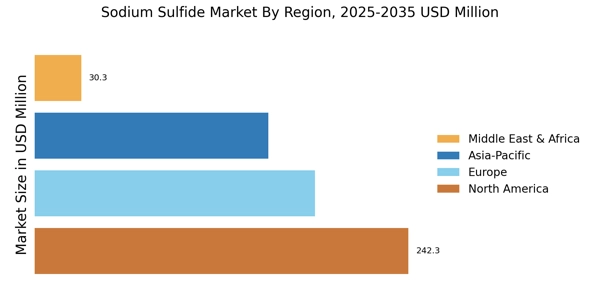
North America is witnessing robust growth in the sodium sulfide market, driven by increasing demand from the textile and paper industries. The region holds approximately 40% of the global market share, making it the largest market. Regulatory support for sustainable practices and innovations in chemical manufacturing are further propelling growth. The U.S. is the primary contributor, followed by Canada, which is also expanding its production capabilities. The competitive landscape is characterized by key players such as Sodium Sulfide Market, Inc. and BASF SE, which are investing in advanced technologies to enhance production efficiency. The presence of established chemical manufacturers and a strong distribution network are vital for market expansion. Additionally, the focus on eco-friendly products is shaping the strategies of leading companies, ensuring they meet evolving consumer demands.
Europe : Regulatory Framework Driving Growth
Europe is emerging as a significant player in the sodium sulfide market, driven by stringent environmental regulations and a shift towards sustainable chemical processes. The region accounts for approximately 30% of the global market share, with Germany and France being the largest contributors. The European Union's commitment to reducing carbon emissions is fostering innovation in chemical production, thereby enhancing market growth. Leading countries in this region are Germany, France, and the UK, where major players like BASF SE are actively involved in expanding their production capacities. The competitive landscape is marked by collaborations and partnerships aimed at improving sustainability. The presence of regulatory bodies ensures compliance with environmental standards, which is crucial for market players to thrive in this evolving landscape.
Asia-Pacific : Emerging Market with High Potential
Asia-Pacific Sodium Sulfide Market is rapidly becoming a powerhouse driven by industrialization and increasing demand from various sectors, including textiles and mining. The region holds about 25% of the global market share, with China being the largest market, followed by India. The government's initiatives to boost manufacturing and exports are significant growth drivers, alongside the rising demand for eco-friendly chemicals. China dominates the competitive landscape, with key players like Hunan Dazhong Chemical and Shaanxi Jintai Chemical leading the market. The presence of a robust supply chain and favorable government policies are enhancing the region's attractiveness for investment. Additionally, the focus on research and development is fostering innovation, enabling companies to meet the growing demand for sodium sulfide in various applications.
Middle East and Africa : Resource-Rich Region with Challenges
The Middle East and Africa region is characterized by its rich natural resources, which are pivotal for the Sodium Sulfide Market. However, the market share is relatively small, accounting for about 5% of the global total. The region faces challenges such as political instability and infrastructure issues, which can hinder market growth. Nevertheless, there is a growing interest in developing the chemical sector, particularly in countries like South Africa and Saudi Arabia. Key players in this region are focusing on leveraging local resources to enhance production capabilities. The competitive landscape is evolving, with new entrants looking to capitalize on the untapped potential. Government initiatives aimed at diversifying economies are expected to boost the sodium sulfide market, making it an area to watch for future growth opportunities.
Key Players and Competitive Insights
In August BASF SE (Germany) announced a significant investment in a new production facility aimed at increasing its sodium sulfide output while adhering to stringent environmental standards. This strategic move not only enhances BASF's production capacity but also aligns with the growing emphasis on sustainable practices within the chemical industry. The facility is expected to utilize advanced technologies that minimize waste and energy consumption, thereby reinforcing BASF's commitment to sustainability.
In September Tessenderlo Group (Belgium) entered into a strategic partnership with a leading textile manufacturer to develop innovative applications for sodium sulfide in dyeing processes. This collaboration is indicative of Tessenderlo's focus on innovation and market diversification, as it seeks to expand its product offerings and enhance its competitive edge. By aligning with key industry players, Tessenderlo is likely to strengthen its market position and drive growth in the textile sector.
In July Hunan Dazhong Chemical (China) launched a new line of sodium sulfide products tailored for the leather industry, which is experiencing a resurgence in demand. This strategic initiative not only showcases Hunan Dazhong's responsiveness to market trends but also highlights its commitment to product development. By catering to specific industry needs, the company is poised to capture a larger market share and enhance customer loyalty.
As of October the Sodium Sulfide Market is witnessing trends that emphasize digitalization, sustainability, and the integration of advanced technologies. Companies are increasingly forming strategic alliances to enhance their competitive positioning, focusing on innovation rather than price-based competition. This shift suggests that future differentiation will hinge on technological advancements, supply chain reliability, and sustainable practices, ultimately reshaping the competitive landscape in the sodium sulfide sector.
Key Companies in the Sodium Sulfide Market include
Industry Developments
June 2023: Solvay announced that it had signed a definitive agreement to acquire ICS Industires, a leading producer of sodium sulfide and other specialty chemicals. The acquisition is expected to close in the third quarter of 2023.
July 2023: PPG Industries announced that it had expanded its production capacity for sodium sulfide at its plant in China. The expansion is expected to be completed in the first quarter of 2024.
August 2023: ISSC (IRSS) announced that it had signed a new contract to supply sodium sulfide to a major customer in the pulp and paper industry. The contract is for a period of three years.
August 2023: The Chinese government announced that it would be investing in the development of new sodium sulfide production capacity. The investment is expected to help meet the growing demand for sodium sulfide in China.
Future Outlook
Sodium Sulfide Market Future Outlook
The Sodium Sulfide Market size is projected to grow at a 3.4% CAGR from 2024 to 2035, driven by increasing demand in the textile and leather industries. The future of Sodium Sulfide Market is robust, driven by its essential role in ore flotation for mining and kraft pulping in paper production. Expansion in wastewater treatment and lithium-sulfur battery research will provide new growth avenues.
New opportunities lie in:
- Expansion into emerging markets with tailored product offerings.
- Development of eco-friendly sodium sulfide production methods.
- Strategic partnerships with textile manufacturers for bulk supply agreements.
By 2035, the Sodium Sulfide Market is expected to solidify its position as a key player in various industrial applications.
Market Segmentation
Sodium Sulfide Market Grade Outlook
- purified
- technical grade
Sodium Sulfide Market Product Outlook
- low ferric
- anhydrous
- crystal
Sodium Sulfide Market Application Outlook
- pulp & paper
- chemical processing
- water treatment
- textile
- tanning
- ore processing
- others
Report Scope
| MARKET SIZE 2024 | 605.76(USD Million) |
| MARKET SIZE 2025 | 626.37(USD Million) |
| MARKET SIZE 2035 | 875.23(USD Million) |
| COMPOUND ANNUAL GROWTH RATE (CAGR) | 3.4% (2025 - 2035) |
| REPORT COVERAGE | Revenue Forecast, Competitive Landscape, Growth Factors, and Trends |
| BASE YEAR | 2024 |
| Market Forecast Period | 2025 - 2035 |
| Historical Data | 2019 - 2024 |
| Market Forecast Units | USD Million |
| Key Companies Profiled | Tessenderlo Group (BE), BASF SE (DE), Hunan Dazhong Chemical (CN), Shaanxi Jintai Chemical (CN), Korea Zinc Co., Ltd. (KR), Sodium Sulfide, Inc. (US), Hubei Yihua Chemical Industry Co., Ltd. (CN), Shaanxi Huayu Chemical Co., Ltd. (CN) |
| Segments Covered | Product |
| Key Market Opportunities | Growing demand for eco-friendly applications drives innovation in the Sodium Sulfide Market. |
| Key Market Dynamics | Rising demand for sodium sulfide in various industries drives competitive dynamics and influences supply chain strategies. |
| Countries Covered | North America, Europe, APAC, South America, MEA |
Market Highlights
FAQs
What is the projected market valuation of the Sodium Sulfide Market by 2035?
The Sodium Sulfide Market is projected to reach a valuation of 875.23 USD Million by 2035.
What was the market valuation of Sodium Sulfide in 2024?
In 2024, the Sodium Sulfide Market was valued at 605.76 USD Million.
What is the expected CAGR for the Sodium Sulfide Market during the forecast period 2025 - 2035?
The expected CAGR for the Sodium Sulfide Market during the forecast period 2025 - 2035 is 3.4%.
Which companies are considered key players in the Sodium Sulfide Market?
Key players in the Sodium Sulfide Market include Tessenderlo Group, BASF SE, Hunan Dazhong Chemical, and others.
What are the main product segments of the Sodium Sulfide Market?
The main product segments include low ferric, anhydrous, and crystal, with valuations ranging from 181.73 to 353.13 USD Million.
How does the technical grade Sodium Sulfide compare to the purified grade in terms of market valuation?
What applications are driving demand in the Sodium Sulfide Market?
What is the valuation range for the pulp & paper application segment in the Sodium Sulfide Market?
How does the ore processing application segment perform in the Sodium Sulfide Market?
What trends are expected to influence the Sodium Sulfide Market in the coming years?
Kindly complete the form below to receive a free sample of this Report
Customer Stories
“This is really good guys. Excellent work on a tight deadline. I will continue to use you going forward and recommend you to others. Nice job”
“Thanks. It’s been a pleasure working with you, please use me as reference with any other Intel employees.”
“Thanks for sending the report it gives us a good global view of the Betaïne market.”
“Thank you, this will be very helpful for OQS.”
“We found the report very insightful! we found your research firm very helpful. I'm sending this email to secure our future business.”
“I am very pleased with how market segments have been defined in a relevant way for my purposes (such as "Portable Freezers & refrigerators" and "last-mile"). In general the report is well structured. Thanks very much for your efforts.”
“I have been reading the first document or the study, ,the Global HVAC and FP market report 2021 till 2026. Must say, good info! I have not gone in depth at all parts, but got a good indication of the data inside!”
“We got the report in time, we really thank you for your support in this process. I also thank to all of your team as they did a great job.”