Poultry Vaccines Market (2026 - 2035)

Poultry Vaccines Market Research Report By Type (Live Attentuated Vaccines, Inactivated Vaccines, Subunit Vaccines, DNA Vaccines), By Species (Broilers, Layers, Turkeys, Others), By Administration Route (Intramuscular, Subcutaneous, Oral, Inhalation), By Disease Targeted (Newcastle Disease, Infectious Bursal Disease, Avian Influenza, Marek's Disease) and By Regional (North America, Europe, South America, Asia Pacific, Middle East and Africa) - Growth & Industry Forecast 2025 To 2035

Forecast Period
2026-2035
CAGR
9.55%
2019 Market Size
2.45 USD Billion
2021 Market Size
2.66 USD Billion
Healthcare ● Updated August 24, 2026 Report ID: MRFR/HC/6046-HCR | Pages: 200 | Author: Vikita Thakur, Rahul Gotadki

Poultry Vaccines Market Summary

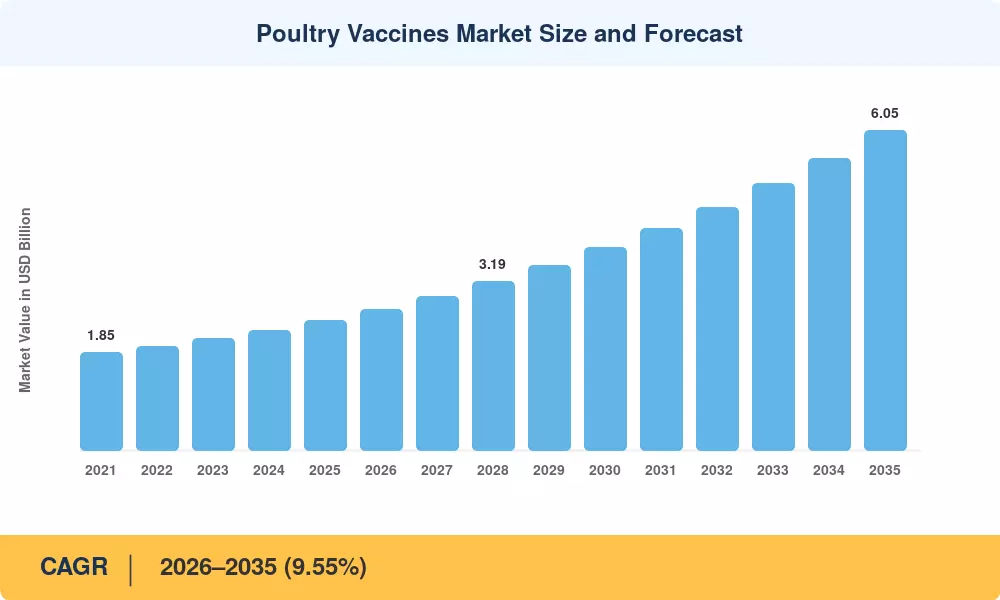
The Poultry Vaccines Market was valued at USD 2.45 billion in 2025 and is projected to reach USD 2.66 billion by 2026 before climbing to USD 6.05 billion by 2035, expanding at a 9.55% CAGR during the 2026–2035 forecast window. Two catalysts anchor this trajectory: the accelerating global phase-out of prophylactic antibiotic use in animal husbandry — codified by the European Union's Regulation 2019/6 and mirrored by USDA Veterinary Feed Directive updates — and the persistent circulation of H5N1 clade 2.3.4.4b, which has kept government stockpiling programs active across 40+ countries [1][2].

Technology-wise, the Poultry Vaccines Market is undergoing a generational shift. Traditional inactivated and killed-virus products are steadily yielding ground to recombinant herpesvirus of turkey (HVT) vector platforms that combine multiple antigens into a single in-ovo dose. Ceva Santé Animale's VECTORMUNE platform and Boehringer Ingelheim's VAXXITEK HVT+IBD line illustrate how R&D budgets — estimated at over USD 680 million industry-wide in 2024 — are tilting toward next-generation constructs [3][4]. Thermostable and lyophilized formulations are also gaining traction in regions where cold-chain infrastructure remains unreliable.

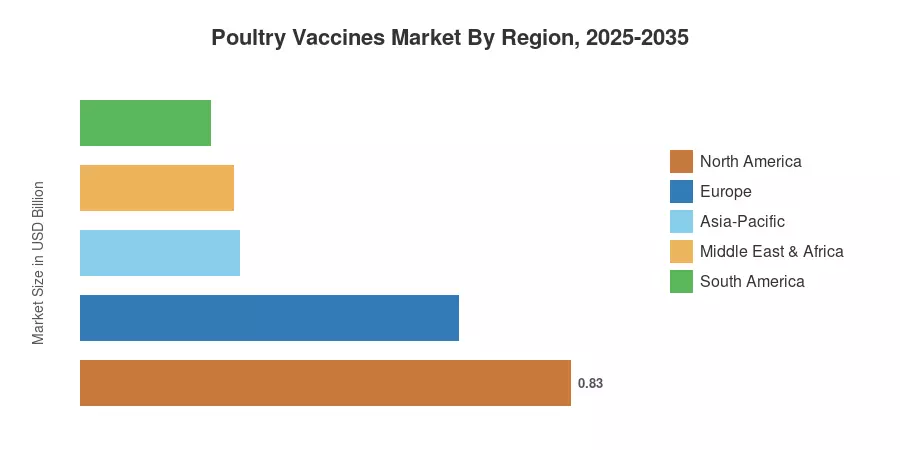
North America held approximately 34% of the Poultry Vaccines Market in 2025, led by intensive broiler and layer operations in the United States. Asia-Pacific is the fastest-growing region, forecast to expand at an 11.2% CAGR through 2035, driven by vertically integrated poultry companies in China, India, and ASEAN nations. Europe accounted for roughly 26% of global revenue, supported by stringent EU animal welfare mandates. The decade ahead will see digitized vaccine ordering, QR-coded dose authentication, and AI-driven flock health monitoring reshape competitive dynamics across every geography.

Key Report Takeaways

• By Disease Type

  • Infectious bronchitis represented 24.5% of the Poultry Vaccines Market in 2025, reflecting persistent variant emergence across commercial flocks worldwide.
  • The avian influenza segment is forecast to expand at a 9.7% CAGR through 2035, fueled by government stockpiling mandates and evolving clade surveillance programs.

• By Technology

  • Live attenuated products commanded roughly 41% share of the Poultry Vaccines Market in 2025, maintaining dominance in mass-application drinking-water and spray cabinet protocols.
  • Recombinant and vector-based platforms are advancing at a 10.0% CAGR, supported by the shift toward single-dose in-ovo delivery systems.

• By Application

  • Breeder-flock immunization generated USD 1.16 billion in 2025, anchoring parental immunity transfer strategies across vertically integrated operations.
  • Layer-flock programs are on track for a 9.7% CAGR as egg production scales in South and Southeast Asia.

• By Region

  • North America accounted for 34% of total Poultry Vaccines Market revenue in 2025, driven by USDA-regulated broiler complexes.
  • Asia-Pacific is set to grow at an 11.2% CAGR through 2035 as China and India expand commercial poultry infrastructure.

Poultry Vaccines Market Size and Forecast (2021–2035)

Market Research Future's sizing model blends bottom-up revenue estimates from 45+ vaccine manufacturers with top-down validation using OIE/WOAH immunization coverage data, FAO livestock census figures, and national veterinary pharmaceutical import records. Historical values (2021–2024) reflect audited sales, while forecast projections (2026–2035) apply the 9.55% calibrated CAGR with adjustments for pandemic-driven demand spikes and regulatory-triggered adoption inflections[6].
Poultry Vaccines Market Size and Forecast
Our Impact
Enabled $4.3B Revenue Impact for Fortune 500 and Leading Multinationals
Partnering with 2000+ Global Organizations Each Year
30K+ Citations by Top-Tier Firms in the Industry

Driver Impact Analysis

Driver ~% Impact on CAGR Geographic Relevance Impact Timeline
Antibiotic-reduction regulations ~22% Global Short-term (≤2 yr)
H5N1 clade 2.3.4.4b outbreak cycles ~18% North America, Europe Short-term (≤2 yr)
Recombinant HVT vector platform adoption ~16% Global Medium-term (2–4 yr)
Vertical integration in Asia-Pacific poultry ~14% Asia-Pacific Medium-term (2–4 yr)
Thermostable / lyophilized formulation expansion ~12% Africa, Southeast Asia Long-term (≥4 yr)
Digitized cold-chain and e-ordering platforms ~10% Global Medium-term (2–4 yr)
Government stockpiling programs ~8% North America, Europe Short-term (≤2 yr)


Antibiotic-Reduction Mandates

The EU's Regulation 2019/6, which outlawed the use of prophylactic group-level antibiotics in animals starting in January 2022, has given the market for poultry vaccines a structural boost. An estimated EUR 420 million in yearly antibiotic spending was diverted by the rule to vaccination initiatives for the 7.5 billion commercial birds in the bloc. The National Action Plan on Antimicrobial Resistance in India and the Veterinary Feed Directive in the United States are having similar effects; according to USDA data, the number of federally approved chicken vaccine licenses increased by 31% between 2020 and 2024 [1][2].


Persistent HPAI Outbreak Pressure

Since 2021, the highly pathogenic avian influenza (HPAI) H5N1 strain 2.3.4.4b has spread over six continents, depopulating over 200 million commercial birds worldwide and leading to emergency vaccination authorization in France, the Netherlands, and other ASEAN countries. The European Commission approved preventive immunization trials for 64 million ducks and turkeys in 2023–2024, and the USDA set aside USD 1.3 billion for poultry disease preparedness between 2022 and 2025 [6][14].


Recombinant Vector Technology Scaling

Recombinant HVT-vector constructs allow producers to deliver multiple antigens — infectious bursal disease, Newcastle disease, and infectious laryngotracheitis — in a single in-ovo injection at the hatchery. This approach reduces handling stress, improves uniformity of immune response, and lowers per-bird vaccination costs by an estimated 18–25% compared with multi-dose conventional schedules. Boehringer Ingelheim reported that its VAXXITEK HVT+IBD franchise exceeded USD 350 million in 2024 sales, illustrating the commercial traction of this platform [4][7].

Vertical Integration in Asia-Pacific

Companies such as CP Group (Thailand), Wen's Food Group (China), and Suguna Foods (India) are integrating hatchery-to-processing operations that mandate standardized vaccination programs across billions of birds annually. China's poultry flock — exceeding 6.2 billion birds in 2024 — is increasingly managed under centralized health protocols that favour recombinant and thermostable vaccine products over conventional live-virus alternatives [9][15].

Restraints Impact Analysis

The following restraint estimates are directional and represent headwinds that moderate the Poultry Vaccines Market growth rate. They are not additive reductions to the stated CAGR.

Restraint ~% Negative Impact on CAGR Geographic Relevance Impact Timeline
Cold-chain infrastructure gaps ~−20% Africa, South Asia Long-term (≥4 yr)
Counterfeit and substandard vaccines ~−18% Africa, Southeast Asia Medium-term (2–4 yr)
Regulatory fragmentation across markets ~−16% Global Long-term (≥4 yr)
Price sensitivity in smallholder flocks ~−14% South America, MEA Medium-term (2–4 yr)
Vaccine interference and field-reversion risks ~−12% Global Short-term (≤2 yr)


Cold-Chain Fragility in Emerging Markets

Conventional liquid-format vaccinations are vulnerable to potency loss during last-mile delivery because over 40% of rural poultry-keeping families in sub-Saharan Africa lack consistent access to grid electricity. According to World Bank estimates, 15–20% of supplied veterinary biologics are ineffective in low-income settings due to cold-chain failures. This issue costs manufacturers an estimated USD 270 million a year in wasted doses and avoidable mortality in the poultry vaccines market [8][16].


Counterfeit Vaccine Proliferation

In 2023, OIE/WOAH field audits found fake chicken vaccine goods in six Southeast Asian and fourteen African markets; some batches had no viable antigen. When unprotected flocks act as reservoirs for zoonotic infections, these inferior goods threaten public health, erode producer confidence, and lower consumer willingness to pay for reputable brands. Although pilot initiatives for serialization and QR-verification are underway in Vietnam and Nigeria, full-scale implementation is still two to four years away [11][18].


Regulatory Fragmentation

Vaccine registration timelines vary from 6 months in the United States to over 36 months in certain ASEAN and African Union member states, delaying product launches and limiting the addressable Poultry Vaccines Market for new-generation constructs. Harmonization efforts under the VICH (Veterinary International Cooperation on Harmonization) framework are progressing, but mutual-recognition agreements remain limited to a handful of bilateral corridors [9].

Poultry Vaccines Market Opportunities

Thermostable Formulations for Off-Grid Markets

Lyophilized and heat-stable vaccine formats that maintain potency at 40°C for 14+ days could unlock an estimated USD 420 million incremental opportunity by 2035 across Africa, South Asia, and rural Southeast Asia, where cold-chain infrastructure remains weak. Hester Biosciences and the Global Alliance for Livestock Veterinary Medicines (GALVmed) are advancing thermostable Newcastle disease vaccine programs targeting backyard and semi-commercial flocks [8].

In-Ovo Vaccination Automation

Automated in-ovo injection systems — already processing over 70,000 eggs per hour in leading US and European hatcheries — are expanding into Brazil, India, and China. The Poultry Vaccines Market stands to gain as these platforms increase vaccine uptake uniformity and reduce labour costs by 30–40% versus post-hatch manual administration[7].

mRNA and Next-Generation Platform Vaccines

Messenger RNA vaccine technology, validated during the COVID-19 pandemic, is entering veterinary applications. Preliminary trials by Sequivity (Merck Animal Health) and academic partnerships at the Pirbright Institute are evaluating mRNA constructs against avian influenza and infectious bronchitis. If scaled, mRNA platforms could halve development timelines from 18–24 months to under 10 months, reshaping the competitive landscape of the Poultry Vaccines Market[12].

Data-Driven Vaccination-as-a-Service

Integrated digital platforms combining flock-level health monitoring, automated reordering, and vaccination compliance dashboards represent a growing service layer within the Poultry Vaccines Market. Companies like Zoetis (with its Performance Livestock Analytics platform) and Ceva are monetizing data streams that pair vaccine sales with advisory subscriptions, generating recurring revenue margins estimated at 25–35% above product-only sales [10][19].

Expansion into Aquaculture-Adjacent Biologics

Vertically integrated poultry firms in Asia-Pacific are diversifying into aquaculture, creating cross-selling opportunities for biologics companies with dual-species platforms. The Poultry Vaccines Market could capture adjacent revenue as firms like HIPRA and Vaxxinova extend antigen discovery capabilities into fish and shrimp vaccine pipelines[15].

Poultry Vaccines Market Future Outlook

Precision Vaccinology and AI-Driven Flock Analytics

By 2030, AI-powered flock health platforms will routinely integrate serology data, environmental sensors, and genomic surveillance to recommend customized vaccination schedules at the house level. Zoetis's Performance Livestock Analytics and similar systems could reduce vaccine waste by 15–20% while improving seroconversion rates, fundamentally altering how the Poultry Vaccines Market allocates R&D investment [10].

mRNA and Synthetic Biology Platforms

Messenger RNA vaccine technology is expected to reach commercial veterinary deployment by 2028–2030. The ability to design and manufacture a new antigen construct in under 10 weeks would dramatically compress response times during novel outbreak events, positioning the Poultry Vaccines Market to absorb pandemic-related demand shocks more effectively than legacy egg-based production allows [12][20].

Sustainability and ESG-Aligned Poultry Production

Consumer and retailer pressure for antibiotic-free, welfare-certified poultry is accelerating across North America and Europe. Major QSR chains and grocery retailers have pledged antibiotic-free sourcing targets by 2030, linking procurement criteria directly to vaccination compliance. This ESG-driven purchasing shift ensures sustained premium pricing for comprehensive vaccine programs within the Poultry Vaccines Market [2][21].

Traceability, Serialization, and Digital Supply Chains

OIE/WOAH-backed serialization standards, currently piloted in eight countries, are expected to cover 60% of global poultry vaccine volumes by 2032. Blockchain-verified dose authentication, combined with e-ordering platforms, will squeeze counterfeit products out of formal distribution channels and create new value-added service niches for manufacturers competing in the Poultry Vaccines Market [11][18].

Poultry Vaccines Market Segmentation

By Disease Type

Segment Key Metric Primary Demand Driver
Infectious Bronchitis 24.5% share (2025) Persistent variant emergence; mass spray application
Avian Influenza 9.7% CAGR Government stockpiling; H5N1 clade circulation
Newcastle Disease USD 0.44 Billion (2025) Compulsory vaccination mandates in Asia
Infectious Bursal Disease (Gumboro) 8.8% CAGR Breeder-flock maternal immunity programs
Marek's Disease USD 0.31 Billion (2025) Universal in-ovo hatchery protocols
Others 7.5% CAGR Mycoplasma, coccidiosis, laryngotracheitis


Infectious bronchitis remains the most commercially significant disease segment in the Poultry Vaccines Market, with new serotype variants emerging frequently enough to sustain rolling reformulation demand. Producers typically administer live attenuated IB vaccines via hatchery spray or drinking water at day-old, followed by inactivated booster doses at 14–18 weeks for long-lived layer and breeder flocks.

The avian influenza segment is growing fastest, propelled by emergency-use authorizations and government stockpile contracts that guarantee offtake volumes irrespective of outbreak timing. France's 2023–2024 preventive vaccination program alone consumed over 80 million doses [6][14].

By Technology

Segment Key Metric Primary Demand Driver
Live Attenuated Vaccines 41% share (2025) Mass-application compatibility; low per-dose cost
Inactivated / Killed Vaccines USD 0.63 Billion (2025) Booster programs for breeders and layers
Recombinant / Vector Vaccines 10.0% CAGR Multivalent in-ovo delivery; reduced handling stress
Toxoid and Subunit Vaccines 8.2% CAGR Clostridial disease control in free-range operations


Live attenuated products continue to dominate the Poultry Vaccines Market because they can be delivered through drinking water or spray cabinets to thousands of birds simultaneously — a critical advantage in high-throughput broiler operations. Recombinant HVT-vector vaccines are the fastest-growing technology segment, driven by their ability to bundle two or three antigens into a single in-ovo injection.

By Application

Segment Key Metric Primary Demand Driver
Breeder Flocks 47.3% share (2025) Maternal antibody transfer to progeny
Layer Flocks 9.7% CAGR Egg-production scaling in Asia; long production cycles
Broiler Flocks USD 0.68 Billion (2025) Volume-driven demand; in-ovo hatchery automation


Breeder-flock immunization commands the largest share because breeder birds receive the most comprehensive vaccination schedules — often 15–20 individual vaccinations over a 65-week production cycle — to ensure robust maternal antibody transfer to progeny. Layer programs are expanding rapidly as egg production intensifies across India, Indonesia, and China, creating sustained demand growth in the Poultry Vaccines Market [15].

By Dosage Form

Segment Key Metric Primary Demand Driver
Liquid Formulations 59.3% share (2025) Injectable and drinking-water delivery compatibility
Powder / Lyophilized 11.6% CAGR Thermostability; off-grid suitability
Dust and Aerosol 8.5% CAGR Hatchery spray-cabinet adoption


By Route of Administration

Segment Key Metric Primary Demand Driver
Injectable 60.8% share (2025) Breeder and layer booster programs
Drinking Water USD 0.38 Billion (2025) Mass broiler application; low labour cost
Intranasal / Spray 11.7% CAGR Hatchery automation; mucosal immunity advantage
In-Ovo 10.5% CAGR Automated hatchery systems; single-dose efficiency


By End User

Segment Key Metric Primary Demand Driver
Poultry Farms 62.9% share (2025) Direct procurement by integrated operations
Veterinary Clinics & Hospitals 11.0% CAGR Advisory-service bundling; smallholder outreach
Government & Research Institutes USD 0.11 Billion (2025) Stockpiling; surveillance; field trials


By Distribution Channel

Segment Key Metric Primary Demand Driver
Hospital / Veterinary Pharmacies 48.0% share (2025) Established cold-chain logistics; prescription compliance
Direct Sales / Manufacturer Channels USD 0.52 Billion (2025) Integrated producer procurement contracts
Online Platforms 12.8% CAGR E-ordering; cold-chain tracking; rural accessibility


Regional Market Share Analysis

Region Key Metric (2025) Primary Investment Themes
North America 34% share HPAI preparedness; USDA compliance; in-ovo automation
Europe 26% share Antibiotic-reduction enforcement; EU vaccination trials
Asia-Pacific 11.2% CAGR (2026–2035) Vertical integration; flock expansion; thermostable formats
South America USD 0.22 Billion Brazilian broiler exports; biosecurity upgrades
Middle East & Africa 10.8% CAGR (2026–2035) Off-grid thermostable vaccines; counterfeiting controls
Total USD 2.45 Billion

The Poultry Vaccines Market exhibits distinct regional dynamics shaped by flock size, regulatory maturity, and cold-chain infrastructure. North America leads in per-bird vaccination expenditure, while Asia-Pacific drives volume growth.


North America

Country Key Metric Key Driver
United States 76% of regional share USDA HPAI preparedness budget; integrated broiler operations
Canada 13% of regional share CFIA vaccination guidelines; export-linked biosecurity
Mexico USD 0.04 Billion SENASICA poultry health programs; growing layer sector


The United States produced over 9.2 billion broilers in 2024, making it the single largest country-level opportunity in the Poultry Vaccines Market. USDA's Animal and Plant Health Inspection Service (APHIS) disbursed USD 1.3 billion for avian disease management during 2022–2025, and Canadian Food Inspection Agency (CFIA) regulations increasingly mirror US protocols, creating a harmonized North American vaccination framework [1][6].

Europe

Country Key Metric Key Driver
Germany USD 0.11 Billion QS quality scheme compliance; broiler welfare mandates
United Kingdom 9.5% CAGR Post-Brexit independent veterinary product approvals
France 18% of regional share EU-authorized HPAI preventive vaccination trials
Italy USD 0.06 Billion Layer-focused operations in Veneto region
Spain 8.9% CAGR Expanding broiler export capacity
Nordic Countries USD 0.04 Billion High biosecurity standards; low disease prevalence
Russia 9.2% CAGR Domestic poultry production self-sufficiency targets
Rest of Europe USD 0.08 Billion EU harmonized regulation adoption


France spearheaded Europe's HPAI preventive vaccination campaign, immunizing over 64 million ducks and turkeys under European Commission emergency authorization in 2023–2024. The broader European Poultry Vaccines Market benefits from Regulation 2019/6 enforcement, which has made vaccination the default disease-prevention strategy across the bloc's 8.2 billion-bird flock [2][14].

Asia-Pacific

Country Key Metric Key Driver
China 38% of regional share CP Group and Wen's Food Group scale; government stockpiling
India 12.5% CAGR Suguna Foods, Venky's expansion; NAVP compliance
Japan USD 0.05 Billion Advanced in-ovo hatchery automation
South Korea 10.1% CAGR HPAI recurrence; MAFRA vaccination programs
ASEAN USD 0.09 Billion Regional registration harmonization; export biosecurity
Rest of Asia-Pacific 9.8% CAGR Emerging commercial operations in Bangladesh, Myanmar


China and India together represent over 55% of the Asia-Pacific Poultry Vaccines Market. China's Ministry of Agriculture and Rural Affairs mandates compulsory vaccination against HPAI and Newcastle disease across all commercial operations, while India's National Action Plan for Egg and Poultry (NAPEP) is driving organized-sector growth at approximately 8–10% annually, pulling vaccine demand upward [9][15].

South America

Country Key Metric Key Driver
Brazil 72% of regional share MAPA export-certification vaccination requirements
Argentina 10.2% CAGR Expanding broiler capacity; SENASA programs
Rest of South America USD 0.03 Billion Colombia and Peru flock growth


Brazil — the world's largest chicken exporter — produced 14.5 million tonnes of poultry meat in 2024. MAPA (Ministry of Agriculture) mandates disease-free certification for all export-destined flocks, ensuring robust vaccination coverage across the country's Poultry Vaccines Market [13].

Middle East & Africa

Country Key Metric Key Driver
Saudi Arabia 28% of regional share SFDA import-quality requirements; Vision 2030 food security
UAE USD 0.02 Billion Premium poultry imports; ESMA biosecurity standards
South Africa 10.4% CAGR DALRRD disease-control programs; local manufacturing
Egypt 32% of regional share Large backyard flock; H5N1 endemicity
Rest of MEA 11.1% CAGR Nigeria, Kenya, Ethiopia flock commercialization


Egypt's endemic H5N1 status sustains one of the highest per-capita vaccination rates in the Middle East & Africa region, while Nigeria's emerging commercial poultry sector — growing at an estimated 12% annually — is drawing vaccine manufacturers to establish local fill-and-finish facilities to serve the wider West African Poultry Vaccines Market [16][18].

Poultry Vaccines Market By Region, 2025-2035

Competitive Benchmarking

The Poultry Vaccines Market exhibits medium concentration, with the top five players commanding an estimated 52–58% of global revenue. The Herfindahl-Hirschman Index (HHI) sits in the 1,200–1,500 range, indicating a moderately competitive landscape where large multinationals coexist with regional specialists serving local regulatory and distribution niches.

Company Est. Revenue Share Range Key Offerings Strategic Positioning
Zoetis Inc. ~12–15% Embrex in-ovo systems; Poulvac portfolio Broadest in-ovo automation installed base globally
Merck Animal Health (MSD) ~10–13% Nobilis range; Sequivity RNA particle platform RNA platform pioneer; strong in HPAI and ND programs
Boehringer Ingelheim ~9–12% VAXXITEK HVT+IBD; AviPro line Recombinant HVT-vector market leader
Ceva Santé Animale ~7–10% VECTORMUNE platform; TRANSMUNE In-ovo and hatchery-spray technology specialist
Elanco Animal Health ~5–8% AviPro; formerly Lohmann Animal Health portfolio Layer-focused franchise; strong European distribution
HIPRA ~4–6% EVALON; HIPRAVIAR Innovation-driven; strong R&D pipeline in IBV variants
Phibro Animal Health ~3–5% Probiocin; ORT vaccine portfolio Feed-additive synergy; integrated health programs
Hester Biosciences ~2–4% Thermostable ND vaccines; classical inactivated line Emerging-market specialist; Africa and South Asia focus
Vaxxinova (EW Group) ~2–3% Autogenous and licensed conventional vaccines Customised autogenous vaccine solutions
Venky's (India) Ltd. ~1–3% Domestic live and inactivated poultry biologics India-centric; vertically integrated poultry group


Recent News & Developments


  • Merck Animal Health (January 2025): Expanded Sequivity RNA particle technology platform to include an avian influenza H5 construct under USDA conditional license review [12].


  • European Commission (July 2024): Extended emergency preventive HPAI vaccination authorization for duck and turkey flocks in France and the Netherlands through December 2025 [14].
  • Zoetis Inc. (April 2024): Acquired a controlling stake in a Brazilian hatchery-services company to expand in-ovo vaccination penetration across Latin America's Poultry Vaccines Market [13].
  • USDA APHIS (February 2024): Approved USD 470 million supplemental funding for the National Poultry Improvement Plan (NPIP), including expanded vaccine-bank procurement for H5N1 preparedness [1].
  • Hester Biosciences (November 2023): Commenced commercial production at its Dar es Salaam, Tanzania facility, the first dedicated poultry vaccine manufacturing plant in East Africa [8].
  • HIPRA (September 2023): Received EMA positive opinion for EVALON IBV QX-variant vaccine, addressing the fastest-growing infectious bronchitis lineage in Western Europe [17].


Poultry Vaccines Market Report Scope

Parameter Detail
Market Scope Global Poultry Vaccines Market covering disease types, technologies, applications, dosage forms, routes, end users, distribution channels, and 25+ countries
Study Period 2021–2035
CAGR Window 2026–2035 (9.55%)
Base Year 2025 (USD 2.45 Billion)
Forecast Endpoint 2035 (USD 6.05 Billion)
Fastest Growing Segment Online distribution channel (12.8% CAGR); intranasal/spray route (11.7% CAGR)
Companies Profiled 10 (Zoetis, Merck Animal Health, Boehringer Ingelheim, Ceva, Elanco, HIPRA, Phibro, Hester Biosciences, Vaxxinova, Venky's)
Valuation Currency USD Billion

FAQs

How do autogenous vaccines fit into the Poultry Vaccines Market value chain?
Autogenous (custom) vaccines are farm-specific biologics manufactured from pathogens isolated on a particular premises. They fill gaps where licensed commercial products lack strain-matched coverage, typically representing 3–5% of total vaccine expenditure in mature markets [17].
What shelf-life challenges do liquid poultry vaccines face during last-mile delivery?
Most liquid formulations require 2–8°C storage and lose potency within 2 hours of reconstitution. This limits usability in tropical off-grid regions and drives demand for lyophilized alternatives with 30+ day ambient stability [8].
How does in-ovo injection timing affect vaccine efficacy in broiler hatcheries?
Embryonated eggs vaccinated at 18 days of incubation achieve 92–96% seroconversion rates. Timing precision is critical — injection outside the 17.5–18.5 day window reduces immune response uniformity by up to 20% [7].
What role do adjuvants play in inactivated poultry vaccine formulations?
Oil-in-water and aluminium-based adjuvants boost immune response duration from 4–6 weeks to 20+ weeks, essential for breeder and layer birds requiring long-lived immunity across extended production cycles [17].
How are biosecurity audits linked to vaccination compliance in export markets?
Major importers — including the EU, Japan, and Saudi Arabia — require OIE-compliant vaccination records as part of export health certification. Non-compliant flocks face trade exclusion regardless of disease-free status [9].
What intellectual property barriers exist for new entrants in the Poultry Vaccines Market?
Recombinant HVT-vector technology is protected by 60+ active patent families held primarily by Boehringer Ingelheim, Ceva, and Merck. New entrants typically require licensing agreements or must pursue alternative vector backbones [4].
How do combination vaccines reduce total cost of ownership for integrated producers?
Multivalent in-ovo constructs cut total vaccination events from 6–8 to 2–3 per flock cycle. Integrated producers report 18–25% reductions in per-bird immunization costs through fewer handling rounds and lower labour inputs [7].    
Author
Author
Author Profile
Vikita Thakur LinkedIn
Senior Research Analyst
She holds an experience of about 5+ years in market research and business consulting projects for sectors such as life sciences, medical devices, and healthcare IT. She possesses a robust background in data analysis, market estimation, competitive intelligence, pipeline analysis market trend identification, and consumer behavior insights. Her expertise lies in technical Sales support, client interaction and project management, designing and implementing market research studies, conducting competitive analysis, and synthesizing complex data into actionable recommendations that drive business growth.
Co-Author
Co-Author Profile
Rahul Gotadki LinkedIn
Research Manager
He holds an experience of about 9+ years in Market Research and Business Consulting, working under the spectrum of Life Sciences and Healthcare domains. Rahul conceptualizes and implements a scalable business strategy and provides strategic leadership to the clients. His expertise lies in market estimation, competitive intelligence, pipeline analysis, customer assessment, etc.
Share::
Request Free Sample

Research Approach


Secondary Research

The secondary research process involved comprehensive analysis of veterinary regulatory databases, peer-reviewed animal science journals, agricultural publications, and authoritative livestock health organizations. Key sources included the US Department of Agriculture (USDA) Animal and Plant Health Inspection Service (APHIS), Center for Veterinary Medicine (CVM) at the US Food & Drug Administration, European Medicines Agency (EMA) Veterinary Medicines Division, World Organisation for Animal Health (WOAH/formerly OIE), Food and Agriculture Organization (FAO) of the United Nations, Centers for Disease Control and Prevention (CDC) - Zoonotic Diseases Division, National Veterinary Services Laboratories (NVSL), National Institute for Animal Agriculture (NIAA), European Food Safety Authority (EFSA), OECD-FAO Agricultural Outlook Database, World Animal Protection Global Animal Health Index, national agricultural statistics services from USDA, Eurostat Agricultural Database, and veterinary ministry reports from key poultry-producing markets. These sources were used to collect poultry disease outbreak statistics, vaccine approval data, flock health surveillance studies, livestock demographic trends, and global protein production analysis for live attenuated vaccines, inactivated vaccines, subunit vaccines, and recombinant/DNA vaccine technologies.


Primary Research

Qualitative and quantitative insights were obtained by interviewing supply-side and demand-side stakeholders during the primary research process. CEOs, VPs of R&D & Product Development, regulatory affairs managers, chief veterinary officers, and commercial directors from poultry vaccine manufacturers, biotechnology companies, and animal health pharmaceutical firms comprised supply-side sources. Veterinary poultry specialists, flock health managers, procurement leads from integrated poultry producers, contract growers, veterinary distributors, and technical service representatives from commercial broiler operations, layer farms, and turkey production facilities comprised demand-side sources. Market segmentation was validated across vaccine types and species, product pipeline timelines were confirmed, and insights regarding vaccination protocols, biosecurity implementation patterns, pricing dynamics, and contract vaccination service models were gathered through primary research.

Primary Respondent Breakdown:

By Designation: C-level Primaries (28%), Director Level (32%), Others (40%)

By Region: North America (32%), Europe (30%), Asia-Pacific (28%), Rest of World (10%)


Market Size Estimation

Global market valuation was derived through revenue mapping and poultry flock consumption analysis. The methodology included:

Identification of over 40 significant animal health manufacturers in North America, Europe, Asia-Pacific, and Latin America that specialize in poultry vaccines

Product mapping across live attenuated vaccines, inactivated/killed vaccines, subunit/recombinant vaccines, and DNA/vector vaccine categories

Analysis of reported and modeled annual revenues specific to poultry vaccine portfolios and avian health segments

Coverage of manufacturers representing 75-80% of global market share in 2024

Extrapolation using bottom-up (poultry flock population × vaccination protocols × ASP by country/region) and top-down (manufacturer revenue validation against global animal health reports) approaches to derive segment-specific valuations across broiler, layer, and turkey production systems

Sources cited from WOAH, USDA APHIS, EMA Veterinary Division, and FAO Agricultural Outlook databases.

Share::
Request Free Sample
Download Free Sample

Kindly complete the form below to receive a free sample of this Report

* Please use a valid business email

Share::
Request Free Sample
Download PDF ×

We do not share your information with anyone. However, we may send you emails based on your report interest from time to time. You may contact us at any time to opt-out.
















