North America : Market Leader in Premium Helmets
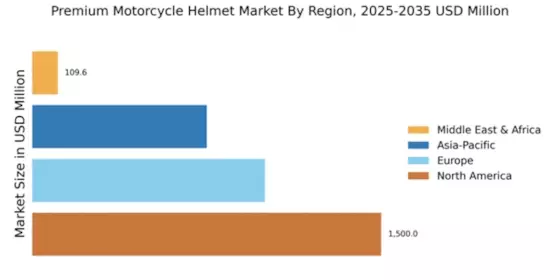
North America is poised to maintain its leadership in the premium motorcycle helmet market, holding a significant market share of 1500.0. The growth is driven by increasing motorcycle ownership, heightened safety awareness, and stringent regulations promoting helmet use. Additionally, the rise in recreational riding and motorcycle tourism is fueling demand for high-quality helmets that offer superior protection and comfort.
The competitive landscape is robust, with key players like Bell, Shoei, and Arai leading the market. The U.S. is the largest contributor, supported by a strong distribution network and consumer preference for premium brands. The presence of established manufacturers and continuous innovation in helmet technology further solidify North America's position as a market leader.
Europe : Emerging Market with Growth Potential
Europe is witnessing a notable surge in the premium motorcycle helmet market, with a market size of 1000.0. Factors such as increasing disposable income, a growing number of motorcycle enthusiasts, and stringent safety regulations are driving this growth. The European Union's commitment to enhancing road safety through regulations is also a significant catalyst for helmet adoption, ensuring that riders prioritize quality and safety in their purchases.
Leading countries in this region include Germany, France, and Italy, where brands like AGV and Nolan are well-established. The competitive landscape is characterized by a mix of local and international players, fostering innovation and quality improvements. The presence of a diverse consumer base further enhances market dynamics, making Europe a key player in the premium motorcycle helmet sector.
Asia-Pacific : Rapid Growth in Emerging Markets
The Asia-Pacific region is experiencing rapid growth in the premium motorcycle helmet market, with a market size of 750.0. This growth is driven by increasing urbanization, rising disposable incomes, and a burgeoning middle class that values safety and quality. Additionally, government initiatives promoting road safety and helmet usage are contributing to the rising demand for premium helmets in countries like India and China.
Key players in this region include HJC and LS2, which are capitalizing on the growing motorcycle culture. The competitive landscape is evolving, with both domestic and international brands vying for market share. As motorcycle ownership continues to rise, the demand for high-quality helmets is expected to increase, positioning Asia-Pacific as a significant player in the global market.
Middle East and Africa : Niche Market with Growth Opportunities
The Middle East and Africa region represents a niche market in the premium motorcycle helmet sector, with a market size of 109.56. The growth is primarily driven by increasing motorcycle usage for both transportation and leisure, alongside a growing awareness of safety standards. Regulatory bodies are beginning to implement stricter safety regulations, which is expected to boost the demand for premium helmets in the coming years.
Countries like South Africa and the UAE are leading the market, with a mix of local and international brands competing for consumer attention. The presence of key players is gradually increasing, and as the motorcycle culture expands, the demand for high-quality helmets is anticipated to rise, offering significant growth opportunities in this region.