Download Free Sample
Kindly complete the form below to receive a free sample of this Report
Proliferative Diabetic Retinopathy Market Research Report: Size, Share, Trend Analysis By Treatment Type (Laser Therapy, Intravitreal Injections, Surgical Procedures, Photocoagulation, Anti-VEGF Therapy), By Diagnosis Type (Fundus Photography, Optical Coherence Tomography, Fluorescein Angiography, Ultrasound, Visual Field Testing), By End Users (Hospitals, Ophthalmology Clinics, Research Institutes, Homecare, Ambulatory Surgical Centers), By Distribution Channel (Direct Tender, Retail Pharmacy, Online Pharmacy, Hospital Pharmacies, Specialty Clinics) and By Regional (North America, Europe, South America, Asia Pacific, Middle East and Africa) - Growth Outlook & Industry Forecast 2025 To 2035
As per Market Research Future analysis, the Proliferative Diabetic Retinopathy Market Size was estimated at 5.824 USD Billion in 2024. The Proliferative Diabetic Retinopathy industry is projected to grow from 6.133 USD Billion in 2025 to 10.29 USD Billion by 2035, exhibiting a compound annual growth rate (CAGR) of 5.31% during the forecast period 2025 - 2035
The Proliferative Diabetic Retinopathy Market is experiencing dynamic growth driven by technological advancements and increasing awareness.
| 2024 Market Size | 5.824 (USD Billion) |
| 2035 Market Size | 10.29 (USD Billion) |
| CAGR (2025 - 2035) | 5.31% |
Regeneron Pharmaceuticals (US), Novartis (CH), Roche (CH), Bayer (DE), Pfizer (US), Eli Lilly and Company (US), AstraZeneca (GB), Santen Pharmaceutical (JP), Horizon Therapeutics (IE)
Our Impact
Enabled $4.3B Revenue Impact for Fortune 500 and Leading Multinationals
Partnering with 2000+ Global Organizations Each Year
30K+ Citations by Top-Tier Firms in the Industry
The Proliferative Diabetic Retinopathy Market is currently experiencing notable developments driven by advancements in treatment options and increasing awareness of diabetic eye diseases. As healthcare providers and patients alike become more informed about the implications of diabetic retinopathy, there appears to be a growing demand for effective therapies. This trend is further supported by ongoing research and innovation in medical technology, which seems to enhance the efficacy of existing treatments while introducing novel approaches. Additionally, the rising prevalence of diabetes globally contributes to a larger patient population requiring specialized care, thereby expanding the market's potential. Moreover, the Proliferative Diabetic Retinopathy Market is likely to benefit from collaborative efforts among pharmaceutical companies, healthcare institutions, and research organizations. These partnerships may facilitate the development of comprehensive treatment protocols and improve patient outcomes. Furthermore, the integration of telemedicine and digital health solutions into patient management strategies could enhance accessibility to care, particularly in underserved regions. As the market evolves, it is essential to monitor these dynamics closely, as they may shape the future landscape of diabetic retinopathy management and treatment options.
The Proliferative Diabetic Retinopathy Market is witnessing a surge in innovative treatment modalities. New therapies, including anti-VEGF injections and laser treatments, are being refined to improve patient outcomes. These advancements not only enhance the effectiveness of existing treatments but also provide patients with more options tailored to their specific needs.
There is a growing emphasis on awareness and education regarding diabetic retinopathy. Healthcare providers are actively engaging in outreach programs to inform patients about the risks associated with diabetes and the importance of regular eye examinations. This heightened awareness is likely to lead to earlier diagnosis and treatment, positively impacting the market.
The integration of digital health solutions into the management of diabetic retinopathy is becoming increasingly prevalent. Telemedicine platforms and mobile health applications are facilitating remote monitoring and consultations, thereby improving access to care. This trend may enhance patient engagement and adherence to treatment regimens, ultimately benefiting the Proliferative Diabetic Retinopathy Market.
The growing geriatric population is a significant driver for the Proliferative Diabetic Retinopathy Market. As individuals age, the risk of developing diabetes and its associated complications, including diabetic retinopathy, increases. By 2030, it is estimated that the number of people aged 60 and above will surpass 1.4 billion, creating a larger demographic susceptible to these conditions. This demographic shift necessitates enhanced healthcare services and treatment options tailored to older adults. Consequently, the Proliferative Diabetic Retinopathy Market is likely to expand as healthcare providers seek to address the unique needs of this population, ensuring timely diagnosis and effective management.
The increasing prevalence of diabetes worldwide is a primary driver for the Proliferative Diabetic Retinopathy Market. According to recent estimates, the number of individuals diagnosed with diabetes is projected to reach 700 million by 2045. This surge in diabetes cases correlates with a heightened risk of developing diabetic retinopathy, particularly its proliferative form. As more patients require screening and treatment, the demand for innovative therapies and interventions in the Proliferative Diabetic Retinopathy Market is likely to escalate. Furthermore, the growing recognition of diabetes as a leading cause of blindness underscores the urgency for effective management strategies, thereby propelling market growth.
The emergence of novel therapeutics is reshaping the Proliferative Diabetic Retinopathy Market. Recent developments in pharmacological treatments, such as anti-VEGF therapies and corticosteroids, have shown promise in managing the progression of diabetic retinopathy. These innovative therapies not only aim to halt disease progression but also improve visual outcomes for patients. The introduction of combination therapies and sustained-release drug delivery systems is further enhancing treatment efficacy. As research continues to unveil new therapeutic options, the Proliferative Diabetic Retinopathy Market is poised for growth, driven by the demand for more effective and patient-centric treatment solutions.
Government initiatives aimed at combating diabetes and its complications are playing a pivotal role in the Proliferative Diabetic Retinopathy Market. Various health organizations are implementing programs to raise awareness about diabetic retinopathy and promote regular eye examinations among diabetic patients. Additionally, increased funding for research and development of new treatment options is likely to enhance the market landscape. For instance, public health campaigns and subsidies for screening programs can lead to higher patient engagement and treatment adherence. Such initiatives not only improve patient outcomes but also stimulate growth within the Proliferative Diabetic Retinopathy Market.
Technological advancements in diagnostic tools are significantly influencing the Proliferative Diabetic Retinopathy Market. Innovations such as optical coherence tomography (OCT) and fundus photography have enhanced the ability to detect and monitor the progression of diabetic retinopathy. These technologies facilitate early diagnosis, which is crucial for effective treatment and management. The integration of artificial intelligence in imaging analysis is also emerging, potentially improving diagnostic accuracy and efficiency. As healthcare providers increasingly adopt these advanced diagnostic modalities, the Proliferative Diabetic Retinopathy Market is expected to experience substantial growth, driven by the need for timely and precise interventions.
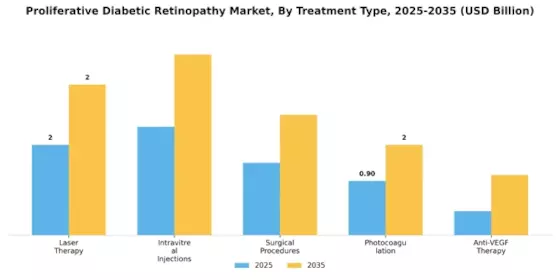
The Proliferative Diabetic Retinopathy Market is characterized by a diverse range of treatment options, with Anti-VEGF Therapy emerging as the largest segment due to its efficacy in reducing visual deterioration. Following closely, Intravitreal Injections account for a significant share, alongside Laser Therapy and Surgical Procedures. Photocoagulation also remains relevant but is shifting slightly as newer therapies gain traction. As the prevalence of diabetic retinopathy rises, the segmentation reveals insights into preferences and treatment dynamics.
Anti-VEGF Therapy: Dominant vs. Intravitreal Injections: Emerging
Anti-VEGF Therapy has become the dominant force in the Proliferative Diabetic Retinopathy Market, celebrated for its ability to decelerate disease progression and preserve vision. This segment exemplifies a well-established treatment choice with robust clinical data supporting its efficacy. Conversely, Intravitreal Injections represent the emerging trend, rapidly gaining ground due to advancements in injection techniques and formulations. This shift indicates a growing preference for less invasive treatment methods, allowing for patient-centered approaches. Together, these segments reflect a market evolving towards a multifaceted treatment landscape.
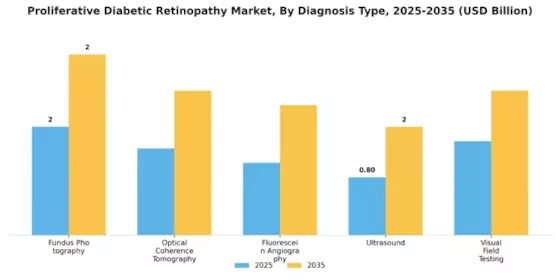
In the Proliferative Diabetic Retinopathy Market, Fundus Photography currently holds the largest market share. It is widely adopted due to its accessibility and effectiveness in visualizing the retina and spotting diabetic changes. Other diagnosis types such as Optical Coherence Tomography, Fluorescein Angiography, Ultrasound, and Visual Field Testing also contribute to the market, but they occupy a smaller share compared to Fundus Photography. Fluorescein Angiography is well-respected for its detailed vascular imaging, while ultrasound provides structural insights and Visual Field Testing aids in assessing functional vision.; The growing prevalence of diabetes and advancements in imaging technologies are significant factors driving the growth of the Optical Coherence Tomography segment, making it the fastest-growing diagnosis type in the market. Enhanced accuracy and non-invasive nature of this method appeal to both practitioners and patients. The increasing demand for early diagnosis and monitoring of diabetic retinopathy further fuels interest in diagnostic tools, with Optical Coherence Tomography experiencing rapid advancements in resolution and speed, enhancing its utility in clinical settings.
Fundus Photography (Dominant) vs. Fluorescein Angiography (Emerging)
Fundus Photography remains the dominant technique in diagnosing Proliferative Diabetic Retinopathy Market due to its simplicity, cost-effectiveness, and ability to capture comprehensive images of the retina. It is increasingly integrated into routine eye exams, significantly contributing to early detection. Conversely, Fluorescein Angiography, while more advanced in functionality, is seen as an emerging option. It excels in imaging the retinal vasculature by utilizing fluorescent dye, offering detailed insight into blood flow and leakage in the eyes, which is crucial for effective treatment planning. As healthcare systems worldwide focus on improving diabetic care, both methods are expected to gain prominence, with the potential for Fluorescein Angiography to enhance diagnostic accuracy.
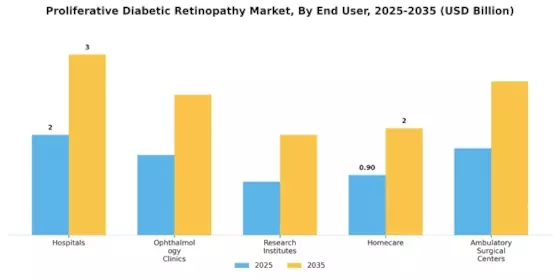
The Proliferative Diabetic Retinopathy Market exhibits a diverse segmentation based on end users, with hospitals leading the market share due to their extensive resources and capabilities for managing complex cases. They often have the necessary infrastructure, specialist personnel, and advanced technologies which allow them to provide comprehensive care for patients with proliferative diabetic retinopathy. Meanwhile, ophthalmology clinics are experiencing rapid growth as specialized centers become increasingly popular for treatment options. Their ability to focus on eye care has attracted a larger patient base seeking targeted treatments.
End User: Hospitals (Dominant) vs. Ophthalmology Clinics (Emerging)
Hospitals serve as the dominant end user within the Proliferative Diabetic Retinopathy Market, offering comprehensive services and employing multidisciplinary teams to manage severe cases effectively. Their advanced technological resources enable the application of cutting-edge treatments, which contribute to superior patient outcomes. In contrast, ophthalmology clinics are emerging as significant players, appealing to patients with a focused scope on eye care. These clinics typically offer personalized services and shorter waiting times, attracting a growing segment of the population looking for specialized treatment options. The rise of telemedicine has also bolstered their accessibility, allowing them to cater to a broader audience.
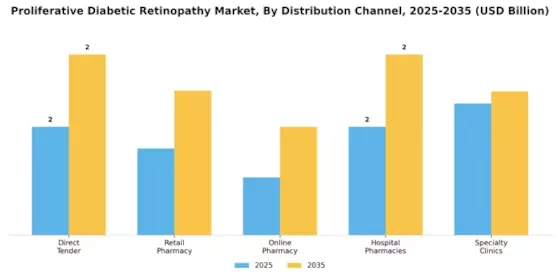
In the Proliferative Diabetic Retinopathy Market, the distribution channels exhibit diverse shares. Hospital Pharmacies dominate the market, benefiting from established relationships with healthcare providers and patients receiving treatment within clinical settings. In contrast, Online Pharmacies are rapidly gaining traction, appealing to tech-savvy customers seeking convenience and accessibility. Together, these channels cater to the unique needs of patients and healthcare professionals, creating a balanced distribution landscape. Growth trends indicate a significant shift towards Online Pharmacies, driven by increased digital adoption and patient preference for home-based care. Coupled with the rising incidence of diabetic retinopathy, the demand for convenient access to treatment is escalating. Hospital Pharmacies continue to thrive, but the online channel is redefining how patients access and manage their treatments, presenting opportunities for innovation and expansion.
Hospital Pharmacies (Dominant) vs. Online Pharmacy (Emerging)
Hospital Pharmacies hold a dominant position in the Proliferative Diabetic Retinopathy Market, primarily due to their close ties with healthcare facilities and ability to provide tailored treatment solutions. These pharmacies are integral to patient management, offering personalized care and comprehensive treatment plans under professional supervision. In contrast, Online Pharmacies represent an emerging segment that caters to an increasingly digital-savvy population. They provide ease of access, allowing patients to order medications from the comfort of their homes, often with streamlined processes that enhance user experience. While Hospital Pharmacies excel in patient care and direct interaction, Online Pharmacies are redefining convenience, making them a crucial aspect of the market's evolution as patient preferences shift.
Get more detailed insights about Proliferative Diabetic Retinopathy Market Request Free Sample
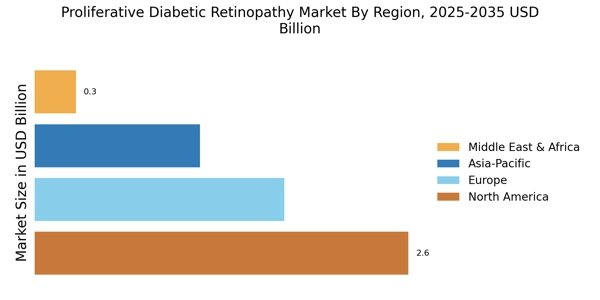
The Proliferative Diabetic Retinopathy Market exhibits significant regional variation, with North America leading in market share. In 2024, North America held a market value of 2.6 USD Billion, expected to grow to 4.65 USD Billion by 2035, reflecting its majority holding in the industry.
Europe follows, with a market valuation of 1.4 USD Billion in 2024, projected to rise to 2.5 USD Billion by 2035, indicating its significant role in the market. The APAC region is valued at 1.2 USD Billion in 2024 and is anticipated to reach 2.15 USD Billion by 2035, marking it as an important growth area due to increasing diabetic populations.South America reported a market value of 0.4 USD Billion in 2024, growing to 0.75 USD Billion by 2035, while the MEA region, valued at 0.23 USD Billion in 2024, is expected to grow to 0.45 USD Billion by 2035.
This growth across various regions is driven by increased awareness, advancements in healthcare infrastructure, and a rising prevalence of diabetes, highlighting opportunities for stakeholders in the Proliferative Diabetic Retinopathy Market growth. Market dynamics indicate that North America and Europe will continue to dominate due to higher healthcare expenditure and advanced treatment solutions available in these regions.
The Proliferative Diabetic Retinopathy Market is characterized by a highly competitive landscape driven by the rising prevalence of diabetic retinopathy among the global population. As healthcare providers increasingly focus on innovative treatment options, the demand for advanced therapeutics has surged. Companies are engaging in extensive research and development, aiming to enhance patient outcomes and expand their product portfolios. The competitive dynamics are influenced by multiple factors, including technological advancements, strategic collaborations, and the increasing understanding of the underlying pathophysiological mechanisms of the disease. As market players strive to capture a significant share, understanding the competitive landscape is paramount for stakeholders involved in the development and delivery of solutions for proliferative diabetic retinopathy. Amgen has established a notable presence in the Proliferative Diabetic Retinopathy Market through its robust development pipeline and a commitment to addressing unmet medical needs. The company's extensive research efforts in the field of ophthalmic diseases have led to the creation of advanced treatments aimed specifically at managing diabetic retinopathy complications. Amgen's strength lies in its established reputation for innovation and quality, backed by a team of experts committed to driving scientific breakthroughs. Additionally, the company's strategic partnerships and collaborations with research institutions bolster its position, allowing Amgen to leverage shared knowledge and accelerate the development of its therapeutic offerings. This commitment to scientific excellence, combined with a focus on patient-centric strategies and direct engagement with healthcare professionals, enhances Amgen's competitive edge in this therapeutic field. On the other hand, Horizon Therapeutics embodies a strong commitment to addressing the needs of patients suffering from proliferative diabetic retinopathy, marking its presence in the Proliferative Diabetic Retinopathy Market. The company's strengths are reflected in its dedicated focus on rare and serious diseases, translating to specialized treatments that resonate with the specific challenges posed by diabetic retinopathy. Horizon Therapeutics actively engages in clinical trials to ensure evidence-based therapies and continuously seeks to expand its portfolio with novel solutions that can provide meaningful benefits to patients. The company’s approach emphasizes collaboration, not only with healthcare professionals but also with patient advocacy groups, ensuring a comprehensive understanding of patient needs and preferences. This positions Horizon Therapeutics as a pivotal player in the market, where its innovative solutions are crucial for the effective management and treatment of proliferative diabetic retinopathy.

The Proliferative Diabetic Retinopathy Market is projected to grow at a 5.31% CAGR from 2025 to 2035, driven by advancements in treatment options and increasing prevalence of diabetes.
New opportunities lie in:
By 2035, the market is expected to achieve substantial growth, reflecting enhanced treatment accessibility and technological advancements.
| MARKET SIZE 2024 | 5.824(USD Billion) |
| MARKET SIZE 2025 | 6.133(USD Billion) |
| MARKET SIZE 2035 | 10.29(USD Billion) |
| COMPOUND ANNUAL GROWTH RATE (CAGR) | 5.31% (2025 - 2035) |
| REPORT COVERAGE | Revenue Forecast, Competitive Landscape, Growth Factors, and Trends |
| BASE YEAR | 2024 |
| Market Forecast Period | 2025 - 2035 |
| Historical Data | 2019 - 2024 |
| Market Forecast Units | USD Billion |
| Key Companies Profiled | Regeneron Pharmaceuticals (US), Novartis (CH), Roche (CH), Bayer (DE), Pfizer (US), Eli Lilly and Company (US), AstraZeneca (GB), Santen Pharmaceutical (JP), Horizon Therapeutics (IE) |
| Segments Covered | Treatment Type, Diagnosis Type, End Users, Distribution Channel, Regional |
| Key Market Opportunities | Advancements in telemedicine and AI-driven diagnostics enhance access to Proliferative Diabetic Retinopathy treatment. |
| Key Market Dynamics | Rising prevalence of diabetes drives demand for innovative therapies in the Proliferative Diabetic Retinopathy Market. |
| Countries Covered | North America, Europe, APAC, South America, MEA |
The projected market valuation for the Proliferative Diabetic Retinopathy Market in 2035 is 10.29 USD Billion.
The overall market valuation for the Proliferative Diabetic Retinopathy Market was 5.824 USD Billion in 2024.
The expected CAGR for the Proliferative Diabetic Retinopathy Market during the forecast period 2025 - 2035 is 5.31%.
The Intravitreal Injections segment is projected to reach a valuation of 3.0 USD Billion by 2035.
Key players in the market include Regeneron Pharmaceuticals, Novartis, Roche, Bayer, Pfizer, Eli Lilly and Company, AstraZeneca, Santen Pharmaceutical, and Horizon Therapeutics.
The Fundus Photography segment is expected to reach 2.5 USD Billion by 2035, making it one of the leading diagnostic types.
The Surgical Procedures segment is projected to reach a valuation of 2.0 USD Billion by 2035.
The Hospitals segment is anticipated to grow to a valuation of 2.7 USD Billion by 2035.
The Online Pharmacy distribution channel is expected to reach a valuation of 1.5 USD Billion by 2035.
The Anti-VEGF Therapy segment is projected to reach 1.0 USD Billion by 2035, indicating a notable growth potential.


Kindly complete the form below to receive a free sample of this Report

“This is really good guys. Excellent work on a tight deadline. I will continue to use you going forward and recommend you to others. Nice job”


“Thanks. It’s been a pleasure working with you, please use me as reference with any other Intel employees.”


“Thanks for sending the report it gives us a good global view of the Betaïne market.”


“Thank you, this will be very helpful for OQS.”


“We found the report very insightful! we found your research firm very helpful. I'm sending this email to secure our future business.”


“I am very pleased with how market segments have been defined in a relevant way for my purposes (such as "Portable Freezers & refrigerators" and "last-mile"). In general the report is well structured. Thanks very much for your efforts.”


“I have been reading the first document or the study, ,the Global HVAC and FP market report 2021 till 2026. Must say, good info! I have not gone in depth at all parts, but got a good indication of the data inside!”


“We got the report in time, we really thank you for your support in this process. I also thank to all of your team as they did a great job.”


“The Automotive 48V ECU Components Procurement Intelligence Study” was a complex project, but the Market Research Future (MRFR) team handled it with quality, agility, and customer-centricity. They delivered all requested data on time and within the agreed scope. The team, including Shubhendra Anand and Rahul Gotadki, was always readily available to clarify questions and swiftly implement necessary adjustments, driving the project to a successful conclusion within a very demanding timeframe.
I would also like to specifically commend Akshay Agarwal for his responsiveness and support at every stage—from our initial inquiry on May 6th through to final delivery on June 18th. His dedication made the entire process seamless.”



