Prostate Cancer Market Research Report Information by Type (Prostate Adenocarcinoma, Small Cell Carcinoma), By Component (Therapy and Diagnosis), By End-User (Specialty Centers, Hospital & Clinics), and By Region (North America, Europe, Asia-Pacific, And Rest of The World) – Therapeutics Industry Forecast Till 2035
As per MRFR analysis, the Prostate Cancer Size was estimated at 7.35 USD Billion in 2024. The Prostate cancer industry is projected to grow from 7.91 USD Billion in 2025 to 16.5 USD Billion by 2035, exhibiting a compound annual growth rate (CAGR) of 7.62% during the forecast period 2025 - 2035.
Key Market Trends & Highlights
The Prostate cancer Market is experiencing transformative growth driven by technological advancements and increasing awareness.
Advancements in diagnostic technologies are enhancing early detection and treatment outcomes in North America.
There is a notable shift towards personalized medicine, particularly in the Asia-Pacific region, catering to individual patient needs.
Increased focus on patient education and awareness is fostering proactive health management among at-risk populations.
The rising incidence of prostate cancer and technological advancements in treatment options are key drivers propelling market growth.
Market Size & Forecast
2024 Market Size
7.35 (USD Billion)
2035 Market Size
16.5 (USD Billion)
CAGR (2025 - 2035)
7.62%
Major Players
AbbVie (US), Bristol-Myers Squibb (US), Johnson & Johnson (US), Astellas Pharma (JP), Merck & Co. (US), Pfizer (US), Novartis (CH), Sanofi (FR), Amgen (US), Eli Lilly and Company (US)
Our Impact
Enabled $4.3B Revenue Impact for Fortune 500 and Leading Multinationals
Partnering with 2000+ Global Organizations Each Year
30K+ Citations by Top-Tier Firms in the Industry
Prostate Cancer Market Trends
The Prostate cancer Market is currently experiencing a dynamic evolution, driven by advancements in diagnostic technologies and treatment modalities. The increasing prevalence of prostate cancer globally has prompted a surge in research and development efforts aimed at improving patient outcomes. Innovative therapies, including targeted treatments and immunotherapies, are gaining traction, suggesting a shift towards more personalized approaches in managing this disease. Furthermore, the integration of artificial intelligence in diagnostic processes appears to enhance early detection rates, potentially leading to better prognoses for patients. In addition to technological advancements, the Prostate cancer Market is influenced by changing demographics and heightened awareness surrounding men's health issues. Educational campaigns and advocacy initiatives are likely contributing to increased screening rates, which may facilitate earlier intervention and treatment. As healthcare systems adapt to these trends, the market is poised for continued growth, with a focus on improving accessibility and affordability of care. Overall, the Prostate cancer Market reflects a complex interplay of innovation, awareness, and evolving patient needs, indicating a promising future for stakeholders involved in this field.
Advancements in Diagnostic Technologies
The Prostate cancer Market is witnessing significant progress in diagnostic tools, particularly with the incorporation of advanced imaging techniques and biomarker identification. These innovations are likely to enhance the accuracy of early detection, enabling healthcare providers to identify prostate cancer at more treatable stages.
Shift Towards Personalized Medicine
There is a noticeable trend towards personalized treatment strategies within the Prostate cancer Market. Tailoring therapies based on individual genetic profiles and tumor characteristics appears to improve treatment efficacy and minimize adverse effects, reflecting a broader movement in oncology.
Increased Focus on Patient Education and Awareness
The Prostate cancer Market is also seeing a rise in initiatives aimed at educating patients about the disease. Enhanced awareness campaigns may lead to higher screening rates and earlier diagnosis, ultimately contributing to improved patient outcomes and survival rates.
Prostate Cancer Market Drivers
Rising Incidence of Prostate Cancer
The Global Prostate Cancer Market Industry is experiencing growth due to the increasing incidence of prostate cancer worldwide. According to credible health statistics, prostate cancer is one of the most common cancers among men, with millions diagnosed annually. This rising prevalence is driving demand for innovative treatment options and diagnostic tools. As awareness increases, more men are seeking screening and treatment, contributing to the market's expansion. The projected market value of 7.35 USD Billion in 2024 underscores the urgency for effective solutions in managing this disease.
Market Segment Insights
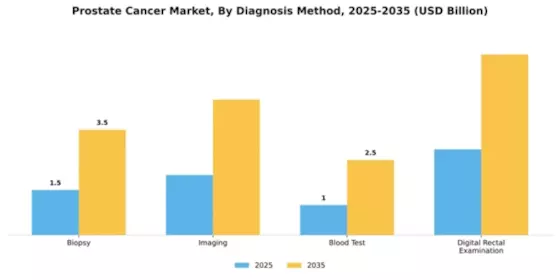
By Diagnosis Method: Biopsy (Largest) vs. Blood Test (Fastest-Growing)
The 'Diagnosis Method' segment in the prostate cancer market showcases a diverse distribution among its values, with biopsy emerging as the largest contributor. Biopsy holds a significant share of the market due to its established role as the gold standard in diagnosing prostate cancer. Following this are imaging methods, which aid in locating tumors, and the blood test segment, which is gaining traction as a less invasive option. Digital rectal examinations, while crucial in initial assessments, occupy a smaller share in comparison to these advanced techniques. Growth trends within this segment reveal that the blood test is the fastest-growing method, driven by advancements in technology that enable earlier detection and better monitoring of prostate cancer. Patients and healthcare providers are increasingly favoring blood tests due to their non-invasive nature and the growing awareness of prostate cancer. The biopsy continues to dominate, yet the shift towards less invasive methods reflects the evolving preferences within the healthcare landscape.
Biopsy (Dominant) vs. Blood Test (Emerging)
The biopsy method remains the dominant force in prostate cancer diagnosis, recognized for its accuracy and reliability in confirming cancer presence. This procedure increases physician confidence in diagnosis and treatment decisions, underpinning its widespread use. In contrast, the blood test is an emerging player, gaining momentum due to innovations such as the Prostate-Specific Antigen (PSA) test, which allows for a non-invasive approach. The growing preference for blood tests aligns with a shift towards personalized medicine, where early detection and monitoring become paramount. While biopsy will continue to be vital in definitive diagnosis, the emerging status of blood tests underscores an important trend towards patient-centric approaches in managing prostate cancer.
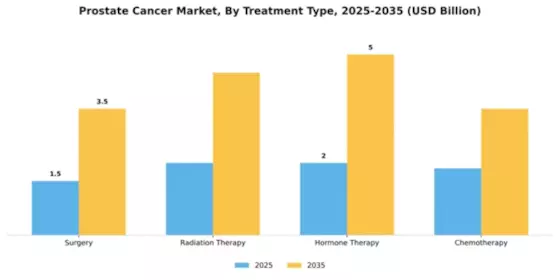
By Treatment Type: Surgery (Largest) vs. Hormone Therapy (Fastest-Growing)
In the Prostate cancer market, the treatment landscape is primarily dominated by surgery, which has established itself as the largest treatment option due to its effectiveness in localized cases. Following closely are radiation therapy and hormone therapy, with the latter emerging rapidly in recent years as a preferred choice for advanced cases. Chemotherapy also plays a role, particularly in metastatic scenarios, but largely in the later stages of treatment. The diverse therapeutic spectrum helps in catering to varying patient needs and preferences, thereby shaping the overall market dynamics. The growth trends within the Prostate cancer treatment segment are influenced by factors such as technological advancements in surgical techniques, increased awareness for early detection, and the evolving understanding of hormone therapy’s benefits. The shift toward personalized medicine is also propelling hormone therapy into a faster-growing position as clinicians increasingly adopt these approaches. Additionally, the rise in geriatric populations and lifestyle factors contributing to prostate cancer incidence are expected to drive continual demand across all treatment types, yet surgery remains a cornerstone treatment for many patients.
Surgery (Dominant) vs. Hormone Therapy (Emerging)
Surgery has long been the dominant form of treatment in the Prostate cancer market, primarily comprising radical prostatectomies and other surgical techniques. Its effectiveness in treating localized prostate cancer has established surgical intervention as the go-to approach for many healthcare professionals. The intricate nature of surgical procedures continues to evolve, with innovations like robotic-assisted surgeries enhancing precision and recovery times. On the other hand, Hormone Therapy emerges as a significant player in the treatment landscape, particularly for advanced prostate cancer. Its ability to target hormone-dependent tumors offers a unique therapeutic advantage, especially as it becomes increasingly recognized for its role in delaying disease progression. This growing awareness and its adaptability in combination therapies position Hormone Therapy as an essential complement to surgical interventions.
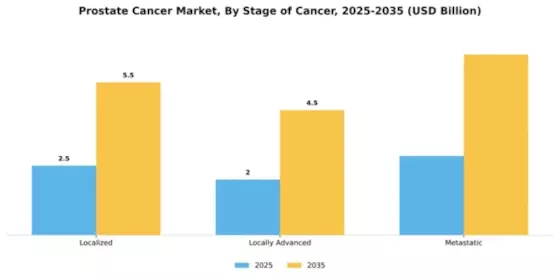
By Stage of Cancer: Localized (Largest) vs. Metastatic (Fastest-Growing)
In the Prostate cancer Market, the Localized stage holds the largest market share, reflecting its prevalence among diagnosed cases. This segment benefits from advancements in early detection and treatment options, leading to an increase in the number of patients diagnosed at this stage. Meanwhile, the Metastatic stage, while smaller, represents the fastest-growing segment as awareness rises regarding the disease's progression and the need for urgent treatment options. This growth is driven by both an increasing incidence of prostate cancer and advancements in therapeutic interventions. Growth trends within the Prostate cancer market indicate a shift towards more comprehensive treatment strategies across all stages. The Localized stage sees a continued investment in new therapies aimed at improving outcomes and reducing recurrence rates. In contrast, the Metastatic segment is experiencing heightened activity due to the rise in research for new targeted therapies and immunotherapeutics, addressing the urgent needs of patients with advanced disease. This dynamic has resulted in a market increasingly categorizing treatment approaches based on the stage of cancer, with ongoing innovations driving growth across the board.
Localized (Dominant) vs. Metastatic (Emerging)
The Localized stage of prostate cancer is characterized by its potential for high treatment success, as tumors are often confined to the prostate and can be effectively managed through surgery, radiation, or active surveillance. This segment benefits significantly from early detection programs, leading to better outcomes and a focus on preserving the patient's quality of life. As the dominant category, it not only represents a larger number of cases but also encourages ongoing research aimed at refining treatment methodologies. Conversely, the Metastatic stage, while considered emerging, is becoming increasingly prioritized in research and clinical settings. Patients diagnosed with metastatic prostate cancer often face more complex treatment regimens, including hormone therapy and chemotherapy. The rising incidence of advanced-stage diagnoses is propelling this segment forward, with innovation focusing on life-extending therapies and improving patient outcomes. This dynamic creates a compelling landscape where the prioritization of both stages drives growth and development in the overall prostate cancer market.
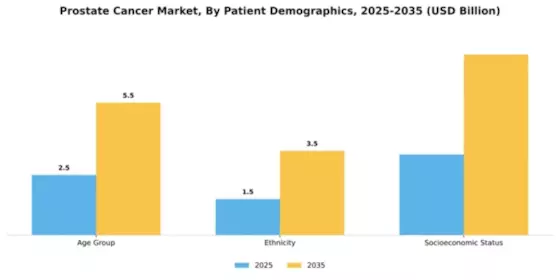
By Patient Demographics: Age Group (Largest) vs. Ethnicity (Fastest-Growing)
In the Prostate Cancer Market, the patient demographics segment illustrates a clear distribution of market share across various age groups and ethnicities. Age groups reveal a predominant share, particularly among men aged 65 and older, who represent the largest segment facing prostate cancer diagnoses. Ethnic diversity has surfaced as a significant factor, with African American men at a notably higher risk, thereby influencing treatment patterns and healthcare strategies.
Age Group: 65+ (Dominant) vs. Ethnicity: African American (Emerging)
The aged 65+ group is recognized as the dominant demographic in the Prostate Cancer Market, primarily due to the noticeable prevalence of prostate cancer in older men. This age group's health complications and increased screenings contribute to their larger market presence. Conversely, the African American demographic, while emerging, shows alarming rates of incidence and mortality associated with prostate cancer. This emerging group is gaining attention, spurring targeted outreach, and tailored treatment options to address the unique challenges faced by this population, highlighting an urgent need for focused intervention.
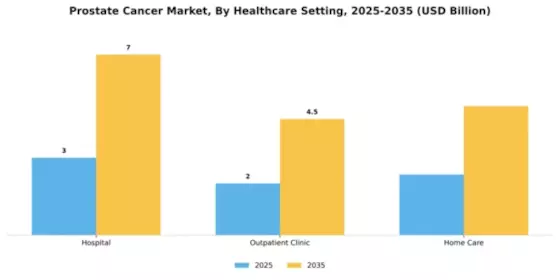
By Healthcare Setting: Hospital (Largest) vs. Outpatient Clinic (Fastest-Growing)
The prostate cancer market shows significant distribution in healthcare settings, with hospitals holding the largest share due to their comprehensive treatment capabilities, advanced technology, and multidisciplinary approach to patient care. Outpatient clinics are gaining ground due to the increasing trend towards minimally invasive procedures and cost-effectiveness in treatment delivery, providing a more patient-centered approach that aligns with contemporary healthcare demands.
Hospital (Dominant) vs. Outpatient Clinic (Emerging)
Hospitals remain the dominant healthcare setting in the prostate cancer market, offering a wide range of diagnostic and treatment options including surgery, radiation therapy, and chemotherapy, supported by a multi-specialty team of oncologists and other healthcare professionals. In contrast, outpatient clinics are emerging as an essential component of care delivery, driven by the growing demand for convenient and accessible services, especially for follow-up care and routine management. They tend to focus on less invasive procedures and patient education, carving a niche for themselves as effective and efficient alternatives to traditional hospital settings.
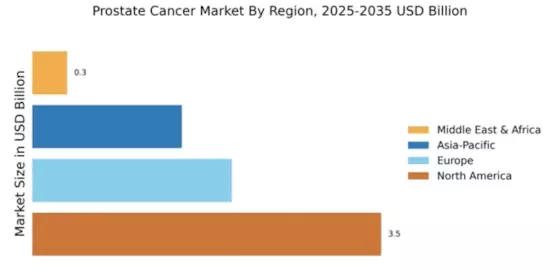
North America holds a significant share of the prostate cancer market, valued at $3.5 billion in 2024. The region's growth is driven by advanced healthcare infrastructure, increasing awareness, and a rising incidence of prostate cancer. Regulatory support for innovative therapies and a strong focus on research and development further catalyze market expansion. The demand for effective treatment options continues to rise, supported by a growing aging population and improved screening methods. The competitive landscape in North America is robust, featuring key players such as AbbVie, Johnson & Johnson, and Merck & Co. These companies are at the forefront of developing novel therapies and maintaining a strong market presence. The U.S. is the leading country, contributing significantly to the market size, while Canada also plays a vital role in the regional dynamics. The presence of major pharmaceutical firms ensures a continuous flow of innovative treatments, enhancing patient outcomes.
Europe : Emerging Market with Growth Potential
Europe's prostate cancer market is valued at $2.0 billion, reflecting a growing demand for advanced treatment options. Factors such as increasing awareness, improved diagnostic techniques, and supportive healthcare policies are driving market growth. The region is witnessing a shift towards personalized medicine, with regulatory bodies encouraging the development of targeted therapies. The aging population and rising incidence of prostate cancer further contribute to the market's expansion. Leading countries in Europe include Germany, France, and the UK, which are home to several key players like Novartis and Sanofi. The competitive landscape is characterized by a mix of established pharmaceutical companies and emerging biotech firms. The European Medicines Agency (EMA) plays a crucial role in regulating new therapies, ensuring safety and efficacy. This regulatory support fosters innovation and enhances the market's growth potential.
Asia-Pacific : Rapidly Growing Market Segment
The Asia-Pacific region's prostate cancer market is valued at $1.5 billion, driven by increasing awareness and advancements in healthcare infrastructure. The rising incidence of prostate cancer, coupled with a growing aging population, is propelling demand for effective treatment options. Regulatory bodies in countries like Japan and Australia are promoting research and development, which is crucial for market growth. The region is also witnessing a shift towards more personalized treatment approaches, enhancing patient outcomes. Key players in the Asia-Pacific market include Astellas Pharma and Pfizer, with Japan being a significant contributor to the market size. The competitive landscape is evolving, with both multinational corporations and local firms vying for market share. The presence of innovative therapies and a focus on improving healthcare access are essential for sustaining growth in this dynamic market.
Middle East and Africa : Emerging Market with Challenges
The Middle East and Africa (MEA) prostate cancer market is valued at $0.35 billion, reflecting a nascent but growing segment. The market is driven by increasing awareness of prostate cancer and the need for improved healthcare services. However, challenges such as limited access to advanced treatments and varying healthcare infrastructure across countries hinder rapid growth. Regulatory bodies are beginning to focus on cancer treatment, which may catalyze future market expansion. Leading countries in the MEA region include South Africa and the UAE, where there is a growing presence of key players like Amgen and Eli Lilly. The competitive landscape is characterized by a mix of local and international firms, with efforts to enhance treatment accessibility. As healthcare systems evolve, the potential for growth in the prostate cancer market in this region is significant, albeit gradual.
Key Players and Competitive Insights
The Prostate cancer Market is characterized by a dynamic competitive landscape, driven by a confluence of innovation, strategic partnerships, and a growing emphasis on personalized medicine. Major players such as AbbVie (US), Johnson & Johnson (US), and Merck & Co. (US) are at the forefront, each adopting distinct strategies to enhance their market positioning. AbbVie (US) focuses on expanding its oncology portfolio through strategic acquisitions and collaborations, while Johnson & Johnson (US) emphasizes innovation in treatment modalities, particularly in immunotherapy. Merck & Co. (US) is leveraging its expertise in immuno-oncology to develop novel therapies, thereby shaping the competitive environment through a commitment to research and development.The business tactics employed by these companies reflect a concerted effort to optimize supply chains and localize manufacturing processes. The Prostate cancer Market appears moderately fragmented, with a blend of established pharmaceutical giants and emerging biotech firms. This structure allows for a diverse range of treatment options, although the influence of key players remains substantial, often dictating market trends and pricing strategies.
In November AbbVie (US) announced a strategic partnership with a leading biotech firm to co-develop a novel prostate cancer therapy. This collaboration is poised to enhance AbbVie's research capabilities and accelerate the development of innovative treatment options, potentially positioning the company as a leader in the next generation of prostate cancer therapies. The strategic importance of this partnership lies in its potential to leverage combined expertise, thereby expediting the delivery of new therapies to market.
In October Johnson & Johnson (US) launched a groundbreaking clinical trial for a new immunotherapy treatment aimed at advanced prostate cancer. This initiative underscores the company's commitment to pioneering innovative solutions that address unmet medical needs. The trial's success could significantly bolster Johnson & Johnson's market share and reinforce its reputation as a leader in oncology.
In September Merck & Co. (US) unveiled a new digital health platform designed to enhance patient engagement and adherence to prostate cancer therapies. This initiative reflects a broader trend towards digitalization in healthcare, aiming to improve patient outcomes through technology. By integrating digital tools into its treatment protocols, Merck & Co. (US) is likely to enhance its competitive edge in a rapidly evolving market.
As of December the Prostate cancer Market is witnessing a shift towards digitalization, sustainability, and the integration of artificial intelligence (AI) in treatment development. Strategic alliances are increasingly shaping the competitive landscape, fostering innovation and collaboration among key players. The evolution of competitive differentiation appears to be moving away from price-based competition towards a focus on technological advancements, innovative therapies, and reliable supply chains. This trend suggests that companies that prioritize research and development, alongside strategic partnerships, will likely emerge as leaders in the future.
Key Companies in the Prostate Cancer Market include
Industry Developments
MDxHealth SA announced a partnership with Oxford University, whose aim is to study the relationship between Genomic Prostate Score (GPS) and test results post-treatment progression of this disease in men who have undergone various forms of localized prostate cancer therapy.
August 2023:
The U.S. Food and Drug Administration (FDA) granted approval to FoundationOneCDx as a companion diagnostic of AKEEGA (abiraterone acetate Dual Action Tablet + niraparib) developed by Janssen Pharmaceuticals. This approval applies specifically to individuals with BRCA-positive metastatic castration-resistant prostate cancer.
July 2023:
A new biomarker test that identified prostate cancer using subspecialty pathology business was introduced by Quest Diagnostic called AmeriPath. The company signed a deal with Envision Sciences Pty Ltd., an Australian clinical diagnostics firm.
April 2022:
As a part of the Milton and Carroll Petrie Department of Urology at Mount Sinai, a Mount Sinai Robert F. Smith Mobile Prostate Cancer Screening Unit was launched to address the disparity in prostate cancer outcomes for Black men and increase access to care.
March 2022:
The approval of Pluvicto by the US FDA will allow Novartis to offer a new treatment option for adult patients with prostate-specific membrane antigen-positive metastatic castration-resistant prostate cancer, a variety of advanced prostate cancer.
March 2022:
Merck announced that they would be conducting a Keytruda plus Lynparza clinical trial targeting patients with metastatic-refractory prostate cancers that have keylynk-010.
Future Outlook
Prostate Cancer Market Future Outlook
The Prostate cancer Market is projected to grow at a 7.62% CAGR from 2025 to 2035, driven by advancements in diagnostics, treatment options, and increasing awareness.
New opportunities lie in:
Development of personalized immunotherapy treatments for advanced prostate cancer patients. Expansion of telehealth services for remote patient monitoring and consultations. Investment in AI-driven diagnostic tools to enhance early detection rates.
By 2035, the Prostate cancer Market is expected to achieve substantial growth, reflecting evolving treatment paradigms and technological advancements.
Market Segmentation
Prostate cancer Market Treatment Type Outlook
Surgery
Radiation Therapy
Hormone Therapy
Chemotherapy
Prostate cancer Market Stage of Cancer Outlook
Localized
Locally Advanced
Metastatic
Prostate cancer Market Diagnosis Method Outlook
Biopsy
Imaging
Blood Test
Digital Rectal Examination
Prostate cancer Market Healthcare Setting Outlook
Hospital
Outpatient Clinic
Research Facility
Prostate cancer Market Patient Demographics Outlook
Age Group
Ethnicity
Family History
Report Scope
MARKET SIZE 2024
7.35(USD Billion)
MARKET SIZE 2025
7.91(USD Billion)
MARKET SIZE 2035
16.5(USD Billion)
COMPOUND ANNUAL GROWTH RATE (CAGR)
7.62% (2025 - 2035)
REPORT COVERAGE
Revenue Forecast, Competitive Landscape, Growth Factors, and Trends
BASE YEAR
2024
Market Forecast Period
2025 - 2035
Historical Data
2019 - 2024
Market Forecast Units
USD Billion
Key Companies Profiled
AbbVie (US), Bristol-Myers Squibb (US), Johnson & Johnson (US), Astellas Pharma (JP), Merck & Co. (US), Pfizer (US), Novartis (CH), Sanofi (FR), Amgen (US), Eli Lilly and Company (US)
What is the current valuation of the Prostate cancer Market as of 2024?
The Prostate cancer Market was valued at 7.35 USD Billion in 2024.
What is the projected market valuation for the Prostate cancer Market in 2035?
The market is projected to reach 16.5 USD Billion by 2035.
What is the expected CAGR for the Prostate cancer Market during the forecast period 2025 - 2035?
The expected CAGR for the Prostate cancer Market during 2025 - 2035 is 7.62%.
Which companies are considered key players in the Prostate cancer Market?
Key players in the market include AbbVie, Bristol-Myers Squibb, Johnson & Johnson, and others.
What are the primary diagnosis methods used in the Prostate cancer Market?
Primary diagnosis methods include Biopsy, Imaging, Blood Test, and Digital Rectal Examination.
What is the market size for the Digital Rectal Examination segment in 2024?
The Digital Rectal Examination segment was valued at 2.85 USD Billion in 2024.
How does the market for Hormone Therapy compare to other treatment types?
Hormone Therapy is projected to grow from 2.0 USD Billion to 5.0 USD Billion during the forecast period.
What are the projected valuations for the Localized stage of cancer by 2035?
The Localized stage of cancer is expected to reach 5.5 USD Billion by 2035.
What healthcare settings are included in the Prostate cancer Market analysis?
Healthcare settings include Hospital, Outpatient Clinic, and Home Care.
What is the projected market size for Home Care in 2035?
The Home Care segment is projected to reach 5.0 USD Billion by 2035.
Author
Author
Satyendra Maurya
Research Analyst
An accomplished research analyst with high proficiency in market forecasting, data visualization, competitive benchmarking, and others. He holds a pronounced track record in research and consulting projects for sectors such as life sciences, medical devices, and healthcare IT. His capabilities in qualitative and quantitative analysis have resulted in positive client outcomes. Working on niche market trends, opportunities, sales, and forecasted value is part of his skill set.
read more
Co-Author
Kinjoll Dey
Senior Research Analyst
He is an extremely curious individual currently working in Healthcare and Medical Devices Domain. Kinjoll is comfortably versed in data centric research backed by healthcare educational background. He leverages extensive data mining and analytics tools such as Primary and Secondary Research, Statistical Analysis, Machine Learning, Data Modelling. His key role also involves Technical Sales Support, Client Interaction and Project management within the Healthcare team. Lastly, he showcases extensive affinity towards learning new skills and remain fascinated in implementing them.
The secondary research process involved comprehensive analysis of regulatory databases, peer-reviewed oncology journals, clinical trial repositories, and authoritative health organizations. Key sources included the US Food & Drug Administration (FDA), European Medicines Agency (EMA), National Comprehensive Cancer Network (NCCN) Clinical Practice Guidelines, National Cancer Institute (NCI) Surveillance, Epidemiology, and End Results (SEER) Program, American Cancer Society (ACS) Statistics Database, European Society for Medical Oncology (ESMO) Guidelines, American Society of Clinical Oncology (ASCO) Publications, World Health Organization (WHO) Global Cancer Observatory (GLOBOCAN), Centers for Disease Control and Prevention (CDC) National Program of Cancer Registries, ClinicalTrials.gov, PubMed/MEDLINE, IQVIA National Sales Perspectives, Evaluate Pharma, national cancer registries from key markets (UK National Cancer Registration and Analysis Service, Japan National Cancer Center, Australian Institute of Health and Welfare), and hospital discharge databases. These sources were utilized to collect prostate cancer incidence and prevalence statistics, regulatory approval data for androgen receptor inhibitors and PARP inhibitors, clinical safety and efficacy studies, treatment protocol adoption rates, and diagnostic procedure volumes across biopsy, imaging (MRI/PSMA-PET), and blood-based biomarker testing.
Primary Research
In order to gather qualitative and quantitative information unique to prostate cancer treatments and diagnostics, supply-side and demand-side stakeholders were interviewed during the primary research process. Chief executive officers, chief medical officers, vice presidents of oncology research and development, heads of international regulatory affairs, and commercial directors from pharmaceutical companies (AbbVie, Johnson & Johnson, Astellas Pharma, etc.), biotechnology firms creating new immunotherapies, and manufacturers of diagnostic imaging and biopsy devices were examples of supply-side sources. Board-certified medical oncologists, urologists, radiation oncologists, chiefs of genitourinary oncology at comprehensive cancer centers, hospital pharmacy directors, and procurement leads from academic medical centers, community oncology practices, and specialty urology clinics were among the demand-side sources. Primary research verified clinical pipeline timelines for next-generation anti-androgens, validated market segmentation across treatment modalities (hormonal therapy vs. chemotherapy vs. radioligand therapy), and collected information on formulary adoption patterns, reimbursement dynamics for PSMA-targeted therapies, and changing diagnostic preferences from invasive biopsy to liquid biopsy approaches.
Primary Respondent Breakdown:
• By Designation: C-level Primaries (38%), Director Level (30%), Others (32%)
• By Region: North America (36%), Europe (28%), Asia-Pacific (27%), Rest of World (9%)
Market Size Estimation
Global market valuation was derived through revenue mapping and treatment volume analysis across both therapeutic and diagnostic segments. The methodology included:
• Identification of 40+ key manufacturers and developers across North America, Europe, Asia-Pacific, and Latin America specializing in prostate cancer therapeutics (hormonal agents, chemotherapy, immunotherapy, radiopharmaceuticals) and diagnostics (imaging systems, biopsy devices, biomarker assays)
• Analysis of reported and modeled annual revenues specific to prostate cancer portfolios, including marketed drugs (Erleada, Xtandi, Zytiga) and diagnostic procedures
• Coverage of manufacturers representing 75-80% of global market share in 2024
• Extrapolation using bottom-up (treatment volume × ASP by country/region, procedure volumes for biopsies and imaging studies) and top-down (manufacturer revenue validation, pharmaceutical sales data triangulation) approaches to derive segment-specific valuations for localized, locally advanced, and metastatic castration-resistant prostate cancer (mCRPC) treatment markets
“This is really good guys. Excellent work on a tight deadline. I will continue to use you going forward and recommend you to others. Nice job”
Noah MalgeriCo-Founder
“Thanks. It’s been a pleasure working with you, please use me as reference with any other Intel employees.”
Joseph AguayoSales Operations & Pricing Manager
“Thanks for sending the report it gives us a good global view of the Betaïne market.”
Peter Groot koerkampAccount and Business Manager
“Thank you, this will be very helpful for OQS.”
La Terria DoddProgram Support Specialist
“We found the report very insightful! we found your research firm very helpful. I'm sending this email to secure our future business.”
Younghwan ChoiSenior Retail Manager
“I am very pleased with how market segments have been defined in a relevant way for my purposes (such as "Portable Freezers & refrigerators" and "last-mile").
In general the report is well structured. Thanks very much for your efforts.”
Mark IrwinManagement Consultant
“I have been reading the first document or the study, ,the Global HVAC and FP market report 2021 till 2026. Must say, good info! I have not gone in depth at all parts, but got a good indication of the data inside!”
Rob KooikerGroup Product Manager HVAC & Fire Protection GMA
“We got the report in time, we really thank you for your support in this process. I also thank to all of your team as they did a great job.”
Akif MorogluStrategy & Business Development Director
“The Automotive 48V ECU Components Procurement Intelligence Study” was a complex project, but the Market Research Future (MRFR) team handled it with quality, agility, and customer-centricity. They delivered all requested data on time and within the agreed scope. The team, including Shubhendra Anand and Rahul Gotadki, was always readily available to clarify questions and swiftly implement necessary adjustments, driving the project to a successful conclusion within a very demanding timeframe.
I would also like to specifically commend Akshay Agarwal for his responsiveness and support at every stage—from our initial inquiry on May 6th through to final delivery on June 18th. His dedication made the entire process seamless.”
Guilherme Gomes MartinsProduct Management Director