×
Request Free Sample ×

Kindly complete the form below to receive a free sample of this Report

* Please use a valid business email

Leading companies partner with us for data-driven Insights

clients tt-cursor
Hero Background

Renal Disease Market

ID: MRFR/Pharma/2289-CR
157 Pages
Kinjoll Dey
February 2021

Renal Disease Market Research Report Information by Disease Type (Chronic Kidney Disease, End-Stage Renal Disease), by Treatment Type (Dialysis, Medication, Kidney Transplantation), by End User (Dialysis Centers, Hospital & Clinics, Research and Academic Institutes), and By Region (North America, Europe, Asia-Pacific, and Rest of The World) - Forecast Till 2035

Share:
Download PDF ×

We do not share your information with anyone. However, we may send you emails based on your report interest from time to time. You may contact us at any time to opt-out.

Renal Disease Market Infographic
Purchase Options

Renal Disease Market Summary

As per MRFR analysis, the Renal Disease Market Size was estimated at 3900.0 USD Million in 2024. The Renal Disease industry is projected to grow from 4279.09 in 2025 to 10819.79 by 2035, exhibiting a compound annual growth rate (CAGR) of 9.72 during the forecast period 2025 - 2035.

Key Market Trends & Highlights

The Renal Disease Market is experiencing transformative growth driven by technological advancements and increasing disease prevalence.

  • The rise of telehealth solutions is reshaping patient management in renal disease care.
  • Advancements in diagnostic technologies are enhancing early detection and treatment outcomes.
  • The focus on personalized medicine is tailoring therapies to individual patient needs, particularly in chronic kidney disease.
  • Increasing prevalence of renal diseases and rising demand for renal replacement therapies are key drivers propelling market growth in North America and Asia-Pacific.

Market Size & Forecast

2024 Market Size 3900.0 (USD Million)
2035 Market Size 10819.79 (USD Million)
CAGR (2025 - 2035) 9.72%

Major Players

Fresenius Medical Care (DE), DaVita Inc. (US), Baxter International Inc. (US), NantKwest Inc. (US), Medtronic plc (IE), Amgen Inc. (US), Keryx Biopharmaceuticals Inc. (US), Otsuka Pharmaceutical Co. Ltd. (JP), Astellas Pharma Inc. (JP)

Renal Disease Market Trends

The Renal Disease Market is currently experiencing notable transformations driven by advancements in medical technology and an increasing prevalence of kidney-related ailments. As healthcare systems evolve, there is a growing emphasis on early detection and management of renal diseases, which appears to be fostering innovation in diagnostic tools and treatment modalities. The integration of telemedicine and digital health solutions is also gaining traction, enabling patients to access care remotely and enhancing the overall patient experience. This shift towards patient-centered care may lead to improved outcomes and greater adherence to treatment regimens. Moreover, the Renal Disease Market is likely to witness a surge in demand for personalized medicine approaches. Tailoring treatments to individual patient profiles could enhance efficacy and minimize adverse effects, thereby improving quality of life for those affected by renal conditions. Additionally, the collaboration between pharmaceutical companies and biotechnology firms seems to be accelerating the development of novel therapies, which may further reshape the landscape of renal disease management. As the market continues to evolve, stakeholders must remain vigilant to emerging trends and adapt strategies accordingly to meet the needs of patients and healthcare providers alike.

Rise of Telehealth Solutions

The adoption of telehealth services is transforming the Renal Disease Market by providing patients with convenient access to healthcare professionals. This trend facilitates remote monitoring and consultations, which can lead to timely interventions and better management of renal conditions.

Advancements in Diagnostic Technologies

Innovations in diagnostic tools are enhancing the ability to detect renal diseases at earlier stages. These advancements may include the development of more sensitive biomarkers and imaging techniques, which could significantly improve patient outcomes.

Focus on Personalized Medicine

The shift towards personalized medicine in the Renal Disease Market is gaining momentum. Tailoring treatments based on individual genetic profiles and disease characteristics may lead to more effective therapies and improved patient adherence.

Renal Disease Market Drivers

Market Growth Projections

The Global Renal Disease Market Industry is projected to experience substantial growth over the coming years. With a market valuation of 3.9 USD Billion in 2024, it is anticipated to reach 9.8 USD Billion by 2035, reflecting a robust compound annual growth rate of 8.73% from 2025 to 2035. This growth trajectory is indicative of the increasing demand for renal care services and innovations in treatment options. The market dynamics are influenced by various factors, including the rising prevalence of renal diseases, advancements in technology, and heightened awareness among the population.

Rising Prevalence of Renal Diseases

The Global Renal Disease Market Industry is experiencing growth driven by the increasing prevalence of renal diseases worldwide. Factors such as diabetes and hypertension, which are known to exacerbate kidney conditions, contribute significantly to this trend. According to health statistics, millions of individuals are diagnosed with chronic kidney disease each year, leading to a heightened demand for treatment options. In 2024, the market is valued at approximately 3.9 USD Billion, reflecting the urgent need for innovative therapies and management strategies. This rising incidence underscores the necessity for healthcare systems to adapt and expand their renal care services.

Growing Awareness and Screening Initiatives

Increased awareness regarding renal health and proactive screening initiatives are crucial drivers of the Global Renal Disease Market Industry. Public health campaigns aimed at educating individuals about the risk factors and symptoms of kidney diseases have led to earlier diagnosis and intervention. Governments and health organizations are implementing screening programs, particularly in high-risk populations, which facilitates timely treatment and management. This proactive approach is expected to contribute to the market's expansion, as more individuals seek medical attention for renal issues. The emphasis on early detection aligns with the projected market growth, potentially reaching 9.8 USD Billion by 2035.

Advancements in Renal Treatment Technologies

Technological advancements play a pivotal role in shaping the Global Renal Disease Market Industry. Innovations in dialysis techniques, kidney transplantation methods, and pharmacological treatments are enhancing patient outcomes and quality of life. For instance, the development of wearable dialysis devices and improved immunosuppressive therapies for transplant patients are notable examples of progress. These advancements not only improve the efficacy of treatments but also reduce the burden on healthcare systems. As the market evolves, it is anticipated that these technologies will attract significant investment, further propelling the market's growth trajectory.

Aging Population and Associated Health Challenges

The aging population is a significant factor influencing the Global Renal Disease Market Industry. As individuals age, the risk of developing renal diseases increases, primarily due to the cumulative effects of chronic conditions such as hypertension and diabetes. This demographic shift is prompting healthcare providers to focus on renal care, leading to an increased demand for dialysis and transplant services. The market is poised for substantial growth, with a projected compound annual growth rate of 8.73% from 2025 to 2035. Addressing the needs of an aging population necessitates innovative solutions and expanded healthcare resources.

Regulatory Support and Funding for Renal Research

Regulatory support and increased funding for renal research are vital components driving the Global Renal Disease Market Industry. Governments and health organizations are recognizing the importance of addressing renal health, leading to enhanced funding for research initiatives aimed at understanding and treating kidney diseases. This support fosters innovation and encourages the development of new therapies and technologies. As research progresses, it is likely that new treatment options will emerge, further stimulating market growth. The collaborative efforts between public and private sectors are expected to yield significant advancements in renal care.
Market Segment Insights

By Disease Type: Chronic Kidney Disease (Largest) vs. End Stage Renal Disease (Fastest-Growing)

The renal disease market displays a diverse distribution of disease types, with Chronic Kidney Disease (CKD) accounting for the largest share due to its prevalence and significant impact on patients' quality of life. Acute Kidney Injury (AKI) and Polycystic Kidney Disease (PKD) represent smaller, yet noteworthy segments, while End Stage Renal Disease (ESRD) is emerging rapidly, driven by an aging population and increasing diabetes prevalence.

Chronic Kidney Disease (Dominant) vs. End Stage Renal Disease (Emerging)

Chronic Kidney Disease is characterized by a gradual loss of kidney function and is widely recognized for its long-term effects on the health system and patient outcomes. This segment dominates the renal market due to its substantial prevalence, driven by risk factors such as hypertension and diabetes. In contrast, End Stage Renal Disease represents a critical phase of irreversible kidney deterioration, requiring dialysis or transplantation. This segment is rapidly growing, fueled by advancements in treatment options and increased awareness about kidney health, making it an attractive area for investment and research.

By Treatment Type: Dialysis (Largest) vs. Kidney Transplantation (Fastest-Growing)

The Treatment Type segment of the Renal Disease Market is primarily dominated by Dialysis, which accounts for a substantial portion of the market share. Dialysis remains the gold standard for patients with end-stage renal disease, providing essential therapy for those who cannot receive transplants. Its widespread acceptance and infrastructure support drive its leading position in the market. On the other hand, Kidney Transplantation is rapidly gaining traction as a preferred treatment option due to advancements in surgical techniques and immunosuppressive therapies. This segment is expanding quickly, fueled by increasing awareness of the benefits of transplantation over dialysis, along with growing organ donation programs and improve patient survivability post-transplantation.

Dialysis (Dominant) vs. Pharmacological Therapy (Emerging)

Dialysis is the dominant treatment modality in the Renal Disease Market, primarily due to its established protocol and availability across healthcare facilities. It encompasses hemodialysis and peritoneal dialysis, catering to patients based on their medical needs and lifestyle preferences. On the other hand, Pharmacological Therapy is emerging as a critical adjunct to manage renal diseases and complications associated with chronic kidney disease. This segment includes medications aimed at controlling blood pressure and preventing further kidney damage, which are becoming integral as both preventive and therapeutic strategies. Consequently, while Dialysis maintains a stronghold, the rise of Pharmacological Therapy is reshaping treatment paradigms as more patients seek comprehensive care approaches.

By End User: Hospitals (Largest) vs. Dialysis Centers (Fastest-Growing)

In the renal disease market, hospitals take the lead as the largest end user segment, primarily due to their comprehensive services and specialized facilities for renal care. These institutions not only provide advanced treatment options but also cater to a wide patient demographic, encompassing those with severe renal conditions requiring immediate medical attention. Dialysis centers, while smaller in market share compared to hospitals, are rapidly gaining ground, driven by a geriatric population and increasing incidences of chronic kidney disease that necessitate specialized renal therapies.

Dialysis Centers: Fastest-Growing vs. Home Care Settings: Emerging

Dialysis centers are emerging as the fastest-growing end user segment in the renal disease market, attributed to the rising prevalence of end-stage renal disease and the increasing acceptance of outpatient dialysis services. These facilities offer dedicated dialysis treatments, making them pivotal in managing renal health effectively. Conversely, home care settings represent an emerging segment, providing patients with the convenience of receiving care in their own environment, promoting autonomy and comfort. Both segments reflect a shift towards personalized care approaches, where patient preference and accessibility play crucial roles in treatment choices.

By Diagnosis Type: Blood Tests (Largest) vs. Urine Tests (Fastest-Growing)

In the Renal Disease Market, the Diagnosis Type segment is characterized by a diverse range of testing methodologies, key among them being Blood Tests, Urine Tests, Imaging Tests, and Biopsy. Blood Tests hold the largest market share, significantly contributing to the overall diagnostic capabilities for renal diseases. Meanwhile, Urine Tests are emerging as the fastest-growing segment due to their non-invasive nature and growing awareness among patients and healthcare providers regarding their diagnostic effectiveness.

Blood Tests (Dominant) vs. Urine Tests (Emerging)

Blood Tests represent the dominant diagnosis type in the renal disease segment, providing essential insights into the patient's kidney function and overall renal health. They are widely used due to their accuracy and reliability in detecting various renal conditions. Conversely, Urine Tests, classified as the emerging segment, are gaining traction faster thanks to advancements in technology that enhance their sensitivity and specificity. These tests are less invasive and can often give immediate results, making them increasingly popular among healthcare providers and patients, thereby reinforcing their role as a key player in early renal disease detection.

By Stage of Disease: Early Stage (Largest) vs. End Stage (Fastest-Growing)

In the Renal Disease Market, the distribution among the stages of disease reveals that the Early Stage segment accounts for the largest share. Patients diagnosed at this stage are often more manageable, allowing for better treatment outcomes and healthcare cost efficiency. Conversely, the End Stage segment, while currently smaller, is experiencing rapid growth due to an increase in end-stage renal disease cases driven by factors such as aging populations and rising prevalence of diabetes and hypertension. The growth trends for the Renal Disease Market highlight the increasing focus on early diagnosis and intervention, which is expected to drive the Early Stage segment further. In contrast, the End Stage segment is likely to grow due to advancements in renal replacement therapy and the increasing need for dialysis treatment. Public awareness campaigns and healthcare policies aimed at improving patient care are also contributing to the growth of both early-stage interventions and end-stage management approaches.

Early Stage (Dominant) vs. End Stage (Emerging)

The Early Stage segment of the Renal Disease Market is characterized by proactive management strategies that focus on lifestyle modifications and medication to slow disease progression. This segment attracts a significant portion of healthcare resources due to the potential for delaying advancement to more severe stages. On the other hand, the End Stage segment is emerging as a critical area of focus, driven by the need for dialysis treatments and kidney transplants. This segment is characterized by more intensive management, higher costs, and a growing patient population given the increasing incidences of chronic kidney conditions. Advances in technology and treatment modalities, as well as improved patient advocacy, are shaping the future dynamics between these two stages.

Get more detailed insights about Renal Disease Market

Regional Insights

North America : Market Leader in Renal Care

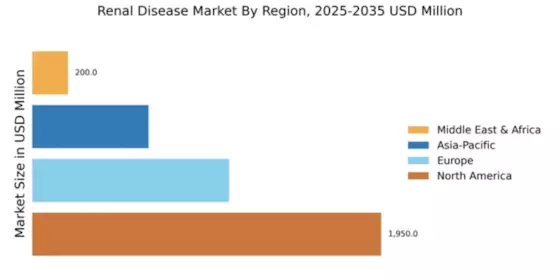
North America is poised to maintain its leadership in the renal disease market, holding a significant share of 1950.0M in 2024. The region's growth is driven by increasing prevalence of chronic kidney diseases, advancements in dialysis technologies, and supportive healthcare policies. Regulatory frameworks are evolving to enhance patient access to innovative treatments, further propelling market demand. The competitive landscape is characterized by major players such as Fresenius Medical Care and DaVita Inc., which dominate the market with their extensive service networks and innovative product offerings. The U.S. remains the largest contributor, supported by a robust healthcare infrastructure and significant investments in renal research and development. This environment fosters continuous innovation, ensuring that North America remains at the forefront of renal disease management.

Europe : Emerging Market with Growth Potential

Europe's renal disease market is projected to grow significantly, with a market size of 1100.0M in 2024. Key growth drivers include an aging population, rising awareness of kidney health, and increasing healthcare expenditure. Regulatory initiatives aimed at improving patient outcomes and access to treatment are also pivotal in shaping the market landscape. Leading countries such as Germany, France, and the UK are at the forefront of this growth, supported by strong healthcare systems and innovative treatment options. Major players like Baxter International and Otsuka Pharmaceutical are actively expanding their presence in the region, enhancing competition and driving advancements in renal care. The European market is expected to witness increased collaboration between public and private sectors to address the growing burden of renal diseases.

Asia-Pacific : Rapidly Growing Healthcare Sector

The Asia-Pacific region is experiencing rapid growth in the renal disease market, with a market size of 650.0M in 2024. This growth is fueled by rising incidences of diabetes and hypertension, which are major risk factors for kidney diseases. Additionally, increasing healthcare investments and government initiatives aimed at enhancing renal care services are driving demand. Countries like Japan, China, and India are leading the charge, with significant contributions from local and international players. Companies such as Astellas Pharma and Keryx Biopharmaceuticals are expanding their operations in this region, focusing on innovative therapies and treatment options. The competitive landscape is evolving, with a growing emphasis on patient-centric care and technological advancements in renal disease management.

Middle East and Africa : Emerging Market with Challenges

The Middle East and Africa (MEA) region is gradually developing its renal disease market, currently valued at 200.0M in 2024. Key growth drivers include increasing awareness of kidney health, rising prevalence of chronic diseases, and improving healthcare infrastructure. However, challenges such as limited access to advanced treatments and healthcare disparities persist. Regulatory efforts are underway to enhance patient access to renal care. Countries like South Africa and the UAE are leading the market, supported by government initiatives aimed at improving healthcare services. The presence of key players is growing, with companies like Medtronic and Amgen expanding their footprint in the region. The competitive landscape is evolving, with a focus on partnerships and collaborations to address the unique challenges faced in renal disease management.

Key Players and Competitive Insights

The Renal Disease Market is characterized by a competitive landscape that is increasingly shaped by innovation, strategic partnerships, and a focus on patient-centric solutions. Key players such as Fresenius Medical Care (Germany), DaVita Inc. (US), and Baxter International Inc. (US) are at the forefront, each employing distinct strategies to enhance their market positioning. Fresenius Medical Care (Germany) emphasizes technological advancements in dialysis treatment, while DaVita Inc. (US) focuses on expanding its service offerings through strategic acquisitions and partnerships. Baxter International Inc. (US) is actively pursuing digital transformation initiatives to optimize patient care and operational efficiency. Collectively, these strategies contribute to a dynamic competitive environment, where innovation and service diversification are paramount.

In terms of business tactics, companies are increasingly localizing manufacturing and optimizing supply chains to enhance responsiveness to market demands. The competitive structure of the Renal Disease Market appears moderately fragmented, with several key players exerting substantial influence. This fragmentation allows for a variety of treatment options and innovations, fostering a competitive atmosphere that encourages continuous improvement and adaptation.

In November 2025, DaVita Inc. (US) announced a strategic partnership with a leading telehealth provider to enhance remote patient monitoring capabilities. This move is significant as it aligns with the growing trend towards digital health solutions, enabling more personalized care for patients with renal disease. By integrating telehealth services, DaVita Inc. (US) aims to improve patient outcomes and streamline care delivery, thereby reinforcing its competitive edge in the market.

In October 2025, Baxter International Inc. (US) launched a new line of home dialysis products designed to improve patient convenience and comfort. This product launch is crucial as it reflects Baxter's commitment to addressing the evolving needs of patients, particularly in the context of increasing demand for home-based therapies. By focusing on patient-centric innovations, Baxter International Inc. (US) positions itself as a leader in the home dialysis segment, potentially capturing a larger market share.

In September 2025, Fresenius Medical Care (Germany) expanded its global footprint by entering into a joint venture with a regional healthcare provider in Asia. This strategic move is indicative of Fresenius's intent to tap into emerging markets, where the prevalence of renal disease is rising. By establishing a presence in Asia, Fresenius Medical Care (Germany) not only diversifies its market reach but also enhances its ability to deliver localized solutions tailored to specific patient needs.

As of December 2025, current competitive trends in the Renal Disease Market are increasingly defined by digitalization, sustainability, and the integration of artificial intelligence (AI) into treatment protocols. Strategic alliances are playing a pivotal role in shaping the landscape, as companies collaborate to leverage complementary strengths. Looking ahead, competitive differentiation is likely to evolve from traditional price-based competition towards a focus on innovation, technology, and supply chain reliability. This shift underscores the importance of developing advanced treatment modalities and enhancing patient experiences as key drivers of success in the market.

Key Companies in the Renal Disease Market market include

Industry Developments

  • Q2 2024: Six kidney disease companies you should know about in 2024 The article highlights several biotech companies making advances in kidney disease, including product launches and clinical trial progress in chronic kidney disease therapeutics. Specific companies mentioned are actively developing new drugs and technologies for renal disease treatment.

Future Outlook

Renal Disease Market Future Outlook

The Renal Disease Market is projected to grow at a 9.72% CAGR from 2024 to 2035, driven by increasing prevalence, technological advancements, and enhanced treatment options.

New opportunities lie in:

  • Development of telehealth platforms for remote patient monitoring
  • Investment in AI-driven diagnostic tools for early detection
  • Expansion of home dialysis solutions to improve patient convenience

By 2035, the Renal Disease Market is expected to be robust, driven by innovation and increased patient access.

Market Segmentation

Renal Disease Market End User Outlook

  • Hospitals
  • Dialysis Centers
  • Home Care Settings
  • Pharmaceutical Companies

Renal Disease Market Disease Type Outlook

  • Chronic Kidney Disease
  • Acute Kidney Injury
  • End Stage Renal Disease
  • Polycystic Kidney Disease

Renal Disease Market Diagnosis Type Outlook

  • Blood Tests
  • Urine Tests
  • Imaging Tests
  • Biopsy

Renal Disease Market Treatment Type Outlook

  • Dialysis
  • Kidney Transplantation
  • Pharmacological Therapy
  • Nutritional Therapy

Renal Disease Market Stage of Disease Outlook

  • Early Stage
  • Moderate Stage
  • Advanced Stage
  • End Stage

Report Scope

MARKET SIZE 20243900.0(USD Million)
MARKET SIZE 20254279.09(USD Million)
MARKET SIZE 203510819.79(USD Million)
COMPOUND ANNUAL GROWTH RATE (CAGR)9.72% (2024 - 2035)
REPORT COVERAGERevenue Forecast, Competitive Landscape, Growth Factors, and Trends
BASE YEAR2024
Market Forecast Period2025 - 2035
Historical Data2019 - 2024
Market Forecast UnitsUSD Million
Key Companies ProfiledFresenius Medical Care (DE), DaVita Inc. (US), Baxter International Inc. (US), NantKwest Inc. (US), Medtronic plc (IE), Amgen Inc. (US), Keryx Biopharmaceuticals Inc. (US), Otsuka Pharmaceutical Co. Ltd. (JP), Astellas Pharma Inc. (JP)
Segments CoveredDisease Type, Treatment Type, End User, Diagnosis Type, Stage of Disease
Key Market OpportunitiesAdvancements in personalized medicine and telehealth enhance patient management in the Renal Disease Market.
Key Market DynamicsRising prevalence of renal diseases drives innovation in treatment options and enhances competitive dynamics among key players.
Countries CoveredNorth America, Europe, APAC, South America, MEA

Market Highlights

Author
Kinjoll Dey
Research Analyst Level I

He is an extremely curious individual currently working in Healthcare and Medical Devices Domain. Kinjoll is comfortably versed in data centric research backed by healthcare educational background. He leverages extensive data mining and analytics tools such as Primary and Secondary Research, Statistical Analysis, Machine Learning, Data Modelling. His key role also involves Technical Sales Support, Client Interaction and Project management within the Healthcare team. Lastly, he showcases extensive affinity towards learning new skills and remain fascinated in implementing them.

Leave a Comment

FAQs

What is the projected growth of the Renal Disease market?

The Renal Disease market is the expected increase in total market value of 10.82 USD billion over a defined forecast period 2025–2035. It is driven by factors such as demand trends, technological advances, regulatory changes, and geographic expansion.

What is the size of the Renal Disease market?

Renal Disease market size was valued at approximately 3.9 billion USD in 2024. This figure will reach 10.82 billion USD covering all regions (America, Europe, Asia, MEA and ROW), focusing its segments / services / distribution channels till 2035.

What is the CAGR of the Renal Disease market?

Renal Disease market is expected to grow at a CAGR of 9.72% between 2025 and 2035.

How much will the Renal Disease market be worth by 2035?

Renal Disease market is expected to be worth of 10.82 billion USD, reflecting growth driven by usage, technology and global demands by the end of 2035.

How will the Renal Disease market perform over the next 10 years?

Over the next 10 years the Renal Disease market is expected to shift from usd billion 3.9 to 10.82 billion USD, led by adoption of advanced tech, demographic trends, regulatory approvals, with potential headwinds from 2025 to 2035.

How Big is the US renal disease Market?

The US Renal Disease Market share is 35-40% during the forecast period of 2024 to 2035

Which region held the largest market share in the renal disease market?

North America held the largest market share in the renal disease market.

Download Free Sample

Kindly complete the form below to receive a free sample of this Report

Compare Licence

×
Features License Type
Single User Multiuser License Enterprise User
Price $4,950 $5,950 $7,250
Maximum User Access Limit 1 User Upto 10 Users Unrestricted Access Throughout the Organization
Free Customization
Direct Access to Analyst
Deliverable Format
Platform Access
Discount on Next Purchase 10% 15% 15%
Printable Versions