×
Request Free Sample ×

Kindly complete the form below to receive a free sample of this Report

* Please use a valid business email

Leading companies partner with us for data-driven Insights

clients tt-cursor
Hero Background

Retinal Implants Market

ID: MRFR/MED/5118-HCR
100 Pages
Rahul Gotadki
October 2025

Retinal Implants Market Research Report Information By Type (Argus II, Implantable Miniature Telescope, Retina Implant Alpha AMS) And By Region (North America, Europe, Asia-Pacific, And Rest Of The World) –Market Forecast Till 2035

Share:
Download PDF ×

We do not share your information with anyone. However, we may send you emails based on your report interest from time to time. You may contact us at any time to opt-out.

Retinal Implants Market Infographic
Purchase Options

Retinal Implants Market Summary

As per MRFR analysis, the Retinal Implants Market Size was estimated at 26.3 USD Billion in 2024. The Retinal Implants industry is projected to grow from 28.55 USD Billion in 2025 to 64.8 USD Billion by 2035, exhibiting a compound annual growth rate (CAGR) of 8.54 during the forecast period 2025 - 2035.

Key Market Trends & Highlights

The Retinal Implants Market is poised for substantial growth driven by technological advancements and increasing disease prevalence.

  • North America remains the largest market for retinal implants, driven by advanced healthcare infrastructure and high patient awareness.
  • The Asia-Pacific region is emerging as the fastest-growing market, fueled by rising healthcare investments and increasing prevalence of retinal diseases.
  • Retinal degeneration is the largest segment, while diabetic retinopathy is experiencing the fastest growth due to rising incidence rates.
  • Technological advancements and increasing prevalence of retinal diseases are key drivers propelling market expansion.

Market Size & Forecast

2024 Market Size 26.3 (USD Billion)
2035 Market Size 64.8 (USD Billion)
CAGR (2025 - 2035) 8.54%

Major Players

Second Sight Medical Products (US), Retina Implant AG (DE), Bionic Vision Technologies (AU), Pixium Vision (FR), Eyenuk (US), Nidek Co., Ltd. (JP), Abbott Laboratories (US), Alcon (CH)

Retinal Implants Market Trends

The Retinal Implants Market is currently experiencing a transformative phase, driven by advancements in technology and increasing prevalence of retinal diseases. Innovations in implant design and materials are enhancing the efficacy and safety of these devices, which are aimed at restoring vision for individuals suffering from conditions such as retinitis pigmentosa and age-related macular degeneration. Furthermore, the growing awareness of eye health and the rising geriatric population are contributing to the demand for retinal implants. As healthcare systems evolve, there is a noticeable shift towards personalized medicine, which may lead to tailored solutions for patients, thereby potentially improving outcomes. In addition, the Retinal Implants Market is witnessing a surge in research and development activities. Collaborations between academic institutions and industry players are fostering the creation of novel technologies that could redefine treatment paradigms. Regulatory bodies are also playing a crucial role in ensuring the safety and effectiveness of these devices, which may enhance consumer confidence. Overall, the market appears poised for growth, with a focus on innovation and patient-centric approaches that could reshape the landscape of vision restoration.

Technological Advancements

Recent innovations in retinal implant technology are enhancing device performance and patient outcomes. New materials and designs are being developed to improve biocompatibility and functionality, which may lead to better integration with the human eye.

Increasing Prevalence of Retinal Diseases

The rising incidence of retinal disorders is driving demand for effective treatment options. As more individuals are diagnosed with conditions like retinitis pigmentosa, the need for retinal implants is likely to grow, prompting further investment in this sector.

Focus on Personalized Medicine

There is a noticeable trend towards personalized approaches in the Retinal Implants Market. Tailoring treatments to individual patient needs may improve efficacy and satisfaction, indicating a shift in how ocular diseases are managed.

Retinal Implants Market Drivers

Market Growth Projections

The Global Retinal Implants Market Industry is projected to experience substantial growth over the next decade. With a market valuation of 26.3 USD Billion in 2024, it is anticipated to reach 64.8 USD Billion by 2035, reflecting a compound annual growth rate of 8.54% from 2025 to 2035. This growth trajectory suggests a robust demand for retinal implants driven by technological advancements, increasing prevalence of retinal disorders, and supportive government policies. The market's expansion is likely to attract investments and foster innovation, further enhancing the availability and effectiveness of retinal implant solutions.

Government Initiatives and Funding

Government initiatives aimed at enhancing healthcare infrastructure and funding for research in retinal disorders are crucial for the Global Retinal Implants Market Industry. Various countries are increasing their investments in healthcare technologies, which includes funding for retinal implant research and development. This support not only accelerates innovation but also ensures that effective treatments become accessible to a broader patient base. As a result, the market is projected to grow, with estimates indicating a rise to 64.8 USD Billion by 2035. Such initiatives are likely to create a conducive environment for the Global Retinal Implants Market Industry to flourish.

Growing Awareness and Patient Advocacy

The rise in awareness regarding retinal health and the role of retinal implants is significantly influencing the Global Retinal Implants Market Industry. Patient advocacy groups are increasingly educating the public about retinal disorders and available treatment options, leading to higher demand for retinal implants. This heightened awareness is likely to result in more patients seeking treatment, thereby driving market growth. As the Global Retinal Implants Market Industry evolves, the emphasis on patient education and advocacy will play a pivotal role in shaping future trends and adoption rates.

Rising Prevalence of Retinal Disorders

The increasing incidence of retinal disorders, such as age-related macular degeneration and diabetic retinopathy, is a primary driver for the Global Retinal Implants Market Industry. As populations age, the prevalence of these conditions is expected to rise significantly. For instance, it is estimated that by 2024, the market will reach a valuation of 26.3 USD Billion, reflecting the urgent need for innovative solutions. This growing patient population necessitates advanced treatment options, thereby propelling the demand for retinal implants. The Global Retinal Implants Market Industry is likely to expand as healthcare systems adapt to these rising challenges.

Technological Advancements in Implant Design

Technological innovations in retinal implant design are transforming the Global Retinal Implants Market Industry. Recent advancements, such as improved biocompatibility and enhanced visual acuity, are making these devices more effective and appealing to patients. For example, the development of wireless and miniaturized implants has shown promise in clinical trials, suggesting a potential shift in patient outcomes. As these technologies evolve, they may lead to increased adoption rates among healthcare providers and patients alike. The Global Retinal Implants Market Industry stands to benefit from these advancements, which could drive market growth significantly in the coming years.

Aging Population and Increased Healthcare Spending

The aging global population is a critical factor driving the Global Retinal Implants Market Industry. As individuals age, the likelihood of developing retinal disorders increases, leading to a higher demand for effective treatment options. Additionally, increased healthcare spending in many regions is facilitating access to advanced medical technologies, including retinal implants. This trend is expected to contribute to a compound annual growth rate of 8.54% from 2025 to 2035, indicating robust growth potential for the market. The Global Retinal Implants Market Industry is poised to capitalize on these demographic shifts, ensuring that innovative solutions are available to those in need.
Market Segment Insights

By Application: Retinal Degeneration (Largest) vs. Diabetic Retinopathy (Fastest-Growing)

Among the various applications of retinal implants, retinal degeneration holds the largest market share, driven by the increasing prevalence of age-related diseases. This segment is significantly bolstered by the aging population and advancements in implant technology. In contrast, diabetic retinopathy, while smaller in share, is emerging rapidly due to the rising incidence of diabetes globally. This growing prevalence among the population increases the demand for innovative treatment options available in this segment.

Retinal Degeneration (Dominant) vs. Diabetic Retinopathy (Emerging)

Retinal degeneration is the dominant application in the retinal implants market, characterized by a variety of hereditary and age-related conditions leading to vision impairment. The advancements in retinal implant technology are enabling better management and restoration of vision for patients suffering from these degenerative conditions. On the other hand, diabetic retinopathy is considered an emerging application, fueled by the increasing number of diabetes patients and the necessary interventions required to mitigate vision loss, which drives demand for effective retinal implants in this category.

By End Use: Hospitals (Largest) vs. Ophthalmology Clinics (Fastest-Growing)

In the Retinal Implants Market, hospitals hold the largest share, serving as primary treatment centers for patients with severe vision impairment. Their capacity to provide comprehensive care and access to advanced technology contributes to their dominant position in the market. The extensive infrastructure and professional expertise available in hospitals ensure consistent growth in the adoption of retinal implants. Ophthalmology clinics, however, are the fastest-growing segment, driven by increasing patient demand for specialized eye care solutions. These clinics often employ cutting-edge technology and offer personalized services, making retinal implants more accessible. They are witnessing a surge in outpatient procedures, which further supports their rapid growth trajectory in the market.

Hospitals (Dominant) vs. Ophthalmology Clinics (Emerging)

The dominant role of hospitals in the Retinal Implants Market is characterized by their extensive resources and specialist staff capable of handling complex surgical procedures. They serve as comprehensive treatment facilities, providing not only surgical interventions but also aftercare and rehabilitation services. In contrast, ophthalmology clinics, considered an emerging segment, focus on personalized care and targeted treatment plans. They often adopt the latest innovations in retinal implant technology, resulting in shorter recovery times and improved patient outcomes. As patient preferences shift towards specialized care, these clinics are likely to expand their offerings. Both segments play critical roles in the retinal implants landscape, with hospitals leading in resource availability and ophthalmology clinics thriving through technological adaptability.

By Technology: Electronic Retinal Implants (Largest) vs. Photovoltaic Retinal Implants (Fastest-Growing)

The retinal implants market is primarily divided among three categories: electronic retinal implants, photovoltaic retinal implants, and optogenetic retinal implants. Currently, electronic retinal implants hold the largest market share, thanks to their established technology and widespread acceptance in clinical settings. Meanwhile, photovoltaic retinal implants are rapidly gaining ground, representing the fastest-growing segment within this market due to their innovative approach to vision restoration and advancements in material science that enhance their functionality.

Electronic Retinal Implants: Dominant vs. Photovoltaic Retinal Implants: Emerging

Electronic retinal implants are the dominant technology in the retinal implants market, leveraging electronic stimulation to restore vision in individuals with retinal degenerative diseases. Their commercial availability and proven effectiveness make them the go-to option for many clinicians. Conversely, photovoltaic retinal implants are an emerging technology that harnesses light to stimulate retinal cells, showing promise for patients with less advanced stages of retinal disease. This innovative approach, along with ongoing improvements in photovoltaic materials, positions them as a leading contender in future market growth, appealing especially to those seeking cutting-edge solutions in vision restoration.

By Patient Demographics: Elderly Patients (Largest) vs. Diabetic Patients (Fastest-Growing)

The Retinal Implants Market exhibits a significant distribution of patients across various demographics, with elderly patients representing the largest segment. This demographic's susceptibility to age-related macular degeneration makes them a primary focus for retinal implant technology. Meanwhile, diabetic patients have emerged as a rapidly growing segment due to the rise in diabetes-related vision complications, making up a substantial percentage of new implant recipients. As the population ages and the prevalence of diabetes increases, the demand for retinal implants among these groups is expected to rise. Advances in technology are making implants more accessible, especially for elderly patients who are typically more vulnerable to retinal diseases. The awareness campaigns targeted at diabetic communities further drive growth in this segment, as awareness of diabetic retinopathy increases among patients and healthcare providers alike.

Elderly Patients (Dominant) vs. Diabetic Patients (Emerging)

Elderly patients represent the dominant demographic in the retinal implants market due to their higher incidence of age-related conditions that lead to vision impairment. They tend to have a greater need for retinal implants, leading to increased investment from manufacturers focused on developing technologies to cater to this group. In contrast, diabetic patients are an emerging demographic, driven by the increasing rates of diabetes and the associated risk of diabetic retinopathy. This segment is characterized by the potential for rapid growth as healthcare providers and patients seek innovative solutions to manage vision loss effectively. The market is witnessing a shift, with companies focusing on creating targeted devices that address the unique needs of these patients.

Get more detailed insights about Retinal Implants Market

Regional Insights

North America : Market Leader in Innovation

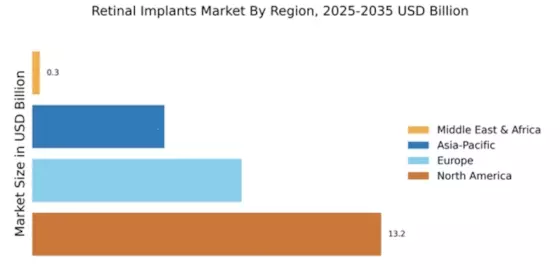
North America continues to lead the retinal implants market, holding a significant share of 13.15% in 2024. The region's growth is driven by advanced healthcare infrastructure, increasing prevalence of retinal diseases, and strong investment in R&D. Regulatory support from agencies like the FDA has accelerated the approval of innovative devices, enhancing market accessibility. The rising demand for minimally invasive surgical options further propels market expansion. The competitive landscape in North America is robust, featuring key players such as Second Sight Medical Products, Eyenuk, and Abbott Laboratories. The U.S. is the primary market, benefiting from a high concentration of healthcare facilities and a growing aging population. Collaborations between technology firms and healthcare providers are fostering innovation, ensuring that North America remains at the forefront of retinal implant advancements.

Europe : Emerging Market with Potential

Europe's retinal implants market is valued at €7.89 million, reflecting a growing interest in advanced ocular solutions. The region benefits from a well-established healthcare system and increasing awareness of retinal disorders. Regulatory frameworks, such as the EU Medical Device Regulation, are facilitating the introduction of innovative products, thereby enhancing market growth. The demand for effective treatments is further fueled by an aging population and rising healthcare expenditure across member states. Leading countries in Europe include Germany, France, and the UK, where companies like Retina Implant AG and Pixium Vision are making significant strides. The competitive landscape is characterized by a mix of established firms and emerging startups, fostering innovation. The European market is poised for growth, driven by technological advancements and strategic partnerships aimed at improving patient outcomes. "The European market is witnessing a surge in innovative retinal solutions, driven by regulatory support and technological advancements."

Asia-Pacific : Rapidly Growing Market

The Asia-Pacific retinal implants market, valued at $4.98 million, is experiencing rapid growth due to increasing healthcare investments and rising awareness of eye health. Countries like Japan and Australia are leading the charge, supported by government initiatives aimed at improving healthcare access. The region's growth is also driven by a rising prevalence of retinal diseases and a growing elderly population, which is increasing the demand for advanced treatment options. In this competitive landscape, companies such as Bionic Vision Technologies and Nidek Co., Ltd. are key players, focusing on innovative solutions tailored to local needs. The presence of a diverse range of manufacturers is fostering healthy competition, while collaborations with healthcare providers are enhancing market penetration. As the region continues to develop, the demand for retinal implants is expected to rise significantly, driven by technological advancements and improved healthcare infrastructure.

Middle East and Africa : Emerging Market Opportunities

The Middle East and Africa (MEA) retinal implants market is valued at $0.28 million, reflecting its nascent stage but significant potential for growth. Factors such as increasing healthcare investments and a rising prevalence of eye disorders are driving demand for retinal implants. Governments in the region are focusing on enhancing healthcare infrastructure, which is expected to facilitate market expansion. The growing awareness of eye health among the population is also contributing to this upward trend. Countries like South Africa and the UAE are emerging as key players in the MEA market, with local firms and international companies exploring opportunities. The competitive landscape is gradually evolving, with an increasing number of partnerships and collaborations aimed at improving access to advanced eye care solutions. As healthcare systems in the region continue to develop, the retinal implants market is poised for significant growth in the coming years.

Key Players and Competitive Insights

The Retinal Implants Market is currently characterized by a dynamic competitive landscape, driven by technological advancements and increasing prevalence of retinal diseases. Key players are focusing on innovation and strategic partnerships to enhance their product offerings and market reach. For instance, Second Sight Medical Products (US) has been actively pursuing collaborations with research institutions to develop next-generation retinal implants, which may significantly improve patient outcomes. Similarly, Retina Implant AG (DE) is concentrating on expanding its product portfolio through strategic acquisitions, thereby positioning itself as a leader in the market. These strategies collectively contribute to a competitive environment that is increasingly focused on technological differentiation and patient-centric solutions.

In terms of business tactics, companies are localizing manufacturing to reduce costs and optimize supply chains, which appears to be a prevalent strategy among major players. The market structure is moderately fragmented, with several companies vying for market share. This fragmentation allows for a diverse range of products and innovations, although it also intensifies competition among key players. The collective influence of these companies shapes the market dynamics, as they strive to establish themselves as leaders through unique value propositions.

In November 2025, Bionic Vision Technologies (AU) announced a breakthrough in its retinal implant technology, which reportedly enhances visual acuity for patients with degenerative retinal diseases. This development is significant as it not only showcases the company's commitment to innovation but also positions it to capture a larger share of the market by addressing unmet medical needs. The potential for improved patient outcomes could lead to increased adoption of their products, thereby strengthening their competitive stance.

In October 2025, Pixium Vision (FR) launched a new clinical trial for its retinal implant system, aimed at evaluating its long-term efficacy and safety. This strategic move is crucial as it underscores the company's focus on rigorous clinical validation, which may enhance its credibility and attract investment. The results of this trial could potentially influence market perceptions and drive future sales, making it a pivotal moment for the company.

In September 2025, Abbott Laboratories (US) entered into a partnership with a leading technology firm to integrate AI capabilities into its retinal implant systems. This collaboration is indicative of a broader trend towards digitalization within the market, as companies seek to leverage advanced technologies to improve product functionality and patient experience. The integration of AI could lead to more personalized treatment options, thereby enhancing competitive differentiation.

As of December 2025, current trends in the Retinal Implants Market are increasingly defined by digitalization, sustainability, and the integration of AI technologies. Strategic alliances are playing a crucial role in shaping the competitive landscape, as companies collaborate to enhance their technological capabilities and market presence. Looking ahead, it is likely that competitive differentiation will evolve from traditional price-based competition to a focus on innovation, advanced technology, and supply chain reliability. This shift may redefine how companies position themselves in the market, emphasizing the importance of delivering superior value through cutting-edge solutions.

Key Companies in the Retinal Implants Market market include

Industry Developments

June 2020 LambdaVision, an innovative biotechnology company developing a novel treatment to help patients regain sight, has been selected by NASA for a Small Business Innovation Research (SBIR) Phase II award worth $750,000 over two years. With the continued support of NASA, LambdaVision will advance the development of its protein-based artificial retina. This award complements a recent $5M NASA Commercialization Award received by LambdaVision and its partner, Space Tango, for continued work on the International Space Station (ISS) to establish pilot-scale production systems for artificial retina and other future biomedical applications.

July 2022 Nidek Co., Ltd. acquired 90% shares of Nidek Medical S.R.L., a sales and service company of ophthalmic devices. This acquisition will help the company to increase the success between Nidek Medical and Nidek.

Future Outlook

Retinal Implants Market Future Outlook

The Retinal Implants Market is projected to grow at an 8.54% CAGR from 2024 to 2035, driven by technological advancements, increasing prevalence of retinal diseases, and rising healthcare investments.

New opportunities lie in:

  • Development of advanced biocompatible materials for implants
  • Expansion into emerging markets with tailored pricing strategies
  • Integration of AI for personalized patient monitoring solutions

By 2035, the Retinal Implants Market is expected to achieve substantial growth and innovation.

Market Segmentation

Retinal Implants Market End Use Outlook

  • Hospitals
  • Ophthalmology Clinics
  • Research Institutions

Retinal Implants Market Technology Outlook

  • Electronic Retinal Implants
  • Photovoltaic Retinal Implants
  • Optogenetic Retinal Implants

Retinal Implants Market Application Outlook

  • Retinal Degeneration
  • Retinal Detachment
  • Diabetic Retinopathy
  • Age-related Macular Degeneration

Retinal Implants Market Patient Demographics Outlook

  • Elderly Patients
  • Diabetic Patients
  • Patients with Genetic Disorders

Report Scope

MARKET SIZE 202426.3(USD Billion)
MARKET SIZE 202528.55(USD Billion)
MARKET SIZE 203564.8(USD Billion)
COMPOUND ANNUAL GROWTH RATE (CAGR)8.54% (2024 - 2035)
REPORT COVERAGERevenue Forecast, Competitive Landscape, Growth Factors, and Trends
BASE YEAR2024
Market Forecast Period2025 - 2035
Historical Data2019 - 2024
Market Forecast UnitsUSD Billion
Key Companies ProfiledSecond Sight Medical Products (US), Retina Implant AG (DE), Bionic Vision Technologies (AU), Pixium Vision (FR), Eyenuk (US), Nidek Co., Ltd. (JP), Abbott Laboratories (US), Alcon (CH)
Segments CoveredApplication, End Use, Technology, Patient Demographics
Key Market OpportunitiesAdvancements in biocompatible materials enhance performance and patient acceptance in the Retinal Implants Market.
Key Market DynamicsTechnological advancements and regulatory changes drive innovation and competition in the retinal implants market.
Countries CoveredNorth America, Europe, APAC, South America, MEA

Market Highlights

Author
Rahul Gotadki
Assistant Manager

He holds an experience of about 7+ years in Market Research and Business Consulting, working under the spectrum of Life Sciences and Healthcare domains. Rahul conceptualizes and implements a scalable business strategy and provides strategic leadership to the clients. His expertise lies in market estimation, competitive intelligence, pipeline analysis, customer assessment, etc. In addition to the above, his other responsibility includes strategic tracking of high growth markets & advising clients on the potential areas of focus they could direct their business initiatives

Leave a Comment

FAQs

What is the projected growth of the Retinal Implants market?

The Retinal Implants market is the expected increase in total market value of 64.8 USD billion over a defined forecast period 2025–2035. It is driven by factors such as demand trends, technological advances, regulatory changes, and geographic expansion.

What is the size of the Retinal Implants market?

Retinal Implants market size was valued at approximately 26.3 billion USD in 2024. This figure will reach 64.8 billion USD covering all regions (America, Europe, Asia, MEA and ROW), focusing its segments / services / distribution channels till 2035.

What is the CAGR of the Retinal Implants market?

Retinal Implants market is expected to grow at a CAGR of 8.54% between 2025 and 2035.

How much will the Retinal Implants market be worth by 2035?

Retinal Implants market is expected to be worth of 64.8 billion USD, reflecting growth driven by usage, technology and global demands by the end of 2035.

How will the Retinal Implants market perform over the next 10 years?

Over the next 10 years the Retinal Implants market is expected to shift from usd billion 26.3 to 64.8 billion USD, led by adoption of advanced tech, demographic trends, regulatory approvals, with potential headwinds from 2025 to 2035.

Download Free Sample

Kindly complete the form below to receive a free sample of this Report

Compare Licence

×
Features License Type
Single User Multiuser License Enterprise User
Price $4,950 $5,950 $7,250
Maximum User Access Limit 1 User Upto 10 Users Unrestricted Access Throughout the Organization
Free Customization
Direct Access to Analyst
Deliverable Format
Platform Access
Discount on Next Purchase 10% 15% 15%
Printable Versions