Rice Milling Machinery Market
Rice Milling Machinery Market Summary
As per Market Research Future analysis, the Rice Milling Machinery Market Size was estimated at 6.661 USD Billion in 2024. The Rice Milling Machinery industry is projected to grow from 6.916 USD Billion in 2025 to 10.07 USD Billion by 2035, exhibiting a compound annual growth rate (CAGR) of 3.83% during the forecast period 2025 - 2035
Key Market Trends & Highlights
The Rice Milling Machinery Market is poised for growth driven by technological advancements and sustainability initiatives.
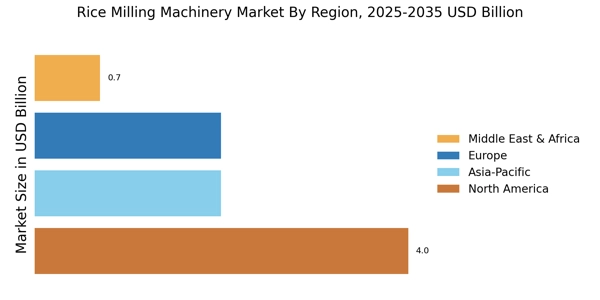
- Technological advancements are reshaping the Rice Milling Machinery Market, particularly in North America, which remains the largest market.
- The Asia-Pacific region is experiencing rapid growth, driven by the emergence of small-scale millers and increasing rice consumption.
- Rice Milling Machines dominate the market, while Rice Packaging Machines are emerging as the fastest-growing segment.
- Key market drivers include rising demand for rice products and government support for sustainable practices in rice milling.
Market Size & Forecast
| 2024 Market Size | 6.661 (USD Billion) |
| 2035 Market Size | 10.07 (USD Billion) |
| CAGR (2025 - 2035) | 3.83% |
Major Players
Satake Corporation (JP), Bühler AG (CH), Mitsubishi Corporation (JP), AGI (CA), Alvan Blanch Development Company Ltd (GB), Sukup Manufacturing Co. (US), Meyer Industries, Inc. (US), Lianyungang Huasheng Grain Machinery Co., Ltd. (CN)
Rice Milling Machinery Market Trends
The Rice Milling Machinery Market is currently experiencing a dynamic evolution, driven by various factors that influence production efficiency and quality. Technological advancements play a pivotal role, as manufacturers increasingly adopt automation and smart technologies to enhance operational capabilities. This shift not only improves the milling process but also reduces labor costs and increases output consistency. Furthermore, the growing demand for high-quality rice products is prompting producers to invest in advanced milling equipment that can meet stringent quality standards. As a result, the market is witnessing a surge in innovation, with companies striving to develop machinery that integrates cutting-edge features such as real-time monitoring and data analytics. In addition to technological progress, sustainability concerns are shaping the Rice Milling Machinery Market. Stakeholders are increasingly focused on eco-friendly practices, leading to the development of energy-efficient machines that minimize waste and reduce environmental impact. This trend aligns with global efforts to promote sustainable agriculture and food production. Moreover, the rise of small-scale rice millers in developing regions is contributing to market diversification, as these entities seek affordable yet efficient milling solutions. Overall, the Rice Milling Machinery Market appears poised for continued growth, driven by innovation, sustainability, and the evolving needs of rice producers worldwide.
Technological Advancements
The Rice Milling Machinery Market is witnessing a notable shift towards automation and smart technologies. Manufacturers are increasingly integrating advanced features that enhance efficiency and precision in milling processes. This trend not only streamlines operations but also ensures consistent product quality, catering to the rising consumer demand for superior rice.
Sustainability Initiatives
Sustainability is becoming a central theme within the Rice Milling Machinery Market. Stakeholders are prioritizing eco-friendly practices, leading to the development of energy-efficient machinery. This focus on reducing environmental impact aligns with global agricultural sustainability goals, promoting responsible production methods.
Emergence of Small-Scale Millers
The rise of small-scale rice millers in developing regions is diversifying the Rice Milling Machinery Market. These millers are seeking cost-effective and efficient milling solutions, which is prompting manufacturers to tailor their offerings. This trend reflects a growing recognition of the importance of supporting local producers in the global rice supply chain.
Rice Milling Machinery Market Drivers
Government Support and Policies
Government support and policies play a crucial role in shaping the Rice Milling Machinery Market. Various governments are implementing policies aimed at enhancing agricultural productivity and food security, which often includes support for milling operations. Subsidies for purchasing modern milling equipment and training programs for mill operators are examples of initiatives that can stimulate market growth. Additionally, regulations promoting food safety and quality standards are compelling millers to upgrade their machinery to comply with these requirements. As a result, the Rice Milling Machinery Market is likely to benefit from increased investments in technology and infrastructure, fostering a more competitive environment. This supportive framework may lead to a more robust market landscape, encouraging innovation and efficiency in rice milling operations.
Rising Demand for Rice Products
The rising demand for rice products is a significant driver in the Rice Milling Machinery Market. As rice remains a staple food for a large portion of the population, the need for efficient milling processes is paramount. Market data suggests that the global consumption of rice is projected to increase, leading to a corresponding rise in the demand for milling machinery. This trend is particularly evident in regions where rice consumption is on the rise due to population growth and changing dietary preferences. Consequently, manufacturers are likely to focus on producing high-capacity milling machines that can meet this growing demand. The interplay between consumer preferences and production capabilities is expected to shape the future of the Rice Milling Machinery Market.
Emergence of Small-Scale Millers
The emergence of small-scale millers is reshaping the Rice Milling Machinery Market. As local farmers and entrepreneurs seek to capitalize on the growing demand for rice, small-scale milling operations are becoming increasingly common. These millers often require affordable and efficient machinery that can cater to their specific needs. The rise of small-scale operations is also supported by government initiatives aimed at promoting local agriculture and food security. This trend is reflected in market data, which indicates a steady increase in the number of small milling units being established. As these millers contribute to local economies and provide fresh rice to communities, they are likely to drive demand for specialized rice milling machinery, thus influencing the overall market dynamics.
Sustainability Initiatives in Rice Milling
Sustainability initiatives are gaining traction within the Rice Milling Machinery Market, driven by increasing awareness of environmental issues. The demand for eco-friendly milling processes is prompting manufacturers to develop machinery that minimizes waste and energy consumption. For example, machines that utilize renewable energy sources or those designed to reduce water usage are becoming more popular. This shift not only meets regulatory requirements but also appeals to environmentally conscious consumers. According to recent data, the market for sustainable rice milling solutions is projected to grow as stakeholders prioritize sustainability in their operations. Consequently, this trend is likely to influence purchasing decisions, thereby shaping the future landscape of the Rice Milling Machinery Market.
Technological Advancements in Rice Milling Machinery
The Rice Milling Machinery Market is experiencing a notable transformation due to rapid technological advancements. Innovations such as automated milling systems, precision milling techniques, and enhanced quality control mechanisms are becoming increasingly prevalent. These advancements not only improve the efficiency of rice processing but also enhance the quality of the final product. For instance, the integration of IoT technology allows for real-time monitoring and data analysis, which can lead to optimized production processes. As a result, manufacturers are likely to invest in modern machinery to remain competitive, potentially increasing the market size significantly. The adoption of energy-efficient machines is also on the rise, aligning with global energy conservation efforts, which may further drive growth in the Rice Milling Machinery Market.
Market Segment Insights
By Type: Rice Milling Machines (Largest) vs. Rice Packaging Machines (Fastest-Growing)
The Rice Milling Machinery Market is experiencing significant diversity in its type segment, with Rice Milling Machines capturing the largest market share due to their foundational role in rice processing. This category serves as the backbone of the rice production line, primarily focusing on high efficiency and quality. Other noteworthy segments include Rice Husking Machines and Rice Polishing Machines, which although smaller in market share, are vital for enhancing the quality and yield of the final product. Each segment plays a critical role in ensuring the overall efficiency of rice milling operations. Looking at growth trends, Rice Packaging Machines are emerging as the fastest-growing segment. This is propelled by the rising demand for packaging solutions that extend shelf life and improve the product's market presence. Moreover, technological advancements in automation and precision have led to increased investments in rice milling machinery, enhancing productivity and operational efficiency. Sustained population growth and the demand for rice in both emerging and developed markets are further driving the growth of various segments, particularly in the packaged form.
Rice Milling Machines (Dominant) vs. Rice Packaging Machines (Emerging)
Rice Milling Machines are a dominant force in the Rice Milling Machinery Market, characterized by their critical role in transforming paddy into milled rice. These machines encompass various functionalities, including hulling, milling, and polishing, and are essential in ensuring quality and consistency in rice output. Their established presence in traditional and modern rice processing facilities makes them indispensable. In contrast, Rice Packaging Machines represent an emerging segment that caters to the increasing trend of consumer packaged goods. These machines not only enhance packaging efficiency but also focus on sustainability and shelf life, adapting to modern retail requirements. As consumer preferences shift towards convenience and durability, Rice Packaging Machines are poised for rapid growth, representing a dynamic area of opportunity within the rice milling landscape.
By Capacity: Medium (Largest) vs. Small (Fastest-Growing)
In the Rice Milling Machinery Market, the capacity segment showcases a diverse distribution of machinery based on output. The medium capacity segment, which encompasses machines capable of processing 1 to 5 tons of rice per hour, holds the largest market share, driven by the increasing demand for medium-scale rice processing among mills and farmers. Conversely, the small capacity segment, representing machines processing less than 1 ton per hour, is emerging rapidly, particularly favored by small-scale farmers and cooperatives seeking efficient, affordable solutions for rice milling.
Capacity: Medium (Dominant) vs. Small (Emerging)
The medium capacity segment of rice milling machinery remains dominant due to its suitability for larger operational scales while still catering to the needs of small to mid-sized businesses. These machines offer a blend of efficiency and output, making them highly appealing as rice demands rise. In contrast, the small capacity segment is gaining traction as an emerging market, fueled by the growing preference for localized, small-scale milling options. These machines are designed for easy operation and cost-effectiveness, meeting the requirements of small farmers who want to increase their productivity without the financial burden of larger equipment.
By Power Source: Electric (Largest) vs. Hybrid (Fastest-Growing)
The power source segment in the rice milling machinery market is marked by distinct preferences among users. The electric power source holds a significant share of the market, being favored for its efficiency, ease of use, and lower operational costs. Conversely, hybrid solutions, incorporating both electric and diesel, are gaining momentum due to their flexibility and adaptability in various operational environments. Diesel-powered machines maintain a presence, particularly in regions with limited electric infrastructure, but their growth is overshadowed by the rising popularity of hybrid technology.
Electric (Dominant) vs. Diesel (Emerging)
Electric rice milling machinery is the dominant player in the power source segment due to its energy efficiency, lower maintenance costs, and accessibility. This segment appeals primarily to modernized milling operations seeking to minimize their environmental footprint. In contrast, diesel-powered models are emerging, especially in rural or off-grid areas where electricity supply is inconsistent, offering robust performance and durability in challenging environments. However, the shift towards eco-friendly milling solutions is pushing diesel systems to adapt or risk falling behind as the hybrid segment, which blends electric and diesel advantages, starts to capture more of the market share.
Regional Insights
North America : Technological Innovation Leader
The North American rice milling machinery market is driven by technological advancements and increasing demand for efficient processing solutions. The U.S. holds the largest market share at approximately 60%, followed by Canada at around 25%. Regulatory support for agricultural innovation and sustainability initiatives further catalyze market growth, encouraging investments in modern milling technologies. Key players like AGI and Sukup Manufacturing Co. dominate the landscape, focusing on innovative solutions tailored to local needs. The competitive environment is characterized by a mix of established companies and emerging startups, all striving to enhance productivity and reduce operational costs. The presence of major manufacturers ensures a robust supply chain, facilitating the growth of the rice milling sector in the region.
Europe : Sustainable Practices Emphasized
Europe's rice milling machinery market is characterized by a strong emphasis on sustainability and regulatory compliance. The region is witnessing a growing demand for eco-friendly milling solutions, with Germany and France leading the market, holding approximately 40% and 30% shares, respectively. EU regulations promoting sustainable agricultural practices are significant growth drivers, pushing manufacturers to innovate and adapt. Countries like Italy and Spain are also emerging as key players in the market, with a focus on enhancing milling efficiency and reducing waste. Major companies such as Bühler AG are at the forefront, leveraging advanced technologies to meet regulatory standards. The competitive landscape is marked by collaborations and partnerships aimed at developing sustainable solutions, ensuring the region remains a leader in rice milling technology.
Asia-Pacific : Emerging Market Potential
The Asia-Pacific region is witnessing rapid growth in the rice milling machinery market, driven by increasing rice consumption and modernization of agricultural practices. Countries like China and India dominate the market, accounting for approximately 50% and 30% of the share, respectively. Government initiatives aimed at enhancing food security and agricultural productivity are significant catalysts for market expansion. China's Lianyungang Huasheng Grain Machinery Co., Ltd. and Japan's Satake Corporation are key players, focusing on innovative milling technologies to meet rising demand. The competitive landscape is evolving, with local manufacturers gaining traction alongside established global players. Investments in research and development are crucial for maintaining competitiveness and addressing the unique needs of the region's diverse agricultural landscape.
Middle East and Africa : Resource-Rich Opportunities
The Middle East and Africa region is emerging as a significant market for rice milling machinery, driven by increasing agricultural investments and a growing population. Countries like Nigeria and South Africa are leading the market, holding approximately 35% and 25% shares, respectively. Government initiatives aimed at enhancing food production and self-sufficiency are key growth drivers in this region. The competitive landscape features a mix of local and international players, with companies like Alvan Blanch Development Company Ltd. making strides in the market. The presence of resource-rich countries provides opportunities for growth, as investments in modern milling technologies are prioritized to meet the rising demand for rice. The region's unique challenges also present opportunities for innovation and tailored solutions.
Key Players and Competitive Insights
Key Companies in the Rice Milling Machinery Market include
Industry Developments
The Rice Milling Machinery Market is projected to reach USD 8.677 billion by 2032, exhibiting a CAGR of 3.83% during the forecast period (2025-2034). The rising demand for rice and increasing urbanization are driving the growth of the market. The Asia-Pacific region is expected to dominate the market throughout the forecast period, owing to the presence of major rice-producing countries such as China, India, and Thailand.
Recent advancements in rice milling technology, such as the development of automated and sensor-based systems, are expected to drive the market growth. Additionally, the growing demand for fortified rice is anticipated to create lucrative opportunities for market players. The market is expected to witness increased adoption of energy-efficient and eco-friendly rice milling machinery, driven by the rising emphasis on sustainability.
Future Outlook
Rice Milling Machinery Market Future Outlook
The Rice Milling Machinery Market is projected to grow at 3.83% CAGR from 2025 to 2035, driven by technological advancements, increasing demand for rice, and automation in processing.
New opportunities lie in:
- Integration of IoT for real-time monitoring and maintenance solutions.
- Development of energy-efficient milling equipment to reduce operational costs.
- Expansion into emerging markets with tailored financing options for small-scale farmers.
By 2035, the market is expected to achieve robust growth, reflecting evolving industry demands and technological innovations.
Market Segmentation
Rice Milling Machinery Market Type Outlook
- Rice Milling Machines
- Rice Husking Machines
- Rice Polishing Machines
- Rice Grading Machines
- Rice Sorters
- Rice Packaging Machines
Rice Milling Machinery Market Capacity Outlook
- Small (less than 1 ton per hour)
- Medium (1-5 tons per hour)
- Large (over 5 tons per hour)
Rice Milling Machinery Market Power Source Outlook
- Electric
- Diesel
- Hybrid (electric and diesel)
Report Scope
| MARKET SIZE 2024 | 6.661(USD Billion) |
| MARKET SIZE 2025 | 6.916(USD Billion) |
| MARKET SIZE 2035 | 10.07(USD Billion) |
| COMPOUND ANNUAL GROWTH RATE (CAGR) | 3.83% (2025 - 2035) |
| REPORT COVERAGE | Revenue Forecast, Competitive Landscape, Growth Factors, and Trends |
| BASE YEAR | 2024 |
| Market Forecast Period | 2025 - 2035 |
| Historical Data | 2019 - 2024 |
| Market Forecast Units | USD Billion |
| Key Companies Profiled | Satake Corporation (JP), Bühler AG (CH), Mitsubishi Corporation (JP), AGI (CA), Alvan Blanch Development Company Ltd (GB), Sukup Manufacturing Co. (US), Meyer Industries, Inc. (US), Lianyungang Huasheng Grain Machinery Co., Ltd. (CN) |
| Segments Covered | Type, Capacity, Power Source, Regional |
| Key Market Opportunities | Integration of automation and smart technology enhances efficiency in the Rice Milling Machinery Market. |

| Key Market Dynamics | Technological advancements and increasing automation drive efficiency in the Rice Milling Machinery Market. |

| Countries Covered | North America, Europe, APAC, South America, MEA |
FAQs
What is the current valuation of the Rice Milling Machinery Market?
The Rice Milling Machinery Market was valued at 6.661 USD Billion in 2024.
What is the projected market size for the Rice Milling Machinery Market by 2035?
The market is projected to reach 10.07 USD Billion by 2035.
What is the expected CAGR for the Rice Milling Machinery Market during the forecast period?
The expected CAGR for the Rice Milling Machinery Market from 2025 to 2035 is 3.83%.
Which companies are considered key players in the Rice Milling Machinery Market?
Key players include Satake Corporation, Bühler AG, Mitsubishi Corporation, and others.
What are the main segments of the Rice Milling Machinery Market?
The main segments include Rice Milling Machines, Rice Husking Machines, and Rice Polishing Machines, among others.
How did the valuation of Rice Milling Machines change from 2024 to 2025?
The valuation of Rice Milling Machines increased from 1.5 USD Billion in 2024 to 2.3 USD Billion in 2025.
What is the market valuation for Rice Husking Machines in 2025?
The market valuation for Rice Husking Machines is expected to be 1.8 USD Billion in 2025.
What capacity segments are present in the Rice Milling Machinery Market?
Capacity segments include Small (less than 1 ton per hour), Medium (1-5 tons per hour), and Large (over 5 tons per hour).
What power sources are utilized in Rice Milling Machinery?
The market features Electric, Diesel, and Hybrid power sources for Rice Milling Machinery.
What is the projected valuation for Rice Packaging Machines in 2035?
The projected valuation for Rice Packaging Machines is expected to reach 0.9 USD Billion by 2035.
Kindly complete the form below to receive a free sample of this Report
Customer Stories
“This is really good guys. Excellent work on a tight deadline. I will continue to use you going forward and recommend you to others. Nice job”
“Thanks. It’s been a pleasure working with you, please use me as reference with any other Intel employees.”
“Thanks for sending the report it gives us a good global view of the Betaïne market.”
“Thank you, this will be very helpful for OQS.”
“We found the report very insightful! we found your research firm very helpful. I'm sending this email to secure our future business.”
“I am very pleased with how market segments have been defined in a relevant way for my purposes (such as "Portable Freezers & refrigerators" and "last-mile"). In general the report is well structured. Thanks very much for your efforts.”
“I have been reading the first document or the study, ,the Global HVAC and FP market report 2021 till 2026. Must say, good info! I have not gone in depth at all parts, but got a good indication of the data inside!”
“We got the report in time, we really thank you for your support in this process. I also thank to all of your team as they did a great job.”