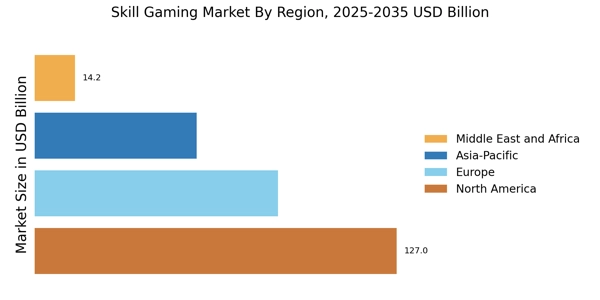
The Skill Gaming Market is currently experiencing a dynamic evolution, characterized by a growing interest in competitive gaming formats that emphasize player skill over chance. This shift is largely driven by advancements in technology, which enhance user experience and engagement. As more individuals seek interactive entertainment options, the demand for skill-based games appears to be on the rise. Furthermore, the integration of social features within these platforms fosters community building, allowing players to connect and compete with others globally. This interconnectedness not only enriches the gaming experience but also encourages sustained participation among users. This gaming market research highlights strong expansion in the skill gaming ecosystem, with rising gaming market size driven by digital adoption, competitive formats, and evolving player engagement models. The growing popularity of skill based gaming and online skill games reflects consumer preference for competitive, strategy-driven entertainment experiences. Advances in skill game technology — including AI-driven matchmaking and immersive platforms — are reshaping user interaction and gameplay sophistication. Emerging trends in new skill gaming formats are introducing hybrid gameplay mechanics that expand audience reach.
The gaming industry forecast suggests sustained growth in skill gaming, with total gaming market value projected to rise alongside innovation and platform diversification. Diverse games skill formats continue to attract varied player demographics, strengthening competitive depth across segments. Social integration is enhancing skills gaming environments by promoting collaboration, rankings, and shared competitive experiences. Leading platforms are refining skilled gaming ecosystems to deliver higher levels of fairness, engagement, and strategic depth. The skill of the game remains a defining factor in player retention, emphasizing strategy, timing, and competitive mastery.
Moreover, regulatory frameworks surrounding the Skill Gaming Market are gradually becoming more defined, which may provide a clearer operational landscape for developers and operators. As jurisdictions recognize the potential economic benefits of skill gaming, there is a likelihood of increased legitimacy and acceptance. This evolving regulatory environment could lead to more investment opportunities and innovation within the sector. Overall, the Skill Gaming Market seems poised for continued growth, driven by technological advancements, community engagement, and a supportive regulatory backdrop.
Technological Advancements
The Skill Gaming Market is witnessing rapid technological innovations that enhance gameplay experiences. Developments in virtual reality, augmented reality, and mobile gaming platforms are transforming how players interact with games. These advancements not only improve graphics and user interfaces but also create immersive environments that attract a broader audience.
Community Engagement
There is a noticeable trend towards fostering community within the Skill Gaming Market. Platforms are increasingly incorporating social features, such as leaderboards, chat functions, and multiplayer modes, which encourage interaction among players. This sense of community enhances user retention and promotes competitive spirit.
Regulatory Developments
The regulatory landscape for the Skill Gaming Market is evolving, with various jurisdictions beginning to establish clearer guidelines. This trend suggests a potential for increased legitimacy and acceptance of skill-based gaming, which may lead to more investment and innovation opportunities in the sector.