Smart Ring Main Unit Market (2026 - 2035)

Smart Ring Main Unit Market Research Report By Insulation Technology (Solid Insulated (SIS), Vacuum Insulated, Gas Insulated (SF₆), Air Insulated), By Voltage Rating (Up to 12 kV, 12–24 kV, Above 24 kV), By Application (Power Utilities, Industrial, Commercial & Infrastructure, Renewable Energy) and By Regional (North America, Europe, South America, Asia Pacific, Middle East and Africa) - Industry Forecast to 2035
ID: MRFR/EnP/29194-HCR
128 Pages
Priya Nagrale
Last Updated: July 28, 2026
Smart Ring Main Unit Market
Market Size
Forecast Period2026-2035
CAGR (2026-2035)7.8%
2025 Market SizeUSD 2.85 Billion / USD 6.04 Billion
Key Players
Schneider Electric
Siemens Energy
Hitachi Energy
Eaton
Lucy Electric
LS Electric
Opportunities
  • SF₆-Free Retrofit and Upgrade Programs
  • Emerging-Market Rural Electrification
  • Data Monetization through Condition-Based Maintenance

Smart Ring Main Unit Market Summary

The Smart Ring Main Unit Market reached an estimated USD 2.85 billion in 2025 and is projected to grow from USD 3.07 billion in 2026 to USD 6.04 billion by 2035, registering a CAGR of 7.8% during the forecast period. Two catalysts are accelerating this trajectory: the European Union's revised Clean Energy Package mandating smart-grid-ready medium-voltage equipment by 2030, and a combined USD 48 billion in global grid modernization capital expenditure committed between 2024 and 2028 by distribution system operators across OECD economies [1].

A generational technology shift is underway. Conventional air-insulated and oil-filled ring main units — many installed during the 1980s and 1990s — are being retired in favor of compact, digitally enabled units featuring embedded sensors, IEC 61850 communication interfaces, and vacuum or solid-dielectric insulation. The IEA estimates that approximately 40% of the world's medium-voltage distribution switchgear fleet will reach end-of-life by 2032, creating a replacement wave worth more than USD 12 billion across all switchgear categories [2].

Europe dominates the Smart Ring Main Unit Market with roughly 35% of global revenue, driven by aggressive decarbonization timelines and dense urban cable networks that favor ring topology. Asia-Pacific is the fastest-growing region at a projected CAGR of 9.5%, propelled by rapid electrification programs in India, Vietnam, and Indonesia. North America holds the second-largest share at approximately 25%, where aging infrastructure and rising distributed energy penetration are reshaping procurement priorities. The decade ahead will reward vendors that can deliver modular, software-upgradable platforms rather than static hardware boxes.


Key Report Takeaways

• By Insulation Technology

  • Solid-insulated switchgear (SIS) commands the largest share of the Smart Ring Main Unit Market at approximately 38% of 2025 revenue, reflecting utility preferences for SF₆-free, maintenance-light solutions.
  • Vacuum-insulated ring main units are the fastest-growing technology segment with a projected CAGR of 9.2% through 2035.
  • Gas-insulated (SF₆) units still represent USD 0.78 billion in 2025 revenue but face regulatory headwinds from the EU F-Gas Regulation phase-down.

• By Application Sector

  • Power utilities account for over 52% of global Smart Ring Main Unit Market demand, underpinned by distribution automation investments.
  • Renewable energy integration is projected to grow at a CAGR of 10.1%, driven by solar and wind farm collector substation buildouts.

• By Region

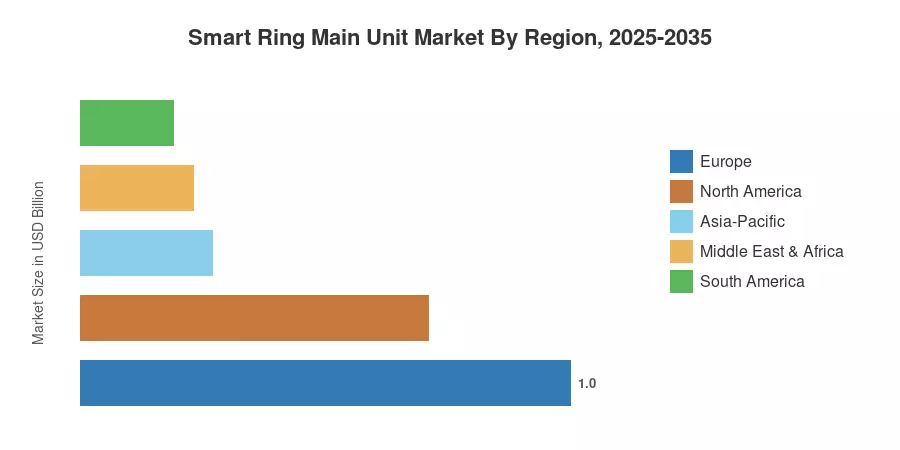
  • Europe leads with approximately USD 1.00 billion in 2025 market value.
  • India is forecast to register the highest country-level CAGR of 11.3% during 2026–2035.
  • The United States represents roughly 18% of the global Smart Ring Main Unit Market.


Market Size and Forecast (2021–2035)

Market sizing draws on a triangulated methodology combining top-down revenue estimation from annual reports of leading switchgear OEMs, bottom-up unit-shipment tracking from regional utility procurement databases, and demand-side modeling based on grid extension and refurbishment programs published by national regulators and the IEA [1][2].
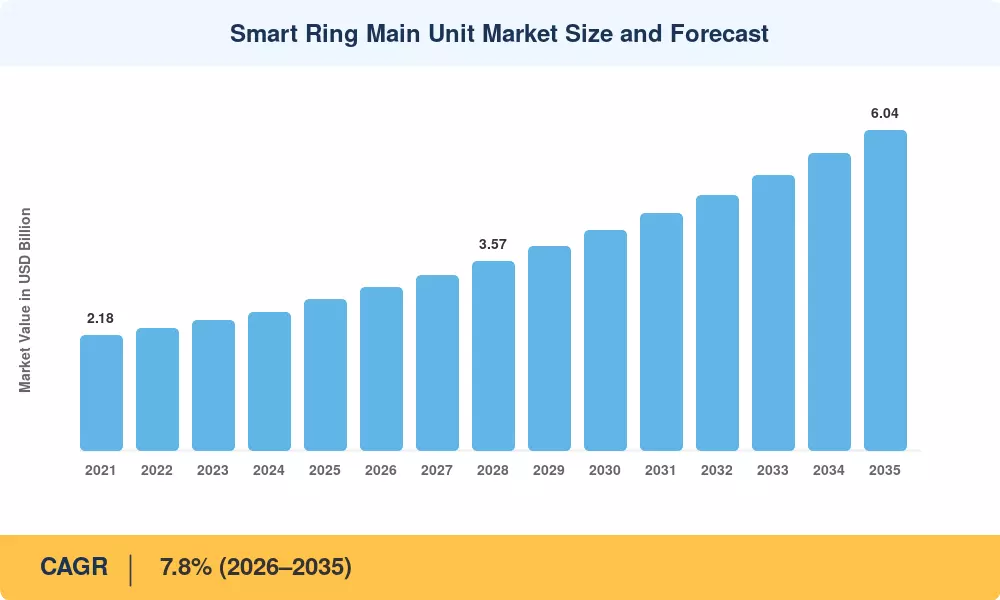
Smart Ring Main Unit Market Size and Forecast
Our Impact
Enabled $4.3B Revenue Impact for Fortune 500 and Leading Multinationals
Partnering with 2000+ Global Organizations Each Year
30K+ Citations by Top-Tier Firms in the Industry

Driver Impact Analysis

Driver ~% Impact on CAGR Geographic Relevance Impact Timeline
Grid modernization and distribution automation mandates 25% Global Medium-term (2–4 yr)
SF₆ phase-down regulations (EU F-Gas, EPA proposals) 20% Europe, North America Short-term (≤2 yr)
Renewable energy integration and DER proliferation 18% Asia-Pacific, Europe Long-term (≥4 yr)
Urban underground cable network expansion 15% Asia-Pacific, MEA Medium-term (2–4 yr)
Aging switchgear fleet replacement cycle 12% Europe, North America Long-term (≥4 yr)
Digital twin and predictive-maintenance adoption 6% Global Long-term (≥4 yr)
Rural electrification programs in emerging economies 4% Asia-Pacific, Africa Medium-term (2–4 yr)


Grid Modernization and Distribution Automation Mandates

Governments across the OECD are converting voluntary smart-grid roadmaps into binding procurement standards. The U.S. Department of Energy's Grid Resilience and Innovation Partnerships (GRIP) program allocated USD 10.5 billion in grants between 2023 and 2026, with medium-voltage automation equipment — including smart ring main units — explicitly listed as eligible expenditure categories [1]. Distribution network operators in the UK committed GBP 3.1 billion under the RIIO-ED2 price control specifically for secondary substation upgrades that replace legacy manual switchgear with remotely operable, IEC 61850-compliant units [10]. These mandates transform the Smart Ring Main Unit Market from a replacement-cycle business into a policy-driven growth segment.

SF₆ Phase-Down Regulations

From January 2026, the revised EU F-Gas Regulation (2024/573) prohibits the use of SF₆ in new medium-voltage switchgear rated below 24 kV. This prohibition will be extended to all voltage classes by 2030 [4]. This singular regulation has a significant impact on the annual installation of approximately 60,000 ring main units throughout Europe, compelling utilities to transition their procurement to vacuum or solid-insulated alternatives. Parallel legislation targeting SF₆ in electrical equipment has been introduced in numerous U.S. states, such as California and New York, which has exacerbated the global demand pivot within the Smart Ring Main Unit Market [] [11].


Renewable Energy Integration

Every new solar park above 5 MW and onshore wind farm above 10 MW typically requires two to six medium-voltage ring main units for collector-bus switching and cable protection. IRENA projects global renewable capacity additions of 550 GW annually through 2030, implying demand for roughly 180,000 additional ring main units over the forecast period [7]. The intermittent load profiles associated with renewables also favor smart units equipped with automated fault isolation and fast reclosing — features absent in conventional designs.

Urban Underground Cable Network Expansion

Rapid urbanization in Southeast Asia and the Middle East is driving a shift from overhead to underground distribution. Singapore's SP Group plans to underground 100% of its 22 kV network by 2030, while Saudi Arabia's SEC has budgeted SAR 9 billion for cable-network expansion under Vision 2030 [8]. Underground networks inherently rely on ring configurations for redundancy, making smart ring main units the default switching node.


Restraints Impact Analysis

Restraint impact percentages represent estimated negative drag on the CAGR trajectory and are directional rather than precisely additive.

Restraint ~% Negative Impact on CAGR Geographic Relevance Impact Timeline
High unit cost premium of smart vs. conventional RMUs −8% Emerging markets Short-term (≤2 yr)
Interoperability gaps across legacy SCADA platforms −5% Global Medium-term (2–4 yr)
Shortage of trained medium-voltage commissioning engineers −4% Asia-Pacific, Africa Long-term (≥4 yr)
Cybersecurity concerns for IEC 61850 connected devices −3% North America, Europe Medium-term (2–4 yr)
Extended lead times for vacuum interrupters and CT cores −2% Global Short-term (≤2 yr)


High Unit Cost Premium

List prices for a fully digitized smart ring main unit typically range from USD 18,000 to USD 45,000, with a 35–50% increase in cost compared to an equivalent conventional unit, depending on the voltage class and sensor suite [12]. This premium can delay adoption by three to five years for utilities in sub-Saharan Africa and certain regions of South Asia where per-connection capital budgets are less than USD 500. The Smart Ring Main Unit Market in low-income countries remains price-sensitive, despite the fact that concessional financing from multilateral development institutions has begun to close the gap.


Interoperability and Legacy SCADA Integration

Many distribution utilities still operate proprietary SCADA systems installed in the early 2000s. Integrating IEC 61850-enabled smart ring main units into these environments requires protocol conversion gateways, middleware licensing, and extensive factory acceptance testing — adding USD 3,000–8,000 per unit in integration costs [9]. Until utilities complete their control-center migrations, hybrid installations will temper full-scale smart-unit procurement.

Workforce Constraints

The global shortage of qualified medium-voltage commissioning engineers is acute. A recent source estimates that 30% of the switchgear engineering workforce in OECD countries will retire by 2030, while training pipelines produce replacements at only 60% of the attrition rate [13]. This bottleneck limits the pace at which utilities can deploy and commission new smart ring main units, particularly in rural electrification projects.


Smart Ring Main Unit Market Opportunities

SF₆-Free Retrofit and Upgrade Programs

Utilities holding large installed bases of SF₆-filled ring main units face regulatory deadlines to transition. Retrofit kits and drop-in-replacement programs — where a smart, solid-insulated module slides into an existing SF₆ enclosure footprint — represent a USD 1.2 billion addressable opportunity through 2032 [4].

Emerging-Market Rural Electrification

India's Revamped Distribution Sector Scheme (RDSS) earmarks INR 3.03 trillion for feeder-level automation, creating demand for over 120,000 smart ring main units by 2028 [5]. Similar programs in Nigeria (NESP Phase III) and Bangladesh (BPDB Grid Modernization) offer greenfield opportunities for vendors willing to localize manufacturing and offer financing packages.

Data Monetization through Condition-Based Maintenance

Smart ring main units generate continuous streams of partial-discharge, temperature, and load-current data. Vendors that package this telemetry into subscription-based asset-health analytics platforms can capture recurring software revenue estimated at 8–12% of hardware value annually [9]. This shift from one-time equipment sales to platform-based business models mirrors trends already visible in transformer monitoring.

Microgrid and Data-Center Edge Switching

Compact, fast-acting medium-voltage switching with seamless islanding capability is necessary for hyperscale data centers and campus microgrids. Smart ring main units with sub-cycle transfer capability are well-positioned to capture switching-node demand in this vertical, as the global data-center power infrastructure segment is expected to grow at a compound annual growth rate (CAGR) of 14% through 2030 [16].


Standardization of Digital Substation Architectures

IEC 61850 Edition 2.1 and the emerging IEC 62351 cybersecurity standard are converging to define a vendor-neutral digital substation blueprint. Early movers in the Smart Ring Main Unit Market that achieve native compliance — eliminating the need for protocol gateways — will secure specification advantages in large utility tenders.


Smart Ring Main Unit Market Future Outlook

AI-Driven Predictive Maintenance and Autonomous Switching

By 2030, embedded edge-AI processors in smart ring main units will enable autonomous fault prediction with 95%+ accuracy based on partial-discharge pattern recognition. The IEA's Digitalisation and Energy report projects that AI-enabled grid assets could reduce unplanned outage minutes by 35% across OECD distribution networks by 2033 [2]. For the Smart Ring Main Unit Market, this translates into a premium pricing tier for AI-ready hardware.

Platform Economics and Software-Defined Switchgear

The hardware-centric revenue model is shifting. Leading OEMs are introducing subscription-based firmware updates, remote diagnostics dashboards, and digital-twin simulation licenses. By 2032, software and data services could account for 15–20% of total Smart Ring Main Unit Market revenue, fundamentally altering competitive dynamics [9].

Electrification Supercycle and EV Charging Infrastructure

A recent source forecasts 730 million electric vehicles on the road globally by 2035 [20]. Each fast-charging hub typically connects through a 10–24 kV ring main unit, and smart variants with dynamic load management will be preferred. This vertical alone could add USD 0.4 billion in incremental demand to the Smart Ring Main Unit Market by the end of the forecast period.

ESG Reporting and SF₆ Scope 3 Disclosure

Asset owners are being compelled to declare SF₆ inventories as Scope 3 greenhouse-gas emissions due to the increasing scrutiny of corporate ESG. The Global Reporting Initiative's updated GRI 305 standard and the EU Corporate Sustainability Reporting Directive both mandate SF₆ disclosure [21]. In order to meet reporting targets, utilities and industrial end users will increasingly specify SF₆-free smart ring main units, which will provide a regulatory tailwind that exacerbates the direct impact of the F-Gas phase-out on the Smart Ring Main Unit Market.


Smart Ring Main Unit Market Segmentation

By Insulation Technology

Segment Key Metric Primary Demand Driver
Solid Insulated (SIS) ~38% share (2025) Zero-GWP; low maintenance; compact footprint
Vacuum Insulated CAGR 9.2% Regulatory SF₆ bans; high-performance interruption
Gas Insulated (SF₆) USD 0.78 B (2025) Legacy fleet; tropical-climate reliability preference
Air Insulated ~8% share (2025) Cost-sensitive rural deployments


Solid-insulated ring main units have emerged as the default specification in European and East Asian tenders. Their elimination of greenhouse-gas handling, combined with 30-year maintenance-free operation claims from manufacturers, aligns with utility total-cost-of-ownership models. Vacuum technology is gaining ground rapidly in the Smart Ring Main Unit Market, particularly for 24 kV applications where interrupting capacity requirements exceed SIS capabilities. Hybrid designs pairing vacuum interrupters with solid-insulated busbars are becoming the preferred architecture for new-build installations.

By Voltage Rating

Segment Key Metric Primary Demand Driver
Up to 12 kV ~48% share (2025) Urban secondary distribution; highest unit volume
12–24 kV CAGR 8.6% Industrial parks; renewable collector substations
Above 24 kV USD 0.22 B (2025) Heavy industry; transmission-distribution interface


The sub-12 kV class dominates unit volumes across the Smart Ring Main Unit Market because the majority of urban secondary distribution worldwide operates at 6.6 kV or 11 kV. The 12–24 kV band is growing fastest as utilities uprate networks to accommodate higher distributed generation penetration and reduce line losses across longer feeder runs.

By Application

Segment Key Metric Primary Demand Driver
Power Utilities ~52% share (2025) Distribution automation; reliability mandates
Industrial USD 0.46 B (2025) Factory electrification; on-site generation
Commercial & Infrastructure CAGR 8.1% Data centers; transit systems; smart buildings
Renewable Energy CAGR 10.1% Solar/wind collector bus switching


Utility procurement remains the backbone of the Smart Ring Main Unit Market, but commercial and infrastructure applications are converging toward utility-grade requirements. Data-center operators now specify smart ring main units with dual-source automatic transfer and real-time power-quality monitoring — features traditionally reserved for utility substations. The renewable energy segment's double-digit growth reflects the structural expansion of distributed generation worldwide.


Regional Market Share Analysis

Region Key Metric Primary Investment Themes
Europe ~35% global share (2025) SF₆ phase-out; underground cable densification; IEC 61850 mandates
North America ~25% global share (2025) Grid resilience; GRIP funding; wildfire-hardening programs
Asia-Pacific CAGR 9.5% (2026–2035) Rural electrification; renewable integration; urbanization
Middle East & Africa USD 0.23 B (2025) Vision 2030 programs; utility privatization; rural access
South America CAGR 6.8% (2026–2035) Mining electrification; grid concession renewals
Total USD 2.85 B (2025)

The Smart Ring Main Unit Market follows a clear regional hierarchy shaped by regulatory maturity, grid density, and capital availability.


Europe

Country Key Metric Key Driver
Germany ~28% of regional share Energiewende; DSO automation under BNetzA framework
United Kingdom CAGR 8.4% RIIO-ED2 capital allowances for smart substations
France ~18% of regional share Enedis Linky+ distribution upgrade program
Italy USD 0.09 B (2025) Enel Open Fiber co-deployment with MV automation
Rest of Europe ~22% of regional share Nordic utility digitalization; Iberian solar integration


European utilities have moved beyond pilot-stage smart ring main unit deployments. Germany's largest DSOs — Westnetz, Bayernwerk, and Stromnetz Berlin — collectively issued framework agreements covering 12,000 smart ring main units between 2023 and 2025, with all contracts requiring full IEC 61850 compliance and SF₆-free insulation [10].

North America

Country Key Metric Key Driver
United States ~72% of regional share GRIP grants; wildfire mitigation; DER integration
Canada CAGR 7.6% Hydro-Québec and BC Hydro grid renewal
Mexico USD 0.05 B (2025) CFE distribution modernization under PRODESEN


The U.S. Smart Ring Main Unit Market benefits from a convergence of federal funding and state-level resilience mandates. California's CPUC approved USD 1.7 billion in wildfire-hardening expenditure for 2024–2028, with underground switchgear upgrades constituting roughly 15% of that budget [17].

Asia-Pacific

Country Key Metric Key Driver
China ~40% of regional share State Grid and CSG 14th Five-Year Plan capex
India CAGR 11.3% RDSS feeder automation; smart city mission
Australia USD 0.06 B (2025) Bushfire resilience; rooftop solar DER management
Japan CAGR 7.2% Aging fleet; TEPCO/Kansai substation digitalization
Rest of APAC ~18% of regional share Vietnam, Indonesia, Philippines electrification


Asia-Pacific represents the highest-growth theater for the Smart Ring Main Unit Market. China's State Grid Corporation alone budgeted CNY 520 billion for distribution network upgrades in its 14th Five-Year Plan, specifying smart switchgear as a mandatory category for all new 10 kV ring network installations in Tier 1 and Tier 2 cities [8].

Middle East & Africa

Country Key Metric Key Driver
Saudi Arabia ~35% of regional share SEC Vision 2030 underground network build-out
UAE CAGR 8.9% DEWA and ADDC smart grid programs
South Africa USD 0.03 B (2025) Eskom unbundling; municipal grid refurbishment
Rest of MEA ~30% of regional share Nigeria NESP; Kenya Last Mile Connectivity


Gulf Cooperation Council utilities are among the most aggressive adopters. DEWA's Al Maktoum Smart Grid initiative requires all new secondary substations to incorporate smart ring main units with SCADA-ready communication from 2025 onward [18].

South America

Country Key Metric Key Driver
Brazil ~55% of regional share ANEEL distribution concession capex obligations
Chile CAGR 7.4% Mining electrification; solar integration in Atacama
Rest of South America USD 0.03 B (2025) Colombia, Peru grid extension programs


Brazil's distribution concession model creates a predictable capex cycle. Concession renewals in 2024–2026 for Enel Rio, CPFL, and Neoenergia include smart-grid KPIs that effectively mandate smart ring main unit adoption across urban feeders [19].


Smart Ring Main Unit Market By Region, 2025-2035

Competitive Benchmarking

The Smart Ring Main Unit Market exhibits moderate concentration. The top five players collectively hold an estimated 55–62% revenue share, corresponding to a Herfindahl-Hirschman Index (HHI) of approximately 900–1,100 — a moderately concentrated structure. Below the global leaders, a tier of regional specialists and emerging Asian manufacturers competes aggressively on price and localization.

Company Est. Revenue Share Range Key Offerings Strategic Positioning
Schneider Electric ~14–17% SM AirSeT; RM AirSeT (SF₆-free) SF₆-free leadership; EcoStruxure digital platform
Siemens Energy ~12–15% SIMOSEC; 8DJH compact RMU Integrated digital substation; MindSphere analytics
Hitachi Energy (ABB) ~10–13% SafeRing; SafePlus Solid-insulation pioneer; global service network
Eaton ~7–9% Xiria; Power Xpert Modular vacuum platform; North America focus
Lucy Electric ~5–7% Aegis+; Gridkey smart RMU UK/MEA stronghold; remote automation heritage
LS Electric ~4–6% Ring Main Unit series (SIS/vacuum) Korean domestic leader; APAC expansion
Alfanar Group ~3–5% Medium-voltage smart RMU range GCC manufacturing base; competitive pricing
Entec Electric & Electronic ~2–4% e-RMU platform Vietnam/ASEAN specialist
Toshiba Energy Systems ~2–3% 24 kV solid-insulated RMU Japan/APAC niche; high-reliability positioning
Larsen & Toubro ~2–3% Smart Ring Main Unit with SCADA integration India domestic champion; RDSS contractor


Recent News & Developments

  • Schneider Electric (March 2025): Launched the RM AirSeT 24 kV variant, completing its SF₆-free ring main unit portfolio across all voltage classes up to 40.5 kV. The release targets EU utilities preparing for the 2026 F-Gas deadline [22].
  • Siemens Energy (November 2024): Signed a five-year framework agreement with UK Power Networks for 8,000 digitally enabled 8DJH ring main units, valued at approximately GBP 120 million [23].
  • Hitachi Energy (August 2024): Opened a dedicated smart ring main unit manufacturing facility in Vadodara, India, with an annual capacity of 15,000 units to serve RDSS demand [24].
  • European Commission (June 2024): Published the final text of the revised F-Gas Regulation (2024/573), confirming the SF₆ ban in medium-voltage switchgear below 24 kV from January 2026 [4].


  • State Grid Corporation of China (July 2023): Issued updated procurement standards requiring all new 10 kV ring network installations in urban areas to include IEC 61850-compliant smart ring main units, affecting an estimated 50,000 units annually [8].


Smart Ring Main Unit Market Report Scope

Parameter Detail
Market Scope Global Smart Ring Main Unit Market, covering hardware, embedded software, and associated integration services
Study Period 2021–2035
CAGR 7.8% (2026–2035)
Market Size (2025 / 2035) USD 2.85 Billion / USD 6.04 Billion
Fastest Growing Segment Vacuum-insulated RMU (by technology); Renewable Energy (by application)
Companies Profiled 10 (Schneider Electric, Siemens Energy, Hitachi Energy, Eaton, Lucy Electric, LS Electric, Alfanar, Entec, Toshiba, Larsen & Toubro)
Valuation Currency USD (constant 2025 dollars)


FAQs

How does total cost of ownership for a smart ring main unit compare to a conventional unit over a 25-year lifecycle?
Smart units cost 35–50% more upfront but reduce lifecycle expenses by 20–30% through eliminated manual switching trips, lower outage penalties, and deferred maintenance. Payback typically occurs within seven to nine years for urban feeders with high fault frequency [12].
What cybersecurity certifications should procurement teams require for IEC 61850-enabled ring main units?
Specify IEC 62351 Part 6 for communication-layer encryption and IEC 62443 SL-2 for device-level hardening. These two standards together address authentication, access control, and encrypted GOOSE messaging [14].
Can existing SF₆ ring main unit enclosures be retrofitted with solid-insulated or vacuum modules?
Several OEMs offer drop-in retrofit modules matching legacy footprints. Retrofit feasibility depends on busbar geometry and cable-box compatibility, so a site survey is essential before specifying [22].
What differentiates a smart ring main unit from a conventional motorized unit with remote control?
Smart units integrate embedded sensors, local processing, and IEC 61850 communication natively. Motorized units only add remote actuation without onboard analytics or protocol-level interoperability [6].
How are utilities financing large-scale smart ring main unit deployments in capital-constrained markets?
Multilateral development banks and export credit agencies fund up to 80% of smart-grid equipment costs through concessional loans. India's RDSS uses a 60:40 central-state co-funding model [5].
What role do digital twins play in smart ring main unit lifecycle management?
Digital twins simulate thermal stress, contact wear, and insulation aging in real time. They enable condition-based maintenance scheduling that extends overhaul intervals by 40–60% compared to time-based protocols [9].
Are there emerging standards beyond IEC 61850 that will reshape smart ring main unit specifications?
IEC 61869 for digital instrument transformers and IEC 62351 for cybersecurity are converging into a unified digital substation framework. Vendors achieving native compliance will bypass costly protocol-gateway installations [9].    
Author
Author
Author Profile
Priya Nagrale LinkedIn
Senior Research Analyst
With an experience of over five years in market research industry (Chemicals & Materials domain), I gather and analyze market data from diverse sources to produce results, which are then presented back to a client. Also, provide recommendations based on the findings. As a Senior Research Analyst, I perform quality checks (QC) for market estimations, QC for reports, and handle queries and work extensively on client customizations. Also, handle the responsibilities of client proposals, report planning, report finalization, and execution

Research Approach


Secondary Research

The secondary research process involved comprehensive analysis of regulatory databases, technical standards repositories, peer-reviewed engineering journals, and authoritative energy sector organizations. Key sources included the International Electrotechnical Commission (IEC), Institute of Electrical and Electronics Engineers (IEEE), CIGRE (International Council on Large Electric Systems), US Department of Energy (DOE), Federal Energy Regulatory Commission (FERC), European Committee for Electrotechnical Standardization (CENELEC), National Electrical Manufacturers Association (NEMA), International Energy Agency (IEA), US Energy Information Administration (EIA), Eurostat Energy Database, World Bank Energy Sector Data, UN International Renewable Energy Agency (IRENA) Global Energy Transformation, and national utility regulatory commission reports from key markets. These sources were used to collect smart grid deployment statistics, equipment certification data, grid modernization investment figures, technical safety studies, utility procurement trends, and competitive landscape analysis for low voltage, medium voltage, and high voltage ring main units across wired and wireless communication protocols.

Additional specialized sources included DNV GL Energy Standards, UL (Underwriters Laboratories) Certification Database, Schneider Electric's Energy Management Research Center, Siemens Smart Infrastructure White Papers, ABB Power Grids Technical Publications, Eaton Electrical Sector Reports, and IEEE Xplore Digital Library for smart grid automation research. Industry-specific data was gathered from GlobalData Power Intelligence Center, IHS Markit Energy & Natural Resources, and Wood Mackenzie Power & Renewables to validate market sizing assumptions and technology adoption curves.


Primary Research

Qualitative and quantitative insights were obtained by interviewing supply-side and demand-side stakeholders during the primary research process. The supply-side sources consisted of CEOs, VPs of Smart Grid Solutions, leaders of Product Development for Switchgear, regulatory affairs directors, and commercial directors from ring main unit manufacturers, switchgear OEMs, and automation technology providers. The demand-side sources included chief engineers, grid modernization directors, procurement managers from electric utilities, industrial facility managers, commercial building operators, and smart grid consultants from power distribution companies, renewable energy developers, and infrastructure engineering firms. Primary research verified market segmentation in power distribution, industrial, and commercial applications, verified product development roadmaps, and collected insights on grid automation adoption patterns, utility procurement cycles, and total cost of ownership dynamics.

Primary Respondent Breakdown:

By Designation: C-level Primaries (28%), Director Level (32%), Others (40%)

By Region: North America (32%), Europe (30%), Asia-Pacific (33%), Rest of World (5%)


Market Size Estimation

Global market valuation was derived through revenue mapping and installation volume analysis across utility-scale and industrial deployments. The methodology included:

Identification of 50+ key manufacturers across North America, Europe, Asia-Pacific, Latin America, and Middle East & Africa

Product mapping across low voltage (LV), medium voltage (MV), and high voltage (HV) ring main units with integrated smart monitoring capabilities

Technology segmentation across wired (fiber optic, Ethernet) and wireless (cellular, RF mesh, LoRaWAN) communication protocols

Analysis of reported and modeled annual revenues specific to smart ring main unit and intelligent switchgear portfolios

Coverage of manufacturers representing 75-80% of global market share in 2024

Extrapolation using bottom-up (installation volume × ASP by voltage class and region) and top-down (manufacturer revenue validation) approaches to derive segment-specific valuations for remote monitoring, automated fault detection, power quality monitoring, and cybersecurity features

Market sizing incorporated utility capital expenditure plans, industrial automation investment cycles, and commercial building electrification trends to forecast adoption rates through 2035.

Download Free Sample

Kindly complete the form below to receive a free sample of this Report

Download PDF ×

We do not share your information with anyone. However, we may send you emails based on your report interest from time to time. You may contact us at any time to opt-out.
















