Smart Toilet Market
Smart Toilet Market Summary
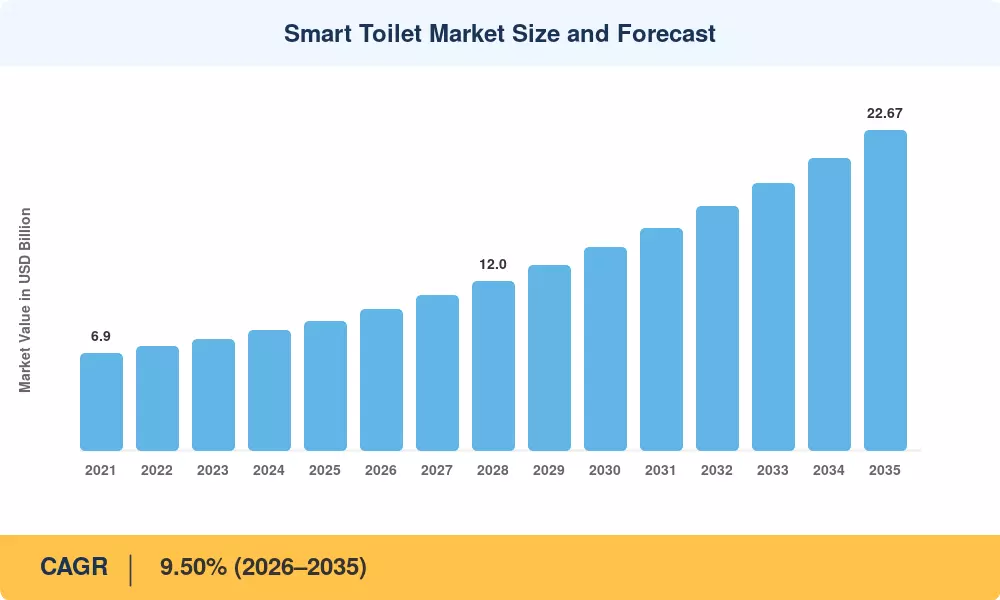
As per Market Research Future analysis, the Smart Toilet Market Size was estimated at 10.87 USD Billion in 2024. The Smart Toilet industry is projected to grow from 12.51 USD Billion in 2025 to 51.14 USD Billion by 2035, exhibiting a compound annual growth rate (CAGR) of 15.12% during the forecast period 2025 - 2035
Key Market Trends & Highlights
The Smart Toilet Market is experiencing robust growth driven by technological advancements and increasing health awareness.
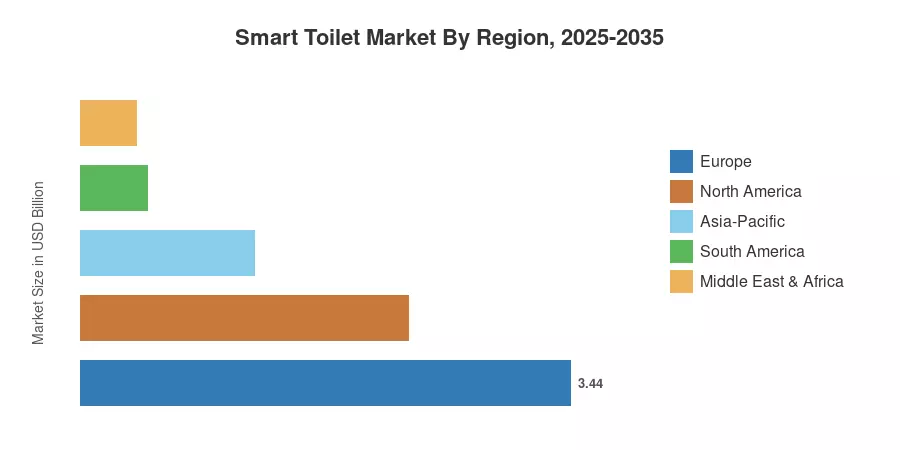
- North America remains the largest market for smart toilets, driven by high disposable incomes and advanced infrastructure.
- Asia-Pacific is the fastest-growing region, with rapid urbanization and a rising focus on health and hygiene.
- Wall hung toilets dominate the market, while one-piece toilets are emerging as the fastest-growing segment due to their space-saving designs.
- Technological advancements and health and wellness trends are key drivers propelling the smart toilet market forward.
Market Size & Forecast
| 2024 Market Size | 10.87 (USD Billion) |
| 2035 Market Size | 51.14 (USD Billion) |
| CAGR (2025 - 2035) | 15.12% |
Major Players
TOTO (JP), Kohler (US), American Standard (US), LIXIL (JP), Duravit (DE), Villeroy & Boch (DE), Roca (ES), Mitsubishi Electric (JP), Inax (JP)
Smart Toilet Market Trends
The Smart Toilet Market is currently experiencing a notable transformation, driven by advancements in technology and changing consumer preferences within the toilet industry. As individuals increasingly seek enhanced comfort and hygiene, intelligence toilet solutions are emerging as a viable option. These innovative products often incorporate features such as automatic flushing, heated seats, and integrated bidets, aligning with evolving expectations for future toilets. Furthermore, insights from consumers reports toilets continue to influence purchasing decisions, as buyers increasingly rely on product performance, hygiene efficiency, and water-saving capabilities. The integration of smart technology allows for personalized settings, improving satisfaction and positioning smart toilets as premium offerings within the toilet industry.
In addition to comfort, the Smart Toilet Market is also influenced by heightened awareness of sustainability and water conservation. Many modern smart toilets are designed to use less water compared to traditional models, supporting eco-conscious demand and contributing to the long-term growth of the smart toilet market.
This trend is likely to resonate with environmentally conscious consumers who prioritize sustainable living. As the market continues to evolve, it appears that the combination of technological innovation and a focus on sustainability will play a crucial role in shaping the future of the Smart Toilet Market.
Technological Integration
The Smart Toilet Market is witnessing a surge in the incorporation of advanced technologies. Features such as touchless controls, self-cleaning mechanisms, and connectivity with smart home systems are increasingly common in intelligence toilet designs, setting new benchmarks for future toilets.
Sustainability Focus
The Smart Toilet Market reflects increased awareness of hygiene, with antimicrobial surfaces and advanced cleaning systems becoming standard in intelligence toilet offerings. This shift highlights evolving consumer expectations within the toilet industry.
Health and Hygiene Awareness
The Smart Toilet Market is also reflecting an increased awareness of health and hygiene. Products that offer features like antimicrobial surfaces and advanced cleaning systems are gaining traction. This trend highlights a consumer shift towards prioritizing cleanliness and personal health in bathroom fixtures.
Smart Toilet Market Drivers
Rising Disposable Income
An increase in disposable income across various demographics is significantly impacting the Smart Toilet Market. As consumers have more financial flexibility, they are more inclined to invest in premium bathroom fixtures that enhance their living standards. This trend is particularly evident in emerging markets, where urbanization and economic growth are leading to higher spending on home improvement. Market analysis indicates that households with higher income levels are more likely to purchase smart toilets, which are perceived as luxury items. Consequently, the Smart Toilet Market is poised for growth as more consumers seek to upgrade their bathrooms with advanced features that offer both functionality and aesthetic appeal.
Health and Wellness Trends
The growing emphasis on health and wellness is influencing consumer choices in the Smart Toilet Market. As individuals become more health-conscious, there is an increasing demand for products that promote hygiene and comfort. Smart toilets equipped with self-cleaning features and advanced sanitation technologies are gaining popularity among consumers who prioritize cleanliness. Furthermore, the integration of health monitoring features, such as temperature control and water usage tracking, aligns with the broader wellness trend. Market data suggests that the health and wellness sector is expected to grow significantly, which will likely benefit the Smart Toilet Market as consumers seek products that contribute to their overall well-being.
Technological Advancements
The Smart Toilet Market is experiencing a surge in demand due to rapid technological advancements. Innovations such as integrated bidets, heated seats, and automatic flushing systems are becoming standard features. The incorporation of IoT technology allows for remote control and monitoring, enhancing user convenience. According to recent data, the market is projected to grow at a compound annual growth rate of approximately 12% over the next five years. This growth is driven by consumer preferences for high-tech solutions that offer comfort and efficiency. As manufacturers continue to innovate, the Smart Toilet Market is likely to see an influx of new products that cater to tech-savvy consumers, further propelling market expansion.
Environmental Sustainability
The Smart Toilet Market is witnessing a shift towards environmentally sustainable products. As awareness of environmental issues grows, consumers are increasingly seeking solutions that reduce water consumption and promote eco-friendly practices. Smart toilets that utilize advanced flushing technologies can significantly decrease water usage compared to traditional models. Reports indicate that smart toilets can save up to 30% more water, appealing to environmentally conscious consumers. This trend is likely to drive innovation in the Smart Toilet Market, as manufacturers strive to develop products that align with sustainability goals while maintaining performance and comfort.
Urbanization and Space Optimization
Urbanization is a key driver of the Smart Toilet Market, particularly in densely populated areas where space is at a premium. As more individuals move to urban centers, the demand for compact and multifunctional bathroom solutions is increasing. Smart toilets, which often combine multiple features into a single unit, are well-suited for small living spaces. This trend is reflected in market data, which shows a rising preference for space-saving designs among urban dwellers. Consequently, the Smart Toilet Market is likely to expand as manufacturers focus on creating innovative products that cater to the needs of urban consumers seeking efficiency and convenience in their bathrooms.
Market Segment Insights
By Type: Wall Hung Toilet (Largest) vs. One-Piece Toilet (Fastest-Growing)
In the Smart Toilet Market, the Wall Hung Toilet segment holds the largest market share, driven by its space-saving design and modern aesthetic appeal. Following closely are the Close-Coupled and Single Floor Standing Toilets, which cater to traditional preferences, while the One-Piece Toilet is rapidly gaining traction among consumers who value seamless design and easy cleaning. Lastly, the Others segment includes niche variants that collectively make a significant contribution to the diverse landscape of smart toilets. The growth trends in this segment are notably influenced by the rising demand for hygiene and cleanliness, alongside technological advancements. The One-Piece Toilet segment is emerging as the fastest-growing due to increasing consumer preference for integrated features such as bidets, heated seats, and automatic flushing. Wall Hung Toilets remain popular, especially in urban settings, as they optimize bathroom space, creating a more contemporary look, which appeals to both homeowners and designers alike.
Wall Hung Toilet (Dominant) vs. One-Piece Toilet (Emerging)
The Wall Hung Toilet segment is characterized by its superior space efficiency and elegant design, making it a popular choice in modern bathrooms. Its ability to create an illusion of space in smaller areas contributes to its dominance in the market. This type also allows for customizable installation heights, catering to various user preferences. On the other hand, the One-Piece Toilet segment represents an emerging trend, combining sleek aesthetics with advanced smart features. Consumers are increasingly drawn to these for their ease of installation and maintenance, as well as for integrated technologies that enhance comfort. The appeal of the One-Piece Toilet is expected to grow further as advancements in smart functionality continue to develop, positioning it as a key player in the evolving smart toilet market.
By Connectivity: Wi-Fi (Largest) vs. Bluetooth (Fastest-Growing)
In the Smart Toilet Market, the connectivity segment reveals a dynamic landscape where Wi-Fi leads as the major technology preferred by consumers. Wi-Fi-enabled smart toilets account for the largest share, driven by the convenience of remote operation and integration with smart home systems. This robust presence is attributed to consumer familiarity and the growing adoption of smart home devices that require reliable internet connections for seamless functionality. On the other hand, Bluetooth is emerging as the fastest-growing segment in the market. Its appeal lies in its ease of use and installation, allowing consumers to connect their smart toilets directly to mobile devices without the hassle of home network configurations. This trend aligns with the increasing demand for portable and user-friendly smart home innovations, thus propelling Bluetooth connectivity in the smart toilet market.
Connectivity: Wi-Fi (Dominant) vs. Bluetooth (Emerging)
Wi-Fi connectivity in smart toilets stands out as the dominant choice, primarily due to its ability to support extensive functionalities like app control, remote diagnostics, and integration with other IoT devices within a smart home ecosystem. Wi-Fi-enabled toilets can provide real-time feedback and updates, enhancing user experience and convenience. Conversely, Bluetooth represents an emerging opportunity in this market, offering a more straightforward and cost-effective solution for consumers seeking smart features without the need for a stable internet connection. This makes Bluetooth increasingly popular among tech-savvy users who prioritize flexibility and ease of access. The competition between these two connectivity options highlights the evolving preferences of modern consumers in the smart toilet segment.
By Usage: Residential (Largest) vs. Commercial (Fastest-Growing)
In the Smart Toilet Market, the residential segment holds the largest market share, primarily driven by increasing consumer awareness regarding health and hygiene. This segment is experiencing a shift as more homeowners look for innovative solutions that enhance comfort and convenience. On the other hand, the commercial segment, while smaller, is noted to be the fastest-growing segment, thanks to the rise of smart buildings and increasing demand from hotels and restaurants that prioritize modern facilities and customer satisfaction.
Usage: Residential (Dominant) vs. Commercial (Emerging)
The residential segment is characterized by its focus on innovation and integration of advanced features such as bidet functions, self-cleaning capabilities, and energy efficiency. It appeals to homeowners looking to enhance their lifestyle and improve sanitation. In contrast, the commercial segment is emerging rapidly, particularly in hospitality and public facilities, where the emphasis is on accommodating higher traffic and maintaining hygiene standards. Commercial smart toilets often incorporate touchless technology and enhanced durability to meet the rigorous demands of public use, marking a significant trend toward smart solutions in the industry.
By Distribution Channel: Online (Largest) vs. Offline (Fastest-Growing)
In the Smart Toilet Market, the distribution channels are primarily divided into online and offline. The online segment currently leads the market, benefiting from the increasing trend of online shopping and customer preferences for convenience. This channel allows manufacturers to reach a larger audience, and consumers are increasingly turning to digital platforms for their purchasing needs. Conversely, the offline segment is gaining traction as many consumers still prefer to experience products firsthand before making a purchase, making it a crucial player in the market.
Distribution Channels: Online (Dominant) vs. Offline (Emerging)
The online distribution channel for smart toilets is characterized by extensive reach and convenience, allowing customers to browse through a vast array of products and make informed decisions from the comfort of their homes. This segment's dominance is fueled by aggressive online marketing strategies and promotional offers that entice consumers. Meanwhile, the offline channel is marked by its hands-on approach, where customers can physically interact with products and gain personalized advice from staff, which many see as invaluable. Despite its emerging status, offline sales are witnessing robust growth due to a resurgence of in-store shopping experiences, aided by advancements like augmented reality to enhance consumer engagement.
Regional Insights
North America : Technological Adoption Leader
North America leads the smart toilet market, supported by innovation, regulatory backing, and strong consumer reliance on consumers reports toilets. The region holds approximately 35% of the global market share, making it the largest market. Regulatory support for water conservation and energy efficiency is further propelling this growth, with initiatives aimed at promoting sustainable bathroom technologies. The United States and Canada are the leading countries in this sector, with major players like Kohler and American Standard dominating the landscape. The competitive environment is characterized by innovation, with companies investing heavily in R&D to enhance product features. The presence of established brands and a growing trend towards smart home integration are key factors contributing to market expansion.
Europe : Sustainability Focused Market
Europe’s smart toilet adoption is driven by strict water regulations and sustainability initiatives shaping the regional toilet industry. The region accounts for approximately 30% of the global market share, making it the second-largest market. Government initiatives aimed at reducing water consumption and promoting eco-friendly products are key growth drivers, fostering innovation in smart toilet technologies. Leading countries such as Germany, France, and the UK are at the forefront of this market, with companies like Duravit and Villeroy & Boch leading the charge. The competitive landscape is marked by a focus on design and functionality, with manufacturers increasingly integrating smart features to meet consumer demands. The presence of established brands and a growing trend towards luxury bathroom solutions are further enhancing market dynamics.
Asia-Pacific : Emerging Market Potential
Asia-Pacific is a major growth engine for future toilets, with Japan setting benchmarks in intelligence toilet technology. The region holds approximately 25% of the global market share, with countries like Japan and China leading the charge. Government initiatives promoting smart home technologies and advanced sanitation solutions are significant catalysts for market growth, enhancing consumer interest in smart toilets. Japan is particularly notable for its advanced smart toilet technology, with companies like TOTO and LIXIL setting industry standards. The competitive landscape is characterized by a mix of local and international players, with a focus on innovation and affordability. As urban populations grow, the demand for smart toilets is expected to surge, making Asia-Pacific a vital region for future market expansion.
Middle East and Africa : Untapped Market Opportunities
Rising urbanization and sanitation investments are opening new opportunities in the toilet industry. The region currently holds about 10% of the global market share, with potential for significant growth as awareness of hygiene and sanitation improves. Government initiatives aimed at enhancing public health and sanitation infrastructure are key drivers of market development in this region.
Countries like the UAE and South Africa are leading the way, with a growing interest in smart home technologies. The competitive landscape is still developing, with both local and international brands vying for market share. As the region invests in modernizing its sanitation facilities, the demand for smart toilets is expected to rise, presenting a promising outlook for manufacturers and investors alike.
Key Players and Competitive Insights
Key Companies in the Smart Toilet Market include
Industry Developments
Recent product launches and acquisitions continue to strengthen innovation pipelines within the smart toilet market and smart toilet seat market.
January 2021: Kohler Co., an American manufacturing company of faucets, bathroom furniture, bathroom sinks, showering, toilets, and accessories, introduced four new products during virtual CES. The company announced several new additions to its smart home portfolio, focusing on personal well beings, such as stillness bath, innate intelligent toilet, touchless bathroom faucet collection, Kohler whole home water monitor, and Pro version. Two new products have emerged from collaborations with Phyn – Kohler Whole Home Water Monitor Powered by Phyn, a DIY unit and a Pro version with automatic shut off.
December 2020: Bemis Manufacturing Company, the world's largest toilet seat manufacturer, announced its acquisition of Bio Bidet, an established and successful bidet company that includes a bidet and smart toilet seats and bidet attachments.
Future Outlook
Smart Toilet Market Future Outlook
The Smart Toilet Market is projected to grow at a 15.12% CAGR from 2025 to 2035, driven by technological advancements, increasing hygiene awareness, and rising demand for smart home solutions.
New opportunities lie in:
- Integration of IoT for real-time monitoring and maintenance services. Development of eco-friendly models with water-saving technologies. Expansion into emerging markets with tailored product offerings.
By 2035, the Smart Toilet Market is expected to achieve substantial growth and innovation.
Market Segmentation
Smart Toilet Market Type Outlook
- Wall Hung Toilet
- Close-Coupled
- Single Floor Standing Toilet
- One-Piece Toilet
- Others
Smart Toilet Market Usage Outlook
- Residential
- Commercial
Smart Toilet Market Connectivity Outlook
- Wi-Fi
- Bluetooth
Smart Toilet Market Distribution Channel Outlook
- Online
- Offline
Report Scope
| MARKET SIZE 2024 | 10.87(USD Billion) |
| MARKET SIZE 2025 | 12.51(USD Billion) |
| MARKET SIZE 2035 | 51.14(USD Billion) |
| COMPOUND ANNUAL GROWTH RATE (CAGR) | 15.12% (2025 - 2035) |
| REPORT COVERAGE | Revenue Forecast, Competitive Landscape, Growth Factors, and Trends |
| BASE YEAR | 2024 |
| Market Forecast Period | 2025 - 2035 |
| Historical Data | 2019 - 2024 |
| Market Forecast Units | USD Billion |
| Key Companies Profiled | TOTO (JP), Kohler (US), American Standard (US), LIXIL (JP), Duravit (DE), Villeroy & Boch (DE), Roca (ES), Mitsubishi Electric (JP), Inax (JP) |
| Segments Covered | Type, Connectivity, Usage, Distribution Channel, Region |
| Key Market Opportunities | Integration of advanced hygiene technologies and smart home connectivity in the Smart Toilet Market. |
| Key Market Dynamics | Rising consumer demand for hygiene and convenience drives innovation and competition in the smart toilet market. |
| Countries Covered | North America, Europe, APAC, South America, MEA |
Market Highlights
FAQs
What is the current valuation of the Smart Toilet Market as of 2024?
The Smart Toilet Market was valued at 10.87 USD Billion in 2024.
What is the projected market size for the Smart Toilet Market by 2035?
The market is projected to reach 51.14 USD Billion by 2035.
What is the expected CAGR for the Smart Toilet Market during the forecast period 2025 - 2035?
The expected CAGR for the Smart Toilet Market during 2025 - 2035 is 15.12%.
Which segment of the Smart Toilet Market is expected to have the highest valuation by 2035?
The One-Piece Toilet segment is projected to reach 15.0 USD Billion by 2035.
How does the residential usage of smart toilets compare to commercial usage in 2035?
By 2035, residential usage is expected to reach 31.14 USD Billion, significantly higher than commercial usage at 20.0 USD Billion.
What are the leading connectivity options for smart toilets in terms of market valuation?
Wi-Fi connectivity is projected to reach 27.0 USD Billion, surpassing Bluetooth at 24.14 USD Billion by 2035.
Which distribution channel is anticipated to dominate the Smart Toilet Market by 2035?
The offline distribution channel is expected to dominate, reaching 36.14 USD Billion by 2035.
Who are the key players in the Smart Toilet Market?
Key players include TOTO, Kohler, American Standard, LIXIL, and Duravit, among others.
What is the projected valuation for the Wall Hung Toilet segment by 2035?
The Wall Hung Toilet segment is projected to reach 7.0 USD Billion by 2035.
How does the market performance of smart toilets vary by type?
By 2035, the One-Piece Toilet segment leads with 15.0 USD Billion, while the Others segment is expected to reach 8.14 USD Billion.
Research Approach
Secondary Research
The secondary research process involved comprehensive analysis of regulatory databases, industry standards repositories, IoT certification records, plumbing code publications, and authoritative construction & sanitation organizations. Key sources included the US Environmental Protection Agency (WaterSense Program), International Association of Plumbing and Mechanical Officials (IAPMO), American Society of Mechanical Engineers (ASME), Uniform Plumbing Code (UPC) standards, British Standards Institution (BSI), Japanese Industrial Standards (JIS), International Electrotechnical Commission (IEC), European Committee for Electrotechnical Standardization (CENELEC), Smart Home Consortium, Custom Electronic Design & Installation Association (CEDIA), National Association of Home Builders (NAHB), US Census Bureau Construction Statistics, Eurostat Construction & Housing Database, World Plumbing Council, National Kitchen & Bath Association (NKBA), International Energy Agency (IEA) data on water efficiency, Building Research Establishment (BRE), and national water conservation agencies from key markets.
These sources were employed to gather installation statistics, IoT compliance data, water efficiency certifications, building permit trends, and market landscape analysis for wall-hung, close-coupled, single-floor-standing, and one-piece toilet categories, as well as Wi-Fi and Bluetooth connectivity specifications.
Primary Research
Qualitative and quantitative insights were obtained by interviewing supply-side and demand-side stakeholders during the primary research process. The supply-side sources consist of CEOs, VPs of Product Development, Chief Technology Officers, IoT integration chiefs, regulatory compliance managers, and sales directors from ceramic sanitary ware manufacturers, smart toilet OEMs, sensor technology providers, and plumbing fixture distributors. Licensed engineers, contractors, smart home integrators, procurement managers from home improvement retailers, commercial real estate developers, hospitality facility managers, and residential developers comprised demand-side sources. Primary research verified market segmentation based on connectivity type and installation method, verified the timelines for the integration of the smart home ecosystem, and collected information on the dynamics of the water rebate program, consumer adoption barriers, and channel pricing strategies.
Primary Respondent Breakdown:
• By Designation: C-level Primaries (30%), Director Level (25%), Others (45%)
• By Region: North America (32%), Europe (30%), Asia-Pacific (34%), Rest of World (4%)
Market Size Estimation
Revenue mapping and installation volume analysis were implemented to determine global market valuation. The methodology comprised the following:
• Identification of over 55 key manufacturers in North America, Europe, Asia-Pacific, and Latin America
• Product mapping for wall-hung, close-coupled, single-piece, single-floor-standing, and other varieties of toilets
• Analysis of connectivity segmentation for smart commode systems that are Bluetooth-enabled and Wi-Fi-enabled
• Examination of the annual revenues that have been reported and modeled for smart commode portfolios
• In 2024, the coverage of manufacturers will account for 75-80% of the global market share.
• Segment-specific valuations across residential and commercial usage channels, as well as online and offline distribution networks, are derived through extrapolation using bottom-up (installation volume × ASP by country) and top-down (manufacturer revenue validation) approaches.
Kindly complete the form below to receive a free sample of this Report
Customer Stories
“This is really good guys. Excellent work on a tight deadline. I will continue to use you going forward and recommend you to others. Nice job”
“Thanks. It’s been a pleasure working with you, please use me as reference with any other Intel employees.”
“Thanks for sending the report it gives us a good global view of the Betaïne market.”
“Thank you, this will be very helpful for OQS.”
“We found the report very insightful! we found your research firm very helpful. I'm sending this email to secure our future business.”
“I am very pleased with how market segments have been defined in a relevant way for my purposes (such as "Portable Freezers & refrigerators" and "last-mile"). In general the report is well structured. Thanks very much for your efforts.”
“I have been reading the first document or the study, ,the Global HVAC and FP market report 2021 till 2026. Must say, good info! I have not gone in depth at all parts, but got a good indication of the data inside!”
“We got the report in time, we really thank you for your support in this process. I also thank to all of your team as they did a great job.”