Download Free Sample
Kindly complete the form below to receive a free sample of this Report
Sodium-Dependent Glucose Cotransporter 2 Market Research Report By Application (Diabetes Mellitus Type 2, Obesity Management, Cardiovascular Disease, Chronic Kidney Disease), By Drug Formulation (Oral Tablets, Injectable Solutions, Extended-Release Formulations), By Distribution Channel (Hospital Pharmacies, Retail Pharmacies, Online Pharmacies), By End User (Hospitals, Clinics, Homecare) and By Regional (North America, Europe, South America, Asia Pacific, Middle East and Africa) - Growth & Industry Forecast 2025 To 2035
As per Market Research Future analysis, the Sodium-Dependent Glucose Cotransporter 2 Market Size was estimated at 7.012 USD Billion in 2024. The Sodium-Dependent Glucose Cotransporter 2 industry is projected to grow from 8.035 USD Billion in 2025 to 31.37 USD Billion by 2035, exhibiting a compound annual growth rate (CAGR) of 14.59% during the forecast period 2025 - 2035
The Sodium-Dependent Glucose Cotransporter 2 Market is poised for substantial growth driven by technological advancements and increasing health awareness.
| 2024 Market Size | 7.012 (USD Billion) |
| 2035 Market Size | 31.37 (USD Billion) |
| CAGR (2025 - 2035) | 14.59% |
Boehringer Ingelheim (DE), AstraZeneca (GB), Merck & Co. (US), Janssen Pharmaceuticals (US), Sanofi (FR), Pfizer (US), Eli Lilly and Company (US), Novartis (CH), Bristol-Myers Squibb (US)
Our Impact
Enabled $4.3B Revenue Impact for Fortune 500 and Leading Multinationals
Partnering with 2000+ Global Organizations Each Year
30K+ Citations by Top-Tier Firms in the Industry
The Sodium-Dependent Glucose Cotransporter 2 Market is currently experiencing notable growth, driven by increasing awareness of diabetes management and the rising prevalence of metabolic disorders. This market appears to be influenced by advancements in pharmaceutical research, leading to the development of innovative therapies targeting glucose regulation. As healthcare systems evolve, there is a growing emphasis on personalized medicine, which may further propel the demand for sodium-dependent glucose cotransporter 2 inhibitors. Additionally, the integration of technology in healthcare, such as telemedicine and digital health solutions, seems to enhance patient access to treatment options, thereby expanding market reach. Moreover, the Sodium-Dependent Glucose Cotransporter 2 Market is likely to benefit from collaborations between pharmaceutical companies and research institutions. These partnerships may foster the discovery of novel compounds and improve existing therapies. Furthermore, regulatory support for new drug approvals could stimulate market dynamics, encouraging investment in research and development. As the landscape continues to evolve, stakeholders must remain vigilant to emerging trends and adapt strategies accordingly to capitalize on potential opportunities in this sector.
The Sodium-Dependent Glucose Cotransporter 2 Market is witnessing a shift towards personalized medicine, where treatments are tailored to individual patient profiles. This trend is likely to enhance treatment efficacy and patient adherence, as therapies become more aligned with specific metabolic needs.
The incorporation of technology into healthcare practices is transforming the Sodium-Dependent Glucose Cotransporter 2 Market. Digital health solutions and telemedicine are facilitating better patient engagement and access to therapies, potentially leading to improved health outcomes.
Collaborations between pharmaceutical companies and academic institutions are becoming increasingly prevalent in the Sodium-Dependent Glucose Cotransporter 2 Market. These partnerships may accelerate the development of innovative therapies and enhance the overall research landscape.
The upward trend in healthcare expenditure is a significant driver for the Sodium-Dependent Glucose Cotransporter 2 Market. As countries allocate more resources to healthcare, there is a corresponding increase in the availability and accessibility of advanced treatment options for diabetes. This financial commitment enables healthcare systems to invest in innovative therapies, including SGLT2 inhibitors, which are recognized for their effectiveness in managing diabetes and associated complications. The growing willingness of patients to invest in their health, coupled with insurance coverage for these medications, is likely to further stimulate market growth, as more individuals seek out effective diabetes management solutions.
Innovations in drug development are significantly influencing the Sodium-Dependent Glucose Cotransporter 2 Market. Recent advancements in pharmaceutical research have led to the introduction of novel SGLT2 inhibitors, which demonstrate enhanced efficacy and safety profiles. For instance, the development of combination therapies that integrate SGLT2 inhibitors with other antidiabetic agents is gaining traction. This trend is supported by clinical trials that reveal improved patient outcomes, thus attracting attention from healthcare professionals. The market is projected to expand as these advancements not only enhance treatment options but also address unmet medical needs, ultimately benefiting patients and healthcare systems alike.
The rising incidence of diabetes worldwide is a primary driver for the Sodium-Dependent Glucose Cotransporter 2 Market. As per recent statistics, the number of individuals diagnosed with diabetes has surged, with projections indicating that by 2030, approximately 578 million people will be affected. This alarming trend necessitates effective treatment options, thereby propelling the demand for sodium-dependent glucose cotransporter 2 inhibitors. These medications not only aid in glycemic control but also offer cardiovascular benefits, making them a preferred choice among healthcare providers. Consequently, the growing diabetic population is likely to stimulate market growth, as patients seek innovative therapies to manage their condition effectively.
Regulatory bodies are increasingly supportive of innovative therapies, which is positively impacting the Sodium-Dependent Glucose Cotransporter 2 Market. Recent approvals of new SGLT2 inhibitors by regulatory agencies have encouraged pharmaceutical companies to invest in research and development. This regulatory environment fosters innovation, allowing for the introduction of new products that meet the evolving needs of patients. Furthermore, streamlined approval processes for combination therapies are likely to enhance market dynamics, as they provide healthcare providers with a broader range of treatment options. This supportive regulatory landscape is anticipated to drive market expansion in the coming years.
There is an increasing awareness regarding the cardiovascular benefits associated with sodium-dependent glucose cotransporter 2 inhibitors, which is driving the Sodium-Dependent Glucose Cotransporter 2 Market. Research indicates that these medications not only assist in glycemic control but also reduce the risk of heart failure and other cardiovascular complications. As healthcare providers become more informed about these advantages, they are more likely to prescribe SGLT2 inhibitors to patients with diabetes, particularly those with existing cardiovascular conditions. This shift in prescribing patterns is expected to enhance market growth, as patients seek comprehensive treatment options that address both diabetes and cardiovascular health.
The Sodium-Dependent Glucose Cotransporter 2 Market exhibits significant segmentation across applications, with Diabetes Mellitus Type 2 leading in market share. This segment is characterized by a high prevalence of the disease, reflecting an ongoing demand for effective glucose management therapies. Conversely, Obesity Management, while currently smaller in market share, is rapidly gaining traction due to escalating global obesity rates, with increasing awareness surrounding its health impacts. As society becomes more health-conscious and lifestyle diseases become prevalent, drivers such as technological advancements in SGLT2 inhibitors and heightened regulatory support for new therapies are propelling growth. Additionally, the recognition of obesity as a critical risk factor for various comorbidities including cardiovascular disease and chronic kidney disease is creating renewed interest in obesity management strategies within the market, making it a key area of focus for future developments.
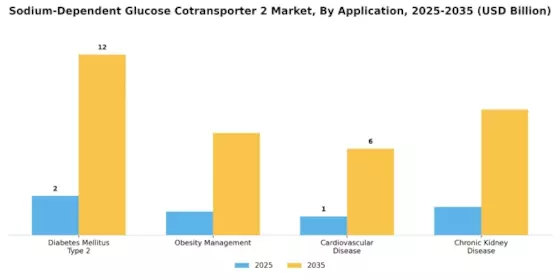
Diabetes Mellitus Type 2 (Dominant) vs. Cardiovascular Disease (Emerging)
The segment of Diabetes Mellitus Type 2 stands as the dominant application in the Sodium-Dependent Glucose Cotransporter 2 Market, driven by a high prevalence of the condition requiring ongoing treatment. Therapies targeting this application are well-established, leveraging both medical necessity and extensive clinical data to support their efficacy. On the other hand, Cardiovascular Disease is emerging as a noteworthy segment. Growing research indicates a strong link between diabetes, obesity, and cardiovascular conditions, prompting stakeholders to explore SGLT2 inhibitors as dual-purpose therapies. This convergence highlights a shift towards integrated treatment options for patients suffering from multiple comorbidities, thus enhancing the appeal of the SGLT2 class in the broader market.
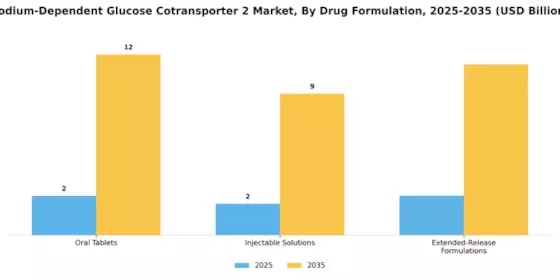
In the Sodium-Dependent Glucose Cotransporter 2 Market, the Oral Tablets segment holds the largest market share, owing to their widespread acceptance and ease of use among patients. This formulation has become a preferred choice for both healthcare providers and patients due to its convenience and efficacy. Meanwhile, the Injectable Solutions segment is gaining traction, particularly among patients who require rapid glucose control, leading to substantial growth in this area.
Drug Formulation: Oral Tablets (Dominant) vs. Injectable Solutions (Emerging)
The Oral Tablets segment stands out as the dominant player in the Sodium-Dependent Glucose Cotransporter 2 Market, characterized by its extensive utilization in chronic management of diabetes. Their stability and patient-friendly administration make them highly favorable. On the other hand, Injectable Solutions represent an emerging trend, primarily driven by the need for rapid glucose-lowering effects in acute situations. This formulation is evolving quickly, appealing to a subset of patients who experience fluctuations in blood glucose levels, thereby providing healthcare professionals with dynamic treatment options.
The Sodium-Dependent Glucose Cotransporter 2 Market showcases a diverse distribution channel landscape, where online pharmacies have emerged as the dominant force. Their extensive reach and data-driven marketing strategies have allowed them to capture a significant market share, appealing to tech-savvy consumers seeking convenience. Conversely, retail pharmacies continue to hold a substantial portion of the market, often preferred by patients for immediate access to medications and consultation. Growth trends within this segment reveal a pronounced shift towards online pharmacies, driven by an increase in e-commerce adoption and a growing demand for home delivery services. Additionally, the ongoing digital transformation within the healthcare sector promotes telehealth and online consultations, further supporting the expansion of online pharmacy services. Retail pharmacies, while currently strong, must adapt to these trends to maintain their relevance and customer base.
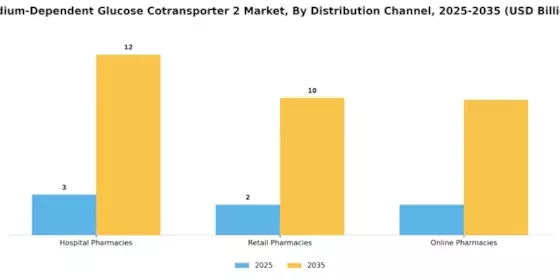
Retail Pharmacies (Dominant) vs. Hospital Pharmacies (Emerging)
In the Sodium-Dependent Glucose Cotransporter 2 Market, retail pharmacies stand as the dominant distribution channel owing to their widespread presence and strong consumer trust. They offer easy access to medications and personalized care, facilitating immediate patient inquiries and services. On the flip side, hospital pharmacies, although still emerging, are increasingly recognized for their role in providing specialized medication management and patient-centered care. Their growth is attributed to the rising demand for tailored therapeutic approaches and the integration of pharmacists in patient care teams, enhancing medication adherence and health outcomes. As healthcare evolves, hospital pharmacies are poised to gain a foothold through specialized services, yet retail pharmacies will continue to command a major share of distribution, highlighting the duality of market dynamics.
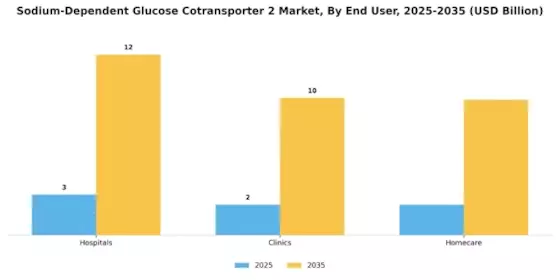
The Sodium-Dependent Glucose Cotransporter 2 market is significantly influenced by end users, where hospitals hold the largest share. This segment is integral due to the higher prevalence of diabetes cases that require advanced management options, leading hospitals to adopt more SGLT2 inhibitors. In contrast, clinics and homecare services are also key players, but they are growing at a faster rate, reflecting a shift towards more personalized and accessible care solutions for patients who prefer self-management.
In recent years, the trend has been shifting towards homecare, driven by increased health awareness and technological advancements that allow patients to manage their conditions from home. Clinics are also gaining traction as they offer immediate care and convenience. The push for cost-effective treatments and patient-centered care models has intensified competition within these segments, fostering rapid growth and expansion opportunities, particularly for homecare services that cater to a growing demographic seeking independence in managing their health.
Hospitals (Dominant) vs. Homecare (Emerging)
Hospitals remain the dominant end user in the Sodium-Dependent Glucose Cotransporter 2 market due to their comprehensive facilities and resources that are crucial for the management of severe diabetic cases. The adoption of SGLT2 inhibitors in hospitals is driven by their ability to meet complex patient needs, alongside strong support from healthcare professionals. In contrast, the homecare segment is emerging as a vital part of the market, catering to patients who prefer receiving treatment in the comfort of their homes. This segment benefits from technological innovations such as remote monitoring tools and telehealth services, enhancing patient engagement and adherence to medication schedules. The growth in this area highlights the increasing preference for home-based healthcare solutions and the demand for accessibility in diabetes management.
Get more detailed insights about Sodium Dependent Glucose Cotransporter 2 Market Request Free Sample
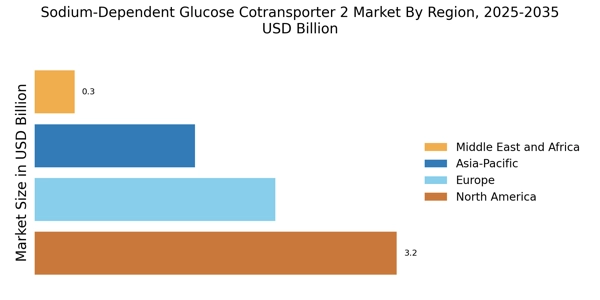
The Sodium-Dependent Glucose Cotransporter 2 Market is anticipated to experience substantial growth across various regions. In 2023, the North America market was valued at 2.5 USD Billion, holding a majority share due to a robust healthcare infrastructure and increased prevalence of diabetes, which is a key driver for market growth. Europe followed with a valuation of 1.4 USD Billion, reflecting significant investment in research and development, driving innovations in sodium-dependent glucose cotransporter 2 medications.
The Asia-Pacific (APAC) region accounted for 1.0 USD Billion in 2023, showing growing access to healthcare and increasing diabetes rates, creating opportunities for market expansion.South America, with a market valuation of 0.3 USD Billion, represents a developing landscape where rising awareness of diabetes management can lead to considerable growth potential. Lastly, the Middle East and Africa (MEA) segment, valued at 0.15 USD Billion, is gradually gaining attention due to a rising focus on chronic disease treatments.
These figures highlight the diverse potential within the Sodium-Dependent Glucose Cotransporter 2 Market revenue streams, with North America and Europe being significant contributors, while the APAC region shows promise in the context of increasing healthcare awareness.
The Sodium-Dependent Glucose Cotransporter 2 Market is characterized by significant competition as various pharmaceutical companies vie for a leading position in developing and delivering innovative therapies. The market highlights the increasing importance of sodium-dependent glucose cotransporters as essential targets for managing conditions such as diabetes and metabolic disorders. A variety of players are actively engaged in research and development initiatives aimed at enhancing the efficacy and safety profiles of glucose transport inhibitors. This dynamic landscape showcases a blend of established firms and emerging biotech companies striving to gain market share while navigating regulatory challenges and evolving patient needs.Merck and Co has established a robust presence in the Sodium-Dependent Glucose Cotransporter 2 Market through its strong portfolio of diabetes management products. The company has leveraged its extensive research capabilities and distribution network to enhance the accessibility of its therapies. Merck and Co.'s commitment to innovation is a core strength, enabling the company to advance its offerings in line with the latest scientific developments. The company benefits from a trusted brand reputation, which fosters strong relationships with healthcare providers and patients alike. Furthermore, its strategic partnerships and collaborations enhance its capacity to deliver comprehensive solutions in managing diabetes, positioning it effectively within this competitive landscape.Takeda Pharmaceutical has also made significant strides in the Sodium-Dependent Glucose Cotransporter 2 Market, focusing on innovative approaches to address unmet medical needs in diabetes management. The company’s strong emphasis on science and research underpins its development strategy, allowing it to introduce novel therapies that stand out among alternatives. Takeda’s commitment to patient-centric solutions and continuous improvement strengthens its market position. With a comprehensive understanding of geographic markets and an agile operational model, the company is well-equipped to navigate the complexities of the healthcare environment. Takeda's investments in clinical research and its expansive pipeline of candidates are key strengths that contribute to its competitive edge in the sodium-dependent glucose cotransporter 2 landscape.

Recent developments in the Sodium-Dependent Glucose Cotransporter 2 market have seen a marked increase in partnerships and innovations among key players such as Merck & Co., Takeda Pharmaceutical, and Pfizer. Eli Lilly and Company has also launched new clinical trials aiming to enhance their competitive positioning. Notably, Amgen and Bristol Myers Squibb have strengthened their portfolios through collaborations focused on the therapeutic benefits of SGLT2 inhibitors. In terms of mergers and acquisitions, Roche's acquisition of a promising biotech firm specializing in glucose transporter therapies has been noteworthy, enhancing their research capabilities.
Furthermore, AbbVie and GSK have announced strategic partnerships aimed at advancing drug development in this sector. Novo Nordisk's recent expansion in its SGLT2 offerings has contributed to its stock market growth, which in turn has positively impacted the overall market valuation. Additionally, Mitsubishi Tanabe Pharma and Boehringer Ingelheim are exploring innovative solutions to improve patient outcomes, while AstraZeneca and Sanofi are investing in R&D to harness new technologies that can lead to enhanced pipeline portfolios. Overall, these developments reflect a dynamic market landscape and an increasingly competitive environment among major pharmaceutical companies in the SGLT2 space.
The Sodium-Dependent Glucose Cotransporter 2 Market is projected to grow at a 14.59% CAGR from 2025 to 2035, driven by increasing diabetes prevalence and innovative therapeutic developments.
New opportunities lie in:
By 2035, the market is expected to achieve substantial growth, solidifying its position as a key player in diabetes management.
| MARKET SIZE 2024 | 7.012(USD Billion) |
| MARKET SIZE 2025 | 8.035(USD Billion) |
| MARKET SIZE 2035 | 31.37(USD Billion) |
| COMPOUND ANNUAL GROWTH RATE (CAGR) | 14.59% (2025 - 2035) |
| REPORT COVERAGE | Revenue Forecast, Competitive Landscape, Growth Factors, and Trends |
| BASE YEAR | 2024 |
| Market Forecast Period | 2025 - 2035 |
| Historical Data | 2019 - 2024 |
| Market Forecast Units | USD Billion |
| Key Companies Profiled | Boehringer Ingelheim (DE), AstraZeneca (GB), Merck & Co. (US), Janssen Pharmaceuticals (US), Sanofi (FR), Pfizer (US), Eli Lilly and Company (US), Novartis (CH), Bristol-Myers Squibb (US) |
| Segments Covered | Application, Drug Formulation, Distribution Channel, End User, Regional |
| Key Market Opportunities | Emergence of novel therapies targeting Sodium-Dependent Glucose Cotransporter 2 for diabetes management presents substantial market potential. |
| Key Market Dynamics | Rising demand for Sodium-Dependent Glucose Cotransporter 2 inhibitors drives competitive innovation and regulatory scrutiny in diabetes management. |
| Countries Covered | North America, Europe, APAC, South America, MEA |
The Sodium-Dependent Glucose Cotransporter 2 Market is projected to reach a valuation of 31.37 USD Billion by 2035.
In 2024, the market valuation of the Sodium-Dependent Glucose Cotransporter 2 Market was 7.012 USD Billion.
The expected CAGR for the Sodium-Dependent Glucose Cotransporter 2 Market during the forecast period 2025 - 2035 is 14.59%.
Key players in the market include Boehringer Ingelheim, AstraZeneca, Merck & Co., Janssen Pharmaceuticals, Sanofi, Pfizer, Eli Lilly and Company, Novartis, and Bristol-Myers Squibb.
The main applications include Diabetes Mellitus Type 2, Obesity Management, Cardiovascular Disease, and Chronic Kidney Disease.
In 2024, the market size for Diabetes Mellitus Type 2 was 2.5 USD Billion.
The projected market size for Chronic Kidney Disease is expected to reach 8.0 USD Billion by 2035.
Distribution channels such as Hospital Pharmacies, Retail Pharmacies, and Online Pharmacies are crucial, with Hospital Pharmacies valued at 2.804 USD Billion in 2024.
Prevalent drug formulations include Oral Tablets, Injectable Solutions, and Extended-Release Formulations, with Oral Tablets valued at 2.5 USD Billion in 2024.
The expected market size for Homecare services is projected to reach 9.37 USD Billion by 2035.


Kindly complete the form below to receive a free sample of this Report

“This is really good guys. Excellent work on a tight deadline. I will continue to use you going forward and recommend you to others. Nice job”


“Thanks. It’s been a pleasure working with you, please use me as reference with any other Intel employees.”


“Thanks for sending the report it gives us a good global view of the Betaïne market.”


“Thank you, this will be very helpful for OQS.”


“We found the report very insightful! we found your research firm very helpful. I'm sending this email to secure our future business.”


“I am very pleased with how market segments have been defined in a relevant way for my purposes (such as "Portable Freezers & refrigerators" and "last-mile"). In general the report is well structured. Thanks very much for your efforts.”


“I have been reading the first document or the study, ,the Global HVAC and FP market report 2021 till 2026. Must say, good info! I have not gone in depth at all parts, but got a good indication of the data inside!”


“We got the report in time, we really thank you for your support in this process. I also thank to all of your team as they did a great job.”


“The Automotive 48V ECU Components Procurement Intelligence Study” was a complex project, but the Market Research Future (MRFR) team handled it with quality, agility, and customer-centricity. They delivered all requested data on time and within the agreed scope. The team, including Shubhendra Anand and Rahul Gotadki, was always readily available to clarify questions and swiftly implement necessary adjustments, driving the project to a successful conclusion within a very demanding timeframe.
I would also like to specifically commend Akshay Agarwal for his responsiveness and support at every stage—from our initial inquiry on May 6th through to final delivery on June 18th. His dedication made the entire process seamless.”



