×
Request Free Sample ×

Kindly complete the form below to receive a free sample of this Report

* Please use a valid business email

Leading companies partner with us for data-driven Insights

clients tt-cursor
Hero Background

Solar Farm Market

ID: MRFR/EnP/9014-HCR
100 Pages
Garvit Vyas
October 2025

Solar Farm Market Research Report By Technology (Fixed-tilt Solar Farms, Single-axis Tracking Solar Farms, Dual-axis Tracking Solar Farms, Concentrated Solar Power (CSP)), By Mounting (Ground-mounted Solar Farms, Rooftop Solar Farms, Floating Solar Farms), By Application (Utility-scale Solar Farms, Commercial Solar Farms, Industrial Solar Farms, Residential Solar Farms), By Panel Type (Monocrystalline Solar Panels, Polycrystalline Solar Panels, Thin-film Solar Panels) and By Regional (North America, Europe, South America, Asia Pacific, Middl... read more

Share:
Download PDF ×

We do not share your information with anyone. However, we may send you emails based on your report interest from time to time. You may contact us at any time to opt-out.

Solar Farm Market Infographic
Purchase Options

Solar Farm Market Summary

As per MRFR analysis, the Solar Farm Market Size was estimated at 297.3 USD Billion in 2024. The Solar Farm industry is projected to grow from 338.25 USD Billion in 2025 to 1229.11 USD Billion by 2035, exhibiting a compound annual growth rate (CAGR) of 13.77 during the forecast period 2025 - 2035.

Key Market Trends & Highlights

The Solar Farm Market is experiencing robust growth driven by technological advancements and supportive policies.

  • Technological advancements are enhancing the efficiency and reliability of solar energy systems.
  • North America remains the largest market for solar farms, while Asia-Pacific is recognized as the fastest-growing region.
  • The utility scale segment dominates the market, whereas the commercial segment is witnessing rapid growth.
  • Increasing energy demand and declining costs of solar technology are key drivers propelling market expansion.

Market Size & Forecast

2024 Market Size 297.3 (USD Billion)
2035 Market Size 1229.11 (USD Billion)
CAGR (2025 - 2035) 13.77%

Major Players

NextEra Energy (US), Enel Green Power (IT), Canadian Solar (CA), First Solar (US), JinkoSolar (CN), Trina Solar (CN), SunPower (US), Sungrow Power Supply (CN), LONGi Green Energy (CN), EDP Renewables (PT)

Solar Farm Market Trends

The Solar Farm Market is currently experiencing a transformative phase characterized by a growing emphasis on sustainability and renewable energy sources. As global awareness of climate change intensifies, stakeholders are increasingly investing in solar energy solutions. This shift is driven by a combination of technological advancements, favorable government policies, and a rising demand for clean energy. The integration of innovative technologies, such as energy storage systems and smart grid solutions, enhances the efficiency and reliability of solar farms, making them more attractive to investors and consumers alike. Moreover, the Solar Farm Market is witnessing a diversification of applications, extending beyond traditional energy generation. Emerging trends indicate a potential for solar farms to contribute to agricultural practices through agrivoltaics, where land is utilized for both solar energy production and crop cultivation. This dual-use approach not only maximizes land efficiency but also supports food security initiatives. As the market evolves, collaboration among various sectors, including agriculture, technology, and finance, appears essential for fostering sustainable growth and addressing the challenges posed by climate change. The future of the Solar Farm Market seems promising, with ongoing innovations likely to reshape the energy landscape.

Technological Advancements

The Solar Farm Market is increasingly influenced by rapid technological innovations. Developments in photovoltaic materials, energy storage solutions, and grid integration technologies are enhancing the efficiency and performance of solar farms. These advancements not only reduce costs but also improve energy output, making solar energy a more viable option for large-scale deployment.

Policy Support and Incentives

Government policies and incentives play a crucial role in shaping the Solar Farm Market. Many countries are implementing favorable regulations and financial incentives to promote renewable energy adoption. This supportive environment encourages investments in solar projects, facilitating the growth of the market and contributing to global sustainability goals.

Diversification of Applications

The Solar Farm Market is witnessing a trend towards diversification in its applications. Beyond traditional energy generation, solar farms are increasingly being integrated into agricultural practices, such as agrivoltaics. This innovative approach allows for simultaneous energy production and crop cultivation, optimizing land use and enhancing food security.

Solar Farm Market Drivers

Market Growth Projections

The Global Solar Farm Market Industry is projected to experience robust growth over the coming years. With a compound annual growth rate (CAGR) of 13.74% anticipated from 2025 to 2035, the market is set to expand significantly. By 2024, the market is valued at 262.0 USD Billion, and it is expected to reach 1080.0 USD Billion by 2035. This growth is indicative of the increasing adoption of solar energy technologies and the ongoing investments in solar infrastructure. The market dynamics suggest a favorable environment for stakeholders, including investors, developers, and policymakers, to capitalize on the opportunities presented by the transition to renewable energy.

Rising Demand for Renewable Energy

The Global Solar Farm Market Industry is experiencing a surge in demand for renewable energy sources, driven by increasing awareness of climate change and the need for sustainable energy solutions. Governments worldwide are implementing policies to reduce carbon emissions, which has led to a significant shift towards solar energy. In 2024, the market is valued at approximately 262.0 USD Billion, reflecting the growing investment in solar infrastructure. This trend is expected to continue, with projections indicating that by 2035, the market could reach 1080.0 USD Billion. The transition to renewable energy is not only environmentally beneficial but also economically advantageous, as it creates jobs and stimulates local economies.

Government Incentives and Subsidies

Government incentives and subsidies are pivotal in shaping the Global Solar Farm Market Industry. Many countries offer financial support to encourage the adoption of solar energy, including tax credits, grants, and feed-in tariffs. These initiatives lower the upfront costs associated with solar installations, making them more appealing to investors and homeowners alike. For instance, in the United States, the Investment Tax Credit allows for a significant deduction on federal taxes for solar energy systems. Such policies are instrumental in driving market growth, as they not only stimulate investment but also promote the transition towards a more sustainable energy landscape.

Increasing Energy Security Concerns

The Global Solar Farm Market Industry is also influenced by rising energy security concerns. As nations seek to reduce their dependence on fossil fuels and foreign energy sources, solar energy presents a viable alternative. The diversification of energy sources enhances national security and stabilizes energy prices, making solar farms an attractive investment. Countries are increasingly recognizing the strategic importance of energy independence, which is likely to propel the growth of solar energy projects. This shift towards self-sufficiency in energy production aligns with global efforts to combat climate change and promote sustainable development.

Growing Corporate Sustainability Initiatives

Corporate sustainability initiatives are becoming increasingly prevalent, significantly impacting the Global Solar Farm Market Industry. Many corporations are committing to renewable energy targets, aiming to reduce their carbon footprints and enhance their corporate social responsibility profiles. This trend is evident in various sectors, including technology, manufacturing, and retail, where companies are investing in solar energy to power their operations. By 2035, the market is projected to reach 1080.0 USD Billion, driven in part by corporate investments in solar farms. As businesses recognize the long-term financial benefits of renewable energy, the demand for solar installations is expected to rise, further contributing to market growth.

Technological Advancements in Solar Technology

Technological innovations play a crucial role in the Global Solar Farm Market Industry, enhancing the efficiency and affordability of solar energy systems. Advances in photovoltaic technology, such as bifacial solar panels and solar tracking systems, have improved energy capture and reduced costs. These innovations are likely to drive market growth, as they make solar energy more accessible to a broader audience. The continuous development of energy storage solutions, such as lithium-ion batteries, further supports the integration of solar energy into the grid. As technology evolves, the cost of solar installations is expected to decrease, making solar energy a more attractive option for both residential and commercial applications.
Market Segment Insights

By Application: Utility Scale (Largest) vs. Commercial (Fastest-Growing)

In the Solar Farm Market, the application segment is categorized into utility scale, commercial, residential, and agricultural. Currently, utility scale applications dominate the market, capturing the largest share due to their ability to generate significant energy output and lower costs per watt. In contrast, commercial applications, while smaller in market share, are recognized as the fastest-growing segment, driven by increasing adoption and state incentives for renewable energy solutions.

Utility Scale (Dominant) vs. Commercial (Emerging)

The utility scale solar segment is characterized by large solar farms connected to the grid, allowing businesses and jurisdictions to harness vast amounts of solar energy. These installations are typically backed by long-term power purchase agreements, ensuring stable returns. On the other hand, the commercial application sector comprises smaller installations tailored for businesses, schools, and other institutions, making it an emerging force in the market. Commercial solar setups are gaining traction as enterprises become more aware of sustainability and energy cost savings, enabled by advancements in solar technology and a supportive regulatory environment.

By Technology: Photovoltaic (Largest) vs. Concentrated Solar Power (Fastest-Growing)

In the Solar Farm Market, Photovoltaic technology holds a substantial share, dominating the landscape due to its widespread adoption and versatility. It is utilized across various solar projects, ranging from residential rooftops to large utility installations. In contrast, Concentrated Solar Power (CSP) is emerging rapidly, appealing to utility-scale projects due to its ability to generate electricity even when sunlight is less intense, enabling greater reliability in energy supply.

Technology: Photovoltaic (Dominant) vs. Concentrated Solar Power (Emerging)

Photovoltaic technology is recognized as the dominant player in the Solar Farm Market, primarily due to its efficiency and declining costs. It converts sunlight directly into electricity using solar cells, making it a preferred choice for many solar farms. On the other hand, Concentrated Solar Power is gaining traction as an innovative solution, employing mirrors or lenses to focus sunlight onto a small area, generating high-temperature steam to drive turbines. While Photovoltaic installations are prevalent, CSP technology's ability to store energy and provide dispatchable power is attracting investment and development, making it an emerging technology in the solar sector.

By End Use: Electricity Generation (Largest) vs. Energy Storage (Fastest-Growing)

In the Solar Farm Market, the segment of Electricity Generation stands out as the largest end-use, dominating the market share significantly. This segment encapsulates the primary function of solar farms, which is to harvest solar energy and convert it into electricity, contributing vastly to the energy mix. In contrast, Energy Storage is increasingly gaining traction, driven by technological advancements and policy support that enhance the adoption of storage solutions alongside solar energy generation.

Electricity Generation (Dominant) vs. Off-Grid Solutions (Emerging)

Electricity Generation is the hallmark of the solar farm sector, representing the core purpose of solar installations. This segment leverages solar photovoltaic (PV) technology to provide renewable energy, promoting sustainability and energy independence. Meanwhile, Off-Grid Solutions are emerging in response to the growing demand for energy access in remote areas where grid connectivity is limited. This segment aims to provide reliable power through solar solutions, utilizing battery storage and innovative technologies to meet the needs of communities with insufficient energy infrastructure. The synergy between these two segments highlights the dynamic evolution of the solar energy landscape.

By Ownership Type: Private (Largest) vs. Community (Fastest-Growing)

In the Solar Farm Market, ownership type is a critical segmentation that showcases diverse structures influencing investment and operational approaches. The largest share is held by Private ownership, driven by substantial capital from corporations and individual investors capitalizing on tax incentives and electricity savings. Public ownership, often tied to governmental initiatives, holds a significant position, while Cooperatives and Community models contribute to local stakeholder engagement and renewable energy accessibility. The distribution reflects varying levels of risk, commitment, and community involvement across these ownership types. As trends evolve towards sustainability and community participation, the growth of the Community ownership model is increasingly significant. Factors such as rising consumer awareness, governmental support, and lower entry barriers enhance this segment's appeal. Simultaneously, the Private sector continues to expand through technology adoption and strategic partnerships, ensuring a competitive landscape as investors recognize the long-term viability of solar energy initiatives.

Public (Dominant) vs. Cooperative (Emerging)

Publicly owned solar farms represent a dominant force in the market, often backed by governmental entities striving to meet renewable energy targets. These projects typically enjoy stable funding and incentives, positioning them as reliable providers of solar energy. Public ownership is marked by a significant emphasis on community benefits and sustainability, often engaging with local populations to promote awareness and usage. On the other hand, Cooperatives are emerging as an innovative ownership type, allowing members to invest in and benefit from solar energy projects directly. This model fosters a sense of ownership among members while promoting local economic development. As electricity costs rise and renewable energy becomes essential, Cooperatives offer a compelling alternative for communities seeking to harness solar power collaboratively.

By Financing Model: Power Purchase Agreement (Largest) vs. Lease Agreement (Fastest-Growing)

In the Solar Farm Market, the financing model segment is primarily characterized by Power Purchase Agreements (PPAs), which hold the largest market share due to their stability and predictability for investors. PPAs allow solar farm developers to secure long-term contracts with utility companies, facilitating consistent revenue streams. Lease agreements are also prevalent, providing another option for developers seeking to minimize upfront costs. However, these agreements generally account for a smaller portion of the market compared to PPAs. As the demand for renewable energy surges, financing models are evolving. Lease agreements are emerging as the fastest-growing segment, driven by the increasing number of businesses and homeowners adopting solar solutions. This trend is propelled by government incentives, rising electricity prices, and a growing awareness of sustainability, encouraging more flexible payment options. Debt financing remains crucial, particularly for large-scale solar projects, as it enables developers to leverage capital while managing risks effectively.

Power Purchase Agreement (Dominant) vs. Debt Financing (Emerging)

Power Purchase Agreements (PPAs) are recognized as the dominant financing model in the Solar Farm Market, offering long-term contracts that benefit both producers and consumers by locking in prices and ensuring energy supply. PPAs facilitate the financing of large solar projects, as developers can secure predictable revenue over the life of the agreement, which alleviates financial risk. In contrast, debt financing is an emerging model that is increasingly being utilized to fund solar projects. This model allows developers to access capital needed for construction and operational costs while taking advantage of tax incentives and subsidies. The growth of debt financing is particularly significant for new entrants aiming to expand their project portfolio without extensive equity investment, thus diversifying the market further.

Get more detailed insights about Solar Farm Market

Regional Insights

North America : Renewable Energy Leader

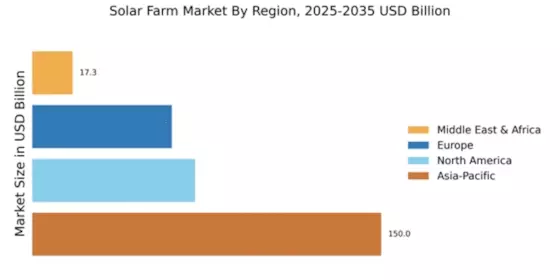
North America is witnessing significant growth in the solar farm market, driven by increasing demand for renewable energy and supportive government policies. With a market size of $70.0 billion, the region is focusing on reducing carbon emissions and enhancing energy independence. Regulatory incentives, such as tax credits and renewable portfolio standards, are catalyzing investments in solar technologies, making it a key player in the global energy transition. The United States leads the North American market, with major players like NextEra Energy and First Solar dominating the landscape. The competitive environment is characterized by innovation and technological advancements, with companies investing heavily in research and development. As the market matures, partnerships and collaborations are becoming essential for expanding capacity and improving efficiency, positioning North America as a leader in solar energy.

Europe : Sustainable Energy Transition

Europe is at the forefront of the solar farm market, with a market size of $60.0 billion, driven by ambitious renewable energy targets and a strong commitment to sustainability. The region's growth is fueled by increasing public awareness of climate change and supportive EU regulations promoting solar energy adoption. Countries are implementing policies to enhance energy efficiency and reduce greenhouse gas emissions, making solar energy a vital component of their energy mix. Leading countries like Germany, Spain, and Italy are spearheading solar initiatives, with key players such as Enel Green Power and EDP Renewables making significant contributions. The competitive landscape is marked by a diverse range of companies, from large utilities to innovative startups. As Europe continues to invest in solar infrastructure, the region is expected to maintain its position as a global leader in renewable energy solutions.

Asia-Pacific : Global Solar Power Hub

Asia-Pacific is the largest market for solar farms, boasting a market size of $150.0 billion. The region's growth is driven by rapid urbanization, increasing energy demand, and government initiatives promoting renewable energy. Countries like China and India are leading the charge, implementing policies that encourage solar energy adoption and investment. The region's commitment to reducing carbon emissions and enhancing energy security is propelling the solar market forward. China is the dominant player in the Asia-Pacific solar market, with companies like JinkoSolar and Trina Solar leading in production and technology. The competitive landscape is characterized by a mix of established firms and emerging players, all vying for market share. As the region continues to expand its solar capacity, it is expected to play a pivotal role in the global energy transition, setting benchmarks for innovation and sustainability.

Middle East and Africa : Emerging Solar Market

The Middle East and Africa region is emerging as a significant player in the solar farm market, with a market size of $17.3 billion. The growth is driven by abundant sunlight, increasing energy needs, and government initiatives aimed at diversifying energy sources. Countries are recognizing the potential of solar energy to meet their growing electricity demands while reducing reliance on fossil fuels, making it a key focus area for development. Leading countries such as South Africa and the UAE are making strides in solar energy adoption, with investments from both local and international players. The competitive landscape is evolving, with companies like Sungrow Power Supply and Canadian Solar entering the market. As the region continues to harness its solar potential, it is expected to attract more investments and partnerships, paving the way for a sustainable energy future.

Key Players and Competitive Insights

The Solar Farm Market is currently characterized by a dynamic competitive landscape, driven by increasing demand for renewable energy and technological advancements. Key players are actively pursuing strategies that emphasize innovation, regional expansion, and strategic partnerships. For instance, NextEra Energy (US) has positioned itself as a leader in solar energy generation, focusing on large-scale projects and innovative energy storage solutions. Similarly, Enel Green Power (IT) is expanding its global footprint through strategic acquisitions and investments in emerging markets, thereby enhancing its operational capabilities and market reach. These strategies collectively contribute to a competitive environment that is increasingly focused on sustainability and technological advancement.

In terms of business tactics, companies are localizing manufacturing and optimizing supply chains to enhance efficiency and reduce costs. The market appears moderately fragmented, with several key players exerting considerable influence. This structure allows for a diverse range of offerings and competitive strategies, fostering innovation and collaboration among industry participants.

In November 2025, First Solar (US) announced a significant partnership with a leading technology firm to develop advanced solar panel technologies aimed at increasing efficiency by 20%. This strategic move is likely to enhance First Solar's competitive edge, positioning it favorably in a market that increasingly values technological innovation. The collaboration underscores the importance of R&D in maintaining market leadership and responding to evolving consumer demands.

In October 2025, JinkoSolar (CN) launched a new line of bifacial solar panels designed to maximize energy output in various environmental conditions. This product introduction not only reflects JinkoSolar's commitment to innovation but also addresses the growing demand for high-efficiency solar solutions. The launch is expected to strengthen the company's market position and appeal to a broader customer base, particularly in regions with diverse climatic conditions.

In September 2025, SunPower (US) expanded its operations in Europe by acquiring a local solar project developer, thereby enhancing its project pipeline and market presence. This acquisition is indicative of SunPower's strategy to penetrate new markets and leverage local expertise, which may lead to increased operational efficiency and market share in the European solar sector.

As of December 2025, current trends in the Solar Farm Market are heavily influenced by digitalization, sustainability initiatives, and the integration of AI technologies. Strategic alliances are becoming increasingly vital, as companies seek to enhance their capabilities and market reach through collaboration. The competitive differentiation is likely to evolve from traditional price-based competition to a focus on innovation, technological advancements, and supply chain reliability, suggesting a transformative shift in how companies position themselves in the market.

Key Companies in the Solar Farm Market market include

Industry Developments

The Solar Farm Market is anticipated to reach a valuation of USD 229.68 billion by 2023 and is projected to grow at a CAGR of 13.77% from 2024 to 2032, reaching a value of USD 733.37 billion. This growth is attributed to increasing government initiatives promoting renewable energy, declining solar panel costs, and rising energy demand. Recent developments in the market include the announcement by Lightsource BP of a 1.5 GW solar farm in Texas, the world's largest single-site solar project.

Additionally, the European Union has set a target of 40% renewable energy by 2030, driving investments in solar farms across the region.

Future Outlook

Solar Farm Market Future Outlook

The Solar Farm Market is projected to grow at a 13.77% CAGR from 2024 to 2035, driven by technological advancements, regulatory support, and increasing energy demand.

New opportunities lie in:

  • Development of energy storage solutions for solar farms
  • Integration of AI for predictive maintenance and efficiency
  • Expansion into emerging markets with tailored financing options

By 2035, the Solar Farm Market is expected to be robust, driven by innovation and strategic investments.

Market Segmentation

Solar Farm Market End Use Outlook

  • Electricity Generation
  • Grid Support
  • Off-Grid Solutions
  • Energy Storage

Solar Farm Market Technology Outlook

  • Photovoltaic
  • Concentrated Solar Power
  • Bifacial Solar Panels
  • Thin-Film Solar

Solar Farm Market Application Outlook

  • Utility Scale
  • Commercial
  • Residential
  • Agricultural

Solar Farm Market Ownership Type Outlook

  • Public
  • Private
  • Cooperative
  • Community

Solar Farm Market Financing Model Outlook

  • Power Purchase Agreement
  • Lease Agreement
  • Cash Purchase
  • Debt Financing

Report Scope

MARKET SIZE 2024297.3(USD Billion)
MARKET SIZE 2025338.25(USD Billion)
MARKET SIZE 20351229.11(USD Billion)
COMPOUND ANNUAL GROWTH RATE (CAGR)13.77% (2024 - 2035)
REPORT COVERAGERevenue Forecast, Competitive Landscape, Growth Factors, and Trends
BASE YEAR2024
Market Forecast Period2025 - 2035
Historical Data2019 - 2024
Market Forecast UnitsUSD Billion
Key Companies ProfiledNextEra Energy (US), Enel Green Power (IT), Canadian Solar (CA), First Solar (US), JinkoSolar (CN), Trina Solar (CN), SunPower (US), Sungrow Power Supply (CN), LONGi Green Energy (CN), EDP Renewables (PT)
Segments CoveredApplication, Technology, End Use, Ownership Type, Financing Model
Key Market OpportunitiesIntegration of energy storage solutions enhances efficiency in the Solar Farm Market.
Key Market DynamicsRising demand for renewable energy drives technological advancements and regulatory support in the Solar Farm Market.
Countries CoveredNorth America, Europe, APAC, South America, MEA

Leave a Comment

FAQs

What is the expected market size of the Solar Farm Market in 2023?

The Solar Farm Market is expected to reach an overall valuation of 229.68 billion USD in 2023.

What is the projected CAGR of the Solar Farm Market from 2024 to 2032?

The Solar Farm Market is projected to grow at a CAGR of 13.77% from 2024 to 2032.

Which region is expected to hold the largest market share in the Solar Farm Market in 2023?

The Asia-Pacific region is expected to hold the largest market share in the Solar Farm Market in 2023, driven by increasing demand for renewable energy sources and government initiatives promoting solar power adoption.

What are the key applications of solar farms?

Solar farms are primarily used for generating electricity on a large scale. The electricity generated can be used for various applications, including powering homes, businesses, and industries, as well as feeding into the electricity grid.

Who are the major competitors in the Solar Farm Market?

Some of the major competitors in the Solar Farm Market include First Solar, JinkoSolar, Canadian Solar, Trina Solar, and LONGi Solar.

What are the key factors driving the growth of the Solar Farm Market?

The growth of the Solar Farm Market is driven by several factors, including increasing concerns about climate change and the need for sustainable energy sources, government policies and incentives supporting solar energy development, and declining costs of solar panels and other components.

What are the challenges faced by the Solar Farm Market?

The Solar Farm Market faces several challenges, such as the intermittent nature of solar power, the need for large land areas for solar farms, and the potential environmental impacts of solar panel manufacturing and disposal.

What are the potential opportunities in the Solar Farm Market?

The Solar Farm Market offers several potential opportunities, including the development of new technologies to improve the efficiency and cost-effectiveness of solar farms, the expansion of solar farms into new regions, and the integration of solar farms with other renewable energy sources.

What are the key trends in the Solar Farm Market?

Key trends in the Solar Farm Market include the increasing adoption of bifacial solar panels, the development of floating solar farms, and the integration of solar farms with energy storage systems.

What is the future outlook for the Solar Farm Market?

The future outlook for the Solar Farm Market is positive, driven by the increasing demand for renewable energy and the declining costs of solar technology. The market is expected to continue to grow at a significant pace in the coming years.

Download Free Sample

Kindly complete the form below to receive a free sample of this Report

Compare Licence

×
Features License Type
Single User Multiuser License Enterprise User
Price $4,950 $5,950 $7,250
Maximum User Access Limit 1 User Upto 10 Users Unrestricted Access Throughout the Organization
Free Customization
Direct Access to Analyst
Deliverable Format
Platform Access
Discount on Next Purchase 10% 15% 15%
Printable Versions