Download Free Sample
Kindly complete the form below to receive a free sample of this Report
South America Glioblastoma Market Research Report By Treatment Type (Surgery, Radiation Therapy, Chemotherapy, Targeted Therapy, Immunotherapy), By Drug Type (Temozolomide, Bevacizumab, Carmustine, Nivolumab, Lomustine), By Distribution Channel (Hospital Pharmacy, Retail Pharmacy, Online Pharmacy, Specialty Pharmacy), By End User (Hospitals, Clinical Research Organizations, Homecare Settings) andBy Regional (Brazil, Mexico, Argentina, Rest of South America) - Growth & Industry Forecast 2025 To 2035
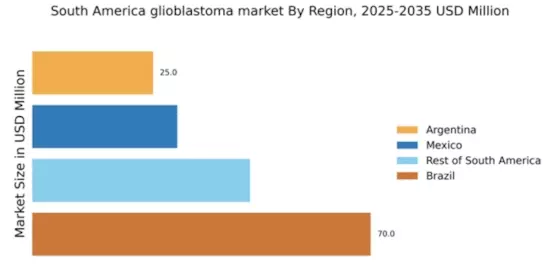
As per Market Research Future analysis, the South America glioblastoma market Size was estimated at 170.03 USD Million in 2024. The South America glioblastoma market is projected to grow from 180.27 USD Million in 2025 to 323.5 USD Million by 2035, exhibiting a compound annual growth rate (CAGR) of 6.0% during the forecast period 2025 - 2035
The South America glioblastoma market is experiencing significant growth driven by rising incidence and advancements in treatment options.
| 2024 Market Size | 170.03 (USD Million) |
| 2035 Market Size | 323.5 (USD Million) |
| CAGR (2025 - 2035) | 6.02% |
The glioblastoma market in South America is currently experiencing notable developments, driven by a combination of increasing incidence rates and advancements in treatment options. The region has seen a rise in awareness regarding brain tumors, particularly glioblastoma, which has led to enhanced diagnostic capabilities. This heightened awareness is likely to foster a more proactive approach to treatment, as healthcare providers and patients alike seek out innovative therapies. Furthermore, the collaboration between local healthcare institutions and international pharmaceutical companies appears to be strengthening, potentially leading to improved access to cutting-edge treatments. In addition, the regulatory environment in South America is evolving, with governments showing a commitment to improving healthcare infrastructure. This shift may facilitate the introduction of novel therapies and clinical trials, thereby expanding the glioblastoma market. The focus on personalized medicine is also gaining traction, as treatments tailored to individual patient profiles may enhance efficacy and reduce side effects. Overall, the glioblastoma market in South America seems poised for growth, driven by a combination of increased awareness, regulatory support, and innovative treatment approaches.
The increasing incidence of glioblastoma in South America is prompting greater awareness among healthcare professionals and the general public. This trend is likely to lead to earlier diagnosis and intervention, which may improve patient outcomes. As awareness campaigns gain momentum, more individuals are seeking information and support, thereby driving demand for treatment options.
Innovations in treatment modalities, including targeted therapies and immunotherapies, are becoming more prevalent in the glioblastoma market. These advancements may offer new hope for patients, as they often come with improved efficacy and reduced side effects. The integration of these therapies into clinical practice is expected to enhance the overall treatment landscape.
The regulatory framework in South America is evolving to support the introduction of innovative therapies for glioblastoma. Governments are increasingly prioritizing healthcare improvements, which may facilitate the approval and availability of new treatment options. This regulatory support could lead to a more dynamic market, fostering collaboration between local and international stakeholders.
The emergence of patient advocacy groups in South America plays a pivotal role in shaping the glioblastoma market. These organizations raise awareness about glioblastoma, providing education and support to patients and families. They also advocate for better access to treatments and funding for research. In recent years, the number of such groups has increased, leading to a more informed patient population. This heightened awareness can drive demand for innovative therapies and clinical trials, as patients seek the latest treatment options. The glioblastoma market is likely to see a surge in participation in clinical studies, as advocacy groups encourage patients to engage with ongoing research efforts. This trend not only enhances patient involvement but also fosters collaboration between stakeholders, including healthcare providers and pharmaceutical companies.
The rising healthcare expenditure in South America is a crucial driver for the glioblastoma market. Governments and private sectors are investing more in healthcare infrastructure, which enhances access to advanced treatment options for glioblastoma patients. In 2025, healthcare spending in the region is projected to reach approximately $500 billion, reflecting a growth rate of around 5% annually. This increase in funding allows for better diagnostic tools and innovative therapies, which are essential for managing glioblastoma. Furthermore, as healthcare systems improve, the availability of specialized oncology services is likely to expand, thereby positively impacting patient outcomes. The glioblastoma market stands to benefit from this trend, as increased funding can lead to more research and development initiatives aimed at discovering effective treatments.
Collaborative research initiatives among academic institutions, healthcare providers, and pharmaceutical companies are emerging as a vital driver for the glioblastoma market in South America. These partnerships aim to accelerate the development of innovative therapies and improve treatment outcomes for glioblastoma patients. In 2025, it is anticipated that collaborative research funding will exceed $200 million, reflecting a growing commitment to tackling this challenging disease. Such initiatives foster knowledge sharing and resource pooling, which can lead to breakthroughs in treatment strategies. The glioblastoma market stands to gain from these collaborations, as they often result in clinical trials that explore novel therapeutic approaches. This trend not only enhances the research landscape but also promotes a more integrated approach to glioblastoma management.
Technological advancements in diagnostic tools are significantly influencing the glioblastoma market in South America. Innovations such as advanced imaging techniques and molecular profiling are enabling earlier and more accurate detection of glioblastoma. In 2025, it is estimated that the market for diagnostic imaging in oncology will reach $10 billion in South America, with a substantial portion dedicated to brain tumors. These advancements facilitate personalized treatment plans, which are crucial for improving patient outcomes. As diagnostic capabilities expand, the glioblastoma market is likely to experience increased demand for targeted therapies that align with specific tumor characteristics. This trend underscores the importance of integrating cutting-edge technology into clinical practice, ultimately enhancing the overall management of glioblastoma.
The rising incidence of neurological disorders, including glioblastoma, is a significant driver for the glioblastoma market in South America. As the population ages, the prevalence of brain tumors is expected to increase, leading to a higher demand for effective treatment options. Current estimates suggest that glioblastoma accounts for approximately 15% of all primary brain tumors in the region. This growing patient population necessitates the development of new therapies and treatment modalities. The glioblastoma market is likely to respond by investing in research and development to address this increasing burden. Additionally, healthcare providers may focus on enhancing treatment protocols to improve survival rates, thereby creating a more robust market for glioblastoma therapies.
The treatment type segment of the glioblastoma market consists of various options, including Surgery, Radiation Therapy, Chemotherapy, Targeted Therapy, and Immunotherapy. Among these, Surgery holds the largest share, as it is often the first line of treatment for glioblastoma patients, while Immunotherapy is recognized for its rapid growth due to advancements in biological therapies and increased clinical trials.
In recent years, the landscape of glioblastoma treatment has been shifting, driven by innovations in targeted therapies and immunotherapy approaches. The demand for personalized medicine is pushing the market towards therapies that specifically target tumor characteristics, leading to a heightened interest in these faster-growing treatments. The integration of Precision Medicine into treatment paradigms serves as a significant driver, promising improved patient outcomes and lower recurrence rates in patients with glioblastoma.
Surgery (Dominant) vs. Immunotherapy (Emerging)
Surgery is the dominant treatment in the glioblastoma market, primarily due to its role in tumor removal and providing immediate relief to patients. It is often the first step in a treatment plan and is critical for improving survival rates. On the other hand, Immunotherapy is emerging as a potent option, leveraging the body's immune system to combat cancer cells. This method is gaining attention for its potential to address tumor heterogeneity and improve long-term outcomes. Factors influencing the rise of Immunotherapy include ongoing clinical trials showcasing its efficacy and the growing understanding of glioblastoma biology. As a result, the market is witnessing a notable shift towards these advanced therapies, reflecting both patient preferences and clinical effectiveness.
In the Drug Type segment of the glioblastoma market, Temozolomide holds the largest market share, significantly dominating its competitors in regional usage. Following Temozolomide, Bevacizumab emerges as a promising option, gradually gaining traction among healthcare providers. Carmustine, Nivolumab, and Lomustine represent niche markets, maintaining smaller shares but still contributing to the overall diversity in treatment options available in South America.
Growth trends in this segment are driven by the increasing incidence of glioblastoma and ongoing research and development of targeted therapies. The growing preference for personalized medicine and advancements in drug formulation technologies are also propelling demand for Bevacizumab, making it the fastest-growing drug type. Continuous clinical trials and collaborations in the pharmaceutical sector further enhance these growth dynamics, ensuring a competitive landscape.
Temozolomide: Dominant vs. Bevacizumab: Emerging
Temozolomide is recognized as the dominant drug type in the glioblastoma treatment landscape, celebrated for its efficacy and established usage in clinical protocols. It has set a benchmark for treatment regimens, providing significant survival benefits for patients. On the other hand, Bevacizumab is an emerging therapy, gaining attention for its innovative approach to inhibiting tumor growth through angiogenesis blockade. This drug's role in combination therapies enhances its market position, providing new hope for patients when traditional therapies show limitations. The comparative efficacy of these drugs illustrates a shift towards integrating established treatments with new molecular strategies, making the choice of therapy increasingly complex and tailored to individual patient needs.
In the South America glioblastoma market, the distribution of sales among the various channels reveals Hospital Pharmacy as the largest segment, commanding a significant share of the market. Following closely are Retail and Specialty Pharmacies, but Online Pharmacy is notably emerging as a competitive player. This shift is indicative of changing consumer preferences, with increased reliance on digital platforms for medication procurement.
Growth trends in this segment are primarily driven by the rising adoption of convenience among patients and healthcare providers alike. Online Pharmacies are seeing accelerated growth due to enhanced accessibility and efficiency in serving patient needs, while Hospital Pharmacies benefit from established relationships with healthcare networks. The adaptability of these channels to evolving market dynamics showcases their potential to cater to a growing demand.
Hospital Pharmacy (Dominant) vs. Online Pharmacy (Emerging)
Hospital Pharmacy is recognized as the dominant distribution channel in the market, largely due to its centralized control over patient medication management and established trust among healthcare professionals. They typically offer a comprehensive selection of treatment options and are equipped for specialized care. In contrast, Online Pharmacy represents an emerging segment that is gaining traction among tech-savvy patients. This channel is characterized by its ease of use, competitive pricing, and direct-to-consumer sales model. As more individuals seek convenience and efficiency in accessing treatment, Online Pharmacies are positioned to capture a larger market share, driven by enhanced digital services and home delivery options.
In the South America glioblastoma market, hospitals represent the largest segment, holding a significant share driven by their comprehensive treatment capabilities and availability of advanced technologies. Clinical Research Organizations (CROs) also play a vital role, particularly in facilitating trials that lead to innovative treatment options. Homecare settings, while growing, hold a smaller share in comparison to these two segments.
Growth trends indicate a shift towards more personalized medicine and telehealth solutions within hospitals, enhancing patient access to treatments. Moreover, the demand for clinical trials conducted by CROs is increasing as pharmaceutical companies seek to introduce new therapies. Homecare settings are emerging as a preferred option for follow-up care, indicating a trend towards outpatient treatment.
Hospitals (Dominant) vs. Clinical Research Organizations (Emerging)
Hospitals in the glioblastoma market are characterized by their robust infrastructure, which allows them to offer a full spectrum of care including surgery, chemotherapy, and radiation therapy. They are often the first point of contact for patients diagnosed with glioblastoma, contributing to their dominant position. The integration of cutting-edge technology and comprehensive support services make hospitals pivotal in treatment pathways. In contrast, Clinical Research Organizations are emerging as essential partners for innovative treatments, focusing on clinical trials that pave the way for new therapeutic options. Their agility in adapting to regulatory demands and their expertise in trial management are fostering rapid growth, making them crucial players in the evolving landscape of glioblastoma care.
São Paulo and Rio de Janeiro are pivotal markets, showcasing a competitive landscape with major players like Roche and Novartis leading the charge. The presence of well-established healthcare facilities and research institutions fosters a conducive environment for clinical trials and new product launches. Local dynamics are characterized by a mix of public and private healthcare systems, with increasing investments in biotechnology and pharmaceuticals. The focus on personalized medicine is also gaining traction, enhancing treatment outcomes for glioblastoma patients.
Key markets include Mexico City and Guadalajara, where healthcare facilities are expanding to meet rising demand. The competitive landscape features significant players like Merck & Co and Eli Lilly, who are actively investing in local partnerships and clinical trials. The business environment is becoming more favorable, with a focus on innovation and collaboration among stakeholders. The pharmaceutical sector is witnessing increased activity, particularly in oncology, as companies seek to address unmet medical needs in glioblastoma treatment.
Buenos Aires and Córdoba are key markets, with a competitive landscape featuring major players like AstraZeneca and Pfizer. The local market dynamics are characterized by a mix of public and private healthcare systems, with increasing collaboration between government and industry. The business environment is evolving, with a focus on clinical research and development in oncology. Sector-specific applications are expanding, particularly in personalized medicine, as stakeholders aim to improve treatment outcomes for glioblastoma patients.
Countries like Chile and Colombia are emerging markets, with key cities such as Santiago and Bogotá showing potential for growth. The competitive landscape includes local and international players, with companies like Amgen and Bayer making significant inroads. Local market dynamics vary widely, influenced by economic conditions and healthcare policies. The business environment is improving, with a focus on collaboration among stakeholders to enhance treatment access and outcomes for glioblastoma patients.
The glioblastoma market exhibits a dynamic competitive landscape characterized by rapid advancements in treatment modalities and a growing emphasis on personalized medicine. Key players such as Bristol-Myers Squibb (US), Roche (CH), and Merck & Co (US) are strategically positioned to leverage their extensive research capabilities and established market presence. Bristol-Myers Squibb (US) focuses on immunotherapy innovations, while Roche (CH) emphasizes targeted therapies, and Merck & Co (US) is advancing its pipeline through strategic collaborations. Collectively, these strategies foster a competitive environment that prioritizes innovation and patient-centric solutions.In terms of business tactics, companies are increasingly localizing manufacturing and optimizing supply chains to enhance operational efficiency. The market structure appears moderately fragmented, with several players vying for market share. However, the influence of major companies is substantial, as they drive technological advancements and set industry standards. This competitive structure encourages smaller firms to innovate and differentiate their offerings, thereby enriching the overall market landscape.
In October Roche (CH) announced a partnership with a leading biotechnology firm to develop a novel gene therapy for glioblastoma. This collaboration is poised to enhance Roche's portfolio and potentially revolutionize treatment options, reflecting a strategic shift towards gene-based therapies. The significance of this partnership lies in its potential to address unmet medical needs and improve patient outcomes, thereby reinforcing Roche's competitive edge in the market.
In September Merck & Co (US) launched a clinical trial for a new combination therapy targeting glioblastoma, which integrates their existing immunotherapy with a novel agent. This strategic move underscores Merck's commitment to advancing treatment efficacy through innovative combinations. The trial's outcomes could significantly impact treatment protocols and establish Merck as a leader in the evolving therapeutic landscape.
In August Bristol-Myers Squibb (US) expanded its research initiatives in South America, focusing on local collaborations to enhance drug accessibility and patient engagement. This initiative not only strengthens their market presence but also aligns with global trends towards localized healthcare solutions. By fostering partnerships with regional healthcare providers, Bristol-Myers Squibb aims to improve treatment delivery and patient outcomes, thereby solidifying its competitive position.
As of November current trends in the glioblastoma market are increasingly defined by digitalization, sustainability, and the integration of artificial intelligence in drug development. Strategic alliances are becoming pivotal, as companies recognize the value of collaborative innovation. Looking ahead, competitive differentiation is likely to evolve from traditional price-based strategies to a focus on technological advancements, innovative therapies, and reliable supply chains. This shift indicates a transformative phase in the market, where companies that prioritize innovation and patient-centric approaches will likely emerge as leaders.

The South America Glioblastoma Market is witnessing significant developments as of late 2023, driven by innovations and investments from major pharmaceutical companies. Celgene, Novartis, and AstraZeneca are at the forefront, focusing on innovative therapies and clinical trials to enhance treatment outcomes for glioblastoma. Recently, Eli Lilly announced a collaboration with Medtronic aimed at integrating advanced diagnostics and targeted therapies in the region, enhancing patient access to cutting-edge treatments. In terms of mergers and acquisitions, Roche's acquisition of a smaller biotech firm in Brazil in September 2023 was a notable event, enhancing its portfolio in neuro-oncology.
Additionally, Amgen is expanding its footprint by partnering with local distribution channels to ensure better access to its glioblastoma therapies. The market valuation for key players has been on the rise, with Bristol-Myers Squibb reporting a 15% increase due to successful product launches. The Brazilian government's support for biopharmaceutical innovations is contributing to proactive growth in the Glioblastoma sector, showcasing a robust pipeline and increased Research and Development activities aimed at tackling this aggressive form of cancer.
The Glioblastoma Market is projected to grow at a 6.02% CAGR from 2025 to 2035, driven by advancements in treatment options, increasing patient awareness, and enhanced diagnostic technologies.
New opportunities lie in:
By 2035, the glioblastoma market is expected to achieve substantial growth and innovation.
| MARKET SIZE 2024 | 170.03(USD Million) |
| MARKET SIZE 2025 | 180.27(USD Million) |
| MARKET SIZE 2035 | 323.5(USD Million) |
| COMPOUND ANNUAL GROWTH RATE (CAGR) | 6.02% (2025 - 2035) |
| REPORT COVERAGE | Revenue Forecast, Competitive Landscape, Growth Factors, and Trends |
| BASE YEAR | 2024 |
| Market Forecast Period | 2025 - 2035 |
| Historical Data | 2019 - 2024 |
| Market Forecast Units | USD Million |
| Key Companies Profiled | Bristol-Myers Squibb (US), Roche (CH), Merck & Co (US), Novartis (CH), Eli Lilly and Company (US), Amgen (US), AstraZeneca (GB), Pfizer (US), Bayer (DE) |
| Segments Covered | Treatment Type, Drug Type, Distribution Channel, End User |
| Key Market Opportunities | Emerging immunotherapies and personalized medicine present growth opportunities in the glioblastoma market. |
| Key Market Dynamics | Rising investment in Research and Development for innovative glioblastoma therapies drives competitive dynamics in South America. |
| Countries Covered | Brazil, Mexico, Argentina, Rest of South America |
The overall market valuation for glioblastoma in South America was $170.03 Million in 2024.
The projected market valuation for glioblastoma in South America is $323.5 Million by 2035.
The expected CAGR for the glioblastoma market in South America during the forecast period 2025 - 2035 is 6.02%.
In 2024, chemotherapy had the highest valuation among treatment types, ranging from $50.0 Million to $100.0 Million.
By 2035, surgery is projected to range from $30.0 Million to $60.0 Million, while radiation therapy is expected to range from $40.0 Million to $80.0 Million.
Temozolomide is anticipated to have the highest market valuation, projected to range from $60.0 Million to $120.0 Million by 2035.
Specialty pharmacy is expected to dominate the glioblastoma market, with projected valuations ranging from $75.0 Million to $138.5 Million by 2035.
Hospitals are projected to have the highest valuation among end user segments, expected to range from $85.0 Million to $160.0 Million by 2035.
Key players in the glioblastoma market include Bristol-Myers Squibb, Roche, Merck & Co, Novartis, Eli Lilly and Company, Amgen, AstraZeneca, Pfizer, and Bayer.
In 2024, the valuation range for immunotherapy in the glioblastoma market was between $25.03 Million and $33.5 Million.


Kindly complete the form below to receive a free sample of this Report

“This is really good guys. Excellent work on a tight deadline. I will continue to use you going forward and recommend you to others. Nice job”


“Thanks. It’s been a pleasure working with you, please use me as reference with any other Intel employees.”


“Thanks for sending the report it gives us a good global view of the Betaïne market.”


“Thank you, this will be very helpful for OQS.”


“We found the report very insightful! we found your research firm very helpful. I'm sending this email to secure our future business.”


“I am very pleased with how market segments have been defined in a relevant way for my purposes (such as "Portable Freezers & refrigerators" and "last-mile"). In general the report is well structured. Thanks very much for your efforts.”


“I have been reading the first document or the study, ,the Global HVAC and FP market report 2021 till 2026. Must say, good info! I have not gone in depth at all parts, but got a good indication of the data inside!”


“We got the report in time, we really thank you for your support in this process. I also thank to all of your team as they did a great job.”


“The Automotive 48V ECU Components Procurement Intelligence Study” was a complex project, but the Market Research Future (MRFR) team handled it with quality, agility, and customer-centricity. They delivered all requested data on time and within the agreed scope. The team, including Shubhendra Anand and Rahul Gotadki, was always readily available to clarify questions and swiftly implement necessary adjustments, driving the project to a successful conclusion within a very demanding timeframe.
I would also like to specifically commend Akshay Agarwal for his responsiveness and support at every stage—from our initial inquiry on May 6th through to final delivery on June 18th. His dedication made the entire process seamless.”


.webp?v=1787579851)
