×
Request Free Sample ×

Kindly complete the form below to receive a free sample of this Report

* Please use a valid business email

Leading companies partner with us for data-driven Insights

clients tt-cursor
Hero Background

South America Glioma Diagnosis Treatment Market

ID: MRFR/HC/52772-HCR
200 Pages
Garvit Vyas
October 2025

South America Glioma Diagnosis and Treatment Market Research Report By Type (Primary Tumors, Secondary Tumors), By Diagnosis (Neurological Exam, CT Scan, MRI, PET Scan, Biopsy, Molecular Testing, EEG, Others), By Treatment (Surgery, Chemotherapy, Radiation Therapy, Immunotherapy, Targeted Therapy), By Grade (Low Grade Glioma, High Grade Glioma, Recurrent High Grade Glioma), By Location (Supratentorial, Infratentorial), By End User (Hospitals and amp; Clinics, Diagnostic Centers, Medical Research Centers, Others) and By Regional (Brazil, Mexi... read more

Share:
Download PDF ×

We do not share your information with anyone. However, we may send you emails based on your report interest from time to time. You may contact us at any time to opt-out.

South America Glioma Diagnosis Treatment Market Infographic
Purchase Options

South America Glioma Diagnosis Treatment Market Summary

As per MRFR analysis, the South America glioma diagnosis-treatment market size was estimated at 286.15 USD Million in 2024. The South America glioma diagnosis-treatment market is projected to grow from 301.03 USD Million in 2025 to 499.95 USD Million by 2035, exhibiting a compound annual growth rate (CAGR) of 5.2% during the forecast period 2025 - 2035.

Key Market Trends & Highlights

The South America glioma diagnosis-treatment market is experiencing significant growth driven by advanced technologies and rising incidence rates.

  • The emergence of advanced diagnostic techniques is transforming the glioma diagnosis landscape in South America.
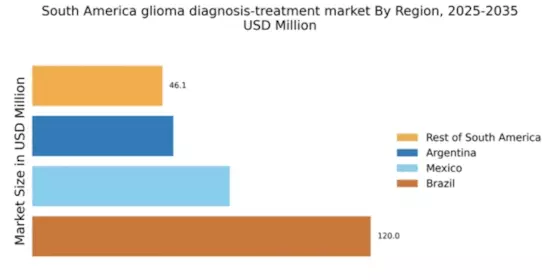
  • Brazil remains the largest market for glioma diagnosis and treatment, while Mexico is recognized as the fastest-growing region.
  • The growth of personalized medicine is enhancing treatment outcomes and patient experiences across the region.
  • Rising incidence of glioma cases and advancements in imaging technologies are key drivers propelling market expansion.

Market Size & Forecast

2024 Market Size 286.15 (USD Million)
2035 Market Size 499.95 (USD Million)
CAGR (2025 - 2035) 5.2%

Major Players

Roche (CH), Novartis (CH), Merck (DE), Bristol-Myers Squibb (US), Eli Lilly (US), Amgen (US), AstraZeneca (GB), Pfizer (US), Bayer (DE)

South America Glioma Diagnosis Treatment Market Trends

The glioma diagnosis-treatment market is currently experiencing notable developments, particularly in South America. The region is witnessing an increase in the prevalence of gliomas, which has prompted healthcare systems to enhance diagnostic capabilities and treatment options. Advances in imaging technologies, such as MRI and CT scans, are becoming more accessible, allowing for earlier detection and improved patient outcomes. Furthermore, the integration of molecular diagnostics is gaining traction, enabling personalized treatment approaches that cater to the unique genetic profiles of tumors. This shift towards precision medicine appears to be reshaping the landscape of glioma management in South America. In addition, the collaboration between public health institutions and private entities is fostering innovation in therapeutic strategies. Clinical trials are increasingly being conducted in South America, focusing on novel therapies, including immunotherapy and targeted treatments. These initiatives not only aim to improve survival rates but also enhance the quality of life for patients. As the healthcare infrastructure continues to evolve, the glioma diagnosis-treatment market is likely to expand, driven by a growing emphasis on research and development, as well as the need for comprehensive care solutions.

Emergence of Advanced Diagnostic Techniques

The glioma diagnosis-treatment market is witnessing a shift towards advanced diagnostic techniques. Enhanced imaging modalities, such as high-resolution MRI and PET scans, are becoming more prevalent. These technologies facilitate earlier and more accurate detection of gliomas, which is crucial for effective treatment planning.

Growth of Personalized Medicine

There is a notable trend towards personalized medicine within the glioma diagnosis-treatment market. Tailored treatment plans based on genetic profiling of tumors are gaining traction. This approach aims to optimize therapeutic efficacy and minimize adverse effects, reflecting a broader shift towards individualized patient care.

Increased Collaboration in Research and Development

Collaboration between academic institutions and healthcare providers is on the rise in the glioma diagnosis-treatment market. Joint efforts in research and clinical trials are fostering innovation. This trend is expected to lead to the development of novel therapies and improved treatment protocols, enhancing patient outcomes.

South America Glioma Diagnosis Treatment Market Drivers

Emergence of Targeted Therapies

The glioma diagnosis-treatment market in South America is witnessing a shift towards the emergence of targeted therapies. These therapies, which focus on specific molecular targets associated with gliomas, are gaining traction due to their potential to improve treatment outcomes. Clinical trials have shown promising results, with some targeted therapies demonstrating a 30% increase in survival rates for certain glioma subtypes. As more targeted treatment options become available, healthcare providers are likely to incorporate these therapies into their treatment protocols. This trend not only enhances the effectiveness of glioma management but also drives the overall growth of the glioma diagnosis-treatment market, as patients seek access to the latest advancements in care.

Growing Awareness and Education

The glioma diagnosis-treatment market in South America is also being driven by growing awareness and education regarding brain tumors. Increased public knowledge about gliomas, their symptoms, and the importance of early diagnosis is leading to more individuals seeking medical attention. Educational campaigns by healthcare organizations and non-profits have contributed to this trend, resulting in a higher rate of early detection. As awareness rises, the demand for diagnostic services and treatment options is expected to increase. This shift in patient behavior is likely to create a more robust market for glioma diagnosis and treatment, as healthcare providers adapt to meet the needs of a more informed patient population.

Rising Incidence of Glioma Cases

The glioma diagnosis-treatment market in South America is experiencing growth due to the rising incidence of glioma cases. Recent data indicates that the incidence rate of gliomas in South America has increased by approximately 2.5% annually. This trend is likely attributed to factors such as environmental influences and lifestyle changes. As the number of diagnosed cases rises, the demand for effective diagnostic and treatment options intensifies. Healthcare providers are compelled to enhance their capabilities in glioma detection and management, thereby driving investments in advanced imaging technologies and treatment modalities. Consequently, this growing patient population is expected to stimulate the glioma diagnosis-treatment market, leading to innovations in therapeutic approaches and improved patient outcomes.

Government Initiatives and Funding

Government initiatives aimed at improving cancer care are playing a pivotal role in the glioma diagnosis-treatment market in South America. Increased funding for cancer research and treatment programs has been observed, with several countries allocating substantial budgets to enhance healthcare infrastructure. For instance, Brazil has committed over $500 million to cancer research initiatives, which includes glioma studies. These investments are expected to foster innovation in diagnostic and therapeutic approaches, ultimately benefiting patients. Furthermore, public health campaigns aimed at raising awareness about gliomas are likely to lead to earlier diagnoses, thereby increasing the demand for treatment options. This supportive environment is anticipated to bolster the glioma diagnosis-treatment market.

Advancements in Imaging Technologies

Technological advancements in imaging modalities are significantly impacting the glioma diagnosis-treatment market in South America. Innovations such as MRI and PET scans have improved the accuracy of glioma detection, allowing for earlier diagnosis and better treatment planning. The market for imaging technologies is projected to grow at a CAGR of 6% over the next five years, reflecting the increasing reliance on these tools in clinical practice. Enhanced imaging capabilities facilitate precise tumor localization and characterization, which are crucial for tailoring treatment strategies. As healthcare facilities adopt these advanced technologies, the glioma diagnosis-treatment market is likely to expand, providing patients with more effective and personalized care.
Market Segment Insights

By Type: Primary Tumors (Largest) vs. Secondary Tumors (Fastest-Growing)

In the glioma diagnosis-treatment market, Primary Tumors represent the largest segment by market share due to their prevalent occurrence compared to Secondary Tumors. The focus on innovative treatment methods and increasing awareness of primary brain tumors significantly drives this market segment. As a result, healthcare providers are emphasizing targeted therapies and early diagnostics to enhance patient outcomes, contributing to the dominance of Primary Tumors in the market. Conversely, Secondary Tumors are gaining traction in market growth as advancements in diagnostic technologies and treatment options emerge. This segment is characterized by a growing recognition of the need for effective management strategies, especially as secondary gliomas can complicate existing cancer therapies. The increasing incidence of metastatic brain tumors is encouraging investment in research and development, making this segment the fastest-growing within the broader diagnosis-treatment landscape.

Primary Tumors: Dominant vs. Secondary Tumors: Emerging

Primary Tumors are recognized as the dominant segment within the glioma diagnosis-treatment sphere, driven by high incidences and the critical need for effective treatment protocols. These tumors primarily arise from glial cells in the brain and are often treated through a combination of surgery, radiation, and chemotherapy. They benefit from extensive research funding and a well-defined treatment pathway. In contrast, Secondary Tumors emerge from cancers that metastasize to the brain from other body parts. Their rising prevalence underscores an increasing focus on better diagnostic techniques and treatment options to address this complex clinical challenge, indicating a shift in market dynamics as Secondary Tumors become a significant focal point for research and clinical trials.

By Diagnosis: MRI (Largest) vs. Biopsy (Fastest-Growing)

The glioma diagnosis segment in South America is characterized by a diverse range of diagnostic tools that vary in popularity and utility. MRI stands out as the largest segment, dominating the market with its advanced imaging capabilities, followed by CT scans and biopsies. Neurological exams and other methods contribute to the market but on a smaller scale. As awareness of glioma diagnostics increases, the distribution of these tools continues to evolve, highlighting the importance of effective diagnosis in treatment outcomes. Growth trends indicate a significant rise in the adoption of biopsies and molecular testing, attributed to advances in technology and a growing emphasis on personalized medicine. As clinicians seek more precise ways to diagnose glioma, the demand for these methods is expected to accelerate. Additionally, the emergence of PET scans and EEGs reflects an ongoing effort to enhance diagnostic accuracy and treatment planning, positioning these tools as instrumental in the future of glioma management.

MRI (Dominant) vs. Biopsy (Emerging)

MRI has long been the dominant method for glioma diagnosis, offering detailed imaging that facilitates early detection and accurate assessment. Its robustness and widespread availability make it the preferred choice among healthcare professionals. Conversely, biopsies, although historically invasive, are emerging as a critical tool due to advancements in techniques that reduce risk and improve patient outcomes. Their role in obtaining tissue samples for molecular testing provides essential information for tailoring treatment strategies. Both methods are now pivotal in the landscape of glioma diagnostics, with MRI maintaining its status while biopsies gain prominence as essential diagnostic components in clinical decision-making.

By Treatment: Surgery (Largest) vs. Chemotherapy (Fastest-Growing)

The market share distribution among treatment methods for glioma diagnosis in South America reveals that Surgery holds the largest share, reflecting its fundamental role in glioma management. Following Surgery, Chemotherapy occupies a significant position, benefiting from continuous advancements and increasing integration into treatment protocols. As healthcare providers increasingly emphasize personalized treatment strategies, these methods are seeing varied adoption rates across regions, influenced by local access to technologies and oncological expertise. Growth trends within the treatment segment are primarily driven by the rising incidence of glioma and the consequent need for effective treatment solutions. Innovations in Chemotherapy have made it a fast-growing option, particularly with the introduction of novel agents that enhance efficacy and reduce side effects. Furthermore, the increasing use of Immunotherapy and Targeted Therapy is reshaping treatment paradigms, offering promising alternatives to traditional approaches, thus expanding the market for innovative treatments.

Surgery: Dominant vs. Chemotherapy: Emerging

Surgery is the dominant treatment method for gliomas, often considered the first line of defense against tumor progression. Its effectiveness in tumor resection makes it crucial for patient outcomes, and ongoing advancements in surgical techniques bolster its utility. On the other hand, Chemotherapy is emerging rapidly within the treatment landscape due to significant breakthroughs that enhance its effectiveness against glioma. The demand for Chemotherapy is surging as it complements surgical interventions and is pivotal in post-operative treatments. This dual approach enhances survival rates and is increasingly becoming the norm as healthcare systems adapt to more integrated care models. The evolution of these treatments signifies a shift towards comprehensive and dynamic management strategies for gliomas.

By Grade: Low Grade Glioma (Largest) vs. Recurrent High Grade Glioma (Fastest-Growing)

In the Grade segment, Low Grade Glioma currently holds the largest market share, reflecting a steady preference for early-stage diagnosis and treatment options among practitioners. This segment benefits from advancements in imaging technologies and a growing understanding of tumor biology, allowing for more accurate identification and management strategies. Recurrent High Grade Glioma, while comprising a smaller portion of the market, is rapidly gaining attention due to its aggressive nature and the need for novel therapeutic approaches, driving investment and research in this area. The growth trends in this segment are largely influenced by the increasing incidence rates of gliomas and an aging population in South America. Moreover, advancements in targeted therapies and immunotherapy are aiding the treatment of both High and Recurrent High Grade Gliomas, enhancing survival rates and improving patient outcomes. A heightened awareness of glioma subtypes and the importance of personalized treatment plans are also contributing factors that are fostering growth within the market, making it crucial for stakeholders to adapt to these evolving needs.

Low Grade Glioma (Dominant) vs. High Grade Glioma (Emerging)

Low Grade Glioma represents the dominant segment within this market, primarily characterized by its indolent nature and better prognosis compared to its high-grade counterparts. Patients with Low Grade Glioma often have a variety of treatment options, including surgical resection, chemotherapy, and radiotherapy, which are tailored based on individual tumor features. Conversely, High Grade Glioma, while considered an emerging segment, presents significant challenges in terms of management due to its aggressive behavior and rapid progression. The need for innovative therapies and new clinical trials targeting High Grade Glioma is becoming increasingly essential. As research continues to evolve, collaborations across institutions are paving the way for more effective treatment methodologies, contributing to the dynamism of this segment.

By Location: Supratentorial (Largest) vs. Infratentorial (Fastest-Growing)

The market share distribution in the glioma diagnosis-treatment sector reveals that the supratentorial location holds the largest portion of the market, being more frequently diagnosed and treated. Conversely, the infratentorial segment, although smaller in share, is experiencing a notable upward trend in demand due to increasing awareness and advancements in diagnostic technologies. Growth trends for these segments are influenced largely by improvements in imaging techniques and tailored therapeutic approaches. The supratentorial area benefits from established diagnostic protocols, making it a dominant force in treatment strategies, while the infratentorial segment is gaining attention for its unique treatment challenges, driving investment and research aimed at addressing these needs in the coming years.

Supratentorial (Dominant) vs. Infratentorial (Emerging)

The supratentorial segment is characterized by a higher incidence of gliomas, often attributed to its anatomical position, which allows for better accessibility during surgical interventions. Its established treatment pathways and broad clinical experience make it the dominant segment, benefiting from ongoing research and innovation in therapy options. In contrast, the infratentorial segment, often considered emerging, presents unique challenges such as critical neurological functions located in that region, making it a focal point for developing specialized treatment methodologies. Increased investment in research specifically targeting infratentorial gliomas is expected to enhance diagnosis and treatment, reflecting a growing focus on overcoming the complexities associated with this segment.

By End User: Hospitals & Clinics (Largest) vs. Diagnostic Centers (Fastest-Growing)

In the South America glioma diagnosis-treatment market, Hospitals & Clinics represent the largest segment, holding a significant share due to their comprehensive medical facilities and accessibility. This segment benefits from the integration of various healthcare services, ensuring a streamlined approach to glioma treatment and diagnosis. On the other hand, Diagnostic Centers are rapidly emerging, capturing increasing attention and investment due to their specialized focus on imaging and laboratory tests, which are crucial for accurate glioma diagnosis and monitoring. The growth trends within this segment are influenced by several factors, including the rising prevalence of glioma cases, advancements in diagnostic technologies, and increasing healthcare expenditures in South America. Hospitals & Clinics continue to thrive as they adapt to changing patient needs, whereas Diagnostic Centers are becoming vital for their specialized offerings, driving demand for timely and precise diagnosis. The integration of novel diagnostic tools and personalized treatment options is fostering growth across these sectors, paving the way for enhanced patient outcomes.

Hospitals & Clinics (Dominant) vs. Diagnostic Centers (Emerging)

Hospitals & Clinics maintain a dominant position in the glioma diagnosis-treatment space due to their extensive resources, multidisciplinary approach, and ability to provide holistic patient care. They cater to a broad spectrum of medical needs and maintain advanced technology for treatment protocols. In contrast, Diagnostic Centers are emerging as key players by focusing on precision diagnostics and early detection techniques, which are essential for effective glioma management. These centers usually have specialized equipment and skilled professionals dedicated to neuroimaging and analysis, making them critical for timely intervention. While Hospitals & Clinics provide comprehensive treatment solutions, Diagnostic Centers are crucial in ensuring accurate and prompt diagnoses, thereby playing an indispensable role in the overall treatment ecosystem.

Get more detailed insights about South America Glioma Diagnosis Treatment Market

Regional Insights

Brazil : Strong Demand and Infrastructure Growth

Brazil holds a dominant position in the glioma diagnosis-treatment market, accounting for 120.0 million, representing a significant share of the South American market. Key growth drivers include increasing healthcare expenditure, advancements in medical technology, and a rising incidence of glioma cases. Government initiatives aimed at improving healthcare access and regulatory support for innovative treatments further bolster market demand. The country's robust healthcare infrastructure and investment in research and development are pivotal for sustained growth.

Mexico : Increasing Awareness and Treatment Access

Key markets include Mexico City and Guadalajara, where healthcare facilities are rapidly evolving. The competitive landscape features major players like Roche and Novartis, who are investing in local partnerships. The business environment is becoming more favorable due to regulatory reforms aimed at streamlining drug approvals and enhancing patient access to innovative therapies. The oncology sector is particularly dynamic, with a focus on personalized medicine.

Argentina : Focus on Innovative Therapies

Key markets include Buenos Aires and Córdoba, where healthcare infrastructure is being upgraded. The competitive landscape features significant players like Merck and Eli Lilly, who are expanding their presence through collaborations with local healthcare providers. The business environment is improving, with regulatory bodies working to expedite the approval process for new treatments. The focus on advanced therapies is reshaping the local market dynamics.

Rest of South America : Varied Demand Across Countries

Countries like Chile and Colombia are emerging as key markets, with Santiago and Bogotá leading in healthcare advancements. The competitive landscape is fragmented, with local and international players vying for market share. Major companies like Pfizer and AstraZeneca are establishing partnerships to enhance their market presence. The business environment is characterized by regulatory challenges, but ongoing reforms are expected to improve access to innovative treatments.

South America Glioma Diagnosis Treatment Market Regional Image

Key Players and Competitive Insights

The glioma diagnosis-treatment market in South America is characterized by a competitive landscape that is increasingly shaped by innovation, strategic partnerships, and regional expansion. Key players such as Roche (CH), Novartis (CH), and Merck (DE) are actively pursuing strategies that emphasize the development of advanced therapeutic solutions and diagnostic tools. These companies appear to be focusing on enhancing their product portfolios through research and development, while also exploring collaborations with local healthcare providers to improve patient access to cutting-edge treatments. This collective approach not only strengthens their market positions but also fosters a more dynamic competitive environment.

In terms of business tactics, companies are increasingly localizing manufacturing and optimizing supply chains to enhance operational efficiency. The market structure is moderately fragmented, with several players vying for market share. However, the influence of major companies is significant, as they leverage their resources to establish a strong foothold in the region. This competitive structure suggests that while there is room for smaller entities, the dominance of key players is likely to shape market trends and consumer preferences.

In October 2025, Roche (CH) announced a strategic partnership with a leading South American biotechnology firm to co-develop a novel glioma treatment. This collaboration is expected to accelerate the development timeline and enhance the therapeutic options available to patients. The strategic importance of this partnership lies in Roche's ability to leverage local expertise and resources, potentially leading to more effective treatments tailored to the regional patient population.

In September 2025, Novartis (CH) launched a new diagnostic tool aimed at improving the accuracy of glioma detection in clinical settings. This innovation is significant as it not only enhances patient outcomes but also positions Novartis as a leader in the diagnostic segment of the market. The introduction of this tool reflects a broader trend towards integrating advanced technologies in healthcare, which is likely to influence competitive dynamics moving forward.

In August 2025, Merck (DE) expanded its clinical trial initiatives in South America, focusing on a promising glioma therapy. This expansion is indicative of Merck's commitment to investing in the region and underscores the importance of clinical research in driving innovation. By increasing its presence in clinical trials, Merck aims to gather valuable data that could inform future treatment protocols and solidify its competitive edge.

As of November 2025, current trends in the glioma diagnosis-treatment market are increasingly defined by digitalization, sustainability, and the integration of artificial intelligence (AI) in therapeutic development. Strategic alliances are becoming more prevalent, as companies recognize the value of collaboration in navigating complex regulatory environments and enhancing product offerings. Looking ahead, competitive differentiation is likely to evolve from traditional price-based competition to a focus on innovation, technological advancements, and supply chain reliability, suggesting a transformative shift in how companies approach market challenges.

Key Companies in the South America Glioma Diagnosis Treatment Market market include

Industry Developments

In recent developments within the South America Glioma Diagnosis and Treatment Market, Novartis and Roche have been active in expanding their therapeutic offerings, particularly in immunotherapy and precision medicine. Notably, in September 2023, Genentech announced the launch of a new study on brain tumor treatments targeting gliomas, highlighting its commitment to advancing Research and Development in this area.

There have also been significant valuation increases for companies such as Pfizer and Merck, indicating a robust investment environment in glioma therapies. Furthermore, in July 2023, AbbVie entered into a collaborative agreement with a local firm in Brazil to enhance treatment access for glioma patients, responding to regional healthcare needs.

Looking back, during 2021 and 2022, AstraZeneca and Johnson and Johnson made significant strides in clinical trials tailored for glioma treatments, which set the stage for current innovations. The South American market continues to attract attention due to increasing incidences of gliomas, prompting companies to adapt their strategies to better serve local populations.

Ongoing mergers and acquisitions, though limited recently, reflect a keen interest in consolidating expertise in the glioma diagnosis and treatment sector, ultimately aiming for comprehensive patient care across the region.

Future Outlook

South America Glioma Diagnosis Treatment Market Future Outlook

The Glioma Diagnosis Treatment Market is projected to grow at a 5.2% CAGR from 2024 to 2035, driven by advancements in diagnostic technologies and increasing healthcare investments.

New opportunities lie in:

  • Development of AI-driven diagnostic tools for early glioma detection.
  • Expansion of telemedicine services for remote patient monitoring.
  • Partnerships with biotech firms for innovative treatment solutions.

By 2035, the market is expected to achieve substantial growth, reflecting evolving treatment paradigms.

Market Segmentation

South America Glioma Diagnosis Treatment Market Type Outlook

  • Primary Tumors
  • Secondary Tumors

South America Glioma Diagnosis Treatment Market Grade Outlook

  • Low Grade Glioma
  • High Grade Glioma
  • Recurrent High Grade Glioma

South America Glioma Diagnosis Treatment Market End User Outlook

  • Hospitals & Clinics
  • Diagnostic Centers
  • Medical Research Centers
  • Others

South America Glioma Diagnosis Treatment Market Location Outlook

  • Supratentorial
  • Infratentorial

South America Glioma Diagnosis Treatment Market Diagnosis Outlook

  • Neurological Exam
  • CT Scan
  • MRI
  • PET Scan
  • Biopsy
  • Molecular Testing
  • EEG
  • Others

South America Glioma Diagnosis Treatment Market Treatment Outlook

  • Surgery
  • Chemotherapy
  • Radiation Therapy
  • Immunotherapy
  • Targeted Therapy

Report Scope

MARKET SIZE 2024286.15(USD Million)
MARKET SIZE 2025301.03(USD Million)
MARKET SIZE 2035499.95(USD Million)
COMPOUND ANNUAL GROWTH RATE (CAGR)5.2% (2024 - 2035)
REPORT COVERAGERevenue Forecast, Competitive Landscape, Growth Factors, and Trends
BASE YEAR2024
Market Forecast Period2025 - 2035
Historical Data2019 - 2024
Market Forecast UnitsUSD Million
Key Companies Profiled["Roche (CH)", "Novartis (CH)", "Merck (DE)", "Bristol-Myers Squibb (US)", "Eli Lilly (US)", "Amgen (US)", "AstraZeneca (GB)", "Pfizer (US)", "Bayer (DE)"]
Segments CoveredType, Diagnosis, Treatment, Grade, Location, End User
Key Market OpportunitiesEmerging diagnostic technologies enhance precision in glioma diagnosis-treatment market, addressing unmet clinical needs.
Key Market DynamicsRising demand for advanced imaging techniques enhances glioma diagnosis and treatment options in South America.
Countries CoveredBrazil, Mexico, Argentina, Rest of South America

Leave a Comment

FAQs

What is the expected market size of the South America Glioma Diagnosis and Treatment Market in 2024?

The South America Glioma Diagnosis and Treatment Market is expected to be valued at 286.4 million USD in 2024.

What is the projected market value for the South America Glioma Diagnosis and Treatment Market by 2035?

By 2035, the market is projected to reach a value of 499.99 million USD.

What is the expected compound annual growth rate (CAGR) for the South America Glioma Diagnosis and Treatment Market from 2025 to 2035?

The expected CAGR for the South America Glioma Diagnosis and Treatment Market from 2025 to 2035 is 5.196%.

Which region is anticipated to hold the largest market share in the South America Glioma Diagnosis and Treatment Market?

Brazil is anticipated to hold the largest market share, valued at 98.5 million USD in 2024.

What will be the market value of Secondary Tumors in the South America Glioma Diagnosis and Treatment Market in 2035?

The market value for Secondary Tumors is expected to reach 196.93 million USD in 2035.

Who are the key players in the South America Glioma Diagnosis and Treatment Market?

Major players in the market include Novartis, Genentech, Merck, and Bristol Myers Squibb among others.

What will be the market value for Primary Tumors in 2024?

The market value for Primary Tumors is projected at 171.84 million USD in 2024.

How does the market for Glioma Diagnosis and Treatment vary across different regions in South America?

In 2024, Brazil is valued at 98.5 million USD, Mexico at 75.3 million USD, Argentina at 40.6 million USD, and the rest of South America at 71.0 million USD.

What is the expected growth in market size for Primary Tumors by 2035?

The market for Primary Tumors is expected to grow to 303.06 million USD by 2035.

What are some key growth drivers for the South America Glioma Diagnosis and Treatment Market?

Key growth drivers include advancements in medical technology and increasing healthcare expenditure in South America.

Download Free Sample

Kindly complete the form below to receive a free sample of this Report

Compare Licence

×
Features License Type
Single User Multiuser License Enterprise User
Price $4,950 $5,950 $7,250
Maximum User Access Limit 1 User Upto 10 Users Unrestricted Access Throughout the Organization
Free Customization
Direct Access to Analyst
Deliverable Format
Platform Access
Discount on Next Purchase 10% 15% 15%
Printable Versions