Advancements in Stem Cell Research
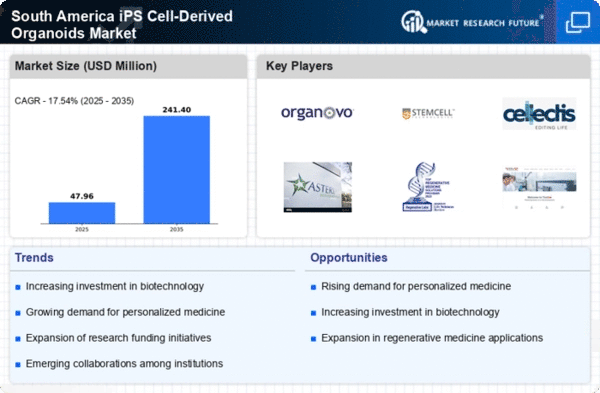
Recent advancements in stem cell research are significantly influencing the ips cell-derived-organoids market in South America. Breakthroughs in understanding stem cell biology and differentiation processes have led to the development of more sophisticated organoid models. These models are increasingly being utilized in drug discovery, toxicity testing, and disease modeling. Countries like Argentina and Chile are at the forefront of this research, with numerous institutions focusing on stem cell applications. The market for stem cell therapies is projected to grow substantially, potentially reaching $1.5 billion by 2027 in South America. This growth is likely to create a favorable environment for the ips cell-derived-organoids market, as researchers and clinicians seek to leverage these advancements for therapeutic purposes.
Rising Prevalence of Chronic Diseases
The escalating prevalence of chronic diseases in South America is a significant driver for the ips cell-derived-organoids market. Conditions such as diabetes, cancer, and cardiovascular diseases are becoming increasingly common, necessitating innovative research and treatment approaches. Ips cell-derived organoids offer a promising platform for studying disease mechanisms and testing new therapies. According to recent statistics, chronic diseases account for nearly 70% of all deaths in the region, highlighting the urgent need for effective treatment solutions. This growing health crisis is likely to enhance the demand for organoid technology, as researchers seek to develop more effective and targeted therapies using ips cell-derived organoids.
Growing Demand for Personalized Medicine
The increasing emphasis on personalized medicine in South America is driving the ips cell-derived-organoids market. As healthcare systems evolve, there is a notable shift towards treatments tailored to individual patient profiles. This trend is supported by advancements in genomics and biotechnology, which enable the development of organoids that closely mimic human physiology. The market for personalized medicine is projected to reach approximately $2 billion by 2026 in South America, indicating a robust growth trajectory. This demand for customized therapeutic solutions is likely to propel the ips cell-derived-organoids market, as these organoids can be utilized for drug testing and disease modeling, thereby enhancing treatment efficacy and safety.
Increased Funding for Regenerative Medicine
In South America, there is a marked increase in funding directed towards regenerative medicine, which significantly impacts the ips cell-derived-organoids market. Governments and private investors are recognizing the potential of stem cell research and organoid technology in addressing chronic diseases and injuries. For instance, Brazil has allocated substantial resources to research initiatives aimed at developing innovative therapies using ips cell-derived organoids. This influx of capital is expected to foster advancements in organoid technology, leading to improved applications in drug discovery and disease modeling. The regenerative medicine market in South America is anticipated to grow at a CAGR of around 15% over the next five years, further stimulating the ips cell-derived-organoids market.
Collaborative Efforts in Research and Development
Collaborative efforts among academic institutions, government agencies, and private companies are fostering innovation in the ips cell-derived-organoids market in South America. These partnerships are essential for sharing knowledge, resources, and expertise, which can accelerate the development of organoid technologies. For example, joint research initiatives between universities and biotech firms are increasingly common, leading to the creation of advanced organoid models for various applications. Such collaborations are expected to enhance the overall research landscape, driving the market forward. The collaborative research funding in the region is projected to increase by approximately 20% over the next few years, indicating a strong commitment to advancing the ips cell-derived-organoids market.



















Leave a Comment