Download Free Sample
Kindly complete the form below to receive a free sample of this Report
South America Myasthenia Gravis Market Research Report: Size, Share, Trend Analysis By Disease Type (Acetylcholine Receptor Antibody Positive Myasthenia Gravis, Muscle-Specific Kinase Antibody Positive Myasthenia Gravis, Seronegative Myasthenia Gravis), By Treatment Type (Anticholinesterase Agents, Immunosuppressants, Intravenous Immunoglobulin, Plasmapheresis, Thymectomy), By Route of Administration (Oral, Intravenous, Subcutaneous), By End Users (Hospitals, Specialty Clinics, Homecare Settings) and By Regional (Brazil, Mexico, Argentina, Rest of South America)
As per Market Research Future analysis, the Myasthenia Gravis market size was estimated at 69.76 USD Million in 2024. The myasthenia gravis market is projected to grow from 74.85 USD Million in 2025 to 151.5 USD Million by 2035, exhibiting a compound annual growth rate (CAGR) of 7% during the forecast period 2025 - 2035
The South America myasthenia gravis market is experiencing notable growth driven by increased awareness and advancements in treatment options.
| 2024 Market Size | 69.76 (USD Million) |
| 2035 Market Size | 151.5 (USD Million) |
| CAGR (2025 - 2035) | 7.3% |
Roche (CH), Bristol-Myers Squibb (US), Novartis (CH), Sanofi (FR), Pfizer (US), AstraZeneca (GB), Eisai (JP), Amgen (US), Teva (IL)
Our Impact
Enabled $4.3B Revenue Impact for Fortune 500 and Leading Multinationals
Partnering with 2000+ Global Organizations Each Year
30K+ Citations by Top-Tier Firms in the Industry
The myasthenia gravis market is currently experiencing notable developments, particularly in South America. The region has seen an increase in awareness regarding this neuromuscular disorder, which is characterized by weakness in the skeletal muscles. This heightened awareness is likely to lead to improved diagnosis and treatment options, as healthcare providers become more familiar with the condition. Furthermore, the growing population of elderly individuals in South America may contribute to a rise in myasthenia gravis cases, as the disorder is more prevalent among older adults. As a result, there is a potential for increased demand for therapeutic interventions and support services tailored to this demographic. In addition to demographic factors, advancements in medical research and technology are influencing the myasthenia gravis market. Innovative treatment modalities, including monoclonal antibodies and immunosuppressive therapies, are being explored and may soon become available in South America. These developments could enhance patient outcomes and quality of life. Moreover, collaboration between healthcare institutions and research organizations is likely to foster a more robust understanding of the disease, paving the way for novel therapeutic approaches. Overall, the myasthenia gravis market in South America appears poised for growth, driven by increased awareness, demographic shifts, and ongoing research efforts.
There is a growing emphasis on raising awareness about myasthenia gravis among healthcare professionals and the general public in South America. Educational initiatives are being implemented to improve understanding of the disorder, which may lead to earlier diagnosis and better management of symptoms.
Recent developments in treatment options for myasthenia gravis are emerging in South America. Innovative therapies, including biologics and targeted immunotherapies, are being investigated, potentially offering new hope for patients and improving overall treatment outcomes.
The expansion of supportive care services for individuals with myasthenia gravis is becoming increasingly important. This includes the establishment of specialized clinics and support groups, which aim to provide comprehensive care and enhance the quality of life for patients.
Government initiatives aimed at improving healthcare infrastructure and funding for rare diseases play a significant role in the myasthenia gravis market. In South America, various governments are increasingly allocating resources to enhance research and development for autoimmune disorders. For instance, funding programs for clinical trials and patient registries are being established, which could lead to the discovery of new treatment options. Additionally, public health campaigns aimed at raising awareness about myasthenia gravis are being implemented, which may encourage more patients to seek diagnosis and treatment. This proactive approach by governments is likely to stimulate growth in the myasthenia gravis market, as it fosters an environment conducive to innovation and improved patient outcomes.
The increasing investment in biopharmaceuticals is a notable driver for the myasthenia gravis market. In South America, pharmaceutical companies are focusing on developing novel therapies that target the underlying mechanisms of myasthenia gravis. This shift towards biopharmaceuticals is driven by the potential for higher efficacy and fewer side effects compared to traditional therapies. Market data suggests that the biopharmaceutical sector is expected to grow at a CAGR of around 8% over the next five years, indicating a robust interest in innovative treatment options. As more companies enter the market with new products, the myasthenia gravis market is poised for significant expansion.
The rising incidence of myasthenia gravis in South America is a crucial driver for the myasthenia gravis market. Recent studies indicate that the prevalence of this autoimmune disorder is increasing, with estimates suggesting that approximately 20 in 100,000 individuals are affected. This growing patient population necessitates enhanced healthcare services and treatment options, thereby expanding the market. Furthermore, the increasing awareness among healthcare professionals regarding the symptoms and diagnosis of myasthenia gravis contributes to earlier detection and treatment, which is likely to drive market growth. As more patients seek medical attention, the demand for innovative therapies and supportive care services is expected to rise, further propelling the myasthenia gravis market in the region.
Technological advancements in diagnostic tools are transforming the myasthenia gravis market in South America. The introduction of more sophisticated diagnostic techniques, such as advanced imaging and biomarker identification, is enabling healthcare providers to diagnose myasthenia gravis more accurately and swiftly. This is particularly important in a region where misdiagnosis can lead to delayed treatment and worsened patient outcomes. Enhanced diagnostic capabilities not only improve patient care but also increase the overall demand for treatment options, thereby driving market growth. As healthcare facilities adopt these new technologies, the myasthenia gravis market is likely to experience a surge in both patient referrals and treatment initiation.
The emergence of patient advocacy and support groups is increasingly influencing the myasthenia gravis market. In South America, these organizations play a vital role in raising awareness about the condition and providing resources for patients and their families. They often collaborate with healthcare providers to facilitate educational programs and support networks, which can lead to improved patient engagement and adherence to treatment plans. The presence of these groups not only empowers patients but also drives demand for new therapies and services tailored to their needs. As advocacy efforts continue to grow, the myasthenia gravis market is likely to benefit from heightened visibility and increased patient participation.
In the South America myasthenia gravis market, the treatment type segment exhibits varied distribution of market share. Anticholinesterase inhibitors currently hold the largest share due to their established efficacy in managing symptoms of myasthenia gravis. Following them, immunosuppressants and monoclonal antibodies are gaining traction, with the latter showing significant growth potential as new therapies emerge. Despite being historically underutilized, treatments like plasmatherapy and intravenous immunoglobulin are also carving out their niche in the market.
Anticholinesterase Inhibitors (Dominant) vs. Monoclonal Antibodies (Emerging)
Anticholinesterase inhibitors are dominant in the South America myasthenia gravis market, valued for their ability to increase acetylcholine levels at neuromuscular junctions, providing symptomatic relief for patients. They have a longstanding history of use, contributing to their strong market position. Conversely, monoclonal antibodies represent an emerging force, targeting specific pathways implicated in the disease's pathophysiology. These therapies are becoming increasingly preferred due to their targeted action and clinical trials that showcase their effectiveness, thus making them a promising option for future treatment strategies. This dichotomy in the market highlights the dynamic nature of treatment preferences among healthcare providers and patients.
In the South America myasthenia gravis market, the diagnosis methods exhibit a diverse distribution of market share. Clinical examination remains the largest segment, primarily due to its widespread availability and reliance on physician experience. Following this, serological tests and electromyography hold significant shares, catering to the need for more specific diagnostic tools. CT scan and MRI, while essential, have a smaller overall footprint, primarily due to operational costs and accessibility in certain regions. Growth trends within the diagnosis methods segment show a steady increase in the adoption of electromyography, which is considered the fastest-growing method. The increasing awareness of myasthenia gravis and advancements in medical technology contribute to this growth. Moreover, the rise in healthcare spending across South America supports the enhanced implementation of sophisticated diagnostic techniques, indicating a promising outlook for all diagnosis methods.
Clinical Examination (Dominant) vs. Electromyography (Emerging)
In the South America myasthenia gravis market, clinical examination stands as the dominant diagnosis method, lauded for its simplicity and the essential role it plays in initial evaluations. This method benefits from widespread familiarity among healthcare providers and requires minimal resources. In contrast, electromyography is emerging as a pivotal diagnostic tool, gaining popularity due to its ability to provide more detailed insights into neuromuscular transmission. As physicians increasingly embrace this technology, its role is expected to expand within clinical practices. The unique characteristics of these two methods highlight the ongoing balance between traditional approaches and innovative techniques in diagnosing myasthenia gravis.
In the South America myasthenia gravis market, the patient demographics are predominantly characterized by age groups where adults aged 50 and above represent the largest share. This demographic is particularly significant as myasthenia gravis prevalence increases with age. Conversely, the gender distribution shows a notable trend where females are increasingly diagnosed and treated for myasthenia gravis, marking them as the fastest-growing segment within this population.
Age Group (Dominant) vs. Gender (Emerging)
The age group of 50 and above is dominant in the South America myasthenia gravis market, primarily due to the disease's association with age-related autoimmunity. This demographic encounters a higher incidence and severity of symptoms, leading to increased healthcare engagement. On the other hand, the emerging gender segment, particularly females, is gaining focus, as studies indicate that women are being diagnosed later in life but represent a significant share of new cases in their 40s and 50s. Their increasing diagnosis rate contributes to growing awareness and tailored therapeutic approaches, highlighting a shift in the demographic landscape.
In the South America myasthenia gravis market, the healthcare settings play a crucial role in patient management and care. Hospitals dominate the market share, serving as the primary facility for diagnosis, treatment, and patient recovery. Outpatient clinics are also significant but tend to focus on follow-up care and management, while specialized neurology centers are gaining traction due to their dedicated services for neurological disorders. Home healthcare has slowly emerged, catering to patients requiring continuous support in a familiar environment. Pharmaceutical distribution is vital in ensuring that medications reach these settings effectively.
Hospitals (Dominant) vs. Specialized Neurology Centers (Emerging)
Hospitals are the cornerstone of the myasthenia gravis market in South America, providing comprehensive care including diagnostic testing, acute treatment, and rehabilitation. Their established infrastructure, trained medical personnel, and ability to handle complex cases solidify their dominant market position. Conversely, specialized neurology centers are rapidly emerging, focusing exclusively on neurological disorders like myasthenia gravis. These centers offer innovative therapies and personalized treatment plans, attracting patients seeking specialized care. The growing emphasis on tailored neurology services, together with advancements in treatment options, positions them for significant growth as awareness of neuromuscular diseases increases.
Get more detailed insights about South America Myasthenia Gravis Market Request Free Sample
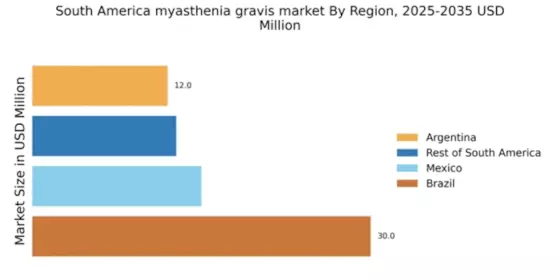
Brazil holds a commanding 30.0% market share in the South American myasthenia gravis market, driven by increasing awareness and improved diagnostic capabilities. Key growth drivers include government initiatives aimed at enhancing healthcare access and the introduction of innovative therapies. The regulatory environment is supportive, with streamlined approval processes for new treatments. Infrastructure improvements in healthcare facilities further bolster market growth, catering to rising patient demand.
Mexico accounts for 15.0% of the South American myasthenia gravis market, characterized by increasing patient awareness and access to treatment. The government has implemented policies to improve healthcare delivery, which is crucial for patient management. Demand is rising due to a growing population and better healthcare infrastructure, particularly in urban areas. The market is also seeing a shift towards personalized medicine, enhancing treatment outcomes.
Argentina holds a 12.0% share of the myasthenia gravis market in South America, with growth driven by increasing healthcare investments and patient advocacy. Regulatory challenges persist, but recent reforms aim to streamline drug approvals. Demand is influenced by a rising prevalence of autoimmune diseases and a focus on improving treatment protocols. The government is also promoting research initiatives to better understand myasthenia gravis.
The Rest of South America represents a 12.76% share in the myasthenia gravis market, with diverse healthcare landscapes across countries. Growth is driven by localized healthcare initiatives and increasing access to treatments. Countries like Chile and Colombia are emerging as key markets, supported by government policies aimed at improving healthcare access. The competitive landscape features both local and international players, adapting to regional needs and preferences.
The myasthenia gravis market in South America is characterized by a competitive landscape that is increasingly shaped by innovation, strategic partnerships, and regional expansion. Key players such as Roche (CH), Bristol-Myers Squibb (US), and Novartis (CH) are actively pursuing strategies that emphasize research and development, aiming to enhance their product offerings and market presence. Roche (CH) has focused on advancing its pipeline of therapies, while Bristol-Myers Squibb (US) has been enhancing its collaborative efforts with local healthcare providers to improve patient access to treatments. Novartis (CH) appears to be leveraging its extensive experience in neurology to introduce novel therapies tailored to the unique needs of South American patients, thereby influencing the competitive dynamics of the market. The business tactics employed by these companies include localizing manufacturing and optimizing supply chains to better serve the regional market. The competitive structure of the myasthenia gravis market is moderately fragmented, with several players vying for market share. This fragmentation allows for a diverse range of treatment options, yet the collective influence of major companies like Roche (CH) and Novartis (CH) is significant, as they set benchmarks for innovation and quality in the industry. In October 2025, Roche (CH) announced a strategic partnership with a local biotechnology firm to co-develop a new treatment for myasthenia gravis. This collaboration is expected to enhance Roche's research capabilities and expedite the development of therapies that are more aligned with the specific needs of South American patients. Such partnerships not only bolster Roche's position in the market but also reflect a broader trend of collaboration aimed at accelerating drug development processes. In September 2025, Bristol-Myers Squibb (US) launched a new patient assistance program designed to improve access to its myasthenia gravis treatments across South America. This initiative is particularly significant as it addresses the financial barriers that many patients face, thereby potentially increasing the company's market share. By prioritizing patient access, Bristol-Myers Squibb (US) is likely to enhance its reputation and foster loyalty among healthcare providers and patients alike. In August 2025, Novartis (CH) expanded its clinical trial network in Brazil, focusing on innovative therapies for myasthenia gravis. This expansion is indicative of Novartis's commitment to advancing research in the region and underscores the importance of local clinical data in shaping treatment protocols. By investing in local trials, Novartis (CH) not only strengthens its product pipeline but also positions itself as a leader in the regional market. As of November 2025, the competitive trends in the myasthenia gravis market are increasingly defined by digitalization, sustainability, and the integration of artificial intelligence in drug development. Strategic alliances are becoming more prevalent, as companies recognize the value of collaboration in navigating complex regulatory environments and enhancing innovation. Looking ahead, the competitive differentiation in this market is likely to evolve from traditional price-based competition to a focus on technological advancements, innovative therapies, and reliable supply chains, thereby reshaping the landscape of treatment options available to patients.






The South America Myasthenia Gravis Market has been witnessing significant developments recently, particularly with companies such as Genentech, Novartis, and AstraZeneca focusing on expanding their therapeutic options and improving patient outcomes. In November 2022, Roche announced advancements in their myasthenia gravis treatment protocols, which have influenced competitive strategies in the region. Current affairs indicate a rising prevalence of the condition, prompting increased investment in research and development by firms like Merck and Bristol-Myers Squibb, aimed at creating innovative therapies targeted specifically for the South American demographic.
Notably, the market is experiencing an upward valuation, driven by heightened awareness of the disease and improved healthcare infrastructures in countries like Brazil and Argentina, as reported by government health agencies. Additionally, amidst the dynamic landscape, Pfizer and Boehringer Ingelheim have been engaging in strategic collaborations to enhance drug accessibility, while recent mergers and acquisitions remain relatively scarce. However, as of October 2023, there were reports of ongoing negotiations for potential mergers involving Mylan and Teva Pharmaceuticals, which could further reshape the competitive landscape in the South American Myasthenia Gravis market in the upcoming years.
The Myasthenia Gravis Market is projected to grow at a 7.3% CAGR from 2025 to 2035, driven by increasing patient awareness, advancements in treatment options, and enhanced diagnostic technologies.
New opportunities lie in:
By 2035, the myasthenia gravis market is expected to achieve substantial growth and innovation.
| MARKET SIZE 2024 | 69.76(USD Million) |
| MARKET SIZE 2025 | 74.85(USD Million) |
| MARKET SIZE 2035 | 151.5(USD Million) |
| COMPOUND ANNUAL GROWTH RATE (CAGR) | 7.3% (2025 - 2035) |
| REPORT COVERAGE | Revenue Forecast, Competitive Landscape, Growth Factors, and Trends |
| BASE YEAR | 2024 |
| Market Forecast Period | 2025 - 2035 |
| Historical Data | 2019 - 2024 |
| Market Forecast Units | USD Million |
| Key Companies Profiled | Roche (CH), Bristol-Myers Squibb (US), Novartis (CH), Sanofi (FR), Pfizer (US), AstraZeneca (GB), Eisai (JP), Amgen (US), Teva (IL) |
| Segments Covered | Disease Type, Treatment Type, Route of Administration, End User |
| Key Market Opportunities | Emergence of novel therapies and personalized medicine approaches in the myasthenia gravis market. |
| Key Market Dynamics | Rising demand for innovative therapies in myasthenia gravis market driven by evolving patient needs and regulatory support. |
| Countries Covered | Brazil, Mexico, Argentina, Rest of South America |
The South America myasthenia gravis market was valued at 209.27 USD Million in 2024.
The market is expected to reach a valuation of 455.21 USD Million by 2035.
The expected CAGR for the South America myasthenia gravis market from 2025 to 2035 is 7.32%.
Key players include Roche, Novartis, Bristol-Myers Squibb, Sanofi, Pfizer, Merck & Co., Amgen, Teva Pharmaceutical Industries, and AstraZeneca.
Main treatment types include Anticholinesterase Inhibitors, Immunosuppressants, Monoclonal Antibodies, Plasmapheresis, and Intravenous Immunoglobulin.
Immunosuppressants generated revenue between 70.0 and 150.0 USD Million.
Diagnostic methods include Clinical Examination, Electromyography, Serological Tests, CT Scan, and MRI.
MRI generated revenue between 64.27 and 130.21 USD Million.
The market is segmented by Age Group, Gender, Socioeconomic Status, Geographic Distribution, and Comorbidities.
Healthcare settings include Hospitals, Outpatient Clinics, Specialized Neurology Centers, Home Healthcare, and Pharmaceutical Distribution.


Kindly complete the form below to receive a free sample of this Report

“This is really good guys. Excellent work on a tight deadline. I will continue to use you going forward and recommend you to others. Nice job”


“Thanks. It’s been a pleasure working with you, please use me as reference with any other Intel employees.”


“Thanks for sending the report it gives us a good global view of the Betaïne market.”


“Thank you, this will be very helpful for OQS.”


“We found the report very insightful! we found your research firm very helpful. I'm sending this email to secure our future business.”


“I am very pleased with how market segments have been defined in a relevant way for my purposes (such as "Portable Freezers & refrigerators" and "last-mile"). In general the report is well structured. Thanks very much for your efforts.”


“I have been reading the first document or the study, ,the Global HVAC and FP market report 2021 till 2026. Must say, good info! I have not gone in depth at all parts, but got a good indication of the data inside!”


“We got the report in time, we really thank you for your support in this process. I also thank to all of your team as they did a great job.”


“The Automotive 48V ECU Components Procurement Intelligence Study” was a complex project, but the Market Research Future (MRFR) team handled it with quality, agility, and customer-centricity. They delivered all requested data on time and within the agreed scope. The team, including Shubhendra Anand and Rahul Gotadki, was always readily available to clarify questions and swiftly implement necessary adjustments, driving the project to a successful conclusion within a very demanding timeframe.
I would also like to specifically commend Akshay Agarwal for his responsiveness and support at every stage—from our initial inquiry on May 6th through to final delivery on June 18th. His dedication made the entire process seamless.”



