×
Request Free Sample ×

Kindly complete the form below to receive a free sample of this Report

* Please use a valid business email

Leading companies partner with us for data-driven Insights

clients tt-cursor
Hero Background

South America Pain Relief Medication Market

ID: MRFR/HC/49337-HCR
200 Pages
Rahul Gotadki
October 2025

South America Pain Relief Medication Market Research Report By Medication Type (Non-Steroidal Anti-Inflammatory Drugs, Acetaminophen, Opioids, Adjuvant Analgesics), By Formulation Type (Tablets, Capsules, Liquid, Topical), By Route of Administration (Oral, Topical, Injectable, Transdermal), By Therapeutic Area (Chronic Pain, Acute Pain, Postoperative Pain, Cancer Pain) and By Regional (Brazil, Mexico, Argentina, Rest of South America)- Forecast to 2035

Share:
Download PDF ×

We do not share your information with anyone. However, we may send you emails based on your report interest from time to time. You may contact us at any time to opt-out.

South America Pain Relief Medication Market Infographic
Purchase Options

South America Pain Relief Medication Market Summary

As per MRFR analysis, the South America pain relief-medication market Size was estimated at 10.75 USD Billion in 2024. The South America pain relief-medication market is projected to grow from 11.28 USD Billion in 2025 to 18.23 USD Billion by 2035, exhibiting a compound annual growth rate (CAGR) of 4.92% during the forecast period 2025 - 2035.

Key Market Trends & Highlights

The South America pain relief-medication market is experiencing a transformative shift towards non-opioid alternatives and innovative distribution methods.

  • The market is witnessing a notable shift towards non-opioid alternatives as consumers seek safer pain management options.
  • E-commerce is rapidly growing as a preferred channel for medication distribution, particularly in Brazil and Mexico.
  • Regulatory changes are facilitating innovation in the pain relief sector, enhancing the speed of drug approvals and market entry.
  • The increasing prevalence of chronic pain conditions and the rising geriatric population are key drivers propelling market growth.

Market Size & Forecast

2024 Market Size 10.75 (USD Billion)
2035 Market Size 18.23 (USD Billion)
CAGR (2025 - 2035) 4.92%

Major Players

Johnson & Johnson (US), Pfizer Inc (US), Bayer AG (DE), GlaxoSmithKline plc (GB), AbbVie Inc (US), Novartis AG (CH), Sanofi S.A. (FR), AstraZeneca plc (GB), Teva Pharmaceutical Industries Ltd (IL)

South America Pain Relief Medication Market Trends

The pain relief-medication market in South America is currently experiencing notable shifts driven by various factors. The increasing prevalence of chronic pain conditions, such as arthritis and back pain, has led to a heightened demand for effective pain management solutions. Additionally, the growing awareness of pain management options among healthcare professionals and patients alike is influencing market dynamics. Regulatory frameworks in several South American countries are evolving, which may facilitate the introduction of innovative products and therapies. Furthermore, the rise of e-commerce platforms is transforming how consumers access pain relief medications, making them more readily available than ever before. In this context, the pain relief-medication market appears poised for growth, with potential opportunities for both established and emerging players. The focus on patient-centric approaches and personalized medicine is likely to shape future developments. As the market continues to adapt to changing consumer preferences and healthcare needs, stakeholders must remain vigilant in monitoring trends and responding to the evolving landscape.

Shift Towards Non-Opioid Alternatives

There is a noticeable trend towards the adoption of non-opioid pain relief options in South America. This shift is largely driven by concerns regarding opioid dependency and the associated risks. As a result, healthcare providers are increasingly recommending alternative therapies, such as non-steroidal anti-inflammatory drugs (NSAIDs) and natural remedies, to manage pain effectively.

Growth of E-Commerce in Medication Distribution

The rise of e-commerce platforms is significantly impacting the distribution of pain relief medications. Consumers in South America are increasingly turning to online pharmacies for convenience and accessibility. This trend is likely to enhance market reach and provide patients with a wider array of options for pain management.

Regulatory Changes Facilitating Innovation

Recent regulatory changes in South America are fostering an environment conducive to innovation within the pain relief-medication market. Governments are streamlining approval processes for new medications and therapies, which may lead to the introduction of advanced pain management solutions. This regulatory support could encourage investment and research in the sector.

South America Pain Relief Medication Market Drivers

Rising Geriatric Population

The demographic shift towards an aging population in South America is likely to have a profound impact on the pain relief-medication market. As individuals age, they often experience a higher incidence of chronic pain and related health issues, leading to increased demand for pain management solutions. Current projections indicate that by 2030, the geriatric population in South America will account for over 15% of the total population. This demographic trend suggests a growing market for pain relief medications tailored to the needs of older adults, who may require specific formulations that consider their unique health profiles. The pain relief-medication market is thus expected to adapt, with a focus on developing safer and more effective options for this demographic, potentially driving innovation and growth in the sector.

Growing Awareness of Pain Management

There is a notable increase in awareness regarding pain management strategies among both healthcare professionals and patients in South America. Educational campaigns and initiatives aimed at improving understanding of chronic pain and its treatment options are becoming more prevalent. This heightened awareness is likely to drive demand for various pain relief medications, as individuals seek effective solutions for their pain management needs. The pain relief-medication market is thus positioned to capitalize on this trend, with companies potentially investing in marketing and educational efforts to inform consumers about their products. Additionally, the integration of pain management into primary healthcare practices may further enhance access to necessary medications, contributing to market growth.

Regulatory Support for Drug Approvals

The regulatory environment in South America appears to be evolving in a manner that supports the approval and availability of new pain relief medications. Recent initiatives by health authorities to streamline the drug approval process may facilitate quicker access to innovative therapies for patients. This regulatory support is likely to encourage pharmaceutical companies to invest in the development of new pain relief options, thereby expanding the market. The pain relief-medication market may experience a boost as a result of these changes, with an influx of new products entering the market. Furthermore, the potential for expedited approvals for medications that demonstrate significant therapeutic benefits could enhance competition and drive down prices, ultimately benefiting consumers.

Advancements in Pharmaceutical Research

Ongoing advancements in pharmaceutical research and development are likely to play a crucial role in shaping the pain relief-medication market in South America. The industry is witnessing a surge in the discovery of novel compounds and drug delivery systems that promise enhanced efficacy and reduced side effects. For instance, the development of targeted therapies and biologics may offer new avenues for pain management, appealing to both healthcare providers and patients. The pain relief-medication market is expected to benefit from these innovations, as they could lead to the introduction of new products that meet the evolving needs of consumers. Furthermore, increased investment in research initiatives by both public and private sectors may accelerate the pace of innovation, potentially resulting in a more competitive market landscape.

Increasing Prevalence of Chronic Pain Conditions

The rising incidence of chronic pain conditions in South America appears to be a primary driver for the pain relief-medication market. Conditions such as arthritis, fibromyalgia, and neuropathic pain are becoming more prevalent, affecting a significant portion of the population. According to recent health statistics, approximately 30% of adults in South America report experiencing chronic pain, which necessitates effective pain management solutions. This growing demand for pain relief options is likely to stimulate market growth, as patients seek both prescription and over-the-counter medications. The pain relief-medication market is thus positioned to expand, with pharmaceutical companies focusing on developing innovative formulations to address these chronic conditions. Furthermore, the increasing awareness of pain management strategies among healthcare providers and patients may further enhance the market's trajectory.
Market Segment Insights

By Type: Non-Steroidal Anti-Inflammatory Drugs (Largest) vs. Opioids (Fastest-Growing)

In the South America pain relief-medication market, Non-Steroidal Anti-Inflammatory Drugs (NSAIDs) capture the largest share among segment values, reflecting broad usage due to their effectiveness in treating acute and chronic pain conditions. Acetaminophen also maintains a significant presence, offering a safer alternative for pain relief with widespread availability. Meanwhile, Adjuvant Analgesics, while smaller in share, contribute to comprehensive pain management strategies by addressing neuropathic pain. The growth trends within this segment show a rapid increase in the demand for Opioids, driven by rising incidences of chronic pain and an aging population. Although concerns over dependency and misuse remain, the therapeutic applications of Opioids in severe pain scenarios lead to their emergence as the fastest-growing segment. Furthermore, ongoing research and development in formulations aim to mitigate these concerns, supporting continued growth.

Non-Steroidal Anti-Inflammatory Drugs (Dominant) vs. Opioids (Emerging)

Non-Steroidal Anti-Inflammatory Drugs (NSAIDs) dominate the South America pain relief-medication market due to their wide therapeutic uses and accessibility. They are preferred for both acute and chronic conditions, appealing to a vast consumer base looking for effective pain management solutions. On the other hand, Opioids are emerging as a critical component of treatment protocols, particularly in managing severe pain cases resulting from various medical conditions. Despite facing regulatory scrutiny due to potential abuse, the medical community recognizes their indispensable role in pain management. This duality creates a dynamic market where NSAIDs retain strong market share, while Opioids rapidly evolve to meet the growing demand for effective pain relief.

By Formulation Type: Tablets (Largest) vs. Capsules (Fastest-Growing)

In the formulation type segment, tablets represent the largest share in terms of market distribution, primarily due to their convenience and established efficacy in pain management. Capsules, while still significant, are experiencing a rapid increase in demand as consumers seek alternatives that may offer enhanced absorption and more targeted delivery systems. The growth trends in this segment are driven by an aging population that requires effective pain relief solutions and a rise in chronic conditions among consumers. The preference for easy-to-swallow formats, such as capsules and liquids, is expanding, reflecting a shift in consumer behavior towards versatile and user-friendly pain relief options. Additionally, the increasing trend of self-medication contributes to this positive trajectory.

Tablets: Dominant vs. Capsules: Emerging

Tablets hold the dominant position in the formulation type segment, characterized by their wide acceptance and established presence in the market. They are favored for their ease of production and long shelf life, making them a reliable choice for both manufacturers and consumers. On the other hand, capsules are emerging rapidly, appealing to consumers looking for alternatives that may offer better therapeutic effects and improved palatability. The distinction between these two formats lies not just in consumer preference but also in their unique characteristics: while tablets have a granular composition and can be scored for easy splitting, capsules encapsulate ingredients in a gelatin or vegetarian shell and are often preferred for those with taste aversions or difficulty swallowing. Overall, both formulations play a crucial role in addressing the diverse needs of pain relief medication users.

By Route of Administration: Oral (Largest) vs. Transdermal (Fastest-Growing)

In the Route of Administration segment for the pain relief-medication market, Oral administration emerges as the largest segment, commanding a significant share of market preferences. This method is favored for its ease of use, convenience, and patient compliance. In contrast, Transdermal administration, while smaller in market share, is rapidly gaining traction due to its innovative delivery systems that enhance drug absorption and prolong therapeutic effects. Growth dynamics in this segment are influenced by an increasing prevalence of chronic pain conditions and a rising demand for non-invasive treatment options. Additionally, advances in formulation technologies are propelling the popularity of Transdermal patches, making them the fastest-growing method for pain relief. Consumer preferences are shifting towards more personalized and effective pain management solutions, driving further growth in this area.

Oral (Dominant) vs. Transdermal (Emerging)

The Oral route is characterized by its widespread acceptance and comprehensive range of formulations, from tablets to liquid forms, catering to diverse patient preferences and needs. This method's dominant position in the market is sustained by a robust supply chain and extensive distribution channels. On the other hand, Transdermal administration represents an emerging segment that is increasingly valued for its innovative approach to delivering medication through the skin. This method allows for a controlled release of medication, reducing the frequency of doses and enhancing patient adherence. However, it remains in the developmental phase, with ongoing research aimed at maximizing its effectiveness and broadening its application in pain management.

By Therapeutic Area: Chronic Pain (Largest) vs. Acute Pain (Fastest-Growing)

In the South America pain relief-medication market, the distribution among the therapeutic areas shows Chronic Pain as the dominant segment, holding the largest share. Acute Pain follows as an emerging segment, gaining attention due to increasing prevalence. Postoperative and Cancer Pain segments continue to have steady market positions, but it's chronic and acute pain that largely influences market dynamics. Growth trends indicate that Chronic Pain remains a staple due to rising awareness and prescription rates, while Acute Pain is fast becoming a focus due to its rapid increase among younger demographics. Factors like lifestyle changes and aging populations are driving these trends, alongside ongoing research and development initiatives aiming to innovate pain management solutions.

Chronic Pain (Dominant) vs. Acute Pain (Emerging)

Chronic Pain is characterized by long-lasting discomfort, stemming from conditions like arthritis and neuropathy. Its dominance is attributed to widespread recognition and treatment approaches available in the market. On the other hand, Acute Pain is often linked to sudden injuries or medical procedures and is currently seeing significant growth as healthcare systems prioritize immediate and effective pain relief solutions. Both segments offer varied treatment modalities, with Chronic Pain benefiting from long-term management strategies, while Acute Pain solutions focus on quick resolution, showcasing their unique positions within the market.

Get more detailed insights about South America Pain Relief Medication Market

Regional Insights

Brazil : Robust Growth and Demand Trends

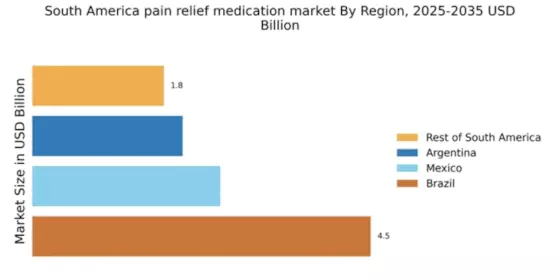
Brazil holds a commanding 4.5% market share in South America's pain relief medication sector, valued at approximately $1.5 billion. Key growth drivers include an increasing prevalence of chronic pain conditions and a rising aging population. Government initiatives aimed at improving healthcare access and regulatory policies favoring over-the-counter medications further stimulate demand. Infrastructure improvements in healthcare facilities also enhance distribution channels, making pain relief medications more accessible to consumers.

Mexico : Growing Demand and Competitive Landscape

Mexico's pain relief medication market accounts for 2.5% of the South American share, valued at around $800 million. The growth is driven by increasing healthcare awareness and a shift towards self-medication. Regulatory frameworks are evolving to support the availability of pain relief options, while local manufacturing capabilities are improving. The demand for both prescription and over-the-counter medications is on the rise, reflecting changing consumption patterns among consumers.

Argentina : Resilient Market Dynamics and Trends

Argentina represents 2.0% of the South American pain relief medication market, valued at approximately $600 million. Economic fluctuations have led to a focus on cost-effective pain relief solutions, driving demand for generics. Government policies aimed at regulating drug prices and improving healthcare access are pivotal. The market is characterized by a mix of local and international players, with a growing preference for non-opioid pain relief options among consumers.

Rest of South America : Varied Demand Across Sub-regions

The Rest of South America holds a 1.75% market share in pain relief medications, valued at about $500 million. This sub-region showcases diverse healthcare needs, influenced by varying economic conditions and regulatory environments. Growth is driven by increasing healthcare investments and a rising awareness of pain management. Local governments are implementing policies to enhance drug accessibility, which is crucial for market expansion.

South America Pain Relief Medication Market Regional Image

Key Players and Competitive Insights

The pain relief-medication market in South America is characterized by a dynamic competitive landscape, driven by increasing consumer demand for effective pain management solutions. Key players such as Johnson & Johnson (US), Pfizer Inc (US), and Bayer AG (DE) are actively shaping the market through strategic initiatives focused on innovation and regional expansion. Johnson & Johnson (US) emphasizes its commitment to research and development, aiming to introduce novel analgesics that cater to diverse patient needs. Meanwhile, Pfizer Inc (US) is leveraging its extensive distribution network to enhance accessibility, while Bayer AG (DE) is concentrating on partnerships with local healthcare providers to strengthen its market presence.

The competitive structure of the market appears moderately fragmented, with several players vying for market share. Companies are increasingly localizing manufacturing and optimizing supply chains to respond swiftly to regional demands. This localized approach not only reduces operational costs but also enhances responsiveness to market fluctuations, thereby fostering a more resilient competitive environment.

In October 2025, Pfizer Inc (US) announced a strategic partnership with a leading South American pharmaceutical firm to co-develop a new line of over-the-counter pain relief products. This collaboration is expected to leverage local Market Research Future and distribution channels, potentially increasing Pfizer's market penetration and enhancing its competitive edge. Such partnerships may signify a shift towards more localized strategies in product development and distribution.

In September 2025, Bayer AG (DE) launched a digital health platform aimed at providing personalized pain management solutions. This initiative reflects a growing trend towards digitalization in healthcare, allowing patients to access tailored treatment plans and track their progress. The strategic importance of this move lies in Bayer's ability to differentiate itself through technology, potentially attracting a tech-savvy consumer base seeking innovative solutions.

In August 2025, Johnson & Johnson (US) expanded its manufacturing capabilities in Brazil, investing approximately $50 million to enhance production efficiency for its pain relief products. This investment not only signifies a commitment to the South American market but also positions the company to better meet local demand, thereby strengthening its competitive position. Such operational enhancements are likely to yield long-term benefits in terms of supply chain reliability and cost-effectiveness.

As of November 2025, current trends in the pain relief-medication market are increasingly defined by digitalization, sustainability, and the integration of artificial intelligence. Strategic alliances are becoming pivotal in shaping the competitive landscape, as companies seek to pool resources and expertise to drive innovation. The shift from price-based competition towards differentiation through technology and supply chain reliability is evident, suggesting that future competitive dynamics will hinge on the ability to innovate and adapt to evolving consumer preferences.

Key Companies in the South America Pain Relief Medication Market market include

Industry Developments

The South America Pain Relief Medication Market has witnessed significant developments recently, particularly with major pharmaceutical companies like Novartis, Eli Lilly, and Johnson and Johnson increasing their investments in the region. As of September 2023, Novartis announced a new facility in Brazil focused on expanding its pain relief product line, reinforcing its commitment to address the region's healthcare needs. Additionally, Eli Lilly has been actively promoting innovative pain management therapies across South America, which is helping to increase the accessibility of effective medications in local markets. 

In terms of mergers and acquisitions, in August 2023, Pfizer completed the acquisition of a small biotechnology firm specializing in analgesic treatments, enhancing its portfolio in pain management solutions. Market growth has been robust, with a projected increase in valuation driven by rising demand for pain relief medications due to a growing elderly population and increased prevalence of chronic pain disorders. Over the past two years, a notable shift toward digital health solutions has been observed, with major players like Roche implementing telehealth initiatives to improve patient access to pain management therapies.

The strategic focus on research and development in South America is expected to continue driving market expansion.

Future Outlook

South America Pain Relief Medication Market Future Outlook

The Pain Relief Medication Market is projected to grow at a 4.92% CAGR from 2024 to 2035, driven by increasing demand for effective pain management solutions and advancements in drug formulations.

New opportunities lie in:

  • Development of personalized pain management therapies
  • Expansion of telehealth services for pain consultations
  • Investment in AI-driven drug discovery for pain relief medications

By 2035, the market is expected to achieve substantial growth, reflecting evolving consumer needs and innovative solutions.

Market Segmentation

South America Pain Relief Medication Market Type Outlook

  • Non-Steroidal Anti-Inflammatory Drugs
  • Acetaminophen
  • Opioids
  • Adjuvant Analgesics

South America Pain Relief Medication Market Formulation Type Outlook

  • Tablets
  • Capsules
  • Liquid
  • Topical

South America Pain Relief Medication Market Therapeutic Area Outlook

  • Chronic Pain
  • Acute Pain
  • Postoperative Pain
  • Cancer Pain

South America Pain Relief Medication Market Route of Administration Outlook

  • Oral
  • Topical
  • Injectable
  • Transdermal

Report Scope

MARKET SIZE 202410.75(USD Billion)
MARKET SIZE 202511.28(USD Billion)
MARKET SIZE 203518.23(USD Billion)
COMPOUND ANNUAL GROWTH RATE (CAGR)4.92% (2024 - 2035)
REPORT COVERAGERevenue Forecast, Competitive Landscape, Growth Factors, and Trends
BASE YEAR2024
Market Forecast Period2025 - 2035
Historical Data2019 - 2024
Market Forecast UnitsUSD Billion
Key Companies Profiled["Johnson & Johnson (US)", "Pfizer Inc (US)", "Bayer AG (DE)", "GlaxoSmithKline plc (GB)", "AbbVie Inc (US)", "Novartis AG (CH)", "Sanofi S.A. (FR)", "AstraZeneca plc (GB)", "Teva Pharmaceutical Industries Ltd (IL)"]
Segments CoveredType, Formulation Type, Route of Administration, Therapeutic Area
Key Market OpportunitiesEmergence of innovative formulations addressing chronic pain management in the pain relief-medication market.
Key Market DynamicsRising demand for natural pain relief medications drives innovation and competition in South America's pharmaceutical sector.
Countries CoveredBrazil, Mexico, Argentina, Rest of South America

Leave a Comment

FAQs

What is the expected market size of the South America Pain Relief Medication Market in 2024?

The South America Pain Relief Medication Market is expected to be valued at 5.7 billion USD in 2024.

What will be the market value of the South America Pain Relief Medication Market by 2035?

By 2035, the South America Pain Relief Medication Market is projected to reach 8.8 billion USD.

What is the expected CAGR for the South America Pain Relief Medication Market from 2025 to 2035?

The market is anticipated to grow at a CAGR of 4.027% between 2025 and 2035.

Which region holds the largest market share in the South America Pain Relief Medication Market in 2024?

Brazil is projected to hold the largest market share with a value of 2.2 billion USD in 2024.

What is the projected market value for Opioids by 2035 in the South America Pain Relief Medication Market?

The projected market value for Opioids is expected to reach 1.8 billion USD by 2035.

Who are the key players in the South America Pain Relief Medication Market?

Major players include Novartis, Eli Lilly, Roche, Johnson & Johnson, and Bayer among others.

How much will the Acetaminophen segment be valued in 2035?

The Acetaminophen segment is expected to be valued at 2.2 billion USD by 2035.

What is the market value for Argentina in the South America Pain Relief Medication Market in 2024?

The market value for Argentina in 2024 is estimated to be 0.8 billion USD.

What is the expected growth rate for Non-Steroidal Anti-Inflammatory Drugs from 2025 to 2035?

The Non-Steroidal Anti-Inflammatory Drugs segment is expected to show a robust growth rate from 2025 to 2035.

What will the value of Adjuvant Analgesics be in 2024 in the South America Pain Relief Medication Market?

The market value for Adjuvant Analgesics in 2024 is anticipated to be 0.8 billion USD.

Download Free Sample

Kindly complete the form below to receive a free sample of this Report

Compare Licence

×
Features License Type
Single User Multiuser License Enterprise User
Price $4,950 $5,950 $7,250
Maximum User Access Limit 1 User Upto 10 Users Unrestricted Access Throughout the Organization
Free Customization
Direct Access to Analyst
Deliverable Format
Platform Access
Discount on Next Purchase 10% 15% 15%
Printable Versions