×
Request Free Sample ×

Kindly complete the form below to receive a free sample of this Report

* Please use a valid business email

Leading companies partner with us for data-driven Insights

clients tt-cursor
Hero Background

Pain Relief Medication Market

ID: MRFR/HC/6959-HCR
200 Pages
Rahul Gotadki
October 2025

Pain Relief Medication Market Size, Growth Research Report By Medication Type (Non-Steroidal Anti-Inflammatory Drugs, Acetaminophen, Opioids, Adjuvant Analgesics), By Formulation Type (Tablets, Capsules, Liquid, Topical), By Route of Administration (Oral, Topical, Injectable, Transdermal), By Therapeutic Area (Chronic Pain, Acute Pain, Postoperative Pain, Cancer Pain) and By Regional (North America, Europe, South America, Asia Pacific, Middle East and Africa) - Competitor Industry Analysis and Trends Forecast Till 2035

Share:
Download PDF ×

We do not share your information with anyone. However, we may send you emails based on your report interest from time to time. You may contact us at any time to opt-out.

Pain Relief Medication Market Infographic
Purchase Options

Pain Relief Medication Market Summary

As per MRFR analysis, the Pain Relief Medication Market Size was estimated at 107.54 USD Billion in 2024. The Pain Relief Medication industry is projected to grow from 115.31 USD Billion in 2025 to 231.54 USD Billion by 2035, exhibiting a compound annual growth rate (CAGR) of 7.22 during the forecast period 2025 - 2035.

Key Market Trends & Highlights

The Pain Relief Medication Market is experiencing a transformative shift towards non-opioid alternatives and digital health solutions.

  • The market is witnessing a notable shift towards non-opioid alternatives, driven by rising concerns over opioid dependency.
  • Integration of digital health solutions is becoming increasingly prevalent, enhancing patient engagement and monitoring.
  • The focus on holistic and natural remedies is gaining traction, particularly among consumers seeking safer pain management options.
  • Rising incidence of chronic pain and increased awareness of pain management are key drivers propelling market growth in North America and Asia-Pacific.

Market Size & Forecast

2024 Market Size 107.54 (USD Billion)
2035 Market Size 231.54 (USD Billion)
CAGR (2025 - 2035) 7.22%

Major Players

Johnson & Johnson (US), Pfizer (US), Bayer (DE), GlaxoSmithKline (GB), AbbVie (US), Sanofi (FR), Novartis (CH), AstraZeneca (GB), Teva Pharmaceutical Industries (IL)

Pain Relief Medication Market Trends

The Pain Relief Medication Market is currently experiencing a dynamic evolution, driven by various factors that influence consumer preferences and healthcare practices. The increasing prevalence of chronic pain conditions, coupled with a growing awareness of pain management options, appears to be propelling demand for diverse analgesic products. Additionally, the rise of telemedicine and digital health solutions may facilitate easier access to pain relief medications, thereby enhancing patient engagement and adherence to treatment regimens. Furthermore, the market seems to be witnessing a shift towards more natural and holistic approaches, as consumers increasingly seek alternatives to traditional pharmaceuticals. This trend suggests a potential transformation in product offerings, with an emphasis on herbal and non-opioid solutions. Moreover, regulatory changes and a heightened focus on safety and efficacy are likely to shape the landscape of the Pain Relief Medication Market. Manufacturers may need to adapt to stringent guidelines while also addressing the concerns surrounding opioid use and dependency. As a result, innovation in formulation and delivery methods could become paramount, with companies exploring novel technologies to enhance the effectiveness and safety profiles of their products. Overall, the Pain Relief Medication Market appears poised for growth, driven by evolving consumer needs and a commitment to improving pain management outcomes.

Shift Towards Non-Opioid Alternatives

There is a noticeable trend towards the development and utilization of non-opioid pain relief options. This shift is largely influenced by the growing awareness of the risks associated with opioid medications, prompting both consumers and healthcare providers to seek safer alternatives. Non-opioid analgesics, including NSAIDs and acetaminophen, are gaining traction as viable options for managing pain without the associated risks of addiction.

Integration of Digital Health Solutions

The incorporation of digital health technologies into pain management strategies is becoming increasingly prevalent. Telehealth platforms and mobile applications are facilitating remote consultations and personalized treatment plans, allowing patients to access pain relief medications more conveniently. This trend not only enhances patient engagement but also supports ongoing monitoring and adjustment of treatment regimens.

Focus on Holistic and Natural Remedies

Consumers are increasingly gravitating towards holistic and natural remedies for pain relief. This trend reflects a broader societal shift towards wellness and preventive care, with individuals seeking products that align with their health philosophies. Herbal supplements, essential oils, and other natural alternatives are gaining popularity, indicating a potential transformation in the types of products offered within the Pain Relief Medication Market.

Pain Relief Medication Market Drivers

Market Growth Projections

The Global Pain Relief Medication Market Industry is projected to experience substantial growth over the next decade. With an estimated market value of 56.8 USD Billion in 2024, it is anticipated to reach 88 USD Billion by 2035. This growth trajectory suggests a compound annual growth rate of 4.07% from 2025 to 2035. Factors contributing to this expansion include the rising prevalence of chronic pain, advancements in pain management technologies, and increased awareness of pain management options. As the market evolves, it is likely to witness the introduction of innovative therapies and a broader range of pain relief medications.

Growing Geriatric Population

The aging population significantly influences the Global Pain Relief Medication Market Industry. As individuals age, they are more susceptible to chronic pain conditions, leading to an increased demand for pain relief medications. The World Health Organization projects that by 2030, the number of people aged 60 years and older will reach 1.4 billion globally. This demographic shift necessitates the development and availability of effective pain management solutions tailored to the needs of older adults. Consequently, the market is poised for growth as pharmaceutical companies focus on creating medications that address the unique challenges faced by this population.

Increased Awareness and Education

The Global Pain Relief Medication Market Industry benefits from heightened awareness and education regarding pain management options. Campaigns aimed at educating patients and healthcare professionals about chronic pain and its treatment options have led to a more informed public. This increased awareness encourages individuals to seek appropriate pain relief solutions, thereby driving demand for medications. Furthermore, healthcare providers are more likely to prescribe effective pain management therapies as they become better informed about available options. This trend is expected to support the market's growth trajectory, particularly as more individuals recognize the importance of addressing chronic pain.

Rising Prevalence of Chronic Pain

The Global Pain Relief Medication Market Industry experiences a notable surge due to the increasing prevalence of chronic pain conditions, such as arthritis and fibromyalgia. As populations age, the incidence of these conditions rises, leading to a greater demand for effective pain management solutions. In 2024, the market is projected to reach 56.8 USD Billion, reflecting the urgent need for innovative pain relief medications. This trend is likely to continue as healthcare systems prioritize pain management, potentially driving the market to an estimated 88 USD Billion by 2035, with a compound annual growth rate of 4.07% from 2025 to 2035.

Regulatory Support for Pain Management

Regulatory bodies play a pivotal role in shaping the Global Pain Relief Medication Market Industry by providing support for the development and approval of new pain management therapies. Initiatives aimed at streamlining the approval process for innovative pain relief medications can facilitate quicker access to effective treatments for patients. Additionally, guidelines promoting the use of multimodal pain management strategies encourage healthcare providers to adopt comprehensive approaches to pain relief. This regulatory support not only enhances patient care but also fosters a favorable environment for market growth, as pharmaceutical companies are incentivized to invest in research and development.

Advancements in Pain Management Technologies

Technological advancements play a crucial role in shaping the Global Pain Relief Medication Market Industry. Innovations in drug formulation, delivery systems, and personalized medicine are enhancing the efficacy and safety of pain relief medications. For instance, the development of transdermal patches and sustained-release formulations allows for more effective pain management with fewer side effects. These advancements not only improve patient outcomes but also drive market growth as healthcare providers adopt new technologies. As a result, the industry is likely to witness a shift towards more sophisticated pain management solutions, further contributing to the projected market growth.

Market Segment Insights

By Application: Chronic Pain (Largest) vs. Musculoskeletal Pain (Fastest-Growing)

In the Pain Relief Medication Market, the application segment reveals significant insights into the distribution of various categories. Chronic pain remains the largest segment, as it encompasses a broad range of long-term health issues, impacting a substantial population. Acute pain and postoperative pain also hold considerable market shares but are comparatively smaller, reflecting specific conditions requiring immediate treatment. The musculoskeletal pain segment, while smaller, shows promise due to rising incidences of sports injuries and age-related conditions, propelling both demand and innovation in treatments. Growth trends in this market segment are closely tied to the increasing prevalence of conditions leading to chronic and musculoskeletal pain. Factors such as the aging population, increased focus on pain management, and a growing preference for non-opioid alternatives are driving broader adoption of pain relief medications across various applications. The pandemic has also brought forth a notable rise in anxiety-related pain, adding complexity to market dynamics. The shift towards personalized medicine and the development of novel therapeutics are further shaping growth trajectories within these segments.

Chronic Pain (Dominant) vs. Musculoskeletal Pain (Emerging)

Chronic pain stands as the dominant application segment in the Pain Relief Medication Market, reflecting its impact on millions of individuals suffering from long-term conditions. This segment includes ailments like arthritis, migraines, and fibromyalgia, requiring ongoing management to enhance quality of life. Given its extensive prevalence, chronic pain treatments are often prioritized, resulting in a variety of therapeutic options, including over-the-counter medications and prescription drugs. In contrast, the musculoskeletal pain segment emerges as a dynamic area within this market, driven by the rising incidence of injury and degenerative conditions associated with aging and lifestyle factors. This segment is rapidly evolving, with innovations aimed at delivering targeted relief, expanding the range of available products to address specific pain pathways.

By Drug Type: Non-Steroidal Anti-Inflammatory Drugs (Largest) vs. Opioids (Fastest-Growing)

The Pain Relief Medication Market is characterized by a diverse array of drug types, with Non-Steroidal Anti-Inflammatory Drugs (NSAIDs) leading the segment due to their widespread use for relieving pain and reducing inflammation. These medications boast a solid market share, primarily among consumers seeking more accessible and over-the-counter solutions. Opioids, while also significant in pain management, follow behind NSAIDs but are witnessing rapid growth. This increase is largely attributed to the rise in chronic pain conditions and prescriptions. In recent years, the Pain Relief Medication Market has evolved, with both NSAIDs and Opioids adapting to changing consumer demands and regulatory environments. The growth of the opioid segment is fueled by the increasing recognition of pain as a critical health issue, leading to more prescriptions. Meanwhile, Acetaminophen and Combination Medications are becoming increasingly popular, primarily for their effectiveness and enhanced patient compliance, signaling a shift towards versatile pain management strategies that cater to diverse needs.

Non-Steroidal Anti-Inflammatory Drugs (Dominant) vs. Opioids (Emerging)

Non-Steroidal Anti-Inflammatory Drugs (NSAIDs) remain the dominant force in the Pain Relief Medication Market, recognized for their effectiveness in mitigating mild to moderate pain without the risk of opioid dependency. These medications, which include common over-the-counter options like ibuprofen and naproxen, cater to a broad demographic seeking non-prescription pain relief, thereby solidifying their market position. In contrast, Opioids, while classified as an emerging segment due to their recent growth trajectory, present a different profile, often used for managing severe pain conditions. Despite their effectiveness, Opioids face scrutiny due to potential addiction issues. Nonetheless, innovative formulations and regulated distribution channels are helping to sustain their position in the market, demonstrating their vital role in comprehensive pain management.

By Route of Administration: Oral (Largest) vs. Injectable (Fastest-Growing)

The Pain Relief Medication Market demonstrates diverse routes of administration, with Oral medications holding the largest market share. This segment benefits from high patient compliance and convenience, as oral medications are often the first choice among consumers. Topical and transdermal options also capture substantial shares due to localized application benefits, while injectable medications cater to patients needing rapid relief, albeit from a smaller base. Overall, these dynamics create a robust and competitive landscape for the route of administration segments.

Pain Relief Methods: Oral (Dominant) vs. Injectable (Emerging)

The Oral route of administration remains dominant in the Pain Relief Medication Market, appealing to a broad patient demographic seeking convenience and ease of use. This segment encompasses over-the-counter options as well as prescription medications, providing effective solutions for both acute and chronic pain management. In contrast, the Injectable segment is emerging rapidly, driven by innovations in formulations and delivery methods. Injectable pain relief medications offer rapid onset of action and are increasingly preferred for acute pain situations, thus attracting attention from both healthcare providers and patients. As the market evolves, these two segments will continue to shape the future of pain management.

By Patient Demographics: Adult (Largest) vs. Geriatric (Fastest-Growing)

In the Pain Relief Medication Market, the patient demographics are categorized primarily into pediatric, adult, and geriatric segments. Currently, the adult demographic holds the largest market share due to the higher incidence of chronic pain conditions in this age group. Adults typically utilize a diverse range of pain relief medications, including over-the-counter and prescription drugs, contributing to their dominant position in the market. Comparatively, the pediatric demographic represents a smaller share, with specific formulations tailored for children. The geriatric segment, however, is emerging as the fastest-growing category powered by the aging population and the accompanying rise in age-related ailments. With increasing awareness about pain management in older adults, there is a steady growth in the demand for medications, specifically those tailored for geriatric patients. Innovations in drug formulations that cater to sensitivity and drug interaction concerns are also spurring market expansion in this category.

Adult (Dominant) vs. Geriatric (Emerging)

The adult segment in the Pain Relief Medication Market is characterized by its extensive utilization of both prescription and over-the-counter pain relief options. This segment predominantly encompasses individuals aged 18 to 64, who often experience chronic conditions, acute pain, and sports injuries. As such, a multitude of medications, ranging from NSAIDs to opioids, cater to their diverse needs. Conversely, the geriatric segment, which includes individuals aged 65 and older, is rapidly evolving as higher occurrences of arthritis, neuropathic pain, and other chronic conditions heighten the demand for pain relief solutions. Medications for this demographic are increasingly customized to reduce side effects and enhance efficacy to suit seniors' unique physiological needs, positioning geriatric medications as an emerging focus in the market.

Get more detailed insights about Pain Relief Medication Market

Regional Insights

North America : Market Leader in Pain Relief

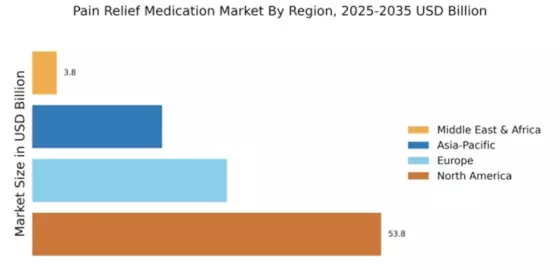
North America continues to lead the Pain Relief Medication Market, holding a significant market share of 53.77% as of 2024. The growth is driven by increasing healthcare expenditure, a rise in chronic pain conditions, and a strong regulatory framework that supports innovation in pharmaceuticals. The demand for over-the-counter and prescription pain relief medications is on the rise, fueled by an aging population and heightened awareness of pain management options. The competitive landscape is robust, with key players like Johnson & Johnson, Pfizer, and AbbVie dominating the market. The U.S. remains the largest contributor, supported by advanced healthcare infrastructure and significant investments in R&D. The presence of major pharmaceutical companies ensures a steady supply of innovative pain relief solutions, catering to diverse consumer needs.

Europe : Growing Market with Regulations

Europe's Pain Relief Medication Market is valued at €30.0 billion, reflecting a growing demand for effective pain management solutions. The region benefits from stringent regulatory frameworks that ensure the safety and efficacy of medications. Increasing incidences of chronic pain and a focus on patient-centered care are driving market growth. Additionally, the rise of telemedicine and digital health solutions is enhancing access to pain relief options across Europe. Leading countries such as Germany, France, and the UK are at the forefront of this market, with a competitive landscape featuring major players like Bayer and GlaxoSmithKline. The European market is characterized by a mix of established brands and emerging companies, fostering innovation and competition. The European Medicines Agency plays a crucial role in regulating and approving new pain relief medications, ensuring high standards in the market.

Asia-Pacific : Emerging Market with Potential

The Asia-Pacific region is witnessing significant growth in the Pain Relief Medication Market, valued at $20.0 billion. Factors such as increasing disposable incomes, urbanization, and a growing awareness of healthcare are driving demand for pain relief solutions. The rise in lifestyle-related diseases and an aging population further contribute to the market's expansion. Regulatory bodies are increasingly focusing on improving access to essential medications, which is expected to boost market growth. Countries like China, India, and Japan are leading the market, with a competitive landscape that includes both local and international players. Companies such as Teva Pharmaceutical Industries and Novartis are actively investing in the region to capture market share. The presence of a diverse consumer base and varying healthcare needs presents both challenges and opportunities for market players.

Middle East and Africa : Niche Market with Growth Potential

The Middle East & Africa Pain Relief Medication Market, valued at $3.77 billion, is gradually evolving, driven by increasing healthcare access and awareness of pain management. The region faces unique challenges, including varying healthcare infrastructure and economic disparities. However, the demand for effective pain relief solutions is rising, particularly in urban areas where healthcare facilities are improving. Regulatory bodies are working to enhance the availability of essential medications, which is expected to support market growth. Countries like South Africa and the UAE are leading the market, with a mix of local and international pharmaceutical companies. The competitive landscape is characterized by a focus on affordability and accessibility, with key players striving to meet the diverse needs of consumers. The presence of organizations like the World Health Organization is crucial in promoting better healthcare practices in the region.

Key Players and Competitive Insights

The Pain Relief Medication Market is characterized by a dynamic competitive landscape, driven by increasing consumer demand for effective pain management solutions and a growing emphasis on innovative therapies. Key players such as Johnson & Johnson (US), Pfizer (US), and AbbVie (US) are strategically positioned to leverage their extensive research and development capabilities, focusing on the introduction of novel formulations and delivery systems. These companies are actively pursuing partnerships and collaborations to enhance their product portfolios, thereby shaping a competitive environment that prioritizes innovation and patient-centric solutions.

In terms of business tactics, companies are increasingly localizing manufacturing to reduce costs and improve supply chain efficiency. The market structure appears moderately fragmented, with several players vying for market share. However, the collective influence of major companies like Bayer (DE) and GlaxoSmithKline (GB) is notable, as they continue to expand their global reach and optimize their operations to meet diverse consumer needs.

In November 2025, Johnson & Johnson (US) announced a strategic partnership with a leading technology firm to develop a digital health platform aimed at enhancing patient engagement in pain management. This initiative is expected to integrate AI-driven analytics to personalize treatment plans, thereby improving patient outcomes and reinforcing Johnson & Johnson's commitment to innovation in pain relief solutions.

In October 2025, Pfizer (US) launched a new formulation of its widely used pain relief medication, which incorporates a novel delivery mechanism designed to enhance bioavailability. This strategic move not only addresses patient needs for more effective pain management but also positions Pfizer to capture a larger market share amidst increasing competition.

In September 2025, AbbVie (US) expanded its product line by acquiring a smaller biotech firm specializing in cannabinoid-based therapies for chronic pain. This acquisition is likely to bolster AbbVie's portfolio, allowing it to tap into the growing demand for alternative pain relief options, thus diversifying its offerings in a competitive market.

As of December 2025, current trends in the Pain Relief Medication Market indicate a significant shift towards digitalization and sustainability. Companies are increasingly integrating AI technologies to enhance drug development processes and improve patient engagement. Strategic alliances are becoming more prevalent, as firms recognize the value of collaboration in driving innovation. Looking ahead, competitive differentiation is expected to evolve, with a pronounced shift from price-based competition to a focus on technological advancements, innovative therapies, and reliable supply chains. This transition underscores the importance of adaptability and forward-thinking strategies in maintaining a competitive edge.

Key Companies in the Pain Relief Medication Market market include

Industry Developments

The Pain Relief Medication Market has seen significant activity recently, particularly from major pharmaceutical companies. In September 2023, Pfizer announced advancements in its pain management portfolio, focusing on innovative formulations that enhance patient compliance. In October 2023, Johnson and Johnson expanded its long-acting pain relief solutions, which have drawn attention due to the increase in chronic pain cases globally. Novartis and Gilead Sciences continue to invest heavily in Research and Development to improve pain relief efficacy while ensuring safety amid regulatory changes.

Furthermore, discussions around potential mergers and acquisitions were sparked when AstraZeneca indicated interest in acquiring pain relief specialty companies to strengthen its product line. Recent valuation trends show a growth trajectory, largely driven by increased demand for non-opioid alternatives, which has propelled companies like Bayer and AbbVie to expand their offerings in this space. The last couple of years have also marked the introduction of new pain relief medications, thanks to accelerated R&D efforts during the COVID-19 pandemic, emphasizing a shift towards personalized medicine in pain management strategies across the global market.

Future Outlook

Pain Relief Medication Market Future Outlook

The Pain Relief Medication Market is projected to grow at a 7.22% CAGR from 2024 to 2035, driven by increasing chronic pain prevalence, aging populations, and advancements in drug formulations.

New opportunities lie in:

  • Development of personalized pain management solutions
  • Expansion of telehealth services for pain management
  • Investment in AI-driven drug discovery for novel analgesics

By 2035, the market is expected to achieve substantial growth, reflecting evolving consumer needs and innovative solutions.

Market Segmentation

Pain Relief Medication Market Drug Type Outlook

  • Non-Steroidal Anti-Inflammatory Drugs
  • Opioids
  • Acetaminophen
  • Combination Medications

Pain Relief Medication Market Application Outlook

  • Chronic Pain
  • Acute Pain
  • Postoperative Pain
  • Musculoskeletal Pain

Pain Relief Medication Market Patient Demographics Outlook

  • Pediatric
  • Adult
  • Geriatric

Pain Relief Medication Market Route of Administration Outlook

  • Oral
  • Topical
  • Injectable
  • Transdermal

Report Scope

MARKET SIZE 2024107.54(USD Billion)
MARKET SIZE 2025115.31(USD Billion)
MARKET SIZE 2035231.54(USD Billion)
COMPOUND ANNUAL GROWTH RATE (CAGR)7.22% (2024 - 2035)
REPORT COVERAGERevenue Forecast, Competitive Landscape, Growth Factors, and Trends
BASE YEAR2024
Market Forecast Period2025 - 2035
Historical Data2019 - 2024
Market Forecast UnitsUSD Billion
Key Companies ProfiledJohnson & Johnson (US), Pfizer (US), Bayer (DE), GlaxoSmithKline (GB), AbbVie (US), Sanofi (FR), Novartis (CH), AstraZeneca (GB), Teva Pharmaceutical Industries (IL)
Segments CoveredApplication, Drug Type, Route of Administration, Patient Demographics
Key Market OpportunitiesIntegration of digital health technologies enhances patient engagement in the Pain Relief Medication Market.
Key Market DynamicsRising consumer demand for non-opioid pain relief options drives innovation and regulatory scrutiny in the medication market.
Countries CoveredNorth America, Europe, APAC, South America, MEA

Market Highlights

Author
Rahul Gotadki
Assistant Manager

He holds an experience of about 7+ years in Market Research and Business Consulting, working under the spectrum of Life Sciences and Healthcare domains. Rahul conceptualizes and implements a scalable business strategy and provides strategic leadership to the clients. His expertise lies in market estimation, competitive intelligence, pipeline analysis, customer assessment, etc. In addition to the above, his other responsibility includes strategic tracking of high growth markets & advising clients on the potential areas of focus they could direct their business initiatives

Leave a Comment

FAQs

What is the projected growth of the Pain Relief Medication market?

The Pain Relief Medication market is the expected increase in total market value of 231.54 USD billion over a defined forecast period 2025–2035. It is driven by factors such as demand trends, technological advances, regulatory changes, and geographic expansion.

What is the size of the Pain Relief Medication market?

Pain Relief Medication market size was valued at approximately 107.54 billion USD in 2024. This figure will reach 231.54 billion USD covering all regions (America, Europe, Asia, MEA and ROW), focusing its segments / services / distribution channels till 2035.

What is the CAGR of the Pain Relief Medication market?

Pain Relief Medication market is expected to grow at a CAGR of 7.22% between 2025 and 2035.

How much will the Pain Relief Medication market be worth by 2035?

Pain Relief Medication market is expected to be worth of 231.54 billion USD, reflecting growth driven by usage, technology and global demands by the end of 2035.

How will the Pain Relief Medication market perform over the next 10 years?

Over the next 10 years the Pain Relief Medication market is expected to shift from usd billion 107.54 to 231.54 billion USD, led by adoption of advanced tech, demographic trends, regulatory approvals, with potential headwinds from 2025 to 2035.

What is the projected value of the Pain Relief Medication Market by 2035?

By 2035, the Pain Relief Medication Market is anticipated to reach 88.0 billion USD.

What is the projected growth of the North American market by 2035?

The market in North America is projected to grow to 33.8 billion USD by 2035.

How does the European market size compare in 2024 versus 2035?

The European market is valued at 18.0 billion USD in 2024 and is expected to grow to 26.7 billion USD by 2035.

What is the value of the Opioids segment in 2024?

The Opioids segment of the Pain Relief Medication Market is valued at 12.0 billion USD in 2024.

Which key players dominate the Pain Relief Medication Market?

Key players in the Pain Relief Medication Market include Novartis, Pfizer, Johnson & Johnson, and Bayer.

Download Free Sample

Kindly complete the form below to receive a free sample of this Report

Compare Licence

×
Features License Type
Single User Multiuser License Enterprise User
Price $4,950 $5,950 $7,250
Maximum User Access Limit 1 User Upto 10 Users Unrestricted Access Throughout the Organization
Free Customization
Direct Access to Analyst
Deliverable Format
Platform Access
Discount on Next Purchase 10% 15% 15%
Printable Versions