Download Free Sample
Kindly complete the form below to receive a free sample of this Report
South America Transdermal Drug Delivery Systems Market Research Report By Product (Transdermal Patches, Semisolids), By Technology (Electric Current, Iontophoresis, Electroporation, Ultrasound, Microporation) and By Regional (Brazil, Mexico, Argentina, Rest of South America) - Growth & Industry Forecast 2025 To 2035
As per Market Research Future analysis, the South America transdermal drug delivery systems market size was estimated at 1900.0 $ Million in 2024. The South America transdermal drug-delivery-systems market is projected to grow from 1992.15 $ Million in 2025 to 3200.0 $ Million by 2035, exhibiting a compound annual growth rate (CAGR) of 4.8% during the forecast period 2025 - 2035
The South America transdermal drug-delivery-systems market is experiencing robust growth driven by technological advancements and increasing consumer preferences.
| 2024 Market Size | 1900.0 (USD Million) |
| 2035 Market Size | 3200.0 (USD Million) |
| CAGR (2025 - 2035) | 4.85% |
The transdermal drug-delivery-systems market in South America is currently experiencing notable growth, driven by increasing demand for non-invasive drug administration methods. This trend is largely influenced by the rising prevalence of chronic diseases, which necessitate effective and convenient treatment options. Additionally, advancements in technology are enhancing the efficacy and reliability of transdermal systems, making them more appealing to both healthcare providers and patients. Regulatory support from government agencies is also fostering innovation in this sector, encouraging the development of new formulations and delivery mechanisms. Moreover, the market is witnessing a shift towards personalized medicine, where transdermal systems are tailored to meet individual patient needs. This customization is expected to improve therapeutic outcomes and patient adherence to treatment regimens. The growing awareness of the benefits of transdermal delivery, such as reduced side effects and improved bioavailability, further propels market expansion. As the healthcare landscape evolves, the transdermal drug-delivery-systems market is poised for continued growth, reflecting broader trends in patient-centered care and technological advancement.
There is an increasing preference for non-invasive drug delivery systems among patients and healthcare providers. This trend is driven by the desire for pain-free administration and improved patient compliance. Transdermal systems offer a convenient alternative to traditional methods, making them more attractive in the South American healthcare market.
Innovations in formulation and delivery technologies are enhancing the effectiveness of transdermal systems. These advancements are likely to improve drug absorption rates and extend the range of medications that can be delivered transdermally. As technology continues to evolve, the market is expected to benefit from more sophisticated and efficient delivery systems.
The shift towards personalized medicine is influencing the transdermal drug-delivery-systems market. Tailoring treatments to individual patient profiles can lead to better therapeutic outcomes. This trend reflects a broader movement in healthcare towards customized solutions, which is gaining traction in South America.
The demographic shift towards an aging population in South America significantly influences the transdermal drug-delivery-systems market. By 2030, it is projected that individuals aged 60 and above will constitute over 20% of the total population in several South American countries. This demographic is often associated with multiple health issues requiring ongoing medication. Transdermal systems are particularly advantageous for older patients, as they simplify drug administration and reduce the risk of complications associated with oral medications. Consequently, the demand for these systems is expected to rise as healthcare systems adapt to the needs of an aging society.
In South America, increasing healthcare expenditure is a crucial factor driving the transdermal drug-delivery-systems market. Governments and private sectors are investing more in healthcare infrastructure, with spending projected to reach $500 billion by 2026. This financial commitment facilitates the adoption of advanced medical technologies, including transdermal systems, which are recognized for their efficacy and patient-friendly nature. As healthcare providers aim to improve treatment outcomes and patient satisfaction, the market for transdermal drug-delivery systems is likely to expand, reflecting the broader trend of enhanced healthcare investment.
The rising incidence of chronic diseases in South America is a pivotal driver for the transdermal drug-delivery-systems market. Conditions such as diabetes, hypertension, and cardiovascular diseases are becoming more prevalent, necessitating effective management strategies. According to health statistics, approximately 30% of the adult population in South America suffers from chronic ailments, which increases the demand for innovative treatment options. Transdermal systems offer a non-invasive alternative that enhances patient compliance and provides steady drug release. This trend is likely to propel the market forward as healthcare providers seek efficient solutions to manage these conditions.
Regulatory bodies in South America are increasingly supportive of innovative therapies, which positively impacts the transdermal drug-delivery-systems market. Initiatives aimed at expediting the approval process for new drug delivery technologies are being implemented, fostering an environment conducive to innovation. This regulatory landscape encourages pharmaceutical companies to invest in research and development of transdermal systems, which are often seen as safer and more effective alternatives to traditional methods. As a result, the market is expected to witness growth driven by a steady influx of new products and technologies.
Consumer preferences in South America are shifting towards more convenient drug administration methods, which is a significant driver for the transdermal drug-delivery-systems market. Patients increasingly favor non-invasive options that minimize discomfort and enhance adherence to treatment regimens. Surveys indicate that over 60% of patients express a preference for transdermal systems over oral medications due to their ease of use and reduced side effects. This growing inclination towards convenience is likely to stimulate market growth as manufacturers respond to consumer demands by developing more user-friendly transdermal products.
In the technology segment of the transdermal drug-delivery-systems market, transdermal patches dominate with a substantial market share, appealing to a wide range of therapeutic areas due to their ease of use and efficacy. This technology is widely adopted in Brazil and Argentina, contributing significantly to the market's growth, as healthcare providers increasingly recommend these patches for chronic pain management and hormonal therapies.
On the other hand, microneedle patches are emerging as the fastest-growing segment, driven by their innovative design which enhances drug delivery effectiveness and patient compliance. The rising interest in painless and minimally invasive delivery methods is propelling this growth, particularly for vaccine delivery and insulin. As a result, both segments are expected to play pivotal roles in shaping the future of drug delivery systems in the region.
Technology: Transdermal Patches (Dominant) vs. Microneedle Patches (Emerging)
Transdermal patches are well-established in the market due to their reliability and widespread acceptance among patients and healthcare providers alike. They offer continuous drug release, which helps maintain consistent therapeutic levels and enhances patient adherence. Meanwhile, microneedle patches represent an innovative solution to traditional delivery methods, offering a pain-free experience and improved bioavailability. Their compact design allows for self-administration, which is appealing for consumers seeking convenience. The ongoing research and development in microneedle technology, along with increasing investments, are expected to elevate their market presence and challenge traditional transdermal patches in the coming years.
The market for transdermal drug delivery systems is significantly driven by the pain management segment, which captures the largest share in the overall application sector. This segment’s dominance is attributed to the growing prevalence of chronic pain conditions and the rising geriatric population, leading to an increased need for effective pain management solutions. Conversely, hormone replacement therapy is emerging as the fastest-growing segment, fueled by an increasing awareness of hormonal health and menopause management in women, resulting in greater demand for transdermal patches.
Growth trends reveal an overall positive trajectory for the application market, particularly for pain management and hormone replacement therapy. The expanding incidence of lifestyle-related diseases, such as diabetes and cardiovascular ailments, further propels the consumption of transdermal systems. Additionally, technological advancements in drug formulations and delivery methods are expected to enhance user experience and adherence, driving the market forward. Investment in research and development will likely yield innovative solutions, validating the promising future of this segment.
Pain Management (Dominant) vs. Hormone Replacement Therapy (Emerging)
Pain management stands as the dominant segment within the application framework, characterized by its ability to address severe and chronic pain through effective transdermal systems. This method allows for consistent drug delivery, enhancing patient compliance and comfort. On the other hand, hormone replacement therapy is recognized as an emerging segment, primarily aimed at alleviating menopausal symptoms and hormonal imbalances. The growing interest in non-invasive treatment options, alongside advancements in patch technology, marks this segment's rapid growth. Both segments are poised for significant advancements; however, pain management remains robustly established, while hormone replacement therapy is rapidly catching up as consumers become more health-conscious.
In the End-use segment of the transdermal drug-delivery-systems market, hospitals hold the largest market share, benefiting from their robust infrastructure and high patient volumes. Hospitals serve as primary settings for advanced drug delivery methods, ensuring a significant portion of the market demand is met. Conversely, the home healthcare sector is rapidly gaining traction, reflecting a shift toward outpatient care and personalized medication regimens. This emerging segment caters to patients who prefer receiving treatment in the comfort of their homes, which is driving its growth.
The growth trends in this segment are influenced by several factors, including an increasing prevalence of chronic diseases and a growing elderly population. As healthcare systems evolve to support more home-based treatments, the demand for transdermal systems is expected to rise. Pharmaceutical companies are also adapting to these trends by investing in innovative delivery methods that cater to both hospital and home healthcare environments, further fostering market expansion.
Hospitals: Dominant vs. Home Healthcare: Emerging
Hospitals are the dominant players in the transdermal drug-delivery-systems market due to their established infrastructure, which is essential for effective patient care and medication administration. They offer a comprehensive range of therapies and have access to a high volume of patients requiring complex drug delivery solutions. On the other hand, the home healthcare segment is emerging as a crucial player, driven by the desire for patient-centered care and technological advancements that enable effective drug administration at home. As this segment grows, it encourages innovations tailored to non-invasive delivery methods, thereby enhancing patient compliance and treatment outcomes. The contrast between these two segments highlights the diverse approaches to drug delivery, catering to different patient needs and preferences.
The formulation type segment of transdermal drug delivery systems showcases a diverse landscape, where Drug-in-Patch accounts for the largest market share due to its widespread adoption and effective drug delivery mechanisms. Following closely is the Reservoir Type, known for its efficiency in maintaining consistent drug release, marking a significant presence as well. These segments collectively illustrate the evolving preferences within the market, driven by advancing technologies and patient-centric solutions.
Growth trends indicate an increasing demand for innovative formulations that enhance patient compliance and therapeutic effectiveness. The Reservoir Type is emerging as the fastest-growing segment, fueled by advancements in formulation technologies and an expanding pipeline of drugs designed for transdermal delivery. Factors such as rising chronic conditions and a preference for non-invasive treatment options further drive this segment's growth, reflecting a paradigm shift in healthcare delivery methodologies.
Drug-in-Patch (Dominant) vs. Microreservoir Type (Emerging)
The Drug-in-Patch formulation type remains dominant in the transdermal drug delivery landscape, owing to its simplicity in use and reliable medication adherence. This structure allows for continuous drug release, providing patients with a consistent therapeutic effect, thus making it preferable for diverse therapeutic areas. On the other hand, the Microreservoir Type is recognized as an emerging formulation, gaining traction due to its ability to encapsulate drugs effectively, hence controlling the release profile. This evolution is pivotal, as Microreservoirs integrate nanotechnology innovations to enhance drug solubility and bioavailability. As both segments evolve, their distinct characteristics address specific patient needs and compliance challenges, shaping the future of medication delivery.
Key markets include São Paulo, Rio de Janeiro, and Brasília, where healthcare facilities are rapidly adopting transdermal technologies. The competitive landscape features major players like Johnson & Johnson and Novartis, who are investing in local production. The business environment is bolstered by partnerships between pharmaceutical companies and local distributors. Applications in pain management and hormone replacement therapies are particularly prominent, driving further market growth.
Key markets include Mexico City, Guadalajara, and Monterrey, where healthcare facilities are increasingly adopting advanced drug delivery systems. The competitive landscape features players like Mylan N.V. and Teva Pharmaceutical Industries, who are expanding their product offerings. Local dynamics favor partnerships with healthcare providers to enhance distribution. Applications in diabetes management and pain relief are gaining traction, contributing to market growth.
Key markets include Buenos Aires, Córdoba, and Rosario, where healthcare facilities are beginning to adopt transdermal systems. The competitive landscape includes major players like Boehringer Ingelheim and AstraZeneca, who are focusing on localized production. The business environment is characterized by a mix of public and private healthcare providers, with applications in chronic pain management and hormone therapies becoming more prevalent.
Key markets include Santiago in Chile, Bogotá in Colombia, and Lima in Peru, where healthcare systems are gradually integrating transdermal technologies. The competitive landscape features a mix of local and international players, including Hikma Pharmaceuticals and Fresenius Kabi. Local dynamics are influenced by varying healthcare policies and economic conditions, with applications in pain management and cardiovascular treatments gaining traction.
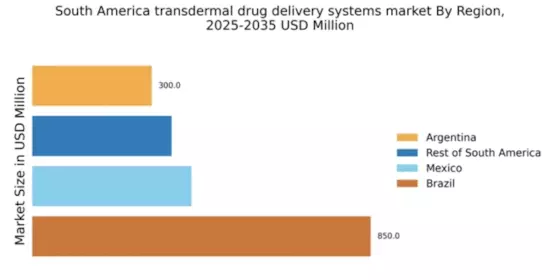
The transdermal drug-delivery-systems market in South America is characterized by a dynamic competitive landscape, driven by increasing demand for non-invasive drug administration methods and the growing prevalence of chronic diseases. Key players such as Johnson & Johnson (US), Mylan N.V. (US), and Novartis AG (CH) are strategically positioned to leverage innovation and regional expansion to enhance their market presence. Johnson & Johnson (US) focuses on developing advanced transdermal patches that improve patient compliance, while Mylan N.V. (US) emphasizes cost-effective solutions to cater to diverse patient needs. Novartis AG (CH) is investing in research and development to create novel drug formulations that can be delivered transdermally, thereby shaping a competitive environment that prioritizes innovation and patient-centric solutions.In terms of business tactics, companies are increasingly localizing manufacturing to reduce costs and enhance supply chain efficiency. The market structure appears moderately fragmented, with several players competing for market share. This fragmentation allows for a variety of product offerings, but also intensifies competition among key players, as they strive to differentiate themselves through unique product features and enhanced delivery mechanisms.
In October Mylan N.V. (US) announced a partnership with a local South American pharmaceutical company to co-develop a new line of transdermal patches aimed at treating chronic pain. This collaboration is significant as it not only expands Mylan's product portfolio but also enhances its distribution capabilities within the region, potentially increasing market penetration and accessibility for patients.
In September Novartis AG (CH) launched a new transdermal delivery system for a hypertension medication, which utilizes a novel polymer technology to improve drug absorption. This strategic move is crucial as it positions Novartis at the forefront of innovation in drug delivery, potentially setting new standards for efficacy and patient adherence in the treatment of hypertension.
In August Johnson & Johnson (US) unveiled a digital platform that integrates with its transdermal products, allowing for real-time monitoring of patient adherence and drug efficacy. This initiative reflects a growing trend towards digitalization in healthcare, suggesting that companies are increasingly recognizing the importance of technology in enhancing patient outcomes and engagement.
As of November current competitive trends indicate a strong emphasis on digitalization, sustainability, and the integration of artificial intelligence in drug delivery systems. Strategic alliances are becoming more prevalent, as companies seek to combine resources and expertise to drive innovation. The competitive landscape is likely to evolve from a focus on price-based competition to one centered on technological advancements, product differentiation, and supply chain reliability, ultimately enhancing the overall value proposition for patients and healthcare providers.



The South America Transdermal Drug Delivery Systems Market has witnessed significant developments recently. As of September 2023, companies like Novartis and Pfizer have been expanding their product lines, enhancing their presence in the region by introducing innovative transdermal systems that improve patient compliance and therapeutic outcomes. There have been notable mergers and acquisitions, including Astellas Pharma acquiring a smaller firm to bolster its portfolio in Brazil in August 2023, enhancing its capabilities in drug delivery technology.
In recent years, from 2021 to 2023, the market has seen a steady growth in valuation, driven by increasing healthcare awareness and a rising incidence of chronic diseases requiring effective drug delivery methods. Companies such as Johnson and Johnson and Eli Lilly are prioritizing Research and Development efforts, aligning with government initiatives to improve healthcare infrastructure in South America. Furthermore, recent regulatory changes have streamlined product approvals, aiding in quicker market entry for companies like Teva Pharmaceutical Industries.
The landscape continues to evolve with an increasing focus on localized production, sustainability, and innovation in transdermal patches and gels that cater to patient needs across the South American continent.
The Transdermal Drug Delivery Systems Market is projected to grow at 4.85% CAGR from 2025 to 2035, driven by technological advancements and increasing demand for non-invasive therapies.
New opportunities lie in:
By 2035, the market is expected to achieve substantial growth, driven by innovation and diverse applications.
| MARKET SIZE 2024 | 1900.0(USD Million) |
| MARKET SIZE 2025 | 1992.15(USD Million) |
| MARKET SIZE 2035 | 3200.0(USD Million) |
| COMPOUND ANNUAL GROWTH RATE (CAGR) | 4.85% (2025 - 2035) |
| REPORT COVERAGE | Revenue Forecast, Competitive Landscape, Growth Factors, and Trends |
| BASE YEAR | 2024 |
| Market Forecast Period | 2025 - 2035 |
| Historical Data | 2019 - 2024 |
| Market Forecast Units | USD Million |
| Key Companies Profiled | Johnson & Johnson (US), Mylan N.V. (US), Novartis AG (CH), Boehringer Ingelheim (DE), Teva Pharmaceutical Industries Ltd. (IL), Hikma Pharmaceuticals PLC (GB), Purdue Pharma L.P. (US), AstraZeneca PLC (GB), Fresenius Kabi AG (DE) |
| Segments Covered | Technology, Application, End-use, Formulation Type |
| Key Market Opportunities | Emerging technologies in transdermal drug-delivery-systems enhance patient compliance and therapeutic efficacy. |
| Key Market Dynamics | Rising demand for non-invasive therapies drives innovation in transdermal drug-delivery-systems across South America. |
| Countries Covered | Brazil, Mexico, Argentina, Rest of South America |
The market valuation was $1900.0 Million in 2024.
The projected valuation for 2035 is $3200.0 Million.
The expected CAGR during the forecast period is 4.85%.
Key players include Johnson & Johnson, Mylan N.V., Novartis AG, and Boehringer Ingelheim.
Transdermal Patches had the highest valuation, ranging from $900.0 Million to $1500.0 Million.
Pain Management is projected to generate the most revenue, with a range of $600.0 Million to $1000.0 Million.
The expected revenue range for hospitals is $760.0 Million to $1200.0 Million.
The Drug-in-Patch formulation type is anticipated to have a significant presence, with a range of $600.0 Million to $1000.0 Million.
Home Healthcare is expected to generate $570.0 Million to $900.0 Million, compared to $380.0 Million to $600.0 Million for pharmaceutical companies.
Trends may include advancements in technology and increased demand for non-invasive drug delivery methods.


Kindly complete the form below to receive a free sample of this Report

“This is really good guys. Excellent work on a tight deadline. I will continue to use you going forward and recommend you to others. Nice job”


“Thanks. It’s been a pleasure working with you, please use me as reference with any other Intel employees.”


“Thanks for sending the report it gives us a good global view of the Betaïne market.”


“Thank you, this will be very helpful for OQS.”


“We found the report very insightful! we found your research firm very helpful. I'm sending this email to secure our future business.”


“I am very pleased with how market segments have been defined in a relevant way for my purposes (such as "Portable Freezers & refrigerators" and "last-mile"). In general the report is well structured. Thanks very much for your efforts.”


“I have been reading the first document or the study, ,the Global HVAC and FP market report 2021 till 2026. Must say, good info! I have not gone in depth at all parts, but got a good indication of the data inside!”


“We got the report in time, we really thank you for your support in this process. I also thank to all of your team as they did a great job.”


“The Automotive 48V ECU Components Procurement Intelligence Study” was a complex project, but the Market Research Future (MRFR) team handled it with quality, agility, and customer-centricity. They delivered all requested data on time and within the agreed scope. The team, including Shubhendra Anand and Rahul Gotadki, was always readily available to clarify questions and swiftly implement necessary adjustments, driving the project to a successful conclusion within a very demanding timeframe.
I would also like to specifically commend Akshay Agarwal for his responsiveness and support at every stage—from our initial inquiry on May 6th through to final delivery on June 18th. His dedication made the entire process seamless.”



