×
Request Free Sample ×

Kindly complete the form below to receive a free sample of this Report

* Please use a valid business email

Leading companies partner with us for data-driven Insights

clients tt-cursor
Hero Background

South Korea Keytruda Market

ID: MRFR/HC/43640-HCR
200 Pages
Rahul Gotadki
October 2025

South Korea Keytruda Market Research Report By Cancer Type (Melanoma, Lung cancer, Hodgkin lymphoma, Stomach cancer, Urothelial carcinoma) and By Distribution Channel (Hospital Pharmacies, Specialty Pharmacies)- Forecast to 2035

Share:
Download PDF ×

We do not share your information with anyone. However, we may send you emails based on your report interest from time to time. You may contact us at any time to opt-out.

South Korea Keytruda Market Infographic
Purchase Options

South Korea Keytruda Market Summary

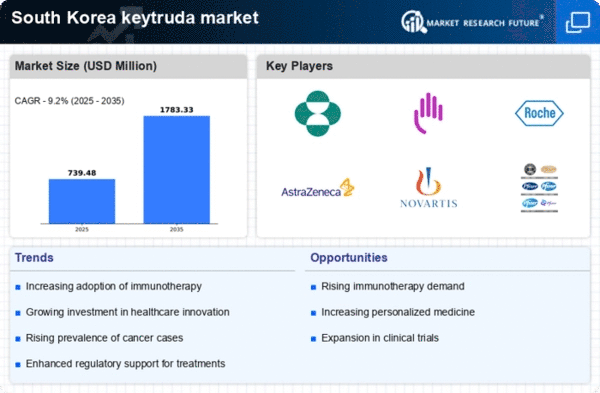
As per MRFR analysis, the South Korea keytruda market Size was estimated at 677.17 USD Million in 2024. The South Korea keytruda market is projected to grow from 739.48 USD Million in 2025 to 1783.33 USD Million by 2035, exhibiting a compound annual growth rate (CAGR) of 9.2% during the forecast period 2025 - 2035.

Key Market Trends & Highlights

The South Korea Keytruda Market is experiencing robust growth driven by increasing cancer incidence and supportive regulatory frameworks.

  • The market is characterized by a rising incidence of cancer, which is driving demand for innovative therapies like Keytruda.
  • Regulatory support for immunotherapy is enhancing market access and adoption of Keytruda in South Korea.
  • Collaboration in research is fostering advancements in treatment options, positioning Keytruda as a leading choice among oncologists.
  • Key market drivers include increasing awareness of immunotherapy and government initiatives for cancer treatment, which are likely to propel market growth.

Market Size & Forecast

2024 Market Size 677.17 (USD Million)
2035 Market Size 1783.33 (USD Million)
CAGR (2025 - 2035) 9.2%

Major Players

Merck & Co (US), Bristol-Myers Squibb (US), Roche Holding AG (CH), AstraZeneca PLC (GB), Novartis AG (CH), Pfizer Inc (US), Eli Lilly and Company (US), Amgen Inc (US)

South Korea Keytruda Market Trends

The keytruda market in South Korea is currently experiencing notable growth, driven by increasing incidences of various cancers and a rising demand for innovative therapies. The South Korean healthcare system is characterized by its advanced infrastructure and a strong emphasis on research and development. This environment fosters the introduction of cutting-edge treatments, including immunotherapies like keytruda. Furthermore, the government’s support for cancer research and treatment accessibility enhances the market's potential. As healthcare professionals become more familiar with the benefits of immunotherapy, the adoption of keytruda is likely to rise, reflecting a shift in treatment paradigms. In addition, the regulatory landscape in South Korea appears to be conducive to the expansion of the keytruda market. The Ministry of Food and Drug Safety has streamlined approval processes for new cancer therapies, which may facilitate quicker access to keytruda for patients. Moreover, the increasing collaboration between pharmaceutical companies and local research institutions suggests a promising future for the development of personalized medicine. Overall, the keytruda market is poised for continued growth, driven by innovation, supportive policies, and a commitment to improving patient outcomes.

Rising Cancer Incidence

The incidence of various cancers in South Korea is on the rise, leading to an increased demand for effective treatment options. This trend is likely to drive the adoption of keytruda, as healthcare providers seek advanced therapies to address the growing patient population.

Regulatory Support

The South Korean government has implemented favorable regulations that expedite the approval of new cancer therapies. This supportive environment may enhance the availability of keytruda, allowing for quicker patient access and potentially increasing market penetration.

Collaboration in Research

There is a notable trend of collaboration between pharmaceutical companies and local research institutions in South Korea. This synergy may lead to innovative applications of keytruda, fostering advancements in personalized medicine and expanding treatment options for patients.

South Korea Keytruda Market Drivers

Emerging Patient Demographics

The emergence of new patient demographics is reshaping the keytruda market in South Korea. An aging population, coupled with lifestyle changes, has led to an increase in cancer diagnoses among younger individuals. This demographic shift is prompting healthcare providers to consider keytruda as a first-line treatment option for a broader range of patients. In 2025, it is estimated that the incidence of cancer among individuals aged 30-50 will rise by 15%, creating a larger patient base for keytruda. As healthcare systems adapt to these changing demographics, the keytruda market is likely to experience significant growth.

Rising Healthcare Expenditure

The increase in healthcare expenditure in South Korea is a significant driver for the keytruda market. As the government and private sectors invest more in healthcare, there is a corresponding rise in the availability of advanced cancer treatments. In 2025, healthcare spending is projected to reach approximately 9% of the GDP, reflecting a commitment to improving patient outcomes. This financial commitment is likely to facilitate greater access to keytruda, as hospitals and clinics expand their treatment offerings. Consequently, the keytruda market may see a substantial uptick in demand as more patients are able to afford cutting-edge therapies.

Advancements in Clinical Research

Ongoing advancements in clinical research are playing a crucial role in the expansion of the keytruda market. South Korean research institutions are increasingly involved in clinical trials that explore the efficacy of keytruda in various cancer types. Recent studies indicate that keytruda has shown promising results in treating melanoma and lung cancer, leading to a potential increase in its adoption. The South Korean government has allocated substantial funding for cancer research, which may further enhance the development of new treatment protocols involving keytruda. This focus on research is likely to bolster the keytruda market as new data emerges.

Increasing Awareness of Immunotherapy

The growing awareness of immunotherapy as a viable treatment option for various cancers is driving the keytruda market in South Korea. Educational campaigns by healthcare providers and patient advocacy groups have contributed to a better understanding of the benefits of immunotherapy. As patients become more informed about their treatment options, the demand for keytruda is likely to rise. In 2025, it is estimated that approximately 30% of cancer patients in South Korea are considering immunotherapy as part of their treatment plan. This shift in patient preference is expected to significantly impact the keytruda market, as more individuals seek out this innovative therapy.

Government Initiatives for Cancer Treatment

Government initiatives aimed at improving cancer treatment accessibility are influencing the keytruda market in South Korea. The Ministry of Health and Welfare has implemented policies to subsidize cancer treatments, including immunotherapy options like keytruda. These initiatives are designed to reduce the financial burden on patients, making keytruda more accessible to a broader population. As a result, the market is expected to experience growth, with projections indicating a potential increase in keytruda prescriptions by 20% over the next few years. This supportive regulatory environment is likely to enhance the overall landscape of the keytruda market.


Market Segment Insights

By Cancer Type: Melanoma (Largest) vs. Lung Cancer (Fastest-Growing)

In the South Korea keytruda market, melanoma accounts for the largest share, driven by increased awareness and early detection methods among patients. Lung cancer follows closely, benefiting from advancements in diagnostic techniques and the growing prevalence of smoking-related cases. Other cancers like Hodgkin lymphoma, stomach cancer, and urothelial carcinoma hold smaller market shares, yet they contribute to the overall landscape by addressing specific patient needs and treatment options. The growth trends within this segment indicate a robust expansion, particularly in lung cancer, which has emerged as the fastest-growing category. Factors such as innovative therapies, enhanced clinical outcomes, and supportive government policies to improve lung cancer screening are fueling this growth. Additionally, melanoma continues to thrive as a priority area due to ongoing research and development dedicated to immuno-oncology treatments, positioning it as a key player in the treatment landscape.

Melanoma: Dominant vs. Lung Cancer: Emerging

Melanoma stands as the dominant force within the South Korea keytruda market, characterized by high incidences and significant investment in research and development. This cancer type benefits from established treatment protocols and is often prioritized due to its visibility in the dermatological landscape. It possesses a well-structured support system, enabling better patient access to therapies. Conversely, lung cancer is emerging rapidly, driven by increasing diagnostic capabilities and a growing focus on targeted therapies. This segment is gaining momentum owing to heightened awareness about lung health and the effectiveness of new treatment modalities. Both segments are critical, yet their market dynamics offer unique challenges and opportunities that shape their respective trajectories.

By Distribution Channel: Hospital Pharmacies (Largest) vs. Specialty Pharmacies (Fastest-Growing)

In the South Korea keytruda market, Hospital Pharmacies hold the largest market share, benefiting from established relationships with healthcare providers and patients relying on hospital settings for treatments. Specialty Pharmacies, although smaller in share, are rapidly gaining traction as they cater to specific patient needs and provide specialized care for keytruda therapies. The growth of Specialty Pharmacies is driven by the increasing demand for personalized medicine and the rise of chronic diseases requiring long-term management. Innovations in pharmaceutical services, along with the growing preference for targeted therapies, have contributed to this segment's expansion. As healthcare continues to evolve, both Hospital and Specialty Pharmacies are poised to play crucial roles in the distribution of keytruda in the market.

Hospital Pharmacies: Dominant vs. Specialty Pharmacies: Emerging

Hospital Pharmacies dominate the South Korea keytruda market due to their extensive reach and critical role in patient care. They typically have robust infrastructures and established relationships with medical professionals, facilitating efficient patient access to treatments. Meanwhile, Specialty Pharmacies are emerging as vital players, driven by the increasing complexity of patient therapies. They focus on providing tailored services and education to patients, which enhances adherence to treatment regimens. The combination of specialized knowledge, inventory of high-cost drugs, and supportive patient services positions Specialty Pharmacies as significant contributors to the future growth of the market.

Get more detailed insights about South Korea Keytruda Market

Key Players and Competitive Insights

The competitive dynamics within the keytruda market exhibit a landscape characterized by rapid innovation and strategic maneuvering among key players. Major companies such as Merck & Co (US), Bristol-Myers Squibb (US), and Roche Holding AG (CH) are at the forefront, each leveraging distinct strategies to enhance their market presence. Merck & Co (US) continues to focus on expanding its clinical trial portfolio, particularly in combination therapies, which appears to be a pivotal strategy for maintaining its leadership position. Meanwhile, Bristol-Myers Squibb (US) emphasizes strategic partnerships to bolster its research capabilities, particularly in immuno-oncology, thereby enhancing its competitive edge. Roche Holding AG (CH) is investing heavily in digital transformation initiatives, aiming to streamline operations and improve patient outcomes through data analytics and personalized medicine.

The business tactics employed by these companies reflect a concerted effort to optimize supply chains and localize manufacturing processes. The market structure is moderately fragmented, with a few dominant players exerting considerable influence over pricing and innovation. This fragmentation allows for niche players to emerge, yet the collective strength of the major companies shapes the competitive environment significantly, often dictating market trends and consumer preferences.

In October 2025, Merck & Co (US) announced a strategic collaboration with a leading South Korean biotech firm to enhance its research capabilities in the region. This partnership is likely to facilitate localized clinical trials, thereby accelerating the development of new therapies tailored to the South Korean population. Such collaborations not only enhance Merck's operational efficiency but also position it favorably within the local market, potentially increasing its market share.

In September 2025, Bristol-Myers Squibb (US) launched a new initiative aimed at expanding access to its immunotherapy treatments in South Korea. This initiative includes partnerships with local healthcare providers to ensure that patients have better access to cutting-edge therapies. The strategic importance of this move lies in its potential to enhance patient outcomes while simultaneously strengthening the company's brand loyalty in a competitive market.

In August 2025, Roche Holding AG (CH) unveiled a new digital platform designed to integrate patient data with treatment protocols, enhancing the precision of its therapeutic offerings. This initiative underscores Roche's commitment to digitalization and personalized medicine, which are increasingly becoming critical differentiators in the keytruda market. By leveraging technology, Roche aims to improve treatment efficacy and patient engagement, thereby solidifying its competitive position.

As of November 2025, the keytruda market is witnessing trends that emphasize digitalization, sustainability, and the integration of artificial intelligence (AI) into therapeutic development. Strategic alliances are increasingly shaping the competitive landscape, allowing companies to pool resources and expertise. The evolution of competitive differentiation appears to be shifting from traditional price-based competition towards a focus on innovation, technological advancements, and supply chain reliability. This transition suggests that companies that prioritize these areas may be better positioned to thrive in the evolving market.

Key Companies in the South Korea Keytruda Market market include

Industry Developments

The South Korea Keytruda Market has witnessed significant movements recently, particularly concerning collaborations and advancements among key players. In late 2022, Merck & Co. announced the expansion of its partnership with Hanmi Pharmaceutical to enhance oncology offerings, facilitating the development of innovative treatments alongside Keytruda. Furthermore, Ildong Pharmaceutical and LG Chem have embarked on joint research projects to explore new immunotherapies, signaling a focus on enhancing pharmaceutical capabilities in the sector.In terms of market growth, Celltrion reported a boost in its stock market valuation following positive clinical trial results linked to immunotherapy lines related to Keytruda. 

Samsung Biologics and SK Pharmteco are also solidifying their positions by upgrading their manufacturing capabilities ensuring efficient production of biologics, which is pivotal for the growing demand Keytruda in South Korea. Additionally, the South Korean government has been actively promoting research and development in the biopharmaceutical sector, contributing to an impressive increase in market valuations among companies engaged in Keytruda research and development, particularly over the last two years.

Future Outlook

South Korea Keytruda Market Future Outlook

The Keytruda Market in South Korea is projected to grow at a 9.2% CAGR from 2024 to 2035, driven by increasing cancer prevalence and advancements in immunotherapy.

New opportunities lie in:

  • Expansion of telehealth services for remote patient monitoring
  • Development of combination therapies with emerging oncology drugs
  • Investment in personalized medicine approaches for tailored treatments

By 2035, the keytruda market is expected to achieve substantial growth and innovation.

Market Segmentation

South Korea Keytruda Market Cancer Type Outlook

  • Melanoma
  • Lung cancer
  • Hodgkin lymphoma
  • Stomach cancer
  • Urothelial carcinoma

South Korea Keytruda Market Distribution Channel Outlook

  • Hospital Pharmacies
  • Specialty Pharmacies

Report Scope

MARKET SIZE 2024 677.17(USD Million)
MARKET SIZE 2025 739.48(USD Million)
MARKET SIZE 2035 1783.33(USD Million)
COMPOUND ANNUAL GROWTH RATE (CAGR) 9.2% (2024 - 2035)
REPORT COVERAGE Revenue Forecast, Competitive Landscape, Growth Factors, and Trends
BASE YEAR 2024
Market Forecast Period 2025 - 2035
Historical Data 2019 - 2024
Market Forecast Units USD Million
Key Companies Profiled Merck & Co (US), Bristol-Myers Squibb (US), Roche Holding AG (CH), AstraZeneca PLC (GB), Novartis AG (CH), Pfizer Inc (US), Eli Lilly and Company (US), Amgen Inc (US)
Segments Covered Cancer Type, Distribution Channel
Key Market Opportunities Emerging immunotherapy advancements and regulatory support enhance growth potential in the keytruda market.

Key Market Dynamics Intensifying competition and evolving regulatory frameworks shape the Keytruda market dynamics in South Korea.
Countries Covered South Korea

Leave a Comment

FAQs

What is the expected market size of the South Korea Keytruda Market in 2024?

The South Korea Keytruda Market is expected to be valued at 677.25 million USD in 2024.

What is the projected market value for the South Korea Keytruda Market by 2035?

By 2035, the South Korea Keytruda Market is expected to reach a value of 1167.95 million USD.

What is the compound annual growth rate (CAGR) for the South Korea Keytruda Market from 2025 to 2035?

The expected CAGR for the South Korea Keytruda Market from 2025 to 2035 is 5.079%.

Which cancer type is expected to hold the largest share in the South Korea Keytruda Market in 2024?

Lung cancer is projected to have the largest share in the South Korea Keytruda Market, valued at 200.0 million USD in 2024.

What market value is anticipated for Urothelial carcinoma within the South Korea Keytruda Market in 2035?

The market value for Urothelial carcinoma in the South Korea Keytruda Market is anticipated to be 247.95 million USD by 2035.

Who are the major players in the South Korea Keytruda Market?

Major players in the South Korea Keytruda Market include Merck and Co, LG Chem, Hanmi Pharmaceutical, and Samsung Biologics.

What is the expected market value for Melanoma in the South Korea Keytruda Market by 2035?

The expected market value for Melanoma by 2035 is 250.0 million USD.

What challenges does the South Korea Keytruda Market face in its growth?

The South Korea Keytruda Market faces challenges such as regulatory hurdles and the need for continual innovation in cancer therapies.

What are the projected market dynamics for Stomach cancer in the South Korea Keytruda Market in 2024?

In 2024, the market for Stomach cancer in the South Korea Keytruda Market is projected to be valued at 80.0 million USD.

What is the anticipated impact of emerging trends on the South Korea Keytruda Market?

Emerging trends such as personalized medicine and advancements in immunotherapy are expected to drive the growth of the South Korea Keytruda Market.

Download Free Sample

Kindly complete the form below to receive a free sample of this Report

Compare Licence

×
Features License Type
Single User Multiuser License Enterprise User
Price $4,950 $5,950 $7,250
Maximum User Access Limit 1 User Upto 10 Users Unrestricted Access Throughout the Organization
Free Customization
Direct Access to Analyst
Deliverable Format
Platform Access
Discount on Next Purchase 10% 15% 15%
Printable Versions