×
Request Free Sample ×

Kindly complete the form below to receive a free sample of this Report

* Please use a valid business email

Leading companies partner with us for data-driven Insights

clients tt-cursor
Hero Background

UK Keytruda Market

ID: MRFR/HC/43639-HCR
200 Pages
Rahul Gotadki
October 2025

UK Keytruda Market Research Report By Cancer Type (Melanoma, Lung cancer, Hodgkin lymphoma, Stomach cancer, Urothelial carcinoma) and By Distribution Channel (Hospital Pharmacies, Specialty Pharmacies)- Forecast to 2035

Share:
Download PDF ×

We do not share your information with anyone. However, we may send you emails based on your report interest from time to time. You may contact us at any time to opt-out.

UK Keytruda Market Infographic
Purchase Options

UK Keytruda Market Summary

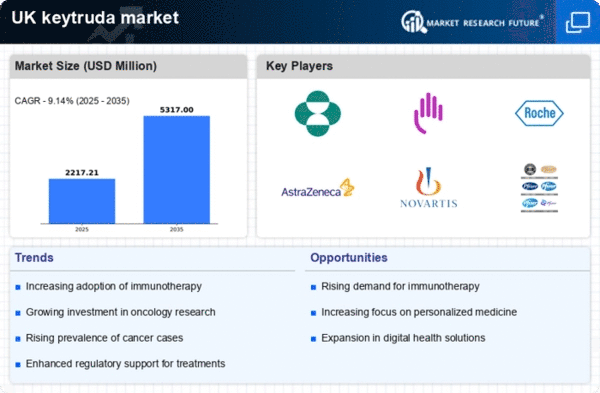
As per MRFR analysis, the keytruda market Size was estimated at 2031.52 USD Million in 2024. The keytruda market is projected to grow from 2217.21 USD Million in 2025 to 5317.0 USD Million by 2035, exhibiting a compound annual growth rate (CAGR) of 9.14% during the forecast period 2025 - 2035.

Key Market Trends & Highlights

The UK Keytruda Market is experiencing robust growth driven by increasing adoption of immunotherapy and rising cancer incidence.

  • The UK Keytruda Market is witnessing a notable shift towards immunotherapy as a preferred treatment option.
  • Cost-effectiveness is becoming a critical factor influencing treatment decisions among healthcare providers.
  • Clinical trials for Keytruda are expanding, particularly in the oncology segment, which is the largest in the market.
  • Rising cancer incidence and advancements in research and development are key drivers propelling market growth.

Market Size & Forecast

2024 Market Size 2031.52 (USD Million)
2035 Market Size 5317.0 (USD Million)
CAGR (2025 - 2035) 9.14%

Major Players

Merck & Co (US), Bristol-Myers Squibb (US), Roche Holding AG (CH), AstraZeneca PLC (GB), Novartis AG (CH), Pfizer Inc (US), Eli Lilly and Company (US), Amgen Inc (US)

UK Keytruda Market Trends

The keytruda market in the UK is currently experiencing notable developments, driven by advancements in immunotherapy and increasing adoption among healthcare providers. This treatment, primarily used for various cancers, has gained traction due to its efficacy and relatively favorable safety profile. The National Health Service (NHS) has been pivotal in facilitating access to this therapy, ensuring that eligible patients receive timely treatment. Furthermore, ongoing clinical trials and research initiatives are likely to enhance the understanding of keytruda's applications, potentially expanding its use in different cancer types. As the healthcare landscape evolves, the integration of keytruda into treatment protocols appears to be a growing trend, reflecting a shift towards personalized medicine. In addition to clinical advancements, the economic aspects of the keytruda market are also noteworthy. The pricing strategies employed by manufacturers, alongside reimbursement policies from the NHS, play a crucial role in shaping market dynamics. Stakeholders are increasingly focused on cost-effectiveness analyses to justify the investment in this therapy. Moreover, the competitive landscape is becoming more complex, with emerging therapies vying for market share. This competition may lead to innovative pricing models and partnerships aimed at improving patient access. Overall, the keytruda market is poised for continued growth, influenced by both clinical and economic factors that are reshaping cancer treatment in the UK.

Increasing Adoption of Immunotherapy

The trend towards immunotherapy is gaining momentum, with keytruda being at the forefront of this shift. Healthcare providers are increasingly recognizing the benefits of immunotherapy in treating various cancers, leading to a rise in prescriptions. This growing acceptance is likely to enhance patient outcomes and drive further research into the drug's potential applications.

Focus on Cost-Effectiveness

As the keytruda market evolves, stakeholders are placing greater emphasis on cost-effectiveness. The NHS and healthcare providers are conducting analyses to evaluate the economic impact of keytruda, which may influence treatment decisions. This focus on value is expected to shape pricing strategies and reimbursement policies.

Expansion of Clinical Trials

The landscape of clinical trials related to keytruda is expanding, with ongoing studies exploring its efficacy in various cancer types. This trend suggests a commitment to understanding the full potential of the drug, which may lead to new indications and broaden its use in the treatment of cancer.

UK Keytruda Market Drivers

Rising Cancer Incidence

The keytruda market in the UK is experiencing growth due to the rising incidence of various cancers, particularly lung cancer and melanoma. According to recent statistics, cancer cases in the UK have increased by approximately 5% annually, leading to a heightened demand for effective treatment options. Keytruda, as an immunotherapy agent, has shown promising results in clinical settings, which may contribute to its adoption among healthcare providers. The increasing prevalence of cancer is likely to drive the need for innovative therapies, positioning the keytruda market as a critical component in the fight against cancer. As healthcare systems adapt to these trends, the market may see further expansion, with keytruda playing a pivotal role in treatment protocols.

Growing Awareness and Education

There is a notable increase in awareness and education regarding immunotherapy and its benefits within the keytruda market. Healthcare professionals and patients are becoming more informed about the potential of Keytruda as a treatment option for various cancers. Educational initiatives, including seminars and workshops, are being conducted to disseminate information about the efficacy and safety of Keytruda. This growing awareness is likely to influence treatment decisions, as patients and providers seek out the most effective therapies available. As knowledge about immunotherapy expands, the keytruda market may experience a surge in demand, driven by informed patient choices and proactive healthcare practices.

Regulatory Support and Approvals

The regulatory environment in the UK is becoming increasingly supportive of new cancer therapies, including Keytruda. The Medicines and Healthcare products Regulatory Agency (MHRA) has streamlined the approval process for innovative treatments, which may expedite the entry of Keytruda into the market. Recent approvals for expanded indications have allowed for broader patient access, which is likely to enhance the market's growth. The keytruda market benefits from this regulatory support, as it encourages healthcare providers to adopt new therapies that have been validated through rigorous clinical trials. This trend may lead to increased sales and market penetration, as more patients gain access to effective treatment options.

Economic Factors and Healthcare Funding

Economic factors play a crucial role in shaping the keytruda market in the UK. The allocation of healthcare funding towards innovative cancer treatments is essential for the sustainability of the market. Recent budgetary increases for the National Health Service (NHS) have allowed for greater investment in advanced therapies, including Keytruda. This financial support may enhance patient access to cutting-edge treatments, thereby driving market growth. Additionally, cost-effectiveness analyses are becoming increasingly important in determining the adoption of new therapies. As Keytruda demonstrates its value in improving patient outcomes, it is likely to secure a more prominent position within the healthcare budget, further solidifying its role in the keytruda market.

Advancements in Research and Development

Ongoing advancements in research and development within the keytruda market are propelling its growth in the UK. Pharmaceutical companies are investing heavily in R&D to explore new indications and combinations for Keytruda, which may enhance its efficacy and broaden its application. Recent studies have indicated that combination therapies involving Keytruda could improve patient outcomes significantly. The UK government has also been supportive of innovative research initiatives, providing funding and resources to facilitate clinical trials. This focus on R&D not only enhances the therapeutic landscape but also positions the keytruda market as a leader in cancer treatment innovation, potentially attracting more investment and interest from stakeholders.


Market Segment Insights

By Cancer Type: Melanoma (Largest) vs. Lung Cancer (Fastest-Growing)

The UK keytruda market exhibits a diverse distribution of market shares among various cancer types. Melanoma represents the largest share due to its higher incidence rates and better awareness among patients, contributing to increased treatment adoption. In contrast, lung cancer also holds a significant share, but its position is leveraged by growing awareness and advancements in treatment options leading to a strong competitive landscape in the market. In recent years, growth trends reveal that lung cancer is emerging as the fastest-growing segment, driven by innovations in therapies and increased screening rates. Factors such as rising smoking cessation efforts and education around early detection are significantly bolstering its market presence. Conversely, melanoma benefits from established treatment protocols but must adapt to emerging therapies that challenge its dominance, indicating an evolving landscape in the UK keytruda market.

Melanoma (Dominant) vs. Stomach Cancer (Emerging)

Melanoma is recognized as the dominant segment in the UK keytruda market, characterized by a well-established treatment framework and high patient awareness. This cancer type benefits from a variety of FDA-approved therapies that have been shown to improve survival rates significantly. In contrast, stomach cancer is classified as an emerging segment. Although historically overshadowed, recent research developments and novel therapeutic agents are beginning to reshape its clinical landscape. Awareness campaigns targeting early detection are also driving momentum in this space. As treatment options expand for stomach cancer, its market share is expected to grow, bolstered by an increasing focus on personalized medicine and targeted therapies that could improve patient outcomes.

By Distribution Channel: Hospital Pharmacies (Largest) vs. Specialty Pharmacies (Fastest-Growing)

In the UK keytruda market, Hospital Pharmacies hold a significant portion of the overall distribution channel. Their established networks and accessibility to a larger patient base contribute to their dominance in this segment. The reliance of healthcare providers on these pharmacies for efficient medication delivery enhances their market share, making them a key player in the treatment of patients requiring keytruda. The integration of Hospital Pharmacies within healthcare systems ensures that they remain a staple in the distribution of oncology therapies. On the other hand, Specialty Pharmacies are emerging as the fastest-growing segment in the distribution channel. This growth can be attributed to the rising demand for specialized medications and personalized treatment plans. With a focus on high-cost therapies like keytruda, these pharmacies are strategically positioned to cater to patients with unique healthcare needs. Their ability to provide tailored support services and patient education is driving their rapid expansion, positioning them as a critical component in the UK keytruda market.

Distribution Channel: Hospital Pharmacies (Dominant) vs. Specialty Pharmacies (Emerging)

Hospital Pharmacies dominate the distribution landscape due to their extensive presence and integration into the healthcare system. They offer a broad range of medications, including keytruda, supported by trained personnel who ensure accurate dispensing and patient safety. Their established relationships with hospitals facilitate smoother logistics and patient onboarding. Conversely, Specialty Pharmacies represent an emerging force, specializing in niche therapies that require unique handling. Their dynamic approach to patient care, which includes comprehensive management programs and personalized consultations, ensures they meet rising patient demands effectively. The growing acceptance of specialty pharmaceuticals in treatment plans further solidifies their role within the UK keytruda market.

Get more detailed insights about UK Keytruda Market

Key Players and Competitive Insights

The competitive dynamics within the keytruda market exhibit a landscape characterized by rapid innovation and strategic maneuvering among key players. Major companies such as Merck & Co (US), Bristol-Myers Squibb (US), and Roche Holding AG (CH) are at the forefront, each leveraging distinct strategies to enhance their market positions. Merck & Co (US) continues to focus on expanding its immunotherapy portfolio, while Bristol-Myers Squibb (US) emphasizes strategic partnerships to bolster its research capabilities. Roche Holding AG (CH) appears to be concentrating on integrating digital health solutions into its offerings, thereby enhancing patient engagement and treatment outcomes. Collectively, these strategies contribute to a competitive environment that is increasingly driven by innovation and collaboration.

In terms of business tactics, companies are localizing manufacturing and optimizing supply chains to enhance efficiency and responsiveness to market demands. The market structure is moderately fragmented, with several players vying for market share, yet the influence of major companies remains substantial. This competitive structure allows for a dynamic interplay of strategies, where established firms can leverage their resources to outpace smaller competitors.

In October 2025, Merck & Co (US) announced a collaboration with a leading biotech firm to develop next-generation immunotherapies. This strategic move is likely to enhance Merck's research capabilities and accelerate the development of innovative treatments, positioning the company favorably in a competitive landscape that increasingly values cutting-edge solutions. The partnership may also facilitate access to novel technologies that could streamline the drug development process.

In September 2025, Bristol-Myers Squibb (US) expanded its partnership with a prominent academic institution to advance research in cancer immunotherapy. This initiative underscores the company's commitment to fostering innovation through collaboration, potentially leading to breakthroughs that could redefine treatment paradigms. By aligning with academic leaders, Bristol-Myers Squibb is likely to enhance its credibility and attract top-tier talent to its research initiatives.

In August 2025, Roche Holding AG (CH) launched a digital health platform aimed at improving patient adherence to treatment regimens. This initiative reflects Roche's strategic focus on integrating technology into healthcare, which may enhance patient outcomes and streamline the treatment process. By prioritizing digital solutions, Roche is positioning itself as a leader in patient-centric care, which is increasingly becoming a critical differentiator in the market.

As of November 2025, current trends in the keytruda market indicate a shift towards digitalization, sustainability, and the integration of artificial intelligence (AI) in drug development and patient care. Strategic alliances are playing a pivotal role in shaping the competitive landscape, enabling companies to pool resources and expertise. Looking ahead, competitive differentiation is expected to evolve, with a pronounced shift from price-based competition to a focus on innovation, technological advancements, and supply chain reliability. This transition suggests that companies that prioritize these elements will likely secure a more robust position in the market.

Key Companies in the UK Keytruda Market market include

Industry Developments

The UK Keytruda Market has witnessed notable developments recently. In September 2023, Merck & Co announced the successful expansion of Keytruda's indications, allowing its use in more advanced stages of non-small cell lung cancer (NSCLC), which aligns with the National Institute for Health and Care Excellence (NICE) recommendations. Additionally, Bristol Myers Squibb launched a campaign to further educate oncologists on the potential of immunotherapies, including Keytruda, in combination with their own therapies.

AstraZeneca is also in discussions about possible partnerships, looking to integrate their drugs with existing treatments in the immuno-oncology space. Over the past couple of years, significant growth has been noted in the UK cancer treatment market, bolstered by advancements in precision medicine and immunotherapy, with the overall market valued at approximately 2 billion in 2022, as reported by NHS sources. Furthermore, the market has been attracting investments aimed at R&D in oncology drugs.

However, there have been no major mergers or acquisitions reported among the companies directly linked to Keytruda in the UK market since early 2022, keeping the competitive landscape stable.

Future Outlook

UK Keytruda Market Future Outlook

The Keytruda Market is projected to grow at a 9.14% CAGR from 2024 to 2035, driven by increasing cancer prevalence, advancements in immunotherapy, and expanding treatment indications.

New opportunities lie in:

  • Development of personalized treatment plans leveraging genetic profiling.
  • Expansion into emerging markets with tailored pricing strategies.
  • Investment in digital health technologies for remote patient monitoring.

By 2035, the keytruda market is expected to achieve substantial growth, solidifying its position as a leader in oncology.

Market Segmentation

UK Keytruda Market Cancer Type Outlook

  • Melanoma
  • Lung cancer
  • Hodgkin lymphoma
  • Stomach cancer
  • Urothelial carcinoma

UK Keytruda Market Distribution Channel Outlook

  • Hospital Pharmacies
  • Specialty Pharmacies

Report Scope

MARKET SIZE 2024 2031.52(USD Million)
MARKET SIZE 2025 2217.21(USD Million)
MARKET SIZE 2035 5317.0(USD Million)
COMPOUND ANNUAL GROWTH RATE (CAGR) 9.14% (2024 - 2035)
REPORT COVERAGE Revenue Forecast, Competitive Landscape, Growth Factors, and Trends
BASE YEAR 2024
Market Forecast Period 2025 - 2035
Historical Data 2019 - 2024
Market Forecast Units USD Million
Key Companies Profiled Merck & Co (US), Bristol-Myers Squibb (US), Roche Holding AG (CH), AstraZeneca PLC (GB), Novartis AG (CH), Pfizer Inc (US), Eli Lilly and Company (US), Amgen Inc (US)
Segments Covered Cancer Type, Distribution Channel
Key Market Opportunities Emerging immunotherapy advancements enhance treatment options in the keytruda market.
Key Market Dynamics Intensifying competition and evolving regulatory frameworks shape the dynamics of the keytruda market.
Countries Covered UK

Leave a Comment

FAQs

What is the expected market size of the UK Keytruda Market in 2024?

The UK Keytruda Market is expected to be valued at 1.02 billion USD in 2024.

What is the projected market size for the UK Keytruda Market by 2035?

By 2035, the market is projected to reach a value of 3.1 billion USD.

What is the expected CAGR for the UK Keytruda Market from 2025 to 2035?

The expected compound annual growth rate (CAGR) for the market from 2025 to 2035 is 10.658%.

Which cancer type is expected to dominate the UK Keytruda Market?

Lung cancer is anticipated to be the dominant segment, valued at 1.05 billion USD in 2035.

What is the market size for Melanoma in the UK Keytruda Market in 2024?

The market size for Melanoma in 2024 is projected to be 0.25 billion USD.

Who are the key players in the UK Keytruda Market?

Major players in the market include AbbVie, Regeneron Pharmaceuticals, Johnson and Johnson, and Merck and Co.

What is the market valuation for Urothelial carcinoma in 2035?

Urothelial carcinoma is expected to reach a market valuation of 0.55 billion USD by 2035.

How much is the UK Keytruda Market for Hodgkin lymphoma expected to grow by 2035?

The market for Hodgkin lymphoma is projected to grow to 0.45 billion USD by 2035 from 0.15 billion USD in 2024.

What is the anticipated market size for Stomach cancer in the UK Keytruda Market by 2035?

The market size for Stomach cancer is expected to reach 0.3 billion USD by 2035.

What are the growth drivers for the UK Keytruda Market?

Growth drivers include increasing cancer prevalence and advancements in immunotherapy treatments.

Download Free Sample

Kindly complete the form below to receive a free sample of this Report

Compare Licence

×
Features License Type
Single User Multiuser License Enterprise User
Price $4,950 $5,950 $7,250
Maximum User Access Limit 1 User Upto 10 Users Unrestricted Access Throughout the Organization
Free Customization
Direct Access to Analyst
Deliverable Format
Platform Access
Discount on Next Purchase 10% 15% 15%
Printable Versions