×
Request Free Sample ×

Kindly complete the form below to receive a free sample of this Report

* Please use a valid business email

Leading companies partner with us for data-driven Insights

clients tt-cursor
Hero Background

Sustainable Tourism Market

ID: MRFR/CG/10190-HCR
128 Pages
Pradeep Nandi
October 2025

Sustainable Tourism Market Research Report: By Tourism Type (Ecotourism, Cultural Tourism, Adventure Tourism, Wellness Tourism), By Service Type (Transportation, Accommodation, Food and Beverage, Activities and Experiences), By Consumer Segment (Individual Travelers, Family Travelers, Corporate Travelers, Group Travelers), By Travel Purpose (Leisure, Business, Educational, Volunteer) and By Regional (North America, Europe, South America, Asia Pacific, Middle East and Africa)- Forecast to 2035

Share:
Download PDF ×

We do not share your information with anyone. However, we may send you emails based on your report interest from time to time. You may contact us at any time to opt-out.

Sustainable Tourism Market Infographic
Purchase Options

Sustainable Tourism Market Summary

As per MRFR analysis, the Sustainable Tourism Market Size was estimated at 1261.7 USD Billion in 2024. The Sustainable Tourism industry is projected to grow from 1558.23 USD Billion in 2025 to 12863.85 USD Billion by 2035, exhibiting a compound annual growth rate (CAGR) of 23.5 during the forecast period 2025 - 2035.

Key Market Trends & Highlights

The Sustainable Tourism Market is experiencing a transformative shift towards eco-conscious practices and authentic experiences.

  • The rise of eco-friendly accommodations is reshaping consumer preferences in North America, the largest market for sustainable tourism.
  • Cultural and community engagement initiatives are gaining traction, particularly in the Asia-Pacific region, which is the fastest-growing market.
  • Technological innovations in sustainability are enhancing the travel experience, appealing to both individual and family travelers.
  • Increased consumer awareness and government initiatives are driving the demand for authentic experiences in ecotourism and wellness tourism segments.

Market Size & Forecast

2024 Market Size 1261.7 (USD Billion)
2035 Market Size 12863.85 (USD Billion)
CAGR (2025 - 2035) 23.5%

Major Players

Intrepid Group (AU), G Adventures (CA), Trafalgar (GB), Responsible Travel (GB), EcoTour (US), Sustainable Travel International (US), Natural Habitat Adventures (US), Green Globe (AU)

Sustainable Tourism Market Trends

The Sustainable Tourism Market is currently experiencing a notable transformation, driven by an increasing awareness of environmental issues and a growing demand for responsible travel options. Travelers are becoming more conscious of their impact on the environment and local communities, leading to a shift in preferences towards eco-friendly accommodations, sustainable transportation, and experiences that promote cultural preservation. This evolving mindset appears to be influencing various stakeholders within the tourism industry, including operators, governments, and local communities, all of whom are adapting to meet the expectations of a more environmentally aware clientele. Moreover, the Sustainable Tourism Market seems to be benefiting from technological advancements that facilitate sustainable practices. Innovations in renewable energy, waste management, and digital platforms for eco-tourism are emerging as key components in this sector. As travelers increasingly seek authentic experiences that align with their values, the market is likely to expand further, fostering a more sustainable approach to tourism that prioritizes ecological balance and social responsibility. This trend indicates a promising future for the Sustainable Tourism Market, as it aligns with broader global efforts to combat climate change and promote sustainable development.

Rise of Eco-Friendly Accommodations

There is a growing trend towards eco-friendly accommodations, as travelers increasingly seek lodging options that prioritize sustainability. This includes hotels and resorts that implement green practices, such as energy efficiency, waste reduction, and sourcing local materials. Such establishments not only appeal to environmentally conscious consumers but also contribute to the preservation of local ecosystems.

Cultural and Community Engagement

Travelers are showing a heightened interest in engaging with local cultures and communities. This trend emphasizes authentic experiences that foster connections between visitors and residents, promoting cultural exchange and supporting local economies. Sustainable tourism initiatives often focus on community involvement, ensuring that tourism benefits the local population.

Technological Innovations in Sustainability

The Sustainable Tourism Market is witnessing a surge in technological innovations aimed at enhancing sustainability. From apps that promote eco-friendly travel choices to advancements in renewable energy for transportation, technology plays a crucial role in facilitating sustainable practices. These innovations not only improve the travel experience but also contribute to reducing the overall carbon footprint of tourism.

Sustainable Tourism Market Drivers

Impact of Climate Change

The impact of climate change is a pressing concern that is shaping the Global Sustainable Tourism Industry. As natural disasters and environmental degradation become more prevalent, there is a growing recognition of the need for sustainable tourism practices. Destinations that are vulnerable to climate change are increasingly adopting strategies to mitigate its effects, such as promoting responsible tourism and conservation efforts. This shift not only helps protect ecosystems but also ensures the long-term viability of tourism-dependent economies. The urgency to address climate change is likely to drive further investment in sustainable tourism initiatives, contributing to the industry's projected growth.

Growing Consumer Awareness

The Global Sustainable Tourism Industry is witnessing a notable increase in consumer awareness regarding environmental and social issues. Travelers are increasingly prioritizing eco-friendly options, as evidenced by a 2024 market valuation of 150.3 USD Billion. This heightened awareness drives demand for sustainable practices among tourism providers, compelling them to adopt greener initiatives. For instance, many hotels are now implementing energy-efficient systems and sourcing local products to minimize their carbon footprint. As consumers become more informed, they are likely to choose destinations and services that align with their values, further propelling the growth of the sustainable tourism sector.

Technological Advancements

Technological advancements are significantly influencing the Global Sustainable Tourism Industry. Innovations such as smart travel apps and online platforms facilitate eco-friendly travel planning, allowing consumers to make informed choices. For instance, platforms that highlight sustainable accommodations and activities are gaining traction, enabling travelers to reduce their environmental impact. Additionally, advancements in renewable energy technologies are being adopted by tourism operators, further enhancing sustainability. As technology continues to evolve, it is anticipated that the market will experience a compound annual growth rate of 7.99% from 2025 to 2035, reflecting the growing integration of sustainable practices in tourism.

Rise of Eco-Conscious Travelers

The rise of eco-conscious travelers is a significant driver of the Global Sustainable Tourism Industry. A growing segment of the population seeks experiences that align with their values, favoring destinations that prioritize sustainability. This trend is reflected in the increasing number of eco-tourism packages offered by travel agencies, which cater to environmentally aware consumers. As this demographic expands, the demand for sustainable options is likely to intensify, prompting businesses to innovate and adapt. The market's trajectory suggests that by 2035, the industry could reach a valuation of 350 USD Billion, driven by the preferences of eco-conscious travelers.

Government Initiatives and Policies

Government initiatives play a crucial role in shaping the Global Sustainable Tourism Industry. Various countries are implementing policies aimed at promoting sustainable practices within the tourism sector. For example, the European Union has introduced regulations that encourage sustainable tourism development, which has led to increased funding for eco-friendly projects. These initiatives not only support local economies but also aim to preserve cultural heritage and natural resources. As governments recognize the economic potential of sustainable tourism, investments in infrastructure and incentives for businesses adopting sustainable practices are likely to increase, contributing to the projected market growth to 350 USD Billion by 2035.

Market Segment Insights

By Market Type: Ecotourism (Largest) vs. Wellness Tourism (Fastest-Growing)

The Sustainable Tourism Market exhibits a diverse range of segments, with Ecotourism reigning as the largest contributor. It captures the attention of environmentally conscious travelers, promoting conservation and reducing carbon footprints. Meanwhile, Adventure Tourism and Cultural Tourism also sustain significant market shares, appealing to thrill-seekers and culture enthusiasts alike. These segments thrive due to increased demand for unique and immersive travel experiences. Growth trends within the Sustainable Tourism Market reveal a marked increase in Wellness Tourism, which is emerging as the fastest-growing segment. Factors driving this growth include a heightened awareness of mental and physical well-being, alongside a collective focus on sustainable lifestyle choices. Consumers are prioritizing travel experiences that foster personal health while being environmentally responsible.

Ecotourism: Dominant vs. Wellness Tourism: Emerging

Ecotourism stands out as the dominant force in the Sustainable Tourism Market, characterized by its focus on environmental conservation and support for local communities. It attracts eco-conscious travelers who are keen on minimizing their ecological impact while exploring natural wonders. In contrast, Wellness Tourism is emerging as a significant trend, resonating with those who seek rejuvenation through travel. This segment emphasizes holistic experiences, blending physical, mental, and spiritual health. As travelers increasingly prioritize self-care and wellness, the growth trajectory of Wellness Tourism suggests a shift towards experiences that are both restorative and sustainable, reflecting a broader trend in societal values.

By Consumer Type: Individual Travelers (Largest) vs. Family Travelers (Fastest-Growing)

In the Sustainable Tourism Market, the consumer type segment showcases diverse preferences among travelers. Individual travelers currently dominate this segment, reflecting a significant share of the overall market. Their inclination towards personalized and immersive experiences not only drives demand for unique sustainability-focused offerings but also reinforces their importance in shaping travel trends. Meanwhile, family travelers are emerging as a dynamic segment, rapidly growing as families increasingly prioritize eco-friendly vacations that cater to both leisure and educational experiences. The growth potential of family travelers is attributed to rising awareness among parents about the environmental impact of tourism. Families are now seeking ways to engage their children in sustainable practices while traveling, leading to increased interest in eco-friendly accommodations and tours. This segment's focus on shared experiences and educational adventures resonates with sustainability values, showing a promising upward trajectory in their contribution to the Sustainable Tourism Market.

Individual Travelers (Dominant) vs. Family Travelers (Emerging)

Individual travelers are characterized by their preference for tailor-made experiences that often focus on eco-conscious choices. This segment tends to value authenticity and personal discovery, leading them to engage directly with local communities and sustainable practices. As the largest group in the Sustainable Tourism Market, they drive demand for a wide range of environmentally friendly services. In contrast, family travelers are emerging rapidly, emphasizing shared experiences that integrate sustainability. They seek family-oriented eco-tourism options that provide educational opportunities about nature and conservation. This segment thrives on accessibility and affordability while advocating for responsible tourism practices. Both segments highlight differing motivations within sustainable tourism, catering to unique consumer needs while promoting environmental consciousness.

By Service Type: Accommodation (Largest) vs. Transportation (Fastest-Growing)

In the Sustainable Tourism Market, Accommodation dominates the service type segment landscape, capturing the largest market share as travelers prioritize eco-friendly lodging options. Sustainable practices in this area, ranging from energy-efficient designs to waste reduction initiatives, are increasingly appealing to conscious consumers. Following closely, Transportation has emerged as the fastest-growing segment, with sustainable travel options gaining traction among eco-aware tourists who seek greener alternatives to traditional transit methods. This growing awareness is pushing operators to innovate and adopt environmentally friendly practices. The growth trends in this segment are driven by changing consumer preferences toward sustainability and environmental impact. Tour Packages are also adapting to this trend, with emphasis on responsible travel that prioritizes local experiences and minimal ecological footprints. Activities related to sustainable tourism, from guided nature walks to wildlife conservation projects, further enrich the offerings, appealing to a demographic that values meaningful engagement with the environment.

Accommodation (Dominant) vs. Transportation (Emerging)

The Accommodation segment in the Sustainable Tourism Market is characterized by its robust commitment to eco-friendly practices, making it a dominant player among service types. With a surge in eco-conscious travelers, accommodations ranging from green hotels to eco-lodges have become exceptionally popular. These options not only focus on minimizing environmental impacts but also emphasize the use of sustainable resources and local cultures. On the other hand, the Transportation segment is rapidly emerging, driven by innovations in electric and hybrid transport solutions that cater to the eco-friendly traveler. As consumers seek sustainable modes of transport, including bike-sharing and electric vehicles, transportation providers are increasingly investing in green technologies to meet demand. Both segments reflect a significant shift in consumer behavior, with an increased focus on sustainability.

Get more detailed insights about Sustainable Tourism Market

Regional Insights

North America : Sustainable Travel Growth Hub

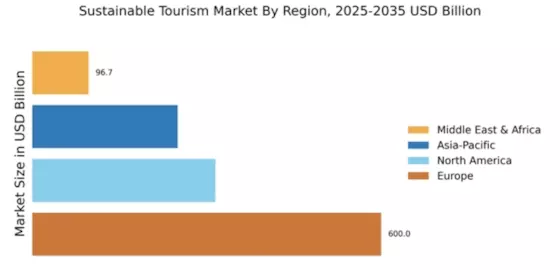
The North American sustainable tourism market is valued at $315.0M, driven by increasing consumer awareness and demand for eco-friendly travel options. Regulatory support from government initiatives promoting sustainable practices has catalyzed growth. The region is witnessing a shift towards responsible travel, with travelers seeking experiences that minimize environmental impact and support local communities. This trend is further fueled by the rise of digital platforms that facilitate sustainable travel choices. Leading countries in this region include the US and Canada, where companies like EcoTour and Sustainable Travel International are making significant strides. The competitive landscape is characterized by a mix of established players and new entrants focusing on niche markets. The presence of key players such as Intrepid Group and G Adventures highlights the growing emphasis on sustainable practices in travel, catering to a more environmentally conscious consumer base.

Europe : Leading Global Market for Sustainability

Europe holds the largest market share in sustainable tourism, valued at €600.0M. The region benefits from strong regulatory frameworks that promote sustainability, such as the European Green Deal, which aims to make Europe climate-neutral by 2050. This regulatory environment encourages investments in sustainable travel initiatives, driving demand for eco-friendly tourism options. The increasing focus on reducing carbon footprints among travelers is a significant growth driver in this market. Countries like Germany, France, and the UK are at the forefront of this movement, with companies such as Responsible Travel and Trafalgar leading the charge. The competitive landscape is robust, with numerous players offering diverse sustainable travel experiences. The presence of organizations like Green Globe further emphasizes the commitment to sustainability, ensuring that tourism practices align with environmental conservation efforts. The market is expected to continue growing as consumer preferences shift towards responsible travel.

Asia-Pacific : Emerging Market for Eco-Tourism

The Asia-Pacific sustainable tourism market is valued at $250.0M, driven by a growing middle class and increasing awareness of environmental issues. Countries in this region are beginning to adopt more sustainable practices in tourism, influenced by global trends and local initiatives. Regulatory support is gradually improving, with governments recognizing the importance of sustainable tourism for economic growth and environmental preservation. This shift is expected to enhance market dynamics significantly. Leading countries include Australia, Japan, and New Zealand, where companies like Natural Habitat Adventures are making notable contributions. The competitive landscape is evolving, with both local and international players entering the market. The presence of key players is crucial in promoting sustainable practices, as they cater to a rising demand for eco-friendly travel options among consumers who prioritize sustainability in their travel choices.

Middle East and Africa : Developing Sustainable Tourism Sector

The Middle East and Africa sustainable tourism market is valued at $96.7M, with significant growth potential driven by increasing awareness of environmental issues and the need for sustainable practices in tourism. Governments in this region are beginning to implement regulations that support sustainable tourism initiatives, recognizing the economic benefits of eco-friendly travel. This regulatory shift is expected to attract more investments and enhance market growth in the coming years. Countries like South Africa and Kenya are leading the way in promoting sustainable tourism, with initiatives aimed at preserving natural resources and supporting local communities. The competitive landscape is characterized by a mix of established players and emerging companies focused on eco-tourism. The presence of organizations dedicated to sustainable practices is crucial for fostering a culture of responsible travel in the region, ensuring that tourism contributes positively to both the economy and the environment.

Key Players and Competitive Insights

The Sustainable Tourism Market is currently characterized by a dynamic competitive landscape, driven by increasing consumer demand for environmentally responsible travel options. Key players are actively positioning themselves through innovative strategies, partnerships, and regional expansions. Companies such as Intrepid Group (AU) and G Adventures (CA) are at the forefront, focusing on immersive travel experiences that emphasize local cultures and sustainability. Their operational focus on small group tours and community engagement not only enhances customer loyalty but also fosters a competitive environment that prioritizes ethical travel practices.

In terms of business tactics, companies are increasingly localizing their offerings and optimizing supply chains to enhance sustainability. The market appears moderately fragmented, with numerous players vying for market share, yet the influence of major companies is palpable. This collective presence shapes consumer expectations and drives smaller entities to adopt similar sustainable practices, thereby elevating the overall market standard.

In November 2025, Intrepid Group (AU) announced a partnership with local conservation organizations to enhance its wildlife tourism offerings. This strategic move underscores the company's commitment to responsible travel and biodiversity conservation, potentially attracting eco-conscious travelers. By integrating conservation efforts into their itineraries, Intrepid Group not only differentiates itself but also contributes to the preservation of natural habitats, aligning with broader sustainability goals.

Similarly, in October 2025, G Adventures (CA) launched a new initiative aimed at carbon neutrality across its operations by 2027. This ambitious goal reflects a growing trend among leading companies to address climate change proactively. By committing to carbon offsetting and sustainable practices, G Adventures positions itself as a leader in the market, appealing to environmentally aware consumers who prioritize sustainability in their travel choices.

In September 2025, Trafalgar (GB) introduced a series of eco-friendly travel packages that incorporate local community experiences and sustainable accommodations. This initiative not only enhances the travel experience but also supports local economies, thereby creating a win-win scenario for both travelers and host communities. Trafalgar's approach illustrates a broader trend where companies are increasingly integrating social responsibility into their business models, which may resonate well with the modern traveler.

As of December 2025, the competitive trends in the Sustainable Tourism Market are heavily influenced by digitalization, sustainability initiatives, and the integration of AI technologies. Strategic alliances among companies are becoming more prevalent, fostering innovation and enhancing service offerings. The shift from price-based competition to a focus on technological advancements and supply chain reliability is evident. Companies that prioritize innovation and sustainability are likely to emerge as leaders, shaping the future of the market.

Key Companies in the Sustainable Tourism Market market include

Industry Developments

  • Q2 2024: UNWTO and Google partner to boost digital skills for sustainable tourism The United Nations World Tourism Organization (UNWTO) announced a partnership with Google to provide digital training for tourism businesses, aiming to accelerate sustainable tourism practices and recovery in key destinations.
  • Q2 2024: Intrepid Travel launches new carbon-neutral tours for 2024 Intrepid Travel unveiled a series of new carbon-neutral tours, expanding its sustainable travel offerings and reinforcing its commitment to environmental responsibility in the tourism sector.
  • Q2 2024: Booking.com announces $10 million fund for sustainable tourism startups Booking.com launched a $10 million fund to support startups developing innovative solutions for sustainable tourism, focusing on reducing environmental impact and promoting responsible travel.
  • Q3 2024: Accor opens first net-zero energy hotel in Southeast Asia Accor inaugurated its first net-zero energy hotel in Southeast Asia, marking a significant milestone in the company's sustainability strategy and commitment to eco-friendly hospitality.
  • Q3 2024: Airbnb partners with WWF to promote sustainable travel experiences Airbnb announced a partnership with the World Wildlife Fund (WWF) to develop and promote sustainable travel experiences, aiming to educate travelers and support conservation efforts.
  • Q3 2024: EcoHotels.com secures $5 million Series A funding to expand green hotel platform EcoHotels.com raised $5 million in Series A funding to scale its platform, which connects travelers with certified sustainable hotels and accommodations worldwide.
  • Q4 2024: TUI Group launches new sustainability certification program for resorts TUI Group introduced a new sustainability certification program for its resorts, aiming to standardize and elevate environmental practices across its global portfolio.
  • Q4 2024: Expedia Group appoints Chief Sustainability Officer to lead green initiatives Expedia Group named a new Chief Sustainability Officer to oversee the company's environmental strategy and drive sustainable tourism initiatives across its brands.
  • Q1 2025: Hilton opens eco-friendly resort in Costa Rica Hilton opened a new eco-friendly resort in Costa Rica, featuring renewable energy systems and sustainable design elements to minimize environmental impact.
  • Q1 2025: Adventure Travel Trade Association announces partnership with Rainforest Alliance The Adventure Travel Trade Association (ATTA) formed a partnership with the Rainforest Alliance to promote sustainable tourism standards and support conservation projects in Latin America.
  • Q2 2025: G Adventures acquires sustainable travel startup Rewild G Adventures completed the acquisition of Rewild, a startup specializing in sustainable travel experiences, to expand its eco-tourism offerings and strengthen its commitment to responsible travel.
  • Q2 2025: Trip.com Group launches green travel initiative in Asia-Pacific Trip.com Group launched a new green travel initiative across Asia-Pacific, introducing eco-friendly booking options and partnerships with local conservation organizations.

Future Outlook

Sustainable Tourism Market Future Outlook

The Sustainable Tourism Market is projected to grow at a 23.5% CAGR from 2024 to 2035, driven by increasing consumer awareness, eco-friendly travel options, and government initiatives.

New opportunities lie in:

  • Development of eco-lodges utilizing renewable energy sources.
  • Integration of carbon offset programs in travel packages.
  • Partnerships with local communities for authentic cultural experiences.

By 2035, the Sustainable Tourism Market is expected to be a leading sector, reflecting robust growth and innovation.

Market Segmentation

Sustainable Tourism Market Market Type Outlook

  • Ecotourism
  • Adventure Tourism
  • Cultural Tourism
  • Wellness Tourism

Sustainable Tourism Market Service Type Outlook

  • Accommodation
  • Transportation
  • Tour Packages
  • Activities

Sustainable Tourism Market Consumer Type Outlook

  • Individual Travelers
  • Family Travelers
  • Corporate Travelers
  • Educational Groups

Report Scope

MARKET SIZE 20241261.7(USD Billion)
MARKET SIZE 20251558.23(USD Billion)
MARKET SIZE 203512863.85(USD Billion)
COMPOUND ANNUAL GROWTH RATE (CAGR)23.5% (2024 - 2035)
REPORT COVERAGERevenue Forecast, Competitive Landscape, Growth Factors, and Trends
BASE YEAR2024
Market Forecast Period2025 - 2035
Historical Data2019 - 2024
Market Forecast UnitsUSD Billion
Key Companies ProfiledIntrepid Group (AU), G Adventures (CA), Trafalgar (GB), Responsible Travel (GB), EcoTour (US), Sustainable Travel International (US), Natural Habitat Adventures (US), Green Globe (AU)
Segments CoveredMarket Type, Consumer Type, Service Type
Key Market OpportunitiesIntegration of eco-friendly technologies enhances experiences in the Sustainable Tourism Market.
Key Market DynamicsRising consumer demand for eco-friendly travel options drives innovation and competition in the Sustainable Tourism Market.
Countries CoveredNorth America, Europe, APAC, South America, MEA

Market Highlights

Author
Pradeep Nandi
Senior Research Analyst

I have a bachelor's degree in mechanical engineering and an MBA. I have more than two years of expertise in the retail, food, and beverage, chemical, and material industries, and hence have developed a sound cross-domain expertise. A firm believer in lifelong learning and sharing of knowledge. Having a proclivity for hatching ideas and trying to absorb as much information as possible in a short amount of time. Introducing corporates to the data and insight, which enables them to move from probability to possibility, has been my key areas of interest. 

Leave a Comment

FAQs

What was at a the expected Market Was at a the Global Sustainable Tourism Market in 2024?

The Global Sustainable Tourism Market 1261.70 Billion USD by 2024

Download Free Sample

Kindly complete the form below to receive a free sample of this Report

Compare Licence

×
Features License Type
Single User Multiuser License Enterprise User
Price $4,950 $5,950 $7,250
Maximum User Access Limit 1 User Upto 10 Users Unrestricted Access Throughout the Organization
Free Customization
Direct Access to Analyst
Deliverable Format
Platform Access
Discount on Next Purchase 10% 15% 15%
Printable Versions