Tanker Aircraft Market
Tanker Aircraft Market Summary
As per Market Research Future analysis, the Tanker Aircraft Market Size was estimated at 7.28 USD Billion in 2024. The Tanker Aircraft industry is projected to grow from 7.593 USD Billion in 2025 to 11.57 USD Billion by 2035, exhibiting a compound annual growth rate (CAGR) of 4.3% during the forecast period 2025 - 2035
Key Market Trends & Highlights
The Tanker Aircraft Market is poised for growth driven by military investments and technological advancements.
- North America remains the largest market for tanker aircraft, driven by substantial military budgets and modernization efforts.
- The Asia-Pacific region is emerging as the fastest-growing market, reflecting increasing defense spending and regional tensions.
- Air-to-Air Refueling Tankers dominate the market, while Cargo Tankers are experiencing rapid growth due to evolving logistical needs.
- Rising demand for aerial refueling and geopolitical tensions are key drivers influencing market expansion.
Market Size & Forecast
| 2024 Market Size | 7.28 (USD Billion) |
| 2035 Market Size | 11.57 (USD Billion) |
| CAGR (2025 - 2035) | 4.3% |
Major Players
Boeing (US), Lockheed Martin (US), Airbus (FR), Northrop Grumman (US), Embraer (BR), Leonardo (IT), Dassault Aviation (FR), Saab (SE), Textron (US)
Tanker Aircraft Market Trends
The Tanker Aircraft Market is currently experiencing a dynamic evolution, driven by various factors that influence military and civilian aviation sectors. The increasing demand for aerial refueling capabilities, particularly among military forces, appears to be a primary driver of growth. Nations are investing in modernizing their fleets to enhance operational readiness and extend the range of their aircraft. Additionally, the rise in international tensions and the need for rapid response capabilities may further stimulate interest in advanced tanker solutions. Furthermore, technological advancements in aircraft design and fuel efficiency are likely to play a crucial role in shaping the future landscape of this market. Moreover, the Tanker Aircraft Market is witnessing a shift towards multi-role platforms that can perform various missions beyond refueling. This versatility may appeal to defense organizations looking to maximize their investment in aircraft. The integration of unmanned aerial vehicles into tanker operations could also emerge as a noteworthy trend, potentially transforming traditional operational paradigms. As the market continues to evolve, stakeholders must remain vigilant to emerging technologies and geopolitical developments that could influence demand and operational requirements in the coming years.
Increased Military Investment
Countries are prioritizing the enhancement of their aerial refueling capabilities, leading to a surge in military expenditure on tanker aircraft. This trend reflects a broader strategy to ensure operational readiness and extend the reach of air forces.
Technological Advancements
Innovations in aircraft design and fuel efficiency are shaping the Tanker Aircraft Market. These advancements may lead to the development of more capable and versatile platforms, enhancing mission effectiveness.
Shift Towards Multi-Role Platforms
There is a growing inclination towards tanker aircraft that can perform multiple functions beyond refueling. This trend suggests a strategic approach to maximize the utility of defense assets.
Tanker Aircraft Market Drivers
Rising Demand for Aerial Refueling
The Tanker Aircraft Market experiences a notable increase in demand for aerial refueling capabilities. This demand is primarily driven by the growing need for extended operational ranges of military aircraft. As nations enhance their air power, the requirement for tanker aircraft to support long-range missions becomes critical. Recent data indicates that the market for aerial refueling aircraft is projected to grow at a compound annual growth rate of approximately 5.2% over the next decade. This growth is fueled by the modernization of air forces and the increasing complexity of military operations, which necessitate the use of tanker aircraft to ensure sustained air operations. Consequently, the Tanker Aircraft Market is likely to witness significant investments in new technologies and platforms to meet these evolving demands.
Geopolitical Tensions and Defense Spending
The Tanker Aircraft Market is significantly influenced by rising geopolitical tensions across various regions. As nations face potential threats, defense spending has escalated, leading to increased procurement of military assets, including tanker aircraft. Recent reports suggest that defense budgets in several countries have seen an uptick, with a focus on enhancing air mobility and operational readiness. This trend indicates a strategic shift towards bolstering aerial capabilities, which directly impacts the tanker aircraft segment. The need for reliable and efficient refueling solutions is paramount in maintaining a competitive edge in military operations. Thus, the Tanker Aircraft Market is poised for growth as countries prioritize investments in advanced aerial refueling systems to address these security challenges.
Increased Focus on Multi-Role Capabilities
The Tanker Aircraft Market is witnessing a shift towards multi-role capabilities in military aviation. Modern military strategies emphasize versatility, prompting the development of tanker aircraft that can perform various functions beyond refueling. This includes intelligence, surveillance, reconnaissance, and cargo transport roles. The ability to adapt to multiple missions enhances the operational value of tanker aircraft, making them indispensable assets in contemporary military operations. Recent trends indicate that defense forces are increasingly seeking platforms that can fulfill diverse roles, thereby driving demand in the tanker aircraft segment. Consequently, the Tanker Aircraft Market is likely to evolve, with manufacturers focusing on designing aircraft that meet these multi-role requirements, ensuring they remain relevant in an ever-changing defense landscape.
Technological Innovations in Aircraft Design
Technological advancements play a pivotal role in shaping the Tanker Aircraft Market. Innovations in aircraft design, materials, and systems integration are enhancing the performance and efficiency of tanker aircraft. For instance, the introduction of advanced avionics and fuel management systems has improved operational capabilities, allowing for more effective refueling missions. Additionally, the integration of unmanned aerial vehicle (UAV) technology into tanker operations is emerging as a potential game-changer. These advancements not only increase the operational range and flexibility of tanker aircraft but also reduce operational costs. As a result, the Tanker Aircraft Market is likely to see a surge in demand for next-generation platforms that leverage these technological innovations, thereby transforming the landscape of aerial refueling.
Environmental Regulations and Sustainable Practices
The Tanker Aircraft Market is increasingly influenced by environmental regulations and the push for sustainable aviation practices. As concerns about climate change and carbon emissions grow, military organizations are exploring ways to reduce their environmental footprint. This includes investing in more fuel-efficient tanker aircraft and exploring alternative fuels. Recent studies suggest that the adoption of sustainable aviation fuels could significantly lower emissions associated with aerial refueling operations. Furthermore, the development of hybrid and electric propulsion systems is gaining traction, potentially revolutionizing the tanker aircraft segment. As a result, the Tanker Aircraft Market is likely to see a shift towards greener technologies, aligning military operations with global sustainability goals while maintaining operational effectiveness.
Market Segment Insights
By Aircraft Type: Air-to-Air Refueling Tankers (Largest) vs. Cargo Tankers (Fastest-Growing)
The Tanker Aircraft Market exhibits a diverse segmentation based on aircraft type, with Air-to-Air Refueling Tankers holding the largest market share. This segment is vital to military operations, providing essential refueling capabilities to extend mission ranges for combat and support aircraft. Cargo Tankers also hold a significant position, rapidly gaining traction as logistical requirements evolve, especially in defence and humanitarian operations, leading to their accelerated growth in recent years.
Air-to-Air Refueling Tankers (Dominant) vs. Cargo Tankers (Emerging)
Air-to-Air Refueling Tankers have established themselves as the dominant force within the Tanker Aircraft Market, primarily due to their critical role in modern military strategies and operations. These aircraft are specifically designed to refuel other planes mid-air, greatly enhancing their operational ranges and flexibility. On the other hand, Cargo Tankers represent an emerging segment responding to growing military and commercial logistics needs. They are increasingly recognized for their versatility in transporting essential supplies and personnel to remote locations, which is crucial in both wartime and peacetime scenarios. As demand for seamless logistics grows, the Cargo Tanker category is witnessing innovations and improvement efforts aimed at increasing efficiency and performance.
By Fuel Type: Conventional Fuel (Largest) vs. Sustainable Fuel (Fastest-Growing)
In the Tanker Aircraft Market, the fuel type segment is primarily divided into Conventional Fuel Tankers and Sustainable Fuel Tankers. Conventional Fuel Tankers hold the largest share in the market, as they are widely used for current aviation operations. Their established use in the industry makes them a familiar and reliable choice for many airline operators. On the other hand, Sustainable Fuel Tankers are emerging as a viable alternative, representing a growing share as more companies seek to reduce their carbon footprints and invest in greener technologies.
Fuel Type: Conventional (Dominant) vs. Sustainable (Emerging)
Conventional Fuel Tankers are characterized by their reliance on traditional fossil fuels, making up the dominant segment in the tanker aircraft market. Their established infrastructure and operational efficiencies provide a competitive edge. However, they face increasing scrutiny for their environmental impact, pushing the industry towards sustainable alternatives. Sustainable Fuel Tankers, on the other hand, are gaining rapid traction, driven by regulatory support and a global shift towards eco-friendly aviation. These tankers utilize biofuels or renewable fuel sources, positioning them as a burgeoning segment poised for significant growth in the coming years, as more airlines look to meet sustainability goals while maintaining operational viability.
By Platform: Dedicated Tanker Aircraft (Largest) vs. Convertible Tanker Aircraft (Fastest-Growing)
In the tanker aircraft market, dedicated tanker aircraft currently hold the largest market share, attributed to their specialized design and capabilities specifically tailored for aerial refueling missions. With advanced features and optimal performance, dedicated tankers serve the unique requirements of military and aerial operations, thus maintaining a significant presence within the market. On the other hand, convertible tanker aircraft are gaining traction due to their versatility, allowing operators to switch between cargo and refueling missions, which appeals to a broader range of military and civilian customers.
Dedicated Tanker Aircraft (Dominant) vs. Convertible Tanker Aircraft (Emerging)
Dedicated tanker aircraft are considered the dominant platform segment in the tanker aircraft market, offering superior performance, reliability, and specialized systems designed for efficient refueling operations. These aircraft are integral to military operations, providing unparalleled support during critical missions. On the other hand, convertible tanker aircraft represent an emerging segment that is rapidly gaining popularity for their adaptability and multifunctional use. They can transform from cargo configurations to tanker duties, allowing for flexible deployment scenarios. As operational demands evolve, this emerging segment is capturing interest from both military forces and commercial operators, seeking cost-effective solutions.
By Payload Capacity: Large (Largest) vs. Medium (Fastest-Growing)
In the Tanker Aircraft Market, the payload capacity segments are categorized into small, medium, and large. The large segment, which encompasses aircraft with over 200,000 pounds of capacity, dominates the market, driven by the growing demand for long-range flights and international operations. Meanwhile, the medium segment, defined as those with capacities between 100,000 and 200,000 pounds, is gaining traction as it offers a balanced solution for many logistics providers who require flexibility and efficiency in their operations.
Large (Dominant) vs. Medium (Emerging)
The large payload capacity segment is characterized by its ability to transport substantial volumes of cargo, making it the dominant force in tanker operations. These aircraft are primarily utilized for international supply chains and are preferred by major logistics and delivery companies due to their range and efficiency. In contrast, the medium payload capacity segment is rapidly emerging as a crucial player in the market, providing carriers with versatility for regional and specialized routes. This segment appeals to operators seeking cost-effective solutions that do not compromise on performance, thus catering to a growing demand in niche markets.
By Mission Type: Combat Refueling (Largest) vs. Aerial Firefighting (Fastest-Growing)
In the Tanker Aircraft Market, the Combat Refueling segment holds a dominant market share, primarily due to the increasing focus of military organizations on enhancing aerial capabilities. This segment benefits from substantial investments in defense and security, making it a significant player in the overall tanker aircraft landscape. Meanwhile, the Transport Refueling segment also plays a crucial role, catering to needs in both military and civil aviation sectors, although it does not match the dominance of Combat Refueling. Aerial Firefighting is gaining traction, reflecting an emerging trend driven by the growing frequency of wildfires and environmental challenges. Growth trends indicate a notable expansion in the Aerial Firefighting segment as governments and private sectors invest in resources to combat wildfires effectively. The shift towards climate resilience is further fueling demand for aerial firefighting solutions. As technology advances, Tanker Aircraft Market designed for aerial firefighting are becoming more efficient and capable, thus attracting considerable interest and investment. Moreover, the military's ongoing modernization efforts are likely to see sustained growth in Combat Refueling, further enriching the dynamics of the Tanker Aircraft Market.
Combat Refueling (Dominant) vs. Aerial Firefighting (Emerging)
Combat Refueling is recognized as the dominant segment within the Tanker Aircraft Market, characterized by its critical role in extending the operational range and endurance of military aircraft. This segment utilizes specialized aircraft equipped with advanced refueling systems, ensuring seamless operations during combat missions. The investments in this sector are propelled by geopolitical tensions and defense strategies aimed at maintaining air superiority. Conversely, Aerial Firefighting is categorized as an emerging segment due to the increasing frequency of wildfires and environmental concerns. These tanker aircraft are designed with unique capabilities, such as carrying large water loads and integrating firefighting technologies. As climate challenges intensify, the demand for Aerial Firefighting solutions is expected to rise, thus shifting focus and investment towards this segment in the years to come.
Regional Insights
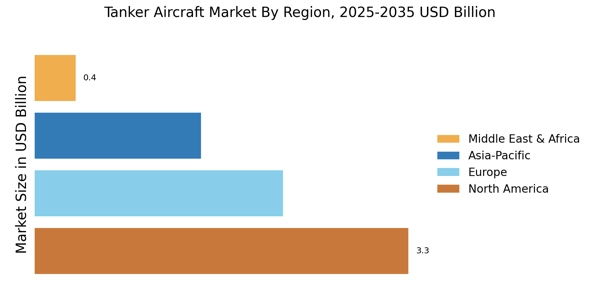
The regional segmentation of the Tanker Aircraft Market offers valuable insights into the diverse market dynamics across different geographical regions. North America maintained its dominance, accounting for a significant share of the market revenue in 2023, estimated at USD 2.56 billion.
The region's robust defense spending and technological advancements contribute to its leadership position. Europe followed closely, with a market valuation of approximately USD 1.78 billion in 2023, supported by the presence of major defense contractors and ongoing modernization programs.
The Asia-Pacific (APAC) region exhibited promising growth potential, driven by rising defense budgets in countries like China and India and the increasing need for airlift capabilities. South America and the Middle East and Africa (MEA) regions are expected to experience steady growth, with governments investing in defense infrastructure and seeking intercontinental transport solutions.
Key Players and Competitive Insights
Key Companies in the Tanker Aircraft Market include
Industry Developments
The Tanker Aircraft Market is witnessing significant developments, characterized by an increasing focus on modernization and efficiency. As of 2024, the market is projected to exhibit a valuation of approximately USD 6.98 billion, with a steady growth trajectory anticipated until 2032, where it could reach around USD 10.2 billion, reflecting a compound annual growth rate (CAGR) of 4.3%. Recent news highlights advancements in technology, such as the integration of advanced propulsion systems and enhancements in fuel efficiency, which are driving market demand.
Geopolitical factors and global safety protocols have also led to elevated investments in tanker aircraft, with increasing commitments from both military and civilian sectors. The need for rapid response capabilities in firefighting operations, humanitarian aid, and military logistics has pushed nations to upgrade their aerial refueling fleets. Additionally, partnerships between government and aerospace companies are emerging to bolster research and development efforts, focusing on sustainability and reduced environmental impact. This evolving landscape underscores a crucial shift in the market, driven by both technological innovation and strategic initiatives aimed at addressing contemporary operational challenges.
Future Outlook
Tanker Aircraft Market Future Outlook
The Tanker Aircraft Market is projected to grow at a 4.3% CAGR from 2025 to 2035, driven by increasing defense budgets and rising demand for aerial refueling capabilities.
New opportunities lie in:
- Development of advanced aerial refueling systems for unmanned aircraft.
- Partnerships with defense contractors for integrated logistics solutions.
- Expansion into emerging markets with tailored tanker aircraft offerings.
By 2035, the Tanker Aircraft Market is expected to be robust, reflecting sustained growth and innovation.
Market Segmentation
Tanker Aircraft Market Platform Outlook
- Dedicated Tanker Aircraft
- Convertible Tanker Aircraft
Tanker Aircraft Market Fuel Type Outlook
- Conventional Fuel Tankers
- Sustainable Fuel Tankers
Tanker Aircraft Market Mission Type Outlook
- Combat Refueling
- Transport Refueling
- Aerial Firefighting
Tanker Aircraft Market Aircraft Type Outlook
- Air-to-Air Refueling Tankers
- Cargo Tankers
- Combination Tankers
Tanker Aircraft Market Payload Capacity Outlook
- Small (up to 100,000 pounds)
- Medium (100,000 to 200,000 pounds)
- Large (over 200,000 pounds)
Report Scope
| MARKET SIZE 2024 | 7.28(USD Billion) |
| MARKET SIZE 2025 | 7.593(USD Billion) |
| MARKET SIZE 2035 | 11.57(USD Billion) |
| COMPOUND ANNUAL GROWTH RATE (CAGR) | 4.3% (2025 - 2035) |
| REPORT COVERAGE | Revenue Forecast, Competitive Landscape, Growth Factors, and Trends |
| BASE YEAR | 2024 |
| Market Forecast Period | 2025 - 2035 |
| Historical Data | 2019 - 2024 |
| Market Forecast Units | USD Billion |
| Key Companies Profiled | Boeing (US), Lockheed Martin (US), Airbus (FR), Northrop Grumman (US), Embraer (BR), Leonardo (IT), Dassault Aviation (FR), Saab (SE), Textron (US) |
| Segments Covered | Aircraft Type, Fuel Type, Platform, Payload Capacity, Mission Type, Regional |
| Key Market Opportunities | Integration of advanced aerial refueling technologies enhances operational efficiency in the Tanker Aircraft Market. |
| Key Market Dynamics | Technological advancements and regulatory changes drive innovation and competition in the tanker aircraft market. |
| Countries Covered | North America, Europe, APAC, South America, MEA |
FAQs
What is the projected market valuation of the Tanker Aircraft Market by 2035?
The Tanker Aircraft Market is projected to reach a valuation of 11.57 USD Billion by 2035.
What was the market valuation of the Tanker Aircraft Market in 2024?
In 2024, the Tanker Aircraft Market was valued at 7.28 USD Billion.
What is the expected CAGR for the Tanker Aircraft Market during the forecast period 2025 - 2035?
The expected CAGR for the Tanker Aircraft Market during the forecast period 2025 - 2035 is 4.3%.
Which companies are considered key players in the Tanker Aircraft Market?
Key players in the Tanker Aircraft Market include Boeing, Lockheed Martin, Airbus, Northrop Grumman, Embraer, Leonardo, Dassault Aviation, Saab, and Textron.
What are the projected revenues for Air-to-Air Refueling Tankers by 2035?
Air-to-Air Refueling Tankers are projected to generate revenues of 4.8 USD Billion by 2035.
How do the revenues of Conventional Fuel Tankers compare to Sustainable Fuel Tankers by 2035?
By 2035, Conventional Fuel Tankers are expected to reach 8.0 USD Billion, whereas Sustainable Fuel Tankers may achieve 3.57 USD Billion.
What is the revenue projection for Dedicated Tanker Aircraft by 2035?
Dedicated Tanker Aircraft are projected to generate revenues of 6.5 USD Billion by 2035.
What is the expected revenue for the Medium Payload Capacity segment by 2035?
The Medium Payload Capacity segment is expected to reach revenues of 4.5 USD Billion by 2035.
What are the projected revenues for the Aerial Firefighting mission type by 2035?
The Aerial Firefighting mission type is projected to generate revenues of 3.43 USD Billion by 2035.
What is the anticipated growth trend for Combination Tankers in the Tanker Aircraft Market?
Combination Tankers are expected to grow to 3.57 USD Billion by 2035, indicating a positive trend in this segment.
Kindly complete the form below to receive a free sample of this Report
Customer Stories
“This is really good guys. Excellent work on a tight deadline. I will continue to use you going forward and recommend you to others. Nice job”
“Thanks. It’s been a pleasure working with you, please use me as reference with any other Intel employees.”
“Thanks for sending the report it gives us a good global view of the Betaïne market.”
“Thank you, this will be very helpful for OQS.”
“We found the report very insightful! we found your research firm very helpful. I'm sending this email to secure our future business.”
“I am very pleased with how market segments have been defined in a relevant way for my purposes (such as "Portable Freezers & refrigerators" and "last-mile"). In general the report is well structured. Thanks very much for your efforts.”
“I have been reading the first document or the study, ,the Global HVAC and FP market report 2021 till 2026. Must say, good info! I have not gone in depth at all parts, but got a good indication of the data inside!”
“We got the report in time, we really thank you for your support in this process. I also thank to all of your team as they did a great job.”