Research Methodology on Global Traffic Management Market
Introduction
The Global Traffic Management Market is anticipated to expand at a significant CAGR during the evaluation period of 2023-2030. Traffic management is facilitating better control over road traffic and guides people securely and efficiently. Traffic management solutions generally address issues that arise due to the rise in urbanization and population growth, such as traffic control, increased mobility, safety & security, and various other aspects.
Needless to say, traffic management solutions are of utmost importance to enhance the efficiency of roads in the current urban infrastructure and systems. The solutions deployed through traffic management systems enable the timely exchange of information between vehicles, networks, and people, who together form an urban transport ecosystem.
Markets Covered
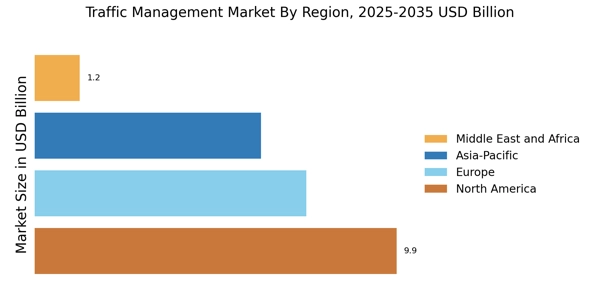
The research report covers the Global Traffic Management Market as a whole and in five regional segments. These regional segments include North America, Europe, Asia-Pacific, Middle East & Africa, and Latin America.
Key players
The key players considered to be part of this market include Kapsch TrafficCom AG (Austria), Siemens AG (Germany), Thales S.A. (France), Q-Free ASA (Norway), and Garmin International Inc. (US) among others.
Research Objectives
This research seeks to examine the Global Traffic Management Market with the help of the following objectives:
- To determine the current market size and to analyze the overall traction of the Global Traffic Management Market
- To identify the various key trends and opportunities that exist in the Global Traffic Management Market
- To determine the market share of the market's leading players in the different regions
- To analyze the regional market dynamics, technological advancements, and recent strategic moves
- To determine the overall regional potential of the Global Traffic Management Market
Research Methodology
The parameters used to determine the Global Traffic Management Market include secondary research, primary interviews, and primary research. These parameters will help determine the overall status of the Global Traffic Management Market.
Secondary Research
For a detailed understanding of the topic, secondary research is done. The research topics covered through secondary research include market drivers, restraints, and trends, along with existing opportunities and market segments. The sources used to collect secondary data include company websites, market reports, industry magazines, and various other sources. These sources are analyzed and verified to ascertain the validity of their information.
Primary Research
Primary research is conducted to gain firsthand insights into the Global Traffic Management Market. Primary research is done using industry experts, market experts, consultants, and industry executives from various entities operating in the traffic management space. These experts provide inputs on both quantitative and qualitative aspects of the Global Traffic Management Market.
Primary Interviews
Primary interviews are conducted with a panel of industry experts and market analysts to get a more granular view of the Global Traffic Management Market. These experts are asked questions about their current assessment of the Global Traffic Management Market, recent trends, and their predictions for its future.
Data Collection
Data is collected from both primary and secondary sources. Secondary data is collected from national trade associations, industry journals, market intelligence reports, and others. Primary data is gathered from various sources, including trade associations, industry experts, and interviews with key industry participants. The purpose of data collection is to analyze the Global Traffic Management Market from various perspectives.
Market Estimation
The market size of the Global Traffic Management Market is estimated by conducting market sizing for the major countries in each region. This includes the North America, Europe, Asia-Pacific, Middle East & Africa, and Latin America regions. The figures are further consolidated and used to arrive at regional and global market size estimations/projections.
Data Validation
All the market data points obtained from secondary and primary sources are analyzed to identify patterns and expected trends in the Global Traffic Management Market. Additionally, overall market sizes are compared with those obtained through top-down and bottom-up procedures to ensure accuracy.
Data Interpretation & Analysis
Market data points are further examined, adjusted, and interpret to portray a consolidated view of the Global Traffic Management Market. Macro- and microeconomic factors influencing the market are analyzed and validated during the detailed market assessment. Additionally, data points are analyzed and presented in graphical representations for ease of viewing and understanding.
Research Findings & Conclusion
The research conducted for the report provided insights into the Global Traffic Management Market, along with analyzing and allocating the key players in the market, the market trends and opportunities, the dynamics in different regions, and the segmentation of the Global Traffic Management Market according to the system, component, road type, and regions. The report concluded by providing valuable recommendations and conclusions to help market participants gains a competitive advantage.
Overall, the research conducted for the Global Traffic Management Market provided an in-depth analysis of the market covering the following:
Market size and growth, both in terms of value and volume
Market segments and their growth prospects
Market dynamics including key growth and restraining factors
Regional overviews and the key regional dynamics
Key competing companies and their financial performance
Growth prospects of the Global Traffic Management Market
Recommendations and conclusions to gain a competitive edge in the market