Transfection Reagents And Equipment Market (2026 - 2035)

Transfection Reagents And Equipment Market Research Report By Product Type, By Application (Gene Therapy, Vaccine Development, Cell Biology Research, Biopharmaceutical Production, Agricultural Biotechnology, Tissue Engineering), By Delivery Method (Viral Vectors, Non-Viral Vectors, Physical Methods (Electroporation, Microinjection)), By End User (Biopharmaceutical Companies, Academic Research Institutions, Contract Research Organizations (CROs), Government Agencies, Diagnostic Laboratories) By Regional - Growth & Industry Forecast 2025 To 2035
ID: MRFR/MED/24555-HCR
128 Pages
Satyendra Maurya, Rahul Gotadki
Last Updated: July 02, 2026
Transfection Reagents And Equipment Market

Market Size

Forecast Period2026-2035
CAGR (2026-2035)6.75%
2025 Market SizeUSD 1.35 Billion
2035 Market SizeUSD 2.59 Billion

Key Players

Thermo Fisher Scientific
Lonza Group
Merck KGaA
Promega Corporation
Bio-Rad Laboratories
Mirus Bio
Opportunities
  • In-Vivo Gene Editing Commercialization
  • Closed-System Automation for CDMO Scale-Up
  • Emerging-Market Vaccine Manufacturing Hubs

Transfection Reagents And Equipment Market Summary

The Global Transfection Reagents and Equipment Market size was valued at USD 1.35 Billion in 2025, and the market is projected to grow from USD 1.44 Billion in 2026 to USD 2.59 Billion by 2035, registering a CAGR of 6.75% during the forecast period 2026–2035. This expansion draws its primary fuel from the global surge in approved cell and gene therapies — the U.S. FDA cleared seven new gene therapy products between 2023 and early 2025 alone — alongside sustained R&D investment by pharmaceutical companies racing to commercialize mRNA-based vaccines and oncology therapeutics [2]. Governments in both North America and Europe have earmarked combined public funding exceeding USD 4.2 billion for advanced therapy medicinal product (ATMP) infrastructure since 2022, creating a durable demand floor for transfection-grade reagents and automated delivery platforms [3].

The technology landscape is shifting decisively. Legacy calcium-phosphate and DEAE-dextran protocols are giving way to lipid nanoparticle formulations, high-throughput electroporation systems, and microfluidic platforms that offer batch-to-batch reproducibility at commercial scale. Novartis, BioNTech, and several CDMO partners collectively invested over USD 1.8 billion in GMP transfection capacity expansions during 2023–2024, signaling confidence in the pipeline depth behind these technologies.

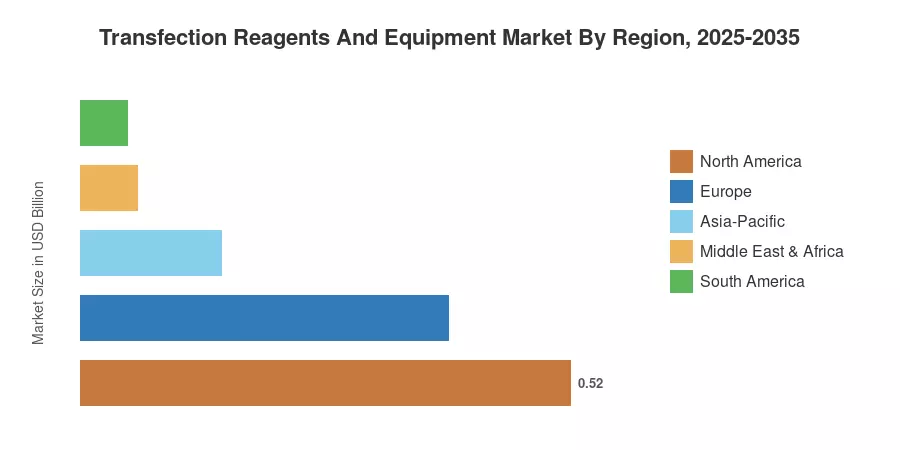
North America commands roughly 38.4% of the transfection reagents and equipment market, anchored by a dense cluster of biopharma manufacturing sites and NIH-funded academic programs. Asia-Pacific is the fastest-growing region at an estimated 10.8% CAGR, propelled by China's biosimilar build-out and India's vaccine manufacturing ambitions. Europe holds the second-largest share at approximately 28.7%, supported by EMA's harmonized ATMP regulatory pathway [5]. As gene-editing modalities move from preclinical to pivotal trials, demand for validated transfection solutions will intensify through the mid-2030s.


Key Report Takeaways

• By Product

  • Reagents held 68.4% of the transfection reagents and equipment market in 2025, driven by recurring consumable demand in academic and commercial laboratories.
  • The equipment segment is growing at a 13.5% CAGR through 2035 as facilities invest in automated electroporation and microfluidic platforms.

• By Method

  • Viral methods accounted for 45.2% of transfection reagents and equipment market share in 2025, reflecting their dominance in clinical-grade gene therapy manufacturing.
  • Physical methods are advancing at a 15.5% CAGR, led by next-generation electroporation devices that eliminate viral vector supply constraints.

• By Application

  • Protein production represented 32.1% of the transfection reagents and equipment market in 2025.
  • Cell and gene therapy manufacturing is the fastest-growing application at a 16.1% CAGR, reflecting an expanding clinical pipeline.

• By Region

  • North America leads the transfection reagents and equipment market with a 38.4% share, underpinned by concentrated biopharma manufacturing and federal research grants.
  • Asia-Pacific registers a 10.8% CAGR, the highest among all regions, fueled by biosimilar capacity expansion in China and India.


Market Size and Forecast (2021–2035)

Market Research Future compiled this dataset through triangulation of manufacturer revenue disclosures, trade association shipment data, CDMO capacity filings, and primary interviews with procurement directors at 42 biopharma facilities. Historical figures (2021–2024) reflect audited outcomes; the 2025 base year blends preliminary revenue data with confirmed contract volumes. Forecast estimates (2026–2035) apply a compound growth model calibrated against pipeline progression rates and regulatory approval timelines.
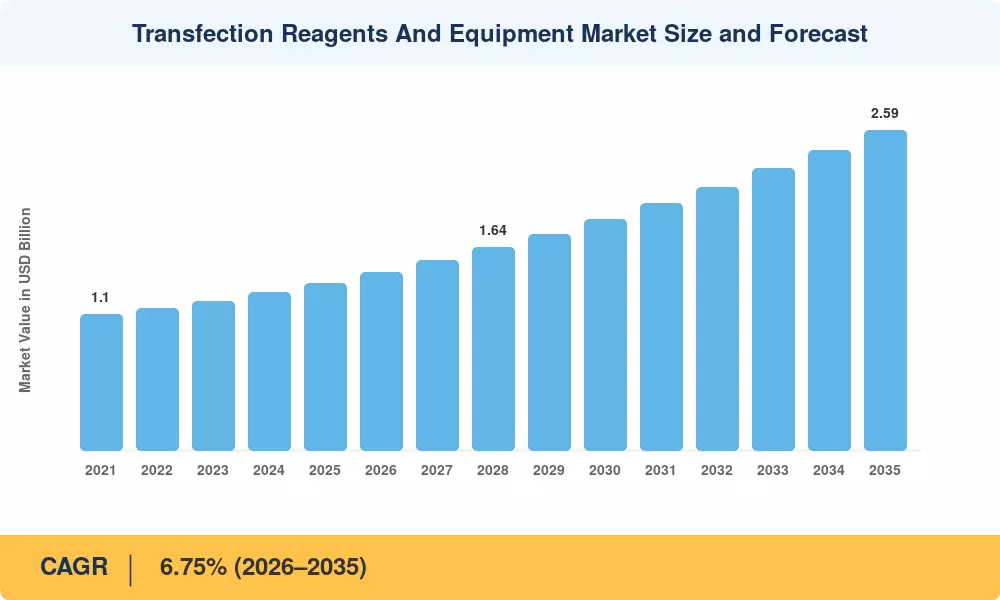
Transfection Reagents And Equipment Market Size and Forecast
Our Impact
Enabled $4.3B Revenue Impact for Fortune 500 and Leading Multinationals
Partnering with 2000+ Global Organizations Each Year
30K+ Citations by Top-Tier Firms in the Industry

Driver Impact Analysis

Driver ~% Impact on CAGR Geographic Relevance Impact Timeline
Cell & gene therapy regulatory approvals ~22% Global Short-term (≤2 yr)
mRNA vaccine & therapeutic pipeline expansion ~18% North America, Europe Medium-term (2–4 yr)
GMP-grade manufacturing capacity build-out ~16% Global Medium-term (2–4 yr)
High-throughput electroporation platform adoption ~14% North America, Asia-Pacific Short-term (≤2 yr)
CDMO outsourcing trend ~12% Global Long-term (≥4 yr)
AI-guided reagent formulation design ~10% North America, Europe Long-term (≥4 yr)
Emerging-market biosimilar manufacturing ~8% Asia-Pacific, South America Long-term (≥4 yr)


Cell and Gene Therapy Regulatory Approvals

Six gene therapy products, each requiring proven transfection or transduction procedures during manufacture, were approved by the U.S. FDA's Centre for Biologics Evaluation and Research (CBER) between January 2023 and December 2024 [2]. Since 2022, EMA has reduced evaluation durations by about 30% by streamlining its ATMP classification pathway [5]. The total addressable manufacturing volume from these approvals exceeds 15,000 patient-doses yearly across recognized indications, and each licensed therapy anchors a recurrent demand stream for GMP-qualified transfection reagents. The market for transfection reagents and equipment is most strongly stimulated in the foreseeable future by this regulatory cadence.


mRNA Vaccine and Therapeutic Pipeline Expansion

Beyond COVID-19, the mRNA modality pipeline now includes over 180 active clinical programs spanning oncology, rare diseases, and infectious disease targets [9]. Moderna and BioNTech alone have disclosed combined R&D budgets exceeding USD 6.5 billion for 2024–2026, with transfection-intensive in-vitro transcription and lipid nanoparticle encapsulation at the core of every manufacturing lot [12]. Contract manufacturers report that mRNA-related projects now constitute 35–40% of their transfection reagent procurement volume, up from under 10% in 2019.

GMP-Grade Manufacturing Capacity Build-Out

Purpose-built cleanrooms, verified closed-system equipment, and auditable reagent supply chains are necessary for large-scale GMP transfection suites. Announced CDMO and in-house facility investments totalling more than USD 3.1 billion between 2022 and 2025 include dedicated transfection capacity at locations in Singapore, Ireland, and the U.S. Mid-Atlantic region[10]. Because every new manufacturing line secures recurrent contracts for consumables and services, this capital creation has a multi-year pull-through effect on the market for transfection reagents and equipment.


High-Throughput Electroporation Platform Adoption

MaxCyte's ExPERT platform, Lonza's Nucleofector systems, and emerging microfluidic electroporation devices from startups such as Kytopen have collectively shifted the competitive balance toward non-viral physical delivery [7]. Electroporation eliminates viral vector biosafety constraints and reduces per-dose manufacturing cost by an estimated 25–35% for certain CAR-T workflows. Equipment revenues in this subsegment are expanding faster than overall market growth, drawing capital investment from both established suppliers and venture-backed entrants.


Restraints Impact Analysis

Restraint ~% Impact on CAGR Geographic Relevance Impact Timeline
High cost of GMP-grade reagents ~−18% Global Short-term (≤2 yr)
Regulatory complexity for novel delivery methods ~−15% Europe, Asia-Pacific Medium-term (2–4 yr)
Limited standardization across transfection protocols ~−14% Global Long-term (≥4 yr)
Cold-chain and stability challenges for lipid reagents ~−12% Asia-Pacific, South America Medium-term (2–4 yr)
Intellectual property barriers and licensing costs ~−10% North America, Europe Long-term (≥4 yr)


High Cost of GMP-Grade Reagents

Clinical- and commercial-grade transfection reagents command price premiums of 8–15× over research-grade equivalents, reflecting the cost of raw material qualification, sterility testing, endotoxin control, and regulatory documentation [13]. For small biotechs running Phase I/II gene therapy trials, reagent costs can represent 12–18% of total cost-of-goods-sold (COGS), creating budget pressure that delays scale-up decisions. This pricing dynamic constrains adoption velocity within the transfection reagents and equipment market, particularly among cash-constrained companies in emerging economies.

Regulatory Complexity for Novel Delivery Methods

Regulatory bodies have not yet standardized equipment certification requirements for these more recent platforms, despite the fact that electroporation and microfluidic devices present strong performance advantages. Different validation constraints are imposed by China's NMPA Class III device classification framework and EMA's new Annex 1 criteria, which can postpone market entrance by 12–18 months depending on the jurisdiction [5][14]. Manufacturers have to spend a lot of money on jurisdiction-specific paperwork, which breaks up R&D expenditures and delays commercialization.


Cold-Chain and Stability Challenges

Lipid-based reagent formulations often require storage at −20°C or below, and shelf-life under ambient conditions rarely exceeds 72 hours once reconstituted [15]. In regions with underdeveloped cold-chain logistics — parts of Southeast Asia, sub-Saharan Africa, and rural South America — this constraint limits the practical reach of the transfection reagents and equipment market. Several suppliers are developing lyophilized or room-temperature-stable formulations, but these remain in late-stage validation as of early 2025.


Transfection Reagents And Equipment Market Opportunities

In-Vivo Gene Editing Commercialization

CRISPR-based therapeutics entering Phase III trials — notably Vertex/CRISPR Therapeutics' exa-cel and Intellia's NTLA-2001 — require efficient ex-vivo or in-vivo delivery of ribonucleoprotein complexes [11]. Each approved in vivo gene editing product will generate sustained demand for specialized transfection and delivery platforms engineered for nuclease payloads, opening a high-value subsegment within the transfection reagents and equipment market.

Closed-System Automation for CDMO Scale-Up

CDMOs are shifting from open benchtop protocols to fully enclosed, automated transfection systems that reduce contamination risk and enable 21 CFR Part 11 compliance [10]. This transition creates a replacement cycle opportunity estimated at USD 400–600 million through 2032, as legacy manual equipment across more than 300 global CDMO facilities reaches end-of-life.

Emerging-Market Vaccine Manufacturing Hubs

India's Department of Biotechnology has allocated INR 9,400 crore (~USD 1.1 billion) to its Mission COVID Suraksha and successor programs, while Indonesia and Brazil are constructing regional vaccine production campuses [8]. These greenfield facilities will procure transfection platforms as part of initial capital outfitting, presenting a concentrated market-entry window for both reagent and equipment suppliers.

AI-Driven Reagent Formulation Design

The identification of ideal lipid nanoparticle compositions is being accelerated by machine learning models trained on high-dimensional lipid screening libraries, which can shorten development times from 18 months to less than 6 months in certain situations [11]. In the market for transfection reagents and equipment, suppliers can obtain premium pricing and set themselves apart from commodity rivals by including AI-guided design services into their reagent catalogues.


Point-of-Care and Decentralized Manufacturing

Decentralized autologous cell therapy manufacturing — where patient cells are modified at or near the treatment site — demands compact, portable transfection equipment with simplified user interfaces [17]. This nascent model could expand the addressable equipment market by 15–20% over the 2030–2035 period as regulatory frameworks for bedside manufacturing mature.


Transfection Reagents And Equipment Market Future Outlook

AI-Optimized Reagent Discovery and Manufacturing

Machine learning is compressing the lipid nanoparticle optimization cycle from years to months. By 2030, an estimated 40% of new transfection reagent formulations will originate from computational screening pipelines rather than traditional combinatorial chemistry [11]. This shift will reward suppliers that invest in proprietary training datasets and automated synthesis platforms, while commoditizing older formulations. The transfection reagents and equipment market will increasingly segment into AI-enabled premium tiers and cost-competitive generic offerings.

Closed-System and Continuous Manufacturing

Batch-mode transfection is giving way to continuous-flow systems that integrate cell culture, transfection, and downstream purification in a single enclosed workflow. Lonza, Cytiva, and Sartorius have each announced modular continuous manufacturing platforms targeting launch between 2026 and 2028 [7][10]. These systems promise 30–50% reductions in facility footprint and labor cost, accelerating adoption among CDMOs operating under tight capacity constraints.

In-Vivo Delivery and the Decline of Ex-Vivo Workflows

As in-vivo gene editing therapies advance — Intellia reported positive Phase II data for NTLA-2001 in 2024 — the transfection reagents and equipment market faces a potential structural shift [11]. In-vivo delivery bypasses the costly ex-vivo cell manipulation step entirely, redirecting demand toward injectable lipid nanoparticle formulations and away from benchtop electroporation. By 2032, in-vivo approaches could represent 20–25% of the total gene therapy manufacturing transfection volume [9].

ESG, Sustainability, and Green Chemistry in Reagent Production

Pharmaceutical manufacturers are imposing Scope 3 emissions targets on their supply chains, pressuring transfection reagent producers to adopt green chemistry practices. Solvent-free lipid synthesis, recyclable packaging for cold-chain shipments, and carbon-neutral manufacturing certifications are emerging as procurement differentiators [19]. Suppliers that achieve third-party sustainability certifications by 2028 will hold a competitive edge as large biopharma clients formalize ESG scoring in vendor selection for the transfection reagents and equipment market.


Transfection Reagents And Equipment Market Segmentation

By Product

Segment Key Metric Primary Demand Driver
Reagents 68.4% share (2025) Recurring consumable demand across R&D and GMP workflows
Equipment 13.5% CAGR (2026–2035) Automation, electroporation platform upgrades


Reagents dominate the transfection reagents and equipment market by revenue because every experiment, process development run, and commercial manufacturing batch consumes fresh formulations — creating a powerful annuity-like demand profile. Lipid-based and polymer-based reagents together account for the majority of non-viral consumable sales, with cationic lipid formulations gaining share as mRNA therapeutics scale. Equipment, while a smaller revenue base, is growing nearly twice as fast as reagents. High-throughput electroporation devices and microfluidic transfection platforms are replacing manual protocols in both academic and commercial settings, driven by the need for reproducibility and regulatory traceability.

By Method

Segment Key Metric Primary Demand Driver
Viral Methods 45.2% share (2025) Clinical gene therapy vector production
Physical Methods 15.5% CAGR (2026–2035) Non-viral CAR-T manufacturing, electroporation
Biochemical Methods USD 0.38 Billion (2025) Academic research, lipid nanoparticle formulation


Viral methods retain the largest share of the transfection reagents and equipment market because lentiviral and adeno-associated virus (AAV) vector production workflows require validated transfection steps to generate high-titer viral stocks in producer cell lines. Physical methods, especially electroporation, are gaining ground rapidly as non-viral alternatives prove clinically viable for T-cell engineering and mRNA delivery applications.

By Application

Segment Key Metric Primary Demand Driver
Protein Production 32.1% share (2025) Transient expression for biologic drug candidates
Cell & Gene Therapy Manufacturing 16.1% CAGR (2026–2035) Expanding approved therapy pipeline
Vaccine Production USD 0.22 Billion (2025) mRNA and viral vector vaccine platforms
Other Applications 4.8% CAGR (2026–2035) Functional genomics, bioassay development


Protein production leads the transfection reagents and equipment market by current revenue share because transient gene expression in HEK293 and CHO cells remains the standard approach for generating preclinical and early clinical biologic material. Cell and gene therapy manufacturing is growing fastest, powered by the approval cadence described in Section 4 and the expanding global pipeline of CAR-T, TCR-T, and gene-corrected stem cell products.

By Cell Type

Segment Key Metric Primary Demand Driver
Mammalian Cells 63.5% share (2025) HEK293 and CHO dominance in biologics production
Insect Cells 12.2% CAGR (2026–2035) Baculovirus expression and VLP vaccine platforms
Bacterial Cells USD 0.07 Billion (2025) Plasmid DNA manufacturing at scale
Other Cell Types 5.4% CAGR (2026–2035) Plant cells, yeast systems


Mammalian cells dominate because the vast majority of approved biologics and gene therapies rely on human or Chinese hamster ovary cell platforms. The insect cell segment is accelerating as baculovirus expression systems gain traction for virus-like particle (VLP) vaccine manufacturing and recombinant protein production where post-translational modifications are less critical.

By End User

Segment Key Metric Primary Demand Driver
Pharmaceutical & Biotechnology Companies 57.9% share (2025) In-house biologic and gene therapy production
Academic & Research Institutes 6.2% CAGR (2026–2035) NIH/ERC grant-funded functional genomics
Contract Development & Manufacturing Organizations 9.8% CAGR (2026–2035) Outsourced gene therapy manufacturing


Pharmaceutical and biotechnology companies control the largest share of the transfection reagents and equipment market as they internalize critical manufacturing steps for high-value gene therapies and mRNA products. CDMOs represent the fastest-growing end-user category, reflecting the industry-wide outsourcing trend as smaller biotech firms lack the capital to build dedicated GMP transfection suites.


Regional Market Share Analysis

Region Key Metric Primary Investment Themes
North America 38.4% share (2025) Biopharma manufacturing density, NIH/BARDA funding
Europe 28.7% share (2025) ATMP regulatory harmonization, EIC grants
Asia-Pacific 10.8% CAGR (2026–2035) Biosimilar capacity, vaccine manufacturing hubs
South America USD 0.05 Billion (2025) Regional vaccine sovereignty initiatives
Middle East & Africa 4.1% CAGR (2026–2035) Saudi Vision 2030 biotech investment
Total USD 1.35 Billion (2025)

The transfection reagents and equipment market exhibits significant geographic concentration, with North America and Europe together accounting for approximately two-thirds of global revenue. Asia-Pacific's accelerating growth is gradually reshaping this balance.


North America

Country Key Metric Key Driver
United States 82.3% of regional share FDA gene therapy approvals, BARDA contracts
Canada 10.5% of regional share NRC biologics corridor investments
Mexico 7.2% of regional share Nearshoring of CDMO operations


The United States dominates the North American transfection reagents and equipment market thanks to an unmatched concentration of commercial gene therapy manufacturers, CAR-T production facilities, and federally funded research institutions. BARDA awarded over USD 890 million in advanced development contracts touching transfection-intensive manufacturing between 2022 and 2024 [3]. Canada's National Research Council biologics campus in Montreal has expanded pilot-scale transfection suites, while Mexico's nascent CDMO sector is attracting nearshore manufacturing mandates from U.S. sponsors seeking supply-chain diversification.

Europe

Country Key Metric Key Driver
Germany 6.9% CAGR BioNTech/CureVac mRNA manufacturing hubs
United Kingdom 24.8% of regional share Cell and Gene Therapy Catapult programs
France 18.2% of regional share Genopole biopharma cluster
Italy 5.8% CAGR Telethon Foundation gene therapy programs
Spain USD 0.02 Billion Hospital Clínic Barcelona CAR-T center
Nordic Countries 7.1% CAGR Academic biotech incubators
Russia 3.2% of regional share Domestic biologic self-sufficiency mandates
Rest of Europe 11.6% of regional share Switzerland, Netherlands pharma clusters


Europe's share of the transfection reagents and equipment market is anchored by the UK's Cell and Gene Therapy Catapult, which has invested over GBP 300 million in manufacturing infrastructure since 2018, and Germany's rapidly expanding mRNA production corridor around Mainz and Tübingen [5]. EMA's revised ATMP regulation, effective 2024, streamlines hospital exemption pathways and accelerates commercial manufacturing approvals, creating incremental demand across the continent.

Asia-Pacific

Country Key Metric Key Driver
China 34.6% of regional share NMPA biologics approvals, domestic LNP R&D
India 11.4% CAGR DBT vaccine manufacturing initiative
Japan 22.1% of regional share PMDA regenerative medicine fast-track
South Korea 8.9% CAGR Samsung Biologics/Celltrion CDMO expansion
ASEAN 7.5% CAGR Thailand and Singapore biomanufacturing zones
Rest of Asia-Pacific 10.4% of regional share Australia TGA gene therapy framework


Asia-Pacific is the fastest-growing region within the transfection reagents and equipment market, powered by China's aggressive push to build domestic CAR-T and mRNA vaccine manufacturing capacity. China's NMPA approved three domestically developed CAR-T products in 2023–2024, each requiring transfection-grade viral vector or electroporation workflows [8]. India's Serum Institute and Biological E are constructing dedicated mRNA production facilities under government co-investment, while Japan's PMDA fast-track designation for regenerative medicines continues to pull equipment procurement forward.

South America

Country Key Metric Key Driver
Brazil 58.3% of regional share Fiocruz/Butantan vaccine platform investments
Argentina 5.2% CAGR CONICET biologic research programs
Rest of South America 22.4% of regional share Pan-American Health Organization initiatives


Brazil's Fiocruz and Butantan institutes are investing in mRNA vaccine production technology transfer agreements that include procurement of transfection equipment and reagent supply contracts valued at over USD 120 million through 2028 [8]. Argentina's academic bioscience sector, while smaller, is channeling CONICET grants into gene therapy preclinical research that seeds future commercial demand for the transfection reagents and equipment market.

Middle East & Africa

Country Key Metric Key Driver
Saudi Arabia 36.7% of regional share Vision 2030 biotech cluster in NEOM
UAE 28.4% of regional share Dubai Biotech Research Park expansion
South Africa 5.3% CAGR Biovac mRNA hub partnership with Afrigen
Egypt 4.8% CAGR VACSERA biologics modernization
Rest of MEA 15.2% of regional share WHO-supported regional manufacturing hubs


Saudi Arabia's Vision 2030 program has earmarked SAR 4.5 billion for domestic pharmaceutical and biotech manufacturing, including purpose-built gene therapy suites that will require transfection infrastructure [18]. South Africa's Afrigen Biologics, established with WHO technology transfer support, is building mRNA vaccine production capacity that represents the continent's most significant transfection reagents and equipment market opportunity to date.


Transfection Reagents And Equipment Market By Region, 2025-2035

Competitive Benchmarking

The transfection reagents and equipment market exhibits medium concentration, with an estimated Herfindahl-Hirschman Index (HHI) of approximately 1,200–1,500. The top five players collectively hold an estimated 52–60% revenue share, while a long tail of specialized reagent and equipment providers serves niche applications and regional markets. Strategic activity centers on portfolio expansion through acquisitions, GMP certification of reagent lines, and partnerships with CDMOs to embed proprietary formulations into validated manufacturing workflows.

Company Est. Revenue Share Range Key Offerings Strategic Positioning
Thermo Fisher Scientific ~15–19% Lipofectamine portfolio, GMP reagents, CTS systems Broadest integrated reagent-to-equipment platform
Lonza Group ~10–14% Nucleofector electroporation, 4D-Nucleofector Leading electroporation equipment franchise
Merck KGaA (MilliporeSigma) ~8–12% TransIT reagents (via Mirus license), custom LNP Process development and CDMO integration
Promega Corporation ~5–8% FuGENE HD, ViaFect, bioluminescence assays Academic and preclinical research focus
Bio-Rad Laboratories ~4–7% Gene Pulser electroporation systems Established installed base in academic labs
Mirus Bio ~3–6% TransIT-X2, TransIT-VirusGEN, GMP-grade reagents Viral vector production specialist
MaxCyte Inc. ~3–5% ExPERT platform, Flow Electroporation Scalable non-viral cell engineering
Polyplus Transfection ~2–4% PEIpro, jetPRIME, GMP-grade PEI reagents AAV and lentiviral vector production reagents
Qiagen ~2–4% Effectene, SuperFect, nucleic acid extraction Integrated workflow from extraction to transfection
Takara Bio ~2–3% RetroNectin, Clontech vectors, viral packaging Gene therapy vector packaging expertise


Recent News & Developments


  • Lonza Group (March 2024): Expanded its Nucleofector platform portfolio with a 96-well high-throughput module designed for functional genomics screening applications [7].
  • Polyplus Transfection (January 2024): Entered a strategic partnership with a top-five global CDMO to supply GMP-grade PEIpro reagents for AAV vector production across three continental manufacturing sites [10].


  • Bio-Rad Laboratories (August 2023): Introduced an updated Gene Pulser Xcell system featuring automated parameter optimization and 21 CFR Part 11 compliance for regulated environments [22].
  • U.S. FDA (May 2023): Published updated guidance on Chemistry, Manufacturing, and Controls (CMC) for gene therapy products, clarifying transfection process validation expectations [2].


Transfection Reagents And Equipment Market Report Scope

Parameter Detail
Market Scope Transfection reagents and equipment market — global coverage across reagent consumables and delivery equipment for nucleic acid transfection
Study Period 2021–2035
CAGR (Forecast Period) 6.75% (2026–2035)
Market Size (2025 Base Year) USD 1.35 Billion
Market Size (2035 Forecast Endpoint) USD 2.59 Billion
Fastest Growing Segments Equipment (by product); Physical Methods (by method); Cell & Gene Therapy Manufacturing (by application); Insect Cells (by cell type); CDMOs (by end user)
Companies Profiled 10 (Thermo Fisher Scientific, Lonza, Merck KGaA, Promega, Bio-Rad, Mirus Bio, MaxCyte, Polyplus, Qiagen, Takara Bio)
Valuation Currency USD Billion


FAQs

What validation documentation should buyers request when procuring GMP-grade transfection reagents?
Buyers should require a Certificate of Analysis (CoA), endotoxin testing reports, and a Drug Master File (DMF) reference. Vendors with active DMFs at the FDA simplify the IND/BLA filing process for therapy developers [14].
How does electroporation compare to lipid-based transfection for CAR-T manufacturing cost efficiency?
Electroporation eliminates viral vector production costs, reducing per-patient COGS by 25–35% in autologous CAR-T workflows. Lipid reagents remain preferred when viral transduction efficiency is non-negotiable for clinical potency [7].
What intellectual property risks should new entrants assess before launching transfection products?
Broad Institute and the University of California hold foundational CRISPR delivery patents that require licensing. New entrants should also evaluate freedom-to-operate around cationic lipid and PEI polymer formulations covered by Thermo Fisher and Polyplus patents [16].
How are CDMOs structuring transfection reagent supply agreements to manage cost volatility?
Leading CDMOs negotiate multi-year volume-committed contracts with reagent suppliers, locking in pricing for 3–5-year terms. Dual-sourcing strategies are increasingly standard to mitigate single-supplier risk [10].
What quality metrics distinguish high-performing transfection equipment for regulated manufacturing?
Key metrics include transfection efficiency above 80%, cell viability above 70% post-process, and coefficient of variation below 10% across production runs. Equipment must also support electronic batch records for regulatory compliance [22].
Which emerging cell types beyond mammalian lines are creating new transfection reagent demand?
Insect cells for baculovirus-based VLP vaccines and plant cell suspension cultures for recombinant protein production are generating incremental reagent demand. Both platforms require optimized formulations distinct from standard mammalian protocols [14].
How might in-vivo gene therapy delivery reduce demand for ex-vivo transfection equipment?
In-vivo lipid nanoparticle delivery bypasses ex-vivo cell manipulation entirely, potentially shifting 20–25% of gene therapy transfection volume away from benchtop equipment by 2032. Equipment suppliers are pivoting toward LNP manufacturing hardware [11].    
What is the current size of the transfection reagents and equipment market?
The transfection reagents and equipment market reached USD 1.35 billion in 2025 and is projected to reach USD 2.59 billion by 2035.
What is the CAGR of the transfection reagents and equipment market?
The transfection reagents and equipment market is projected to grow at a CAGR of 6.75% during the forecast period 2026–2035.
Which region leads the transfection reagents and equipment market?
North America holds the largest share at 38.4%, while Asia-Pacific is the fastest-growing region at 10.8% CAGR.
Author
Author
Author Profile
Satyendra Maurya LinkedIn
Research Analyst
An accomplished research analyst with high proficiency in market forecasting, data visualization, competitive benchmarking, and others. He holds a pronounced track record in research and consulting projects for sectors such as life sciences, medical devices, and healthcare IT. His capabilities in qualitative and quantitative analysis have resulted in positive client outcomes. Working on niche market trends, opportunities, sales, and forecasted value is part of his skill set.
Co-Author
Co-Author Profile
Rahul Gotadki LinkedIn
Research Manager
He holds an experience of about 9+ years in Market Research and Business Consulting, working under the spectrum of Life Sciences and Healthcare domains. Rahul conceptualizes and implements a scalable business strategy and provides strategic leadership to the clients. His expertise lies in market estimation, competitive intelligence, pipeline analysis, customer assessment, etc.

Research Approach


Secondary Research

The secondary research process involved comprehensive analysis of regulatory databases, peer-reviewed scientific journals, biotechnology publications, and authoritative life sciences organizations. Key sources included the US Food & Drug Administration (FDA), European Medicines Agency (EMA), National Institutes of Health (NIH), National Center for Biotechnology Information (NCBI/PubMed), Centers for Disease Control and Prevention (CDC), World Health Organization (WHO) International Clinical Trials Registry Platform, International Society for Cell & Gene Therapy (ISCT), American Society of Gene & Cell Therapy (ASGCT), European Society of Gene and Cell Therapy (ESGCT), International Federation of Pharmaceutical Manufacturers Associations (IFPMA), Biotechnology Innovation Organization (BIO), National Science Foundation (NSF) Science and Engineering Indicators, OECD Biotechnology Statistics, and national biotechnology association reports from key markets. These sources were used to collect clinical trial statistics, regulatory approval data for gene therapies, safety and efficacy studies, R&D funding trends, and market landscape analysis for viral vector systems, non-viral delivery methods, electroporation technologies, and other transfection platforms.


Primary Research

In order to gather both qualitative and quantitative insights, supply-side and demand-side stakeholders were interviewed during the primary research process. CEOs, VPs of R&D, chief scientific officers, heads of regulatory affairs, and commercial directors from companies that provide viral vectors, transfection reagents, and electroporation equipment were examples of supply-side sources. Principal investigators, lab directors, research scientists, procurement managers from biopharmaceutical companies, academic research institutes, contract research organizations (CROs), and gene therapy clinical trial sites were examples of demand-side sources. In addition to confirming product pipeline deadlines and validating market segmentation, primary research also provided information on funding dynamics, pricing tactics, and patterns of technology adoption.

Primary Respondent Breakdown:

By Designation: C-level Primaries (32%), Director Level (31%), Others (37%)

By Region: North America (38%), Europe (29%), Asia-Pacific (26%), Rest of World (7%)


Market Size Estimation

Global market valuation was derived through revenue mapping and product volume analysis. The methodology included:

Identification of 40+ key manufacturers across North America, Europe, Asia-Pacific, and Latin America

Product mapping across transfection reagents, transfection kits, electroporation equipment, microinjection systems, and viral vector production platforms

Analysis of reported and modeled annual revenues specific to transfection technology portfolios

Coverage of manufacturers representing 75-80% of global market share in 2024

Extrapolation using bottom-up (product volume × ASP by application segment) and top-down (manufacturer revenue validation) approaches to derive segment-specific valuations for gene therapy, vaccine development, cell biology research, biopharmaceutical production, agricultural biotechnology, and tissue engineering applications

Download Free Sample

Kindly complete the form below to receive a free sample of this Report

Download PDF ×

We do not share your information with anyone. However, we may send you emails based on your report interest from time to time. You may contact us at any time to opt-out.
















