Research Methodology on U.S. Tile Adhesive Market
Introduction
A market research methodology is a set of meticulous processes and procedures used by organizations to develop a better understanding of their target market, customers, and industry. It is a systematic and data-driven methodology designed to help organizations make informed decisions before entering the field of market research. The purpose of a market research methodology is to gather and analyze data about the target market and customers in order to understand their needs better. In this paper, we will be discussing the market research methodology used to analyse the U.S. Tile Adhesive Market.
Research Objective and Methodology
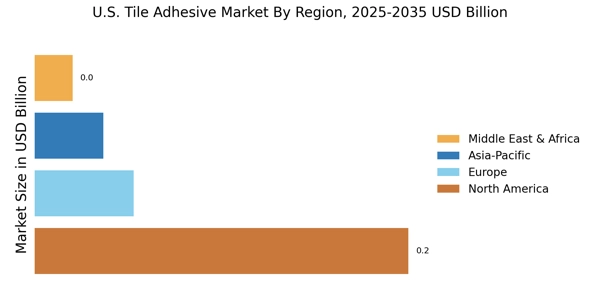
This research report is focusing on understanding the size, share, trends and forecast for the U.S. tile adhesive market covering all the major regions. The research objective is to analyze the current status and future opportunities and challenges presented by the U.S. tile adhesive market for various vendors competing in the market. The research methodology adopted for this research report aims to use a combination of comprehensive primary research, surveys, interviews, secondary sources, and in-depth analysis to provide a comprehensive analysis of the U.S. market for tile adhesives in terms of size, share, and trend.
Secondary Research
Secondary research is a research method which involves collecting and aggregating data from external sources like annual reports, company websites, white papers, studies, research, analysis, etc. For this report, the secondary research was conducted by using various sources such as trade journals, leading magazines, latest news, scientific publications, websites, government and institution websites, industry portals, and regulatory databases, among others. These external sources helped us to have a deeper understanding of the U.S. tile adhesive market and the latest trends adopted in the U.S. Tile Adhesive market.
Primary Research
The primary research involves data collection from industry experts, industry specialists, opinion leaders, board advisors, key management, government/institution representatives, and professionals from the food industry, among others. We conducted thorough interviews with experts from the industry and collected data through one-to-one interaction, mail surveys, and telephone surveys. We collected data on revenue, trends, consumption patterns, import/export, market size, and market share price, among others. This kind of data helps us to build a comprehensive picture of the U.S. tile adhesive market.
Approach
The approach used to analyze the U.S. tile adhesive market involves leveraging a mix of top-down approach, bottom-up approach, time-series analysis, factor analysis, demand side and supply side data triangulation. The approach aims to develop a better understanding of the market size, share, and trends through a comprehensive analysis of the top 3 vendors in the U.S. tile adhesive market. The top-down approach allows us to identify the macro-level factors impacting the U.S. tile adhesive market. The bottom-up approach will generate data related to production capacity and market share of the top 3 vendors in the market. The factor analysis helps us to identify the key market drivers, factors, income values, patterns of consumption and other factors impacting the industry. The time-series analysis will give us historical data pertaining to the U.S. tile market and will help us analyze the future outlook in the U.S. tile market. The demand-side and supply-side data triangulation will help us to gather relevant data and information from both sources and to understand the most accurate picture of the U.S. tile adhesive market.
Data Analysis
The research report is based on a comprehensive analysis of the secondary and primary sources of research. The data collected from these sources is then analyzed using various tools like graphs, tables, and figures to display the trends of the U.S. tile adhesive market. The data is analyzed in terms of market size, market share, production capacity, patterns of consumption, and revenue, among others. The data is analyzed in both qualitative and quantitative terms to have a better overall picture of the U.S. tile adhesive market. The data is then used to provide insights into the trends and structure of the U.S. tile adhesives market.
Conclusion
The methodology adopted for this report is a combination of secondary and primary sources and analytical tools, which will help us to understand the current status of the U.S. tile adhesive market, analyze the trends in the market and study the drivers and constraints of the U.S. tile adhesives market. The approach adopted will involve leveraging a mix of top-down approach, bottom-up approach, time-series analysis, factor analysis, demand side and supply side data triangulation, and various other analytical tools to deliver a comprehensive analysis of the U.S. tile adhesive market along with the market forecast from 2023 to 2030.