Download Free Sample
Kindly complete the form below to receive a free sample of this Report
UK Embolic Protection Devices Market Research Report By Type (Distal Filter Device, Distal Occlusion Device, Proximal Occlusion Device), By Material (Nitinol, Polyurethane), By Usage (Disposable Device, Reusable Device), By Application (Cardiovascular Diseases, Neurovascular Diseases, Peripheral Vascular Diseases) andBy End User (Hospitals and Clinics, Ambulatory Surgical Centers, Specialty Centers) - Growth & Industry Forecast 2025 To 2035
As per Market Research Future analysis, the UK embolic protection-devices market size was estimated at 17.89 $ Million in 2024. The UK embolic protection-devices market is projected to grow from 19.49 $ Million in 2025 to 46.06 $ Million by 2035, exhibiting a compound annual growth rate (CAGR) of 8.9% during the forecast period 2025 - 2035
The UK embolic protection-devices market is poised for growth driven by technological advancements and increasing awareness.
| 2024 Market Size | 17.89 (USD Million) |
| 2035 Market Size | 46.06 (USD Million) |
| CAGR (2025 - 2035) | 8.98% |
Medtronic (US), Boston Scientific (US), Abbott Laboratories (US), Terumo Corporation (JP), Cardinal Health (US), B. Braun Melsungen AG (DE), Edwards Lifesciences Corporation (US), Stryker Corporation (US)
Our Impact
Enabled $4.3B Revenue Impact for Fortune 500 and Leading Multinationals
Partnering with 2000+ Global Organizations Each Year
30K+ Citations by Top-Tier Firms in the Industry
The embolic protection-devices market is currently experiencing notable growth, driven by advancements in medical technology and an increasing prevalence of cardiovascular diseases. The demand for these devices is largely influenced by the rising awareness of the importance of preventing embolic events during various surgical procedures. As healthcare providers prioritize patient safety, the adoption of innovative embolic protection solutions is becoming more prevalent. Furthermore, regulatory support and favorable reimbursement policies are likely to enhance market accessibility, encouraging more healthcare facilities to integrate these devices into their practices. In addition, the ongoing research and development efforts aimed at improving the efficacy and safety of embolic protection-devices are expected to contribute to market expansion. Manufacturers are focusing on creating devices that are not only effective but also user-friendly, which may lead to increased adoption rates among healthcare professionals. The collaboration between medical device companies and healthcare institutions appears to be fostering an environment conducive to innovation, ultimately benefiting patients. As the market evolves, it is essential to monitor these trends closely to understand their implications for future growth and development.
Recent innovations in design and materials are enhancing the performance of embolic protection-devices. These advancements are likely to improve patient outcomes and reduce complications during procedures.
The presence of supportive regulatory frameworks is facilitating the approval and adoption of new embolic protection technologies. This trend may encourage manufacturers to invest in research and development.
Growing awareness among healthcare professionals regarding the benefits of embolic protection-devices is driving their usage. Educational initiatives and training programs are likely to further promote their adoption.
The heightened emphasis on patient safety within the UK healthcare system is a significant driver for the embolic protection-devices market. As healthcare providers strive to minimize complications during invasive procedures, the use of embolic protection devices has become a standard practice. This focus on safety is driven by both regulatory bodies and patient advocacy groups, which advocate for the implementation of best practices in medical procedures. The increasing awareness of the potential risks associated with embolic debris has led to a greater acceptance of these devices among clinicians. Consequently, the market is expected to experience robust growth, as more healthcare facilities prioritize the use of embolic protection devices to enhance patient outcomes and reduce the incidence of adverse events.
The presence of supportive reimbursement policies in the UK is a crucial factor driving the embolic protection-devices market. The National Health Service (NHS) has been increasingly recognizing the importance of embolic protection during high-risk procedures, leading to the inclusion of these devices in reimbursement schedules. This financial support encourages healthcare providers to adopt embolic protection devices, as it alleviates the cost burden associated with their use. As a result, hospitals and clinics are more likely to invest in these technologies, knowing that they will be reimbursed for their expenses. The positive impact of reimbursement policies is evident, as the market is projected to grow by approximately 6% over the next few years, reflecting the increasing integration of embolic protection devices into standard clinical practice.
Innovations in the design and functionality of embolic protection devices are significantly influencing the embolic protection-devices market. Manufacturers are increasingly focusing on developing advanced devices that offer improved efficacy and safety profiles. For instance, the introduction of next-generation filters and balloon occlusion devices has enhanced the ability to capture and remove embolic debris during procedures. These advancements not only improve patient safety but also increase procedural success rates. The UK market has witnessed a surge in the adoption of these innovative devices, with a projected growth rate of around 8% annually over the next five years. As healthcare professionals become more aware of the benefits of these technologies, the demand for sophisticated embolic protection devices is likely to rise, further propelling market growth.
The increasing prevalence of cardiovascular diseases in the UK is a primary driver for the embolic protection-devices market. As the population ages, the incidence of conditions such as atrial fibrillation and coronary artery disease rises, leading to a higher demand for procedures that require embolic protection. According to recent statistics, cardiovascular diseases account for approximately 27% of all deaths in the UK, underscoring the urgent need for effective treatment options. This growing patient population necessitates the use of embolic protection devices during interventions like transcatheter aortic valve replacement (TAVR) and percutaneous coronary interventions (PCI). Consequently, the embolic protection-devices market is expected to expand as healthcare providers seek to mitigate the risks associated with these procedures, ensuring better patient outcomes and reducing the likelihood of complications.
The ongoing investment in healthcare infrastructure in the UK is positively impacting the embolic protection-devices market. As the government and private sector allocate more resources to enhance medical facilities and technologies, the availability of advanced embolic protection devices is likely to improve. This investment is particularly evident in the expansion of cardiac care units and interventional cardiology departments, which are crucial for the effective use of these devices. With an estimated £20 billion earmarked for healthcare improvements over the next five years, the embolic protection-devices market stands to benefit from enhanced access to cutting-edge technologies. As healthcare providers upgrade their facilities and equipment, the adoption of embolic protection devices is expected to rise, contributing to overall market growth.
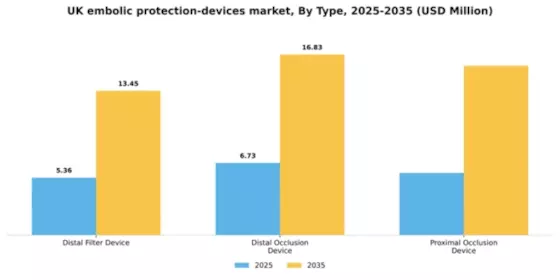
The market share distribution among the segment values reveals that the Distal Filter Device leads with a predominant presence, while the Distal Occlusion Device showcases rapid growth. The Proximal Occlusion Device, while important, holds a smaller share in comparison to these two significant devices. Current growth trends indicate that the Distal Occlusion Device is benefitting from advancements in technology and increased demand for minimally invasive surgical procedures. Additionally, greater awareness of embolic protection and its importance in enhancing patient outcomes is driving the rapid adoption of this segment, with healthcare providers prioritizing devices that ensure safety and efficacy in cardiology procedures.
Distal Filter Device (Dominant) vs. Distal Occlusion Device (Emerging)
The Distal Filter Device is recognized as the dominant player in the market, characterized by its ability to effectively capture embolic debris during procedures, resulting in improved patient outcomes. This segment has established a strong reputation for reliability and is widely adopted in various clinical settings. Conversely, the Distal Occlusion Device is emerging as a vital counterpart, designed to provide quick and efficient occlusion solutions. Its development stems from the need for enhanced protection during complex procedures, attributed to the growing trend for less invasive techniques, leading to increased market traction. The competition between these two segments reflects a crucial dynamic, with each addressing unique clinical needs and patient preferences.
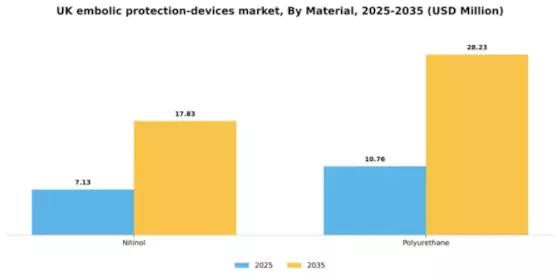
In the UK embolic protection-devices market, the material segment shows a diverse landscape with Nitinol leading the way as the most prominent choice for manufacturers. Its unique properties, such as flexibility and resistance to fatigue, facilitate better performance in various medical applications, making it a preferred material for many embolic devices. Polyurethane, while currently a smaller segment, is rapidly gaining traction due to its biocompatibility and versatility, attracting attention from developers looking for innovative solutions. The growth of this segment is driven by increasing demand for minimally invasive procedures and advancements in material science. Nitinol's established presence and reliability assure clinicians of optimal patient outcomes, while the rising interest in Polyurethane is spurred by its adaptability for different applications and the need for effective embolic protection. As technology evolves, both materials are expected to play pivotal roles in shaping the future landscape of this market.
Material: Nitinol (Dominant) vs. Polyurethane (Emerging)
Nitinol properties, such as superelasticity and shape memory, make it a dominant material in the UK embolic protection-devices market. Its ability to endure repeated deformation without losing structural integrity positions it favorably for long-term use in medical devices. On the other hand, Polyurethane is emerging as a key player, gaining popularity for its excellent biocompatibility and customizable properties. As the demand for innovative solutions in embolic protection rises, Polyurethane's versatility allows it to be tailored for various applications, catering to specific medical needs. This dynamic interplay between the established strengths of Nitinol and the innovative potential of Polyurethane signifies an evolving landscape in the material segment.
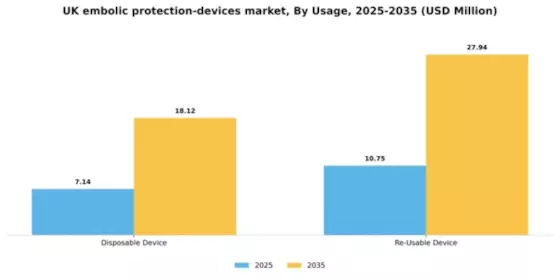
In the UK embolic protection-devices market, the Disposable Device segment holds a significant market share, driven by its convenience and safety features. As healthcare providers increasingly prioritize patient outcomes, disposable devices are favored for their capacity to reduce infection risks associated with reuse. Meanwhile, the Re-Usable Device segment, while smaller, is witnessing accelerated adoption thanks to advancements in materials that enhance their longevity and performance. The growth trends in this segment are influenced by factors such as evolving regulatory standards and heightened demand for safe and effective embolic protection solutions. As procedures become more complex, there is a greater emphasis on devices that can be reliably disinfected and reused, leading to the Re-Usable Device segment emerging as a vital area for innovation. Furthermore, economic considerations are driving hospitals to evaluate the cost-effectiveness of re-usable options, thereby contributing to its rapid growth.
Devices: Disposable (Dominant) vs. Re-Usable (Emerging)
In the UK embolic protection-devices market, the Disposable Device segment is recognized as the dominant player, attributed to its ability to offer one-time use solutions that mitigate the risk of cross-contamination. These devices are preferred in clinical environments where patient safety is paramount. On the other hand, the Re-Usable Device segment is emerging, appealing to healthcare facilities looking for sustainable and cost-effective options without compromising performance. With growing focus on environmentally friendly healthcare practices, re-usable devices are gaining traction, supported by innovations that enhance their functionality. The contrast between these segments highlights a dual focus on safety and sustainability, reflecting broader trends within the healthcare industry.
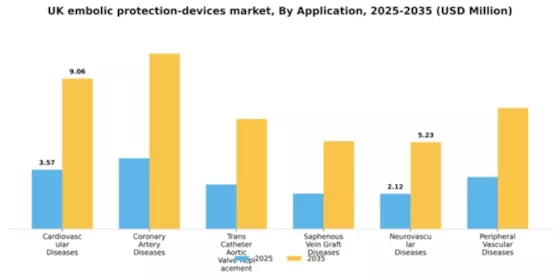
In the UK embolic protection-devices market, the application segments exhibit varying levels of market share. Coronary artery diseases stand as the largest segment due to their prevalence and the essential need for effective treatment options. Following closely are neurovascular diseases, which are gaining traction in the market owing to advancements in technology and increased awareness of stroke risks. Other segments, such as peripheral vascular diseases and saphenous vein graft diseases, also hold significant shares but do not match the dominance of coronary artery diseases. Growth trends within the application segment are influenced by several factors. The increasing prevalence of chronic conditions, coupled with an aging population, drives demand for embolic protection devices. Moreover, advancements in minimally invasive techniques, such as trans catheter aortic valve replacement, are reshaping these dynamics. Hospitals and clinics are increasingly adopting new technologies, and the ongoing research into new devices continues to excite the market, reinforcing the growth potential of the neurovascular diseases segment as it evolves rapidly in response to demand.
Cardiovascular Diseases: Coronary Artery Diseases (Dominant) vs. Neurovascular Diseases (Emerging)
Coronary artery diseases dominate the UK embolic protection-devices market, primarily due to their higher incidence rates and established treatment protocols that require effective embolic protection. This segment benefits from widespread recognition and routine clinical practices, making it a considerable focus for manufacturers. In contrast, neurovascular diseases, while emerging, are rapidly evolving. The growth in this area is fueled by increased awareness of stroke risks and enhanced diagnostic and treatment options. Neurovascular procedures are becoming more prevalent, leading to the incorporation of advanced embolic protection devices designed specifically for these applications. The shift towards minimally invasive procedures further strengthens the position of neurovascular diseases within the market, indicating a bright future for innovations tailored to this segment.
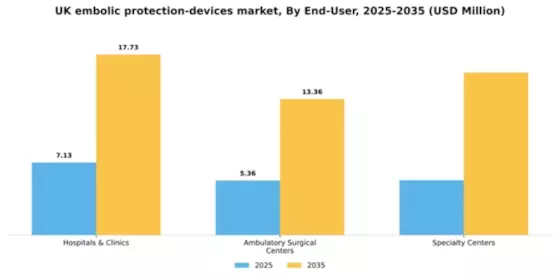
In the UK embolic protection-devices market, the segment distribution reveals Hospitals & Clinics as the largest end-user, commanding a significant share due to their extensive services and ability to cater to a wide patient base. Ambulatory Surgical Centers follow closely, gaining traction for their efficiency and cost-effectiveness. Specialty Centers, while crucial, hold a smaller share compared to the other two segments, reflecting their specialized nature and patient demographic. Growth trends indicate a shift towards Ambulatory Surgical Centers, which are emerging as the fastest-growing segment. This rise is driven by the demand for outpatient services and technological advancements in minimally invasive procedures. The increasing prevalence of cardiovascular diseases is propelling hospitals and clinics as primary users of embolic protection devices, while specialty centers serve specific patient needs, maintaining steady growth in niche markets.
Hospitals & Clinics (Dominant) vs. Ambulatory Surgical Centers (Emerging)
Hospitals & Clinics stand as the dominant force in the UK embolic protection-devices market, characterized by their vast infrastructure and comprehensive cardiovascular care capabilities. They house advanced equipment, skilled personnel, and the ability to handle complex cases, leading to higher adoption rates of embolic devices. On the other hand, Ambulatory Surgical Centers are regarded as emerging players, offering a streamlined approach to surgery that appeals to patients seeking quick and less invasive options. These centers benefit from lower operational costs and a focus on outpatient care, making them increasingly attractive to healthcare providers and patients alike.
Get more detailed insights about UK Embolic Protection Devices Market Request Free Sample
The embolic protection-devices market is characterized by a dynamic competitive landscape, driven by technological advancements and increasing demand for minimally invasive procedures. Key players such as Medtronic (US), Boston Scientific (US), and Abbott Laboratories (US) are at the forefront, focusing on innovation and strategic partnerships to enhance their market presence. Medtronic (US) emphasizes its commitment to research and development, aiming to introduce cutting-edge solutions that address unmet clinical needs. Meanwhile, Boston Scientific (US) has been actively pursuing mergers and acquisitions to expand its product portfolio and strengthen its competitive edge. Abbott Laboratories (US) appears to be leveraging its extensive distribution network to penetrate emerging markets, thereby enhancing its operational focus on regional expansion.The business tactics employed by these companies include localizing manufacturing and optimizing supply chains to improve efficiency and reduce costs. The market structure is moderately fragmented, with several players competing for market share. However, the collective influence of major companies shapes the competitive environment, as they strive to differentiate themselves through innovative product offerings and enhanced customer service.
In September Medtronic (US) announced the launch of its latest embolic protection device, which integrates advanced imaging technology to improve procedural outcomes. This strategic move is likely to enhance Medtronic's market position by addressing the growing demand for precision in interventional procedures. The introduction of this device not only showcases Medtronic's commitment to innovation but also reflects the increasing trend towards integrating technology into medical devices.
In August Boston Scientific (US) completed the acquisition of a smaller competitor specializing in embolic protection technologies. This acquisition is expected to bolster Boston Scientific's product offerings and expand its market reach, particularly in Europe. By integrating the acquired technologies, Boston Scientific aims to enhance its competitive positioning and respond more effectively to the evolving needs of healthcare providers.
In October Abbott Laboratories (US) entered into a strategic partnership with a leading digital health company to develop AI-driven solutions for embolic protection devices. This collaboration is indicative of the growing trend towards digitalization in the healthcare sector, as it aims to leverage data analytics to improve patient outcomes and streamline clinical workflows. Such initiatives may position Abbott as a leader in the integration of technology within the embolic protection space.
As of November the competitive trends in the embolic protection-devices market are increasingly defined by digitalization, sustainability, and the integration of artificial intelligence. Strategic alliances are becoming more prevalent, as companies recognize the importance of collaboration in driving innovation. The competitive differentiation is likely to evolve from traditional price-based competition towards a focus on technological advancements, reliability in supply chains, and the ability to deliver superior patient outcomes. This shift underscores the necessity for companies to adapt and innovate continuously to maintain their competitive edge in a rapidly changing market.





The UK Embolic Protection Devices Market has seen significant developments recently, with a focus on technological advancements and regulatory approvals. In September 2023, Abbott Laboratories received approval for a new embolic protection device that is designed to optimize patient outcomes during vascular interventions. Additionally, Medtronic announced in August 2023 a partnership with a leading UK hospital to conduct clinical trials on their latest embolic protection technology. The market is experiencing growth, attributed to an increase in interventional procedures, with projections indicating a compound annual growth rate of 7% through 2025.
In terms of mergers and acquisitions, Cook Medical announced in June 2023 its acquisition of a UK-based technology firm specializing in embolic protection aimed at enhancing their product line. Stryker Corporation also acquired a smaller competitor in May 2023, further consolidating its position in the market. These developments reflect a robust interest from key players like Boston Scientific and Edward Lifesciences investing in Research and Development to expedite innovation in embolic protection solutions. The UK government has also emphasized the need for advanced medical devices in its recent healthcare initiatives, incentivizing growth in this sector.
The Embolic Protection Devices Market is projected to grow at an 8.98% CAGR from 2025 to 2035, driven by technological advancements, increasing cardiovascular procedures, and rising awareness.
New opportunities lie in:
By 2035, the market is expected to achieve substantial growth, positioning itself as a leader in innovative medical solutions.
| MARKET SIZE 2024 | 17.89(USD Million) |
| MARKET SIZE 2025 | 19.49(USD Million) |
| MARKET SIZE 2035 | 46.06(USD Million) |
| COMPOUND ANNUAL GROWTH RATE (CAGR) | 8.98% (2025 - 2035) |
| REPORT COVERAGE | Revenue Forecast, Competitive Landscape, Growth Factors, and Trends |
| BASE YEAR | 2024 |
| Market Forecast Period | 2025 - 2035 |
| Historical Data | 2019 - 2024 |
| Market Forecast Units | USD Million |
| Key Companies Profiled | Medtronic (US), Boston Scientific (US), Abbott Laboratories (US), Terumo Corporation (JP), Cardinal Health (US), B. Braun Melsungen AG (DE), Edwards Lifesciences Corporation (US), Stryker Corporation (US) |
| Segments Covered | Type, Material, Usage, Application, End-User |
| Key Market Opportunities | Advancements in minimally invasive techniques enhance growth potential in the embolic protection-devices market. |
| Key Market Dynamics | Technological advancements drive innovation in embolic protection devices, enhancing patient outcomes and regulatory compliance. |
| Countries Covered | UK |
The market valuation was $17.89 Million in 2024.
The projected valuation for 2035 is $46.06 Million.
The expected CAGR is 8.98% during the forecast period.
Key players include Medtronic, Boston Scientific, Abbott Laboratories, and others.
Main types include Distal Filter Devices, Distal Occlusion Devices, and Proximal Occlusion Devices.
The Distal Filter Device segment was valued at $5.36 Million in 2024.
Common materials include Nitinol and Polyurethane.
In 2024, Disposable Devices were valued at $7.14 Million, while Re-Usable Devices reached $10.75 Million.
Dominant applications include Cardiovascular Diseases and Coronary Artery Diseases.
Primary end-users include Hospitals & Clinics, Ambulatory Surgical Centers, and Specialty Centers.



Kindly complete the form below to receive a free sample of this Report

“This is really good guys. Excellent work on a tight deadline. I will continue to use you going forward and recommend you to others. Nice job”


“Thanks. It’s been a pleasure working with you, please use me as reference with any other Intel employees.”


“Thanks for sending the report it gives us a good global view of the Betaïne market.”


“Thank you, this will be very helpful for OQS.”


“We found the report very insightful! we found your research firm very helpful. I'm sending this email to secure our future business.”


“I am very pleased with how market segments have been defined in a relevant way for my purposes (such as "Portable Freezers & refrigerators" and "last-mile"). In general the report is well structured. Thanks very much for your efforts.”


“I have been reading the first document or the study, ,the Global HVAC and FP market report 2021 till 2026. Must say, good info! I have not gone in depth at all parts, but got a good indication of the data inside!”


“We got the report in time, we really thank you for your support in this process. I also thank to all of your team as they did a great job.”


“The Automotive 48V ECU Components Procurement Intelligence Study” was a complex project, but the Market Research Future (MRFR) team handled it with quality, agility, and customer-centricity. They delivered all requested data on time and within the agreed scope. The team, including Shubhendra Anand and Rahul Gotadki, was always readily available to clarify questions and swiftly implement necessary adjustments, driving the project to a successful conclusion within a very demanding timeframe.
I would also like to specifically commend Akshay Agarwal for his responsiveness and support at every stage—from our initial inquiry on May 6th through to final delivery on June 18th. His dedication made the entire process seamless.”



