×
Request Free Sample ×

Kindly complete the form below to receive a free sample of this Report

* Please use a valid business email

Leading companies partner with us for data-driven Insights

clients tt-cursor
Hero Background

Unmanned Aerial Vehicle Landing Gear Market

ID: MRFR/AD/22253-HCR
128 Pages
Sejal Akre
October 2025

Unmanned Aerial Vehicle Landing Gear Market Research Report By Type of Unmanned Aerial Vehicle (Fixed-Wing UAV, Rotary-Wing UAV, Hybrid UAV), By Application (Military and Defense, Civil and Commercial, Industrial and Infrastructure), By Material (Aluminum Alloys, Titanium Alloys, Carbon Fiber Composites, Steel), By Actuation Type (Electric Actuation, Hydraulic Actuation, Mechanical Actuation) and By Regional (North America, Europe, South America, Asia-Pacific, Middle East and Africa) - Forecast to 2035

Share:
Download PDF ×

We do not share your information with anyone. However, we may send you emails based on your report interest from time to time. You may contact us at any time to opt-out.

Unmanned Aerial Vehicle Landing Gear Market Infographic
Purchase Options

Unmanned Aerial Vehicle Landing Gear Market Summary

As per MRFR analysis, the Unmanned Aerial Vehicle Landing Gear Market Size was estimated at 1.053 USD Billion in 2024. The Unmanned Aerial Vehicle Landing Gear industry is projected to grow from 1.149 USD Billion in 2025 to 2.753 USD Billion by 2035, exhibiting a compound annual growth rate (CAGR) of 9.13 during the forecast period 2025 - 2035.

Key Market Trends & Highlights

The Unmanned Aerial Vehicle Landing Gear Market is poised for substantial growth driven by technological advancements and increasing demand across various sectors.

  • North America remains the largest market for UAV landing gear, driven by robust military and defense applications.
  • The Asia-Pacific region is emerging as the fastest-growing market, fueled by rising investments in civil and commercial UAVs.
  • Fixed-wing UAVs dominate the market, while rotary-wing UAVs are experiencing rapid growth due to their versatility.
  • Key market drivers include rising demand for UAVs in various sectors and increased investment in UAV research and development.

Market Size & Forecast

2024 Market Size 1.053 (USD Billion)
2035 Market Size 2.753 (USD Billion)
CAGR (2025 - 2035) 9.13%

Major Players

Northrop Grumman (US), General Atomics (US), Textron (US), Boeing (US), Airbus (FR), Lockheed Martin (US), Thales Group (FR), Elbit Systems (IL), SAAB (SE)

Unmanned Aerial Vehicle Landing Gear Market Trends

The Unmanned Aerial Vehicle Landing Gear Market is currently experiencing a transformative phase, driven by advancements in technology and increasing applications across various sectors. The demand for unmanned aerial vehicles (UAVs) is on the rise, particularly in industries such as agriculture, logistics, and surveillance. This growth is prompting manufacturers to innovate landing gear solutions that enhance performance, reliability, and safety. As UAVs become more integral to operations, the need for specialized landing gear that can withstand diverse environmental conditions and operational demands is becoming increasingly apparent. Moreover, the market is witnessing a shift towards lightweight materials and designs that improve fuel efficiency and reduce operational costs. Manufacturers are exploring composite materials and advanced engineering techniques to create landing gear that not only meets the rigorous demands of UAV operations but also contributes to overall vehicle performance. This trend indicates a broader movement towards sustainability and efficiency within the aerospace sector, as stakeholders seek to optimize their UAV systems for a competitive edge. As the Unmanned Aerial Vehicle Landing Gear Market evolves, it appears poised for continued growth, driven by innovation and the expanding role of UAVs in various applications.

Technological Advancements in Materials

The Unmanned Aerial Vehicle Landing Gear Market is increasingly influenced by innovations in materials science. Manufacturers are exploring advanced composites and lightweight alloys that enhance durability while minimizing weight. This trend not only improves the overall performance of UAVs but also contributes to energy efficiency, making operations more cost-effective.

Integration of Smart Technologies

There is a growing trend towards the integration of smart technologies within landing gear systems. Features such as sensors and automated deployment mechanisms are being developed to enhance safety and operational efficiency. This integration allows for real-time monitoring and adjustments, potentially reducing the risk of landing failures.

Focus on Customization and Adaptability

The demand for customized landing gear solutions is rising as various industries adopt UAV technology. Different applications require specific landing gear characteristics, prompting manufacturers to offer adaptable designs. This focus on customization ensures that landing gear can meet the unique needs of diverse operational environments.

Unmanned Aerial Vehicle Landing Gear Market Drivers

Growing Focus on Safety and Reliability

The emphasis on safety and reliability in UAV operations is increasingly influencing the Unmanned Aerial Vehicle Landing Gear Market. As UAVs are deployed in critical applications such as search and rescue, law enforcement, and infrastructure inspection, the need for dependable landing gear becomes paramount. Manufacturers are responding to this demand by developing landing gear that meets stringent safety standards and can perform reliably under various conditions. The market is witnessing a trend towards enhanced testing and certification processes for landing gear, which is likely to bolster consumer confidence and drive market growth.

Regulatory Support and Policy Frameworks

Supportive regulatory frameworks and policies are emerging as significant drivers for the Unmanned Aerial Vehicle Landing Gear Market. Governments are increasingly recognizing the potential of UAVs for enhancing public services and economic growth. This recognition has led to the establishment of regulations that facilitate the safe integration of UAVs into national airspace systems. For example, the Federal Aviation Administration (FAA) has implemented guidelines that promote the use of UAVs in commercial applications, which in turn stimulates demand for reliable landing gear. As regulations evolve, manufacturers are likely to innovate landing gear designs that comply with safety standards, thereby expanding market opportunities.

Rising Demand for UAVs in Various Sectors

The increasing adoption of unmanned aerial vehicles (UAVs) across diverse sectors such as agriculture, logistics, and surveillance is a primary driver for the Unmanned Aerial Vehicle Landing Gear Market. As industries recognize the efficiency and cost-effectiveness of UAVs, the demand for specialized landing gear tailored to specific applications is likely to surge. For instance, the agricultural sector utilizes UAVs for crop monitoring and pesticide spraying, necessitating robust landing gear that can withstand various terrains. Reports indicate that the UAV market is projected to grow at a compound annual growth rate (CAGR) of over 15% in the coming years, further propelling the need for advanced landing gear solutions.

Technological Innovations in Landing Gear Design

Technological advancements in landing gear design are transforming the Unmanned Aerial Vehicle Landing Gear Market. Innovations such as lightweight materials, retractable landing gear, and enhanced shock absorption systems are being developed to improve UAV performance and safety. The integration of advanced materials like carbon fiber and composites not only reduces weight but also enhances durability, which is crucial for UAV operations in challenging environments. Market analysis suggests that the segment for advanced landing gear is expected to witness substantial growth, driven by the need for improved operational efficiency and safety in UAV applications.

Increased Investment in UAV Research and Development

The surge in investment directed towards UAV research and development is a pivotal driver for the Unmanned Aerial Vehicle Landing Gear Market. As companies and governments allocate resources to explore new UAV technologies, the demand for innovative landing gear solutions is likely to rise. This investment is not only fostering advancements in UAV capabilities but also in the associated components, including landing gear. Reports indicate that funding for UAV-related projects has increased significantly, suggesting a robust future for the market as new applications and technologies emerge, necessitating specialized landing gear.
Market Segment Insights

By Type: Fixed-Wing UAV (Largest) vs. Rotary-Wing UAV (Fastest-Growing)

In the Unmanned Aerial Vehicle Landing Gear Market, the distribution among the segments of Fixed-Wing, Rotary-Wing, and Hybrid UAVs showcases a varied landscape of opportunities. Fixed-Wing UAVs hold a significant portion of the market owing to their efficiency and longer flight durations, making them the most established segment. Conversely, Rotary-Wing UAVs have experienced a surge in interest due to their versatility and ability to hover, capturing an increasing share of the market and appealing to various applications, including surveillance and delivery services.

Fixed-Wing UAV (Dominant) vs. Rotary-Wing UAV (Emerging)

Fixed-Wing UAVs dominate the unmanned aerial vehicle landing gear market, primarily due to their long-range capabilities and fuel efficiency, making them ideal for applications such as agriculture, surveillance, and logistics. Their design allows for stable flight dynamics and the carrying of larger payloads, which contributes to their prevailing market share. In contrast, Rotary-Wing UAVs are emerging as a potent alternative with their enhanced maneuverability and operational flexibility. These UAVs are being increasingly utilized in urban environments and complex terrains, thereby fostering innovation and adaptation in landing gear technology. The adaptability of both segments positions them uniquely in the market, with Fixed-Wing UAVs serving bulk transport needs and Rotary-Wing UAVs fulfilling the rising demand for personalized aerial solutions.

By Application: Military and Defense (Largest) vs. Civil and Commercial (Fastest-Growing)

The 'Unmanned Aerial Vehicle Landing Gear Market' showcases a diverse range of applications, with the Military and Defense sector holding a significant share. This segment capitalizes on the need for advanced landing gear technologies in various military operations, including reconnaissance, surveillance, and combat missions. In contrast, the Civil and Commercial sector is quickly gaining momentum, driven by the increasing utilization of drones for delivery, aerial photography, and infrastructure inspections, thereby expanding the overall market landscape.

Military and Defense (Dominant) vs. Civil and Commercial (Emerging)

The Military and Defense segment stands as the dominant force in the Unmanned Aerial Vehicle Landing Gear Market. It is characterized by robust investments in advanced technologies, focusing on resilience and performance under challenging conditions. In comparison, the Civil and Commercial segment is emerging rapidly, fueled by advancements in drone technology and increasing commercial applications. This segment's growth is significantly driven by regulatory support and a surge in demand across industries like logistics and entertainment. Together, these segments illustrate the versatility and potential of UAV applications, each catering to distinct yet complementary needs.

By Material: Aluminum Alloys (Largest) vs. Carbon Fiber Composites (Fastest-Growing)

The Unmanned Aerial Vehicle Landing Gear Market exhibits diverse material utilization, with Aluminum Alloys commanding the largest share due to their favorable properties such as lightweight, strength, and cost-effectiveness. Carbon Fiber Composites, while currently smaller in market share, have begun to gain significant traction, leveraging their lightweight and high-strength characteristics to cater to advanced UAV designs. Each material segment contributes uniquely to the market's dynamics, reflecting both current demand and adaption to technological advancements. Growth trends in this market segment are driven by the increasing demand for lightweight, durable, and efficient materials in UAV design. The shift towards Carbon Fiber Composites is indicative of a broader industry trend favoring high-performance materials that enhance flight efficiency and reduce energy consumption. Meanwhile, Aluminum Alloys remain prominent due to their balance of affordability and performance, making them a staple choice for conventional designs.

Aluminum Alloys (Dominant) vs. Titanium Alloys (Emerging)

Aluminum Alloys have established themselves as the dominant material in the Unmanned Aerial Vehicle Landing Gear Market, offering a compelling blend of strength, lightweight, and economic viability, making them the go-to choice for most manufacturers. In contrast, Titanium Alloys have emerged as a noteworthy alternative, appreciated for their superior strength-to-weight ratio and corrosion resistance. Though more costly, Titanium Alloys are being increasingly valued for their performance in high-stress applications, positioning them as a viable option in higher-end UAV designs. This dynamic between the two materials reflects ongoing innovation and the push for improved performance and sustainability in the UAV sector.

By Actuation Type: Electric Actuation (Largest) vs. Hydraulic Actuation (Fastest-Growing)

In the Unmanned Aerial Vehicle Landing Gear Market, the Actuation Type segment is characterized by a significant presence of electric actuation, which holds the largest market share. Electric actuation is preferred for its reliability, weight savings, and efficiency in operation, making it a go-to choice for many drone manufacturers. Conversely, hydraulic actuation is gaining traction and is recognized as the fastest-growing segment. This growth is driven by its proven performance under high load conditions, appealing particularly in larger drone applications. The growth trends within this segment indicate a shift towards integrating advanced technologies in actuation types. Electric actuation is expected to enhance with innovations in battery technology, leading to improved performance and lower operational costs. On the other hand, the hydraulic actuation segment is benefitting from increased demand in industrial applications, prompting manufacturers to innovate hybrid actuation systems that combine the benefits of both electric and hydraulic solutions.

Electric Actuation (Dominant) vs. Hydraulic Actuation (Emerging)

Electric actuation currently dominates the Unmanned Aerial Vehicle Landing Gear Market due to its advantages in energy efficiency, precision, and lower maintenance needs. It serves as the backbone for many UAV designs, providing reliable performance in varying environmental conditions. This segment is characterized by a trend towards miniaturization and integration of sensors, enhancing control capabilities and performance metrics. Conversely, hydraulic actuation is emerging as a strong value proposition in the market. While traditionally seen as heavy and less energy-efficient, advancements are making this option more viable for larger UAVs, where power and load support are paramount. This growth reflects a diversification strategy among UAV manufacturers, aiming to cater to a wider range of applications.

Get more detailed insights about Unmanned Aerial Vehicle Landing Gear Market

Regional Insights

North America : Innovation and Leadership Hub

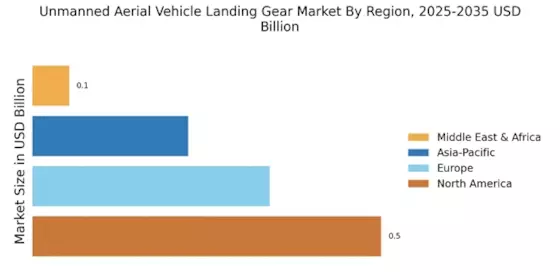
North America is the largest market for unmanned aerial vehicle (UAV) landing gear, holding approximately 45% of the global market share. The region's growth is driven by advancements in technology, increasing defense budgets, and a rising demand for commercial UAV applications. Regulatory support from agencies like the FAA has also catalyzed market expansion, facilitating the integration of UAVs into national airspace systems. The United States leads the North American market, with key players such as Northrop Grumman, Boeing, and Lockheed Martin dominating the landscape. The competitive environment is characterized by continuous innovation and strategic partnerships among these companies. Canada is also emerging as a significant player, focusing on UAV applications in agriculture and surveillance, further enhancing the region's market dynamics.

Europe : Emerging Market with Regulations

Europe is witnessing significant growth in the UAV landing gear market, accounting for approximately 30% of the global share. The region's expansion is fueled by increasing investments in defense and commercial UAV sectors, alongside stringent regulations that promote safety and innovation. The European Union's initiatives to standardize UAV operations are pivotal in shaping market dynamics, encouraging manufacturers to comply with new standards and technologies. Leading countries in Europe include France, Germany, and the UK, where companies like Airbus and Thales Group are at the forefront. The competitive landscape is marked by collaborations between private firms and government agencies to enhance UAV capabilities. The presence of established defense contractors and a growing number of startups contribute to a vibrant ecosystem, driving innovation and market growth.

Asia-Pacific : Rapid Growth and Adoption

Asia-Pacific is rapidly emerging as a significant player in the UAV landing gear market, holding around 20% of the global share. The region's growth is driven by increasing military expenditures, advancements in technology, and a rising demand for UAVs in various sectors, including agriculture and logistics. Countries like China and India are investing heavily in UAV technology, supported by favorable government policies and initiatives aimed at enhancing domestic manufacturing capabilities. China is the largest market in the region, with companies like DJI leading the way in UAV technology. India is also making strides, focusing on defense applications and commercial uses. The competitive landscape is characterized by a mix of established players and new entrants, fostering innovation and driving down costs. The presence of key players such as Elbit Systems and SAAB further enhances the region's market dynamics.

Middle East and Africa : Resource-Rich and Strategic Market

The Middle East and Africa region is witnessing a burgeoning UAV landing gear market, accounting for approximately 5% of the global share. The growth is primarily driven by increasing defense budgets, particularly in countries like the UAE and Saudi Arabia, alongside a rising interest in commercial UAV applications. The region's strategic location and resource wealth are also contributing factors, as governments seek to enhance their technological capabilities and operational efficiencies. The UAE is leading the market in the Middle East, with significant investments in UAV technology and infrastructure. South Africa is also emerging as a key player, focusing on UAV applications in agriculture and surveillance. The competitive landscape is characterized by collaborations between local firms and international players, enhancing the region's technological capabilities and market presence.

Unmanned Aerial Vehicle Landing Gear Market Regional Image

Key Players and Competitive Insights

Major players in Unmanned Aerial Vehicle Landing Gear Market industry are working towards developing innovative and advanced landing gear systems to cater to the evolving needs of the unmanned aerial vehicle market. Leading Unmanned Aerial Vehicle Landing Gear Market players are investing in research and development to enhance the performance, reliability, and durability of their landing gear systems. Unmanned Aerial Vehicle Landing Gear Market Competitive Landscape is characterized by the presence of both established and emerging players.

 Key players in the market include Safran, Honeywell, Meggitt, Liebherr-Aerospace, and Collins Aerospace. These companies are focusing on expanding their product portfolios and geographical reach to gain a competitive edge in the market. Unmanned Aerial Vehicle Landing Gear Market development is driven by factors such as increasing demand for unmanned aerial vehicles for commercial and military applications, technological advancements in landing gear systems, and growing investment in research and development.One of the prominent competitors in the Unmanned Aerial Vehicle Landing Gear Market is Safran.

The company offers a range of landing gear systems for unmanned aerial vehicles, including fixed-wing and rotary-wing aircraft. Safran's landing gear systems are known for their reliability, durability, and performance. The company has a strong presence with manufacturing facilities in Europe, North America, and Asia. Safran is continuously investing in research and development to enhance its landing gear systems and meet the evolving needs of the unmanned aerial vehicle market.Another key player in the Unmanned Aerial Vehicle Landing Gear Market is Honeywell.

The company provides a comprehensive range of landing gear systems for unmanned aerial vehicles, including fixed-wing, rotary-wing, and tilt-rotor aircraft. Honeywell's landing gear systems are designed to meet the specific requirements of each aircraft type and application. The company has a strong engineering and manufacturing team that is dedicated to developing innovative and advanced landing gear systems. Honeywell has a presence with manufacturing facilities in North America, Europe, and Asia. The company is continuously investing in research and development to enhance its landing gear systems and meet the evolving needs of the unmanned aerial vehicle market.

Key Companies in the Unmanned Aerial Vehicle Landing Gear Market market include

Industry Developments

The unmanned aerial vehicle (UAV) landing gear market size was valued at USD 0.88 billion in 2023 and is projected to reach USD 1.93 billion by 2032, exhibiting a CAGR of 9.13% during the forecast period. The growth of the market is attributed to the increasing adoption of UAVs across various industries, coupled with the rising demand for advanced landing gear systems to ensure safe and efficient landings.Recent developments in the market include strategic partnerships and collaborations between key players to develop and commercialize innovative landing gear solutions.

For instance, in 2023, AAL, a leading provider of UAV landing gear systems, partnered with Thales to integrate its landing gear technology into Thales's UAV platforms. Such partnerships are expected to contribute to the overall growth of the UAV landing gear market.

Future Outlook

Unmanned Aerial Vehicle Landing Gear Market Future Outlook

The Unmanned Aerial Vehicle Landing Gear Market is projected to grow at a 9.13% CAGR from 2024 to 2035, driven by technological advancements and increasing demand for UAV applications.

New opportunities lie in:

  • Development of lightweight composite materials for enhanced performance
  • Integration of smart landing gear systems with real-time data analytics
  • Expansion into emerging markets with tailored UAV landing gear solutions

By 2035, the market is expected to achieve substantial growth, reflecting evolving industry needs.

Market Segmentation

Unmanned Aerial Vehicle Landing Gear Market Type Outlook

  • Fixed-Wing UAV
  • Rotary-Wing UAV
  • Hybrid UAV

Unmanned Aerial Vehicle Landing Gear Market Material Outlook

  • Aluminum Alloys
  • Titanium Alloys
  • Carbon Fiber Composites
  • Steel

Unmanned Aerial Vehicle Landing Gear Market Application Outlook

  • Military and Defense
  • Civil and Commercial
  • Industrial and Infrastructure

Unmanned Aerial Vehicle Landing Gear Market Actuation Type Outlook

  • Electric Actuation
  • Hydraulic Actuation
  • Mechanical Actuation

Report Scope

MARKET SIZE 20241.053(USD Billion)
MARKET SIZE 20251.149(USD Billion)
MARKET SIZE 20352.753(USD Billion)
COMPOUND ANNUAL GROWTH RATE (CAGR)9.13% (2024 - 2035)
REPORT COVERAGERevenue Forecast, Competitive Landscape, Growth Factors, and Trends
BASE YEAR2024
Market Forecast Period2025 - 2035
Historical Data2019 - 2024
Market Forecast UnitsUSD Billion
Key Companies ProfiledMarket analysis in progress
Segments CoveredMarket segmentation analysis in progress
Key Market OpportunitiesAdvancements in lightweight materials enhance performance and efficiency in the Unmanned Aerial Vehicle Landing Gear Market.
Key Market DynamicsTechnological advancements in materials and design are enhancing the performance and reliability of unmanned aerial vehicle landing gear.

Countries CoveredNorth America, Europe, APAC, South America, MEA

Leave a Comment

FAQs

What is the projected market valuation for the Unmanned Aerial Vehicle Landing Gear Market in 2035?

The projected market valuation for the Unmanned Aerial Vehicle Landing Gear Market in 2035 is 2.753 USD Billion.

What was the overall market valuation for the Unmanned Aerial Vehicle Landing Gear Market in 2024?

The overall market valuation for the Unmanned Aerial Vehicle Landing Gear Market in 2024 was 1.053 USD Billion.

Download Free Sample

Kindly complete the form below to receive a free sample of this Report

Compare Licence

×
Features License Type
Single User Multiuser License Enterprise User
Price $4,950 $5,950 $7,250
Maximum User Access Limit 1 User Upto 10 Users Unrestricted Access Throughout the Organization
Free Customization
Direct Access to Analyst
Deliverable Format
Platform Access
Discount on Next Purchase 10% 15% 15%
Printable Versions