Download Free Sample
Kindly complete the form below to receive a free sample of this Report
US Bamboos Market Size, Share, Industry Trend & Analysis Research Report By End Use Industry (Wood & Furniture, Construction, Food, Pulp & Paper, Textile, Agriculture, Others) – Forecast to 2035
As per Market Research Future analysis, the US bamboos market Size was estimated at 9.75 USD Billion in 2024. The US bamboos market is projected to grow from 10.22 USD Billion in 2025 to 16.33 USD Billion by 2035, exhibiting a compound annual growth rate (CAGR) of 4% during the forecast period 2025 - 2035
The US bamboos market is experiencing a robust shift towards sustainability and innovation.
| 2024 Market Size | 9.75 (USD Billion) |
| 2035 Market Size | 16.33 (USD Billion) |
| CAGR (2025 - 2035) | 4.8% |
Bamboo Living (US), Bamboo Technologies (IN), Bamboo Supply Co (US), Bamboo Village (VN), Bamboo Products (CN), Bamboo Home (PH), Bamboo Garden (DE), Bamboo Creations (AU)
Our Impact
Enabled $4.3B Revenue Impact for Fortune 500 and Leading Multinationals
Partnering with 2000+ Global Organizations Each Year
30K+ Citations by Top-Tier Firms in the Industry
The United States bamboos market is experiencing a notable transformation, driven by increasing consumer awareness regarding sustainability and eco-friendly materials. As environmental concerns gain traction, bamboos are emerging as a preferred alternative to traditional wood products. This shift is likely influenced by the material's rapid growth rate, strength, and versatility, making it suitable for various applications, including construction, furniture, and textiles. Furthermore, the rise in green building initiatives and government incentives for sustainable practices may further bolster the demand for bamboo products in the coming years. In addition to sustainability, the US bamboos market is also witnessing innovation in product development. Manufacturers are exploring new processing techniques and designs to enhance the aesthetic appeal and functionality of bamboo products. This trend appears to be supported by a growing interest in natural and organic materials among consumers. As the market evolves, it is anticipated that the US bamboos market will continue to expand, driven by both environmental considerations and innovative product offerings.
The trend towards sustainable building materials is gaining momentum, with bamboos being recognized for their eco-friendly properties. As construction practices evolve, the demand for renewable resources is likely to increase, positioning bamboo as a viable option for builders and architects.
Innovation in product development is becoming a focal point within the US bamboos market. Manufacturers are experimenting with new designs and processing methods, enhancing the appeal and functionality of bamboo products, which may attract a broader consumer base.
There is a growing emphasis on consumer awareness regarding the benefits of bamboo products. Educational initiatives aimed at informing the public about the advantages of using bamboo over traditional materials could potentially drive market growth.
The increasing consumer preference for sustainable and eco-friendly products is a pivotal driver in the US bamboos market. As environmental concerns gain traction, more consumers are gravitating towards materials that minimize ecological footprints. Bamboos, known for their rapid growth and renewability, align perfectly with this trend. In the US, the market for sustainable building materials, including bamboo, is projected to grow at a CAGR of approximately 10% over the next five years. This shift towards eco-conscious purchasing is likely to bolster the US bamboos market, as manufacturers respond to consumer demands by incorporating bamboo into various applications, from flooring to furniture.
The rising awareness of plastic pollution and the need for biodegradable alternatives is propelling the US bamboos market forward. Bamboo, being a natural and biodegradable material, presents a compelling solution for consumers and businesses seeking to reduce their environmental impact. The US market is witnessing a shift towards products made from biodegradable materials, with bamboo being at the forefront. This trend is particularly evident in packaging and disposable products, where bamboo's properties can replace conventional plastics. As more companies adopt bamboo-based solutions, the US bamboos market is likely to experience substantial growth.
Technological innovations in the processing and treatment of bamboo are transforming the US bamboos market. Advanced techniques enhance the durability and versatility of bamboo, making it suitable for a wider range of applications. For example, new treatments can improve bamboo's resistance to pests and moisture, expanding its usability in construction and furniture. The introduction of engineered bamboo products, which combine multiple layers of bamboo for added strength, is also gaining traction. These advancements not only improve product quality but also increase market competitiveness, potentially leading to a surge in demand within the US bamboos market.
Investment in sustainable infrastructure is a crucial driver for the bamboos market. As cities and communities prioritize green building practices, the demand for sustainable materials like bamboo is expected to rise. The US government and private sector are increasingly funding projects that incorporate renewable resources, including bamboo, into their designs. This trend is evident in the construction of eco-friendly buildings and public spaces that utilize bamboo for its aesthetic and environmental benefits. As these investments continue, they are likely to create new opportunities for growth within the US bamboos market, fostering innovation and expanding market reach.
Government policies and initiatives aimed at promoting sustainable practices significantly influence the US bamboos market. Various federal and state programs incentivize the use of renewable resources, including bamboo, in construction and manufacturing. For instance, tax credits and grants for using sustainable materials can enhance the attractiveness of bamboo products. The US government has set ambitious targets for reducing carbon emissions, which may further encourage the adoption of bamboo as a viable alternative to traditional materials. This supportive regulatory environment is expected to drive growth in the US bamboos market, as businesses seek to align with governmental sustainability goals.
The US bamboos market exhibits a diverse range of end-use industries, with the Wood and Furniture segment holding the largest US market share. This segment benefits from the increasing consumer preference for sustainable products, driving demand for bamboo-based furniture and wood alternatives. In contrast, the Construction segment has emerged as a major player and is the fastest-growing area, attributed to the rising awareness of eco-friendly building materials and sustainable practices. This growth reflects a shift in industry standards toward more environmentally responsible options. Growth trends in the US bamboos market reveal that while Wood and Furniture continues to thrive, the Construction segment shows the most significant potential for expansion. Factors such as government regulations promoting sustainable construction, coupled with consumers' environmental consciousness, are fueling the surge in bamboo use within this sector. Additionally, increased technological advancements in bamboo processing and construction techniques are enhancing its adoption across various applications, solidifying its presence as a preferred alternative to traditional materials.
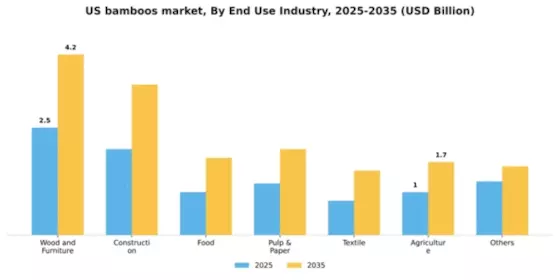
Wood and Furniture: Dominant vs. Construction: Emerging
The Wood and Furniture segment is considered a dominant force within the US bamboos market due to its established customer base and extensive applications in both residential and commercial settings. Its appeal lies in bamboo's aesthetic qualities, durability, and sustainability, making it a preferred choice among eco-conscious consumers. Meanwhile, the Construction segment is emerging rapidly, characterized by its innovative approaches to using bamboo as a building material. With advancements in technology and a growing acceptance among architects and builders, this segment is gaining traction as a green alternative for sustainable construction. The interplay between these two segments highlights the versatility of bamboo and its potential to cater to diverse market needs.
Get more detailed insights about US Bamboos Market Request Free Sample
The US bamboo market exhibits a dynamic competitive landscape characterized by a growing emphasis on sustainability and innovation. Key players such as Bamboo Living (US), Bamboo Technologies (IN), and Bamboo Supply Co (US) are actively shaping the market through strategic initiatives aimed at enhancing their operational capabilities and market reach. Bamboo Living (US) focuses on eco-friendly construction solutions, leveraging bamboo's natural properties to appeal to environmentally conscious consumers. Meanwhile, Bamboo Technologies (IN) emphasizes technological advancements in bamboo processing, which enhance product quality and efficiency. Bamboo Supply Co (US) is strategically positioned to capitalize on the increasing demand for bamboo products in North America, particularly in the home and garden sectors, through a robust supply chain and localized manufacturing. The market structure appears moderately fragmented, with numerous players vying for market share. Key business tactics include localizing manufacturing to reduce costs and optimize supply chains, which is particularly relevant in the context of rising transportation costs. The collective influence of these major players fosters a competitive environment where innovation and sustainability are paramount, driving the market forward.In October Bamboo Living (US) announced a partnership with a leading sustainable architecture firm to develop a new line of eco-friendly homes. This strategic move not only enhances their product offerings but also positions them as a leader in sustainable housing solutions, appealing to a growing demographic of environmentally aware consumers. The collaboration is expected to bolster their market presence and drive sales growth in the coming years.In September Bamboo Technologies (IN) unveiled a new processing technology that significantly reduces waste during bamboo production. This innovation is crucial as it aligns with global sustainability goals and enhances the company's operational efficiency. By minimizing waste, Bamboo Technologies (IN) not only improves its profit margins but also strengthens its brand image as a responsible manufacturer in the US bamboos market.In August Bamboo Supply Co (US) expanded its distribution network by partnering with several major retailers across the United States. This strategic expansion is likely to increase their market penetration and accessibility, allowing them to reach a broader customer base. The partnership with established retailers enhances their visibility and positions them favorably against competitors, potentially leading to increased sales and market share.As of November the US bamboos market is increasingly defined by trends such as digitalization, sustainability, and the integration of advanced technologies. Strategic alliances among key players are shaping the competitive landscape, fostering innovation and collaboration. The shift from price-based competition to a focus on technological advancements and supply chain reliability is evident. Companies that prioritize innovation and sustainability are likely to differentiate themselves in this evolving market, suggesting a promising outlook for the future.
The US bamboos market is projected to grow at a 4.8% CAGR from 2025 to 2035, driven by sustainable building practices, increased demand for eco-friendly products, and innovative applications in various industries.
New opportunities lie in:
By 2035, the US bamboos market is expected to achieve robust growth, driven by innovation and sustainability.
| MARKET SIZE 2024 | 9.75(USD Billion) |
| MARKET SIZE 2025 | 10.22(USD Billion) |
| MARKET SIZE 2035 | 16.33(USD Billion) |
| COMPOUND ANNUAL GROWTH RATE (CAGR) | 4.8% (2025 - 2035) |
| REPORT COVERAGE | Revenue Forecast, Competitive Landscape, Growth Factors, and Trends |
| BASE YEAR | 2024 |
| Market Forecast Period | 2025 - 2035 |
| Historical Data | 2019 - 2024 |
| Market Forecast Units | USD Billion |
| Key Companies Profiled | Bamboo Living (US), Bamboo Technologies (IN), Bamboo Supply Co (US), Bamboo Village (VN), Bamboo Products (CN), Bamboo Home (PH), Bamboo Garden (DE), Bamboo Creations (AU) |
| Segments Covered | End Use Industry |
| Key Market Opportunities | Growing demand for sustainable materials drives innovation in the bamboos market. |
| Key Market Dynamics | Rising consumer preference for sustainable materials drives innovation and competition in the bamboos market. |
| Countries Covered | US |



Kindly complete the form below to receive a free sample of this Report

“This is really good guys. Excellent work on a tight deadline. I will continue to use you going forward and recommend you to others. Nice job”


“Thanks. It’s been a pleasure working with you, please use me as reference with any other Intel employees.”


“Thanks for sending the report it gives us a good global view of the Betaïne market.”


“Thank you, this will be very helpful for OQS.”


“We found the report very insightful! we found your research firm very helpful. I'm sending this email to secure our future business.”


“I am very pleased with how market segments have been defined in a relevant way for my purposes (such as "Portable Freezers & refrigerators" and "last-mile"). In general the report is well structured. Thanks very much for your efforts.”


“I have been reading the first document or the study, ,the Global HVAC and FP market report 2021 till 2026. Must say, good info! I have not gone in depth at all parts, but got a good indication of the data inside!”


“We got the report in time, we really thank you for your support in this process. I also thank to all of your team as they did a great job.”


“The Automotive 48V ECU Components Procurement Intelligence Study” was a complex project, but the Market Research Future (MRFR) team handled it with quality, agility, and customer-centricity. They delivered all requested data on time and within the agreed scope. The team, including Shubhendra Anand and Rahul Gotadki, was always readily available to clarify questions and swiftly implement necessary adjustments, driving the project to a successful conclusion within a very demanding timeframe.
I would also like to specifically commend Akshay Agarwal for his responsiveness and support at every stage—from our initial inquiry on May 6th through to final delivery on June 18th. His dedication made the entire process seamless.”



