Download Free Sample
Kindly complete the form below to receive a free sample of this Report
US Car Covers Market Size, Share, Industry Trend & Analysis Research Report: By Product Type (Conventional, Automatic, Semi - automatic), By End Use (Individual, Vehicle Manufacturers) andBy Distribution Channel (Store-Based, Supermarkets & Hypermarkets, Specialty Stores, Others, Non-Store-Based)- Forecast to 2035
As per Market Research Future analysis, the US car covers market Size was estimated at 204.0 USD Million in 2024. The US car covers market is projected to grow from 210.63 USD Million in 2025 to 290.0 USD Million by 2035, exhibiting a compound annual growth rate (CAGR) of 3.2% during the forecast period 2025 - 2035
The US car covers market is experiencing a dynamic shift towards sustainability and technological innovation.
| 2024 Market Size | 204.0 (USD Million) |
| 2035 Market Size | 290.0 (USD Million) |
| CAGR (2025 - 2035) | 3.25% |
Covercraft (US), WeatherTech (US), CarCapsule (US), Classic Accessories (US), Budge Industries (US), OxGord (US), Leader Accessories (CN), Motor Trend (US)
Our Impact
Enabled $4.3B Revenue Impact for Fortune 500 and Leading Multinationals
Partnering with 2000+ Global Organizations Each Year
30K+ Citations by Top-Tier Firms in the Industry
The car covers market is currently experiencing a notable evolution, driven by various factors including consumer preferences and environmental considerations. As vehicle ownership continues to rise, the demand for protective solutions has intensified. Car covers serve not only as a shield against weather elements but also as a means to maintain the aesthetic appeal of vehicles. This trend appears to be influenced by a growing awareness of vehicle maintenance and the potential long-term savings associated with protecting one's investment. Furthermore, advancements in materials technology have led to the development of more durable and lightweight options, enhancing the appeal of car covers among consumers. In addition, the increasing focus on sustainability is shaping purchasing decisions within the car covers market. Eco-friendly materials are gaining traction, as consumers seek products that align with their values. This shift suggests a potential for growth in the segment of biodegradable or recyclable car covers. Moreover, the rise of e-commerce platforms has transformed the way consumers access these products, providing greater convenience and variety. As a result, the car covers market is poised for continued expansion, reflecting broader trends in consumer behavior and environmental consciousness.
There is a growing emphasis on eco-friendly materials within the car covers market. Consumers are increasingly seeking products made from sustainable resources, which aligns with their values regarding environmental responsibility. This trend indicates a shift towards biodegradable and recyclable options, potentially reshaping product offerings.
Innovations in materials technology are enhancing the durability and functionality of car covers. New lightweight and weather-resistant materials are being developed, which not only protect vehicles but also improve user convenience. This trend suggests that manufacturers are responding to consumer demands for better performance.
The rise of online shopping platforms is significantly impacting the car covers market. Consumers now have access to a wider variety of products and brands, making it easier to compare options and prices. This trend indicates a shift in purchasing behavior, as convenience becomes a key factor in consumer decision-making.
Customization trends in the automotive sector are emerging as a significant driver for the car covers market. Consumers are increasingly looking for personalized products that reflect their individual style and preferences. This trend is evident in the growing demand for custom-fit car covers that cater to specific vehicle models and designs. The car covers market is likely to benefit from this shift, as manufacturers and retailers respond by offering a wider range of customizable options. This not only enhances consumer satisfaction but also encourages brand loyalty, as customers are more inclined to invest in products that align with their personal aesthetics.
The growing awareness of climate change and its effects on vehicle longevity is influencing consumer behavior in the car covers market. As extreme weather events become more frequent, vehicle owners are increasingly concerned about protecting their cars from harsh conditions. This awareness is driving demand for high-quality, durable car covers that can withstand various environmental challenges. The car covers market is likely to see an uptick in sales as consumers seek products that offer enhanced protection against elements such as hail, snow, and intense sunlight. This trend reflects a broader societal shift towards sustainability and responsible ownership.
The increasing rate of vehicle ownership in the US is a pivotal driver for the car covers market. As more households acquire vehicles, the demand for protective accessories, such as car covers, is likely to rise. Recent statistics indicate that vehicle ownership has reached approximately 270 million in the US, suggesting a robust market potential. This trend is further fueled by the growing preference for personal vehicles over public transportation, particularly in suburban areas. Consequently, the car covers market is poised to benefit from this surge in vehicle ownership, as consumers seek to protect their investments from environmental factors and potential damage.
The expansion of retail channels, particularly in e-commerce, is a crucial driver for the car covers market. With the rise of online shopping, consumers have greater access to a variety of car cover options, which enhances market visibility and competition. Data suggests that e-commerce sales in the automotive accessories sector have grown by over 20% in recent years, indicating a shift in consumer purchasing habits. This trend allows the car covers market to reach a broader audience, including niche markets that may have been previously underserved. As more retailers invest in online platforms, the accessibility and variety of car covers are expected to increase.
There is a growing awareness among vehicle owners regarding the importance of maintenance and protection, which significantly impacts the car covers market. Consumers are increasingly recognizing that using car covers can prevent damage from UV rays, bird droppings, and other environmental hazards. This heightened awareness is reflected in consumer behavior, with a notable increase in online searches for car protection products. The car covers market is likely to see a corresponding rise in sales as more individuals prioritize the longevity and appearance of their vehicles. This trend indicates a shift towards proactive vehicle care, which could enhance market growth.
In the US car covers market, the distribution of shares among the segment values reveals that conventional covers hold the largest portion. With their widespread acceptance among consumers due to familiarity and reliability, conventional covers dominate sales. Meanwhile, automatic covers, although still a smaller segment, are gaining traction as technology advancements enhance their convenience and appeal. The growth trends for this segment illustrate a dynamic market landscape. Automatic covers are emerging as the fastest-growing segment, driven by increasing consumer interest in convenience and innovation. As more vehicles are equipped with sophisticated features, the demand for automatic covers is likely to rise, reflecting a shift in consumer preferences towards advanced and user-friendly solutions in the market.
Conventional (Dominant) vs. Automatic (Emerging)
The characteristics of conventional and automatic car covers reveal distinct market positions. Conventional covers, being the dominant segment, are favored for their cost-effectiveness and durability, appealing to mainstream consumers who prioritize practicality over innovation. They are typically made from robust materials resistant to various environmental factors, ensuring vehicle protection. In contrast, automatic covers are a newer, emerging option that caters to a tech-savvy audience. These covers often feature advanced mechanisms that automatically deploy and retract, providing enhanced convenience for users. As technology continues to develop, automatic covers are expected to carve out a larger niche, particularly among younger consumers looking for innovative solutions.
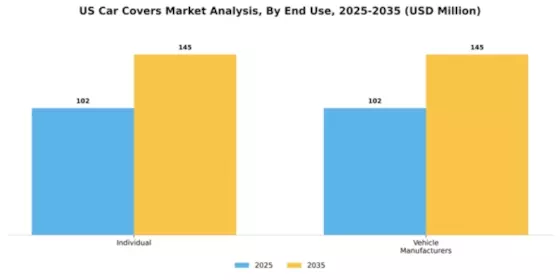
In the US car covers market, the Individual segment holds a significant market share, making it the largest category. This segment primarily includes consumers who purchase car covers for personal use, reflecting a strong preference for protection against environmental factors. Meanwhile, Vehicle Manufacturers represent the fastest-growing segment, as increasing collaborations with manufacturers drive the demand for tailored car cover solutions designed to meet specific customer needs. Growth trends for these segments are influenced by various factors. The surge in e-commerce and evolving consumer preferences towards DIY car care solutions fuel the growth of the Individual segment. Simultaneously, the emphasis on vehicle preservation in the automotive industry pushes Vehicle Manufacturers to adopt innovative cover designs, resulting in a notable expansion of this segment as manufacturers increasingly recognize the market potential for high-quality car covers.
Individual (Dominant) vs. Vehicle Manufacturers (Emerging)
The Individual segment is characterized by a diverse range of consumers, from casual car owners to automotive enthusiasts, who prioritize protection and style in their vehicle covers. With a variety of materials and designs, this dominant segment caters to personal preferences and the need for durability against harsh environmental conditions. In contrast, the Vehicle Manufacturers segment, though emerging, is rapidly gaining traction as automotive companies begin to recognize the importance of offering specialized car covers as part of their customer service and product offerings, thus enhancing customer satisfaction and loyalty. This shift signifies a growing trend where manufacturers are investing more in protective accessories as part of their overall sales strategies.
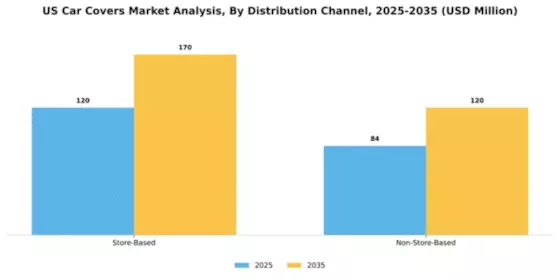
In the US car covers market, the distribution of sales reveals that Store-Based channels dominate significantly, holding the largest share due to established customer trust and convenience factors. Retail outlets and specialized auto accessory stores have become preferred shopping destinations for consumers, leading to a strong market presence. Conversely, Non-Store-Based channels, while smaller in share, have shown a promising rise as e-commerce platforms attract a growing number of tech-savvy customers seeking convenience and a wider selection of car cover options. The growth trends indicate that Non-Store-Based channels are experiencing the fastest increase, driven by the rise of online shopping and the proliferation of digital marketing strategies. COVID-19 has also accelerated shifts towards online purchasing, compelling traditional retailers to adapt to these changes. Innovations in logistics and delivery services are further enhancing the appeal of Non-Store-Based channels, suggesting a dynamic shift in consumer preferences that could reshape the US car covers market.

Store-Based (Dominant) vs. Non-Store-Based (Emerging)
Store-Based channels in the US car covers market are characterized by their established presence, allowing customers to physically inspect products before purchase, and receive instant gratification. Customers often prefer these locations for their perceived reliability and immediate service. These outlets are strategically located to cater to a wide customer base and provide value-added services such as installation guidance. On the other hand, Non-Store-Based channels are emerging rapidly, appealing to a younger demographic that values convenience and a wide range of options not available in brick-and-mortar stores. E-commerce platforms are enhancing user experiences through detailed comparisons, customer reviews, and competitive pricing, ensuring that they capture an increasing share of the market.
Get more detailed insights about US Car Covers Market Request Free Sample
The car covers market exhibits a dynamic competitive landscape characterized by a blend of innovation, strategic partnerships, and a focus on sustainability. Key players such as Covercraft (US), WeatherTech (US), and Budge Industries (US) are actively shaping the market through their distinct operational strategies. Covercraft (US) emphasizes product innovation, particularly in developing custom-fit covers that cater to a diverse range of vehicles, thereby enhancing customer satisfaction and loyalty. WeatherTech (US), on the other hand, has positioned itself as a leader in eco-friendly manufacturing processes, which resonates with the growing consumer demand for sustainable products. Budge Industries (US) focuses on affordability and accessibility, targeting budget-conscious consumers while maintaining a robust online presence to capture a wider audience. Collectively, these strategies contribute to a moderately fragmented market structure, where competition is driven by product differentiation and brand loyalty.In terms of business tactics, companies are increasingly localizing manufacturing to reduce lead times and enhance supply chain efficiency. This approach not only mitigates risks associated with The car covers market demands. The competitive structure remains moderately fragmented, with several players vying for market share, yet the influence of major companies is palpable as they set trends that smaller firms often follow. The collective actions of these key players indicate a market that is responsive to consumer preferences and technological advancements.
In October Covercraft (US) announced a partnership with a leading automotive technology firm to integrate smart features into their car covers, such as temperature regulation and theft deterrence. This strategic move is likely to enhance product appeal, particularly among tech-savvy consumers, and positions Covercraft (US) at the forefront of innovation in the market. The integration of technology into traditional products signifies a shift towards more sophisticated offerings that meet evolving consumer needs.
In September WeatherTech (US) launched a new line of biodegradable car covers, reinforcing its commitment to sustainability. This initiative not only aligns with current environmental trends but also differentiates WeatherTech (US) from competitors who may not prioritize eco-friendly practices. The introduction of biodegradable materials could potentially attract a new segment of environmentally conscious consumers, thereby expanding their market reach.
In August Budge Industries (US) expanded its distribution network by partnering with major online retailers, enhancing its visibility and accessibility to consumers. This strategic action is indicative of a broader trend where companies are leveraging e-commerce platforms to reach a wider audience, particularly in a market that increasingly favors online shopping. By improving distribution channels, Budge Industries (US) is likely to capture a larger share of the market, especially among price-sensitive consumers.
As of November the competitive trends in the car covers market are increasingly defined by digitalization, sustainability, and the integration of advanced technologies. Strategic alliances are becoming more prevalent, as companies recognize the value of collaboration in enhancing product offerings and market reach. Looking ahead, competitive differentiation is expected to evolve, with a notable shift from price-based competition to a focus on innovation, technology integration, and supply chain reliability. This transition suggests that companies that prioritize these aspects will likely gain a competitive edge in an ever-evolving market.

The US Car Covers Market has seen notable developments recently, with increased demand driven by rising vehicle ownership and the growing awareness of vehicle protection. Companies such as WeatherTech and Covercraft Industries LLC are focusing on innovative product development to enhance durability and ease of use. Additionally, market valuations for companies in this sector are showing positive growth, signaling a robust investment interest. Noteworthy events include the recent merger in July 2023 between Classic Accessories Inc and Budge Industries LLC, aimed at expanding product offerings and market reach.
Recent innovations reported by Mastercraft focus on eco-friendly materials used in car covers, aligning with consumer preferences for sustainable products. The ongoing supply chain challenges and inflationary pressures have moderately influenced pricing strategies across the industry. Furthermore, as of August 2023, DashMat has reported an increase in online sales due to changing consumer shopping behaviors post-pandemic. These trends indicate dynamic shifts within the US Car Covers Market, reflecting both new consumer demands and strategic company maneuvers to seize market opportunities.
The Car Covers Market is projected to grow at a 3.25% CAGR from 2025 to 2035, driven by increasing vehicle ownership and environmental concerns.
New opportunities lie in:
By 2035, the market is expected to achieve robust growth, reflecting evolving consumer preferences and technological advancements.
| MARKET SIZE 2024 | 204.0(USD Million) |
| MARKET SIZE 2025 | 210.63(USD Million) |
| MARKET SIZE 2035 | 290.0(USD Million) |
| COMPOUND ANNUAL GROWTH RATE (CAGR) | 3.25% (2025 - 2035) |
| REPORT COVERAGE | Revenue Forecast, Competitive Landscape, Growth Factors, and Trends |
| BASE YEAR | 2024 |
| Market Forecast Period | 2025 - 2035 |
| Historical Data | 2019 - 2024 |
| Market Forecast Units | USD Million |
| Key Companies Profiled | Covercraft (US), WeatherTech (US), CarCapsule (US), Classic Accessories (US), Budge Industries (US), OxGord (US), Leader Accessories (CN), Motor Trend (US) |
| Segments Covered | Type, End Use, Distribution Channel |
| Key Market Opportunities | Growing demand for eco-friendly materials in the car covers market presents significant opportunities. |
| Key Market Dynamics | Rising consumer demand for durable, weather-resistant materials drives innovation in car cover designs and manufacturing. |
| Countries Covered | US |
The market valuation of the US car covers market was $204.0 Million in 2024.
The projected market valuation for the US car covers market is $290.0 Million in 2035.
The expected CAGR for the US car covers market during the forecast period 2025 - 2035 is 3.25%.
Key players in the US car covers market include Covercraft, WeatherTech, CarCapsule, Classic Accessories, Budge Industries, OxGord, Leader Accessories, and Motor Trend.
The main segments by type in the US car covers market include Conventional ($120.0 - $170.0 Million), Automatic ($50.0 - $80.0 Million), and Semi-automatic ($34.0 - $40.0 Million).
The US car covers market is segmented by end use into Individual ($102.0 - $145.0 Million) and Vehicle Manufacturers ($102.0 - $145.0 Million).
The distribution channels in the US car covers market include Store-Based ($120.0 - $170.0 Million) and Non-Store-Based ($84.0 - $120.0 Million).
The performance of the Store-Based distribution channel indicates a valuation range of $120.0 - $170.0 Million, suggesting strong consumer preference for physical retail.
The market size for Individual end use and Vehicle Manufacturers is identical, both ranging from $102.0 - $145.0 Million.
Trends anticipated for the US car covers market in the coming years include steady growth, driven by an expected CAGR of 3.25% from 2025 - 2035.


Kindly complete the form below to receive a free sample of this Report

“This is really good guys. Excellent work on a tight deadline. I will continue to use you going forward and recommend you to others. Nice job”


“Thanks. It’s been a pleasure working with you, please use me as reference with any other Intel employees.”


“Thanks for sending the report it gives us a good global view of the Betaïne market.”


“Thank you, this will be very helpful for OQS.”


“We found the report very insightful! we found your research firm very helpful. I'm sending this email to secure our future business.”


“I am very pleased with how market segments have been defined in a relevant way for my purposes (such as "Portable Freezers & refrigerators" and "last-mile"). In general the report is well structured. Thanks very much for your efforts.”


“I have been reading the first document or the study, ,the Global HVAC and FP market report 2021 till 2026. Must say, good info! I have not gone in depth at all parts, but got a good indication of the data inside!”


“We got the report in time, we really thank you for your support in this process. I also thank to all of your team as they did a great job.”


“The Automotive 48V ECU Components Procurement Intelligence Study” was a complex project, but the Market Research Future (MRFR) team handled it with quality, agility, and customer-centricity. They delivered all requested data on time and within the agreed scope. The team, including Shubhendra Anand and Rahul Gotadki, was always readily available to clarify questions and swiftly implement necessary adjustments, driving the project to a successful conclusion within a very demanding timeframe.
I would also like to specifically commend Akshay Agarwal for his responsiveness and support at every stage—from our initial inquiry on May 6th through to final delivery on June 18th. His dedication made the entire process seamless.”



